睡眠・休息
睡眠・休息睡眠時間は何時間がベスト? 年齢別の目安は「大人7〜9時間」。133本のメタ分析で再確認
 2026.10.02
 English Corner(A2〜B2・4択クイズ)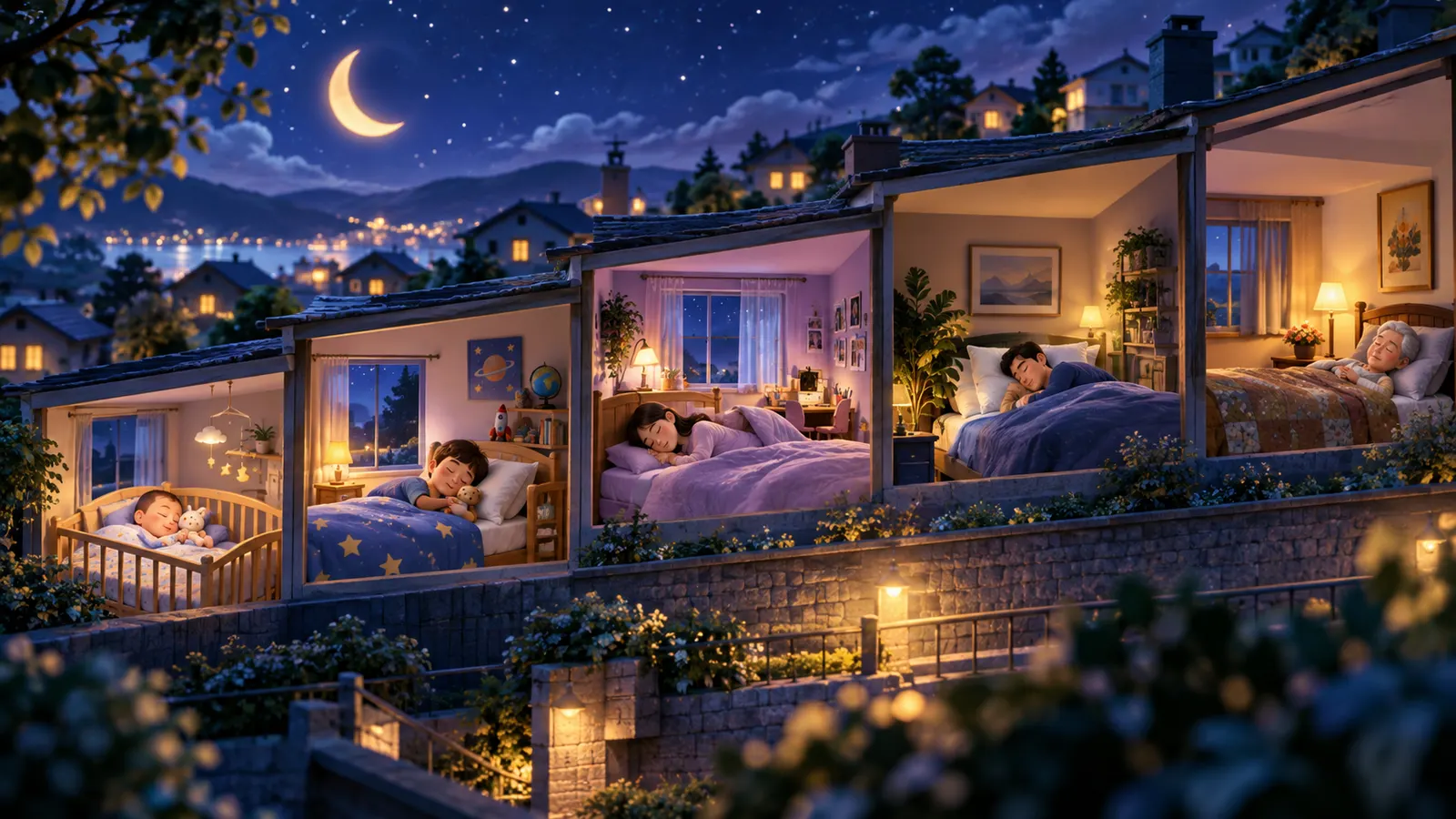
 読む前に予想してみよう!
大人の睡眠時間の目安として、アメリカの専門家団体は「7〜9時間」を挙げている
米国睡眠財団は18〜64歳で7〜9時間を推奨。日本の厚労省ガイドは「6時間以上を目安に」としている。
 研究カード(どんな研究?)
- 対象
- 子ども〜高齢者
- 規模
- メタ分析133本(2026年レビュー)
- 研究の種類
- 専門家パネルの推奨+系統的レビュー
- 確かさ
- ★★★★☆
米国睡眠財団の目安は18〜64歳で7〜9時間、65歳以上で7〜8時間。厚労省は成人「6時間以上」。2026年のレビューでもこの目安が支持された。
ひとことで言うと大人は7〜9時間、中高生は8〜10時間ねるのが目安!
結論から言うと、大人(18〜64歳)の睡眠時間の目安は7〜9時間、65歳以上は7〜8時間です。これは米国睡眠財団(NSF)が2015年に出した推奨で、日本の厚生労働省のガイドも、成人は「6時間以上を目安に、必要な睡眠時間を確保する」としています。
中学・高校生なら8〜10時間、小学生なら9〜12時間。「何時間寝ればいい?」の答えは、年齢によってかなり違うのです。
そして2026年、この目安が10年ぶりに「答え合わせ」されました。結果は――矛盾する研究はゼロでした。
01年齢別:睡眠時間は何時間が目安?
米国睡眠財団の推奨(2015年)を年齢順に並べると、こうなります。
- 新生児(0〜3か月):14〜17時間
- 乳児(4〜11か月):12〜15時間
- 1〜2歳:11〜14時間
- 3〜5歳:10〜13時間
- 6〜13歳:9〜11時間
- 14〜17歳:8〜10時間
- 18〜64歳:7〜9時間
- 65歳以上:7〜8時間
日本の「健康づくりのための睡眠ガイド2023」では、小学生9〜12時間、中学・高校生8〜10時間、成人は6時間以上が目安。高齢者には「床にいる時間が8時間以上にならないように」という注意もついています。

02「7時間」は誰がどうやって決めたの?
この数字は、誰かの思いつきではありません。
米国睡眠財団は、睡眠医学・小児科・老年医学などの専門家パネルを集め、膨大な論文を読み込んだうえで投票を重ねて年齢別の範囲を決めました。同じ2015年、米国睡眠医学会と睡眠研究学会も、成人は「定期的に7時間以上」が健康によいとする合意声明を出しています。
03長く寝るほど健康? ここに「どんでん返し」
「10時間寝ればもっと健康?」――そう単純ではありません。
英ウォーリック大学のカプッチオらが2010年に約138万人分のデータをまとめたメタ分析では、睡眠が短い人も長い人も、その後の死亡リスクが高いという「U字型」の関係が見つかりました。
ただし、これは相関です。長く寝ている人には、もともと病気や体調不良が隠れている可能性があります。厚労省のガイドも、自己申告ではなく脳波や活動量計で測ると「長すぎる睡眠」と健康の関係はほぼ見られなくなる一方、「床にいる時間が長い」ことは不健康と関係するようだ、と紹介しています。詳しくは寝過ぎは脳に悪い?もどうぞ。
04自分に必要な睡眠時間の見つけ方
厚労省のガイドによると、脳波で測った夜の睡眠時間は15歳前後で約8時間、25歳で約7時間、45歳で約6.5時間、65歳で約6時間と、大人になってからは20年ごとに30分ほど短くなっていきます。
「6時間で平気」という感覚は当てにならないことも。6時間睡眠を2週間続けた実験では、本人は眠気に慣れたつもりでも、注意力は落ち続けていました(→「6時間寝てれば十分」は危ない)。逆に、ごく少数ですが本当に短い睡眠で平気な人もいます(→ショートスリーパー遺伝子)。
05まとめ
睡眠時間の目安は、大人で7〜9時間、中高生で8〜10時間。ただしこれは「平均的な人のための地図」です。
最終的な答えは、あなたの昼間の調子が教えてくれます。まずは1週間、いつもより30分早く布団に入って、昼の眠気がどう変わるか試してみませんか?
この研究を英語で読もう原田英語の English CornerIn 2015, the US National Sleep Foundation gathered experts to decide how much sleep people need. 音声
音声 4択クイズ9問A2・B1・B2タップして開く
原田英語の English Corner
この研究を英語で読もう
How many hours should we sleep? The answer depends on age. Experts in the United States say adults need seven to nine hours. Teenagers need eight to ten hours, and young children need even more.
In 2026, scientists checked 133 studies, and none of them disagreed with these numbers. But sleeping too long is not always better. Everyone is different, so check how you feel during the day.
68 words ・ CEFR A2
和訳を見る
私たちは何時間眠るべきでしょうか。答えは年齢によって違います。アメリカの専門家は、大人には7〜9時間が必要だと言っています。10代には8〜10時間が必要で、小さな子どもにはさらに多くの睡眠が必要です。
2026年、科学者たちは133本の研究を調べましたが、これらの数字に反対するものは1本もありませんでした。しかし、長く寝ればいつもよいわけではありません。人はそれぞれ違うので、日中の自分の調子を確かめましょう。
4択リーディングクイズ
Q1. What is the passage mainly about?
年齢によって必要な睡眠時間が違うことがテーマなので C。
Q2. How many hours of sleep do teenagers need?
Teenagers need eight to ten hours とあるので A。7〜9時間は大人。
Q3. In this passage, "disagreed with" means ...
disagree with は「~と意見が違う、~に反対する」なので B。
In 2015, the US National Sleep Foundation gathered experts to decide how much sleep people need. They recommended seven to nine hours for adults aged 18 to 64, seven to eight hours for people over 65, and eight to ten hours for teenagers. Japan's health ministry suggests at least six hours for adults. In 2026, researchers checked 133 meta-analyses published over the previous ten years. About 74 percent agreed with the recommendations, and none contradicted them.
However, sleeping longer is not automatically healthier. A 2010 analysis found that both short and long sleepers had a higher risk of death, but this is a correlation, and long sleepers may already be ill.
111 words ・ CEFR B1
和訳を見る
2015年、米国睡眠財団は、人がどれくらいの睡眠を必要とするかを決めるために専門家を集めました。彼らは、18〜64歳の大人には7〜9時間、65歳以上には7〜8時間、10代には8〜10時間を推奨しました。日本の厚生労働省は、大人には少なくとも6時間を目安として示しています。2026年、研究者たちは過去10年間に発表された133本のメタ分析を調べました。約74パーセントが推奨と一致し、矛盾するものは1本もありませんでした。
しかし、長く眠ればそれだけ健康になるわけではありません。2010年の分析では、睡眠が短い人も長い人も死亡リスクが高いことがわかりましたが、これは相関であり、長く眠る人はもともと病気である可能性もあります。
4択リーディングクイズ
Q1. How much sleep does the National Sleep Foundation recommend for people over 65?
seven to eight hours for people over 65 とあるので B。
Q2. What did the 2026 review find?
About 74 percent agreed with the recommendations, and none contradicted them. とあるので D。
Q3. Why does the writer say long sleep is not automatically healthier?
相関にすぎず、long sleepers may already be ill とあるので A。長い睡眠が病気の原因と言っているわけではない。
A newborn needs about twice as much sleep as a grandparent. In 2015, the US National Sleep Foundation brought together a panel of specialists who reviewed the research and voted on ranges. They settled on 14 to 17 hours for newborns, 8 to 10 for teenagers, 7 to 9 for adults aged 18 to 64, and 7 to 8 for people over 65.
Japan's health ministry advises adults to aim for at least six hours. A 2026 systematic review checked these numbers against 133 meta-analyses from the previous decade. Of those, 74 percent agreed with the recommendations and the rest were inconclusive. None contradicted them, and there was little sign of a sex difference. More sleep is not automatically better, though.
A 2010 meta-analysis of roughly 1.38 million people found a U-shaped curve, with higher mortality among both short and long sleepers. That link comes mostly from people's own reports of their sleep, and long sleep may be a symptom of hidden illness rather than a cause of harm. When sleep is measured objectively, that extra risk largely disappears. Individual needs differ, and feeling alert during the day is a practical test of whether you are getting enough.
198 words ・ CEFR B2
和訳を見る
新生児には、祖父母世代の約2倍の睡眠が必要です。2015年、米国睡眠財団は専門家のパネルを集め、パネルは研究を検討して範囲について投票しました。決まったのは、新生児は14〜17時間、10代は8〜10時間、18〜64歳の大人は7〜9時間、65歳以上は7〜8時間という数字です。
日本の厚生労働省は、大人に少なくとも6時間を目安にするよう助言しています。2026年の系統的レビューは、これらの数字を過去10年間の133本のメタ分析と照らし合わせました。そのうち74パーセントが推奨と一致し、残りは結論が出ていませんでした。矛盾するものは1本もなく、男女差を示す証拠もほとんどありませんでした。ただし、睡眠は多ければ自動的によいというわけではありません。
約138万人を対象とした2010年のメタ分析では、睡眠が短い人も長い人も死亡率が高いというU字型の曲線が見つかりました。この関連は主に本人による睡眠の自己申告にもとづいており、長い睡眠は害の原因というより、隠れた病気の症状なのかもしれません。睡眠を客観的に測ると、その余分なリスクはほぼ消えます。必要な量には個人差があり、日中に頭がすっきりしているかどうかが、睡眠が足りているかの実用的な判断基準になります。
4択リーディングクイズ
Q1. How were the 2015 sleep ranges decided?
brought together a panel of specialists who reviewed the research and voted on ranges とあるので C。
Q2. What does the U-shaped relationship mean?
with higher mortality among both short and long sleepers とあるので A。
Q3. Why might the link between long sleep and mortality be misleading?
That link comes mostly from people's own reports of their sleep, and long sleep may be a symptom of hidden illness とあるので B。
重要単語
- recommendationB2名詞推奨、おすすめThe panel made a new recommendation on sleep.
 動詞 recommend は that 節で should(または原形)を使う:recommend that he (should) rest。
 - durationB2名詞持続時間、長さSleep duration changes with age. during(~の間)と同語源。for the duration of ~「~の間ずっと」。
- consensusC1名詞(専門家の)合意The experts reached a consensus after long discussions. reach a consensus「合意に達する」。scientific consensus「科学的合意」も頻出。
- adolescentC1名詞・形容詞思春期の若者(の)Adolescents need more sleep than adults. 名詞 adolescence「思春期」。teenager より硬い、論文・入試向きの語。
- mortalityC1名詞死亡率The study looked at sleep and mortality. mortal(死ぬ運命の)の名詞形。infant mortality「乳児死亡率」は入試頻出。反対は immortality(不死)。
- individual differenceB2名詞(句)個人差There are large individual differences in sleep needs. ふつう複数形 individual differences で使う。心理学・教育の長文で頻出。
 入試に出る順の単語帳を印刷する →
 全5561語の「科学英単語カード」で復習する →
 公式・一次情報をチェック
- How Much Sleep Do You Really Need?(National Sleep Foundation)thensf.org
- 睡眠対策(厚生労働省)mhlw.go.jp
このネタ、誰かに教えたくなった?
「何時間寝ればいいの?」の答え。大人は7〜9時間、中高生は8〜10時間が目安。2026年には、過去10年のメタ分析133本を調べ直したら、この目安と矛盾する結果は1本もなかったらしい。
押すと「マジかリスト」に保存されます
 出典・参考文献(5件)タップで表示
- Hirshkowitz et al. (2015) National Sleep Foundation's sleep time duration recommendations: methodology and results summary, Sleep Healthdoi.org
- Watson et al. (2015) Recommended Amount of Sleep for a Healthy Adult: A Joint Consensus Statement of the American Academy of Sleep Medicine and Sleep Research Society, Sleepdoi.org
- Dzierzewski et al. (2026) How much sleep do you need: A 10-year systematic review of National Sleep Foundation's sleep duration recommendations and examination of sex differences, Sleep Healthdoi.org
- Cappuccio et al. (2010) Sleep Duration and All-Cause Mortality: A Systematic Review and Meta-Analysis of Prospective Studies, Sleepdoi.org
- 厚生労働省(2023)健康づくりのための睡眠ガイド2023mhlw.go.jp

※本記事は上記の研究・公開資料をもとに、原田英語が独自の言葉で解説したものです。引用は著作権法第32条の範囲で行い、出典を明記しています。画像はすべてオリジナルのイメージです。研究結果には限界や個人差があります。誤りのご指摘は原田英語のお問い合わせフォームから。