心理学ビミョー
誰も選ばない「おとり」が選択を動かす? 雑誌の購読プランで見るおとり効果
 2026.10.02
 English Corner(A2〜B2・4択クイズ)

 読む前に予想してみよう!
誰も選ばない選択肢は、取り除いても他の選択に影響しない
購読プランの例では、誰も選ばなかった「紙版のみ」を消しただけで、最も高いプランの人気が大きく下がった。
 研究カード(どんな研究?)
- 対象
- 消費者・学生
- 規模
- 実験室研究多数+実購買データ約360万件
- 研究の種類
- 実験室実験・大規模追試・実データ分析
- 確かさ
- ★★★☆☆
誰も選ばない「明らかに損な選択肢」を加えると、特定の選択肢が選ばれやすくなる。ただし大規模な検証では、効果が出ない条件も多く見つかっている。
ひとことで言うと「誰も選ばない選択肢」が、こっそりあなたの選択を動かしているかも!
映画館のポップコーン、S・M・Lのうち、なぜかいつもLを選んでしまう。
それ、もしかすると「おとり」に誘導されているのかもしれません。
心理学や行動経済学では、誰も選ばないような選択肢を1つ加えるだけで、ほかの選択肢の人気が変わることが知られています。これを「おとり効果」と呼びます。
01雑誌の購読プランで起きた「マジか」
おとり効果の例として有名なのが、アメリカの行動経済学者アリエリーさんが著書『予想どおりに不合理』で紹介した、イギリスの経済誌『エコノミスト』の購読プランです。
「紙版のみ125ドル」は、同じ値段で紙+ネットが手に入るのだから、誰も選びません。実際に0人でした。
ところが、その誰も選ばない選択肢を消しただけで、いちばん高いプランを選ぶ人は84人から32人に激減。「紙版のみ」は、セットプランをお得に見せるための「おとり」として働いていたのです。
02なぜ「おとり」に引っかかるの?
この現象を最初に実験で示したのは、1982年のアメリカの研究者ヒューバーさんらです。
ポイントは、人は選択肢の絶対的な価値を判断するのが苦手で、比べやすいもの同士を比べてしまうことです。
「紙版のみ」と「紙+ネット」は比べやすい。しかも、セットのほうが明らかに上。すると脳は「セットはお得だ!」という気持ちになり、比べにくい「ネット版のみ」は印象が薄くなってしまうのです。
たとえるなら、引き立て役のいる写真。となりに少しだけ見劣りする人がいると、主役がいつもよりかっこよく見える、あの感じです。

03ただし、いつも効くわけではない
ここで、記事のタイトルの「?」を回収しましょう。実はおとり効果は、思ったほど万能ではないことがわかってきています。
2014年、アメリカの研究者ヤンさんとリンさんは、おとり効果を出そうとする実験を91回(23種類の商品)行いましたが、はっきり効果が出たのはわずか11回でした。商品を写真や言葉で具体的に説明すると、効果は偶然レベルまで下がりました。同じ年、フレデリックさんらも「数値で比べる抽象的な問題でないと効果が出にくい」と報告しています。
これに対しヒューバーさんらは、「元の実験と同じ条件をそろえれば効果は再現される」と反論。おとり効果は「起きる条件と起きない条件がある」というのが、今の落ち着きどころです。
2025年には、イギリスのスーパーで売られたワイン約360万件の購入データを分析した研究も登場。おとり効果らしき傾向は見られましたが、その大きさは約1%ほどと、実験室よりずっと控えめでした。
選択肢が多すぎると選べなくなる話は、ジャムの選択肢の記事もどうぞ。
04まとめ
誰も選ばない「おとり」は、ほかの選択肢を引き立てて、人の選択を動かすことがあります。ただし、その効果は条件しだいで、いつでも大きく効く魔法ではありません。
判定は「ビミョー」。でも、「この選択肢、何のためにあるんだろう?」と一歩引いて考えるクセは、どんな買い物でも役に立ちます。
この研究を英語で読もう原田英語の English CornerIn a popular book, behavioral economist Dan Ariely described a classroom demonstration using magazine… 音声
音声 4択クイズ9問A2・B1・B2タップして開く
原田英語の English Corner
この研究を英語で読もう
A magazine had three plans. Online cost $59, print cost $125, and print plus online cost $125. In a class demo, no student chose "print only," and 84 of 100 chose the most expensive plan.
When "print only" was removed, only 32 chose print plus online. The plan nobody wanted made the other plan look like a good deal. This is called the decoy effect. But later studies show it does not always work.
74 words ・ CEFR A2
和訳を見る
ある雑誌には3つのプランがありました。ネット版59ドル、紙版125ドル、紙版+ネット版125ドルです。授業でのデモでは、「紙版のみ」を選んだ学生は一人もおらず、100人中84人がいちばん高いプランを選びました。
「紙版のみ」を取り除くと、紙版+ネット版を選んだのは32人だけでした。誰も欲しがらないプランが、もう一方のプランをお得に見せていたのです。これはおとり効果と呼ばれます。しかし、その後の研究では、それがいつも効くわけではないことがわかっています。
4択リーディングクイズ
Q1. How many students chose "print only"?
no student chose "print only" とあるので A。
Q2. What happened when "print only" was removed?
84人から32人に減ったので C。
Q3. In this passage, a "good deal" is ...
a good deal は「お得な買い物・取引」。お金に見合う価値があるように見えるものなので B。
In a popular book, behavioral economist Dan Ariely described a classroom demonstration using magazine subscription plans. When 100 students saw three options, an online plan for $59, a print plan for $125, and a print-plus-online plan for $125, no one chose print only, and 84 chose the combined plan. When the print-only option was removed, only 32 chose the combined plan.
The useless option worked as a "decoy," making the combined plan look like a bargain. People find absolute value hard to judge, so they compare options that are easy to compare. However, the decoy effect is not always strong. In 2014, researchers ran 91 tests and found a clear effect in only 11. A 2025 study of real wine sales found an effect of only about 1 percent.
129 words ・ CEFR B1
和訳を見る
行動経済学者のダン・アリエリーは、人気の著書の中で、雑誌の購読プランを使った授業でのデモを紹介しました。100人の学生が3つの選択肢、つまり59ドルのネット版、125ドルの紙版、125ドルの紙版+ネット版を見たとき、紙版のみを選んだ人はおらず、84人がセットのプランを選びました。紙版のみの選択肢を取り除くと、セットのプランを選んだのは32人だけでした。
役に立たない選択肢が「おとり」として働き、セットのプランをお得に見せていたのです。人は絶対的な価値を判断するのが苦手なので、比べやすい選択肢同士を比べてしまいます。しかし、おとり効果はいつも強いわけではありません。2014年、研究者たちは91回の検証を行いましたが、はっきりした効果が見られたのは11回だけでした。実際のワインの販売を調べた2025年の研究では、効果はわずか約1パーセントでした。
4択リーディングクイズ
Q1. Why did the print-only option work as a decoy?
making the combined plan look like a bargain とあるので B。
Q2. According to the passage, why do people fall for decoys?
People find absolute value hard to judge, so they compare options that are easy to compare とあるので D。
Q3. What do the 2014 and 2025 studies suggest?
91回中11回しか効果が出ず、実際の販売では約1%だったことから、有名な例ほど強くないとわかるので A。
One of the best-known illustrations of the decoy effect comes from Dan Ariely's book Predictably Irrational. Offered three subscriptions to The Economist, online only for $59, print only for $125, and print plus online for $125, none of 100 MIT business students chose print only, while 84 took the combined package. Without the print-only option, only 32 did.
The worthless option, which no one selected, seems to have made the bundle look like a bargain. This pattern, formally called the asymmetric dominance or attraction effect, was first demonstrated experimentally by Huber and colleagues in 1982. It matters theoretically because it violates a principle of rational choice: adding an option should not increase the share of an existing one.
However, the Economist example was a classroom demonstration reported in a book, not a peer-reviewed study. Subsequent research has also exposed limits. Yang and Lynn ran 91 attempts across 23 product categories and observed a clear effect in only 11, and the effect largely disappeared when products were presented with pictures or verbal descriptions rather than numbers. A 2025 analysis of about 3.6 million real wine purchases detected a decoy-like pattern, but it shifted preferences by only around 1 percent.
198 words ・ CEFR B2
和訳を見る
おとり効果の最もよく知られた例の一つは、ダン・アリエリーの著書『予想どおりに不合理』に由来します。『エコノミスト』誌の3つの購読プラン、つまりネット版のみ59ドル、紙版のみ125ドル、紙版+ネット版125ドルを提示されたとき、MITのビジネススクールの学生100人のうち紙版のみを選んだ人はおらず、84人がセットのプランを選びました。紙版のみの選択肢がないと、そうしたのは32人だけでした。
誰も選ばなかった価値のない選択肢が、セットをお得に見せていたようです。正式には非対称優越効果または魅力効果と呼ばれるこのパターンは、1982年にヒューバーらによって初めて実験的に示されました。これが理論的に重要なのは、選択肢を加えても既存の選択肢のシェアが増えるべきではない、という合理的選択の原則に反するからです。
しかし、エコノミスト誌の例は本で紹介された授業でのデモであり、査読付きの研究ではありません。その後の研究は限界も明らかにしました。ヤンとリンは23の商品カテゴリーで91回試み、はっきりした効果が見られたのは11回だけで、商品が数値ではなく写真や言葉で示されると効果はほとんど消えました。約360万件の実際のワイン購入を分析した2025年の研究は、おとりのようなパターンを検出しましたが、それが好みを変えたのは約1パーセントだけでした。
4択リーディングクイズ
Q1. Why is the decoy effect theoretically important?
it violates a principle of rational choice: adding an option should not increase the share of an existing one とあるので B。
Q2. What weakness of the Economist example does the author point out?
the Economist example was a classroom demonstration reported in a book, not a peer-reviewed study とあるので A。
Q3. When did the decoy effect largely disappear in Yang and Lynn's research?
the effect largely disappeared when products were presented with pictures or verbal descriptions rather than numbers とあるので D。
重要単語
- decoyC1名詞おとりThe cheap-looking option was just a decoy.
 もとは鳥をおびき寄せる「おとりの模型」。decoy effect「おとり効果」。
 - optionB1名詞選択肢We have three options for lunch. 形容詞 optional「任意の」。have no option but to do「~するしかない」。
- inferiorC1形容詞劣ったThis phone is inferior to the newer model. inferior to ~(than ではなく to)。反対は superior to ~。入試の語法問題で頻出。
- subscriptionB2名詞定期購読、サブスクI canceled my music subscription. subscribe to ~「~を定期購読する」。「サブスク」はこの略。
- robustC1形容詞(結果が)頑健な、安定したA robust finding appears again and again. 日常では「たくましい・丈夫な」。研究では条件を変えても崩れない結果を指す。
- bargainB2名詞お買い得品、取引The combined plan looked like a bargain. a real bargain「掘り出し物」。動詞で「交渉する」の意味もある。
- irrationalC1形容詞不合理なShoppers can make irrational choices. ir-(否定)+rational(合理的な)。行動経済学のキーワード。
 入試に出る順の単語帳を印刷する →
 全5561語の「科学英単語カード」で復習する →
 動画でもっと知る
動画は各チャンネルの公式埋め込みで表示しています(YouTube)。
この話題を TED で聞く
同じテーマの TED・TED-Ed を、 TED HACK で。英語の見どころ・使える表現・学習ミッションつきの日本語ガイドです。(運営:原田英語)


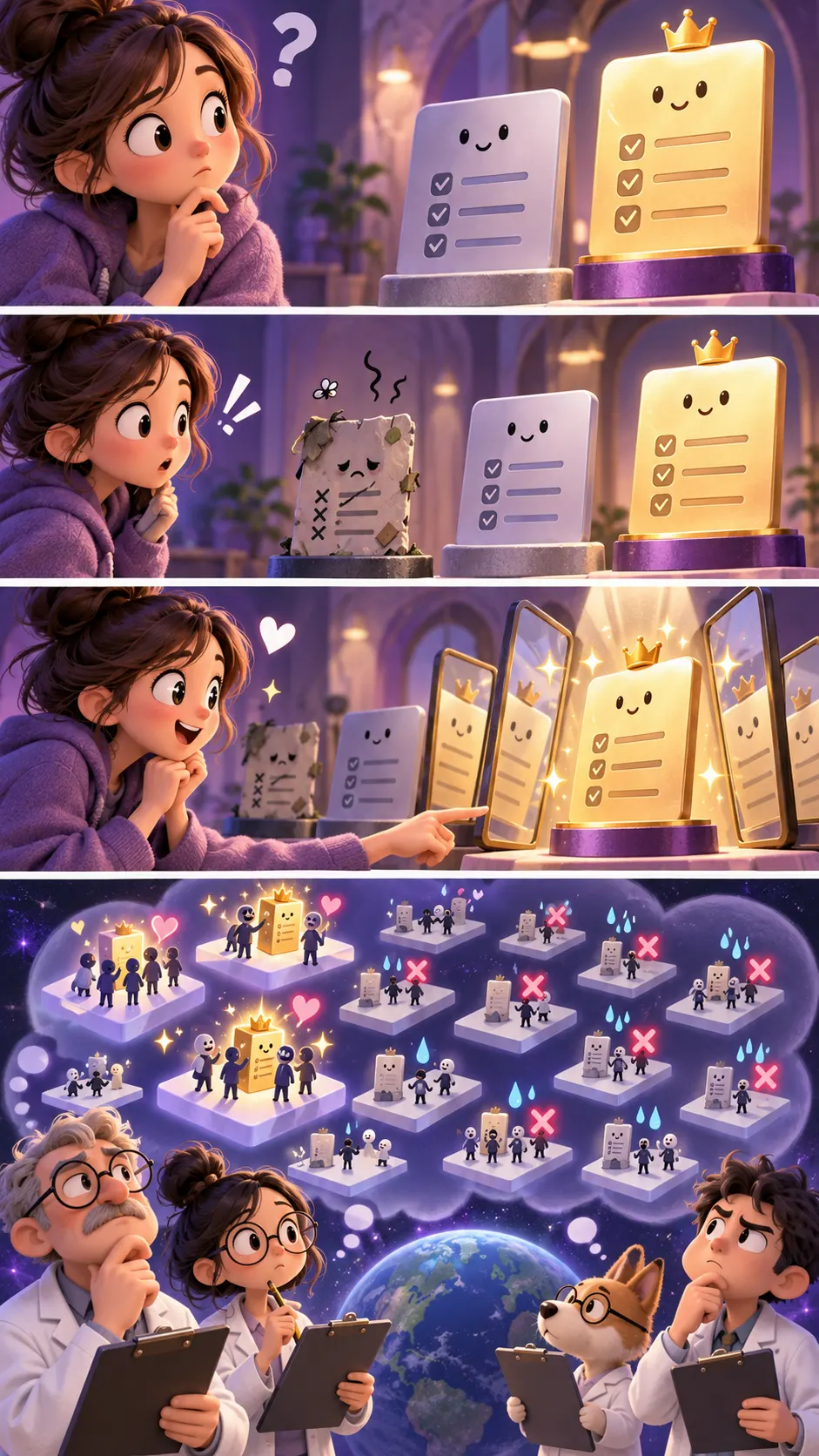
 4コマでわかる
このネタ、誰かに教えたくなった?
雑誌の購読プラン「ネット版59ドル」「紙版125ドル」「紙+ネット125ドル」。誰も選ばない「紙版のみ」を消すと、一番高いプランを選ぶ人が84%から32%に激減したらしい。ただし「おとり効果」は出ないことも。
押すと「マジかリスト」に保存されます
 出典・参考文献(5件)タップで表示
- Huber, Payne & Puto (1982) Adding asymmetrically dominated alternatives: Violations of regularity and the similarity hypothesis, Journal of Consumer Researchdoi.org
- Yang & Lynn (2014) More evidence challenging the robustness and usefulness of the attraction effect, Journal of Marketing Researchdoi.org
- Frederick, Lee & Baskin (2014) The limits of attraction, Journal of Marketing Researchdoi.org
- Huber, Payne & Puto (2014) Let's be honest about the attraction effect, Journal of Marketing Researchdoi.org
- Devine et al. (2025) How decoy options ferment choice biases in real-world consumer decision-making, npj Science of Learningdoi.org

※本記事は上記の研究・公開資料をもとに、原田英語が独自の言葉で解説したものです。引用は著作権法第32条の範囲で行い、出典を明記しています。画像はすべてオリジナルのイメージです。研究結果には限界や個人差があります。誤りのご指摘は原田英語のお問い合わせフォームから。