ウソ?ホント?検証ウソ
【検証】「私は視覚型」「聴覚型」…学習スタイルに合わせると成績は上がるのか
 2026.10.02
 English Corner(A2〜B2・4択クイズ)
 読む前に予想してみよう!
自分の学習スタイル(視覚型・聴覚型など)に合わせて勉強すると、成績が上がることが確かめられている
2008年のレビューは、それを示す信頼できる証拠はほとんどないと結論した。
 研究カード(どんな研究?)
- 対象
- 学生・成人
- 規模
- 研究多数(例:成人約120人の実験)
- 研究の種類
- 総点検(レビュー)+実験研究
- 確かさ
- ★★★★☆
自分の「学習スタイル」に合わせて教えると成績が上がる、という考えは、厳しく確かめた研究ではほぼ支持されていない。言葉と図を組み合わせるなど、タイプを問わず効きやすい方法のほうが近道だ。
ひとことで言うと「〇〇型」に合わせるより、図も言葉も使うのが一番の近道!
「私は視覚型だから、図やイラストで覚えるのが得意」「ぼくは聴覚型。先生の話を聞くほうが頭に入る」
こんなふうに、人には生まれつきの「学習スタイル」があって、自分のタイプに合った方法で学ぶと成績が上がる――。学校の授業や塾、自己分析テストなどで、聞いたことがある人も多いはずです。
いかにも本当っぽいこの考え方。でも、心理学者たちが厳しく確かめてみると、ちょっと意外な結果になっていました。
01「好き」と「効く」は別のもの
まず、はっきりさせておきたいことがあります。
人によって勉強方法の好みがあるのは本当です。図を見るのが好きな人もいれば、話を聞くのが好きな人もいます。
問題は、「好みに合った方法で教えると、本当に成績が上がるのか?」という点。ここを確かめるには、ちゃんとした実験の手順が必要です。
02確かめ方は「交差」がカギ
その後、2015年にアメリカの研究チームが大人を対象に行った実験でも、自分の好みの方法(読む/聞く)で学んだ人の理解度が、そうでない人より高くなることは確認されませんでした。
03教える側にも根強い「神経神話」
学習スタイル説は、神経神話(=脳科学っぽく聞こえるけれど、実は根拠のない思い込み)の代表例とされています。
それでも、この考えは教育の現場に深く根づいています。2012年にイギリスとオランダの教師を対象にした調査では、9割を超える教師が「学習スタイルに合わせて教えると、よく学べる」という考えに同意していました。2015年には、大学教育に関する論文の中でも、学習スタイル説が当然のように前提とされている例が多いと報告されています。
信じている先生が悪いわけではありません。わかりやすくて、生徒一人ひとりを大切にしているように感じられる。だからこそ広まった考えなのです。
04じゃあ、何が本当に効くの?

学習スタイルに合わせるより、誰にでも効く方法を使うほうが近道です。2013年に代表的な勉強法を総点検した研究でも、「思い出す練習」や「間隔をあけた復習」は効果が高いと評価されました。たとえばこんな方法です。
もうひとつ大切なのは、教える内容に合った方法を選ぶこと。地理なら地図、音楽なら音、体育なら実際に体を動かす。これは「生徒のタイプ」ではなく、「学ぶ中身」に合わせるという考え方です。
05まとめ
- 勉強方法に好みがあるのは本当。でも「タイプに合わせると成績が上がる」証拠はほとんどない
- 学習スタイル説は、教師の間にも根強い「神経神話」のひとつ
- 図と言葉の組み合わせ、思い出す練習、間隔をあけた復習は、誰にでも効きやすい
「私は〇〇型だから、この勉強法は向いてない」と決めつけるのは、もったいない話。いろんな方法を試せることこそ、あなたの脳の強みです。
この研究を英語で読もう原田英語の English CornerMany students and teachers believe that each person has a learning style, such as visual or auditory, and… 音声
音声 4択クイズ9問A2・B1・B2タップして開く
原田英語の English Corner
この研究を英語で読もう
Some people say, "I am a visual learner, so I learn best with pictures." Others say they learn best by listening. It is true that people like different ways of studying.
But does studying in your favorite way give you better grades? Scientists checked many studies and found almost no proof. Using both words and pictures, and trying to remember what you read, helps almost everyone.
66 words ・ CEFR A2
和訳を見る
「私は視覚型の学習者だから、絵で学ぶのが一番いい」と言う人がいます。聞くことで一番よく学べると言う人もいます。人によって好きな勉強方法が違うのは本当です。
しかし、自分の好きな方法で勉強すると成績が良くなるのでしょうか。科学者たちは多くの研究を調べましたが、証拠はほとんど見つかりませんでした。言葉と絵の両方を使い、読んだことを思い出そうとすることは、ほとんど誰にとっても役に立ちます。
4択リーディングクイズ
Q1. What is the passage mainly about?
好きな学習スタイルで勉強すると成績が上がるかどうかがテーマなので D。
Q2. What did scientists find?
found almost no proof とあるので D。好みがあること自体は本当だと書かれている点に注意。
Q3. In this passage, "visual" is related to ...
visual learner は with pictures で学ぶ人。visual は「視覚の」なので D。
Many students and teachers believe that each person has a learning style, such as visual or auditory, and that teaching in that style improves results. People certainly have preferences, but a preference is not the same as an effect. In 2008, American psychologists reviewed the research. They explained that a proper test must randomly assign learners of each type to different teaching methods and show that each type does better with its matching method.
Very few studies met this standard and supported the theory. A 2015 experiment with adults found the same. Even so, a 2012 survey found that more than 90 percent of teachers in Britain and the Netherlands agreed with the idea. Instead, students can combine words and pictures, practice recalling information, and spread out their review.
129 words ・ CEFR B1
和訳を見る
多くの生徒や教師は、一人ひとりに視覚型や聴覚型といった学習スタイルがあり、そのスタイルで教えると成果が上がると信じています。人に好みがあるのは確かですが、好みと効果は同じではありません。2008年、アメリカの心理学者たちが研究を見直しました。彼らは、正しく検証するには、各タイプの学習者を異なる教え方にランダムに割り当て、それぞれのタイプが自分に合った方法でより良い成績を出すことを示す必要があると説明しました。
この基準を満たし、理論を支持した研究はほとんどありませんでした。2015年の大人を対象とした実験でも、同じ結果でした。それでも、2012年の調査では、イギリスとオランダの教師の90パーセント以上がこの考えに同意していました。その代わりに、生徒は言葉と図を組み合わせ、情報を思い出す練習をし、復習の間隔をあけることができます。
4択リーディングクイズ
Q1. What does the writer mean by "a preference is not the same as an effect"?
好きな方法だからといって効果があるとは限らない、という意味なので A。
Q2. According to the 2012 survey, what percentage of teachers agreed with the idea?
more than 90 percent of teachers ... agreed with the idea とあるので D。
Q3. What does the passage recommend for students?
最終文で combine words and pictures, practice recalling information, and spread out their review と勧めているので C。
In a 2012 survey, more than 90 percent of teachers in the UK and the Netherlands agreed that students learn best when lessons match their "learning style." The research tells a different story. Nobody disputes that people have preferences. What matters is whether teaching to those preferences improves learning.
In an influential 2008 review, Pashler and colleagues spelled out what a fair test would need. Learners sorted by style must be randomly assigned to different methods, and the results must show a crossover, with visual learners doing better under visual instruction and auditory learners under auditory instruction.
Hardly any studies with this design supported the hypothesis. In a 2015 experiment by Rogowsky and colleagues, adults learned either by reading or by listening, and matching their stated preference did not improve comprehension. So why does this classic "neuromyth" survive? Part of its appeal is that it seems to respect each student's individuality.
But the hours spent diagnosing styles could go to strategies that help almost every learner, such as retrieval practice and spaced review. Format does matter, but it should fit the content. Geography is easier to learn with a map, whoever the student is.
194 words ・ CEFR B2
和訳を見る
2012年の調査では、イギリスとオランダの教師の90パーセント以上が、授業が「学習スタイル」に合っていると生徒は最もよく学ぶ、という考えに賛成していました。しかし研究が語る話は違います。人に好みがあることは誰も否定しません。大事なのは、その好みに合わせて教えることで学習が向上するかどうかです。
影響力のある2008年のレビューで、パシュラーらは公正な検証に何が必要かをはっきり示しました。スタイルで分けた学習者を異なる方法にランダムに割り当て、視覚型は視覚的指導で、聴覚型は聴覚的指導でより良い成績を出すという交差した結果を示さなければならない、というものです。
そうした設計でこの仮説を支持した研究はほとんどありませんでした。ロゴウスキーらの2015年の実験では、大人が読むか聞くかのどちらかで学びましたが、本人が述べた好みに合わせても理解度は向上しませんでした。では、なぜこの典型的な「神経神話」は生き残っているのでしょうか。その魅力の一つは、一人ひとりの生徒の個性を尊重しているように見えることです。
しかし、スタイルの診断に費やす時間は、検索練習や間隔をあけた復習のような、ほぼすべての学習者に役立つ方略に回すことができます。形式も大切ですが、それは内容に合わせるべきです。地理は、どんな生徒であっても地図があるほうが学びやすいのです。
4択リーディングクイズ
Q1. According to Pashler and colleagues, what must a fair test of learning styles show?
the results must show a crossover, with visual learners doing better under visual instruction ... とあるので B。
Q2. According to the author, what is part of the idea's appeal?
Part of its appeal is that it seems to respect each student's individuality とあるので C。
Q3. What does the author suggest teachers should do?
後半で、検索練習や間隔をあけた復習のように strategies that help almost every learner を勧め、形式は it should fit the content と述べているので D。
重要単語
- learning styleB2名詞(句)学習スタイルMatching a learning style did not improve test scores.
 visual(視覚)/auditory(聴覚)/kinesthetic(体感)型に分ける説が有名。
 - preferenceB1名詞好みA preference is not the same as an ability. prefer A to B「BよりAを好む」の名詞形。have a preference for ~ の形も頻出。
- retrieval practiceC1名詞(句)思い出す練習(検索練習)Retrieval practice helps you remember more. retrieve(取り戻す)の名詞形。犬が物を取ってくる retriever と同語源。
- instructionB1名詞指導、教え方Good instruction fits the content, not the student type. 複数形 instructions は「指示・使用説明書」。文脈で意味が変わる。
- misconceptionC1名詞誤解The idea is a common misconception among teachers. mis-(誤って)+conception(考え)。a common misconception that ~ の形で長文に頻出。
- endorseC1動詞支持する、是認するMost teachers endorsed the idea of learning styles. もとは「(書類の)裏に書く」(ラテン語 in+dorsum「背中」)。名詞 endorsement は「推薦・支持」。
- hypothesisC1名詞仮説Few studies supported the hypothesis. 複数形は hypotheses。test a hypothesis「仮説を検証する」が定番。
 入試に出る順の単語帳を印刷する →
 全5561語の「科学英単語カード」で復習する →
 動画でもっと知る
動画は各チャンネルの公式埋め込みで表示しています(YouTube)。
この話題を TED で聞く
同じテーマの TED・TED-Ed を、 TED HACK で。英語の見どころ・使える表現・学習ミッションつきの日本語ガイドです。(運営:原田英語)

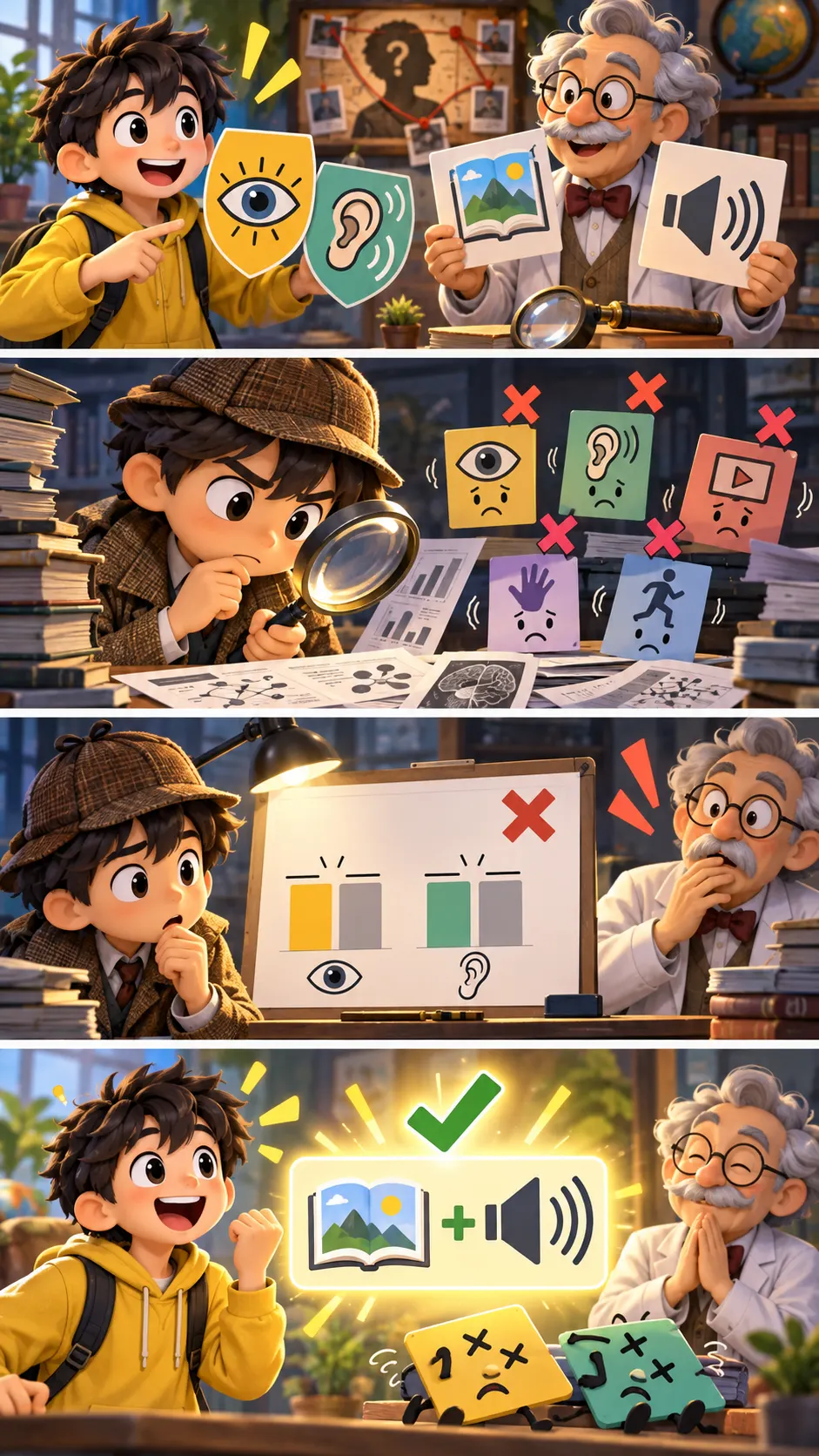
 4コマでわかる
このネタ、誰かに教えたくなった?
「私は視覚型だから図で覚える」みたいな学習スタイル、自分のタイプに合わせて教えると成績が上がるかを厳しく確かめた研究は、ほとんど支持してないらしい。それでも教師の多くが信じてるという調査も。
押すと「マジかリスト」に保存されます
 出典・参考文献(5件)タップで表示
- Pashler et al. (2008) Learning Styles: Concepts and Evidence, Psychological Science in the Public Interestdoi.org
- Rogowsky, Calhoun & Tallal (2015) Matching learning style to instructional method: Effects on comprehension, Journal of Educational Psychologydoi.org
- Dekker et al. (2012) Neuromyths in education: Prevalence and predictors of misconceptions among teachers, Frontiers in Psychologydoi.org
- Newton (2015) The learning styles myth is thriving in higher education, Frontiers in Psychologydoi.org
- Dunlosky et al. (2013) Improving Students' Learning With Effective Learning Techniques, Psychological Science in the Public Interestdoi.org

※本記事は上記の研究・公開資料をもとに、原田英語が独自の言葉で解説したものです。引用は著作権法第32条の範囲で行い、出典を明記しています。画像はすべてオリジナルのイメージです。研究結果には限界や個人差があります。誤りのご指摘は原田英語のお問い合わせフォームから。