宇宙・NASAホント
太陽系の外から来た“葉巻形”の訪問者オウムアムア。ガスも出さずに加速した謎
 2026.10.02
 English Corner(A2〜B2・4択クイズ)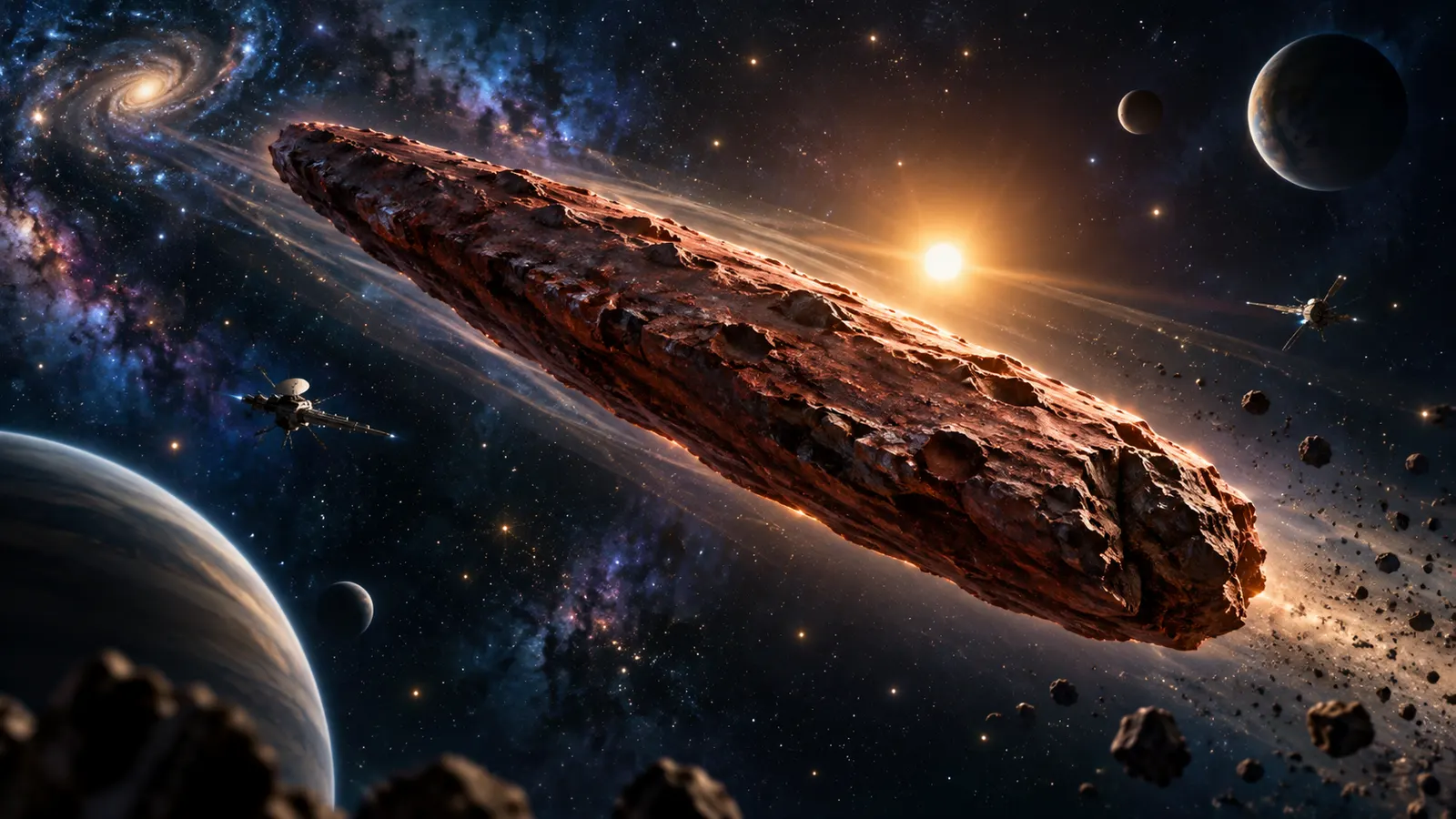
 読む前に予想してみよう!
オウムアムアは、太陽のまわりを回る太陽系の小惑星だった
速すぎて太陽の重力に捕まらない軌道で、太陽系の外から来て外へ去っていった。
 研究カード(どんな研究?)
- 対象
- 恒星間天体
- 規模
- 3天体(2017年・2019年・2025年発見)
- 研究の種類
- 観測研究
- 確かさ
- ★★★☆☆
2017年、太陽系の外から来た初の天体オウムアムアを発見。細長く、目に見えるガスを出さないのに加速していた。3個目の恒星間天体も見つかっている。
ひとことで言うと太陽系の外からお客さんが来て、すぐ去っていった!
2017年10月19日、ハワイの望遠鏡が、空を速く動く小さな天体を見つけました。
ふつうの小惑星や彗星なら、太陽のまわりを回っています。ところがこの天体の軌道を計算すると、太陽の重力に捕まっていないことが分かりました。
太陽系の外から飛んできて、太陽のそばを通り過ぎ、また外へ去っていく――人類が初めて見つけた恒星間天体です。
01名前は「遠くから最初に来た使者」
天体はオウムアムアと名づけられました。ハワイの言葉で、「遠くから最初にやってきた使者」といった意味です。
見つかったときには、すでに太陽への最接近を過ぎて遠ざかり始めていたため、観測できた時間はわずか3か月足らずでした。

02ガスを出さずに「加速」していた
オウムアムアの最大の謎は、その動きでした。
この謎をめぐって、さまざまな説が出されました。
- 目に見えにくい水素の氷や窒素の氷が蒸発した
- 宇宙線で氷の中に作られ、閉じこめられていた水素ガスが、太陽に温められて出てきた(2023年の研究)
- ごく薄くて軽い構造で、太陽の光の圧力に押された
「宇宙人の探査機では?」という説も話題になりましたが、国際チームが2019年にまとめた研究では、観測された特徴はどれも自然の天体で説明できるとされ、多くの研究者もそう考えています。
032人目、3人目の訪問者
オウムアムアの後、恒星間天体はさらに見つかっています。
- 2I/ボリソフ(2019年):アマチュア天文家が発見。こちらははっきりした彗星で、ガスやちりを出していました。
- 3I/ATLAS(2025年7月発見):NASAが支援する観測網ATLASが見つけた3個目の恒星間天体。2025年10月末ごろに太陽に最も近づき、地球に危険はありませんでした。
天体ごとに性格がまったく違うのも、面白いところです。
04なぜ「太陽系の外から来た」と分かったの?
カギはスピードと軌道の形です。太陽のまわりを回る天体は、楕円の軌道を描きます。ところがオウムアムアは、太陽の重力では引き止められないほど速く、双曲線という「行ったきり」の軌道を描いていました。
つまり、太陽系で生まれた天体ではなく、どこか別の恒星系から、長い長い時間をかけて旅をしてきたと考えられるのです。
05まとめ
オウムアムアは、太陽系の外から来た最初の使者でした。しかも、ガスを出さずに加速するという謎を残して、あっという間に去っていきました。
でも、2人目、3人目の訪問者が続いています。宇宙は思ったより「行き来」の多い場所なのかもしれません。
この研究を英語で読もう原田英語の English CornerOn October 19, 2017, a telescope in Hawaii spotted a small object racing across the sky. 音声
音声 4択クイズ9問A2・B1・B2タップして開く
原田英語の English Corner
この研究を英語で読もう
In October 2017, a telescope in Hawaii found a small object moving fast across the sky. It was not going around the Sun. It came from outside our solar system and then left again. It was named 'Oumuamua.
The name means something like "a messenger from far away arriving first" in Hawaiian. It had a long, thin shape. It also sped up a little, but no gas could be seen.
70 words ・ CEFR A2
和訳を見る
2017年10月、ハワイの望遠鏡が、空を速く動く小さな天体を見つけました。それは太陽のまわりを回っていませんでした。太陽系の外からやってきて、また出ていったのです。それはオウムアムアと名づけられました。
この名前は、ハワイの言葉で「遠くから最初にやってきた使者」のような意味です。細長い形をしていました。また、少し加速しましたが、ガスは見えませんでした。
4択リーディングクイズ
Q1. What is the passage mainly about?
太陽系の外から来た天体オウムアムアが主題なので B。
Q2. What shape did 'Oumuamua have?
It had a long, thin shape. とあるので C。
Q3. In the passage, "sped up" means the object ...
speed up は「速度を上げる、加速する」。sped は speed の過去形なので A。
On October 19, 2017, a telescope in Hawaii spotted a small object racing across the sky. When scientists calculated its path, they found it was not held by the Sun's gravity. It had come from another star system and was leaving ours.
This first known interstellar object was named 'Oumuamua, a Hawaiian word meaning a messenger from afar arriving first. Changes in its brightness suggested a very long, thin shape, and it looked reddish. Its biggest mystery was its movement.
In 2018, researchers reported a small push that gravity could not explain. Comets are pushed by escaping gas, but no gas or dust tail was seen. Most scientists think it was a natural object.
114 words ・ CEFR B1
和訳を見る
2017年10月19日、ハワイの望遠鏡が、空を猛スピードで横切る小さな天体を見つけました。科学者たちがその経路を計算すると、太陽の重力に捕まっていないことがわかりました。それは別の恒星系からやってきて、私たちの太陽系から去っていくところだったのです。
この初めて知られた恒星間天体は、「遠くから最初にやってきた使者」を意味するハワイ語で、オウムアムアと名づけられました。明るさの変化から、とても細長い形をしていると考えられ、赤みがかって見えました。最大のなぞはその動きでした。
2018年、研究者たちは重力では説明できない小さな押す力があったと報告しました。彗星は噴き出すガスに押されますが、ガスやちりの尾は見えませんでした。多くの科学者は、それが自然の天体だったと考えています。
4択リーディングクイズ
Q1. How did scientists know 'Oumuamua came from outside the solar system?
When scientists calculated its path, they found it was not held by the Sun's gravity. とあるので C。
Q2. What was the biggest mystery about 'Oumuamua?
重力で説明できない小さな押す力があり、no gas or dust tail was seen とあるので A。
Q3. How do most scientists explain 'Oumuamua?
Most scientists think it was a natural object. とあるので D。
On October 19, 2017, a telescope in Hawaii detected a small, fast-moving object whose orbit revealed that it was not bound to the Sun. Traveling at about 38 kilometers per second relative to the Sun on a hyperbolic path, it had entered from interstellar space and was already heading out again. Named 'Oumuamua, roughly "a messenger from afar arriving first" in Hawaiian, it was the first interstellar object ever identified.
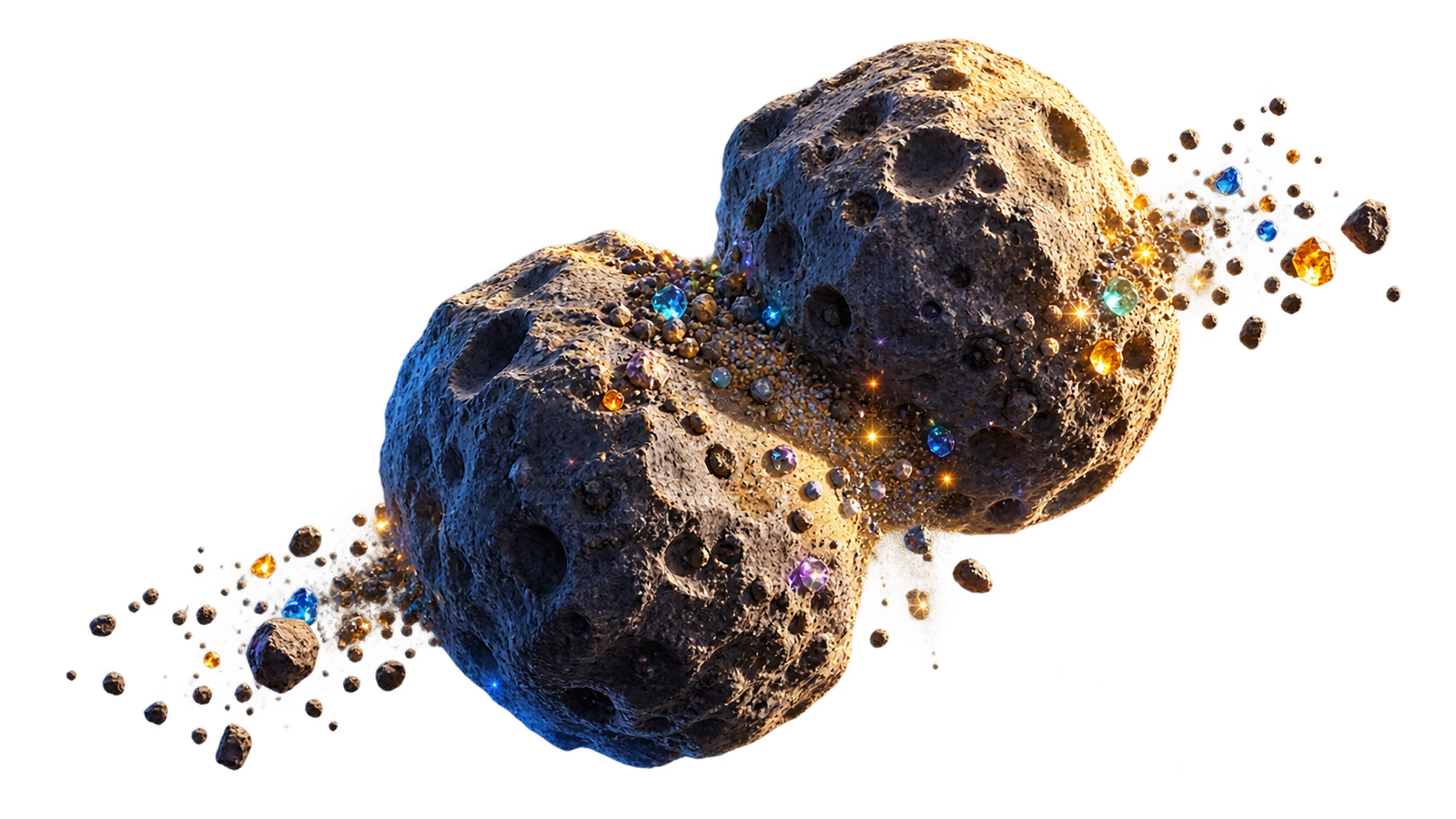
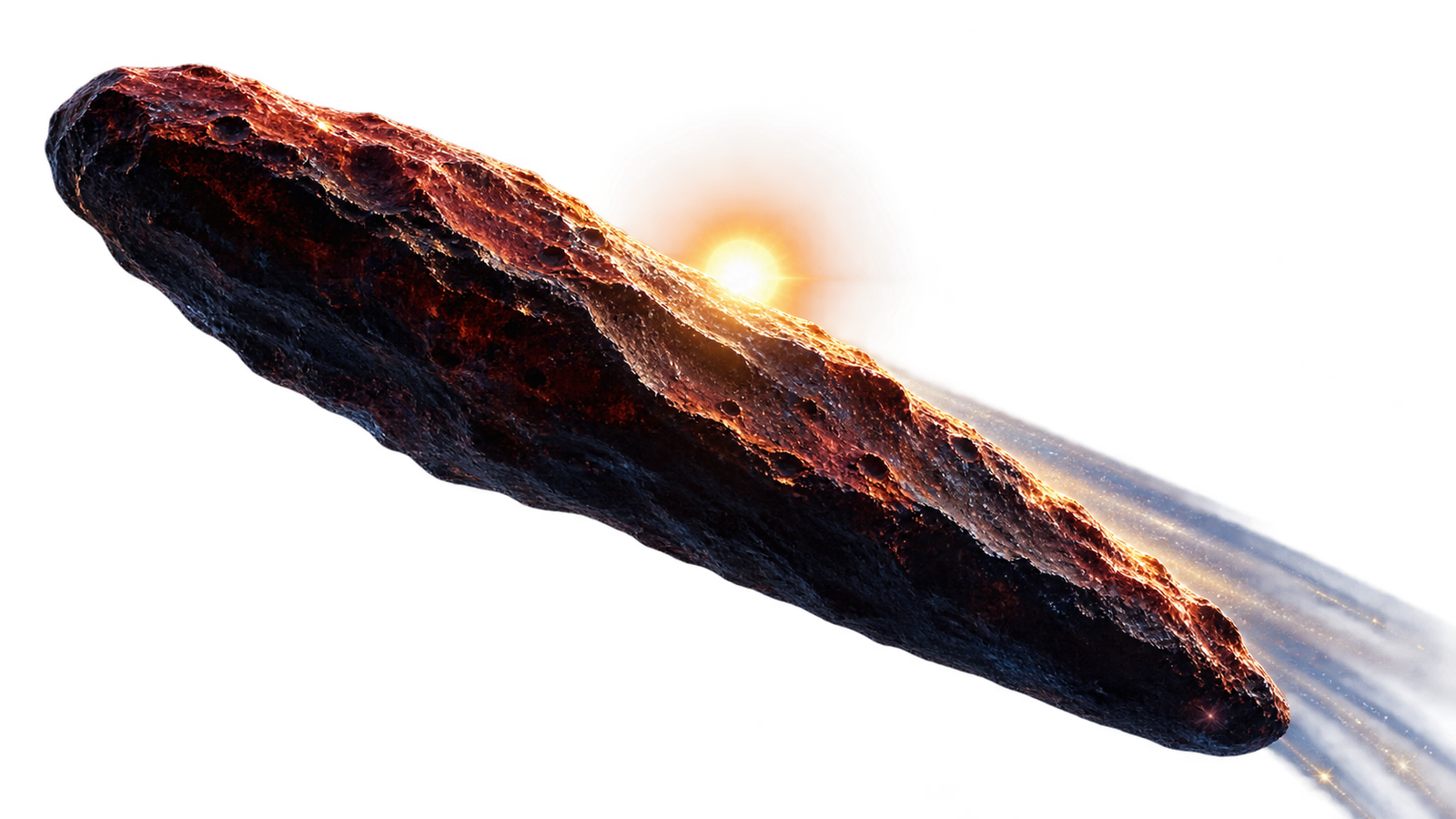
Because it was discovered after its closest approach to the Sun, astronomers could observe it for less than three months. Large swings in its brightness suggested an extremely elongated shape, several to perhaps ten times longer than it was wide, though some researchers argue that a flat, pancake-like shape also fits the data. Its greatest puzzle was a slight non-gravitational acceleration reported in 2018.
Comets are often nudged by escaping gas, yet no coma or tail was detected. Proposed explanations include the escape of hard-to-see hydrogen or nitrogen ice, the release of hydrogen trapped in water ice, and the pressure of sunlight on a very thin body. Speculation about an alien probe attracted attention, but a 2019 review concluded that all observed features are consistent with a natural origin.
199 words ・ CEFR B2
和訳を見る
2017年10月19日、ハワイの望遠鏡が、小さく高速で動く天体を検出しました。その軌道は、この天体が太陽に束縛されていないことを明らかにしました。双曲線の軌道を、太陽に対して秒速約38kmで進むこの天体は、恒星間空間から入ってきて、すでに再び外へ向かっていました。
ハワイ語でおおよそ「遠くから最初にやってきた使者」を意味するオウムアムアと名づけられたこの天体は、初めて確認された恒星間天体でした。太陽に最も近づいた後に発見されたため、天文学者たちは3か月に満たない期間しか観測できませんでした。明るさの大きな変動から、幅の数倍、ひょっとすると10倍ほどの長さをもつ極端に細長い形が示唆されましたが、平たいパンケーキのような形でもデータに合うと主張する研究者もいます。最大のなぞは、2018年に報告された、重力以外による小さな加速でした。
彗星は噴き出すガスに押されることがよくありますが、コマも尾も検出されませんでした。提案されている説明には、見えにくい水素や窒素の氷の蒸発、水の氷に閉じこめられていた水素の放出、とても薄い天体に太陽の光の圧力がかかったこと、などがあります。宇宙人の探査機ではという推測が注目を集めましたが、2019年のレビューは、観測されたすべての特徴が自然の起源と矛盾しないと結論づけました。
4択リーディングクイズ
Q1. Why could astronomers observe 'Oumuamua for less than three months?
Because it was discovered after its closest approach to the Sun, astronomers could observe it for less than three months. とあるので B。
Q2. What does the passage say about the object's shape?
極端に細長い形が示唆されたが、a flat, pancake-like shape also fits the data とあるので C。形の推定には不確かさがある。
Q3. What was the conclusion of the 2019 review?
all observed features are consistent with a natural origin とあるので D。
重要単語
- interstellarC1形容詞恒星間の'Oumuamua was the first interstellar object we found.
 inter-(間の)+stellar(星の)。international(国の間の)と同じ inter-。
 - elongatedC1形容詞細長いThe object seemed very elongated. e-(外へ)+long+-ate。「長く引きのばされた」イメージ。
- accelerationB2名詞加速Its acceleration could not be explained by gravity alone. 動詞 accelerate。車の accelerator(アクセル)。反対は deceleration(減速)。
- trajectoryC1名詞軌道、飛行経路Its trajectory showed it came from outside the solar system. trans-(横切って)+ject(投げる)。投げた物が描く道のり。
- visitorA2名詞訪問者The interstellar visitor left our solar system quickly. visit+-or。天体を「訪問者」にたとえる比喩は科学記事でよく使われる。
- boundB2形容詞束縛された、縛られたThe object was not bound to the Sun. bind(縛る)の過去分詞。be bound to do「きっと~する」、be bound for ~「~行き」と区別。
- consistentB2形容詞矛盾しない、一貫したThe data are consistent with a natural origin. be consistent with ~「~と矛盾しない、一致する」は研究紹介の定番表現。反対は inconsistent。
 入試に出る順の単語帳を印刷する →
 全5561語の「科学英単語カード」で復習する →
 動画でもっと知る
動画は各チャンネルの公式埋め込みで表示しています(YouTube)。
 公式・一次情報をチェック
- 'Oumuamua(NASA Science)science.nasa.gov
- Comet 2I/Borisov(NASA Science)science.nasa.gov
- Comet 3I/ATLAS(NASA Science)science.nasa.gov
 4コマでわかる

このネタ、誰かに教えたくなった?
2017年、太陽系の外からやってきた天体が初めて見つかった。名前はハワイ語で「遠くから最初に来た使者」を意味するオウムアムア。細長い形で、ガスも見えないのに太陽の重力だけでは説明できない加速をしていたらしい。
押すと「マジかリスト」に保存されます
 出典・参考文献(5件)タップで表示
- Meech et al. (2017) A brief visit from a red and extremely elongated interstellar asteroid, Naturedoi.org
- Micheli et al. (2018) Non-gravitational acceleration in the trajectory of 1I/2017 U1 ('Oumuamua), Naturedoi.org
- The 'Oumuamua ISSI Team (2019) The natural history of 'Oumuamua, Nature Astronomydoi.org
- Bergner & Seligman (2023) Acceleration of 1I/'Oumuamua from radiolytically produced H2 in H2O ice, Naturedoi.org
- NASA Science: 'Oumuamuascience.nasa.gov

※本記事は上記の研究・公開資料をもとに、原田英語が独自の言葉で解説したものです。引用は著作権法第32条の範囲で行い、出典を明記しています。画像はすべてオリジナルのイメージです。研究結果には限界や個人差があります。誤りのご指摘は原田英語のお問い合わせフォームから。