宇宙・NASAホント
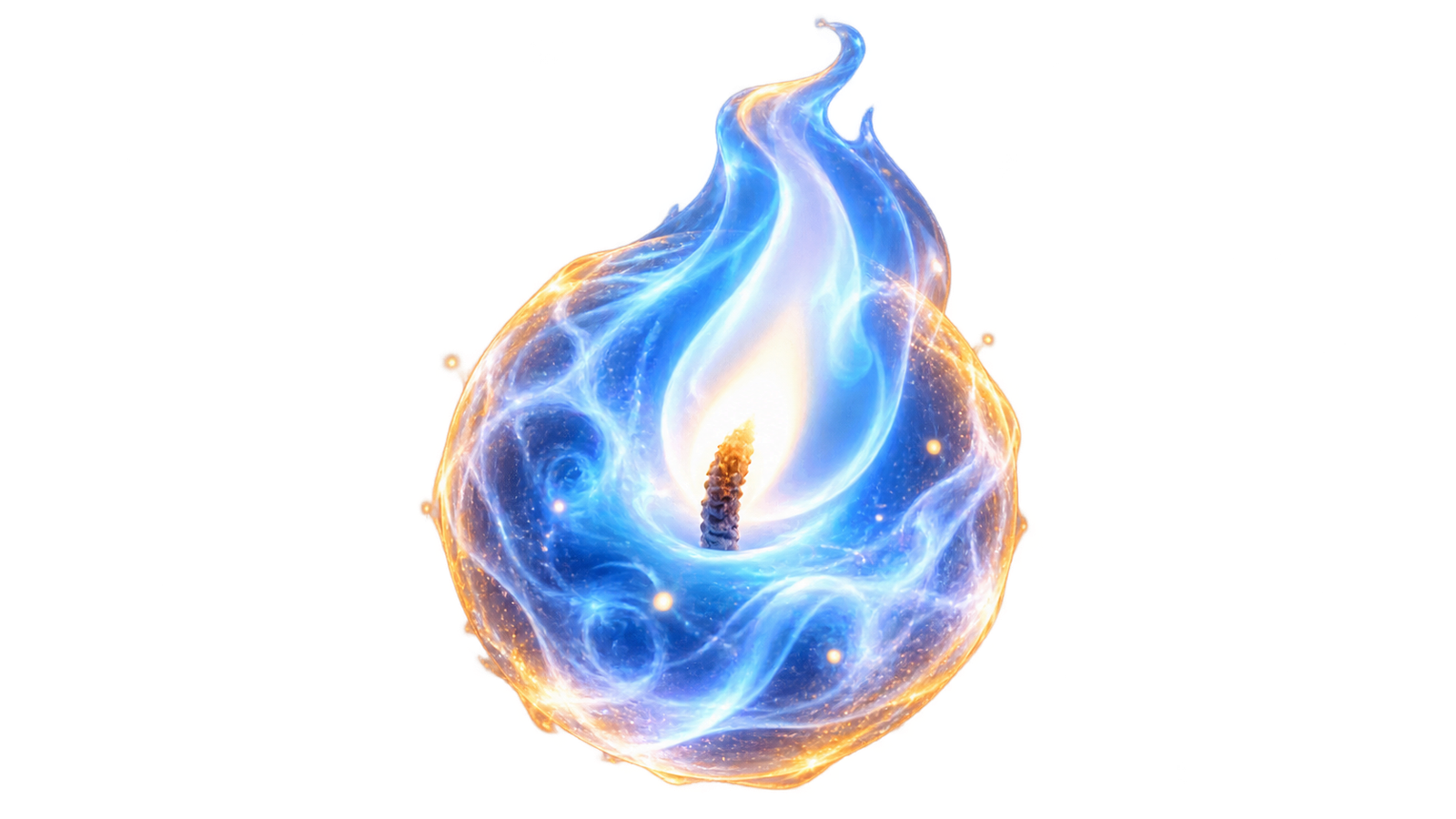
無重力でろうそくを灯すと、炎が「青いまんまる」になる。しかも消えたあとも燃えていた
 2026.10.02
 English Corner(A2〜B2・4択クイズ)
 読む前に予想してみよう!
無重力でも、ろうそくの炎は地上と同じしずく形になる
熱い空気が上にのぼる対流が起きないため、炎は丸くなる。
 研究カード(どんな研究?)
- 対象
- 微小重力下の燃焼
- 規模
- スペースシャトル・ミール・ISSでの実験
- 研究の種類
- 実験研究
- 確かさ
- ★★★★☆
地上の炎がしずく形なのは、温められた空気が上にのぼるから。無重力ではそれが起きず、炎は丸く青白くなる。宇宙の実験では、見えない「冷たい炎」も見つかった。
ひとことで言うと宇宙のろうそくの炎は、青くてまんまる!
ろうそくの炎を思い浮かべてください。上に向かってのびる、オレンジ色のしずく形ですよね。
では、無重力に近い宇宙でろうそくに火をつけたら? 答えは、青くてまんまるな炎です。しかも宇宙の実験では、炎についての常識をくつがえす発見まで飛び出しました。
01炎がしずく形なのは「重力のせい」
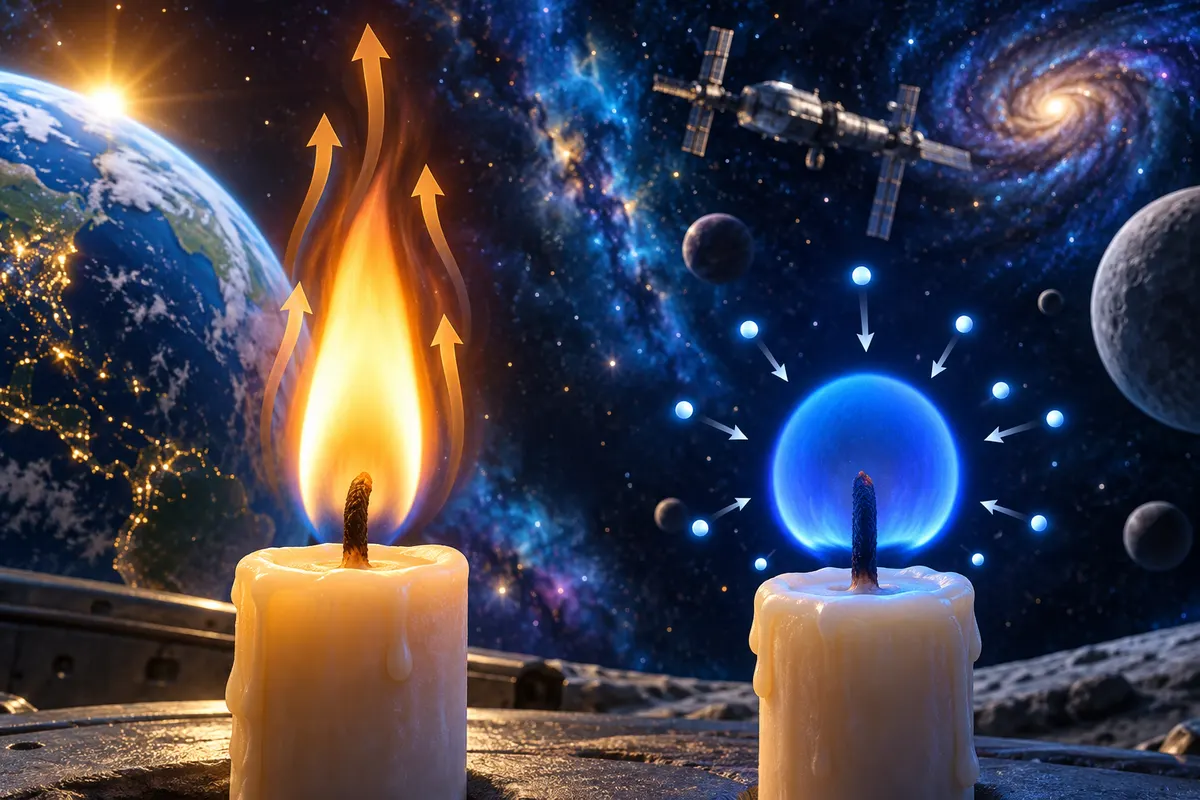
地上でろうそくが燃えると、炎のまわりの空気が温められて軽くなります。軽い空気は上へのぼり、そのあとに下から新しい空気が流れこみます。これが対流です。
この上向きの流れが炎を引きのばし、しずく形を作ります。また、新しい酸素がどんどん運ばれてくるので、炎は勢いよく燃えます。
ところが無重力では、温められた空気も「軽い」「重い」の区別がなくなり、上にのぼりません。そもそも「上」がないのです。
02宇宙の炎は「青くてまんまる」
地上の炎がオレンジ色なのは、燃え残りのすすの粒が熱で光っているからです。宇宙の炎は燃え方がゆっくりで、すすが作られにくいため、青白く見えるのです。
03消えたはずの炎が、燃え続けていた
2012年、国際宇宙ステーション(ISS)で、燃料のしずくを燃やす実験(FLEX)中に不思議なことが起きました。
この発見は、自動車エンジンの効率を上げる研究にもつながると期待されています。
04なぜ宇宙で炎を研究するの?
一番の理由は、宇宙船の火災対策です。宇宙船の中は閉ざされた空間で、逃げ場がありません。重力がない場所で火がどう広がるかを知ることは、命を守ることに直結します。
さらに、対流がない宇宙では、燃焼の基本的なしくみを地上よりシンプルに調べられる、という利点もあります。
05宇宙の火事は気づきにくい?
無重力の炎は小さくて青白く、煙も上にのぼっていきません。そのため、地上と同じ感覚では火事に気づきにくい可能性があります。宇宙船の煙感知器や消火の方法は、こうした宇宙の燃焼研究をもとに工夫されています。
06まとめ
ろうそくの炎がしずく形なのは、重力が作る空気の流れのおかげでした。重力がなければ、炎は青いまんまるになります。
いつも見ている炎の形にも、地球の重力が関わっていた。そう思うと、ろうそく1本でも宇宙を感じられますね。
この研究を英語で読もう原田英語の English CornerWhy is a candle flame on Earth shaped like a teardrop? 音声
音声 4択クイズ9問A2・B1・B2タップして開く
原田英語の English Corner
この研究を英語で読もう
On Earth, a candle flame is orange and shaped like a teardrop. Hot air is light, so it goes up and pulls the flame up. In space, hot air does not go up, because there is no "up."
So a candle flame becomes round and blue. It burns slowly. On the space station, scientists also found a strange flame. It looked like it went out, but it kept burning without light.
71 words ・ CEFR A2
和訳を見る
地球では、ろうそくの炎はオレンジ色で、しずくのような形をしています。熱い空気は軽いので上にのぼり、炎を上に引っぱります。宇宙では「上」がないので、熱い空気はのぼりません。
そのため、ろうそくの炎は丸く青くなります。ゆっくりと燃えます。宇宙ステーションでは、科学者たちは不思議な炎も見つけました。消えたように見えたのに、光を出さずに燃え続けていたのです。
4択リーディングクイズ
Q1. What is the passage mainly about?
宇宙での炎の形や燃え方が主題なので C。
Q2. What does a candle flame look like in space?
a candle flame becomes round and blue とあるので B。
Q3. In the passage, "went out" means the flame ...
go out は火や明かりが「消える」。looked like it went out=消えたように見えた、なので D。
Why is a candle flame on Earth shaped like a teardrop? The air around the flame gets hot and becomes lighter, so it rises, and fresh air flows in from below. This movement, called convection, stretches the flame upward.
In microgravity, however, hot air does not rise, so there is no convection. According to NASA, flames in space become round, blue, and produce little soot. Oxygen reaches them only slowly, so they burn more weakly and much more slowly.
In 2012, an experiment on the International Space Station showed something surprising. A burning fuel droplet seemed to go out, but it kept getting smaller. An invisible "cool flame" was still burning it.
112 words ・ CEFR B1
和訳を見る
なぜ地球のろうそくの炎はしずく形なのでしょうか。炎のまわりの空気は熱くなって軽くなるので上にのぼり、下から新しい空気が流れこみます。対流と呼ばれるこの動きが、炎を上に引きのばすのです。
しかし微小重力では熱い空気がのぼらないので、対流が起きません。NASAによると、宇宙の炎は丸く青くなり、すすをほとんど出しません。酸素はゆっくりとしか届かないので、炎はより弱く、ずっとゆっくり燃えます。
2012年、国際宇宙ステーションでの実験が驚くべきことを示しました。燃えている燃料のしずくが消えたように見えたのに、しずくは小さくなり続けたのです。目に見えない「冷たい炎」が、まだそれを燃やしていました。
4択リーディングクイズ
Q1. What is convection?
熱い空気がのぼり、下から新しい空気が流れこむ動きを convection と呼んでいるので A。
Q2. Why do flames in space burn more weakly?
Oxygen reaches them only slowly, so they burn more weakly とあるので C。
Q3. How did scientists know the droplet was still burning?
消えたように見えたが it kept getting smaller とあり、しずくが減り続けたことから燃焼が続いているとわかったので B。
The familiar teardrop shape of a candle flame is a product of gravity. On Earth, air heated by the flame becomes less dense and rises, drawing in fresh, oxygen-rich air from below. This buoyancy-driven convection stretches the flame upward and keeps it burning vigorously, while glowing particles of soot give it its orange color. In microgravity, heated air has no tendency to rise, so convection disappears.
NASA explains that flames then become nearly spherical, blue, and largely free of soot. Oxygen then arrives only through slow diffusion. Experiments aboard the Space Shuttle and the Russian station Mir confirmed that candle flames in these conditions burn far more slowly and more dimly. An even more surprising discovery came in 2012 during droplet combustion experiments on the International Space Station. A flame burning heptane appeared to go out, yet the droplet continued to shrink.
Researchers concluded that a "cool flame," burning at temperatures far below those of an ordinary flame, was sustaining combustion invisibly. Such behavior is hard to observe on Earth, where buoyancy interferes. Beyond satisfying curiosity, this research matters for spacecraft fire safety, since small, pale flames and smoke that does not rise may be harder to detect.
198 words ・ CEFR B2
和訳を見る
ろうそくの炎のおなじみのしずく形は、重力の産物です。地球では、炎で温められた空気は密度が小さくなってのぼり、下から酸素の豊富な新しい空気を引きこみます。この浮力による対流が炎を上に引きのばして勢いよく燃やし続け、光るすすの粒が炎をオレンジ色にしています。微小重力では、温められた空気がのぼろうとしないので、対流が消えます。
NASAの説明によると、そのとき炎はほぼ球形で青くなり、すすをほとんど含まなくなります。そのとき酸素は、ゆっくりとした拡散によってしか届きません。スペースシャトルやロシアの宇宙ステーション、ミールでの実験で、こうした条件のろうそくの炎ははるかにゆっくり、暗く燃えることが確かめられました。さらに驚くべき発見が、2012年に国際宇宙ステーションでのしずくの燃焼実験中に起きました。ヘプタンを燃やしていた炎が消えたように見えたのに、しずくは縮み続けたのです。研究者たちは、ふつうの炎よりはるかに低い温度で燃える「冷たい炎」が、目に見えないまま燃焼を維持していたと結論づけました。
このような現象は、浮力がじゃまをする地球上では観察しにくいものです。好奇心を満たすだけでなく、この研究は宇宙船の火災安全にとって重要です。小さく青白い炎や、のぼっていかない煙は、見つけにくいかもしれないからです。
4択リーディングクイズ
Q1. According to the passage, what gives an ordinary flame its orange color?
glowing particles of soot give it its orange color とあるので A。
Q2. What is a "cool flame" as described in the passage?
burning at temperatures far below those of an ordinary flame ... invisibly とあるので C。
Q3. Why is this research important for spacecraft safety?
small, pale flames and smoke that does not rise may be harder to detect とあるので B。
重要単語
- flameB1名詞炎The flame turned blue and round in space.
 fire は「火・火事」全体、flame は「炎(1つの火の形)」。flammable(燃えやすい)も覚えよう。
 - buoyancyC1名詞浮力Buoyancy makes hot air rise on Earth. buoy(ブイ)の名詞形。発音は /ˈbɔɪənsi/(ボイアンシー)。形容詞 buoyant は「浮かぶ・好調な」。
- convectionC1名詞対流There is no convection in microgravity. conduction(伝導)・convection(対流)・radiation(放射)の3点セットで。
- diffusionC1名詞拡散Oxygen reaches the flame only by diffusion. 動詞 diffuse。技術や文化の「普及」の意味でも使う(the diffusion of smartphones)。
- combustionC1名詞燃焼Scientists study combustion on the space station. internal combustion engine(内燃機関)は入試頻出。burn の硬い名詞形。
- sootC1名詞すすGlowing soot makes the flame orange. 発音は /sʊt/(スット)。不可算名詞。
- sustainB2動詞維持する、支えるA cool flame sustained the burning. sustainable(持続可能な)の元の動詞。SDGs の S も sustainable。
 入試に出る順の単語帳を印刷する →
 全5561語の「科学英単語カード」で復習する →
 動画でもっと知る
動画は各チャンネルの公式埋め込みで表示しています(YouTube)。
 公式・一次情報をチェック
- Candle Flame – 1g vs Microgravity(NASA)nasa.gov
- Why NASA Is Studying Flames in Space(NASA Science)science.nasa.gov
 4コマでわかる

このネタ、誰かに教えたくなった?
無重力でろうそくを灯すと、炎がしずく形にならず「青いまんまる」になるらしい。理由は、熱い空気が上にのぼる「上」がないから。さらにISSの実験では、炎が消えたように見えた後も、目に見えない「冷たい炎」で燃え続けていた。
押すと「マジかリスト」に保存されます
 出典・参考文献(4件)タップで表示
- Nayagam et al. (2012) Can cool flames support quasi-steady alkane droplet burning?, Combustion and Flamedoi.org
- Dietrich et al. (2022) Can cool flames support candle flame burning in microgravity?, Combustion and Flamedoi.org
- Irace et al. (2021) Observations of long duration microgravity spherical diffusion flames aboard the International Space Station, Combustion and Flamedoi.org
- NASA: Candle Flame – 1g vs Microgravitynasa.gov

※本記事は上記の研究・公開資料をもとに、原田英語が独自の言葉で解説したものです。引用は著作権法第32条の範囲で行い、出典を明記しています。画像はすべてオリジナルのイメージです。研究結果には限界や個人差があります。誤りのご指摘は原田英語のお問い合わせフォームから。