宇宙・NASAホント
彗星の尾は「後ろ」じゃなかった。いつも太陽の反対側を向く、2本の尾のひみつ
 2026.10.02
 English Corner(A2〜B2・4択クイズ)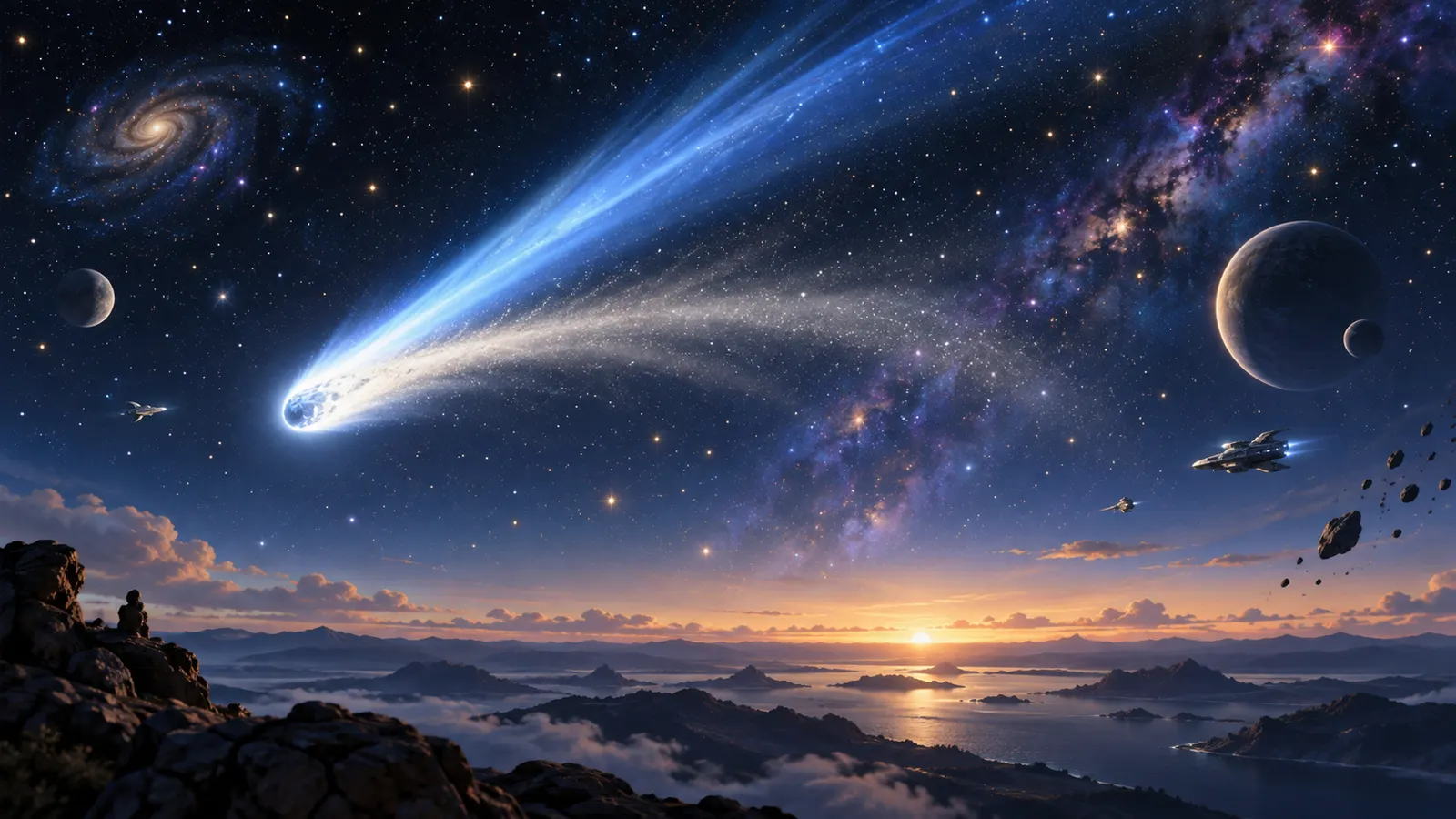
 読む前に予想してみよう!
彗星の尾は、いつも進んでいる方向の後ろにのびる
尾は太陽の反対側を向く。太陽から遠ざかるときは、尾が進行方向の前に出ることもある。
 研究カード(どんな研究?)
- 対象
- 太陽系の彗星
- 規模
- 多数の彗星の観測・探査機
- 研究の種類
- 観測研究
- 確かさ
- ★★★★★
彗星の尾は進む方向の後ろではなく、いつも太陽の反対側を向く。尾は2本あり、ガスの尾は太陽風に、ちりの尾は太陽の光の圧力に押されてできる。
ひとことで言うと彗星のしっぽは、太陽から吹く風でいつも反対側にたなびく!
ほうきのような長い尾をなびかせて夜空に現れる彗星。絵本などでは、尾は進む方向の後ろに描かれることが多いですよね。
ところが、本物の彗星はちがいます。尾はいつも太陽の反対側を向いているのです。だから、太陽から遠ざかっていくときの彗星は、尾を前にして進むこともあります。
01彗星は「よごれた雪だるま」
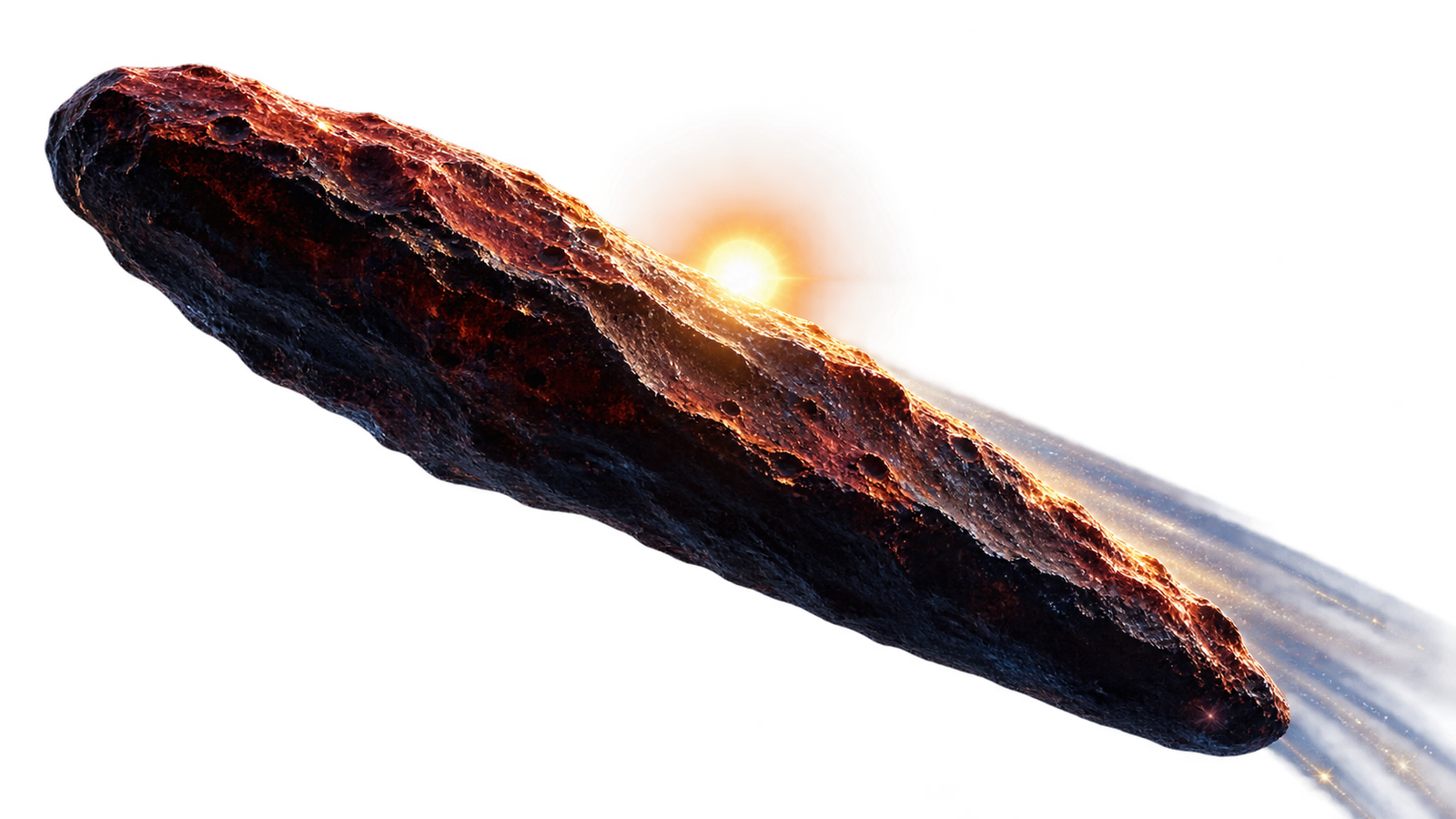
彗星の本体(核)は、氷とちりがまざったかたまりです。大きさは数百m〜数十kmほど。よく「よごれた雪だるま」にたとえられます。
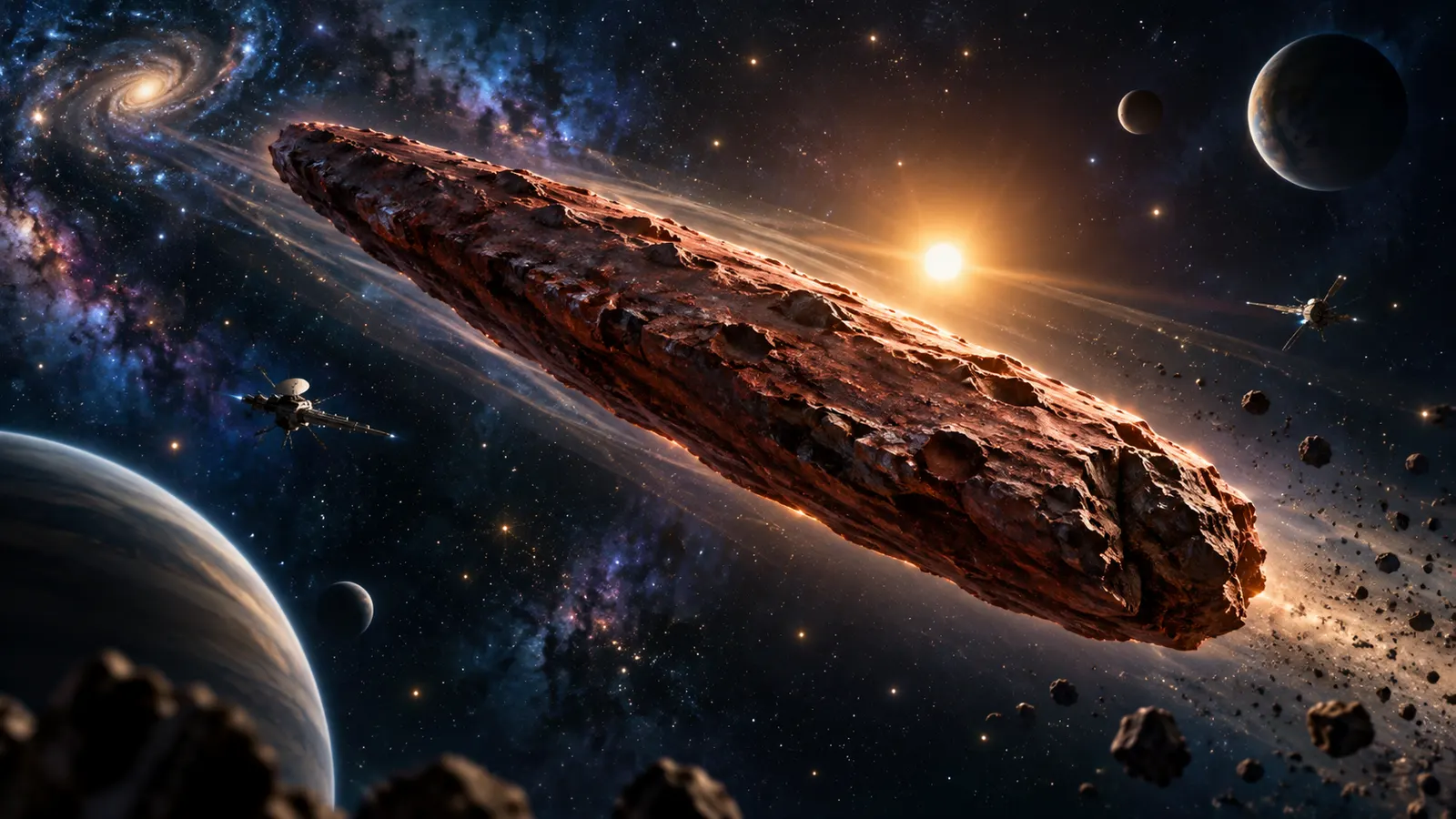
太陽から遠いところでは、ただの冷たいかたまり。でも太陽に近づくと、熱で氷が昇華(固体から直接ガスになること)し、ガスとちりが噴き出して、核のまわりにぼんやりしたコマができます。そこから尾がのびていくのです。
02尾は2本ある
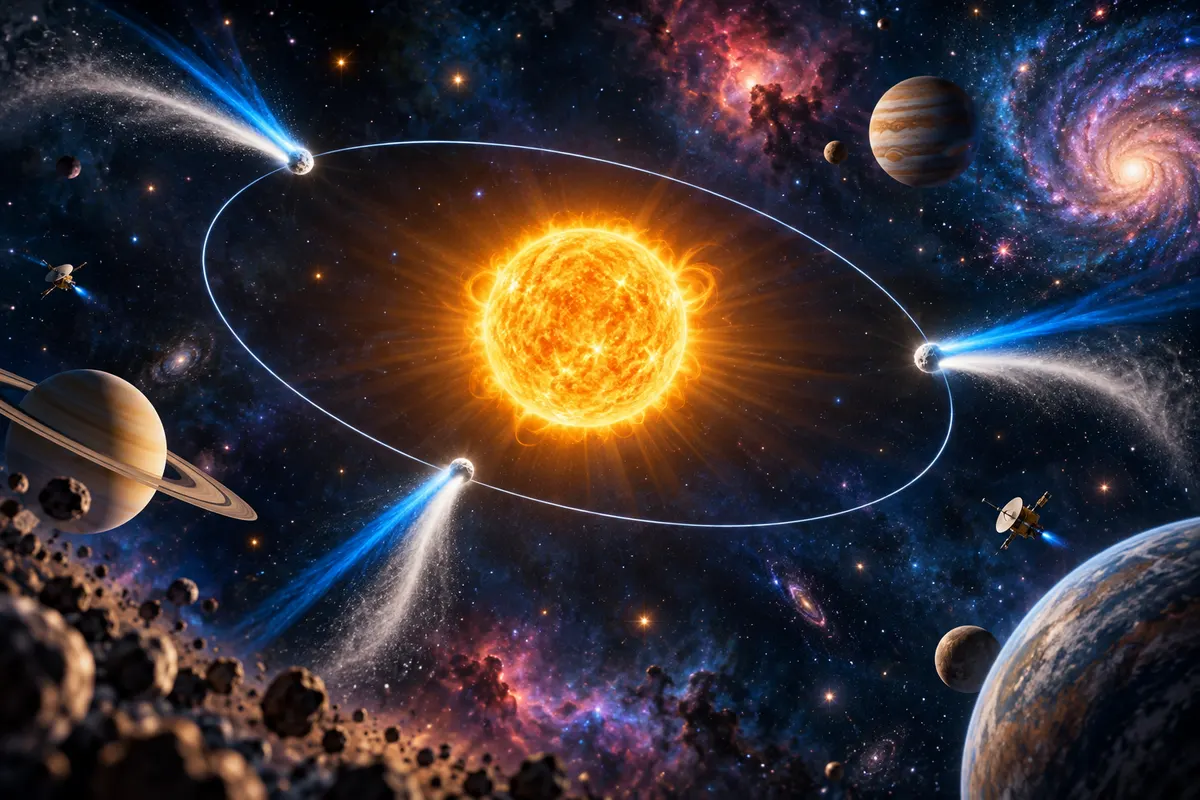
03「太陽風」の発見にもつながった
イオンの尾が太陽のほぼ真反対を向くことは、昔から天文学者の謎でした。光の圧力だけでは、ガスの尾があれほどまっすぐ速く押される説明がつかなかったのです。
1950年代、ドイツの天文学者ビアマンは、太陽から粒子の流れが絶えず吹き出しているのではないかと考えました。これがのちの太陽風の発見へとつながりました。彗星の尾は、目に見える太陽風の吹き流しだったのです。
04尾が3本に見えることも
2023年に話題になったZTF彗星では、尾が3本あるように見えました。ESAによると、これは地球から見る角度によって、ちりの尾の一部が反対方向へのびたように見える現象(アンチテイル)だと説明されています。
05彗星はどこから来るの?
彗星のふるさとは、太陽系の外側の、とても寒い場所だと考えられています。
- 周期の短い彗星:海王星の外側に広がるエッジワース・カイパーベルトなどから来ると考えられています。
- 周期の長い彗星:太陽系をはるか遠くから球の殻のように取り巻くオールトの雲から来ると考えられています。
有名なハレー彗星は、約76年ごとに太陽に近づきます。前回は1986年、次は2061年の予定です。
彗星は、太陽系ができたころの氷やちりを今も残していると考えられています。ESAの探査機ロゼッタは2014〜2016年に、チュリュモフ・ゲラシメンコ彗星を間近で調べ、その素顔を明らかにしました。
彗星が通ったあとに残したちりの帯を、やがて地球が横切ると流星群になります。夜空の流れ星と彗星は、じつは親子のような関係なのです。
06まとめ
彗星の尾は、進む方向の後ろではなく、太陽から吹く風と光に押されて、いつも反対側にたなびくものでした。
次に明るい彗星が見えたら、尾の向きをチェック。そこには、目に見えない太陽風が描いた吹き流しがあります。
この研究を英語で読もう原田英語の English CornerMany people think a comet's tail trails behind it, but it actually always points away from the Sun. 音声
音声 4択クイズ9問A2・B1・B2タップして開く
原田英語の English Corner
この研究を英語で読もう
In picture books, a comet's tail is usually behind it. But this is not true. A comet's tail always points away from the Sun.
So when a comet moves away from the Sun, its tail can be in front of it. A comet is like a dirty snowball. Near the Sun, its ice turns into gas. Most comets have two tails: a blue gas tail and a white dust tail.
70 words ・ CEFR A2
和訳を見る
絵本では、彗星の尾はたいてい後ろにあります。しかし、これは本当ではありません。彗星の尾はいつも太陽の反対側を向いています。
だから彗星が太陽から遠ざかるときは、尾が前にくることもあります。彗星はよごれた雪玉のようなものです。太陽の近くでは、その氷がガスに変わります。ほとんどの彗星には2本の尾があります。青いガスの尾と、白いちりの尾です。
4択リーディングクイズ
Q1. What is the passage mainly about?
彗星の尾がどちらを向くかが主題なので A。
Q2. Where does a comet's tail always point?
A comet's tail always points away from the Sun. とあるので C。
Q3. In the passage, "dust" means ...
dust は「ちり、ほこり」=小さな乾いた粒のこと。B。
Many people think a comet's tail trails behind it, but it actually always points away from the Sun. When a comet is moving away from the Sun, it may even travel tail first. The main body of a comet, called the nucleus, is a mix of ice and dust, often described as a dirty snowball.
As it nears the Sun, the ice turns directly into gas, and gas and dust stream out. Comets usually have two tails. The ion tail is made of electrically charged gas and is pushed straight back by the solar wind. The dust tail is pushed by the pressure of sunlight itself, and because the dust is heavier, this tail gently curves.
116 words ・ CEFR B1
和訳を見る
多くの人は彗星の尾が後ろに引きずられていると思っていますが、実際にはいつも太陽の反対側を向いています。彗星が太陽から遠ざかっているときは、尾を先にして進むことさえあります。核と呼ばれる彗星の本体は氷とちりがまざったもので、よく「よごれた雪玉」とたとえられます。
太陽に近づくと、氷が直接ガスに変わり、ガスとちりが噴き出します。彗星にはふつう2本の尾があります。イオンの尾は電気を帯びたガスでできていて、太陽風によってまっすぐ後ろに押されます。ちりの尾は太陽の光そのものの圧力で押され、ちりは重いので、この尾はゆるやかに曲がります。
4択リーディングクイズ
Q1. What can happen when a comet moves away from the Sun?
When a comet is moving away from the Sun, it may even travel tail first. とあるので B。
Q2. What pushes the ion tail?
The ion tail ... is pushed straight back by the solar wind. とあるので D。光の圧力で押されるのはちりの尾。
Q3. Why does the dust tail curve?
because the dust is heavier, this tail gently curves とあるので A。
Illustrations often show a comet's tail streaming behind it, but in reality the tail always points away from the Sun. A comet receding from the Sun can therefore travel tail first. The nucleus, often called a dirty snowball, is a lump of ice and dust ranging from a few hundred meters to tens of kilometers across.
When it approaches the Sun, its ice sublimates, turning directly from solid to gas, and a hazy cloud called a coma forms. Two distinct tails then develop. The ion tail consists of gas that sunlight has electrically charged; carried by the solar wind and its magnetic field, it extends almost directly away from the Sun and often appears bluish. The dust tail forms when sunlight itself exerts radiation pressure on dust grains.
Because these grains are heavier and also retain some of the comet's orbital motion, the dust tail curves gently and looks white or cream-colored. Comet tails have also shaped science: in the 1950s, astronomer Ludwig Biermann argued that light pressure alone could not explain how fast ion tails were pushed, proposing instead a constant stream of particles from the Sun. This idea led to the discovery of the solar wind.
198 words ・ CEFR B2
和訳を見る
イラストではよく、彗星の尾が後ろへたなびいて描かれますが、実際には尾はいつも太陽の反対側を向いています。そのため、太陽から遠ざかる彗星は尾を先にして進むことがあります。よく「よごれた雪玉」と呼ばれる核は、直径数百mから数十kmの氷とちりのかたまりです。太陽に近づくと、その氷は昇華、つまり固体から直接気体に変わり、コマと呼ばれるぼんやりした雲ができます。
そして性質の違う2本の尾が発達します。イオンの尾は、太陽の光によって電気を帯びたガスでできています。太陽風とその磁場に運ばれて、太陽のほぼ真反対にのび、しばしば青っぽく見えます。ちりの尾は、太陽の光そのものがちりの粒に放射圧を及ぼすことでできます。
これらの粒は重く、彗星の軌道運動の一部も保っているため、ちりの尾はゆるやかに曲がり、白やクリーム色に見えます。彗星の尾は科学にも影響を与えてきました。1950年代、天文学者ルートヴィヒ・ビアマンは、光の圧力だけではイオンの尾がどれほど速く押されるかを説明できないと主張し、代わりに太陽から粒子が絶えず流れ出していると提案しました。この考えが太陽風の発見につながったのです。
4択リーディングクイズ
Q1. What does "sublimates" mean in the passage?
直後に turning directly from solid to gas と言い換えられているので B。
Q2. Why does the dust tail curve, according to the passage?
Because these grains are heavier and also retain some of the comet's orbital motion, the dust tail curves とあるので C。
Q3. How did comet tails contribute to science?
ビアマンがイオンの尾の動きから太陽粒子の流れを提案し、This idea led to the discovery of the solar wind. とあるので A。
重要単語
- cometB2名詞彗星A comet grows a tail when it nears the Sun.
 ギリシャ語で「長い髪の(星)」が語源。尾を髪にたとえた。asteroid(小惑星)と区別。
 - solar windC1名詞(句)太陽風The solar wind pushes the ion tail away from the Sun. solar は「太陽の」(solar panel, solar system)。lunar(月の)とセットで覚える。
- nucleusC1名詞核(彗星の本体)The nucleus of a comet is made of ice and dust. 複数形は nuclei。細胞核・原子核にも使う。形容詞 nuclear。
- radiation pressureC1名詞(句)放射圧(光が物を押す力)Radiation pressure pushes the dust tail. 光にもわずかに「押す力」があることを表す物理用語。radiation は放射。
- orbitB2名詞・動詞軌道/周回するThe comet follows a long, stretched orbit. in orbit「軌道上で」。The Moon orbits the Earth. のように動詞でも使う。
- exertC1動詞(力・影響を)及ぼすSunlight exerts pressure on dust grains. exert pressure / influence on ~「~に圧力・影響を及ぼす」の形で入試頻出。
- trailB2動詞・名詞後ろに引きずる、たなびく/跡Many people think a comet's tail trails behind it. 名詞では「小道、跡」(hiking trail)。動詞では「後を追う、遅れをとる」の意味もある。
 入試に出る順の単語帳を印刷する →
 全5561語の「科学英単語カード」で復習する →
 動画でもっと知る
動画は各チャンネルの公式埋め込みで表示しています(YouTube)。
 公式・一次情報をチェック
- What Is a Comet?(NASA Space Place)spaceplace.nasa.gov
- Comet ZTF and its apparent three tails(ESA)esa.int
このネタ、誰かに教えたくなった?
彗星の尾は「進む方向の後ろ」にのびると思ってた。でも実は、いつも太陽の反対側を向くらしい。太陽から遠ざかるときは、尾を前にして進むことも。しかも尾は2本あって、青いガスの尾とクリーム色のちりの尾。
押すと「マジかリスト」に保存されます
 出典・参考文献(4件)タップで表示

※本記事は上記の研究・公開資料をもとに、原田英語が独自の言葉で解説したものです。引用は著作権法第32条の範囲で行い、出典を明記しています。画像はすべてオリジナルのイメージです。研究結果には限界や個人差があります。誤りのご指摘は原田英語のお問い合わせフォームから。