睡眠・休息ホント
眠れない夜は「ベッドから出る」が正解。不眠治療の第一選択CBT-Iの意外なルール
 2026.10.02
 English Corner(A2〜B2・4択クイズ)
 読む前に予想してみよう!
眠れない時は、眠くなるまでベッドで頑張って横になるのが正解
ベッドで眠れずに過ごす時間が長いと「ベッド=眠れない場所」と脳が覚えてしまうため、一度ベッドを出るのが勧められる。
 研究カード(どんな研究?)
- 対象
- 慢性不眠症の成人
- 規模
- 20研究・1,162人(CBT-Iのメタ分析)
- 研究の種類
- ランダム化比較試験のメタ分析+診療ガイドライン
- 確かさ
- ★★★★☆
不眠の治療で最初に勧められるのは、薬ではなく「認知行動療法(CBT-I)」。眠れない時はベッドを出て、ベッド=眠る場所と脳に覚え直させる。
ひとことで言うと眠れない時は、無理にベッドにいないほうが眠れるようになる!
眠れない夜。時計を見ると、もう深夜2時。「早く寝なきゃ」と焦るほど目がさえて、布団の中で何度も寝返りを打つ――。
そんなとき、多くの人は「とにかく横になっていれば、そのうち眠れるはず」と布団の中で粘ります。でも実は、不眠の専門的な治療では、「眠れないなら、いったんベッドから出なさい」と教えられます。
え、逆じゃないの? と思いますよね。そこには、脳の「覚え方」に関する、ちゃんとした理由があるんです。
01不眠治療の「第一選択」は、薬ではなかった
CBT-I(シービーティー・アイ)は、Cognitive Behavioral Therapy for Insomniaの略。「睡眠についての考え方(認知)」と「睡眠にまつわる習慣(行動)」を少しずつ変えていく治療法です。その中心的なテクニックのひとつが、今回紹介する「刺激制御法」です。
02脳は「ベッド=眠れない場所」と覚えてしまう
パブロフの犬の話を知っていますか? ベルを鳴らしてからエサをあげることをくり返すと、犬はベルの音だけでよだれを出すようになった、という有名な実験です。脳は、いっしょに起きる出来事をセットで覚えてしまう性質があります。
これがベッドでも起きます。
- ベッドでスマホを見る
- ベッドで勉強や仕事をする
- ベッドで「眠れない…」と悩みながら何時間も過ごす
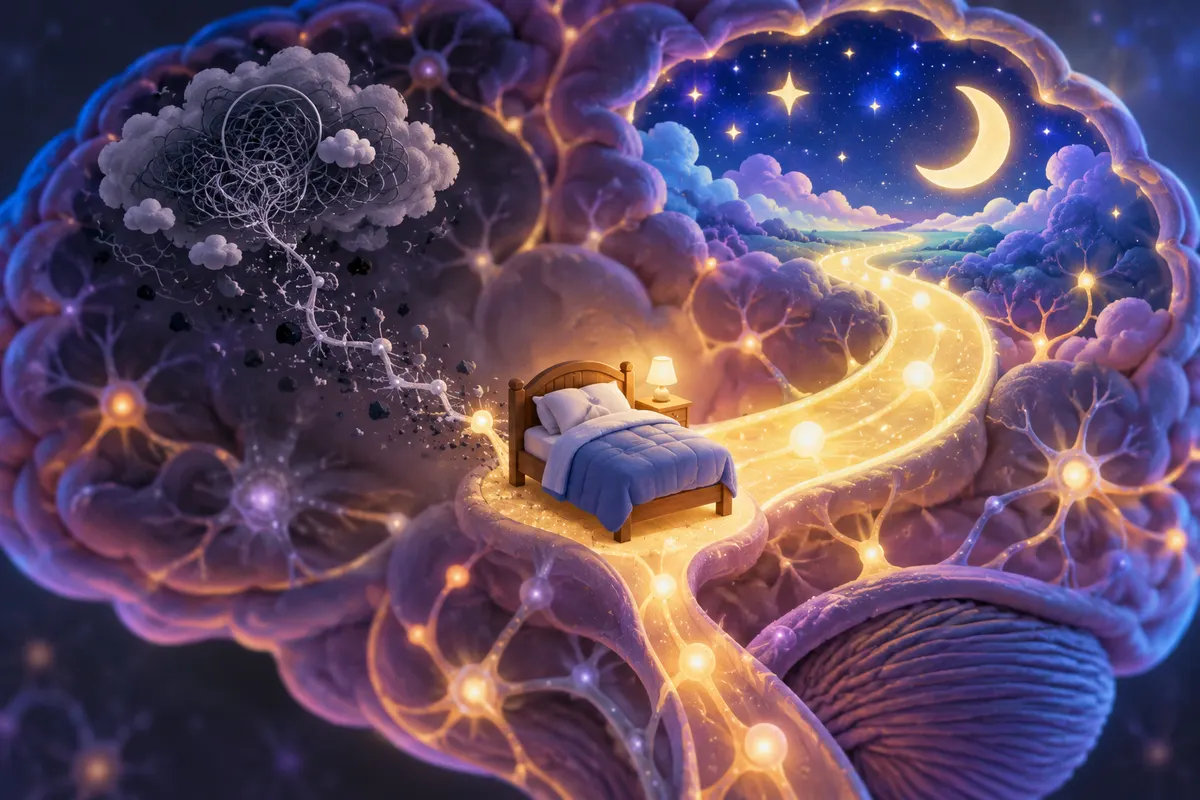
これをくり返すと、脳は「ベッド=起きて考えごとをする場所」と覚えてしまう。すると、ベッドに入った瞬間に目がさえる、という悪循環が生まれます。
刺激制御法は、1970年代にアメリカの心理学者ブーツィン(Bootzin)が提案したもので、この結びつきを「ベッド=すぐ眠れる場所」に覚え直させることを目指します。
実際に効くのでしょうか。ブーツィンさんも加わったアメリカのEpsteinさんらは2012年、『Sleep』誌で、慢性の不眠に悩む高齢者179人をくじ引きで「刺激制御法」「睡眠制限法」「その2つの組み合わせ」「順番待ち(治療なし)」に分けて6週間の治療を行いました。すると、刺激制御法だけでも、治療なしのグループに比べて睡眠日記の結果がはっきり改善し、その効果は1年後まで続いていました。
アメリカ睡眠医学会の2021年のガイドラインでも、刺激制御法は単独で使う治療としても「条件付きで推奨」されています(いちばん強く推奨されているのは、いくつもの方法を組み合わせたCBT-I)。
03刺激制御法の主なルール
最初のうちは「ベッドを出たら余計に眠れなくなるのでは」と不安になるかもしれません。実際、始めて数日はむしろ寝不足になることもあります。でも続けるうちに眠気がたまり、ベッドに入るとすぐ眠れる日が増えていく――というのが、この方法のねらいです。
「目を閉じて横になっているだけでも、体は休まるから大丈夫」とよく言われます。体が休まることは確かにありますが、不眠で悩んでいる人の場合、眠れないままベッドにいる時間が長いほど不眠が固定化しやすい、というのがCBT-Iの考え方です。
04まとめ
眠れない夜にベッドで粘るのは、脳に「ここは眠れない場所」と教え込む練習になってしまうことがあります。
ベッドは、眠るためだけの特別な場所。今夜から、スマホと考えごとは寝室の外に置いて、ベッドを「眠りの聖地」にしてみませんか?
この研究を英語で読もう原田英語の English CornerIf you cannot sleep, staying in bed and trying harder may actually make things worse. 音声
音声 4択クイズ9問A2・B1・B2タップして開く
原田英語の English Corner
この研究を英語で読もう
When you cannot sleep at night, what do you do? Many people stay in bed and wait. But doctors who treat sleep problems say, "Get out of bed." Our brains learn to connect places with actions.
If you often worry or use your phone in bed, your brain learns that the bed is a place for being awake. So, use your bed only for sleep. If you cannot sleep, go to another room and come back when you feel sleepy.
80 words ・ CEFR A2
和訳を見る
夜眠れないとき、あなたはどうしますか?多くの人はベッドにいたまま待ちます。しかし、睡眠の問題を治療する医師たちは「ベッドから出なさい」と言います。私たちの脳は、場所と行動を結びつけて覚えます。
ベッドでよく悩んだりスマホを使ったりすると、脳はベッドを起きているための場所だと覚えてしまいます。だから、ベッドは眠るためだけに使いましょう。眠れないときは別の部屋に行き、眠くなったら戻りましょう。
4択リーディングクイズ
Q1. What is the main idea of the passage?
医師が Get out of bed. と勧め、眠れないときは別の部屋に行くよう説明しているので B。
Q2. According to the passage, what should you do if you cannot sleep?
If you cannot sleep, go to another room and come back when you feel sleepy. とあるので C。
Q3. In this passage, "connect" means ...
connect places with actions は「場所と行動を結びつける」という意味なので D。
If you cannot sleep, staying in bed and trying harder may actually make things worse. In 2016, the American College of Physicians recommended cognitive behavioral therapy for insomnia, called CBT-I, as the first treatment for adults with long-term sleep problems. It comes before sleeping pills.
One of its main techniques is stimulus control. The idea is simple. The brain links places with what usually happens there. If you often check your phone, study, or lie awake worrying in bed, your brain learns that the bed is a place for being awake.
Stimulus control tries to change this link with three rules. Go to bed only when you feel sleepy. Leave the bed if you are still awake. And get up at the same time every morning.
126 words ・ CEFR B1
和訳を見る
眠れないとき、ベッドにとどまってもっと頑張ろうとすると、実はかえって悪化することがあります。2016年、アメリカ内科学会は、長期的な睡眠の問題を抱える大人への最初の治療として、CBT-Iと呼ばれる不眠の認知行動療法を推奨しました。睡眠薬よりも先に行うものです。
その主なテクニックの一つが刺激制御法です。考え方はシンプルです。脳は、場所とそこでふだん起こることを結びつけます。ベッドでよくスマホを見たり、勉強したり、悩みながら眠れずに横になっていたりすると、脳はベッドを起きているための場所だと覚えてしまいます。
刺激制御法は、3つのルールでこの結びつきを変えようとします。眠いと感じたときだけベッドに入ること。まだ眠れなければベッドを離れること。そして、毎朝同じ時刻に起きることです。
4択リーディングクイズ
Q1. What did the American College of Physicians recommend as the first treatment?
recommended cognitive behavioral therapy for insomnia, called CBT-I, as the first treatment とあるので D。
Q2. Which is NOT a rule of stimulus control mentioned in the passage?
ベッドで勉強することは、むしろ「起きている場所」と覚えさせる悪い例として挙げられている。正解は D。
Q3. What can we infer about lying awake in bed for a long time?
ベッドで悩みながら起きていると脳はベッドを起きている場所と学ぶ、とあるので C。
Lying in bed and waiting for sleep seems sensible, yet sleep specialists often advise the opposite. In 2016, the American College of Physicians strongly recommended cognitive behavioral therapy for insomnia (CBT-I) as the initial treatment for chronic insomnia in adults, with medication considered only if it proves insufficient. A 2015 meta-analysis of 20 studies involving 1,162 people found that CBT-I shortened the time needed to fall asleep by about 19 minutes and reduced time awake during the night by about 26 minutes.
A core component is stimulus control, which is based on the principle that the brain associates places with the activities that occur there. When the bed is repeatedly used for scrolling, studying or worrying, it becomes a cue for wakefulness. Patients are therefore told to go to bed only when sleepy, leave the bedroom when they cannot sleep, and wake at a fixed time. A 2012 trial with 179 older adults found that stimulus control alone clearly improved sleep diaries. However, the method may increase sleepiness at first, and its effect probably reflects growing sleep pressure as well as relearning.
182 words ・ CEFR B2
和訳を見る
ベッドに横になって眠りを待つのは理にかなっているように思えますが、睡眠の専門家はしばしば逆のことを勧めます。2016年、アメリカ内科学会は、大人の慢性不眠に対する最初の治療として不眠の認知行動療法(CBT-I)を強く推奨し、薬はそれで不十分な場合にのみ検討するとしました。1,162人を含む20研究の2015年のメタ分析では、CBT-Iによって眠りにつくまでの時間が約19分、夜中に起きている時間が約26分短くなりました。
中心的な要素の一つが刺激制御法で、これは脳が場所とそこで行われる活動を結びつけるという原理に基づいています。ベッドが何度もスマホの閲覧や勉強、悩みごとに使われると、ベッドは覚醒の合図になってしまいます。そのため患者は、眠いときだけベッドに入り、眠れなければ寝室を離れ、決まった時刻に起きるよう指導されます。179人の高齢者を対象とした2012年の試験では、刺激制御法だけでも睡眠日誌の結果がはっきり改善しました。ただし、この方法ははじめは眠気を強めることがあり、その効果は覚え直しだけでなく、睡眠圧の高まりも反映していると考えられます。
4択リーディングクイズ
Q1. What is the passage mainly about?
CBT-Iとその中心的要素である刺激制御法(眠れなければ寝室を出る)が全体のテーマなので D。
Q2. According to the 2015 meta-analysis, how much did CBT-I reduce time awake during the night?
reduced time awake during the night by about 26 minutes とあるので B。19分は寝つくまでの時間の短縮。
Q3. What does the author suggest in the last sentence?
its effect probably reflects growing sleep pressure as well as relearning とあり、効果の一部は睡眠圧の高まりによると示唆しているので C。
重要単語
- insomniaC1名詞不眠症Chronic insomnia can last for months.
 in-(否定)+somnus(眠り)。somnambulism(夢遊病)と同じ語根。
 - stimulusC1名詞刺激(複数形 stimuli)For some people, the bed becomes a stimulus for worry. 複数形 stimuli /ˈstɪmjəlaɪ/ が入試で問われやすい。動詞は stimulate。
- associationB2名詞結びつき、連想We want a strong association between bed and sleep. associate A with B「AをBと結びつけて考える」は入試の超頻出構文。
- first-lineC1形容詞第一選択の、最初に行うCBT-I is a first-line treatment for insomnia. 医療ニュースの定番。first-line treatment「第一選択の治療」の形で覚える。
- guidelineB2名詞指針、ガイドラインThe guideline was written by a group of experts. 複数形 guidelines で使うことが多い。follow the guidelines「指針に従う」。
- chronicB2形容詞慢性のShe has suffered from chronic back pain for years. chrono-(時間)が語源。反意語は acute(急性の)。
- cognitiveC1形容詞認知のCognitive behavioral therapy changes how we think and act. cognition(認知)の形容詞形。recognize(認識する)と同じ語根 -cogn-。
 入試に出る順の単語帳を印刷する →
 全5561語の「科学英単語カード」で復習する →
 動画でもっと知る
動画は各チャンネルの公式埋め込みで表示しています(YouTube)。
この話題を TED で聞く
同じテーマの TED・TED-Ed を、 TED HACK で。英語の見どころ・使える表現・学習ミッションつきの日本語ガイドです。(運営:原田英語)

 公式・一次情報をチェック
- Insomnia - Treatment(NIH 国立心肺血液研究所)nhlbi.nih.gov
- 不眠症(厚生労働省 e-ヘルスネット)kennet.mhlw.go.jp
このネタ、誰かに教えたくなった?
眠れない夜、布団の中でゴロゴロ粘るのは逆効果らしい。不眠治療の第一選択とされる「CBT-I」では、眠れなければ一度ベッドを出るのがルール。脳に「ベッド=眠る場所」と覚え直させるためなんだとか。
押すと「マジかリスト」に保存されます
 出典・参考文献(4件)タップで表示
- Qaseem et al. (2016) Management of Chronic Insomnia Disorder in Adults: A Clinical Practice Guideline From the American College of Physicians, Annals of Internal Medicinedoi.org
- Edinger et al. (2021) Behavioral and psychological treatments for chronic insomnia disorder in adults: an American Academy of Sleep Medicine clinical practice guideline, Journal of Clinical Sleep Medicinedoi.org
- Trauer et al. (2015) Cognitive Behavioral Therapy for Chronic Insomnia: A Systematic Review and Meta-analysis, Annals of Internal Medicinedoi.org
- Epstein et al. (2012) Dismantling multicomponent behavioral treatment for insomnia in older adults: a randomized controlled trial, Sleepdoi.org

※本記事は上記の研究・公開資料をもとに、原田英語が独自の言葉で解説したものです。引用は著作権法第32条の範囲で行い、出典を明記しています。画像はすべてオリジナルのイメージです。研究結果には限界や個人差があります。誤りのご指摘は原田英語のお問い合わせフォームから。