

 心理学ホント
【同志社の入試に出た】サンタの正体を知った子どもより、親のほうが悲しんでいた
 2026.10.02
 English Corner(A2〜B2・4択クイズ)

 読む前に予想してみよう!
サンタの正体を知った子どもの多くは、ショックで強く落ち込んでいた
ある研究では、子どもの反応は主に前向きで、悲しんだと答えたのはむしろ親のほうだった。
 研究カード(どんな研究?)
- 対象
- サンタを信じなくなった子どもと親
- 規模
- 子ども52人ほか
- 研究の種類
- 面接・質問紙調査
- 確かさ
- ★★☆☆☆
サンタの正体を知った子どもたちに聞くと、多くは前向きな反応だった。親のほうは「悲しかった」と答えていた。平均7歳ごろ、自分で気づくことが多い。
ひとことで言うとサンタの正体を知ったとき、悲しかったのは子どもより親のほうだったらしい!
「サンタさんって、本当はいないの?」
いつか必ずやってくるこの瞬間。親としては「夢を壊してしまった」と胸が痛む場面ですよね。では、真実を知った子どもの側は、実際どう感じているのでしょうか?
意外にも、その答えを調べた心理学の研究があります。「サンタクロースがいるという嘘が子どもに与える影響」は、2026年度の同志社大学(2月9日実施)の英語で長文のテーマになりました(代々木ゼミナールの解答速報・概評で確認)。
01真実を知った子どもたちに聞いてみた
夢の終わりを悲しんでいたのは、実は大人のほうだったのかもしれません。
02「物理的にムリ」に気づく力
では、子どもがサンタを疑い始めるとき、頭の中ではどんな力が働いているのでしょう。
2015年の研究タイトルは、そのものずばり「物理的に何が可能かの理解が、サンタへの信じ方を制限する」。サンタとは関係のない出来事で、可能なことと物理的にありえないことを見分けるのが得意な子ほど、サンタの「一晩で世界中の子どもを回る」といった離れ業に疑問をもち、仕組みを考えようとする傾向があったというのです。
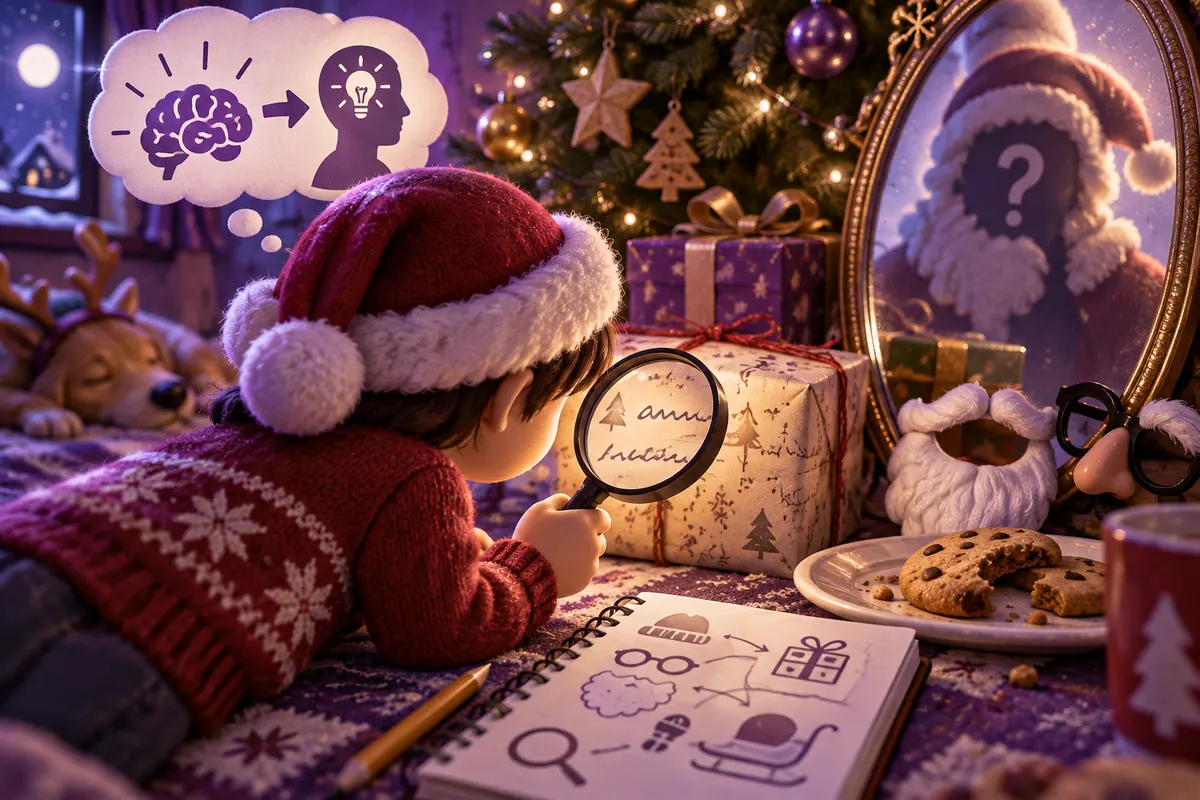
つまり、サンタを疑い始めることは、論理的に考える力の育ちとつながっているのかもしれません。名探偵のように証拠を集め、「やっぱりおかしい」と結論を出す。子どもにとって、それはちょっとした知的な勝利なのかもしれません。
03親は「サンタのうそ」をどう考えている?
親の側を調べた研究もあります。2016年には、親がどれくらいサンタを信じるよう働きかけているかと、子どもがサンタ役の人に実際に会ったときの様子が調べられました。
さらに2026年の研究では、合計700人以上の親を調べ、多くの親がサンタのうそを「許される」と考え、よくついていることが報告されました。同時に、サンタのうそをよくつく親ほど、ほかの種類のうそ(目的のためのうそや、相手を思ってのうそ)も多く、子どもにうそを勧めることも多い傾向が見られたといいます。「正直が大切」と教えながらうそをつく――研究者たちは、このねじれをもっと考えるべきだと問いかけています。
04まとめ
サンタの正体を知る日は、夢が終わる日ではなく、子どもが「自分で考えて真実にたどり着いた日」なのかもしれません。
もし子どもに聞かれたら、責めずに「よく気づいたね」と、その推理力をほめてあげるのもひとつの方法です。そして今度は、子どもがサンタを届ける側になる番です。
この研究を英語で読もう原田英語の English CornerHow do children feel when they discover that Santa Claus is not real? 音声
音声 4択クイズ9問A2・B1・B2タップして開く
原田英語の English Corner
この研究を英語で読もう
When children learn the truth about Santa Claus, are they sad? Researchers in the US asked 52 children who no longer believed in Santa. Most of them found out the truth by themselves at about age seven. The children's feelings were mostly positive.
But many parents said they felt sad. So the grown-ups were sadder than the children! Finding the truth may also show that a child is learning to think carefully.
72 words ・ CEFR A2
和訳を見る
子どもがサンタクロースの真実を知ったとき、悲しむのでしょうか。アメリカの研究者たちは、もうサンタを信じていない52人の子どもに尋ねました。その多くは、7歳ごろに自分で真実に気づいていました。子どもたちの気持ちはおおむね前向きでした。
しかし、多くの親は悲しかったと言いました。つまり、子どもより大人のほうが悲しんでいたのです!真実に気づくことは、子どもが注意深く考えられるようになってきたことを示しているのかもしれません。
4択リーディングクイズ
Q1. What is the passage mainly about?
サンタの真実を知ったときの子どもと親の気持ちを比べた研究の話なので D。
Q2. At about what age did most of the children find out the truth?
Most of them found out the truth by themselves at about age seven. とあるので A。
Q3. In this passage, "grown-ups" means ...
grow up(成長する)から grown-up は「大人」。前の文の parents を言い換えているので B。
How do children feel when they discover that Santa Claus is not real? In a 1994 study, Anderson and Prentice interviewed 52 children who no longer believed in Santa, and the children's parents answered questionnaires. On average, the children learned the truth at around age seven, usually by working it out on their own.
Their reactions were mostly positive, while many parents reported feeling sad. A 2015 study looked at what lies behind children's doubts about Santa. Children who could better tell impossible events from possible ones, even events unrelated to Santa, tended to be more skeptical about Santa's feats. So finding out the truth may be a sign that a child's reasoning skills are growing.
116 words ・ CEFR B1
和訳を見る
子どもは、サンタクロースが実在しないと知ったとき、どのように感じるのでしょうか。1994年の研究で、アンダーソンとプレンティスは、もうサンタを信じていない52人の子どもに面接をし、その子どもたちの親はアンケートに答えました。平均すると、子どもたちは7歳ごろに、たいていは自分で考えて真実を知りました。
子どもたちの反応はおおむね前向きでしたが、多くの親は悲しかったと答えました。2015年の研究は、子どもがサンタを疑う背景に何があるのかを調べました。サンタとは関係のない出来事でも、可能なことと不可能なことをよく見分けられる子どもほど、サンタの離れ業に懐疑的になる傾向がありました。つまり、真実に気づくことは、子どもの推論する力が育っていることのしるしなのかもしれません。
4択リーディングクイズ
Q1. How was information collected from the parents?
the children's parents answered questionnaires とあるので B。面接を受けたのは子どものほう。
Q2. Which children tended to be more skeptical about Santa?
Children who could better tell impossible events from possible ones ... tended to be more skeptical とあるので C。
Q3. What does the passage suggest about learning the truth?
最終文 finding out the truth may be a sign that a child's reasoning skills are growing と一致するので D。
In 1994, Anderson and Prentice interviewed 52 children who had stopped believing in Santa Claus and surveyed their parents. The children had typically found out at about age seven, mostly through their own detective work. Their reactions were largely positive. Many of the parents, by contrast, reported feeling sad, so children seem to cope with the truth better than their parents do. The 1994 data depended on people recalling past feelings, and like most work in this area, the study drew on a limited population.
Later research examined what lies behind children's doubts. A 2015 study found that children who could better tell physically impossible events from possible ones, even events unrelated to Santa, were more skeptical about Santa's feats. Doubting the story may therefore reflect developing reasoning.
Researchers have also turned to the parents. A 2016 study examined how much parents promote belief in Santa. A 2026 study of more than 700 parents, which could measure only correlations, found that many considered the Santa lie acceptable. Those who told it more often also tended to tell other lies and to encourage their children to lie.
186 words ・ CEFR B2
和訳を見る
1994年、アンダーソンとプレンティスは、サンタクロースを信じなくなった52人の子どもに面接し、その親に調査を行いました。子どもたちはたいてい7歳ごろに、主に自分自身の探偵のような推理によって真実を知っていました。その反応はおおむね前向きでした。対照的に、多くの親は悲しかったと答えており、子どもは親よりもうまく真実を受け止めているようです。1994年のデータは人々が過去の気持ちを思い出すことに頼っており、この分野の多くの研究と同じく、限られた集団を対象にしていました。
その後の研究は、子どもが疑いを抱く背景に何があるのかを調べました。2015年の研究では、サンタとは関係のない出来事でも、物理的に不可能なことと可能なことをよく見分けられる子どもほど、サンタの離れ業に懐疑的であることがわかりました。したがって、サンタの話を疑うことは、推論の力の発達を反映しているのかもしれません。
研究者たちは親にも目を向けています。2016年の研究は、親がどの程度サンタを信じるよう働きかけているかを調べました。700人以上の親を対象とした2026年の研究は、相関しか測れないものでしたが、多くの親がサンタのうそを許されるものと考えていることを見いだしました。そのうそをよくつく親ほど、他のうそもつき、子どもにうそをつくよう勧める傾向もありました。
4択リーディングクイズ
Q1. What is the main point of the first part of the passage?
so children seem to cope with the truth better than their parents do が主張で、1994年の研究がその根拠になっているので A。
Q2. According to the 2026 study, what was true of parents who told the Santa lie more often?
Those who told it more often also tended to tell other lies and to encourage their children to lie. とあるので B。
Q3. Why might the 1994 findings need careful interpretation?
The 1994 data depended on people recalling past feelings とある。思い出しによる回答は記憶の書き換えが起こりうるので C。
重要単語
- beliefB1名詞信じること、信念Children's belief in Santa often fades around age seven.
 belief in ~「~の存在を信じること」。複数形は beliefs(believes は動詞)。綴りの区別が頻出。
 - deceptionC1名詞だますこと、欺きSome people see the Santa story as harmless deception. 動詞は deceive(だます)。receive と同じ -ceive → -ception の変化。
- skepticalB2形容詞疑い深い、懐疑的なOlder children become skeptical about impossible events. be skeptical about / of ~「~に懐疑的だ」。イギリス綴りは sceptical。
- reasoningB2名詞推論、論理的思考Good reasoning helps us notice what is impossible. reason(理由・理性)の動名詞形。logical reasoning「論理的推論」。
- mythB2名詞神話、作り話The myth of Santa is shared by many families. 「(根拠のない)俗説」の意味で長文に頻出。myth and fact(俗説と事実)の対比が定番。
- encourageB1動詞促す、励ますParents encourage their children to believe in Santa. encourage 人 to do「人に~するよう促す」の語法が頻出。反対は discourage 人 from ~ing。
- cope withB2熟語~にうまく対処するChildren can cope with the truth better than we think. deal with ~ / handle ~ と言い換え可能。同意表現問題でよく出る。
 入試に出る順の単語帳を印刷する →
 全5561語の「科学英単語カード」で復習する →
 この話題を TED で聞く
同じテーマの TED・TED-Ed を、 TED HACK で。英語の見どころ・使える表現・学習ミッションつきの日本語ガイドです。(運営:原田英語)
 公式・一次情報をチェック
- 2026年度 同志社大学(2/9 実施)英語 概評(「サンタクロースが存在するという嘘が子どもに与える影響」がテーマ)(代々木ゼミナール 解答速報)sokuho.yozemi.ac.jp
 4コマでわかる
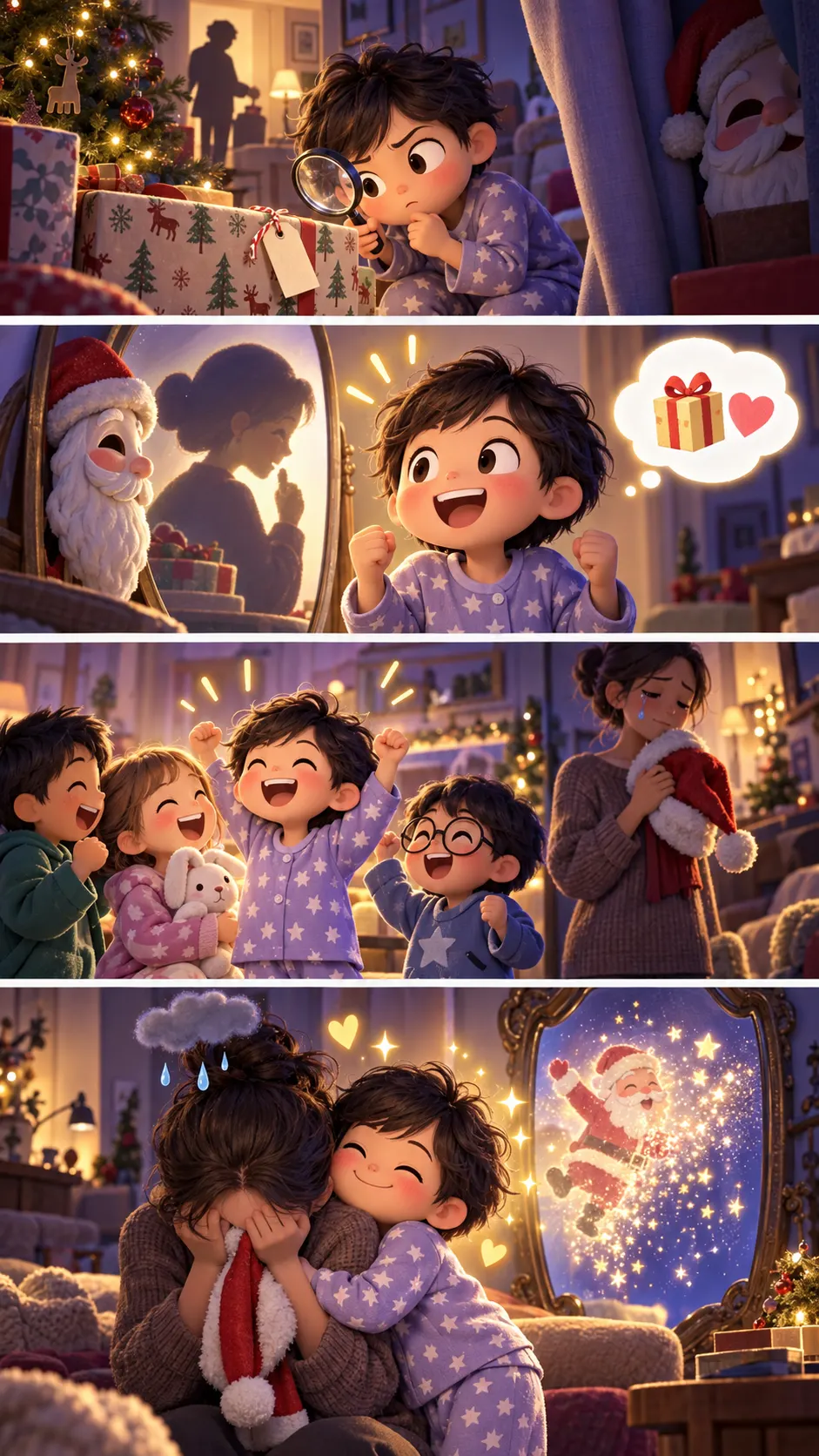
このネタ、誰かに教えたくなった?
サンタの正体を知った子どもたちに当時の気持ちを聞いた研究があるらしい。子どもの多くは前向きな反応だった。むしろ悲しんでいたのは親のほうだった。しかも子どもは平均7歳ごろ、自分の力で真実にたどり着いていた。
押すと「マジかリスト」に保存されます
 出典・参考文献(4件)タップで表示
- Anderson & Prentice (1994) Encounter with reality: children's reactions on discovering the Santa Claus myth, Child Psychiatry and Human Developmentdoi.org
- Shtulman & Yoo (2015) Children's understanding of physical possibility constrains their belief in Santa Claus, Cognitive Developmentdoi.org
- Goldstein & Woolley (2016) Ho! Ho! Who? Parent promotion of belief in and live encounters with Santa Claus, Cognitive Developmentdoi.org
- Goldstein & Mills (2026) When honesty is discouraged: understanding parental lies around Santa Claus, Journal of Moral Educationdoi.org

※本記事は上記の研究・公開資料をもとに、原田英語が独自の言葉で解説したものです。引用は著作権法第32条の範囲で行い、出典を明記しています。画像はすべてオリジナルのイメージです。研究結果には限界や個人差があります。誤りのご指摘は原田英語のお問い合わせフォームから。
 これも「マジか!?」
 心理学
心理学
【同志社の入試に出た】1歳半の赤ちゃんは、頼まれなくても人を助ける。でもご褒美で逆効果
 心理学
心理学
【東北大の入試に出た】「学習性無力感」は50年後、提唱者自身が「逆だった」と認めた
 心理学
心理学
【早稲田の入試に出た】知らない人との「ちょうどいい距離」は国によって2倍近くちがう。42か国調査
 心理学
心理学
【同志社の入試に出た】表情が豊かな人ほど好かれる。1,300人超のビデオ通話を分析
 心理学
心理学
【慶應の入試に出た】「忙しい自慢」はなぜ生まれた?忙しさがステータスになった理由
 心理学
心理学