脳と心理ホント
脳の中の「小人」の地図が約90年ぶりに描き直された。運動の地図に"全身の司令室"が隠れていた
 2026.10.02
 English Corner(A2〜B2・4択クイズ)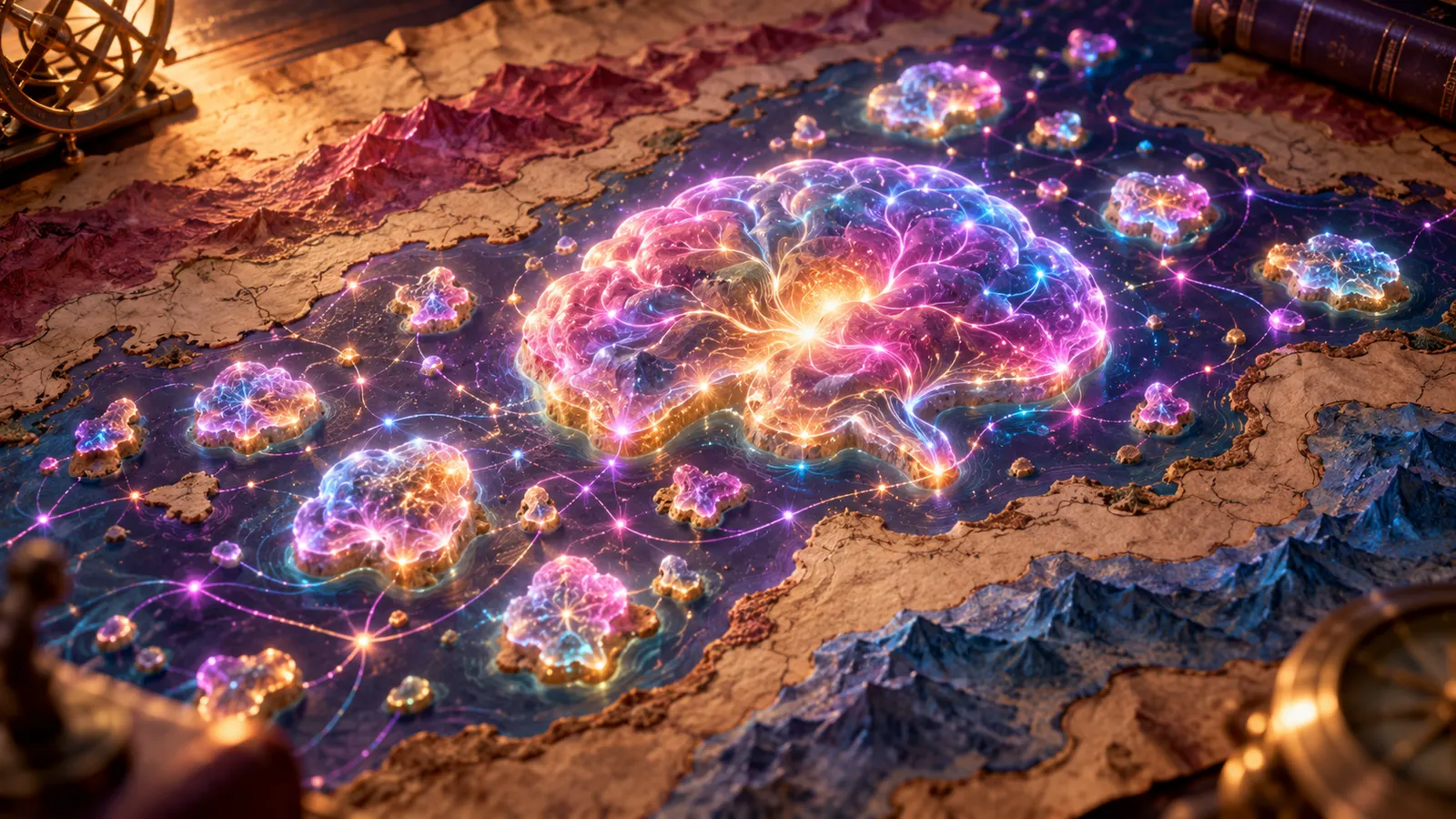
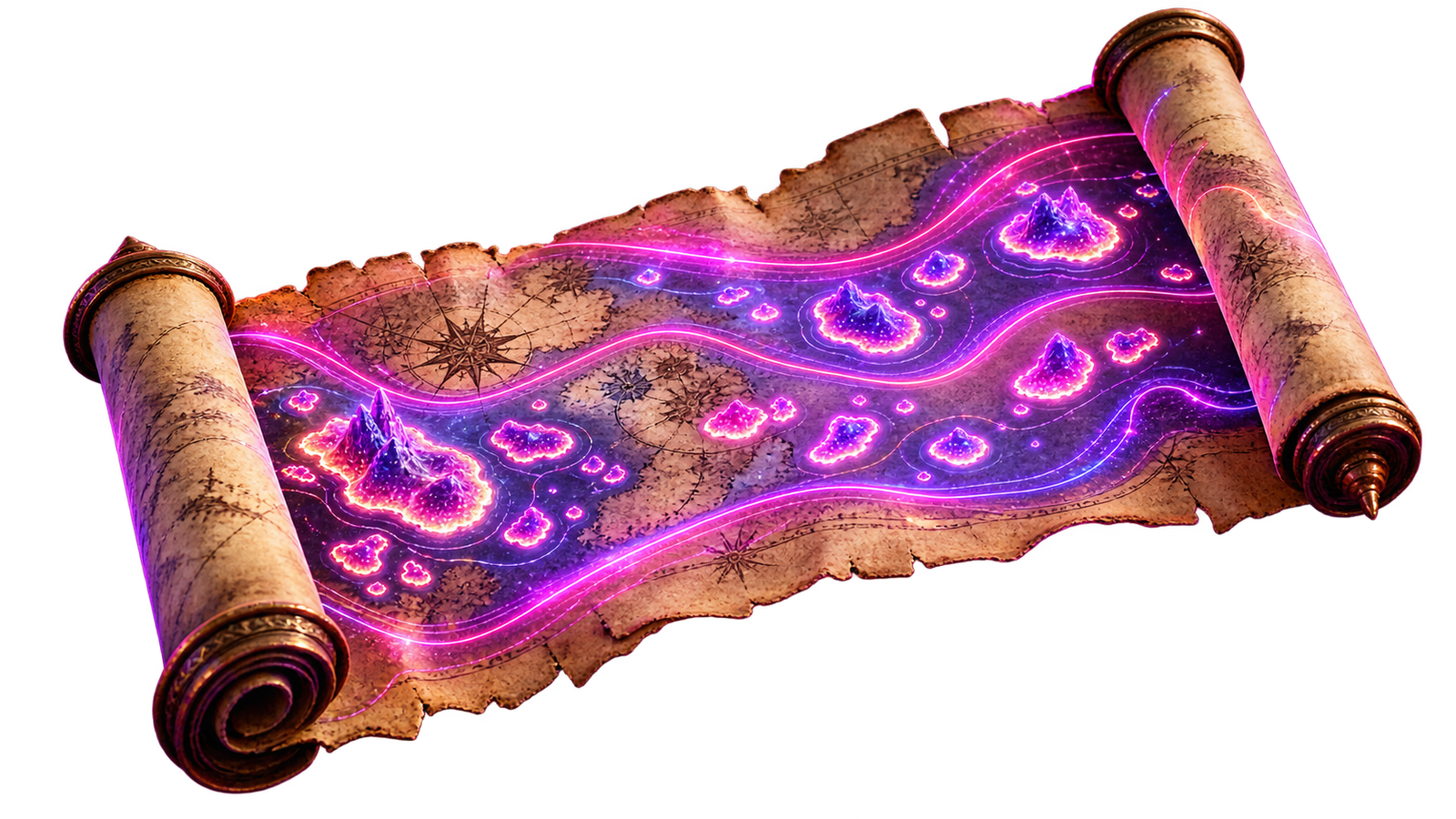
 読む前に予想してみよう!
脳の運動野は、足から顔まで体の部位がすき間なく順番に並んでいるだけだ
2023年の研究で、部位ごとのエリアのあいだに、全身の動きの計画などに関わる別の領域が交互に並んでいることがわかった。
 研究カード(どんな研究?)
- 対象
- 健康な成人・子ども・新生児・乳児・サル
- 規模
- 少数の精密計測+大規模データ3つ
- 研究の種類
- fMRI研究
- 確かさ
- ★★★☆☆
足から顔まで順に並ぶと考えられてきた脳の運動の地図。実は足・手・口のエリアのあいだに、全身の動きを計画するネットワークがはさまっていた。
ひとことで言うと脳の「体の地図」に、全身をまとめて動かす司令室が見つかった!
理科や保健の教科書で、こんな不思議な絵を見たことはありませんか?
手と唇と舌が異様に大きく、胴体や脚がやけに小さい人の姿。これは「ホムンクルス(脳の中の小人)」と呼ばれる図で、脳のどの場所が体のどこを担当しているかを表しています。手や口は細かい動きや感覚が必要なので、脳の中で大きな面積を占めている、というわけです。
この有名な地図が、2023年、約90年ぶりに大きく描き直されました。
01始まりは、起きている患者の脳を刺激した外科医
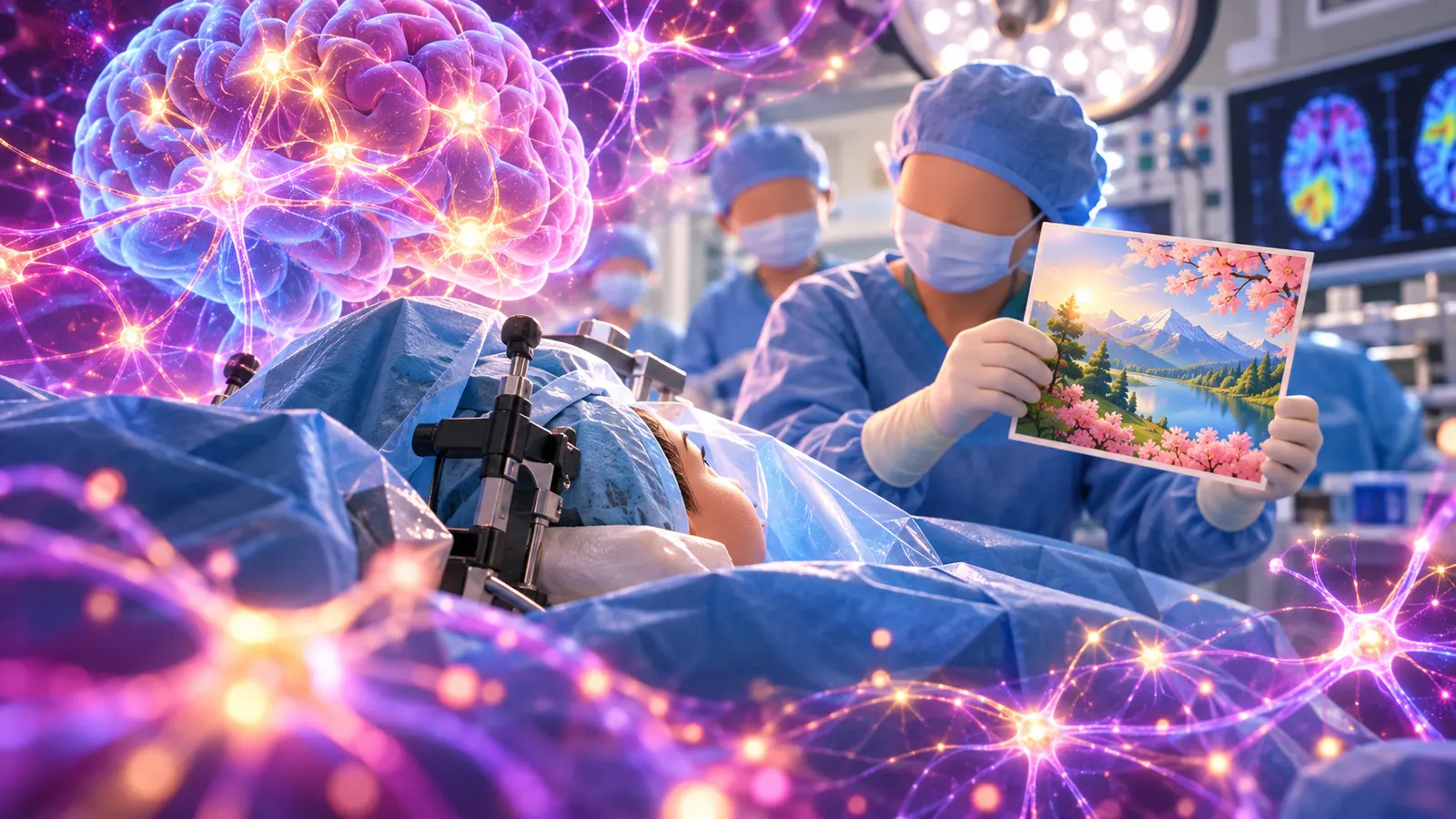
その結果描かれたのが、ホムンクルスです。脳の頭頂部から耳のほうへ向かって、足 → 胴体 → 手 → 顔 → 口と、体の部位が順番に並んでいるように見えました。この地図は、それ以来ずっと教科書の定番になりました。
02最新のMRIで一人ずつ「精密に」測った
2023年、アメリカ・ワシントン大学(セントルイス)のゴードン(Gordon)さんらのチームが『Nature』に発表した研究は、この地図に新しいページを加えました。
研究チームは、同じ人の脳を何時間もかけてくり返しMRIで撮る「精密fMRI」という方法で、一人ひとりの脳の地図を細かく描きました。すると——
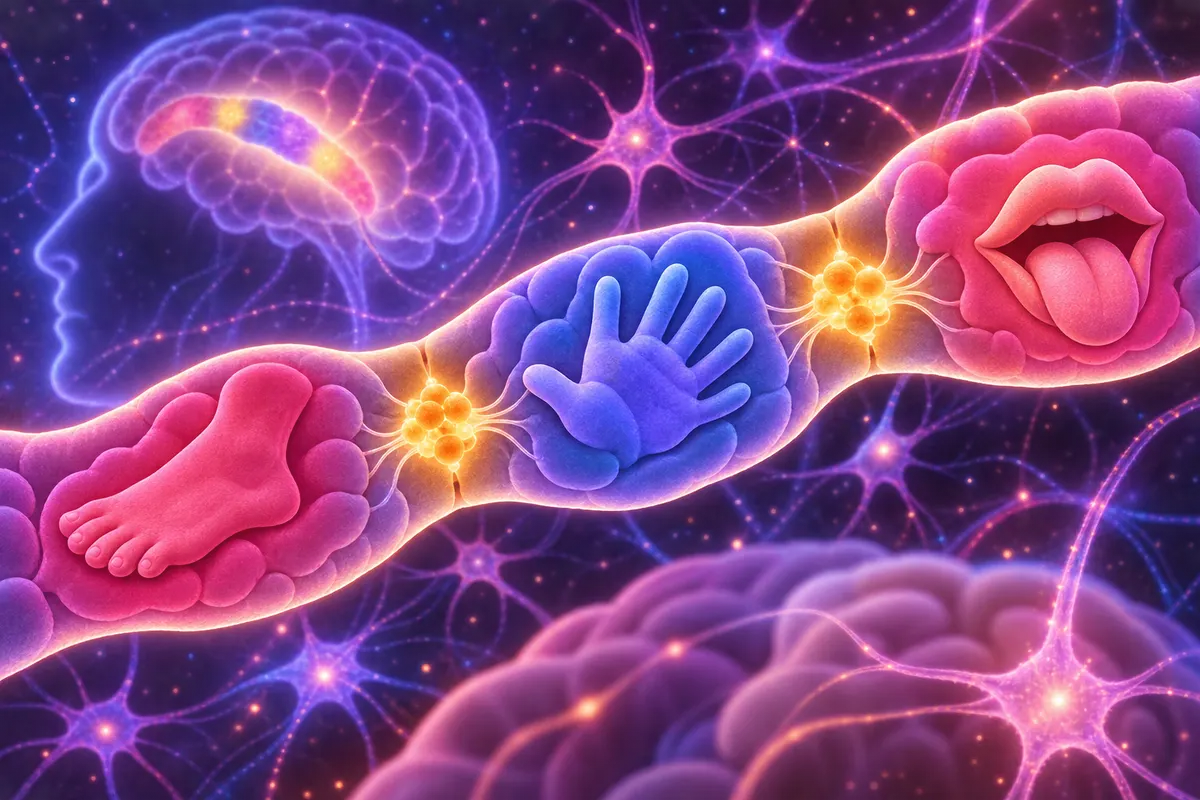
- 足・手・口を担当するエリアは、それぞれ同心円のようなまとまりを作っていた
- そのあいだに、どの部位にも特化しない別の領域が、交互にはさまっていた
- この"あいだの領域"どうしは強く結びつき、さらに行動の計画・覚醒・体の内側の調整に関わる脳のネットワークとつながっていた
研究チームはこれを、「体性認知行動ネットワーク(SCAN)」と名づけました。
03"あいだの領域"は何をしているの?
実験で、指だけ・つま先だけを動かすような単独の動きでは、SCANはあまり反応しませんでした。
ところが、手と足を協調させる動きを計画するときや、おなかや眉など体の中心に近い部分を動かすときに、SCANがそろって活動していたのです。
研究チームは、運動の地図には2つの仕組みが組み合わさっていると考えています。
- 部位ごとのエリア:指や唇などを、それぞれ細かく動かす
- SCAN:体全体の動きをまとめ、計画する
さらに、大規模な3つのMRIデータでも同じパターンが確認され、サルや新生児・乳児のデータでも似た構造の手がかりが見つかりました。
04古い地図は「間違い」だったの?
ペンフィールドの地図が完全に間違っていたわけではありません。足から口へという大まかな並びは、今回の研究でも確かめられています。
2017年の論文では、ホムンクルスの絵がどのように生まれ、改良されてきたかの歴史がまとめられています。電極で刺激できる場所や、当時の技術の限界の中で描かれた「その時代の最良の地図」だったのです。
05まとめ
約90年間、教科書に載り続けた「脳の中の小人」。最新の技術で調べ直すと、その地図のすき間に、全身の動きをまとめる司令室が隠れていました。
科学の"常識"は、終わりではなく、次の発見のスタート地点。教科書の図も、いつか描き直されるかもしれないと思うと、ちょっとワクワクしませんか?
この研究を英語で読もう原田英語の English CornerThe homunculus is a famous drawing of a little man with huge hands and lips, showing how much of the brain… 音声
音声 4択クイズ9問A2・B1・B2タップして開く
原田英語の English Corner
この研究を英語で読もう
Many textbooks show a strange little man with huge hands and lips. It is called the homunculus. It shows which part of the brain moves each part of the body. In the 1930s, a doctor made this map.
People thought the body parts were lined up in order, from foot to mouth. But in 2023, scientists found other areas between the foot, hand and mouth areas. These areas help plan whole-body movements.
72 words ・ CEFR A2
和訳を見る
多くの教科書には、手と唇がとても大きい不思議な小人の絵が載っています。それはホムンクルスと呼ばれます。脳のどの部分が体のどの部分を動かすかを示しています。1930年代、ある医師がこの地図を作りました。
人々は、体の部分が足から口まで順番に並んでいると考えていました。しかし2023年、科学者たちは、足・手・口のエリアのあいだに別の領域を見つけました。これらの領域は、全身の動きを計画するのを助けているのです。
4択リーディングクイズ
Q1. What is the passage mainly about?
古い脳の運動の地図が2023年の発見で描き直された、という話なので C。
Q2. What do the newly found areas do?
These areas help plan whole-body movements. とあるので D。
Q3. In this passage, "in order" means ...
in order は「順番に」。足から口まで決まった順に並ぶ、という意味なので A。
The homunculus is a famous drawing of a little man with huge hands and lips, showing how much of the brain controls each body part. It comes from work in the 1930s, when the surgeon Penfield stimulated the brains of awake patients and recorded which body parts moved. His map suggested that the parts were arranged in order, from the foot to the mouth.
In 2023, however, a team in the United States scanned the same people for many hours using a precise MRI method. They found that the foot, hand and mouth areas were separated by other regions. These regions were active when people planned movements that combined their hands and feet.
113 words ・ CEFR B1
和訳を見る
ホムンクルスは、手と唇がとても大きい小人の有名な絵で、脳のどれだけの部分が体の各部を制御しているかを示しています。これは1930年代の研究から生まれたもので、外科医ペンフィールドが起きている患者の脳を刺激し、体のどの部分が動くかを記録しました。彼の地図は、体の部分が足から口まで順番に並んでいることを示していました。
しかし2023年、アメリカのチームが精密なMRIの方法を使って、同じ人の脳を何時間もかけて撮影しました。その結果、足・手・口のエリアが別の領域によって区切られていることがわかりました。これらの領域は、人が手と足を組み合わせた動きを計画するときに活動していました。
4択リーディングクイズ
Q1. How did Penfield make his map?
stimulated the brains of awake patients and recorded which body parts moved とあるので D。
Q2. What was special about the 2023 MRI method?
scanned the same people for many hours using a precise MRI method とあるので A。
Q3. When were the newly found regions active?
active when people planned movements that combined their hands and feet とあるので C。
In the 1930s, Penfield and colleagues in Montreal electrically stimulated the exposed brains of awake epilepsy patients and recorded the movements and sensations that followed. From this work came the homunculus, a distorted figure with enormous hands and lips that shows how much of the motor cortex is devoted to each body part. Penfield's 1937 summary described a continuous sequence running from foot to trunk, hand, face and mouth.
In 2023, Gordon and colleagues published a substantial revision. They used precision fMRI, scanning the same individuals repeatedly for hours. The foot, hand and mouth regions, they found, form concentric clusters, separated by regions not specialized for any single body part. These in-between regions were strongly connected with one another and with networks involved in action planning, arousal and internal bodily control, so the team named them the somato-cognitive action network.
They responded little to isolated finger or toe movements but became active when people planned coordinated hand and foot actions. All of this evidence comes from fMRI, and no direct causal tests have been done yet. Even so, the pattern showed up in three large datasets, with similar hints in monkeys and infants.
193 words ・ CEFR B2
和訳を見る
1930年代、モントリオールのペンフィールドらは、起きているてんかん患者の露出した脳を電気で刺激し、その後に生じる動きや感覚を記録しました。この研究から生まれたのがホムンクルスです。手と唇が極端に大きくゆがんだこの人物像は、運動野のどれだけが体の各部に割り当てられているかを示しています。
ペンフィールドの1937年のまとめは、足から胴体、手、顔、口へと続く連続した並びを描いていました。2023年、ゴードンらは大幅な見直しを発表しました。彼らは、同じ人を何時間もくり返しスキャンする精密fMRIを使いました。その結果、足・手・口の領域はそれぞれ同心円状のまとまりを作り、どの体の部位にも特化しない領域によって区切られていることがわかりました。これらのあいだの領域は互いに強く結びつき、さらに行動の計画、覚醒、体の内部の制御に関わるネットワークともつながっていたため、チームはこれを体性認知行動ネットワークと名づけました。
この領域は、指やつま先だけの単独の動きにはほとんど反応しませんでしたが、手と足を協調させる動作を計画するときには活発になりました。こうした証拠はすべてfMRIによるもので、この研究では原因を直接検証していません。それでも、このパターンは3つの大規模データで見られ、サルや乳児でも似た手がかりがありました。
4択リーディングクイズ
Q1. What did Penfield's 1937 summary suggest?
a continuous sequence running from foot to trunk, hand, face and mouth とあるので B。
Q2. Why was the new network named the somato-cognitive action network?
networks involved in action planning, arousal and internal bodily control とつながっていたので命名された。正解は D。
Q3. What limitation does the author mention?
All of this evidence comes from fMRI, and this study did not test causes directly とあるので C。3つの大規模データで見られたので D は誤り。
重要単語
- motor cortexC1名詞(句)運動野The motor cortex sends commands to our muscles.
 motor は「運動の」。motor skills「運動技能」。「モーター(電動機)」と同語源で「動かすもの」。
 - homunculusC1名詞ホムンクルス(脳の中の小人の図)The homunculus has huge hands and lips. ラテン語で「小さな人」。homo(人)+-unculus(小さい)。
- mapA2名詞地図The brain contains maps of the body. 脳科学では body map「体の地図」、動詞 map(位置を特定する)もよく使われる。
- interruptB1動詞中断する、途切れさせるThe map is interrupted by other regions. inter-(間に)+rupt(破る)。Sorry to interrupt, but ~「お話し中すみませんが」。
- coordinateB2動詞(動きを)調整する、協調させるWe coordinate our hands and feet when we walk. co-(共に)+ordinate(並べる)。名詞 coordination。形容詞 coordinated「協調した」。
- precisionB2名詞精密さ、精度Precision fMRI maps each person's brain in detail. 形容詞 precise。with precision「正確に」。accuracy(正確さ)との違いは「ばらつきの小ささ」。
 入試に出る順の単語帳を印刷する →
 全5561語の「科学英単語カード」で復習する →
 4コマでわかる
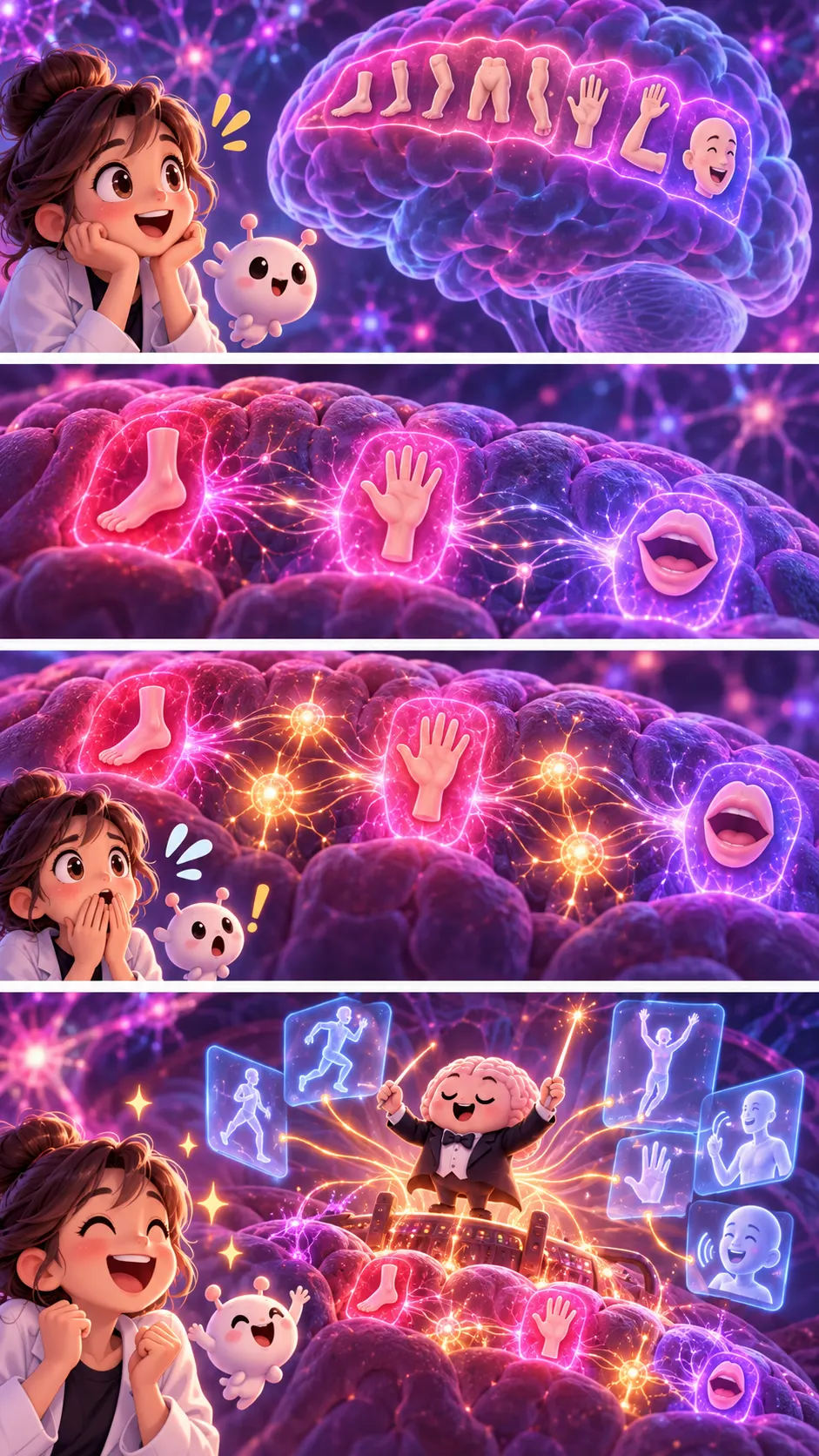
このネタ、誰かに教えたくなった?
教科書でおなじみ、手と唇が巨大な「脳の中の小人(ホムンクルス)」。この運動の地図を最新のMRIで一人ずつ精密に調べたら、足・手・口のエリアのあいだに「全身の動きを計画する別のネットワーク」がはさまっていたらしい。
押すと「マジかリスト」に保存されます
 出典・参考文献(3件)タップで表示
- Penfield & Boldrey (1937) Somatic motor and sensory representation in the cerebral cortex of man as studied by electrical stimulation, Braindoi.org
- Catani (2017) A little man of some importance, Braindoi.org
- Gordon et al. (2023) A somato-cognitive action network alternates with effector regions in motor cortex, Naturedoi.org

※本記事は上記の研究・公開資料をもとに、原田英語が独自の言葉で解説したものです。引用は著作権法第32条の範囲で行い、出典を明記しています。画像はすべてオリジナルのイメージです。研究結果には限界や個人差があります。誤りのご指摘は原田英語のお問い合わせフォームから。