脳と心理ホント
コンセントが"びっくり顔"に見える。モノの顔に、脳は最初「本物の顔」に近い反応をしていた
 2026.10.02
 English Corner(A2〜B2・4択クイズ)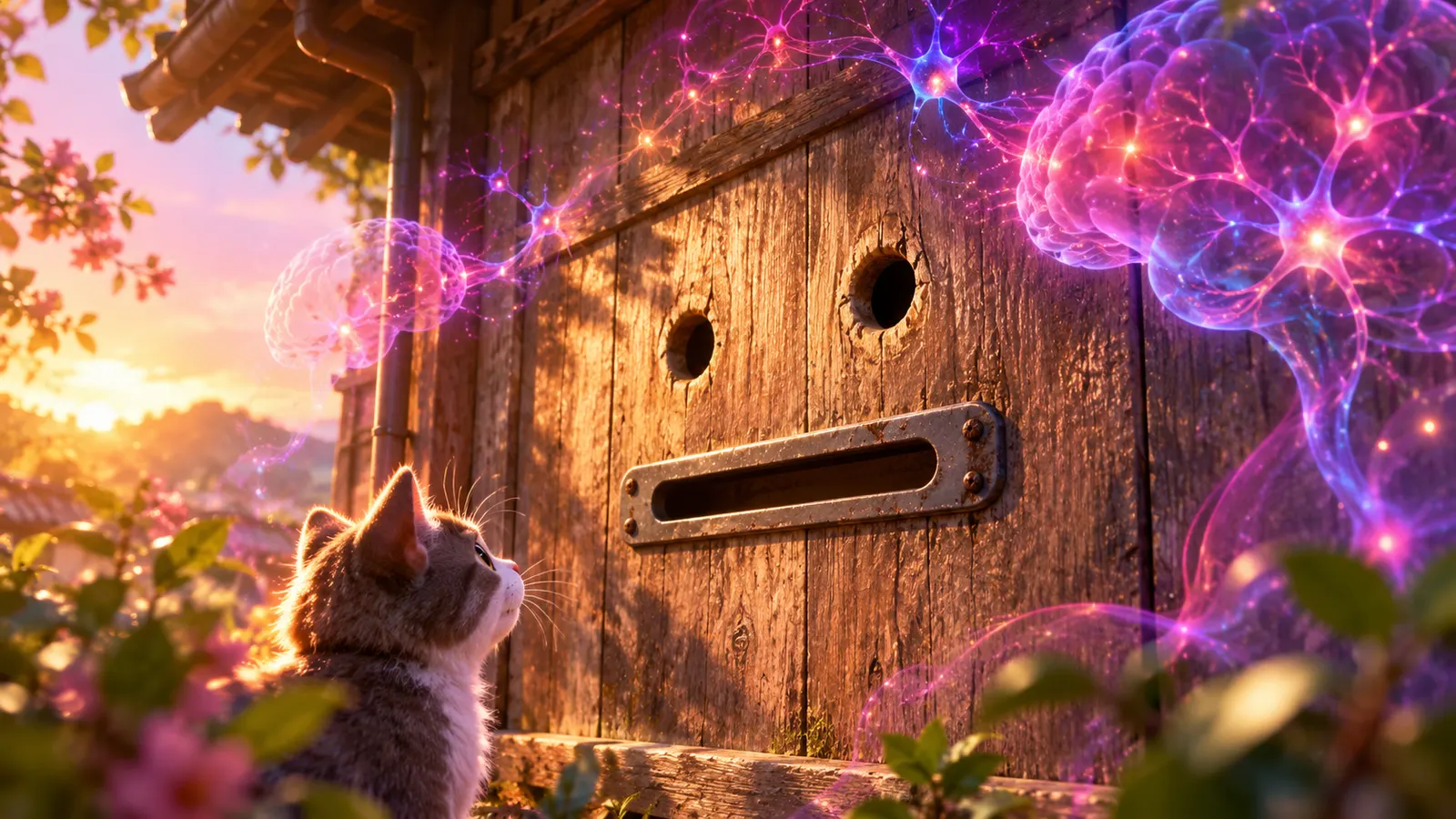
 読む前に予想してみよう!
モノに顔が見える現象は人間だけのもので、サルには起きない
アカゲザルも、人が「顔に見える」と感じる物の写真を長く見つめ、目や口にあたる部分を見ていた。
 研究カード(どんな研究?)
- 対象
- 健康な成人・アカゲザル
- 規模
- 数十人〜3,815人
- 研究の種類
- fMRI・脳磁図・行動実験
- 確かさ
- ★★★☆☆
モノに顔が見える「パレイドリア」。脳は最初の一瞬、本物の顔に近い反応をし、約0.25秒でふつうの物の扱いに切り替えていた。しかも男性の顔に見えやすい。
ひとことで言うとモノが顔に見えるのは、脳が「顔かも!」と早めに反応するからなんだ。
コンセントの穴が、驚いた顔に見える。車の正面が、怒った顔に見える。木の幹の模様が、おじいさんの顔に見える。
こんな経験、誰にでもありますよね。モノの中に顔などを見てしまう現象はパレイドリアと呼ばれています。
なぜ私たちの脳は、こんなに顔を見つけたがるのでしょう?
01「顔があるよ」と言われると、ノイズにも顔が見える
「顔があるはず」と思うだけで、脳はノイズの中にも顔を作り出してしまうのです。
02脳は最初「本物の顔」に近い反応をしていた
では、脳はモノの顔を、本物の顔と同じように処理しているのでしょうか?
2020年、アメリカ国立精神衛生研究所(NIMH)などのチーム(ワードル Wardle さんら)は、モノの顔・本物の顔・顔に見えないふつうの物の写真を見せ、脳の活動をfMRI(場所)と脳磁図(MEG:時間)の両方で調べました。
すると——
- モノの顔に反応したのは、顔の処理を担当する視覚の領域だった
- 写真を見た直後は、モノの顔の脳内での扱いは、ふつうの物より本物の顔に近かった
- ところが約0.25秒のうちに、モノの顔はふつうの物と同じ扱いに変わっていった
脳はまず「顔かも!」と広めに網を張って反応し、そのあとで「いや、これは物だ」と修正しているようです。

03なぜ「見逃さない」ほうが大事なのか
顔を見つけるのが少し大げさなのは、生き物として理にかなっているのかもしれません。
もし茂みの中の本物の顔(敵や仲間)を見逃したら、命にかかわることもあります。一方、ただの木の模様を「顔かも」と思っても、損はほとんどありません。だから脳の顔検出は、正確さより「見逃さないこと」を優先しているのでは、と考えられています。
実際、2017年の研究では、アカゲザルも、人が顔に見えると感じる物の写真を長く見つめ、目や口にあたる部分に視線を向けていました。パレイドリアは、人間だけの現象ではなかったのです。
04モノの顔は、なぜか「男性」に見える
さらに面白い研究があります。2022年、同じワードルさんたちは合計3,815人の大規模な調査で、モノの顔には表情や年齢、性別まで感じ取れることを示しました。
そして、とても強い偏りが見つかりました。モノの顔は、女性より男性に見えやすいのです。この偏りは、物そのもののイメージ(「工具は男っぽい」など)では説明できませんでした。
05まとめ
モノに顔が見えるのは、脳の顔センサーが「見逃すより、早とちりのほうがまし」という設定になっているからかもしれません。脳は最初の一瞬、モノの顔を本物の顔に近いものとして扱い、すぐに「ただの物だ」と修正していました。
今日、身の回りでいくつの"顔"に出会えるか、数えてみてください。
この研究を英語で読もう原田英語の English CornerSeeing faces in things like sockets, cars or tree bark is called pareidolia. 音声
音声 4択クイズ9問A2・B1・B2タップして開く
原田英語の English Corner
この研究を英語で読もう
Have you ever seen a face in an electric socket or the front of a car? This is called pareidolia. In 2020, scientists studied the brain when people looked at these object faces. At first, the brain reacted to them more like real faces than objects.
But in about a quarter of a second, it treated them as normal objects. Our brain does not want to miss a real face.
70 words ・ CEFR A2
和訳を見る
コンセントや車の正面に顔が見えたことはありますか。これはパレイドリアと呼ばれます。2020年、科学者たちは、人がこうしたモノの顔を見ているときの脳を調べました。最初、脳はそれらに、ふつうの物よりも本物の顔に近い反応をしました。
しかし約4分の1秒で、脳はそれらをふつうの物として扱うようになりました。私たちの脳は、本物の顔を見逃したくないのです。
4択リーディングクイズ
Q1. What is the passage mainly about?
モノに顔が見えるパレイドリアと脳の反応が話題なので B。
Q2. How long did it take for the brain to treat object faces as normal objects?
in about a quarter of a second, it treated them as normal objects とあるので D。
Q3. In this passage, "miss" means ...
miss a real face は「本物の顔を見逃す」。fail to notice(気づかない)の意味なので C。
Seeing faces in things like sockets, cars or tree bark is called pareidolia. In a 2014 study, people were shown images of random noise and told that half of them contained hidden faces or letters.
In fact, none did, but people still reported seeing a face in 34 percent of the images. In 2020, another team used brain scans to compare object faces, real faces and ordinary objects. At first, the brain handled object faces more like real faces, but within about 0.25 seconds it treated them like normal objects. Scientists think the brain prefers to react too quickly rather than miss a real face, because missing a face could be dangerous.
112 words ・ CEFR B1
和訳を見る
コンセントや車、木の皮などに顔が見えることは、パレイドリアと呼ばれます。2014年の研究では、人々にランダムなノイズの画像を見せ、その半分には顔か文字が隠れていると伝えました。
実際にはどれにも隠れていませんでしたが、それでも人々は画像の34%で顔が見えたと答えました。2020年、別のチームが脳スキャンを使って、モノの顔、本物の顔、ふつうの物を比べました。最初、脳はモノの顔を本物の顔に近いものとして処理しましたが、約0.25秒のうちに、ふつうの物のように扱いました。顔を見逃すことは危険になりうるので、脳は本物の顔を見逃すよりも早とちりするほうを好むのだと科学者たちは考えています。
4択リーディングクイズ
Q1. What happened in the 2014 study?
people still reported seeing a face in 34 percent of the images とあるので A。実際には何も隠れていなかった。
Q2. What did the 2020 study compare?
compare object faces, real faces and ordinary objects とあるので B。
Q3. Why might the brain prefer to react too quickly to faces?
because missing a face could be dangerous とあるので D。B は「本物の顔は常に危険」と言い過ぎ。
Pareidolia, the tendency to perceive faces in inanimate objects such as sockets, cars and tree bark, reveals how eager the brain is to detect faces. In a 2014 experiment, participants viewed pure visual noise after being told that half the images contained hidden faces or letters. Although nothing was hidden, they reported faces in 34 percent of the images, and the right fusiform face area became active.
A 2020 study combining fMRI, which shows where activity occurs, with MEG, which shows when, examined how illusory faces are processed. They engaged face-selective visual regions, and in the first moments after viewing, the brain represented them more like real faces than like ordinary objects; within about 250 milliseconds, however, they were treated as objects.
One interpretation is that face detection is broadly tuned to favor sensitivity over accuracy, since missing a real face could be costly while a false alarm is harmless. Rhesus monkeys also gazed longer at such objects, focusing on the eye and mouth regions. In 2022, a survey of 3,815 people found that illusory faces convey expression, age and gender, and are strongly biased toward appearing male. Note, however, that the 2014 findings relied on artificial noise images.
199 words ・ CEFR B2
和訳を見る
コンセントや車、木の皮などの無生物に顔を知覚してしまう傾向であるパレイドリアは、脳がいかに顔を見つけたがっているかを明らかにしています。2014年の実験では、参加者は画像の半分に顔か文字が隠れていると伝えられた後、純粋な視覚ノイズを見ました。何も隠れていなかったにもかかわらず、彼らは画像の34%で顔を報告し、右の紡錘状回顔領域が活動しました。2020年の研究は、活動が「どこで」起きるかを示すfMRIと、「いつ」起きるかを示す脳磁図(MEG)を組み合わせて、錯覚の顔がどう処理されるかを調べました。
錯覚の顔は顔に選択的に反応する視覚領域を活動させ、見た直後の瞬間には、脳はそれらをふつうの物よりも本物の顔に近いものとして表現していました。しかし約250ミリ秒のうちに、それらは物として扱われるようになりました。
一つの解釈は、顔の検出は正確さより感度を優先するよう広く調整されているというものです。本物の顔を見逃すと大きな損失になりうる一方、誤った警報は害がないからです。アカゲザルもそうした物を長く見つめ、目や口にあたる部分に注目しました。2022年には、3,815人を対象にした調査で、錯覚の顔からは表情や年齢、性別が伝わり、しかも男性に見えやすいという強い偏りがあることがわかりました。ただし、2014年の結果は人工的なノイズ画像に頼ったものであることに注意が必要です。
4択リーディングクイズ
Q1. What did the 2020 study reveal about illusory faces?
直後は本物の顔に近く表現され、約250ミリ秒で物として扱われたので B。
Q2. Why might face detection favor sensitivity over accuracy?
since missing a real face could be costly while a false alarm is harmless とあるので D。
Q3. What did the 2022 survey find?
are strongly biased toward appearing male とあるので C。
重要単語
- pareidoliaC1名詞パレイドリア(模様などに顔などを見る現象)Pareidolia makes us see faces in clouds.
 ギリシャ語 para(そばに・誤って)+eidolon(像)。face pareidolia で「顔のパレイドリア」。
 - illusoryC1形容詞錯覚の、幻のShe noticed an illusory face on the wall. illusion(錯覚)の形容詞形。illusory faces「錯覚の顔」は論文の定番語。
- biasB2名詞偏りThere was a strong bias toward seeing male faces. bias toward / against ~「~への/~に対する偏り」。cognitive bias「認知バイアス」も頻出。
- detectB2動詞検出する、見つけるOur brains quickly detect faces. 名詞 detection、detector。detective(探偵)と同語源。
- inanimateC1形容詞命のない、無生物のA chair is an inanimate object. in-(否定)+animate(生命のある)。animal、animation と同じ anima(魂)が語源。
- false alarmB2名詞(句)誤警報、空騒ぎSeeing a face in a tree is a harmless false alarm. 信号検出の用語としても使われる。miss(見逃し)と対で覚える。
 入試に出る順の単語帳を印刷する →
 全5561語の「科学英単語カード」で復習する →
 この話題を TED で聞く
同じテーマの TED・TED-Ed を、 TED HACK で。英語の見どころ・使える表現・学習ミッションつきの日本語ガイドです。(運営:原田英語)

このネタ、誰かに教えたくなった?
コンセントや車の正面が顔に見える「パレイドリア」。脳は最初の一瞬、本物の顔に近い反応をして、約0.25秒後に「ただの物」の扱いに切り替えていたらしい。しかもモノの顔は男性に見えやすかった。
押すと「マジかリスト」に保存されます
 出典・参考文献(4件)タップで表示
- Wardle et al. (2020) Rapid and dynamic processing of face pareidolia in the human brain, Nature Communicationsdoi.org
- Wardle et al. (2022) Illusory faces are more likely to be perceived as male than female, PNASdoi.org
- Liu et al. (2014) Seeing Jesus in toast: neural and behavioral correlates of face pareidolia, Cortexdoi.org
- Taubert et al. (2017) Face pareidolia in the rhesus monkey, Current Biologydoi.org

※本記事は上記の研究・公開資料をもとに、原田英語が独自の言葉で解説したものです。引用は著作権法第32条の範囲で行い、出典を明記しています。画像はすべてオリジナルのイメージです。研究結果には限界や個人差があります。誤りのご指摘は原田英語のお問い合わせフォームから。