

 体と健康・食ビミョー
パイナップルで舌がピリピリするのは「舌を少し分解されている」から? たんぱく質を切る酵素の正体
 2026.10.02
 English Corner(A2〜B2・4択クイズ)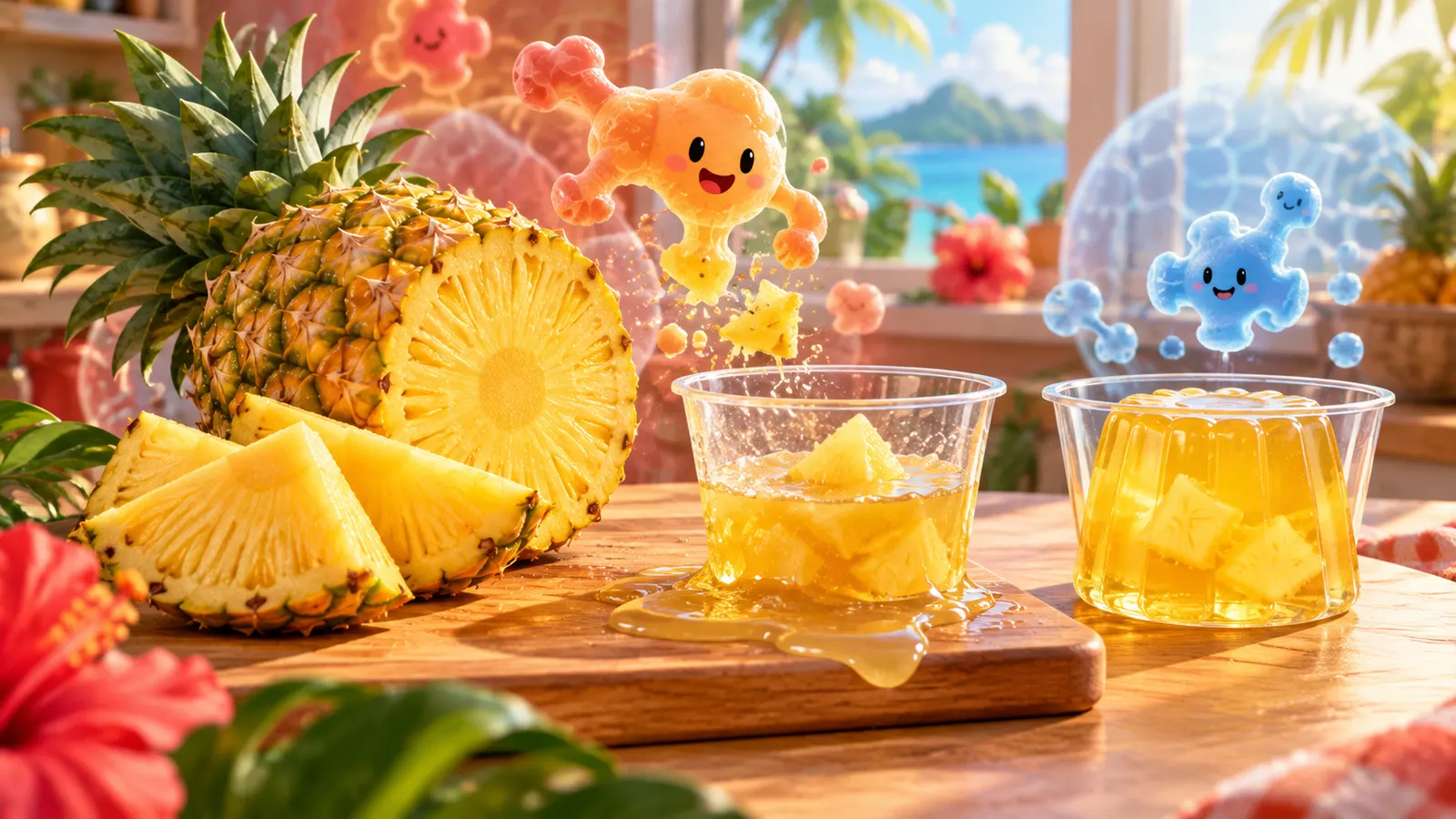
 読む前に予想してみよう!
缶詰のパイナップルは、生と同じくらい舌がピリピリしやすい
缶詰は加熱処理で酵素のはたらきが失われていることが多く、ピリピリしにくい。
 研究カード(どんな研究?)
- 対象
- 酵素の研究・昆虫を使った実験
- 規模
- 基礎研究・総説
- 研究の種類
- 実験研究+レビュー
- 確かさ
- ★★☆☆☆
生のパイナップルには、たんぱく質を切る酵素ブロメラインが含まれ、口の中にも作用すると考えられている。キウイでは針状結晶との合わせ技も。
ひとことで言うとパイナップルの酵素が、舌の表面のたんぱく質をちょっぴり切っているのかも!
生のパイナップルをたくさん食べたら、舌や口の中がピリピリ、ヒリヒリしてきた。そんな経験はありませんか?
よく言われるのが、「パイナップルに舌を溶かされている」という話。ちょっと怖いですが、まったくのウソでもありません。パイナップルには、たんぱく質を切る酵素がたっぷり含まれているのです。
ただし、ピリピリの仕組みがすべて解明されたわけではありません。わかっていることと、まだ"有力な説"の部分を分けて見ていきましょう。
01パイナップルは「たんぱく質を切る酵素」の宝庫
パイナップルの果実や茎には、ブロメラインと呼ばれる酵素のグループが含まれています。ブロメラインは、たんぱく質の鎖をチョキチョキ切るたんぱく質分解酵素(プロテアーゼ)です。
私たちの舌や口の中の表面も、たんぱく質でできた細胞でおおわれています。生のパイナップルをたくさん食べると、ブロメラインが口の中の表面のたんぱく質にも作用し、ピリピリやヒリヒリを感じる——これが有力な説明です。
02証拠1:生パインを入れたゼリーは固まらない
酵素の力を実感できるのが、ゼリー作りです。
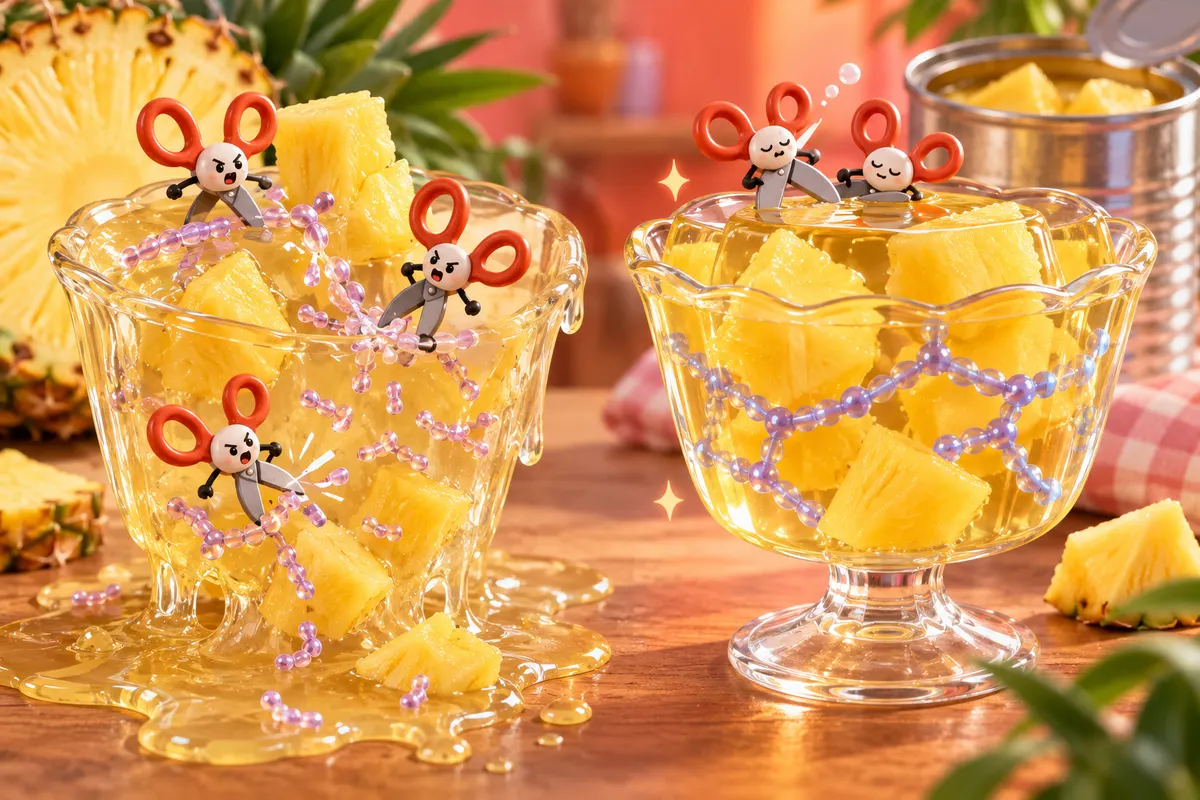
ゼラチンは、動物の皮や骨からとれるたんぱく質(コラーゲン)からできています。ここに生のパイナップルを入れると、ブロメラインがゼラチンを切ってしまい、ゼリーが固まりません。
一方、缶詰のパイナップルを使うと、ちゃんと固まります。缶詰は製造の過程で加熱されるので、酵素のはたらきが失われているからです。缶詰のパインで舌がピリピリしにくいのも、同じ理由と考えられます。
03証拠2:キウイでわかった「針」と「酵素」のコンビ技
似たピリピリは、キウイフルーツでも起こります。キウイにもアクチニジンという、たんぱく質を切る酵素が含まれています。
さらにキウイには、シュウ酸カルシウムの針のような結晶(ラフィド)も含まれています。2014年、日本の農業生物資源研究所のチームは、この針と酵素の関係を実験で確かめました。
イモムシのエサの葉に、キウイから取り出した針状結晶だけ、またはたんぱく質分解酵素だけ(この主実験で使われたのはパイナップルの茎由来のブロメライン)を塗っても、効果は弱いものでした。ところが両方を一緒に塗ると、イモムシの成長が大きく妨げられ、多くが死んでしまったのです。一方、針の形をしていないシュウ酸カルシウムでは、この効果は出ませんでした。
研究者たちは、針が細かい穴をあけ、そこから酵素が入り込む「針効果」が強い作用を生むと考えています。ただし、これは昆虫での実験で、人の口の中で同じことがどの程度起きているかは、まだはっきりしていません。
04まとめ
パイナップルで舌がピリピリするのは、たんぱく質を切る酵素ブロメラインが口の中の表面にはたらくため、というのが有力な説明です。キウイの針状結晶とたんぱく質分解酵素のコンビ技が、昆虫(イモムシ)で強い作用を生むことも実験で示されています。
「舌を溶かされている」はちょっと大げさですが、果物の中に小さなハサミが入っていると思うと、あのピリピリの正体が少し見えてきますね。
この研究を英語で読もう原田英語の English CornerEat a lot of fresh pineapple, and your mouth may start to sting. 音声
音声 4択クイズ9問A2・B1・B2タップして開く
原田英語の English Corner
この研究を英語で読もう
Eating a lot of fresh pineapple can make your tongue sting. Why? Pineapple has enzymes called bromelain. They cut proteins into pieces.
The surface of your mouth is made of protein, so bromelain may work on it too. Here is an easy test. Fresh pineapple stops gelatin jelly from becoming firm.
But canned pineapple does not, because heat stops the enzymes. Canned pineapple also stings less.
66 words ・ CEFR A2
和訳を見る
生のパイナップルをたくさん食べると、舌がピリピリすることがあります。なぜでしょうか。パイナップルにはブロメラインと呼ばれる酵素があります。それはたんぱく質を細かく切ります。
口の中の表面はたんぱく質でできているので、ブロメラインはそこにもはたらくのかもしれません。簡単な実験があります。生のパイナップルを入れると、ゼラチンのゼリーが固まりません。しかし、缶詰のパイナップルではそうなりません。
熱が酵素を止めるからです。缶詰のパイナップルは、ピリピリもしにくいのです。
4択リーディングクイズ
Q1. What is the passage mainly about?
生のパイナップルで舌がピリピリする理由(ブロメライン)を説明しているので D。
Q2. Why does canned pineapple NOT stop jelly from becoming firm?
because heat stops the enzymes とあるので A。
Q3. In this passage, "sting" means ...
sting は「ピリピリ・チクチク痛む」。舌がヒリヒリする感覚なので B。
Eat a lot of fresh pineapple, and your mouth may start to sting. The likely reason is bromelain, a group of enzymes that cut proteins. The surface of the mouth is covered with cells made of protein, so bromelain may act on it as well.
Kiwifruit causes a similar feeling. In a 2014 Japanese experiment, needle-shaped crystals from kiwi and a protein-cutting enzyme were much more harmful to caterpillars when they were used together.
Of course, a caterpillar is very different from a human mouth. You can see the enzyme's power at home, too. Fresh pineapple stops gelatin, which is made of protein, from setting. Canned pineapple does not, because heating destroys the enzymes.
114 words ・ CEFR B1
和訳を見る
生のパイナップルをたくさん食べると、口の中がピリピリしてくることがあります。考えられる理由は、たんぱく質を切る酵素のグループであるブロメラインです。口の中の表面はたんぱく質でできた細胞でおおわれているので、ブロメラインはそこにも作用するのかもしれません。
キウイフルーツも似た感覚を起こします。2014年の日本の実験では、キウイの針の形をした結晶と、たんぱく質を切る酵素は、一緒に使うとイモムシにとってずっと有害になりました。もちろん、イモムシと人間の口とはずいぶんちがいます。
この酵素の力は家でも確かめられます。生のパイナップルは、たんぱく質でできたゼラチンが固まるのを妨げます。缶詰のパイナップルではそうなりません。加熱によって酵素がこわれるからです。
4択リーディングクイズ
Q1. What is bromelain?
bromelain, a group of enzymes that cut proteins とあるので C。
Q2. What did the 2014 experiment find?
were much more harmful to caterpillars when they were used together とあるので D。
Q3. Why does the writer say "a caterpillar is very different from a human mouth"?
イモムシでの結果がそのまま人の口に当てはまるとは限らない、という限界を示しているので A。
The tingling or stinging that many people feel after eating plenty of fresh pineapple is often described as the fruit "digesting your tongue." The idea is exaggerated but not baseless. Pineapple contains bromelain, a mixture of protein-cutting enzymes, or proteases, found in its fruit, stem and roots, which is used industrially to tenderize meat.
Since the lining of the mouth consists of protein-based cells, bromelain is widely thought to act on its surface, although quantitative studies in humans are scarce. The kitchen provides indirect evidence: fresh pineapple prevents gelatin, a protein derived from collagen, from setting, whereas canned pineapple, which has been heated, does not. Kiwifruit produces a similar sensation and contains both a protease and needle-shaped crystals of calcium oxalate.
In a 2014 Japanese study, applying either the crystals or pineapple bromelain alone to leaves had little effect on caterpillars, but applying both together severely stunted their growth and killed many of them; non-needle crystals produced no such effect. The researchers proposed a "needle effect," in which the crystals create tiny holes that let the enzyme penetrate. That result, though, comes from insects, and fruit acids may also contribute to the sensation in humans.
195 words ・ CEFR B2
和訳を見る
生のパイナップルをたくさん食べた後に多くの人が感じるピリピリやヒリヒリは、しばしば果物が「舌を消化している」と表現されます。この考えは大げさですが、根拠がないわけではありません。パイナップルには、果実・茎・根に含まれるたんぱく質分解酵素(プロテアーゼ)の混合物であるブロメラインが含まれ、産業的には肉をやわらかくするのに使われています。口の内側はたんぱく質でできた細胞で構成されているので、ブロメラインはその表面に作用すると広く考えられていますが、ヒトでの定量的な研究は乏しいのが現状です。
台所が間接的な証拠を示してくれます。生のパイナップルは、コラーゲン由来のたんぱく質であるゼラチンが固まるのを妨げますが、加熱された缶詰のパイナップルはそうなりません。キウイフルーツも似た感覚を起こし、プロテアーゼと、シュウ酸カルシウムの針状結晶の両方を含んでいます。
2014年の日本の研究では、葉に結晶だけ、あるいはパイナップルのブロメラインだけを塗ってもイモムシへの影響はほとんどありませんでしたが、両方を一緒に塗ると成長が大きく妨げられ、多くが死にました。針の形をしていない結晶では、このような効果は出ませんでした。研究者たちは、結晶が小さな穴をあけ、そこから酵素が入り込む「針効果」を提案しました。ただし、この結果は昆虫で示されたものであり、ヒトでは果物の酸も感覚に関わっている可能性があります。
4択リーディングクイズ
Q1. How does the writer evaluate the idea that pineapple "digests your tongue"?
The idea is exaggerated but not baseless. とあるので B。
Q2. In the 2014 study, what happened when both the crystals and the enzyme were applied together?
applying both together severely stunted their growth and killed many of them とあるので C。
Q3. Which of the following is a limitation mentioned in the passage?
quantitative studies in humans are scarce と this was shown in insects の2点が限界として挙げられているので D。
重要単語
- proteaseC1名詞たんぱく質分解酵素A protease cuts proteins into pieces.
 protein(たんぱく質)+-ase(酵素)。酵素名の -ase を知っていると語の意味が推測できる。
 - gelatinB2名詞ゼラチンGelatin is made from animal protein. 発音は /ˈdʒelətɪn/(ジェラティン)。gel(ゲル)と同じ仲間。
- crystalB1名詞結晶Kiwifruit contains tiny needle-shaped crystals. needle-shaped「針の形をした」のように 名詞+-shaped で形を表せる。
- tenderB1形容詞(肉が)やわらかいPineapple can make meat tender. 「優しい」の意味もある(tender heart)。動詞 tenderize は「やわらかくする」。
- heatA2動詞加熱するHeating destroys the enzyme. 名詞でも「熱・暑さ」。heat up「温める」、reheat「温め直す」。
- stuntC1動詞(成長を)妨げるPoor food can stunt a child's growth. stunt growth の形でほぼ決まって使う。名詞 stunt(離れ業・スタント)とは別語源。
 入試に出る順の単語帳を印刷する →
 全5561語の「科学英単語カード」で復習する →
このネタ、誰かに教えたくなった?
生のパイナップルを食べると舌がピリピリするのは、たんぱく質を切る酵素「ブロメライン」が関わっているらしい。だからゼラチンのゼリーに生パインを入れると固まらない。缶詰が平気なのは、加熱で酵素が働かなくなるから。
押すと「マジかリスト」に保存されます
 出典・参考文献(3件)タップで表示
- Varilla et al. (2021) Bromelain, a Group of Pineapple Proteolytic Complex Enzymes (Ananas comosus) and Their Possible Therapeutic and Clinical Effects. A Summary, Foodsdoi.org
- Arshad et al. (2014) Bromelain: an overview of industrial application and purification strategies, Applied Microbiology and Biotechnologydoi.org
- Konno, Inoue & Nakamura (2014) Synergistic defensive function of raphides and protease through the needle effect, PLOS ONEdoi.org

※本記事は上記の研究・公開資料をもとに、原田英語が独自の言葉で解説したものです。引用は著作権法第32条の範囲で行い、出典を明記しています。画像はすべてオリジナルのイメージです。研究結果には限界や個人差があります。誤りのご指摘は原田英語のお問い合わせフォームから。
 これも「マジか!?」
 体・健康
体・健康
玉ねぎで涙が出る犯人は、日本の食品会社が見つけた「涙専用の酵素」だった。イグノーベル賞の裏話


 体・健康
体・健康
「誰かがそこにいる」気配の正体。ロボットで"見えない人"を作り出した実験

 体・健康
体・健康
「体の細菌は人間の細胞の10倍」はまちがい。計算し直したら“ほぼ1対1”だった

 体・健康
体・健康
1年間ウォーキングした高齢者、記憶の司令塔「海馬」が約2%大きくなっていた
 体・健康
体・健康
指紋は「すべり止め」じゃなかった? 測ったら接触面積は減っていた。本当の役割は"振動センサー"

 体・健康
体・健康