

 体と健康・食ホント
「体の細菌は人間の細胞の10倍」はまちがい。計算し直したら“ほぼ1対1”だった
 2026.10.02
 English Corner(A2〜B2・4択クイズ)

 読む前に予想してみよう!
数で数えると、人の体の細胞のうち8割以上は赤血球である
2016年の再計算で、約30兆個の人の細胞のうち8割以上が赤血球と見積もられた。
 研究カード(どんな研究?)
- 対象
- 「標準的な成人男性」(体重70kg)のモデル
- 規模
- 既存データの再集計
- 研究の種類
- 推計研究(文献データにもとづく計算)
- 確かさ
- ★★★☆☆
長年「細菌は人の細胞の10倍」と言われてきたが、2016年の再計算で約1.3対1とわかった。トイレに行くと比率が逆転することもある。
ひとことで言うと体の細菌と自分の細胞の数は、だいたい同じくらいだった!
「人間の体には、自分の細胞の10倍もの細菌がすんでいる。私たちは“細菌の乗り物”なのだ」。
こんな話を、本やテレビで聞いたことがあるかもしれません。インパクト抜群で、教科書や講演でも何十年も使われてきました。
ところが2016年、イスラエルの研究者たちがこの数字をゼロから計算し直したところ、まったくちがう答えが出てきたんです。
01「10倍」はどこから来た?
この「10倍」という数字は、1970年代に、ある研究者がざっくりした見積もりとして出したものがもとになったと言われています。
当時は「腸の中の細菌の密度」と「人の細胞の数」を、かなり大まかな仮定で計算していました。そのざっくり数字がそのまま引用され続けたわけです。
有名な人や本が一度言った数字は、「みんな使っているから正しいはず」と思われがちです。でも、もとをたどると誰も確かめ直していなかった――科学の世界でも、ときどきこういうことが起こります。
02ゼロから計算し直してみた
「10倍」どころか、ほぼ同じくらいだったんです。
03細菌は「大腸」に集中している
細菌のほとんどは、大腸にすんでいます。胃や小腸は、大腸に比べると細菌がずっと少ないこともわかりました。
昔の計算は、細菌がぎっしりいる大腸の密度を、消化管全体に広げて考えていた部分があり、それが「多すぎる見積もり」の一因になったと考えられています。
細菌はとても小さいので、全部集めても重さは約0.2kgほど。数は多くても、体重のほんの一部です。
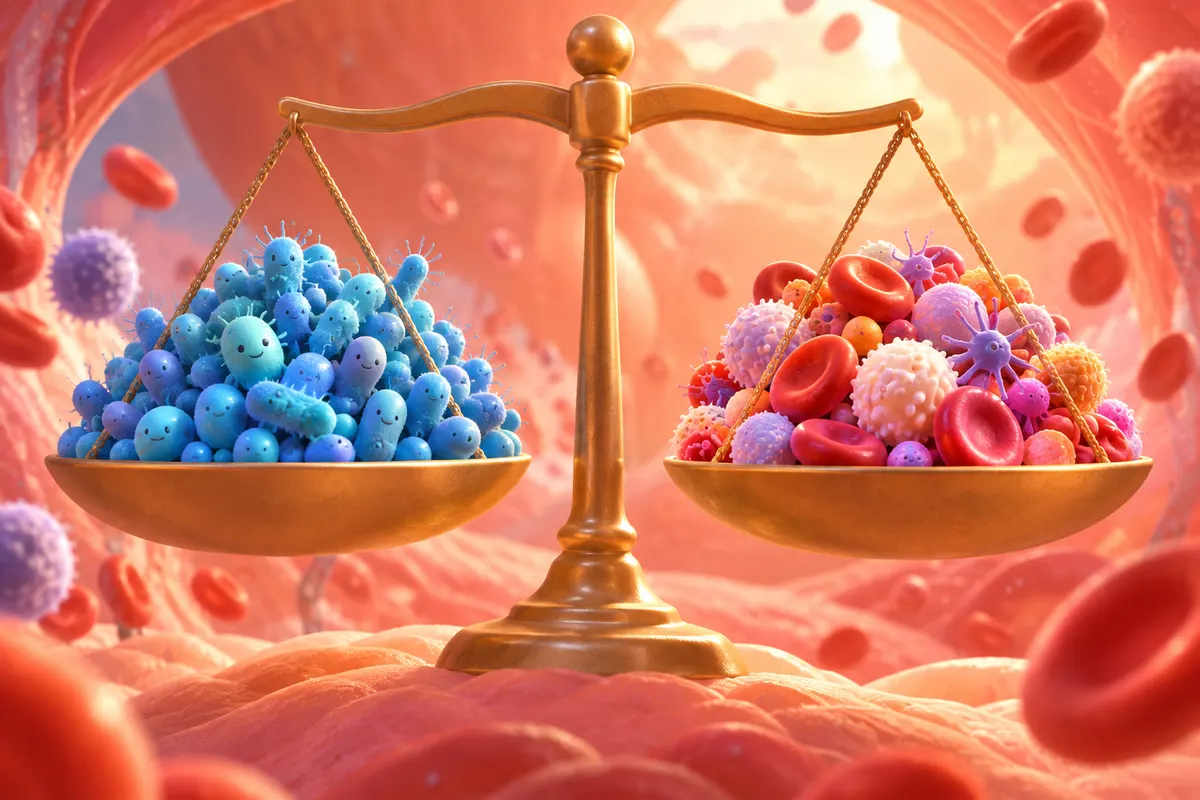
04人の細胞の8割以上は「赤血球」
もうひとつの驚きは、人の細胞の内訳です。約30兆個の人の細胞のうち、8割以上が赤血球でした。
赤血球は、酸素を運ぶ小さな円盤形の運び屋。とても小さいので数はダントツに多いものの、体の重さでいえばほんの一部です。重さでは、筋肉や脂肪の細胞のほうがずっと大きな割合を占めています。
05トイレに行くと比率が逆転!?
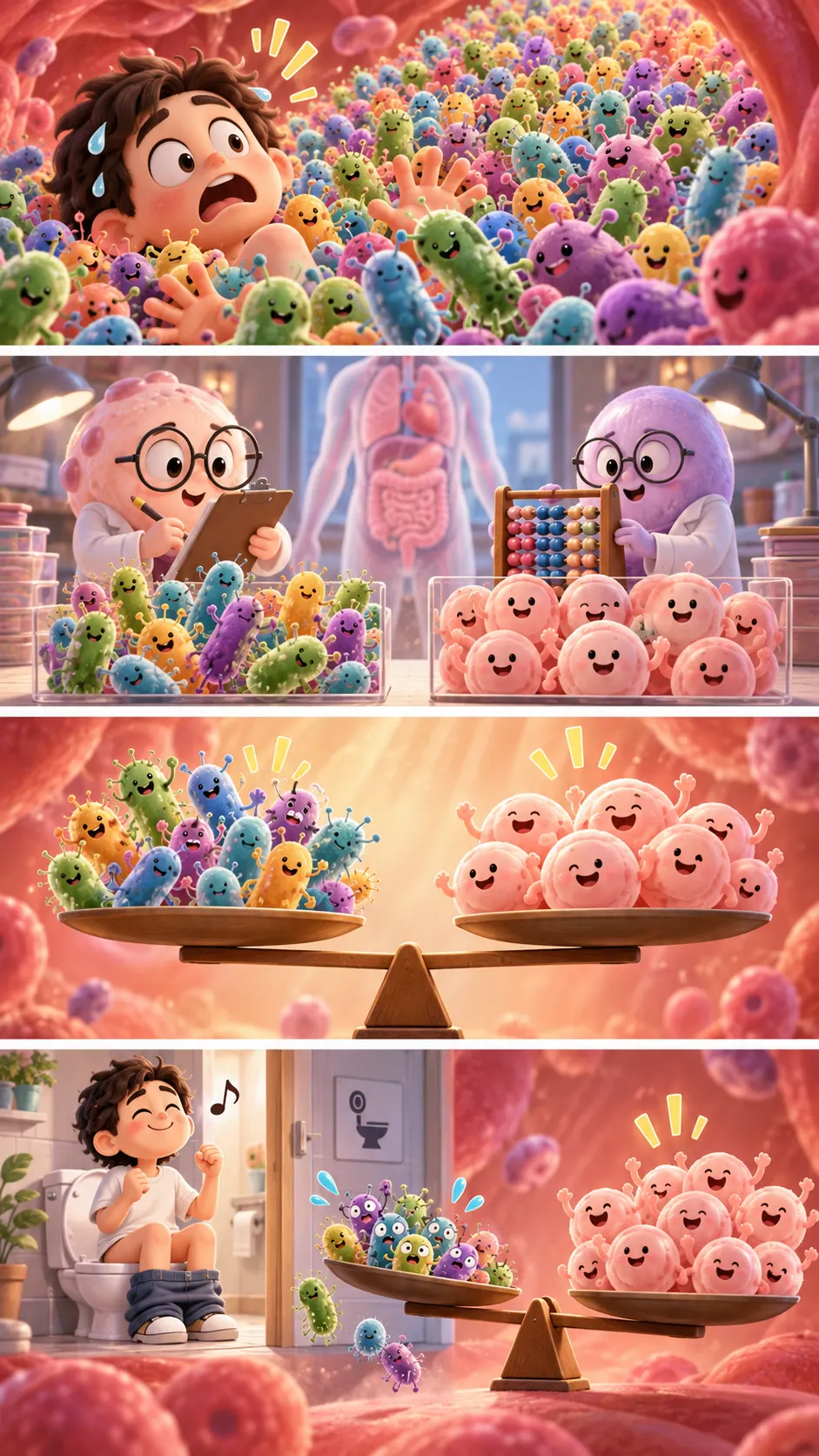
この研究には、ちょっと笑える一文もあります。大腸の中身には細菌がたくさん含まれているため、1回の排便で、体の細菌の数がかなり減る可能性があるというのです。
つまり、トイレの前後で「細菌が多い」「人の細胞が多い」が入れ替わることもありうる――それくらい、両者は“いい勝負”ということですね。
06まとめ
「細菌は人の細胞の10倍」は、昔のざっくり計算がひとり歩きした数字でした。最新の見積もりでは、ほぼ1対1。
有名な数字ほど、一度「どうやって計算したの?」と疑ってみる。それが科学の楽しさであり、強さでもあります。
この研究を英語で読もう原田英語の English CornerFor decades, textbooks and speakers repeated a surprising claim: bacteria in the human body outnumber our… 音声
音声 4択クイズ9問A2・B1・B2タップして開く
原田英語の English Corner
この研究を英語で読もう
Many books said that our bodies have ten times more bacteria than human cells. But in 2016, scientists in Israel did the math again. They used a model of a normal man who weighs 70 kg. They found about 38 trillion bacteria and about 30 trillion human cells.
So the two numbers are almost the same! Most bacteria live in the colon, a part of the large intestine. Also, more than 80 percent of our cells are red blood cells.
80 words ・ CEFR A2
和訳を見る
多くの本には、私たちの体には人の細胞の10倍の細菌がいると書かれていました。しかし2016年、イスラエルの科学者たちが計算をやり直しました。彼らは体重70kgの標準的な男性のモデルを使いました。すると、細菌は約38兆個、人の細胞は約30兆個でした。
つまり、2つの数はほとんど同じなのです!細菌のほとんどは、大腸の一部である結腸にすんでいます。また、私たちの細胞の8割以上は赤血球です。
4択リーディングクイズ
Q1. What is the passage mainly about?
細菌と人の細胞の数を計算し直した話が中心なので B。
Q2. How many human cells are in the body, according to the new count?
about 30 trillion human cells とあるので C。38兆は細菌の数なので注意。
Q3. In this passage, "almost the same" means ...
almost は「ほとんど」。38兆と30兆はほぼ同じ、という意味なので D。
For decades, textbooks and speakers repeated a surprising claim: bacteria in the human body outnumber our own cells by ten to one. However, this figure came from a rough estimate made in the 1970s, and almost nobody checked it again. In 2016, researchers at the Weizmann Institute of Science in Israel recalculated the numbers using newer data.
Their model was a typical man aged 20 to 30 who weighs 70 kilograms. They estimated about 38 trillion bacteria and 30 trillion human cells, a ratio of about 1.3 to 1. Most of the bacteria live in the colon, while the stomach and small intestine contain far fewer. The study also found that over 80 percent of human cells are red blood cells.
121 words ・ CEFR B1
和訳を見る
何十年もの間、教科書や講演者は「人の体の細菌は自分の細胞より10対1で多い」という驚きの主張をくり返してきました。しかし、この数字は1970年代のざっくりした見積もりから来たもので、ほとんど誰も確かめ直していませんでした。2016年、イスラエルのワイツマン科学研究所の研究者たちが、新しいデータを使って数を計算し直しました。
モデルにしたのは、体重70kgの20〜30歳の標準的な男性です。彼らは細菌を約38兆個、人の細胞を約30兆個と見積もり、比率は約1.3対1でした。細菌のほとんどは大腸にすんでおり、胃や小腸にはずっと少ないのです。この研究では、人の細胞の8割以上が赤血球であることもわかりました。
4択リーディングクイズ
Q1. What is the passage mainly about?
有名な「10対1」を新しいデータで計算し直した話なので A。
Q2. Where do most of the body's bacteria live?
Most of the bacteria live in the colon とあるので D。胃や小腸は far fewer(ずっと少ない)。
Q3. What can we infer about the "ten to one" claim?
a rough estimate made in the 1970s, and almost nobody checked it again から、確かめられないままくり返された数字だと推測できるので B。
For decades, textbooks and popular science books repeated a neat ratio of ten bacterial cells for every human cell in the body. The figure came from a rough estimate made in the 1970s. That estimate partly applied the high bacterial density of the colon to the whole digestive tract, and later writers kept citing it without checking.
In 2016, Sender, Fuchs and Milo went back to the question with updated data on organ volumes, bacterial densities and cell sizes. For a reference man aged 20 to 30 and weighing 70 kilograms, they estimated roughly 38 trillion bacteria and 30 trillion human cells, a ratio of about 1.3 to 1. These numbers are calculations, not direct counts, and they differ from person to person.
More than 80 percent of the human cells were red blood cells, which are numerous but tiny. All the bacteria together weighed only about 0.2 kilograms. A roughly equal count does not make our microbes any less important for health. But the two sides are so close that, as the authors noted, a single bowel movement could shift the balance.
183 words ・ CEFR B2
和訳を見る
何十年ものあいだ、教科書や一般向けの科学書は、体の中には人の細胞1個につき細菌の細胞が10個ある、というすっきりした比率をくり返し載せてきました。この数字は、1970年代に出されたざっくりした見積もりから来たものです。その見積もりは、大腸の高い細菌密度を消化管全体に当てはめた部分があり、後の書き手たちは確かめないまま引用し続けました。
2016年、センダー、フックス、ミロの3人は、臓器の体積、細菌の密度、細胞の大きさについての最新データを使って、この問題を改めて調べました。20〜30歳・体重70kgの基準となる男性について、彼らは細菌を約38兆個、人の細胞を約30兆個と見積もり、比率は約1.3対1となりました。これらの数字は直接数えたものではなく計算によるもので、人によっても違います。
人の細胞の8割以上は赤血球で、数は多いもののとても小さいものです。細菌をすべて合わせても、重さは約0.2kgにすぎませんでした。数がほぼ同じだからといって、体内の微生物が健康にとって重要でなくなるわけではありません。ただ、両者はとても接近しているので、著者らが指摘したように、1回の排便でバランスが変わることもありえるのです。
4択リーディングクイズ
Q1. According to the passage, why did the old estimate overstate the number of bacteria?
partly applied the high bacterial density of the colon to the whole digestive tract とあり、大腸の密度を広げすぎたことが過大評価の一因なので D。
Q2. Which of the following is true according to the passage?
More than 80 percent of the human cells were red blood cells とあるので C。重さは約0.2kg、1.3対1は細菌の方が多い比率、数字は calculations, not direct counts。
Q3. What does the author say about the 2016 figures?
These numbers are calculations, not direct counts, and they differ from person to person とあるので A。C は A roughly equal count does not make our microbes any less important for health と矛盾する。
重要単語
- bacteriaB1名詞(複数形)細菌Most bacteria in our body live in the colon.
 単数形は bacterium。data(単数 datum)と同じくラテン語由来の複数形。発音は /bækˈtɪəriə/。
 - estimateB1名詞・動詞見積もり/見積もるScientists revised the old estimate. 名詞は /ˈestɪmət/、動詞は /ˈestɪmeɪt/ と語尾の発音が変わる。overestimate「過大評価する」も頻出。
- ratioB2名詞比率The ratio of bacteria to human cells is about 1.3 to 1. the ratio of A to B「AとBの比率」の形で覚える。rate(割合)、rational(合理的な)と同語源。
- outnumberC1動詞~より数が多いWomen outnumber men in this class. out-(~を上回る)+number。outlive(~より長生きする)、outweigh(~より重要だ)も同じ仲間。
- red blood cellB1名詞(句)赤血球Red blood cells carry oxygen around the body. white blood cell(白血球)とセットで。生物系の長文で頻出。
- colonC1名詞大腸(結腸)The colon is home to trillions of microbes. 記号の「:(コロン)」と同じつづり。large intestine(大腸)とも言う。
- recalculateB2動詞計算し直すThe team recalculated the number of cells. re-(再び)+calculate。reconsider, reexamine と同じ作り。
 入試に出る順の単語帳を印刷する →
 全5561語の「科学英単語カード」で復習する →
 4コマでわかる
このネタ、誰かに教えたくなった?
「人の体には自分の細胞の10倍の細菌がいる」と教科書にも載っていたけど、2016年にイスラエルの研究者が計算し直したら、だいたい1.3対1だったらしい。しかもトイレで大きいほうをすると、比率が逆転することもあるとか。
押すと「マジかリスト」に保存されます
 出典・参考文献(4件)タップで表示
- Sender, Fuchs & Milo (2016) Revised Estimates for the Number of Human and Bacteria Cells in the Body, PLoS Biologydoi.org
- Sender, Fuchs & Milo (2016) Are We Really Vastly Outnumbered? Revisiting the Ratio of Bacterial to Host Cells in Humans, Celldoi.org
- Luckey (1972) Introduction to intestinal microecology, American Journal of Clinical Nutritiondoi.org
- Savage (1977) Microbial ecology of the gastrointestinal tract, Annual Review of Microbiologydoi.org

※本記事は上記の研究・公開資料をもとに、原田英語が独自の言葉で解説したものです。引用は著作権法第32条の範囲で行い、出典を明記しています。画像はすべてオリジナルのイメージです。研究結果には限界や個人差があります。誤りのご指摘は原田英語のお問い合わせフォームから。
 これも「マジか!?」

 体・健康
体・健康
【最新研究】抗生物質を飲んでいる間の「甘いもの」が、腸内細菌の乱れを悪化させていた?
 体・健康
体・健康
虫垂(盲腸)は「進化の名残」じゃないかもしれない。腸内細菌の"避難所"説と、手術しない治療
 体・健康
体・健康
発酵食品を増やしたら腸内細菌が多様になり、炎症の目印が下がった。でも“36人の研究”です
 体・健康
体・健康
おなかの細菌が「気分」に口出ししている? 腸と脳をつなぐホットラインの正体


 体・健康
体・健康
「誰かがそこにいる」気配の正体。ロボットで"見えない人"を作り出した実験

 体・健康
体・健康