学習ハックビミョー
25分集中+5分休憩の「ポモドーロ」、科学で検証したら意外とビミョーだった
 2026.10.02
 English Corner(A2〜B2・4択クイズ)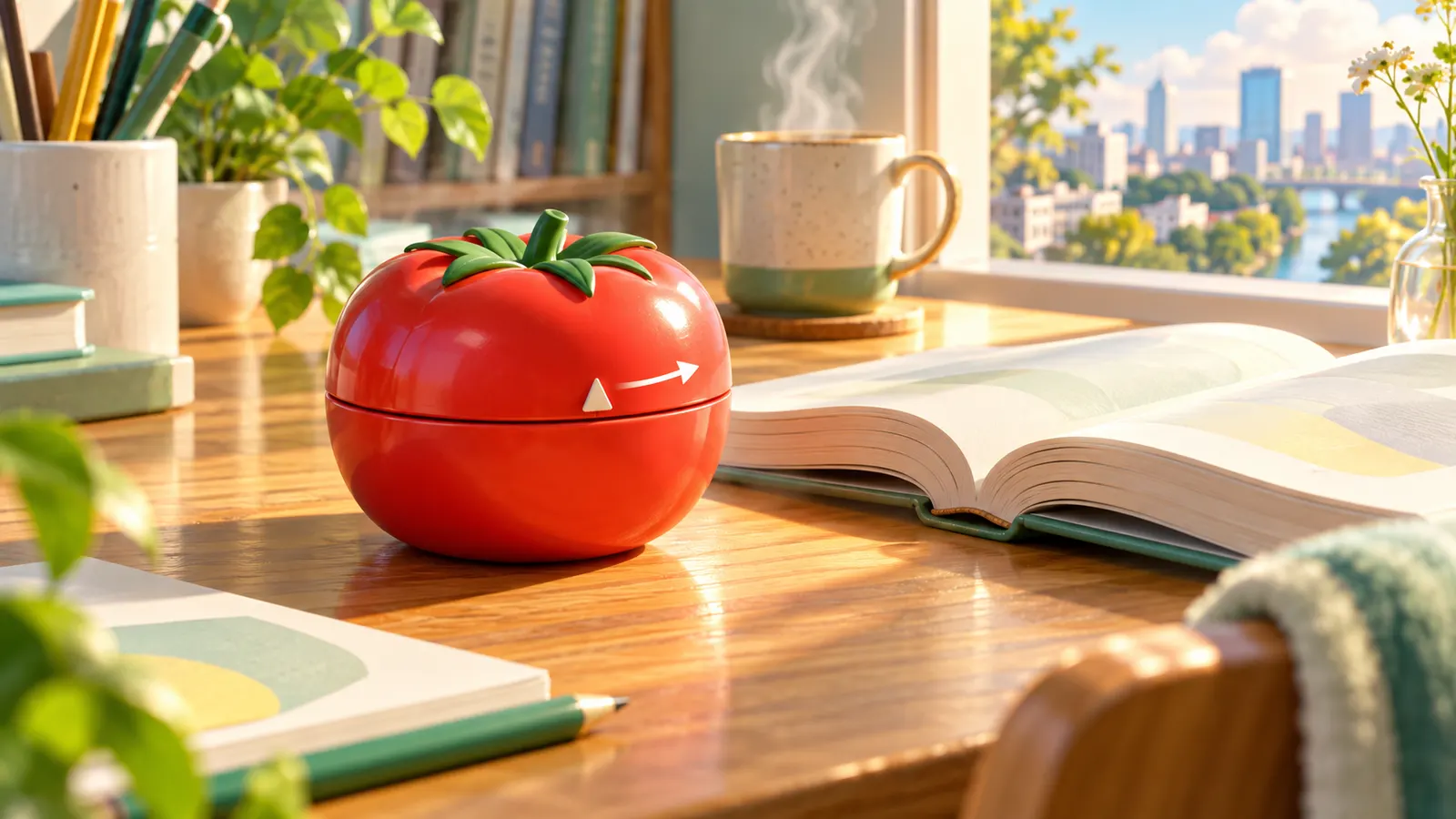
 読む前に予想してみよう!
ポモドーロ・テクニックの「25分」は、脳科学の実験で決められた最適な時間だ
考案者が自分で試して決めた区切り。25分が最適という科学的な証拠はない。
 研究カード(どんな研究?)
- 対象
- オランダなどの大学生
- 規模
- 87〜176人の実験+22サンプルのメタ分析
- 研究の種類
- ランダム割り付けの実験+メタ分析
- 確かさ
- ★★☆☆☆
時間で区切って休む方法は、疲れや気の散りを減らす効果が報告されている。でも「25分」が特別という証拠はなく、成績差は出ない研究も。
ひとことで言うと休けいを先に決めておくと、気分がラクになる人もいる!
タイマーを25分にセットして集中、鳴ったら5分休憩。これを4回くり返したら長めの休憩。勉強好きなら一度は聞いたことがあるポモドーロ・テクニックです。
ポモドーロはイタリア語で「トマト」。1980年代に、当時大学生だったフランチェスコ・シリロが、トマト型のキッチンタイマーを使って始めたのが名前の由来です。
世界中で大人気のこの方法、実は科学的に検証されたのはごく最近。調べてみると、結果は「効く部分もあるけど、魔法ではない」でした。
01決めて休むと、疲れにくかった
ポイントは「同じ量を、より短い時間で、よりラクな気分でこなせた」こと。休むタイミングを先に決めておくと、「まだ頑張れるかな…」と迷うムダが減るのかもしれません。
02別の実験では、差が出なかった
ところが2025年に発表された別の研究では、大学生94人の2時間の自習で比べると、ポモドーロ派は自分で休んだ人より疲れが早く増え、やる気も早く下がりました。最終的な疲れややる気、作業量には差がありませんでした。
さらに2026年には、同じ研究グループを含むチームが大学生176人で読解課題を使って比べたところ、今度は自分で休憩を決めた人の方が気分がよく、集中ややる気も高いという、2023年とは逆向きの結果に。理解度テストの成績には差がありませんでした。
さらに、短い休憩(10分以内のマイクロブレイク)を調べた研究をまとめた2022年のメタ分析(たくさんの研究を束ねて傾向を見る分析)では、短い休憩は元気を回復させ、疲れを減らす効果があった一方、作業の成績アップははっきりしませんでした。
つまり、ポモドーロは「気分よく続けるための仕組み」としては有望。でも「これで成績が上がる」と言い切れる証拠は、まだそろっていません。
03自分用ポモドーロの作り方
04「集中が切れたら休む」方式もアリ
2025年の研究では、ポモドーロのほかにフロータイムという方法も比べられました。これは、時間を決めずに集中が切れたところで休み、休憩の長さを直前の勉強時間に合わせて決めるやり方です。
結果は、作業量や集中の深さに大きな差はなし。つまり「どの方式が正解」というより、自分が続けやすい方式を選べばいいということです。
また、仕事中の休憩についてのメタ分析では、休憩が長いほど作業成績の回復も大きい傾向が見られ、とても疲れる作業のあとは10分以上の休憩が必要かもしれないと指摘されています。難しい問題を解き続けたあとは、5分にこだわらず長めに休むのも手です。
05まとめ
ポモドーロの本当の価値は、「25分」という数字ではなく、休むタイミングを先に決めて、迷いを減らすことにあるようです。
やる気が出ない日は「とりあえず1回だけ」とタイマーを押してみてください。始めてしまえば、脳はあんがい付いてきます。
この研究を英語で読もう原田英語の English CornerIn the Pomodoro technique, you study for 25 minutes, take a 5-minute break, and repeat. 音声
音声 4択クイズ9問A2・B1・B2タップして開く
原田英語の English Corner
この研究を英語で読もう
The Pomodoro technique is a popular way to study. You work for 25 minutes and then rest for 5 minutes. Pomodoro means "tomato" in Italian, because the man who made it used a tomato timer.
Scientists have tested this idea only recently. Planned breaks may help you feel less tired. But studies have not shown better test results, and 25 minutes is not a magic number. You can change the times.
71 words ・ CEFR A2
和訳を見る
ポモドーロ・テクニックは人気のある勉強法です。25分勉強して、それから5分休みます。ポモドーロはイタリア語で「トマト」という意味で、考えた人がトマト型のタイマーを使っていたからです。
科学者たちがこの方法を調べたのはごく最近のことです。決まった休憩をとると、疲れを感じにくくなるかもしれません。しかし、研究ではテストの結果が良くなることは示されておらず、25分は魔法の数字ではありません。時間は変えてもかまいません。
4択リーディングクイズ
Q1. What is the passage mainly about?
ポモドーロ・テクニックを科学的に調べた結果がテーマなので D。
Q2. What may planned breaks help you do?
Planned breaks may help you feel less tired. とあるので B。
Q3. In this passage, "a magic number" means a number that ...
magic number は「誰にでも完璧に効く特別な数」。25分はそうではない、という文脈なので C。
In the Pomodoro technique, you study for 25 minutes, take a 5-minute break, and repeat. Francesco Cirillo created it in the 1980s with a kitchen timer shaped like a tomato. The method has been popular for a long time, but scientists only started testing it recently.
In a 2023 study in the Netherlands, 87 university students studied with fixed breaks or took breaks whenever they wanted. The students who took breaks freely felt more tired and distracted, but they finished the same amount of work.
A 2026 study with 176 students found the opposite. This time, the students who chose their own breaks felt better. Neither study found a difference in results. So the technique may help some people feel comfortable, but there is nothing special about 25 minutes.
129 words ・ CEFR B1
和訳を見る
ポモドーロ・テクニックでは、25分勉強し、5分休憩をとり、それを繰り返します。フランチェスコ・シリロが1980年代に、トマトの形をしたキッチンタイマーを使って考え出しました。この方法は長い間人気がありますが、科学者が検証を始めたのはごく最近です。
オランダでの2023年の研究で、87人の大学生が、決まった休憩で勉強するか、好きなときに休憩をとって勉強しました。自由に休憩した学生は疲れや気の散りを強く感じましたが、終えた作業量は同じでした。
176人の学生を対象とした2026年の研究では、逆の結果が出ました。今度は、自分で休憩を決めた学生の方が気分が良かったのです。どちらの研究でも結果に差は見られませんでした。だから、この方法は気持ちよく続ける助けになる人もいるかもしれませんが、25分という長さに特別な意味はありません。
4択リーディングクイズ
Q1. What did the 2023 study find about students who took breaks freely?
The students who took breaks freely felt more tired and distracted とあるので A。作業量は同じだった。
Q2. How was the 2026 study different from the 2023 study?
A 2026 study with 176 students found the opposite. This time, the students who chose their own breaks felt better. とあるので C。
Q3. What is the writer's conclusion?
最終文 the technique may help some people feel comfortable, but there is nothing special about 25 minutes とあるので B。
Under the Pomodoro technique, devised by Francesco Cirillo in the 1980s, you work for 25 minutes, rest for 5, and take a longer break after four cycles. It was popular for decades before anyone tested it, and the studies so far disagree. In 2023, researchers at Maastricht University had 87 students complete self-study sessions with Pomodoro-style breaks, shorter fixed breaks, or breaks taken whenever they chose.
Students who rested at will reported more fatigue, more distraction and lower motivation, but they got just as much work done. A 2025 study of 94 students found a different pattern. Fatigue rose and motivation fell faster under the Pomodoro schedule, while final outcomes were similar. In 2026, a study of 176 students reading texts reported better mood and concentration with self-chosen breaks, and again no difference in comprehension scores.
So fixed breaks may make studying feel easier for some people, but nothing here shows that they improve learning. Each study looked at a single session, and most of the data came from students rating their own feelings. A 2022 meta-analysis also found that longer breaks tended to restore performance more than short ones, which gives little support to a strict 5-minute rest.
199 words ・ CEFR B2
和訳を見る
1980年代にフランチェスコ・シリロが考案したポモドーロ・テクニックでは、25分作業し、5分休み、4回繰り返すごとに長めの休憩をとります。この方法は検証される前から何十年も人気があり、これまでの研究の結果は一致していません。2023年、マーストリヒト大学の研究者たちは、87人の学生に、ポモドーロ型の休憩、より短い固定休憩、好きなときにとる休憩のいずれかで、自習をしてもらいました。
自由に休んだ学生は、疲れや気の散りを多く報告し、やる気も低かったものの、こなした作業量は同じでした。94人の学生を対象とした2025年の研究では、別のパターンが見られました。ポモドーロのスケジュールでは疲れがより早く増え、やる気がより早く下がりましたが、最終的な結果は同程度でした。2026年には、文章を読む176人の学生を対象とした研究が、自分で決めた休憩の方が気分と集中が良かったと報告し、ここでも理解度テストの点数に差はありませんでした。つまり、決まった休憩は一部の人にとって勉強を楽に感じさせるかもしれませんが、学習を向上させることを示すものはここにはありません。
どの研究も1回のセッションしか調べておらず、データの大部分は学生が自分の感覚を評価したものでした。2022年のメタ分析でも、休憩が長いほど成績の回復が大きい傾向が見られました。これは5分きっかりの休憩をあまり支持しないのです。
4択リーディングクイズ
Q1. What does the author say about the studies on the Pomodoro technique?
the studies so far disagree とあり、2023年と2025年・2026年で疲れや気分への効果の向きが異なるので D。
Q2. What did all three studies have in common?
2023年は got just as much work done、2025年は final outcomes were similar、2026年は no difference in comprehension scores。学習成果に明確な差がない点が共通なので C。
Q3. Why does the 2022 meta-analysis give little support to a strict 5-minute rest?
longer breaks tended to restore performance more than short ones とあり、5分固定の根拠が弱いことを示すので A。
重要単語
- breakA2名詞休憩Take a short break before you get exhausted.
 take a break「休憩をとる」。lunch break(昼休み)、coffee break も定番。動詞 break(壊す)と同じ語。
 - fatigueB2名詞疲労Planned breaks may reduce fatigue. 発音は /fəˈtiːɡ/。mental fatigue(精神的疲労)。tiredness より硬い語。
- productivityB2名詞生産性Productivity did not differ between the groups. produce → productive(生産的な)→ productivity。反対の counterproductive(逆効果の)も重要。
- self-regulatedC1形容詞自己調整的な(自分で決める)Self-regulated breaks depend on your own judgment. regulate(調整する・規制する)。self-regulated learning(自己調整学習)は教育学のキーワード。
- motivationB1名詞やる気、動機づけMusic can boost your motivation before studying. motivate(やる気にさせる)の名詞形。intrinsic / extrinsic motivation(内発的/外発的動機づけ)は評論文頻出。
- deviseC1動詞考案するCirillo devised the method in the 1980s. 名詞 device(装置)と同語源。devise a plan / method「計画・方法を考え出す」。発音は「ディヴァイズ」。
- cast doubt onC1動詞(句)~に疑問を投げかけるThe new data cast doubt on the old theory. cast は「投げる」。throw doubt on とも言う。研究結果を批判的に述べる定番表現。
 入試に出る順の単語帳を印刷する →
 全5561語の「科学英単語カード」で復習する →
 動画でもっと知る
動画は各チャンネルの公式埋め込みで表示しています(YouTube)。
この話題を TED で聞く
同じテーマの TED・TED-Ed を、 TED HACK で。英語の見どころ・使える表現・学習ミッションつきの日本語ガイドです。(運営:原田英語)

このネタ、誰かに教えたくなった?
25分勉強して5分休む「ポモドーロ・テクニック」。実験してみると、疲れにくくやる気も保てたという研究がある一方、成績そのものは変わらなかった研究も。25分は魔法の数字じゃないらしい。
押すと「マジかリスト」に保存されます
出典・参考文献(4件)タップで表示
- Biwer, Wiradhany, oude Egbrink & de Bruin (2023) Understanding effort regulation: Comparing 'Pomodoro' breaks and self-regulated breaks, British Journal of Educational Psychologydoi.org
- Smits, Wenzel & de Bruin (2025) Investigating the effectiveness of self-regulated, Pomodoro, and Flowtime break-taking techniques among students, Behavioral Sciencesdoi.org
- Göksu, Wiradhany & de Bruin (2026) When to take a break: Comparing effects of systematic short (Pomodoro) and self-regulated breaks on subjective experience and actual learning, Behavioral Sciencesdoi.org
- Albulescu et al. (2022) "Give me a break!" A systematic review and meta-analysis on the efficacy of micro-breaks for increasing well-being and performance, PLOS ONEdoi.org

※本記事は上記の研究・公開資料をもとに、原田英語が独自の言葉で解説したものです。引用は著作権法第32条の範囲で行い、出典を明記しています。画像はすべてオリジナルのイメージです。研究結果には限界や個人差があります。誤りのご指摘は原田英語のお問い合わせフォームから。