

 心理学ビミョー
退屈な作業を「楽しい」と言わせたら、1ドル組の方が「本当に楽しかった」と答えた理由
 2026.10.02
 English Corner(A2〜B2・4択クイズ)
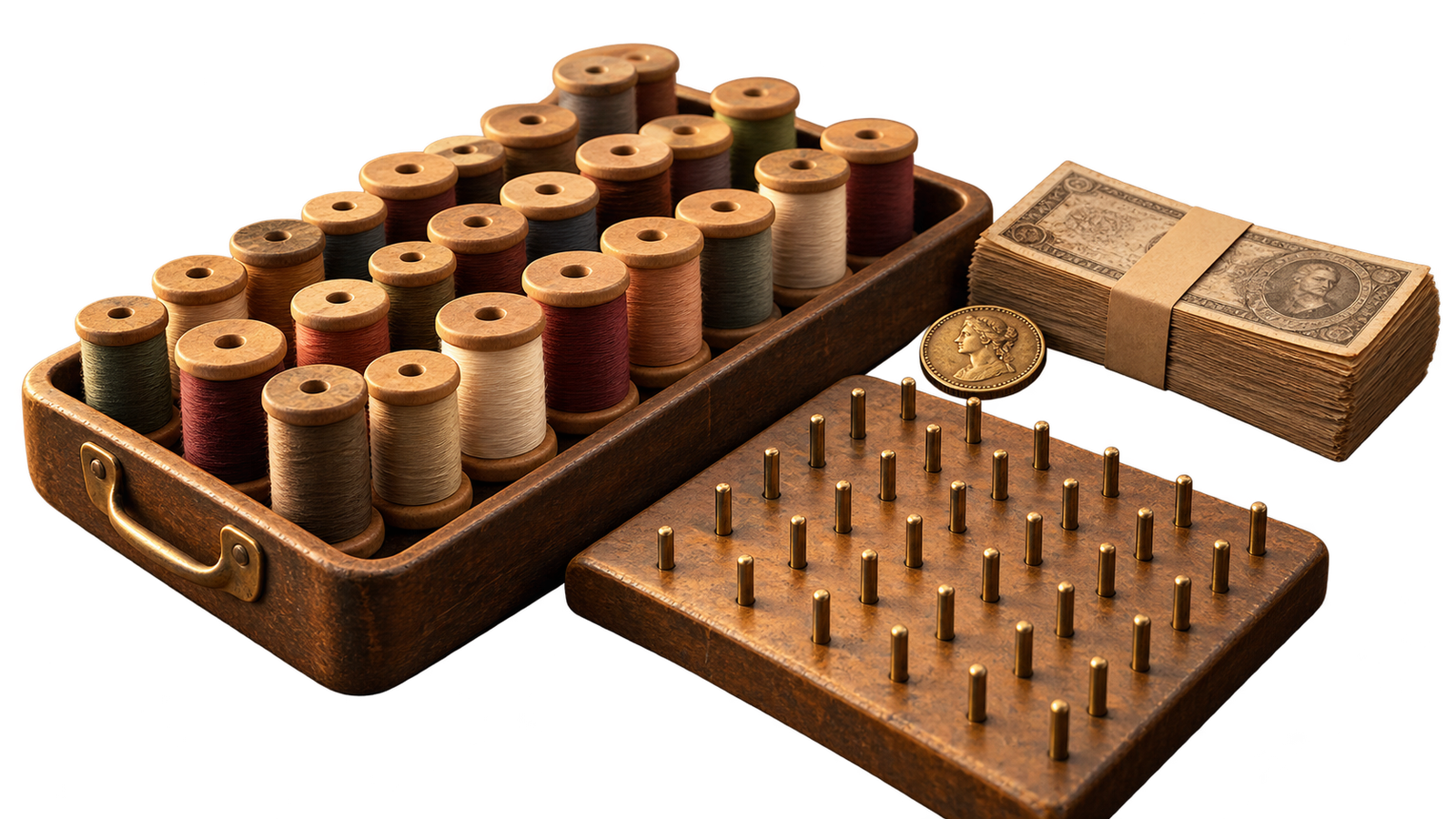
 読む前に予想してみよう!
認知的不協和の古典実験では、報酬が多い人ほど「作業が楽しかった」と答えた
報酬が1ドルと少ない人の方が、作業を楽しかったと評価した。
 研究カード(どんな研究?)
- 対象
- 男子大学生/19か国の成人
- 規模
- 71人(1959年)+4,898人(2024年の多施設追試)
- 研究の種類
- 実験室実験+多施設共同追試
- 確かさ
- ★★☆☆☆
退屈な作業を「楽しい」と伝えた報酬が1ドルの人は、20ドルの人より「楽しかった」と答えた。ただ2024年、同系統の実験の大規模追試で核心は再現されず。
ひとことで言うと「言ったこと」と「思っていること」がズレると、心は思いの方を変えちゃう!
キツネが、高いところにあるブドウを取ろうとして何度もジャンプ。でも届かない。するとキツネは言いました。「どうせあのブドウは酸っぱいに決まってる」。
イソップ童話の「すっぱいブドウ」。実はこれ、心理学のある有名理論そのものです。
「ブドウが欲しい」のに「手に入らない」。この心の中の矛盾が気持ち悪いから、キツネは「ブドウはまずい」と考えの方を書き換えたのです。この心のモヤモヤを、心理学では認知的不協和と呼びます。
011時間の退屈な作業と、1ドルのウソ
この理論を唱えたのは、アメリカの心理学者レオン・フェスティンガー。1959年、弟子のカールスミスと、ちょっと意地悪な実験を行いました。
1ドル組の評価も「とても楽しい」ではなく、「少しプラス」程度です。「本気で大好きになった」というより、「思ったほど悪くなかったかも」と考えが少し動いた、くらいの差だと理解しておきましょう。
普通に考えると、たくさんお金をもらった方が気分が良くなって「楽しかった」と答えそうです。でも結果は逆でした。
02なぜ「1ドル組」は本気になったのか
フェスティンガーの説明はこうです。
- 20ドル組:「お金のためにウソをついた」と自分に説明できる。心の矛盾は小さい
- 1ドル組:「たった1ドルで人にウソをついた自分」は認めたくない。矛盾が大きい
1ドル組は、このモヤモヤを解消するために、「いや、本当に少し楽しかったのかも」と、自分の気持ちの方を変えてしまった、というわけです。
同じ年には、厳しい「入会儀式」を経てグループに入った人ほど、そのグループを高く評価するという実験(Aronson & Mills, 1959)も発表されました。苦労して手に入れたものほど、価値があると思いたくなるのです。自分で組み立てた家具を高く評価するIKEA効果や、つぎ込んだお金を惜しんでやめられないサンクコスト効果とも、どこか似ていますね。

03どんでん返し:大規模な追試で再現されず
ところが、この有名な理論にも大きな問いが投げかけられています。
1967年には心理学者ベムが「人は自分の行動を見て、自分の気持ちを推測しているだけ」という別の説明(自己知覚理論)を提案し、長い論争が続きました。
そして2024年。19か国・39の研究室が協力し、4,898人を対象に、認知的不協和の代表的な実験方法「誘導服従パラダイム」を再現しようとしました。1ドル実験と同じ系統の方法ですが、今回はお金ではなく、自分の考えと反対の意見の作文を「自分で選んで書いた」と感じさせる条件とそうでない条件を比べています(1983年の研究の手順がもと)。
結果、理論の核心となる予測は支持されませんでした。「自分で選んで書いた」と感じさせても、意見の変化は「書かされた」場合と差がなかったのです。一方で、反対意見の作文を書いた人と、中立的な作文を書いた人の間には、意見の差が見られました。
研究者の間では、「実験の方法に問題があったのでは」「理論そのものを見直すべき」など、議論が続いています。なお、1ドルと20ドルを比べる元の実験そのものを、同じ規模で再現した研究ではない点にも注意が必要です。
04つじつま合わせに気づくために
05まとめ
認知的不協和は、「人は自分の矛盾を嫌う」という直感にぴったり合う理論です。でも、その代表的な実験方法がしっかり再現できるかは、今まさに問い直されています。
「すっぱいブドウ」の心は、たぶん誰にでもある。ただ、それをどう測るかは、心理学の宿題としてまだ残っているのです。
この研究を英語で読もう原田英語の English CornerIn Aesop's fable, a fox that cannot reach some grapes decides they must be sour. 音声
音声 4択クイズ9問A2・B1・B2タップして開く
原田英語の English Corner
この研究を英語で読もう
In 1959, students did a very boring task for one hour. Then they were asked to tell the next person, "It was fun." Some students got one dollar for this lie, and others got twenty dollars.
Later, the one-dollar students said the task was more fun! Psychologists say they changed their feelings to match their words. But in 2024, a very large new study of a similar kind could not repeat the key result.
74 words ・ CEFR A2
和訳を見る
1959年、学生たちは1時間とても退屈な作業をしました。その後、次の人に「楽しかったよ」と伝えるよう頼まれました。このウソで1ドルもらった学生もいれば、20ドルもらった学生もいました。
後で、1ドルの学生のほうが、作業がより楽しかったと答えたのです!心理学者は、彼らが自分の言葉に合わせて気持ちを変えたのだと言います。しかし2024年、似た種類の、とても大規模な新しい研究では、核心の結果を再現できませんでした。
4択リーディングクイズ
Q1. What were the students asked to tell the next person?
asked to tell the next person, "It was fun." とあるので B。
Q2. Which students said the task was more fun?
the one-dollar students said the task was more fun とあるので D。
Q3. In this passage, "repeat the key result" means ...
repeat は「繰り返す」。key result は「核心の結果」。同じ結果をもう一度得る(再現する)ことなので A。
In Aesop's fable, a fox that cannot reach some grapes decides they must be sour. Psychologists call the discomfort behind this kind of thinking cognitive dissonance. In 1959, Leon Festinger and James Carlsmith asked students to do a boring task for an hour and then tell the next participant that it was enjoyable. Some were paid one dollar, others twenty, yet the one-dollar group later rated the task as more enjoyable.
Festinger explained that the twenty-dollar group could justify their lie by the money, but the one-dollar group could not, so they changed their attitude instead. However, the original study was small, and in 2024, 39 labs in 19 countries tested a related method with 4,898 people. The key prediction was not supported, so the debate continues.
127 words ・ CEFR B1
和訳を見る
イソップ童話では、ブドウに手が届かないキツネが、あのブドウは酸っぱいに違いないと決めつけます。心理学者は、こうした考え方の背後にある不快感を認知的不協和と呼びます。1959年、レオン・フェスティンガーとジェームズ・カールスミスは、学生たちに1時間退屈な作業をさせ、その後、次の参加者にそれが楽しかったと伝えるよう頼みました。1ドルを支払われた人もいれば、20ドルを支払われた人もいましたが、後で作業をより楽しかったと評価したのは1ドルのグループのほうでした。
フェスティンガーは、20ドルのグループはお金によってウソを正当化できたが、1ドルのグループはできなかったので、代わりに態度を変えたのだと説明しました。しかし、元の研究は小規模で、2024年には19か国の39の研究室が4,898人を対象に関連する方法を検証しました。核心となる予測は支持されず、議論は続いています。
4択リーディングクイズ
Q1. What is the purpose of the fox story at the beginning?
キツネの話の直後に、この考え方の背後にある不快感を認知的不協和と呼ぶ、と導入しているので A。
Q2. According to Festinger, why did the one-dollar group change their attitude?
the one-dollar group could not (justify their lie by the money), so they changed their attitude とあるので B。
Q3. What was the result of the 2024 study?
The key prediction was not supported とあるので C。
Aesop's fox, unable to reach the grapes, decides they were sour anyway. Leon Festinger called the tension behind such reasoning cognitive dissonance: when behavior and belief clash, people may adjust the belief. In a famous 1959 experiment, Festinger and Carlsmith had male students perform tediously repetitive tasks for an hour and then tell a waiting participant that the session had been enjoyable.
Those paid one dollar later rated the task at about 1.35 on a scale from minus 5 to plus 5, whereas those paid twenty dollars gave a rating close to that of a control group. The interpretation was that a large payment justified the lie, while a trivial one left a gap that could be closed only by deciding the task had not been so bad.
The difference was modest, and 11 of the 71 participants were excluded from analysis. Daryl Bem later proposed a rival account, self-perception theory, in which people simply infer their attitudes from their own behavior. In 2024, a collaboration of 39 laboratories in 19 countries tested a closely related induced-compliance procedure with 4,898 participants. Its central prediction about perceived choice was not supported, although that study did not repeat the dollar comparison itself.
200 words ・ CEFR B2
和訳を見る
ブドウに届かないイソップのキツネは、どうせあれは酸っぱかったのだと決めつけます。レオン・フェスティンガーは、こうした推論の背後にある緊張を認知的不協和と呼びました。行動と信念がぶつかると、人は信念のほうを調整することがあるのです。
1959年の有名な実験で、フェスティンガーとカールスミスは、男子学生に1時間退屈な繰り返しの作業をさせ、その後、待っている参加者に、この実験は楽しかったと伝えさせました。1ドルを支払われた人は後で作業を−5から+5の尺度で約1.35と評価したのに対し、20ドルを支払われた人は対照群に近い評価をしました。その解釈は、多額の支払いはウソを正当化したが、わずかな額ではズレが残り、それは作業はそれほど悪くなかったと決めることでしか埋められなかった、というものでした。
差は控えめなもので、参加者71人のうち11人は分析から除外されていました。ダリル・ベムはのちに、人は単に自分の行動から自分の態度を推測しているのだという対立する説明、自己知覚理論を提案しました。2024年には、19か国の39の研究室の共同研究が、4,898人の参加者を対象に、密接に関連する誘導服従の手続きを検証しました。選択したという感覚についての中心的な予測は支持されませんでしたが、その研究はドルの比較そのものを繰り返したわけではありません。
4択リーディングクイズ
Q1. How did Festinger interpret the one-dollar group's higher ratings?
a trivial one left a gap that could be closed only by deciding the task had not been so bad とあるので B。
Q2. What does self-perception theory propose?
people simply infer their attitudes from their own behavior とあるので A。
Q3. Why does the author mention that the 2024 study "did not repeat the dollar comparison itself"?
2024年の研究は関連する手続きの検証であり、1ドル対20ドルの元の実験を直接再現したものではない、と区別するためなので D。
重要単語
- dissonanceC2名詞不協和、食い違いShe felt dissonance between her words and her beliefs.
 音楽の「不協和音」から。反対は consonance / harmony。cognitive dissonance で覚える。
 - justifyB2動詞正当化するHe tried to justify his expensive purchase. 名詞 justification。The end justifies the means.「目的は手段を正当化する」。
- attitudeB1名詞態度、考え方Her attitude toward math changed after the class. attitude toward(s) ~「~に対する態度」。前置詞 toward をセットで。
- rewardB1名詞・動詞報酬、ごほうび/報いるThe reward was only one dollar. award(賞)と混同しない。in reward for ~「~の報酬として」。
- replicationC1名詞追試、再現A large replication tested the famous theory again. replicate の名詞形。multi-lab replication「多施設共同追試」。
- tediousC1形容詞退屈な、うんざりするTurning pegs for an hour was tedious. boring より硬い語。tedious work / task の形でよく使う。
- inferC1動詞推測する、推論するPeople may infer their feelings from their actions. 名詞 inference。infer A from B「BからAを推測する」。読解の設問文でも頻出。
 入試に出る順の単語帳を印刷する →
 全5561語の「科学英単語カード」で復習する →
 動画でもっと知る
動画は各チャンネルの公式埋め込みで表示しています(YouTube)。
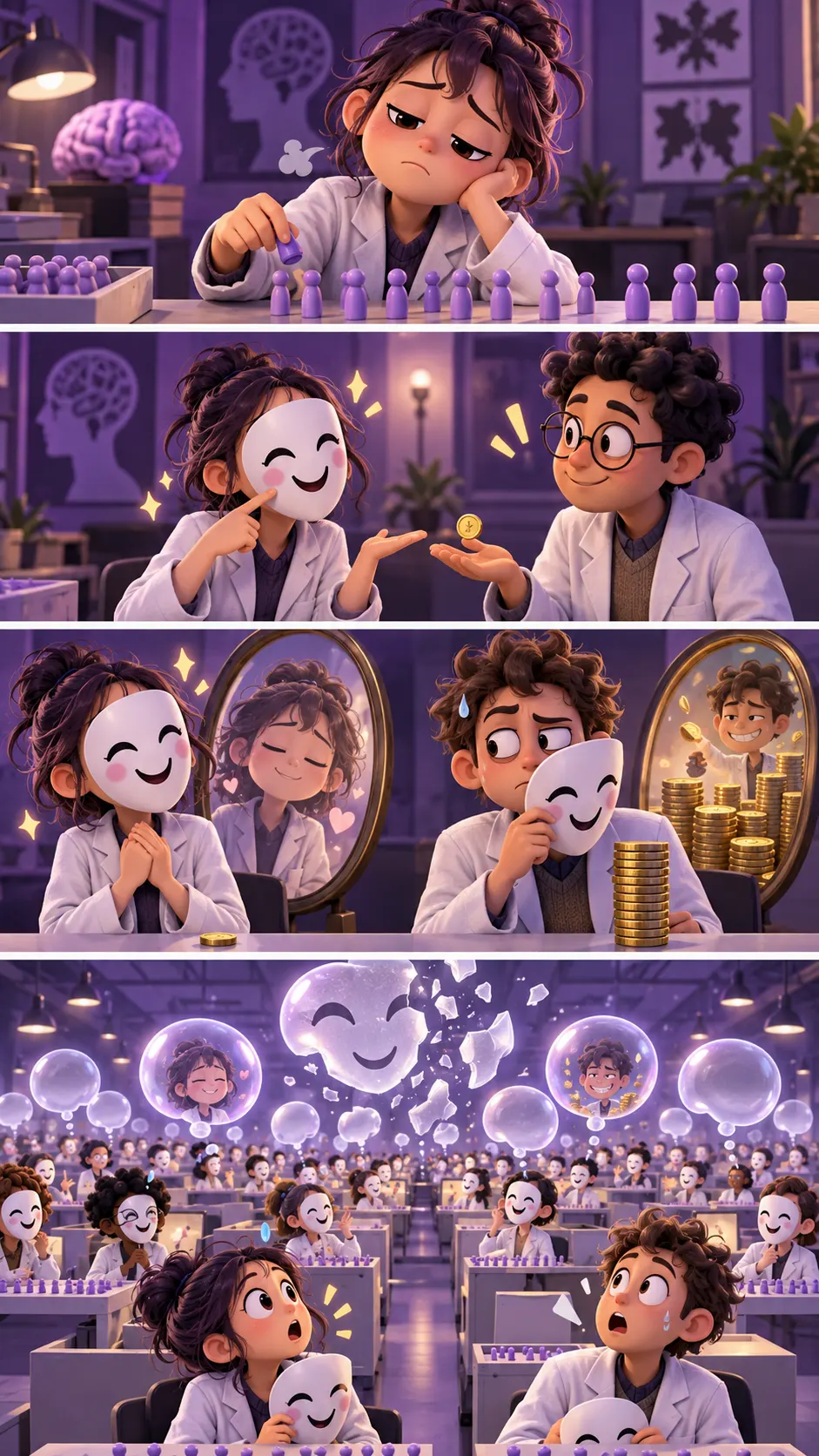
 4コマでわかる
このネタ、誰かに教えたくなった?
退屈な作業の後「楽しかったよ」と次の人にウソをつく役。報酬1ドルの人は20ドルの人より「本当に楽しかった」と答えたらしい。でも2024年、19か国39の研究室で似た実験を再現しようとしたら、核心部分は再現されなかった。
押すと「マジかリスト」に保存されます
 出典・参考文献(4件)タップで表示
- Festinger & Carlsmith (1959) Cognitive consequences of forced compliance, Journal of Abnormal and Social Psychologydoi.org
- Bem (1967) Self-perception: An alternative interpretation of cognitive dissonance phenomena, Psychological Reviewdoi.org
- Aronson & Mills (1959) The effect of severity of initiation on liking for a group, Journal of Abnormal and Social Psychologydoi.org
- Vaidis et al. (2024) A multilab replication of the induced-compliance paradigm of cognitive dissonance, Advances in Methods and Practices in Psychological Sciencedoi.org

※本記事は上記の研究・公開資料をもとに、原田英語が独自の言葉で解説したものです。引用は著作権法第32条の範囲で行い、出典を明記しています。画像はすべてオリジナルのイメージです。研究結果には限界や個人差があります。誤りのご指摘は原田英語のお問い合わせフォームから。
 これも「マジか!?」
 心理学
心理学
「環境のために」より「この部屋の皆さんは」が効いた? ホテルのタオル実験と追試の結末
 心理学
心理学
「この子は伸びる」と先生に期待された子は本当に伸びた? ピグマリオン効果、50年の論争


 心理学
心理学
全員に"同じ性格診断"を配ったら大絶賛。占いが当たる気がする「バーナム効果」

 心理学
心理学
「頭の良さは遺伝で決まる」は誤解? 双子研究の「遺伝率5割」の正しい読み方

 心理学
心理学
10代は「人気者」より「親友1人」? 15歳から25歳まで追いかけた研究のちょっと意外な結論

 心理学
心理学