心理学ホント
「いいことがあった!」への返し方と、関係の未来はつながっている?"喜びの受け止め方"4パターン
 2026.10.02
 English Corner(A2〜B2・4択クイズ)
 読む前に予想してみよう!
人間関係では、つらい時に支えることより、うれしい知らせへの反応のほうが大事なこともある
79組の研究では、2か月後の関係の良さや別れと、うれしい話への反応のほうが強く結びついていた。
 研究カード(どんな研究?)
- 対象
- 米国の大学生・カップル
- 規模
- 79組など複数研究
- 研究の種類
- 日記調査+会話の録画観察
- 確かさ
- ★★★★☆
79組のカップルを調べたら、2か月後の関係の良さと結びついていたのは「つらい話」より「うれしい話」への反応だった。喜びを一緒に喜べるかがカギ。
ひとことで言うと友達のうれしい話には「すごい!どうだったの?」と返そう!
「聞いて! 部活でレギュラーに選ばれた!」
友達からこう言われたとき、あなたはどう返しますか? 「おめでとう」と笑顔で返す人もいれば、「へー、よかったね」とスマホを見たまま答える人もいるでしょう。
実はこの何気ない一言が、2人の関係の未来とつながっているかもしれない——。そんな研究があります。
01うれしい話は、話すとさらにうれしくなる
心理学では、いいことがあったときにそれを人に話して分かち合うことを「キャピタライゼーション」と呼びます。
カリフォルニア大学のゲーブルらは、日々の出来事を記録してもらう調査などで、うれしい出来事を人に話した日は、出来事そのものの効果以上に気分が良くなることを確かめました。さらに、聞き手が積極的に喜んでくれたと感じたとき、その効果はいっそう大きくなりました。
02反応は4パターンに分けられる
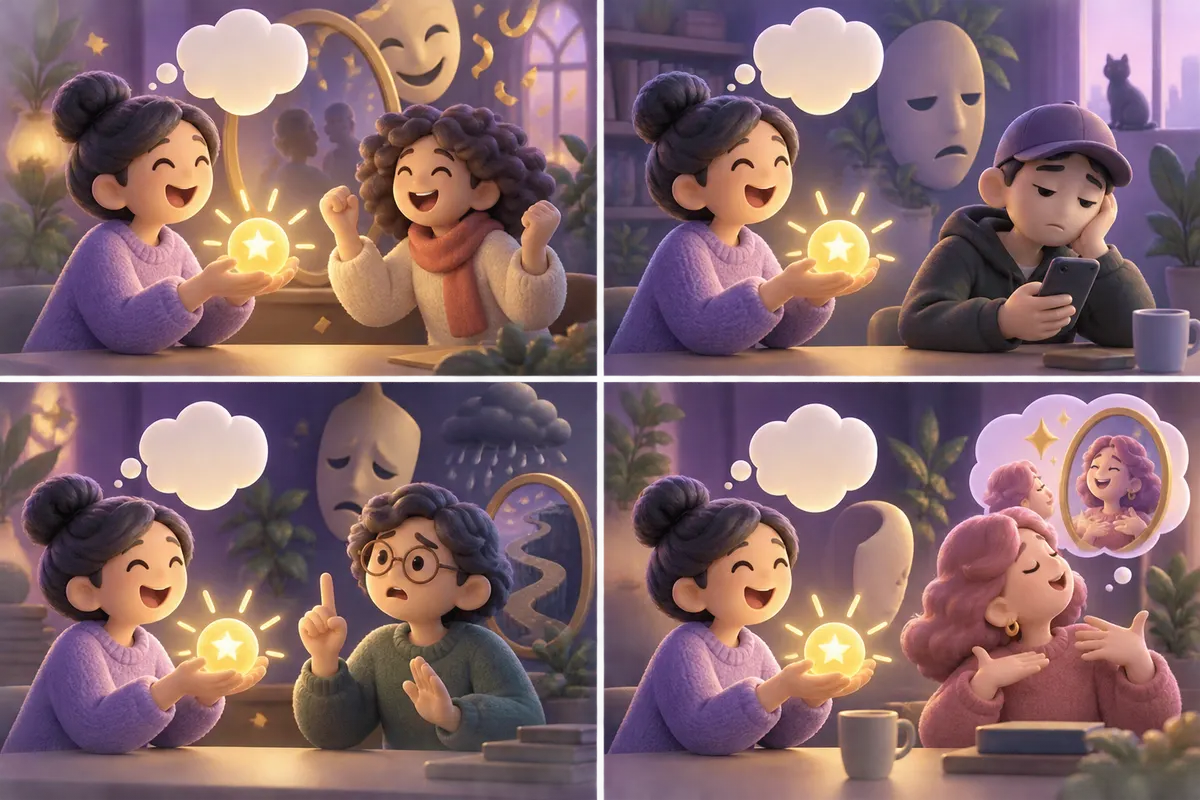
ゲーブルらは、うれしい知らせへの返し方を「積極的か・消極的か」「関係を育てるか・壊すか」の2つの軸で、4つに分けました。
- 積極的・建設的:「すごい! どうやって選ばれたの? 詳しく聞かせて!」
- 消極的・建設的:「へー、よかったね」(悪くはないが、熱がない)
- 積極的・破壊的:「でもレギュラーって練習きつくなるよ? 勉強大丈夫?」
- 消極的・破壊的:「ふーん。そういえば昨日さ……」(話をそらす)
関係を育てるのは、1つ目の「積極的・建設的」な反応だけでした。意外なのは、2つ目の「よかったね」も、良い反応とはみなされにくいことです。
03「つらい時の支え」より効いていた?
さらに驚きの結果があります。
なぜ、うれしい話への反応がそこまで大事なのでしょうか。研究者たちは、いやな出来事に比べてうれしい出来事は毎日のように起こることに注目しています。小さな「聞いて!」は、1日に何度も訪れる関係づくりのチャンス。そのたびに一緒に喜んでもらえるか、受け流されるかが、少しずつ積み重なっていくと考えられます。
また、つらい話のときは「支えなきゃ」と誰でも身構えますが、うれしい話は「わざわざ反応しなくても大丈夫」と油断しがちです。だからこそ、差がつきやすいのかもしれません。
「本当の友達は、困ったときに助けてくれる人」とよく言われます。もちろんそれも大切です。でも研究は、「うれしいときに本気で一緒に喜んでくれる人」も、同じくらい、あるいはそれ以上に大切かもしれないと示しています。
04まとめ
友達のうれしい話は、関係を深める大チャンス。「へー、よかったね」で終わらせず、「すごい! 詳しく聞かせて!」と身を乗り出してみてください。
喜びを分かち合うと、喜びは大きくなる。そして、それを一緒に喜んでくれる人のことを、人はきっと大切に思うのです。
この研究を英語で読もう原田英語の English CornerPsychologists use the word "capitalization" for sharing good news with other people. 音声
音声 4択クイズ9問A2・B1・B2タップして開く
原田英語の English Corner
この研究を英語で読もう
When something good happens, we often want to tell a friend. Psychologists found that sharing good news makes us feel even happier. It works best when the listener is really excited for us.
In one study, 79 couples talked about good and bad events. Their reactions to good news were strongly linked to how the couples were doing two months later. So when a friend shares good news, ask a question and celebrate together.
74 words ・ CEFR A2
和訳を見る
何かいいことが起きると、私たちはよく友達に話したくなります。心理学者たちは、うれしい知らせを分かち合うと、さらに幸せな気分になることを発見しました。聞き手が本気で一緒に喜んでくれると、いちばん効果があります。
ある研究では、79組のカップルが良い出来事といやな出来事について話しました。うれしい知らせへの反応は、2か月後のカップルの様子と強く結びついていました。だから友達がうれしい知らせを話してくれたら、質問をして一緒にお祝いしましょう。
4択リーディングクイズ
Q1. What is the passage mainly about?
うれしい知らせを分かち合うことと、それへの反応の大切さがテーマなので C。
Q2. How many couples were in the study?
In one study, 79 couples talked about ... とあるので B。2は「2か月後」。
Q3. In this passage, "celebrate" means ...
celebrate は「祝う」。いいことを一緒に喜ぶ意味なので A。
Psychologists use the word "capitalization" for sharing good news with other people. Research by Shelly Gable's team showed that people feel better on days when they tell others about positive events, especially when the listener seems truly excited. The team divided responses into four types.
For example, "Wow! How did you do it?" is active and constructive. "Oh, that's nice" is passive, while pointing out problems or changing the subject is destructive. Only the first type helped relationships grow. In another study, 79 couples were filmed talking about recent good and bad events.
Their reactions to good news were more closely linked to relationship quality two months later than their reactions to bad news. One reason may be that good things, even little ones, happen almost every day.
128 words ・ CEFR B1
和訳を見る
心理学者は、うれしい知らせをほかの人と分かち合うことを「キャピタライゼーション」と呼びます。シェリー・ゲーブルのチームの研究によると、人は良い出来事をほかの人に話した日に気分が良くなり、聞き手が本当に喜んでいるように見えるときは特にそうでした。チームは反応を4つのタイプに分けました。
たとえば「すごい!どうやったの?」は積極的・建設的です。「へえ、よかったね」は消極的であり、問題点を指摘したり話題を変えたりするのは破壊的です。関係を育てたのは1つ目のタイプだけでした。別の研究では、79組のカップルが最近の良い出来事といやな出来事について話す様子が撮影されました。
2か月後の関係の良さとより強く結びついていたのは、悪い知らせへの反応よりも、良い知らせへの反応でした。理由の一つは、良いことは、小さなものも含めればほぼ毎日起こるからかもしれません。
4択リーディングクイズ
Q1. What does "capitalization" mean in this passage?
第1文で sharing good news with other people と定義されているので C。
Q2. Which response is described as active and constructive?
"Wow! How did you do it?" is active and constructive. とあるので A。B は passive。
Q3. Why might reactions to good news matter so much?
One reason may be that good things, even little ones, happen almost every day. と理由が挙げられているので D。
In a series of studies, Shelly Gable and her colleagues looked at what happens when people share good news. On days when participants told others about a positive event, they gained extra benefits beyond the effect of the event itself, especially when the listener seemed enthusiastic. Psychologists call this "capitalization."
Gable's team sorted responses along two dimensions, active versus passive and constructive versus destructive. Only active-constructive replies went along with better relationships. In a later study, 79 couples were video-recorded while discussing recent positive and negative events. The researchers analyzed both how understood the speakers felt and how outside observers rated the exchanges.
Responses to positive events predicted relationship well-being, and breakups, two months later more strongly than responses to negative events did. This is observational research, so the arrow could point either way. Warm responses may strengthen a relationship, or people in strong relationships may simply respond more warmly.
We usually judge a friend by how they behave in hard times, but the way they react to good news may matter just as much. One likely reason is frequency. Good events happen more often than bad ones, and each one is another chance to grow closer.
197 words ・ CEFR B2
和訳を見る
一連の研究で、シェリー・ゲーブルと同僚たちは、人がうれしい知らせを分かち合うと何が起こるかを調べました。参加者が良い出来事をほかの人に話した日には、出来事そのものの効果を超えた追加の恩恵があり、聞き手が熱心に見えたときは特にそうでした。心理学者はこれを「キャピタライゼーション」と呼びます。
ゲーブルのチームは、反応を「積極的か消極的か」「建設的か破壊的か」という2つの軸で分類しました。より良い関係と結びついていたのは、積極的・建設的な返答だけでした。その後の研究では、79組のカップルが最近の良い出来事といやな出来事について話し合う様子が録画されました。研究者たちは、話し手がどれだけ理解されたと感じたかと、外部の観察者がそのやりとりをどう評価したかの両方を分析しました。
良い出来事への反応は、悪い出来事への反応よりも、2か月後の関係の良さや別れをより強く予測しました。これは観察研究なので、因果の矢印はどちら向きでもありえます。温かい反応が関係を強めるのかもしれませんし、関係の強い人がただ温かく反応しているだけかもしれません。
私たちはふつう、困ったときにどうふるまうかで友達を判断しますが、うれしい知らせへの反応も同じくらい大切なのかもしれません。理由として考えられるのは頻度です。良い出来事は悪い出来事より頻繁に起こり、そのたびに親しくなる機会が訪れるのです。
4択リーディングクイズ
Q1. What is the main idea of the passage?
the way they react to good news may matter just as much とあり、全体でその根拠を示しているので B。
Q2. According to the passage, what did the 79-couple study measure?
analyzed both how understood the speakers felt and how outside observers rated the exchanges とあるので C。
Q3. What limitation does the author mention?
This is observational research, so the arrow could point either way. とあり、反応が関係を良くするのか、関係の強い人が温かく反応するだけなのか分からない、つまり因果の方向が不明なので A。
重要単語
- capitalizationC1名詞(心理学で)良い出来事を人と分かち合うことCapitalization means sharing good news with others.
 capitalize on ~「~を活用する」から。良い出来事を「最大限に生かす」イメージ。普通は「大文字にすること」の意味も。
 - enthusiasticB2形容詞熱心な、大喜びのShe gave an enthusiastic reply. 名詞 enthusiasm。be enthusiastic about ~「~に夢中だ」。
- constructiveB2形容詞建設的なThank you for your constructive comments. construct(組み立てる)から。反対語は destructive(破壊的な)。constructive criticism「建設的な批判」。
- passiveB2形容詞受け身の、消極的なA passive answer can sound cold. 反対語は active。文法の「受動態」も passive voice。
- well-beingB2名詞幸福、心身の良い状態Good friends support our well-being. happiness より広く、心と体と社会的な良い状態を表す。長文頻出。
- perceiveB2動詞(~だと)感じ取る、認識するShe perceived her friend as kind. perceive A as B「AをBだと受け取る」。名詞 perception も重要。
 入試に出る順の単語帳を印刷する →
 全5561語の「科学英単語カード」で復習する →
 この話題を TED で聞く
同じテーマの TED・TED-Ed を、 TED HACK で。英語の見どころ・使える表現・学習ミッションつきの日本語ガイドです。(運営:原田英語)


このネタ、誰かに教えたくなった?
カップルの会話を録画して2か月追ったら、関係の良さと強く結びついていたのは「つらい話」への支え方より「いい知らせ」への反応だったらしい。「へー」で済ませるか、「すごい!詳しく聞かせて」と返すか。
押すと「マジかリスト」に保存されます
 出典・参考文献(3件)タップで表示
- Gable et al. (2004) What do you do when things go right? The intrapersonal and interpersonal benefits of sharing positive events, Journal of Personality and Social Psychologydoi.org
- Gable, Gonzaga & Strachman (2006) Will you be there for me when things go right? Supportive responses to positive event disclosures, Journal of Personality and Social Psychologydoi.org
- Peters, Reis & Gable (2018) Making the good even better: A review and theoretical model of interpersonal capitalization, Social and Personality Psychology Compassdoi.org

※本記事は上記の研究・公開資料をもとに、原田英語が独自の言葉で解説したものです。引用は著作権法第32条の範囲で行い、出典を明記しています。画像はすべてオリジナルのイメージです。研究結果には限界や個人差があります。誤りのご指摘は原田英語のお問い合わせフォームから。