

 動物・植物ビミョー
森の木は地下のキノコ網で「会話」している? 大人気の説に専門家が待ったをかけた
 2026.10.02
 English Corner(A2〜B2・4択クイズ)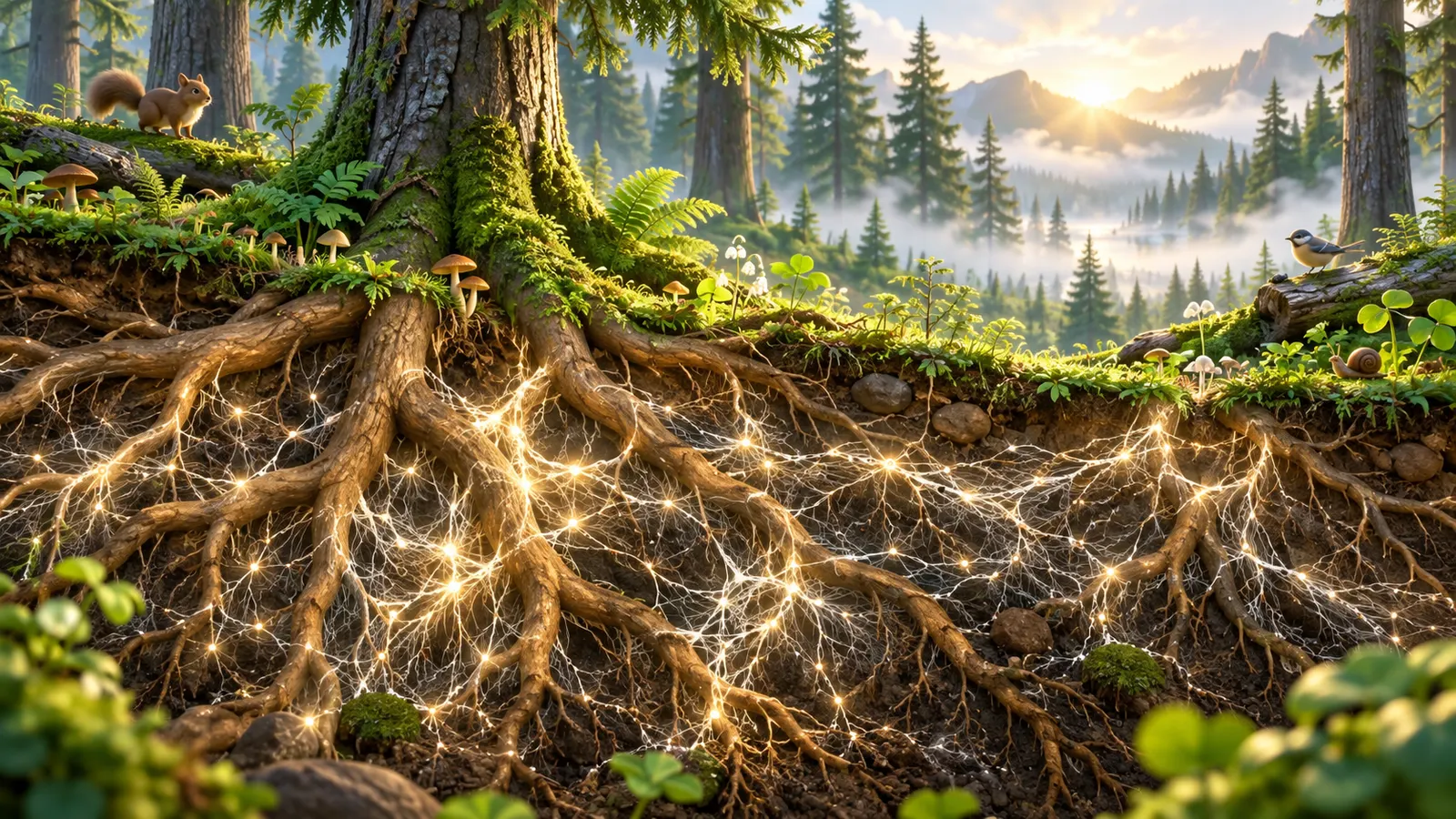
 読む前に予想してみよう!
森の木どうしが地下の菌のネットワークで会話し、母樹が子どもの木を優先して育てていることは、すでに証明されている
2023年の検証論文で、野外でそうした効果を示す証拠は不十分だと指摘された。
 研究カード(どんな研究?)
- 対象
- 森林の樹木と菌根菌
- 規模
- 野外研究の総点検(数十件)
- 研究の種類
- 野外実験とその系統的レビュー
- 確かさ
- ★★☆☆☆
木の根と菌がつながる「菌根ネットワーク」は実在する。でも「木が助け合い、母樹が子に栄養を送る」は証拠が弱いと2023年に指摘された。
ひとことで言うと木の根とキノコがつながるのはホント。でも「会話」は言いすぎかも!
「森の木々は、地下に張りめぐらされたキノコのネットワークでつながっている。弱った仲間に栄養を分け、危険を知らせ合い、母親の木は自分の子どもを見守っている」
ロマンチックですよね。本やドキュメンタリー、映画の世界観にまでなった、大人気の話です。
ところが2023年、この話に専門家から大きな「待った」がかかりました。どこまでがホントで、どこからが言いすぎなのでしょうか。
01根と菌がつながっているのはホント
まず、土台の部分はホントです。
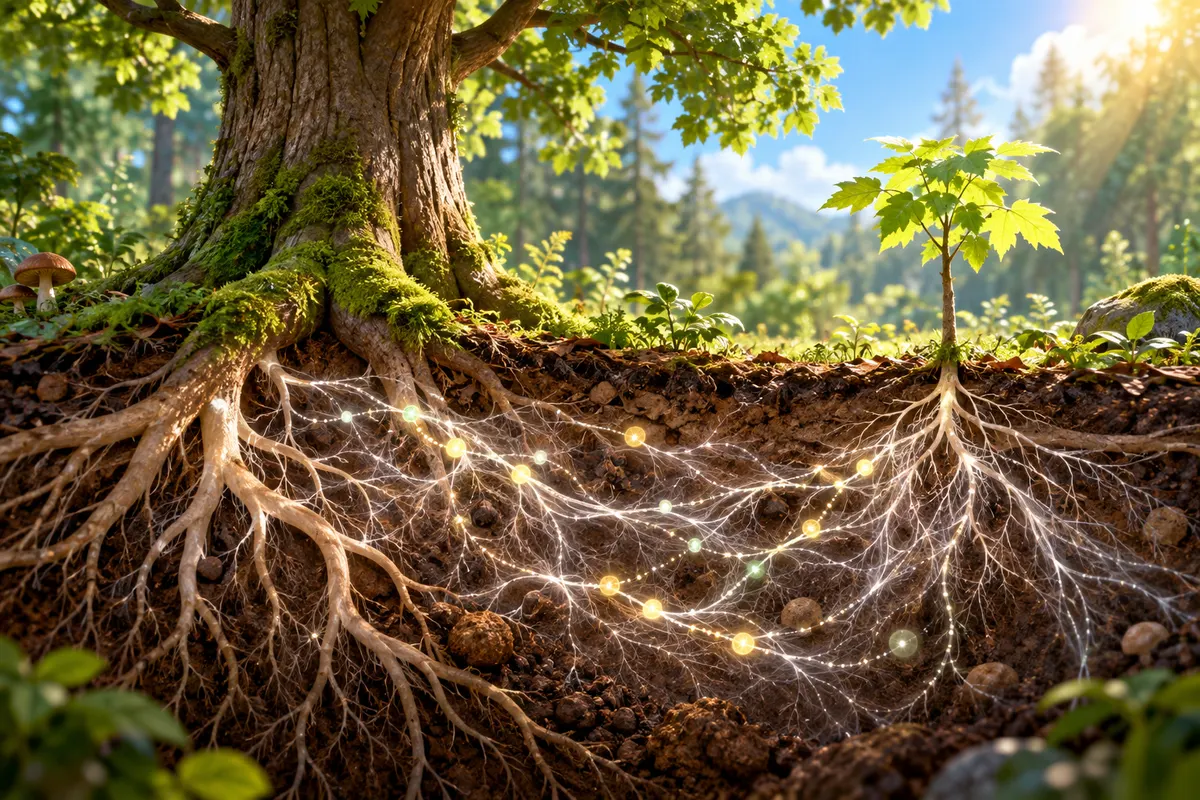
多くの木の根には、菌根菌(きんこんきん)という菌がくっついて暮らしています。菌は土の中に細い糸(菌糸)を張りめぐらせて水や栄養を集め、木に渡す。そのお礼に、木は光合成で作った糖を菌に渡す。持ちつ持たれつの関係です。
そして一つの菌が、何本もの木の根に同時につながることがあります。これが「共通菌根ネットワーク」、通称「ウッド・ワイド・ウェブ」です。
02ブームの始まりは1997年の『Nature』
2016年には、スイスの森で、目印つきの炭素を吸わせたトウヒの大木から、まわりのブナなど別の種類の木の根へ、炭素が地下でやり取りされているらしいという研究が『Science』に載りました(Klein ら)。
ここまで聞くと、「やっぱり木は助け合ってる!」と思えますよね。
032023年、専門家たちが論文を洗い直した
カナダ・アルバータ大学のジャスティン・カーストさん、ブリティッシュコロンビア大学のメラニー・ジョーンズさん、アメリカ・ミシシッピ大学のジェイソン・ホークセマさんは、2023年に『Nature Ecology & Evolution』で、この分野の野外研究を一つひとつ検証した論文を発表しました。
チェックしたのは、よく語られる三つの主張です。
- 森の中には共通菌根ネットワークが広く存在する
- ネットワークを通じて届いた栄養で、若木がよく育つ
- 大きな「母樹」が、自分の子どもの木を優先して助ける
結果は厳しいものでした。主張1と2は野外での証拠が不十分か結果がバラバラで、3にいたっては査読を経て発表された証拠が一つもない状態だったのです。炭素の移動を示した研究も、それが菌の糸を通ったのか、土の中をほかの経路で移動したのかを区別できていない場合が多い、と指摘されました。
同じ2023年には、スウェーデンを中心とする研究者たちも『New Phytologist』で「母樹仮説」の根拠を見直し、菌根ネットワークを通じた資源の分け合いを支持する証拠は弱いと結論づけています。
さらに、ほかの論文が元の研究を引用するとき、実際の結果より大げさに紹介する「引用の盛り」が年々増えていたことも明らかになりました。
04シマードさん側の反論もある
もちろん、議論は終わっていません。シマードさんたちは2025年に反論の論文を出し、ネットワークの重要性を示す研究も多いと主張しています。
科学では、こうした「ツッコミ合い」こそが前に進むエンジンです。どちらが正しいかは、これからの研究しだい。
05まとめ
木の根と菌がつながる地下のネットワークは実在します。でも「木が会話し、助け合い、母樹が子を育てる」という物語は、証拠よりもかなり先に進んでしまった話でした。
森は今も、私たちが思うよりずっと複雑で、まだ謎だらけ。ロマンは捨てずに、証拠と分けて楽しみましょう。
この研究を英語で読もう原田英語の English CornerA popular story says that trees in a forest are linked by an underground fungal network, often called the… 音声
音声 4択クイズ9問A2・B1・B2タップして開く
原田英語の English Corner
この研究を英語で読もう
Many trees live with fungi on their roots. The fungi bring water and food to the trees, and the trees give sugar to the fungi. One fungus can connect several trees.
Some books say trees use this network to talk and help each other. They also say mother trees help their young trees. But in 2023, scientists checked many studies. They found that the evidence for these ideas is weak.
70 words ・ CEFR A2
和訳を見る
多くの木は、根に菌をすまわせて暮らしています。菌は木に水や栄養を運び、木は菌に糖をあげます。1つの菌が何本もの木をつなぐことがあります。
このネットワークを使って木が会話し、助け合っていると書いている本もあります。また、母親の木が若い木を助けているとも書かれています。しかし2023年、科学者たちが多くの研究を調べ直しました。その結果、これらの考えを支える証拠は弱いことがわかりました。
4択リーディングクイズ
Q1. What is the passage mainly about?
木が地下の菌のネットワークで助け合うという人気の考えと、その証拠が弱いことが主題なので D。
Q2. What do trees give to the fungi?
the trees give sugar to the fungi とあるので B。水や栄養を運ぶのは菌のほう。
Q3. In the passage, "connect" means ...
connect は「つなぐ」。One fungus can connect several trees.=1つの菌が何本もの木をつなぐ、なので A。
A popular story says that trees in a forest are linked by an underground fungal network, often called the "wood wide web," and that they use it to share food and help each other. Part of this is true. Many tree roots live together with fungi, and one fungus can be connected to several trees at once. In 1997, a Canadian scientist showed that carbon moved from one tree to another in a forest.
However, in 2023, three researchers carefully checked the field studies. They found that the evidence that young trees grow better through the network, or that mother trees help their own young, was weak or mixed. They also found that many papers exaggerated the original results.
119 words ・ CEFR B1
和訳を見る
森の木々は、しばしば「ウッド・ワイド・ウェブ」と呼ばれる地下の菌のネットワークでつながっていて、それを使って栄養を分け合い、助け合っている、という人気の話があります。その一部は本当です。多くの木の根は菌と共に暮らしており、1つの菌が同時に何本もの木につながることがあります。1997年、カナダの科学者が、森の中で炭素が木から木へ移動していることを示しました。
しかし2023年、3人の研究者が野外研究を注意深く調べ直しました。その結果、若木がネットワークを通じてよく育つことや、母樹が自分の子どもを助けることを示す証拠は、弱いか結果がバラバラであることがわかりました。また、多くの論文が元の研究結果を誇張していたこともわかりました。
4択リーディングクイズ
Q1. Which part of the popular story is true?
Part of this is true. の後に one fungus can be connected to several trees at once とあるので C。
Q2. What did the 2023 review find about many papers?
many papers exaggerated the original results とあるので A。
Q3. What is the writer's main message?
つながりは実在する(Part of this is true)が、助け合いの証拠は弱いと述べているので D。A は言いすぎ。
In a popular story, the trees in a forest are linked by underground fungal networks. Through this "wood wide web" they share nutrients and send warnings, and so-called mother trees look after their offspring. It is an appealing narrative, and in places it has run ahead of the data. Part of the story is solid. Many trees form partnerships with mycorrhizal fungi, trading sugar for water and minerals, and a single fungus can colonize the roots of several trees.
A 1997 study in Nature reported a net transfer of labeled carbon between tree species in a Canadian forest, and a 2016 study pointed to underground carbon exchange among tall trees in Switzerland. In 2023, a review of field studies examined three widely repeated claims. These were that such networks are widespread, that seedlings benefit from them, and that mother trees favor their relatives.
For all three, the review judged the evidence insufficient or inconsistent. In many experiments, nobody could tell whether carbon had moved through fungal threads or simply through the soil. The authors also documented a positive citation bias, in which later papers overstated earlier findings. The original researchers have published a rebuttal, and the argument goes on.
199 words ・ CEFR B2
和訳を見る
よく知られた話では、森の木々は地下の菌のネットワークでつながっています。この「ウッド・ワイド・ウェブ」を通じて木々は栄養を分け合い、警告を送り、いわゆる母樹は自分の子どもの面倒を見る、というのです。魅力的な物語ですが、ところどころでデータの先を走ってしまっています。話の一部はしっかりしています。多くの木は菌根菌とパートナー関係を結び、糖を水やミネラルと交換しており、1つの菌が何本もの木の根にすみつくことがあります。
1997年の『Nature』の研究は、カナダの森で目印をつけた炭素が樹種の間で正味で移動していたと報告し、2016年の研究はスイスの高木どうしの地下での炭素のやり取りを示しました。2023年、野外研究のレビューは、広く繰り返されてきた3つの主張を検討しました。ネットワークが広く存在すること、苗木がその恩恵を受けること、母樹が血縁の木をひいきすること、の3つです。
レビューは、3つとも証拠が不十分か一貫していないと判断しました。多くの実験では、炭素が菌の糸を通ったのか、単に土の中を移動したのかを、だれも見分けられませんでした。著者たちはまた、後の論文が以前の発見を誇張する、ポジティブな引用バイアスも記録しました。元の研究者たちは反論を発表しており、論争は続いています。
4択リーディングクイズ
Q1. According to the passage, which part of the "wood wide web" idea is well supported?
Part of the story is solid. Many trees form partnerships with mycorrhizal fungi とあるので C。他は2023年のレビューで証拠不十分とされた主張。
Q2. What problem did many experiments have?
In many experiments, nobody could tell whether carbon had moved through fungal threads or simply through the soil. とあるので B。
Q3. What does the author mean by saying the narrative "has run ahead of the data"?
魅力的な物語がデータより先走っている=証拠が支える以上に信じられている、という意味なので A。後半の引用バイアスの話ともつながる。
重要単語
- mycorrhizal fungiC1名詞(句)菌根菌Mycorrhizal fungi live on the roots of many trees.
 myco-(菌)+rhiza(根)。fungi は fungus の複数形で、発音は /ˈfʌndʒaɪ/ など。
 - networkA2名詞網、つながりA fungal network can link several trees. net(網)+work。social network、networking(人脈作り)など派生も多い。
- citation biasC1名詞(句)引用バイアス(都合のよい引用の偏り)Citation bias can spread misinformation in science. cite(引用する)→ citation。bias は「偏り」。confirmation bias(確証バイアス)と並ぶ頻出語。
- overinterpretC1動詞過大に解釈するSome authors overinterpreted the original data. over-(過度に)+interpret。overstate, exaggerate と同じく「盛る」系の語。
- seedlingB2名詞苗木、若木The seedlings did not always grow better near large trees. seed(種)+-ling(小さいもの)。duckling(子ガモ)も同じ -ling。
- exaggerateB2動詞誇張するMany papers exaggerated the original results. g が2つ、スペル注意。名詞 exaggeration。It is no exaggeration to say that ~ は入試頻出構文。
- rebuttalC1名詞反論、反証The researchers published a rebuttal to the review. 動詞 rebut(反論する)。ディベートの「反駁(はんばく)」でも使う。
 入試に出る順の単語帳を印刷する →
 全5561語の「科学英単語カード」で復習する →
 動画でもっと知る
動画は各チャンネルの公式埋め込みで表示しています(YouTube)。
このネタ、誰かに教えたくなった?
「森の木は地下のキノコのネットでつながり、会話して助け合っている」。本や映画で大人気のこの話、2023年に専門家が論文を洗い直したら「証拠のわりに話が盛られすぎ」と指摘されていた。
押すと「マジかリスト」に保存されます
 出典・参考文献(5件)タップで表示
- Karst, Jones & Hoeksema (2023) Positive citation bias and overinterpreted results lead to misinformation on common mycorrhizal networks in forests, Nature Ecology & Evolutiondoi.org
- Simard et al. (1997) Net transfer of carbon between ectomycorrhizal tree species in the field, Naturedoi.org
- Klein, Siegwolf & Körner (2016) Belowground carbon trade among tall trees in a temperate forest, Sciencedoi.org
- Henriksson et al. (2023) Re-examining the evidence for the mother tree hypothesis – resource sharing among trees via ectomycorrhizal networks, New Phytologistdoi.org
- Simard et al. (2025) Opinion: Response to questions about common mycorrhizal networks, Frontiers in Forests and Global Changedoi.org

※本記事は上記の研究・公開資料をもとに、原田英語が独自の言葉で解説したものです。引用は著作権法第32条の範囲で行い、出典を明記しています。画像はすべてオリジナルのイメージです。研究結果には限界や個人差があります。誤りのご指摘は原田英語のお問い合わせフォームから。
 これも「マジか!?」

 動物・植物
動物・植物
「観葉植物で空気がキレイに」は幻想? 換気と同じ効果には1㎡に10〜1000鉢が必要だった

 動物・植物
動物・植物
渡り鳥の目の中には「量子コンパス」が入っているかもしれない


 動物・植物
動物・植物
【立命館の入試に出た】「キスする」タコがいた。30年うわさだけだったパナマの縞模様のタコ
 動物・植物
動物・植物
ラーテルと鳥の「ハチミツ泥棒コンビ」は証拠が薄かった。本当に鳥と組んでいたのは人間だった

 動物・植物
動物・植物
タコの神経の3分の2は「腕」にある。8本の腕がそれぞれ半分自分で動く生き物

 動物・植物
動物・植物