

 動物・植物ホント
カラスに一度嫌われると、会ったこともないカラスにまで怒られる話
 2026.10.02
 English Corner(A2〜B2・4択クイズ)
 読む前に予想してみよう!
カラスは、自分をつかまえた人の顔を何年も覚えていることがある
アメリカの研究で、捕獲のときにかぶっていたお面を見せると、何年もたってもカラスが騒いで威嚇した。
 研究カード(どんな研究?)
- 対象
- 野生のアメリカガラス
- 規模
- 捕獲7羽+キャンパスの群れ(数年間の追跡)
- 研究の種類
- 野外実験+脳画像(PET)
- 確かさ
- ★★★☆☆
カラスは危険な人間の顔を何年も覚え、その情報は仲間や次の世代にまで広がる。お面を使った野外実験でわかった。
ひとことで言うとカラスは「こわい人の顔」を覚えて、友だちにも教えちゃう!
「なんかあのカラス、私にだけ鳴いてくる気がする…」
それ、気のせいではないかもしれません。
カラスは人間の顔を見分けて覚えます。しかも、イヤな目にあわされた人の顔は、何年も忘れない。さらに、その情報を仲間にまで広めてしまうのです。
01お面をかぶって、カラスをつかまえてみた
この話を確かめたのは、アメリカ・ワシントン大学の鳥類学者ジョン・マーズラフさんたちです。
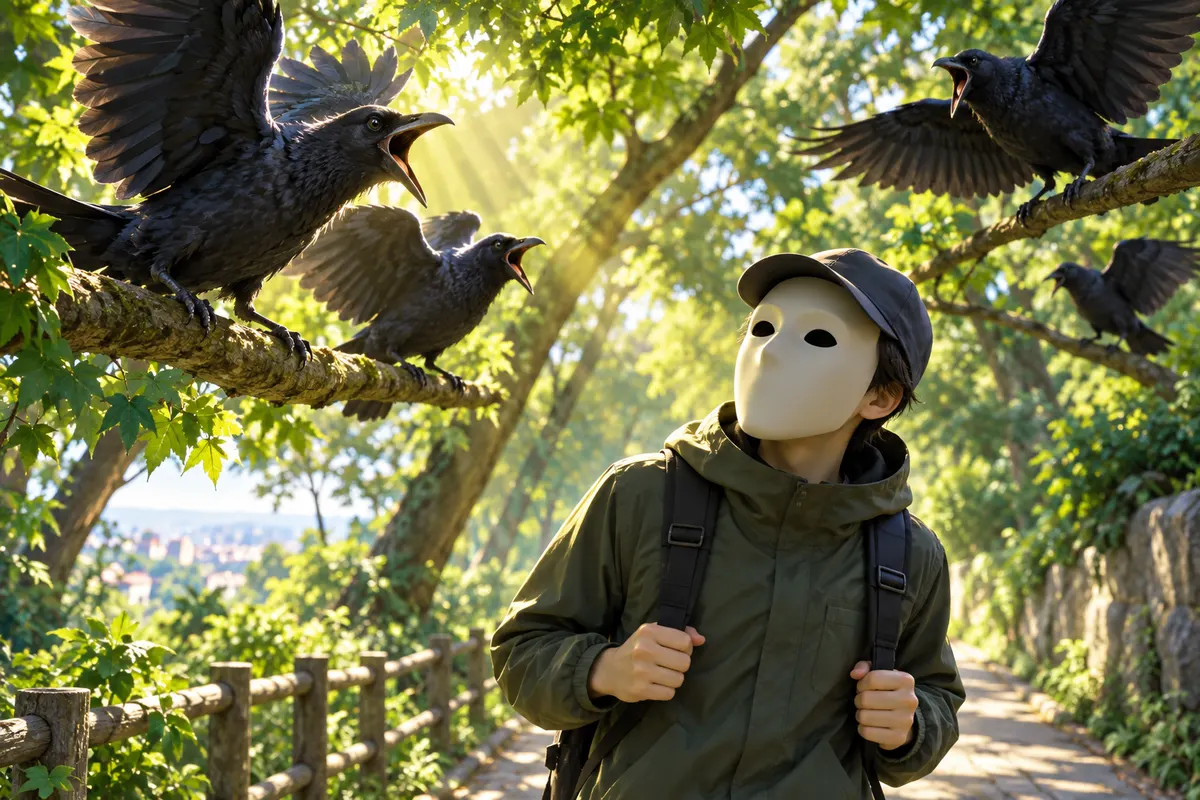
研究のために野生のカラスをつかまえて、足に目印をつけることになりました。そこでチームは、ある工夫をします。つかまえるときに、決まったお面をかぶったのです。
ポイントは、反応したのが「人」ではなく「お面」だったこと。カラスは服や歩き方ではなく、顔そのもので人を見分けていたのです。
02「つかまったことのないカラス」まで怒り出した
驚くのはここからです。
時間がたつにつれて、お面に向かって騒ぐカラスの数は減るどころか増えていきました。しかも、その中には一度もつかまったことのないカラスや、実験のあとに生まれた若いカラスまでいたのです。
2012年に『Proceedings of the Royal Society B』に載った続報では、カラスが仲間の騒ぐ様子を見て「この顔は危険だ」と学ぶ社会的学習が起きていると結論づけました。社会的学習とは、自分で体験しなくても、仲間のふるまいを見て覚えること。人間でいう「うわさ」や「口コミ」に近いものです。
03カラスの脳は、顔を見るとどう動く?
マーズラフさんたちは2012年に『PNAS』で、捕獲したカラスにお面の顔を見せ、PET(陽電子放射断層撮影)という方法で脳の活動を画像化した研究も発表しています。
「危険役」の顔を見たカラスでは、恐怖や学習にかかわる脳の部分が活発に働いていました。哺乳類が危険を感じたときに働く「扁桃体(へんとうたい)」に似た場所です。扁桃体は、ざっくり言えば脳の「警報装置」。カラスの脳でも、似た警報が鳴っているらしいのです。
04カラスとうまく付き合うコツ
05まとめ
カラスは人間の顔を見分け、危険な人の顔を何年も覚えていました。その情報は、会ったこともない仲間や次の世代にまで「口コミ」で広がります。
街で見かけるあの黒い鳥は、私たちが思っているよりずっと、私たちのことを見ているのかもしれません。
この研究を英語で読もう原田英語の English CornerCrows can recognize human faces, and they remember people who treat them badly. 音声
音声 4択クイズ9問A2・B1・B2タップして開く
原田英語の English Corner
この研究を英語で読もう
Can crows remember human faces? Scientists in the United States wore a special mask when they caught seven wild crows. Later, they walked around wearing the same mask. Many crows made loud calls at them.
The crows did not react much to a different mask. This anger lasted for at least two years. Even crows that were never caught joined in. They learned from other crows that the face was dangerous.
71 words ・ CEFR A2
和訳を見る
カラスは人間の顔を覚えられるのでしょうか。アメリカの科学者たちは、7羽の野生のカラスをつかまえるときに特別なお面をかぶりました。その後、同じお面をかぶって歩き回りました。すると多くのカラスが彼らに向かって大声で鳴きました。
カラスは別のお面にはあまり反応しませんでした。この怒りは少なくとも2年間続きました。つかまったことのないカラスまで加わりました。その顔が危険だということを、ほかのカラスから学んだのです。
4択リーディングクイズ
Q1. What is the passage mainly about?
カラスがお面の顔を覚え、ほかのカラスからも危険を学ぶ話なので A。
Q2. How many crows did the scientists catch?
they caught seven wild crows とあるので C。two は反応が続いた年数。
Q3. In this passage, "dangerous" means ...
dangerous は「危険な」=自分を傷つけるかもしれない、という意味なので B。danger(危険)の形容詞形。
Crows can recognize human faces, and they remember people who treat them badly. Researchers at the University of Washington wore a certain mask while they caught seven crows on their campus. Later, when people walked around in the same mask, many crows scolded them loudly and gathered in groups.
However, the birds hardly reacted to a different mask that had not been used for catching them. This reaction continued for at least two years. Over time, the number of crows that scolded the mask actually grew. Some of them had never been caught, and some were young birds born after the experiment. The researchers concluded that crows learn about dangerous people by watching other crows, a process called social learning.
120 words ・ CEFR B1
和訳を見る
カラスは人間の顔を見分けることができ、ひどい扱いをした人を覚えています。ワシントン大学の研究者たちは、キャンパスで7羽のカラスをつかまえる間、決まったお面をかぶりました。その後、人が同じお面をつけて歩き回ると、多くのカラスが大声で威嚇し、群れで集まってきました。
しかし、捕獲に使われなかった別のお面には、鳥たちはほとんど反応しませんでした。この反応は少なくとも2年間続きました。時間がたつにつれて、お面を威嚇するカラスの数はかえって増えていきました。その中には一度もつかまったことのないカラスや、実験のあとに生まれた若い鳥もいました。研究者たちは、カラスはほかのカラスを見ることで危険な人について学ぶと結論づけました。これは社会的学習と呼ばれるしくみです。
4択リーディングクイズ
Q1. What is the passage mainly about?
第1文で顔を覚えることを述べ、最終文で social learning による情報の広がりを結論にしているので D。
Q2. How did the crows react to the mask that was not used for catching them?
the birds hardly reacted to a different mask とあるので B。hardly は「ほとんど~ない」。
Q3. Why was the increase in scolding crows surprising?
増えたカラスの中に、つかまったことのないカラスや実験後に生まれた鳥までいたとあるので C。
Can wild birds remember one particular human face? To find out, John Marzluff and his colleagues at the University of Washington put on a distinctive "dangerous" mask while they trapped and banded seven American crows on campus. Later, volunteers walked through the area wearing either that mask or a neutral one. The crows scolded and mobbed people in the dangerous mask and mostly ignored the neutral one. It made no difference who was behind the mask, and the reaction lasted at least two years.
Instead of fading, the number of scolding crows grew. It came to include birds that had never been caught, and even some that hatched after the trapping. A 2012 follow-up concluded that the knowledge had spread through social learning, both between peers and from parents to their young.
Many of the birds were never individually identified, so the exact routes it took are hard to trace, and a mask is only a stand-in for a real face. The team also looked inside the brain, using PET scans on twelve crows. When those birds viewed the threatening face, a region resembling the mammalian amygdala, an area linked to fear learning, became active.
195 words ・ CEFR B2
和訳を見る
野生の鳥は、特定の人間の顔を覚えられるのでしょうか。それを確かめるため、ワシントン大学のジョン・マーズラフらは、キャンパスで7羽のアメリカガラスを捕獲して足環をつける間、特徴的な「危険役」のお面をかぶりました。その後、ボランティアがそのお面か中立のお面のどちらかをつけて一帯を歩きました。カラスは危険役のお面の人を威嚇して集団で取り囲み、中立のお面はほとんど無視しました。お面をかぶっているのが誰かは関係なく、その反応は少なくとも2年間続きました。
威嚇するカラスの数は減るどころか増えていきました。そこには一度も捕獲されていない鳥や、捕獲の後にかえった鳥まで含まれるようになりました。2012年の続報は、この知識が仲間どうしで、また親から子へと、社会的学習によって広がったと結論づけました。ただし、多くの鳥は個体識別されていなかったため、知識がどんな経路で伝わったのかを正確にたどるのは困難です。
また、お面は本物の顔の代わりにすぎません。研究チームは脳の内部も調べ、12羽のカラスにPETスキャンを行いました。その鳥たちが脅威となる顔を見ると、恐怖の学習に関わる哺乳類の扁桃体に似た領域が活発になりました。
4択リーディングクイズ
Q1. What is the main finding described in the passage?
危険役のお面への反応が2年以上続き、社会的学習で広がったことが中心なので B。誰がかぶっても反応したので服装で見分けているわけではない。
Q2. What happened when different people wore the dangerous mask?
It made no difference who was behind the mask とあるので A。make no difference は「違いを生まない、関係ない」。
Q3. Which of the following is mentioned as a limitation of the research?
many of the birds were never individually identified が限界として挙げられているので D。研究は野外で2年以上行われたので A・C は誤り。
重要単語
- recognizeB1動詞見分ける、認識するCrows can recognize individual human faces.
 re-(再び)+cognize(知る)=「見て、知っているものだとわかる」。名詞は recognition。
 - scoldB2動詞(鳥が)激しく鳴いて威嚇する、叱るThe crows scolded the person in the mask. scold A for B「BのことでAを叱る」が基本形。鳥の警戒の鳴き声にも使う。
- social learningC1名詞(句)社会的学習(他者を見て学ぶこと)Young crows learn about danger through social learning. 自分で体験せず、他者の行動を観察して学ぶこと。心理学・動物行動学の長文で頻出。
- threateningB2形容詞脅威となる、危険なThe birds reacted only to the threatening mask. threat(脅威)→ threaten(脅かす)→ threatening(脅威となる)。endangered(絶滅の危機にある)と区別。
- persistB2動詞長く続く、持続するThe crows' memory of the mask persisted for years. per-(ずっと)+sist(立つ)。persist in ~ing「しつこく~し続ける」。形容詞 persistent も重要。
- offspringB2名詞子、子孫Parents passed the information on to their offspring. 単複同形(offsprings とはしない)。生物系の長文の定番語。
- regardless ofB2前置詞(句)~に関係なくThe crows reacted regardless of who wore the mask. regard(注意)+-less(ない)+of。irregardless は誤用とされるので注意。
 入試に出る順の単語帳を印刷する →
 全5561語の「科学英単語カード」で復習する →
 動画でもっと知る
動画は各チャンネルの公式埋め込みで表示しています(YouTube)。
 4コマでわかる
このネタ、誰かに教えたくなった?
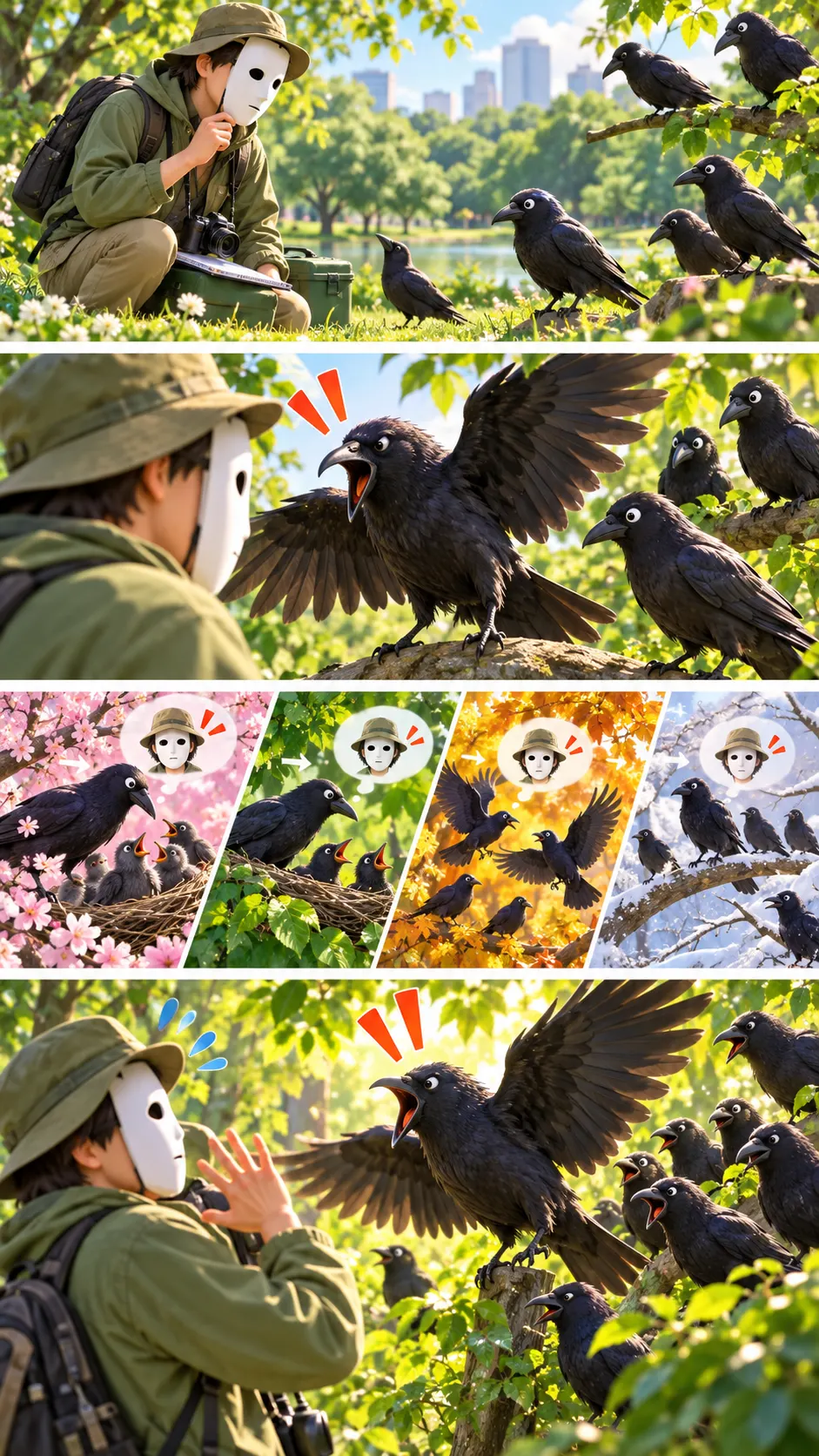
カラスにイタズラすると、その顔を何年も覚えられるうえ、その場にいなかったカラスにまで「アイツは危険」と広まるらしい。お面をかぶった研究者が身をもって確かめた。
押すと「マジかリスト」に保存されます
 出典・参考文献(3件)タップで表示
- Marzluff et al. (2010) Lasting recognition of threatening people by wild American crows, Animal Behaviourdoi.org
- Cornell, Marzluff & Pecoraro (2012) Social learning spreads knowledge about dangerous humans among American crows, Proceedings of the Royal Society Bdoi.org
- Marzluff et al. (2012) Brain imaging reveals neuronal circuitry underlying the crow's perception of human faces, PNASdoi.org

※本記事は上記の研究・公開資料をもとに、原田英語が独自の言葉で解説したものです。引用は著作権法第32条の範囲で行い、出典を明記しています。画像はすべてオリジナルのイメージです。研究結果には限界や個人差があります。誤りのご指摘は原田英語のお問い合わせフォームから。
 これも「マジか!?」

 動物・植物
動物・植物
テッポウウオは「人の顔」を見分けた。水鉄砲で虫を撃ち落とす魚の、意外すぎる頭のよさ


 動物・植物
動物・植物
「観葉植物で空気がキレイに」は幻想? 換気と同じ効果には1㎡に10〜1000鉢が必要だった
 動物・植物
動物・植物
渡り鳥の目の中には「量子コンパス」が入っているかもしれない

 動物・植物
動物・植物
【立命館の入試に出た】「キスする」タコがいた。30年うわさだけだったパナマの縞模様のタコ
 動物・植物
動物・植物
ラーテルと鳥の「ハチミツ泥棒コンビ」は証拠が薄かった。本当に鳥と組んでいたのは人間だった

 動物・植物
動物・植物