ウソ?ホント?検証ウソ
「炭酸飲料を飲むと骨が溶ける」はウソだった。でも"コーラだけ"に残った気になるデータ
 2026.10.02
 English Corner(A2〜B2・4択クイズ)
 読む前に予想してみよう!
炭酸飲料の泡(炭酸ガス)は、体の中で骨を溶かす
炭酸ガスはゲップや呼吸で体の外に出され、骨を溶かす証拠はない。歯の表面には酸の影響が出ることがある。
 研究カード(どんな研究?)
- 対象
- アメリカの成人男女
- 規模
- 約2,500人
- 研究の種類
- 横断研究(観察研究)+関連研究
- 確かさ
- ★★☆☆☆
炭酸の泡で骨が溶けることはない。ただ大規模調査では、毎日コーラを飲む高齢女性の骨密度がやや低かった。理由は「牛乳の代わりに飲む」生活の影響かもしれない。
ひとことで言うとシュワシュワで骨は溶けない。でも、飲みすぎは別の心配があるよ。
「コーラに歯を入れておくと溶けるんだって」「炭酸を飲むと骨が溶けるよ」
学校でこんなウワサを聞いたことはありませんか? シュワシュワした刺激が、いかにも体に悪そうに感じられるのもわかります。
結論から言うと、炭酸の泡で骨が溶けることはありません。ただ、話はそれで終わりません。研究をたどると、ちょっと意外な「容疑者」が浮かび上がってきます。
01炭酸ガスは骨まで届かない
炭酸飲料のシュワシュワの正体は、水に溶けた二酸化炭素です。
飲んだ炭酸ガスの多くはゲップとして出ていき、残りは体内で処理されて、最終的には呼吸で吐き出されます。もともと私たちの体は、細胞が活動するたびに大量の二酸化炭素を作り、それを血液で運んで捨てています。飲み物の炭酸がそこに少し加わっても、骨を溶かすほど体を酸性に傾けることはないのです。
022,500人の調査で「コーラだけ」に差が出た
では、炭酸飲料と骨はまったく無関係なのでしょうか。
ここがポイントです。もし「炭酸」が原因なら、ほかの炭酸飲料でも差が出るはず。差が出たのはコーラだけでした。
研究チームは、コーラに含まれるリン酸やカフェインが関係している可能性を挙げています。ただし、これは「関連」を見た研究で、コーラが原因だと証明したわけではありません。
03本当の犯人は「牛乳の代わりに飲むこと」?
別の研究者たちは、炭酸飲料を飲んだあとの尿中のカルシウム量を実験で測りました。その結果、カルシウムが尿に少し多く出たのはカフェイン入りの飲み物のときで、その量もわずかでした。
研究者らは、炭酸飲料と骨の関係があるとすれば、それは牛乳などの代わりに炭酸飲料を飲むことで、カルシウムの摂取が減ることが大きいのではないか、と考えています。
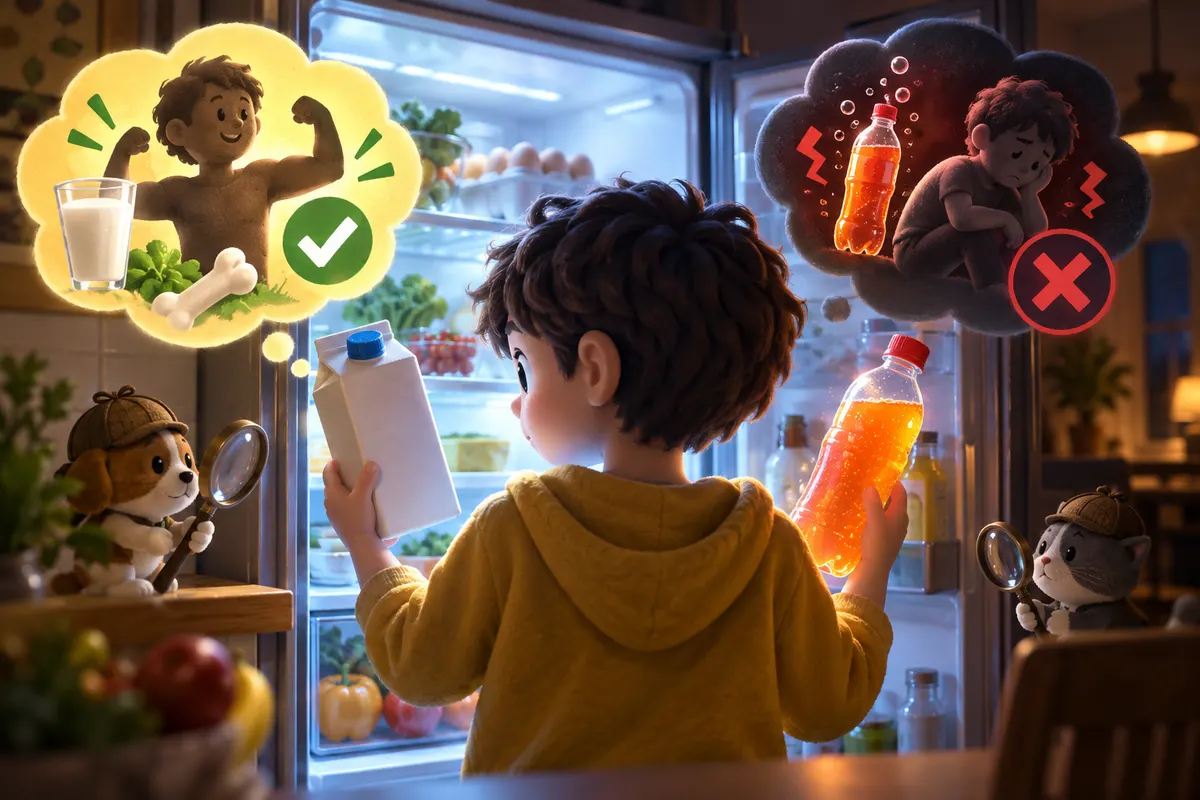
実際、高齢女性1,000人を調べた別の調査では、炭酸飲料と骨密度の関連は見られませんでした。一方、10代の女子で炭酸飲料と骨折の関連を報告した研究もあり、結果は一致していません。
04「溶ける」が本当に起こる場所:歯
じつは「溶ける」がわりと本当に起こる場所があります。歯の表面です。
炭酸飲料やスポーツドリンク、果汁などの酸っぱい飲み物は、歯の表面のエナメル質を少しずつ溶かす酸蝕歯(さんしょくし)の原因になります。「コーラに歯を入れると溶ける」というウワサは、ここから広がったのかもしれません。ただ、口の中では唾液が酸を中和してくれるので、何時間も漬けておく実験とは条件がまったく違います。
05まとめ
- 炭酸の泡が骨を溶かす証拠はない
- ただし「毎日コーラ」の高齢女性で骨密度がやや低いという観察データはある
- 本当に気をつけたいのは、牛乳などを炭酸飲料に置き換えることと、歯への酸の影響
シュワッと1本は楽しみのひとつ。骨のためには、カルシウムをとる食事と運動のほうがずっと大事です。
この研究を英語で読もう原田英語の English CornerThere is a common rumor that the bubbles in soft drinks dissolve your bones. 音声
音声 4択クイズ9問A2・B1・B2タップして開く
原田英語の English Corner
この研究を英語で読もう
Some people say that drinking soda melts your bones. This is not true. The bubbles in soda are carbon dioxide, and our body breathes it out.
But one large study found something interesting. Older women who drank cola every day had slightly weaker hip bones. Other sodas did not show this. Maybe these women drank cola instead of milk. Also, sour drinks can hurt the surface of your teeth.
69 words ・ CEFR A2
和訳を見る
炭酸飲料を飲むと骨が溶ける、と言う人がいます。これは本当ではありません。炭酸飲料の泡は二酸化炭素で、体はそれを息として吐き出します。
しかし、ある大規模な研究で興味深いことがわかりました。毎日コーラを飲む高齢の女性は、股関節の骨がわずかに弱かったのです。ほかの炭酸飲料ではそうなりませんでした。もしかすると、この女性たちは牛乳の代わりにコーラを飲んでいたのかもしれません。また、酸っぱい飲み物は歯の表面を傷めることがあります。
4択リーディングクイズ
Q1. What is the passage mainly about?
炭酸飲料で骨が溶けるのか、というテーマなので D。
Q2. Who had slightly weaker hip bones in the study?
Older women who drank cola every day had slightly weaker hip bones とあるので C。
Q3. In this passage, "instead of" means ...
instead of ~ は「~の代わりに」。牛乳の代わりにコーラを飲んだ、という意味なので A。
There is a common rumor that the bubbles in soft drinks dissolve your bones. In fact, the bubbles are carbon dioxide, which the body easily gets rid of by burping and breathing. However, a study of about 2,500 American adults found a surprising link. Women who drank cola every day had a few percent lower bone density in the hip than women who rarely drank it.
Other carbonated drinks showed no such link, and men showed no difference. This suggests that the bubbles are not the problem. The researchers mentioned phosphoric acid and caffeine in cola as possible factors. Another explanation is that people who drink a lot of cola may drink less milk and get less calcium.
118 words ・ CEFR B1
和訳を見る
炭酸飲料の泡が骨を溶かすというウワサがよくあります。実際には、泡は二酸化炭素で、体はゲップや呼吸で簡単にそれを排出します。しかし、約2,500人のアメリカの成人を対象にした研究で、意外な関連が見つかりました。毎日コーラを飲む女性は、ほとんど飲まない女性より股関節の骨密度が数%低かったのです。
ほかの炭酸飲料ではそのような関連は見られず、男性にも差はありませんでした。これは、泡が問題ではないことを示唆しています。研究者たちは、コーラに含まれるリン酸とカフェインを可能性のある要因として挙げました。もう1つの説明は、コーラをたくさん飲む人は牛乳をあまり飲まず、カルシウムの摂取が少ないのかもしれない、というものです。
4択リーディングクイズ
Q1. What did the study of about 2,500 adults find?
Women who drank cola every day had a few percent lower bone density in the hip とあるので A。
Q2. Why does the passage say "the bubbles are not the problem"?
泡が原因なら他の炭酸飲料でも差が出るはずだが other carbonated drinks showed no such link なので D。
Q3. What is one possible reason for the link between cola and bones?
people who drink a lot of cola may drink less milk and get less calcium とあるので B。
Carbonated drinks do not dissolve your bones. The fizz is dissolved carbon dioxide. Most of it leaves the body when you burp, and the rest is handled by the same system that constantly clears away the large amounts of carbon dioxide our cells produce.
A large study of 1,413 women and 1,125 men in Framingham did turn up an odd pattern. Women who drank cola every day had hip bone density a few percent lower than women who rarely drank it. No such link appeared for other carbonated drinks, or among men.
Because the effect was specific to cola, the bubbles are an unlikely culprit, and the authors pointed instead to phosphoric acid or caffeine. In a separate experiment, only the caffeinated sodas raised the calcium in urine, and only slightly.
So researchers suspect that any harm comes mainly when soft drinks replace milk and people take in less calcium. The wider evidence is mixed. A survey of about 1,000 older women found no link, while another study tied carbonated drinks to fractures in teenage girls. The Framingham study was cross-sectional, so it cannot show cause and effect. Teeth face a real risk, since acidic drinks can wear away enamel.
200 words ・ CEFR B2
和訳を見る
炭酸飲料が骨を溶かすことはありません。シュワシュワの正体は溶けた二酸化炭素です。その大部分はゲップで体の外に出ていき、残りは、細胞が作り出す大量の二酸化炭素を常に取り除いているのと同じ仕組みで処理されます。
ただし、フラミンガムで女性1,413人と男性1,125人を調べた大規模な研究は、奇妙なパターンを見つけました。毎日コーラを飲む女性は、ほとんど飲まない女性より股関節の骨密度が数%低かったのです。ほかの炭酸飲料や男性では、そうした関連は見られませんでした。
関連がコーラに特有だったため、泡が原因である可能性は低く、著者たちはかわりにリン酸やカフェインを挙げました。別の実験では、炭酸飲料のうち尿中のカルシウムを増やしたのはカフェイン入りのものだけで、その量もごく少しでした。そのため研究者たちは、害があるとすれば、主に炭酸飲料が牛乳に取って代わり、カルシウムの摂取が減るときに生じると考えています。
より広く見ると、証拠はまちまちです。約1,000人の高齢女性の調査では関連は見られず、一方で別の研究は炭酸飲料と10代の女子の骨折を結びつけました。フラミンガム研究は横断研究だったため、因果関係を示すことはできません。一方、歯には実際のリスクがあります。酸性の飲み物はエナメル質をすり減らすことがあるからです。
4択リーディングクイズ
Q1. Why does the author think carbonation itself is unlikely to harm bones?
Because the effect was specific to cola, the bubbles are an unlikely culprit とあるので B。
Q2. What do researchers suspect is the main way soft drinks might affect bones?
any harm comes mainly when soft drinks replace milk and people take in less calcium とあるので A。
Q3. Why can't the Framingham study prove that cola causes low bone density?
The Framingham study was cross-sectional, so it cannot show cause and effect とあるので C。横断研究は一時点の関連しか見られない。
重要単語
- bone mineral densityC1名詞(句)骨密度Bone mineral density decreases with age.
 BMD と略される。density は「密度」、dense(密な)の名詞。
 - carbonatedB2形容詞炭酸の入ったI prefer carbonated water to juice. carbon(炭素)から。soft drink / soda / fizzy drink も同じ意味で使われる。
- phosphoric acidC1名詞(句)リン酸Phosphoric acid gives cola its sharp taste. phosphorus(リン)はギリシャ語で「光を運ぶもの」。
- displaceC1動詞押しのける、取って代わるSugary drinks may displace milk in children's diets. dis-(離して)+place(置く)。displaced people は「避難民」。
- erosionC1名詞侵食(歯が酸で溶けること)Acidic drinks can cause tooth erosion. 動詞 erode。soil erosion(土壌侵食)など地理でも頻出。
- rumorB1名詞うわさThe rumor that soda melts bones is false. 英国式つづりは rumour。Rumor has it that ~「うわさでは~だそうだ」。
 入試に出る順の単語帳を印刷する →
 全5561語の「科学英単語カード」で復習する →
 公式・一次情報をチェック
- Osteoporosis(NIAMS, 米国国立関節炎・筋骨格・皮膚疾患研究所)niams.nih.gov
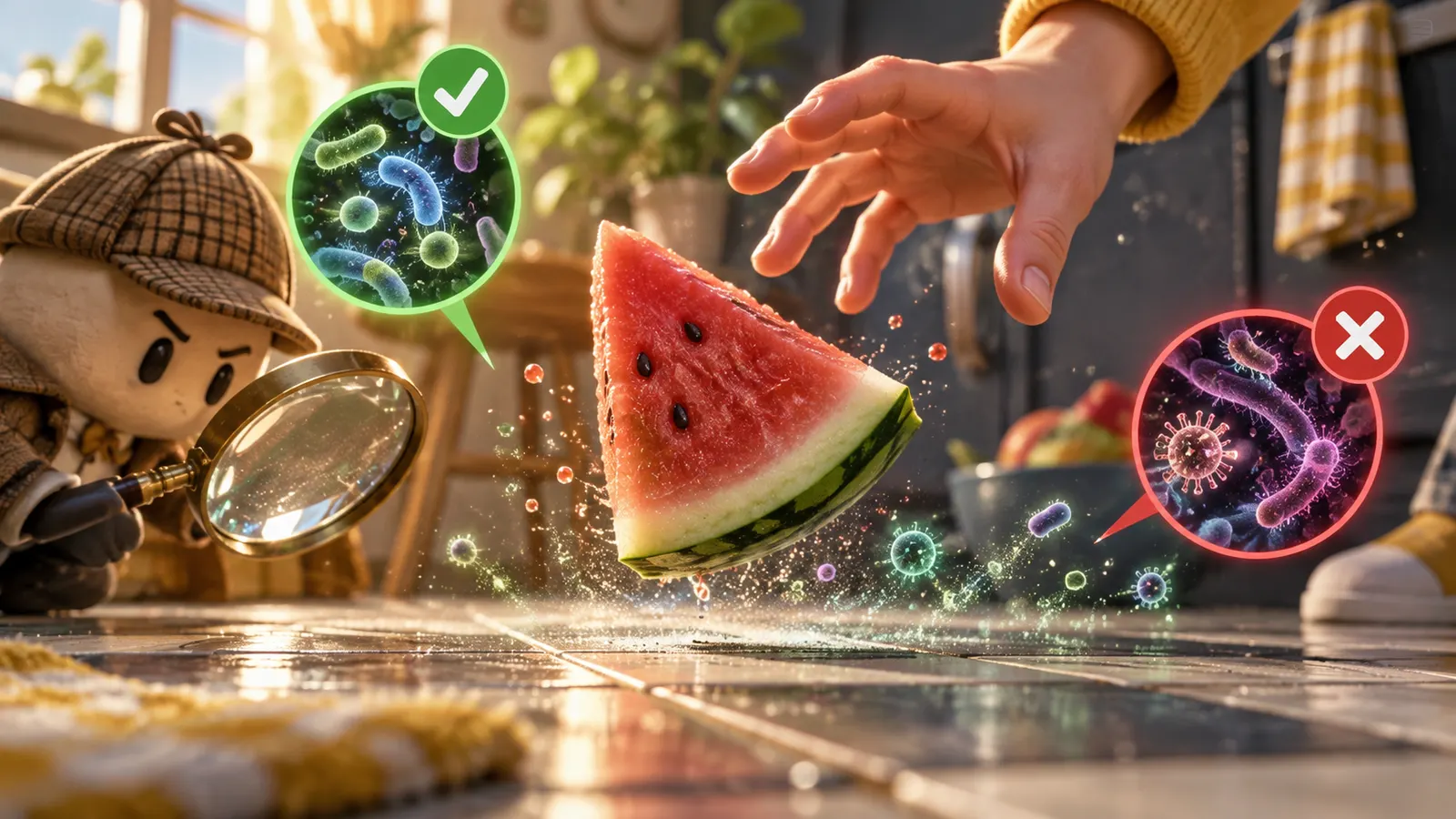
 4コマでわかる
このネタ、誰かに教えたくなった?
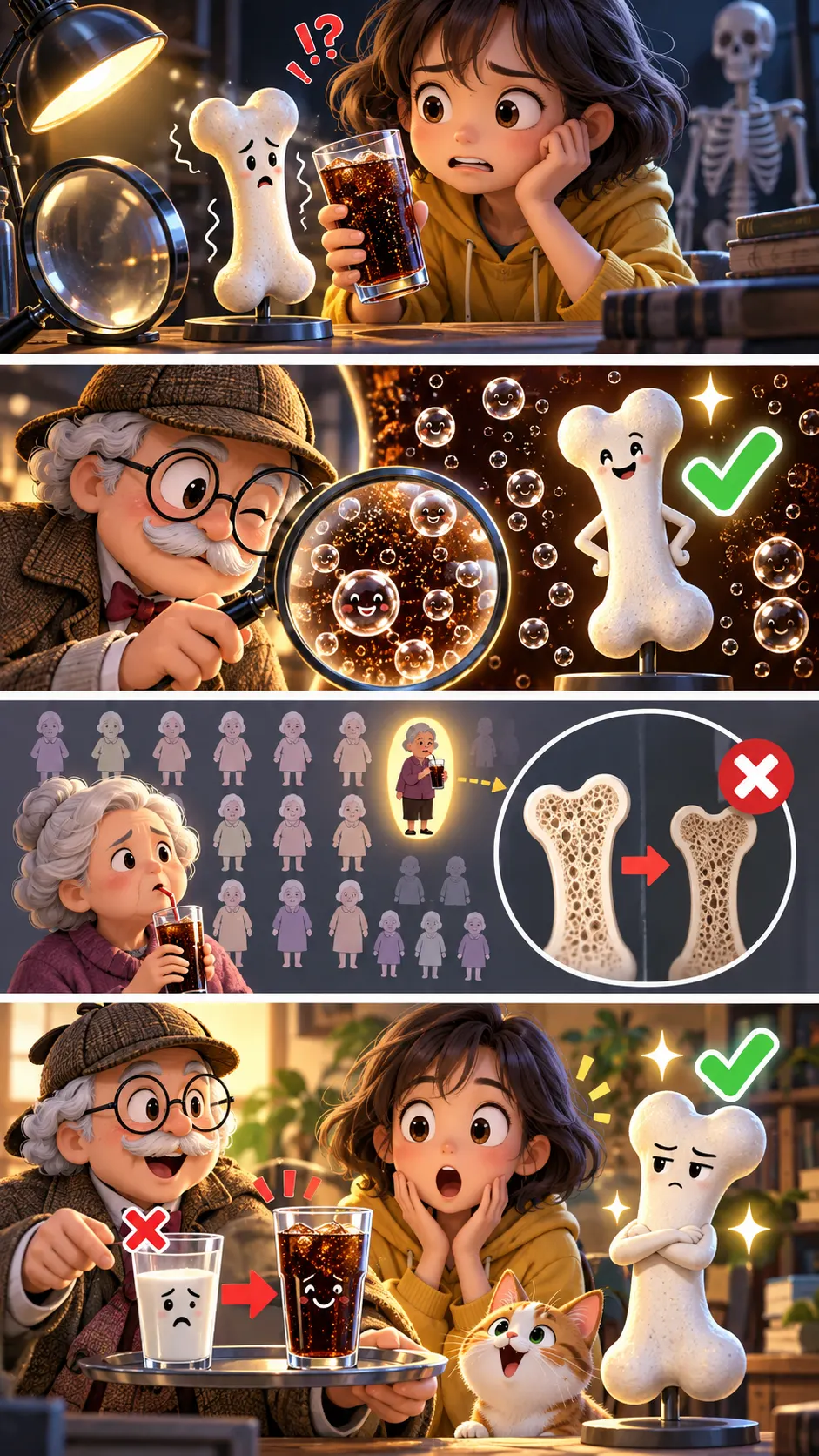
「炭酸を飲むと骨が溶ける」は都市伝説。炭酸の泡と骨は関係ないらしい。ただ2,500人規模の調査で「毎日コーラ」の女性だけ骨密度が数%低かったという、ちょっと気になるデータもある。
押すと「マジかリスト」に保存されます
 出典・参考文献(4件)タップで表示
- Tucker et al. (2006) Colas, but not other carbonated beverages, are associated with low bone mineral density in older women: The Framingham Osteoporosis Study, American Journal of Clinical Nutritiondoi.org
- Heaney & Rafferty (2001) Carbonated beverages and urinary calcium excretion, American Journal of Clinical Nutritiondoi.org
- Kim et al. (1997) Carbonated beverage consumption and bone mineral density among older women: the Rancho Bernardo Study, American Journal of Public Healthdoi.org
- Wyshak (2000) Teenaged Girls, Carbonated Beverage Consumption, and Bone Fractures, Archives of Pediatrics & Adolescent Medicinedoi.org

※本記事は上記の研究・公開資料をもとに、原田英語が独自の言葉で解説したものです。引用は著作権法第32条の範囲で行い、出典を明記しています。画像はすべてオリジナルのイメージです。研究結果には限界や個人差があります。誤りのご指摘は原田英語のお問い合わせフォームから。