

 ウソ?ホント?検証ビミョー
「怖い話を聞くと体温が下がる」は半分ホント。冷えていたのは"体の中"ではなく指先と鼻先だった
 2026.10.02
 English Corner(A2〜B2・4択クイズ)
 読む前に予想してみよう!
怖い話を聞くと、体の中心の体温がぐっと下がる
下がりやすいのは指先や鼻先など体の端の皮膚の温度。体の中心の温度は皮膚ほど下がらない。ネズミでは上がることもある。
 研究カード(どんな研究?)
- 対象
- 健康な成人・ラット
- 規模
- 数十人規模の実験+動物実験
- 研究の種類
- 実験研究
- 確かさ
- ★★★☆☆
怖さやストレスで指先や鼻先の皮膚の温度が下がることは、皮膚温を測る研究で確かめられている。ただ体の中心の温度はほとんど下がらない。
ひとことで言うと怖いと手や鼻の先が冷える。でも体の中までは冷えていないよ!
夏といえば怪談。暗い部屋で怖い話を聞いていると、背筋がゾクッとして、なんだか涼しくなった気がしますよね。
日本では昔から、夏の夜に怪談を楽しむ文化があります。「怖い話で涼をとる」――。でも、これって本当に体が冷えているのでしょうか?
答えは「場所による」。冷えるところと、冷えないところがあったのです。
01怖いと「手の血管」がキュッと縮む
怖さや緊張を感じると、体は「戦うか逃げるか」のモードに入ります。心臓がドキドキし、筋肉に血液を送る準備をします。
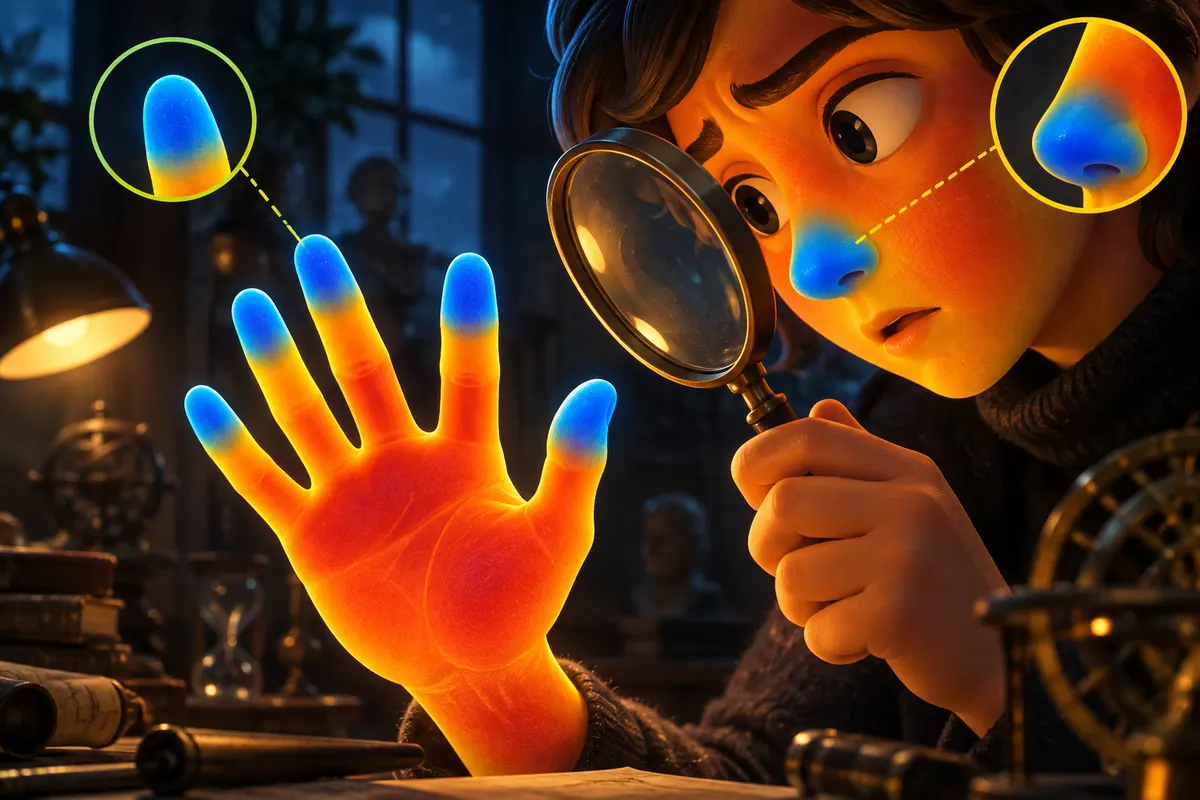
このとき、体の端っこ、つまり手や足の先、鼻の先などの皮膚の血管は、キュッと縮みます。万一けがをしたときの出血を減らす備え、とも考えられている反応です。
血管が縮むと、皮膚に流れる温かい血液が減ります。その結果、皮膚の温度が下がるのです。
02サーモグラフィーで見えた「冷え」
別の研究では、感情を揺さぶる写真を見せたときに、鼻の先の温度が下がることが報告されています。面白いことに、これは不快な写真だけでなく、楽しい写真でも起こりました。つまり鼻先の冷えは、「怖さ」そのものより「ドキドキの強さ」を表しているようです。
03でも「体の中」は冷えていない
ここが大事なポイントです。
皮膚の温度が下がっても、体の中心の温度(深部体温)はほとんど変わりません。ネズミを使った研究では、怖い状況に置かれたネズミのしっぽや足の温度は大きく下がった一方、体の中の温度はむしろ上がっていました。緊張して体が「戦闘準備」に入ると、熱が作られるからだと考えられます。
人の研究でも、ストレスで深部体温がわずかに下がったという報告はあるものの、変化は小さいものです。
04「怖い」だけでは冷えないことも
実は、人の研究では怖い映画を見せても、手の温度がはっきり下がらなかったという報告もあります。一方で、自分について答えにくい質問をされるような「身に迫る緊張」のときには、手の温度が下がりました。
画面の向こうの怖さより、自分の身に関わる緊張のほうが、体を冷やしやすいのかもしれません。怪談でゾクッとするかどうかも、話の上手さや聞く人の入り込み具合で変わりそうです。
05なぜ「怪談で涼しくなる」と言われるのか
怖いとき、私たちはゾクッとする寒気を感じます。鳥肌が立ち、背筋がこわばる。この感覚は、寒いときの体の反応とよく似ています。だから「怖い=涼しい」と結びつきやすいのでしょう。
江戸時代には、夏に怪談の芝居が上演されるなど、怪談は夏の娯楽として親しまれてきました。体の端が冷え、ゾクッとした感覚が「涼しさ」として楽しまれてきた――そう考えると、昔の人の知恵もなかなか科学的です。
06まとめ
- 怖さやストレスで、指先や鼻先の皮膚温度は下がる
- でも体の中心の温度はほとんど変わらない。ネズミではむしろ上がった
- 冷えやすいのは「怖さ」より「ドキドキの強さ」や身に迫る緊張
怪談で涼しくなるのは「半分ホント」。冷房の代わりにはならないけれど、夏の夜の楽しみとしては、科学的にもちゃんと理由がありそうです。
この研究を英語で読もう原田英語の English CornerJapanese people have long enjoyed ghost stories in summer, saying that fear helps them feel cool. 音声
音声 4択クイズ9問A2・B1・B2タップして開く
原田英語の English Corner
この研究を英語で読もう
In Japan, people tell scary stories on summer nights to feel cool. Does fear really make us cold? When we are afraid, the small blood vessels in our hands and nose get narrow.
Less warm blood goes there, so our fingers and the tip of our nose get colder. But the inside of the body does not get cold. So scary stories only cool part of the body.
68 words ・ CEFR A2
和訳を見る
日本では、涼しく感じるために夏の夜に怖い話をします。恐怖は本当に私たちを冷やすのでしょうか。怖いと感じると、手や鼻の小さな血管が細くなります。
そこに流れる温かい血液が減るので、指や鼻の先が冷たくなります。しかし、体の中は冷えません。だから、怖い話は体の一部だけを冷やすのです。
4択リーディングクイズ
Q1. What is the passage mainly about?
恐怖で本当に体が冷えるのか、がテーマなので B。
Q2. Which parts of the body get colder when we are afraid?
our fingers and the tip of our nose get colder とあるので D。体の中は冷えない。
Q3. In this passage, "narrow" means ...
narrow は「狭い・細い」。血管が細くなる=wide(広い)の反対なので A。
Japanese people have long enjoyed ghost stories in summer, saying that fear helps them feel cool. Is there any science behind this? When we feel fear or stress, the body prepares to fight or run away. At the same time, blood vessels in the skin of our hands, feet and nose become narrower, so less warm blood reaches them.
In a study using a stressful speech task, the temperature of people's fingertips dropped, while the skin near the chest hardly changed. However, the body's core temperature, the temperature deep inside, does not fall much. In fact, when rats were placed in a frightening situation, their tails cooled but their inner body temperature actually rose.
114 words ・ CEFR B1
和訳を見る
日本人は昔から、恐怖が涼しさを感じさせてくれると言って、夏に怪談を楽しんできました。これには何か科学的な根拠があるのでしょうか。恐怖やストレスを感じると、体は戦うか逃げるかの準備をします。同時に、手や足、鼻の皮膚の血管が細くなり、そこに届く温かい血液が減ります。
ストレスのかかるスピーチ課題を使った研究では、人々の指先の温度は下がった一方、胸のあたりの皮膚はほとんど変わりませんでした。しかし、体の深い部分の温度である深部体温はあまり下がりません。実際、ネズミを怖い状況に置いたところ、しっぽは冷えましたが、体の中の温度はむしろ上がったのです。
4択リーディングクイズ
Q1. What happens to the body when we feel fear or stress?
blood vessels in the skin of our hands, feet and nose become narrower とあるので A。
Q2. What did the study using a speech task find?
the temperature of people's fingertips dropped, while the skin near the chest hardly changed とあるので C。
Q3. What does the rat experiment suggest?
しっぽは冷えたが体内の温度は上がった、という結果から、体の端は冷えても内部は温まりうると推測できるので B。
On hot summer nights in Japan, people have long told ghost stories, supposedly because fear makes listeners feel cooler. Research says this is only half right. Fear and stress trigger the "fight or flight" response, and as part of it, blood vessels near the skin of the extremities constrict, cutting the flow of warm blood.
In one study, healthy adults gave a public speech and did mental arithmetic while their skin temperature was measured. Their fingertips cooled, but skin temperature near the chest barely changed. In another, the tip of the nose cooled when people looked at emotional pictures, whether unpleasant or pleasant.
So the change seems to track how strongly people are aroused and not fear in particular. Core body temperature hardly falls at all. When rats were placed in a fear-inducing situation, their tails and paws cooled sharply while their core temperature actually rose, presumably because the body makes heat as it gets ready to act. Even skin cooling is not guaranteed. In one study, watching a frightening film did not clearly lower hand temperature, whereas personally threatening questions did. How much a ghost story chills its audience may depend on how involved each listener becomes.
198 words ・ CEFR B2
和訳を見る
日本では昔から、暑い夏の夜に怪談が語られてきました。恐怖が聞き手を涼しく感じさせるからだと言われています。研究によると、これは半分しか正しくありません。恐怖やストレスは「戦うか逃げるか」の反応を引き起こし、その一部として手足など体の端の皮膚近くの血管が収縮し、温かい血液の流れが減ります。
ある研究では、健康な成人が人前でのスピーチと暗算を行い、その間の皮膚温度を測定しました。指先は冷えましたが、胸の近くの皮膚温度はほとんど変わりませんでした。別の研究では、不快な写真でも楽しい写真でも、感情を揺さぶる写真を見ると鼻の先が冷えました。
つまり、この変化は恐怖そのものというより、どれだけ強く興奮しているかに応じているようです。深部体温のほうは、ほとんど下がりません。恐怖を引き起こす状況に置かれたネズミでは、しっぽや足の温度は大きく下がった一方、深部体温はむしろ上がりました。おそらく、体が行動に備えて熱を作り出すためです。皮膚の冷えでさえ必ず起きるわけではありません。ある研究では、怖い映画を見ても手の温度ははっきり下がりませんでしたが、本人に関わる答えにくい質問では下がりました。怪談で聞き手がどれだけゾクッとするかは、一人ひとりがどれだけ話に入り込むかによるのかもしれません。
4択リーディングクイズ
Q1. Why does the author say the idea is "only half right"?
体の端の皮膚は冷えるが、Core body temperature ... hardly falls at all とあるので C。
Q2. What does the nose-temperature study suggest?
不快な写真でも楽しい写真でも鼻先が冷えたので、the change seems to track how strongly people are aroused and not fear in particular と述べており B。
Q3. According to the passage, what lowered hand temperature more clearly than a frightening film?
watching a frightening film did not clearly lower hand temperature, whereas personally threatening questions did とあるので D。
重要単語
- core temperatureC1名詞(句)深部体温(体の中心の温度)Core temperature stays around 37 degrees.
 core は「芯・中心」。core values「中心的な価値観」など比喩でも頻出。
 - skin temperatureB1名詞(句)皮膚温Skin temperature can drop when you are stressed. core temperature と対で覚えると理解しやすい。
- vasoconstrictionC1名詞血管収縮Fear causes vasoconstriction in the hands. vaso-(血管)+constriction(締めつけ)。反対は vasodilation(血管拡張)。
- thermographyC1名詞熱画像撮影(サーモグラフィー)Thermography shows heat as colors. thermo-(熱)+-graphy(記録)。thermometer(温度計)と同じ thermo-。
- goosebumpsB2名詞鳥肌Scary stories give me goosebumps. 直訳は「ガチョウのぶつぶつ」。give ~ goosebumps「~をゾクッとさせる」。
- arousalC1名詞(感情の)興奮、覚醒The nose cools as emotional arousal increases. 動詞 arouse(呼び起こす)。arouse interest「興味をかき立てる」は入試頻出。
 入試に出る順の単語帳を印刷する →
 全5561語の「科学英単語カード」で復習する →
 4コマでわかる
このネタ、誰かに教えたくなった?
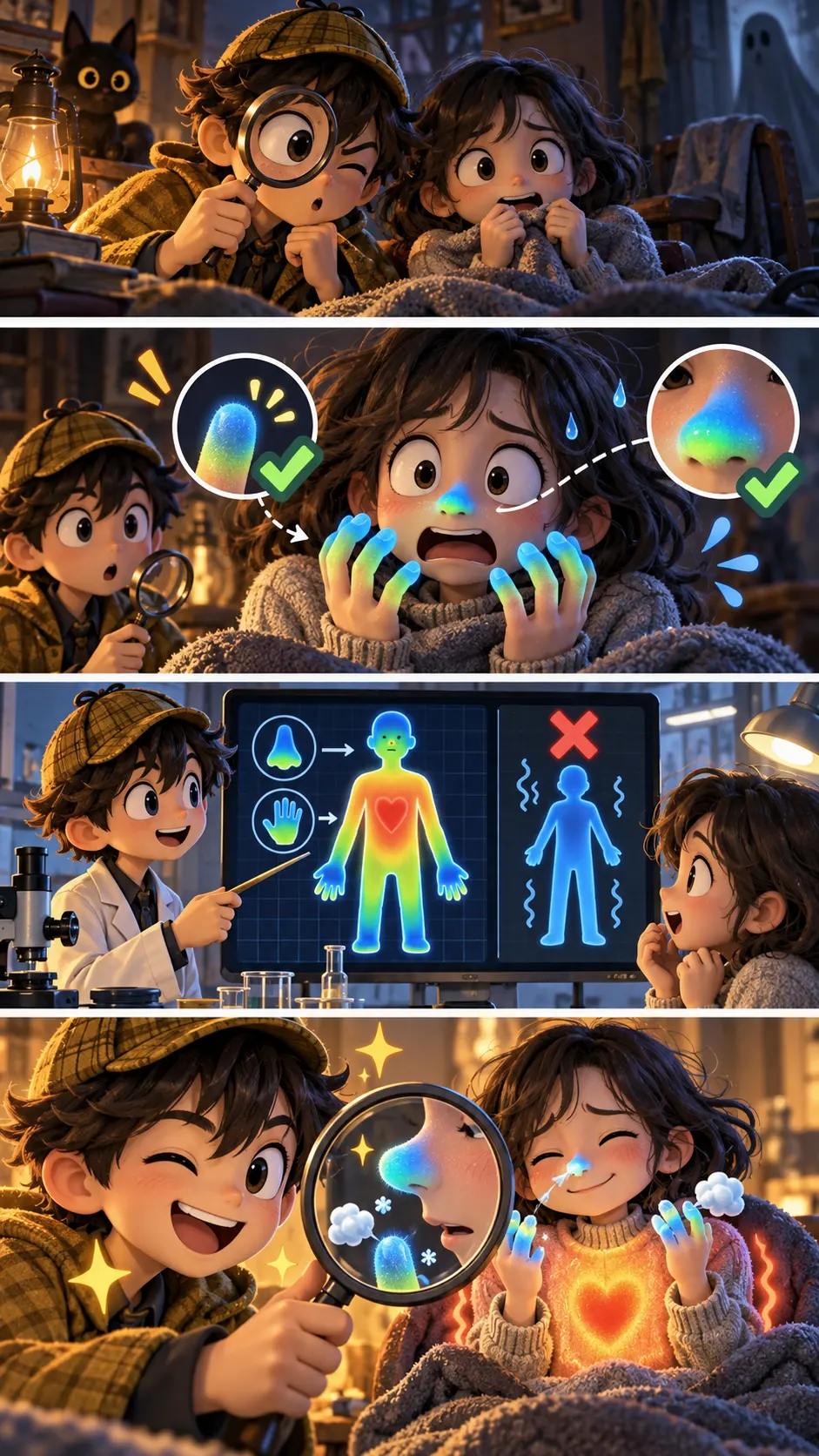
夏の怪談で「ゾッとして涼しくなる」は、半分ホントらしい。ストレスを感じると、指先や鼻先の皮膚の温度が下がることが皮膚温の測定で確かめられている。ただし体の中心の体温はあまり下がらず、ネズミでは逆に上がっていた。
押すと「マジかリスト」に保存されます
 出典・参考文献(4件)タップで表示
- Vinkers et al. (2013) The effect of stress on core and peripheral body temperature in humans, Stressdoi.org
- Rimm-Kaufman & Kagan (1996) The psychological significance of changes in skin temperature, Motivation and Emotiondoi.org
- Kosonogov et al. (2017) Facial thermal variations: A new marker of emotional arousal, PLOS ONEdoi.org
- Vianna & Carrive (2005) Changes in cutaneous and body temperature during and after conditioned fear to context in the rat, European Journal of Neurosciencedoi.org

※本記事は上記の研究・公開資料をもとに、原田英語が独自の言葉で解説したものです。引用は著作権法第32条の範囲で行い、出典を明記しています。画像はすべてオリジナルのイメージです。研究結果には限界や個人差があります。誤りのご指摘は原田英語のお問い合わせフォームから。
 これも「マジか!?」
 検証
検証
「人の平熱は37℃」は150年前の数字だった。体温は人それぞれ、しかも時代とともに下がっていた

 体・健康
体・健康
ストレスで白髪が増えるのは本当? 犯人は「戦うか逃げるか」の神経だった。しかも戻ることも
 検証
検証
「髪や爪は死後も伸びる」はウソ。伸びたように見える"からくり"は皮膚にあった

 検証
検証
「左利きは9年早死に」という研究があった。世界を騒がせた数字は"統計のワナ"だった

 検証
検証
ほうれん草の「鉄分伝説」は小数点のミスから? 調べたら、その"ミス説"自体が伝説だった
 検証
検証