ウソ?ホント?検証ウソ
「静脈の血は青い」はウソ。血はずっと赤いのに、血管が青く見える"光と脳のトリック"
 2026.10.02
 English Corner(A2〜B2・4択クイズ)
 読む前に予想してみよう!
体の中を流れる静脈の血は青く、空気にふれると赤くなる
静脈の血も暗い赤色。血管が青く見えるのは、皮膚の中での光の進み方と色の見え方のせい。
 研究カード(どんな研究?)
- 対象
- 人の皮膚・血管モデル
- 規模
- 測定とコンピューター計算
- 研究の種類
- 光学実験・シミュレーション
- 確かさ
- ★★★☆☆
人の血は酸素が少なくても暗い赤色で、青くはならない。皮膚ごしに血管が青く見えるのは、肌の中での光の吸収・散乱と、まわりの肌色と比べる脳の働きのせい。
ひとことで言うと血はいつも赤。青く見えるのは光と脳のしわざ!
「静脈の血は本当は青いんだよ。ケガをして空気にふれると、赤くなるんだって」
小学校のころ、こんな話を聞いたことはありませんか。手首の内側を見ると、たしかに血管は青っぽく見えます。教科書の血管の図でも、静脈は青、動脈は赤で描かれていることが多いですよね。
でも、これはウソです。人間の血は、体の中でも外でも、いつも赤いのです。
01血の色を決めるのはヘモグロビン
血が赤いのは、赤血球の中にあるヘモグロビンというタンパク質のおかげです。ヘモグロビンは鉄を含んでいて、肺で酸素と結びつき、全身に運びます。
- 酸素とたくさん結びついたヘモグロビン(動脈の血):明るい赤
- 酸素を手放したヘモグロビン(静脈の血):暗い赤(えんじ色に近い)
色の濃さは変わりますが、青くなることはありません。病院で採血するとき、注射器に入る静脈の血も、暗い赤色をしています。空気にふれる前の、血管の中の血そのものです。
血液がどの色の光をどれだけ吸収するかは、医療用の光の研究でくわしく測られています(ボスハールトらの2014年のまとめなど)。血は青や緑の光を強く吸収し、赤い光はあまり吸収しないので、赤く見えるのです。
02では、なぜ血管は青く見えるの?
かんたんに言うと、こんな仕組みです。
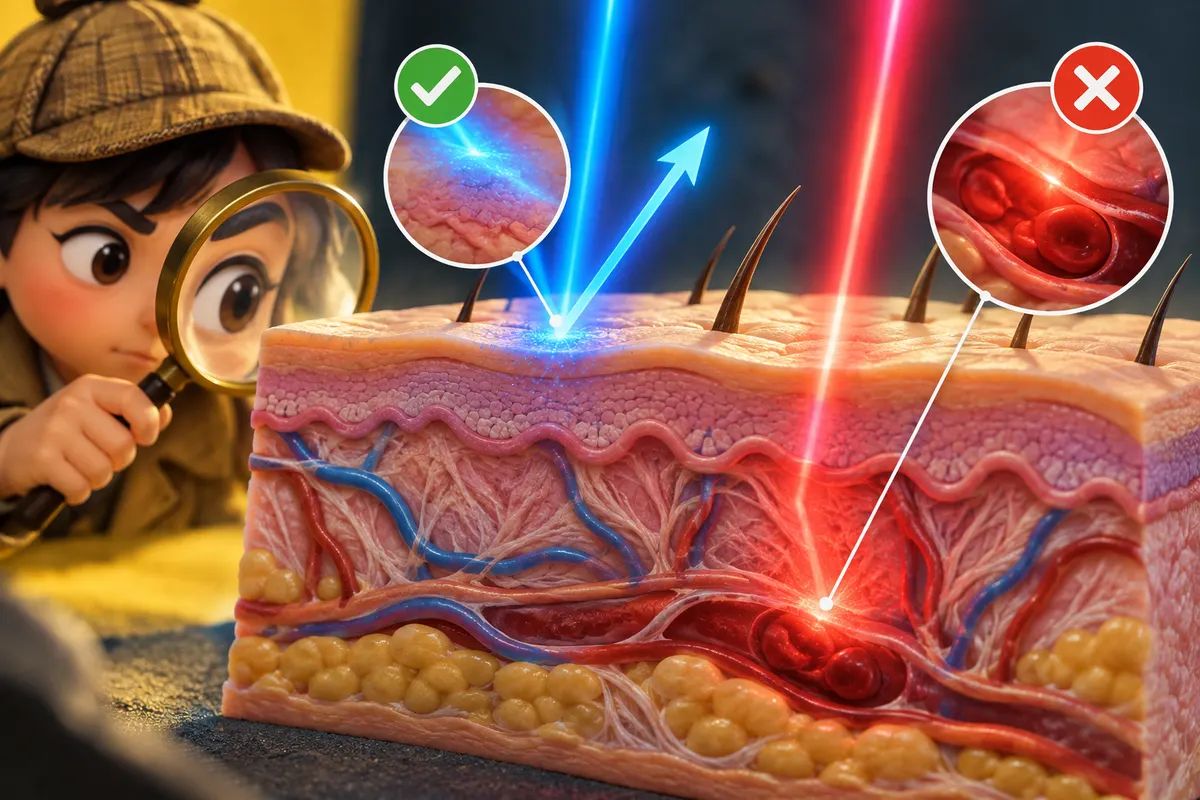
- 赤い光は皮膚の奥まで届きやすい。深いところにある静脈まで届いた赤い光は、血に吸収されて戻ってきにくくなる
- 青い光は皮膚の浅いところで散乱されて戻ってくるので、血管の上でも、まわりの肌とあまり変わらない
- その結果、血管の上だけ「赤い光が少し足りない」状態になる
03最後の仕上げは「脳」だった
ただし、血管の上で返ってくる光は、実はそれほど青いわけではありません。ここで効いてくるのが、脳の色の感じ方です。
私たちの脳は、色を「まわりとの比較」で判断します。血管の上はまわりの肌色より赤みが少ないので、脳はそれを「青っぽい」と感じてしまうのです。同じ灰色でも、周りの色によって違う色に見える錯視と同じ仲間です。
04本当に「青い血」を持つ生き物もいる
ちなみに、世の中には本当に青い血を持つ生き物もいます。タコやイカ、カブトガニなどは、鉄ではなく銅を含む「ヘモシアニン」で酸素を運び、その血は酸素と結びつくと青くなります(コーツとデッカーの2017年の総説)。
人間の血が「本当は青い」というのは誤解ですが、青い血の世界も、ちゃんと地球上にあるのです。
05なぜ「静脈の血は青い」が広まったのか
- 皮膚ごしに見える血管が、実際に青っぽく見える
- 教科書や図鑑で、静脈を青く塗り分けて描くことが多い
- 「酸素にふれると色が変わる」という話が、理科っぽくて納得しやすい
目で見た印象と、図の色分けが合わさって、もっともらしい説明が生まれてしまったのです。
06まとめ
- 人の血は、酸素が少ない静脈の血でも暗い赤色
- 血管が青く見えるのは、赤い光が奥で血に吸われることと、まわりの肌と比べる脳の働きのせい
- タコやカブトガニなど、本当に青い血を持つ生き物もいる
判定は「ウソ」。青く見えるのは血ではなく、光と脳が作り出した"色"でした。
この研究を英語で読もう原田英語の English CornerBlood in the veins is often thought to be blue and to turn red only when it meets air. 音声
音声 4択クイズ9問A2・B1・B2タップして開く
原田英語の English Corner
この研究を英語で読もう
Some people say the blood in our veins is blue and turns red when it touches the air. This is not true. Human blood is always red. Blood with less oxygen is just dark red.
So why do veins look blue? Red light goes deep into the skin and is taken in by the blood. Our brain compares the vein with the skin around it, so it looks blue.
69 words ・ CEFR A2
和訳を見る
静脈の血は青くて、空気にふれると赤くなる、と言う人がいます。これは本当ではありません。人間の血はいつも赤いのです。酸素の少ない血は、暗い赤色なだけです。
では、なぜ静脈は青く見えるのでしょうか。赤い光は皮膚の奥まで入り、血に吸収されます。私たちの脳は血管をまわりの皮膚と比べるので、青く見えるのです。
4択リーディングクイズ
Q1. What is the passage mainly about?
血はいつも赤いのに、静脈が青く見える理由を説明しているので A。
Q2. What color is blood with less oxygen?
Blood with less oxygen is just dark red. とあるので C。
Q3. In this passage, "compares" means ...
compare A with B は「AをBと比べる」。違いを見るために2つを見比べることなので D。
Blood in the veins is often thought to be blue and to turn red only when it meets air. In fact, human blood is always red. Hemoglobin, an iron-containing protein in red blood cells, is bright red when it carries a lot of oxygen and dark red when it carries less. Even the blood taken from a vein at a hospital is dark red.
In 1996, researchers studied why veins still look blue. They found that red light travels deep into the skin and is absorbed by the blood in the veins, while blue light is scattered back near the surface. Our brain then compares the vein with the surrounding skin and sees it as bluish.
116 words ・ CEFR B1
和訳を見る
静脈の血は青く、空気にふれたときにだけ赤くなるとよく考えられています。実際には、人間の血はいつも赤いのです。赤血球の中にある鉄を含むタンパク質のヘモグロビンは、酸素をたくさん運んでいるときは明るい赤、少ないときは暗い赤になります。病院で静脈から採った血でさえ、暗い赤色です。
1996年、研究者たちは、それでも静脈が青く見える理由を調べました。その結果、赤い光は皮膚の奥まで進んで静脈の血に吸収される一方、青い光は表面近くで散乱されて戻ってくることがわかりました。そして脳が血管をまわりの皮膚と比べることで、青っぽく見えるのです。
4択リーディングクイズ
Q1. What is the main idea of the passage?
血はいつも赤く、光の進み方と脳の比較で静脈が青く見えると説明しているので B。
Q2. What happens to red light in the skin?
red light travels deep into the skin and is absorbed by the blood in the veins とあるので B。表面近くで戻るのは青い光。
Q3. Why does the writer mention blood taken from a vein at a hospital?
注射器の中の静脈血は空気にふれる前でも暗い赤なので、「空気で赤くなる」説への反証になる。A。
Venous blood is often said to be blue until it is exposed to air, but this is a persistent misconception. Human blood owes its color to hemoglobin, an iron-containing protein that appears bright red when oxygenated and dark red when it has released oxygen, but never blue.
Why, then, do veins look blue through the skin? In 1996, researchers combined optical measurements with computer simulations and concluded that vein color results from several factors: how skin scatters and absorbs different wavelengths, the oxygen level of the blood, the diameter and depth of the vessel, and the way the visual system perceives color. Red light penetrates deep into the skin, where much of it is absorbed by blood in the vein, whereas blue light is mostly scattered back from shallow layers.
Consequently, less red light returns from above a vein. The light reflected there is not actually very blue, but because the brain judges color relative to the surrounding skin, the vein is perceived as bluish. The diameter and depth of the vessel also affect how blue it looks. Truly blue blood does exist, but only in animals such as octopuses, which use copper-based hemocyanin.
194 words ・ CEFR B2
和訳を見る
静脈の血は空気にふれるまでは青いとよく言われますが、これは根強い誤解です。人間の血の色はヘモグロビンによるもので、この鉄を含むタンパク質は酸素と結びつくと明るい赤、酸素を手放すと暗い赤に見えますが、決して青くはなりません。
では、なぜ静脈は皮膚ごしに青く見えるのでしょうか。1996年、研究者たちは光学的な測定とコンピューターシミュレーションを組み合わせ、静脈の色はいくつかの要因で決まると結論づけました。皮膚が波長ごとに光をどう散乱・吸収するか、血液の酸素量、血管の太さと深さ、そして視覚系が色をどう知覚するか、です。赤い光は皮膚の奥まで入りこみ、そこで多くが静脈の血に吸収されますが、青い光は主に浅い層で散乱されて戻ってきます。
その結果、静脈の上から戻ってくる赤い光は少なくなります。そこで反射される光は実はそれほど青くないのですが、脳はまわりの皮膚との比較で色を判断するため、静脈は青っぽく知覚されるのです。血管の太さと深さによっても、青く見える度合いは変わります。本当に青い血は存在しますが、それは銅を使うヘモシアニンを持つタコのような動物だけです。
4択リーディングクイズ
Q1. What is the main purpose of the passage?
血は青くならないと述べた上で、静脈が青く見える仕組みを説明しているので C。
Q2. Which of the following is NOT mentioned as a factor in the color of veins?
挙げられた要因は皮膚の散乱・吸収、酸素量、血管の太さと深さ、色の知覚。銅はタコの血の話なので D。
Q3. Why are veins perceived as bluish?
反射光は実はそれほど青くないが because the brain judges color relative to the surrounding skin とあるので C。
重要単語
- veinB2名詞静脈You can see the veins on the back of your hand.
 反対は artery(動脈)。in the same vein は「同じ調子で」という比喩表現。
 - hemoglobinC1名詞ヘモグロビンHemoglobin carries oxygen in the blood. hemo-(血)+globin(たんぱく質)。英国つづりは haemoglobin。
- absorbB2動詞吸収するBlood absorbs green and blue light strongly. be absorbed in ~ は「~に夢中になる」。名詞 absorption。
- perceptionC1名詞知覚Color perception depends on the surroundings. 動詞 perceive。visual perception(視覚)など心理学の長文で頻出。
- reflectB1動詞反射するSkin reflects more red light than blue light. 「反映する」「よく考える(reflect on)」の意味もある多義語。
- penetrateC1動詞入りこむ、貫通するRed light penetrates deep into the skin. 名詞 penetration。市場への「浸透」にも使う(market penetration)。
 入試に出る順の単語帳を印刷する →
 全5561語の「科学英単語カード」で復習する →
 この話題を TED で聞く
同じテーマの TED・TED-Ed を、 TED HACK で。英語の見どころ・使える表現・学習ミッションつきの日本語ガイドです。(運営:原田英語)


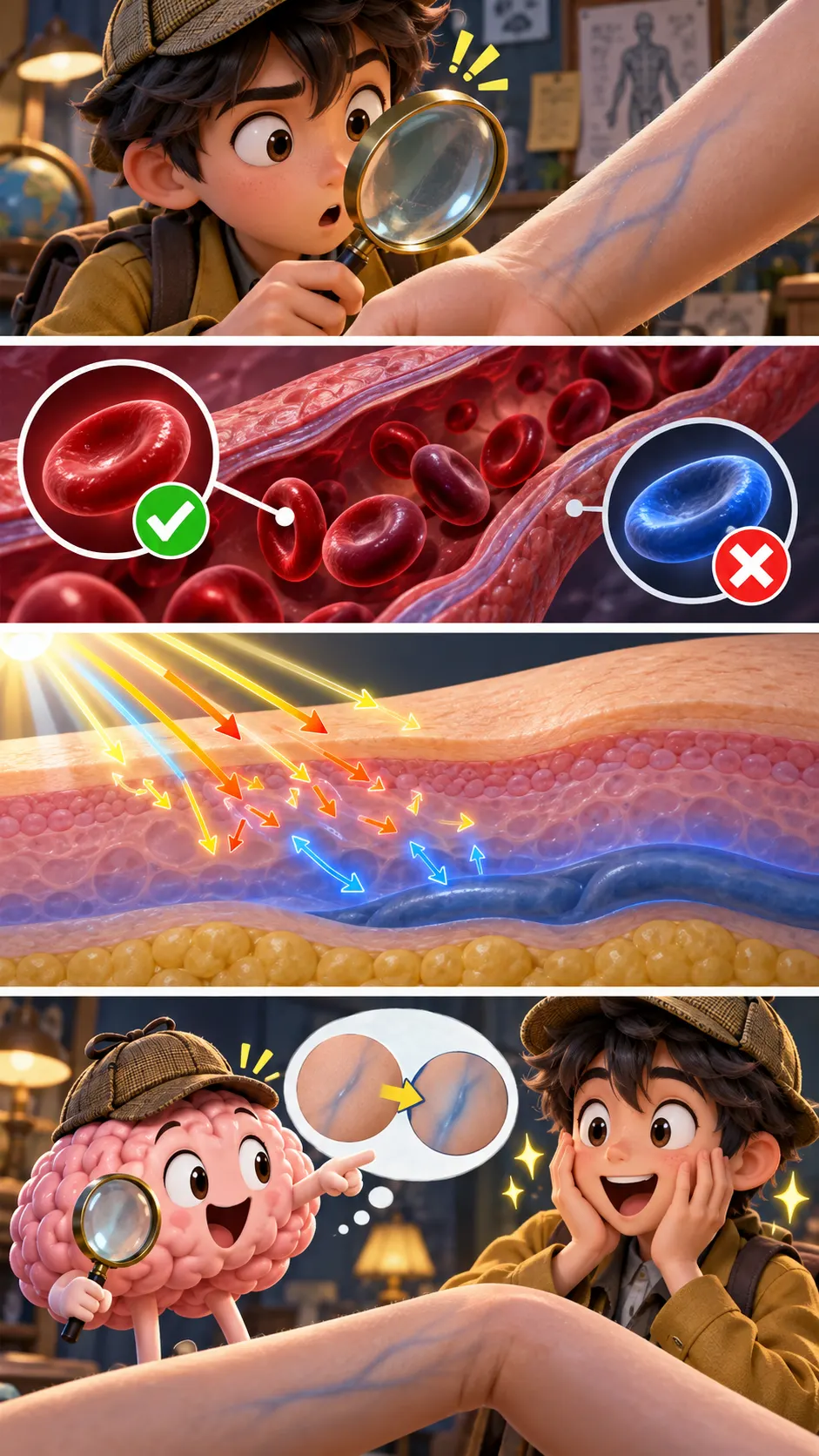
 4コマでわかる
このネタ、誰かに教えたくなった?
「静脈の血は青くて、空気にふれると赤くなる」はウソ。人の血は酸素が少なくても暗い赤。腕の血管が青く見えるのは、赤い光が肌の奥まで入って血に吸われることと、まわりの肌色と比べる脳のクセのせいらしい。
押すと「マジかリスト」に保存されます
 出典・参考文献(3件)タップで表示
- Kienle et al. (1996) Why do veins appear blue? A new look at an old question, Applied Opticsdoi.org
- Bosschaart et al. (2014) A literature review and novel theoretical approach on the optical properties of whole blood, Lasers in Medical Sciencedoi.org
- Coates & Decker (2017) Immunological properties of oxygen-transport proteins: hemoglobin, hemocyanin and hemerythrin, Cellular and Molecular Life Sciencesdoi.org

※本記事は上記の研究・公開資料をもとに、原田英語が独自の言葉で解説したものです。引用は著作権法第32条の範囲で行い、出典を明記しています。画像はすべてオリジナルのイメージです。研究結果には限界や個人差があります。誤りのご指摘は原田英語のお問い合わせフォームから。