語学・英語学習ホント
英語のつづりはヨーロッパの中でも難しかった。欧州13言語の比較で英語だけ2倍以上遅れた
 2026.10.02
 English Corner(A2〜B2・4択クイズ)

 読む前に予想してみよう!
英語を母語とする子どもは、他のヨーロッパの言語の子どもと同じくらいの速さで、文字を読めるようになる
13言語の比較で、英語の子どもは読みの基礎が身につくのに、つづりが規則的な言語の子どもの2倍以上の時間がかかっていた。
 研究カード(どんな研究?)
- 対象
- ヨーロッパ13言語の小学1〜2年生など
- 規模
- 人数は研究ごとに異なる
- 研究の種類
- 国際比較研究・脳画像研究・総説
- 確かさ
- ★★★★☆
欧州13言語の子どもの読み始めを比べると、多くは1年目で正確に読めたのに英語は2倍以上かかった。つづりと音の対応の複雑さが原因とされる。
ひとことで言うと英語のつづりは、ネイティブの子どもにも難しい。あなたが苦労するのは当然!
「through」「though」「thought」「tough」。似たつづりなのに、発音はバラバラ。英語を勉強していると、つづりと発音の関係がめちゃくちゃだと感じる瞬間がありますよね。
実はこれ、日本人学習者だけの悩みではありません。ヨーロッパの研究で、英語のつづりは、英語を母語とする子どもにとっても「別格に難しい」ことが示されていたのです。
0113言語の子どもで「読み始め」を比べた
この差は、学校に入る年齢や、文字の知識の差では説明できなかったとされています。
02原因は「つづりの深さ」
研究者たちは、原因を「正書法の深さ(つづりの深さ)」にあると考えました。
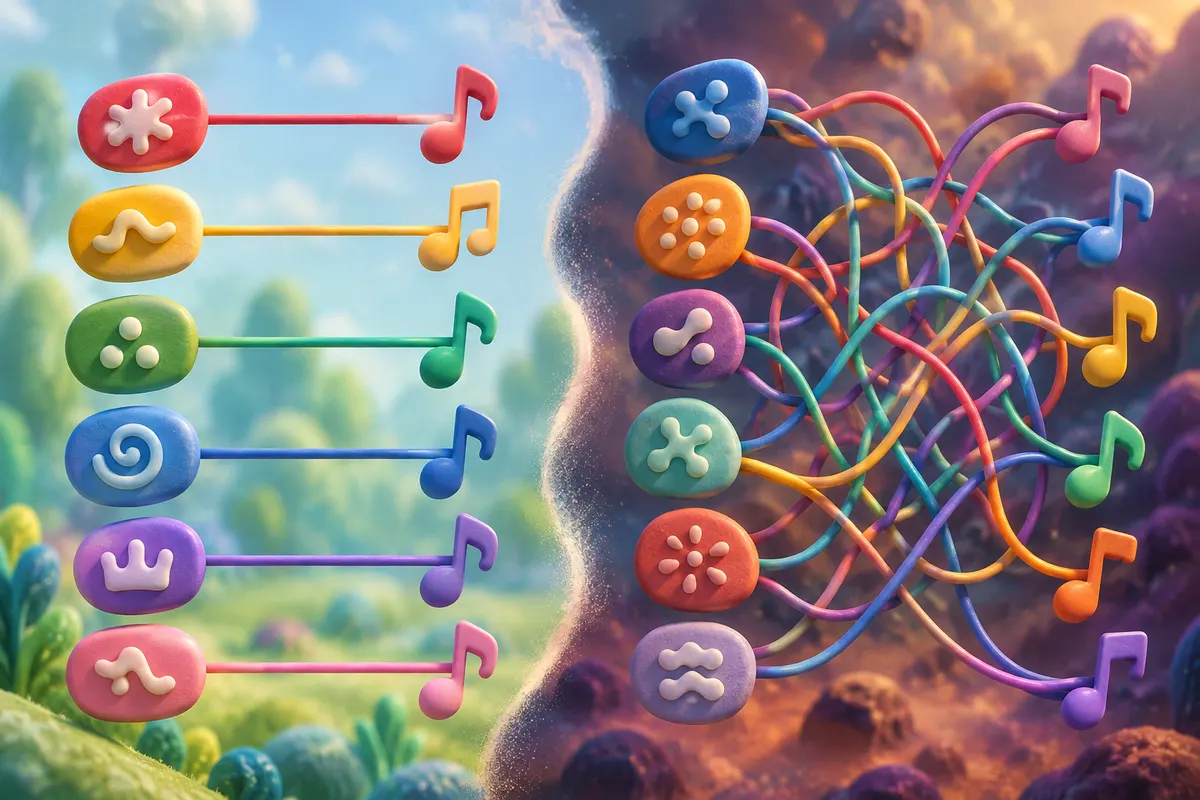
- 浅い正書法:つづりと音の対応がほぼ1対1。イタリア語やフィンランド語など。文字を見れば読み方がわかる
- 深い正書法:同じつづりでも読み方が違ったり、同じ音に何通りものつづりがあったりする。英語はその代表
例えば英語の「ea」は、read、bread、great で全部違う音になります。逆に「イー」という音は、see、sea、piece、me、key など、いくつものつづりで書けます。
さらに英語は、「str」「ngths」のような子音の重なりが多いことも、読み始めの難しさにつながっていると考えられています。
03脳の使い方まで変わる
つづりのしくみの違いは、脳の使い方にも影響していました。
パウレズらの2000年の研究では、イタリア語の読み手と英語の読み手の脳の活動を比べました。すると、規則的なつづりのイタリア語を読む人は音の処理に関わる領域をより強く使い、英語を読む人は単語の形をまとまりで認識したり、意味を引き出したりする領域をより強く使っていたのです。
ジーグラーとゴスワミの2005年の総説は、これを「粒の大きさ」の違いとして説明しています。規則的な言語では1文字=1音の小さな粒で読めるが、英語では1文字では読み方が決まらないため、「ight」や単語まるごとのような大きな粒も使い分ける必要がある。その分、身につけるのに時間がかかるのです。
04日本人学習者へのヒント
この研究から、日本人学習者が受け取れるメッセージは2つあります。
- 英語のつづりが難しいのは、あなたのせいではない。英語圏の子どもも読みの基礎を身につけるのに時間がかかっている
- それでも、規則性はゼロではない。英語にも、ある程度予測できるパターン(「-ight」「-tion」など)がある
05まとめ
英語のつづりは、ヨーロッパの言語の中では特に難しい部類でした。ヨーロッパの子どもの比較では、英語の子どもは、読みの基礎を身につけるまでに、つづりが規則的な言語の子どもの2倍以上の時間がかかっていたのです。
だから、つづりで苦労するのは当然。よく出る文字のかたまりを覚え、例外は割り切る。この2つで、英語のつづりとうまく付き合っていきましょう。
この研究を英語で読もう原田英語の English CornerWhy do "through," "though" and "tough" sound so different? 音声
音声 4択クイズ9問A2・B1・B2タップして開く
原田英語の English Corner
この研究を英語で読もう
Look at "through," "though" and "tough." They look similar, but they sound very different. English spelling is hard, and not only for Japanese learners. A 2003 study compared children learning to read in 13 European languages.
Most children could read correctly before the end of their first school year. But English-speaking children took more than twice as long. So if English spelling is hard for you, you are not alone.
70 words ・ CEFR A2
和訳を見る
「through」「though」「tough」を見てください。見た目は似ていますが、発音はまったく違います。英語のつづりは難しく、それは日本人学習者だけではありません。2003年のある研究は、ヨーロッパの13の言語で読み方を学ぶ子どもたちを比べました。
ほとんどの子どもは、学校の1年目が終わる前に正しく読めるようになりました。しかし英語を話す子どもたちは、2倍以上の時間がかかりました。だから、英語のつづりが難しいと感じても、あなただけではないのです。
4択リーディングクイズ
Q1. What is the passage mainly about?
英語のつづりは英語圏の子どもにとっても難しい、という内容が中心なので A。
Q2. How long did English-speaking children take to learn to read accurately?
English-speaking children took more than twice as long とあるので B。
Q3. In this passage, "you are not alone" means ...
英語のつづりで苦労しているのはあなただけではない=ほかの多くの人も同じ問題を抱えている、という意味なので D。
Why do "through," "though" and "tough" sound so different? English spelling is famously irregular, and research shows it is hard even for native speakers. In 2003, Seymour and his colleagues tested children learning to read in 13 European languages.
In most languages, children could read familiar words and simple made-up words accurately before the end of their first school year. English was the clearest exception. English-speaking children took more than twice as long to build basic reading skills.
Researchers explain this with "orthographic depth." In languages such as Italian, each letter usually has one sound, but in English, letters like "ea" can be read in several ways. English also has many consonant clusters, which make early reading harder.
118 words ・ CEFR B1
和訳を見る
「through」「though」「tough」はなぜこんなに違う音になるのでしょうか。英語のつづりは不規則なことで有名で、研究によると、それはネイティブスピーカーにとってさえ難しいのです。2003年、シーモアらは、ヨーロッパの13の言語で読み方を学ぶ子どもたちをテストしました。
ほとんどの言語では、子どもたちは学校の1年目が終わる前に、よく知っている単語や簡単な作られた単語を正確に読めるようになっていました。英語は最も明らかな例外でした。英語を話す子どもたちは、読みの基礎的な力を身につけるのに2倍以上の時間がかかったのです。
研究者たちはこれを「正書法の深さ」で説明します。イタリア語のような言語では、1つの文字にはふつう1つの音しかありませんが、英語では「ea」のような文字がいくつもの読み方をされます。英語にはまた子音の連続が多く、それが読み始めをさらに難しくしています。
4択リーディングクイズ
Q1. What did Seymour and his colleagues study?
tested children learning to read in 13 European languages とあるので B。
Q2. According to the passage, what is true about Italian?
In languages such as Italian, each letter usually has one sound とあるので A。
Q3. What does "orthographic depth" most likely refer to?
イタリア語(1文字1音)と英語(ea が複数の読み方)の対比で説明されているので、つづりと音の対応の複雑さを指す。正解は C。
English spelling is notoriously inconsistent, and cross-linguistic research confirms that this creates difficulties even for native speakers. In a 2003 study, Seymour, Aro and Erskine assessed early reading in 13 European languages, testing letter knowledge, familiar-word reading and the decoding of simple nonwords. Children learning most languages became accurate and fluent readers before the end of their first school year, but French, Portuguese, Danish and especially English lagged behind.
English-speaking children took more than twice as long as children learning consistent orthographies, a gap that could not be explained by differences in school-entry age or letter knowledge. The authors attributed this mainly to orthographic depth, along with complex syllable structures. Brain imaging points to a related difference.
Paulesu and colleagues found that Italian readers relied more on regions associated with sound processing, while English readers relied more on regions linked to recognizing whole words and retrieving meaning, though age, teaching methods and culture could not be fully separated. Ziegler and Goswami's grain-size theory explains why: when single letters are unreliable, readers of English must also use larger units such as "-ight" or whole words. For learners, this suggests memorizing frequent letter patterns while treating true exceptions individually.
197 words ・ CEFR B2
和訳を見る
英語のつづりは一貫性のなさで悪名高く、言語間の研究は、これがネイティブスピーカーにとってさえ困難を生むことを裏づけています。2003年の研究で、シーモア、アロ、アースキンは、ヨーロッパの13言語で読みの初期段階を評価し、文字の知識、よく知っている単語の読み、そして簡単な非単語の解読をテストしました。ほとんどの言語を学ぶ子どもたちは、学校の1年目が終わる前に正確ですらすら読めるようになりましたが、フランス語、ポルトガル語、デンマーク語、そして特に英語は遅れをとりました。英語を話す子どもたちは、一貫した正書法を学ぶ子どもたちの2倍以上の時間がかかり、その差は就学年齢や文字の知識の違いでは説明できませんでした。
著者たちはこれを、複雑な音節構造とともに、主に正書法の深さによるものだとしました。脳画像研究も関連する違いを示しています。パウレズらは、イタリア語の読み手は音の処理に関わる領域により頼る一方、英語の読み手は単語全体の認識や意味の引き出しに関わる領域により頼っていることを見いだしました。
ただし、比較されたのはイタリア語と英語の読み手だけでした。ジーグラーとゴスワミの粒度理論はその理由を説明します。1文字では当てにならないとき、英語の読み手は「-ight」や単語全体のようなより大きな単位も使わなければならないのです。学習者にとって、これはよく出る文字のパターンを覚えつつ、本当の例外は個別に扱うことを示唆しています。
4択リーディングクイズ
Q1. What is the main point of the passage?
英語のつづりの不規則さが読みの習得を遅らせ、読み方(脳の使い方)にも影響する、という内容なので A。
Q2. What could NOT explain the gap for English-speaking children?
a gap that could not be explained by differences in school-entry age or letter knowledge とあるので D。
Q3. Which limitation of the brain imaging study is mentioned?
though only Italian and English readers were compared とあるので C。
重要単語
- orthographyC1名詞正書法(つづりのしくみ)English orthography is very irregular.
 ortho-(正しい)+ graphy(書くこと)。orthographic depth「正書法の深さ」はつづりと音の対応の複雑さを表す言語学用語。
 - spellingA2名詞つづりEnglish spelling does not always match the sound. spelling bee「つづり大会」は英語圏ならでは。アメリカでは全国大会も開かれている。
- decodeC1動詞(文字を音に)解読するChildren learn to decode letters into sounds. de-(反対)+ code。読み研究では「文字列を音に変換すること」。反対の encode は「符号化する」。
- consistentB2形容詞一貫したItalian spelling is very consistent. 反対語 inconsistent。be consistent with ~「~と一致する」は研究英語の頻出表現。
- phonicsB2名詞フォニックス(つづりと音の対応を教える方法)Phonics helps children read new words. phone(音)から。英語圏の小学校で読み方の基礎として教えられる。日本人学習者の発音・つづり学習にも有効。
- irregularB1形容詞不規則なMany common English words have irregular spellings. irregular verb「不規則動詞」でおなじみ。ir-(否定)+ regular。
- lag behindC1動詞(句)遅れをとるEnglish-speaking children lagged behind in early reading. lag は「遅れ」。time lag「時間のずれ」、jet lag「時差ぼけ」も同じ語。
 入試に出る順の単語帳を印刷する →
 全5561語の「科学英単語カード」で復習する →
 この話題を TED で聞く
同じテーマの TED・TED-Ed を、 TED HACK で。英語の見どころ・使える表現・学習ミッションつきの日本語ガイドです。(運営:原田英語)

 4コマでわかる
このネタ、誰かに教えたくなった?
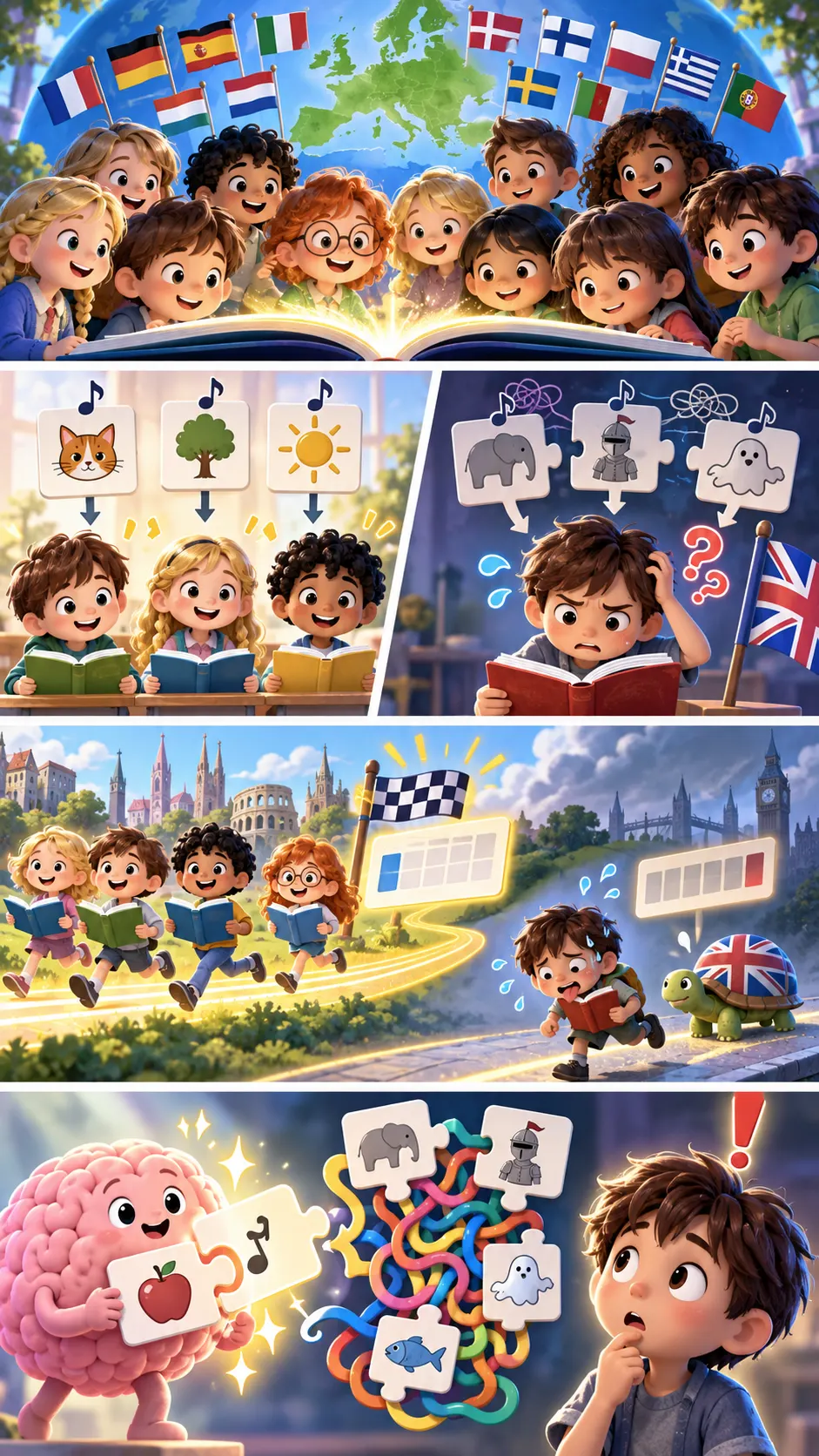
ヨーロッパ13言語の子どもで「読みの基礎」が身につく速さを比べたら、多くの国は1年生のうちに正確に読めるようになったのに、英語の子は2倍以上かかったらしい。英語のつづりが難しいのは、英語圏の子どもにとっても同じだった。
押すと「マジかリスト」に保存されます
 出典・参考文献(3件)タップで表示
- Seymour, Aro & Erskine (2003) Foundation literacy acquisition in European orthographies. British Journal of Psychologydoi.org
- Ziegler & Goswami (2005) Reading acquisition, developmental dyslexia, and skilled reading across languages: A psycholinguistic grain size theory. Psychological Bulletindoi.org
- Paulesu et al. (2000) A cultural effect on brain function. Nature Neurosciencedoi.org

※本記事は上記の研究・公開資料をもとに、原田英語が独自の言葉で解説したものです。引用は著作権法第32条の範囲で行い、出典を明記しています。画像はすべてオリジナルのイメージです。研究結果には限界や個人差があります。誤りのご指摘は原田英語のお問い合わせフォームから。