体と健康・食
筋トレは週何回がベスト? 論文をまとめたら「毎日」より大事なものが見えてきた
 2026.10.02
 English Corner(A2〜B2・4択クイズ)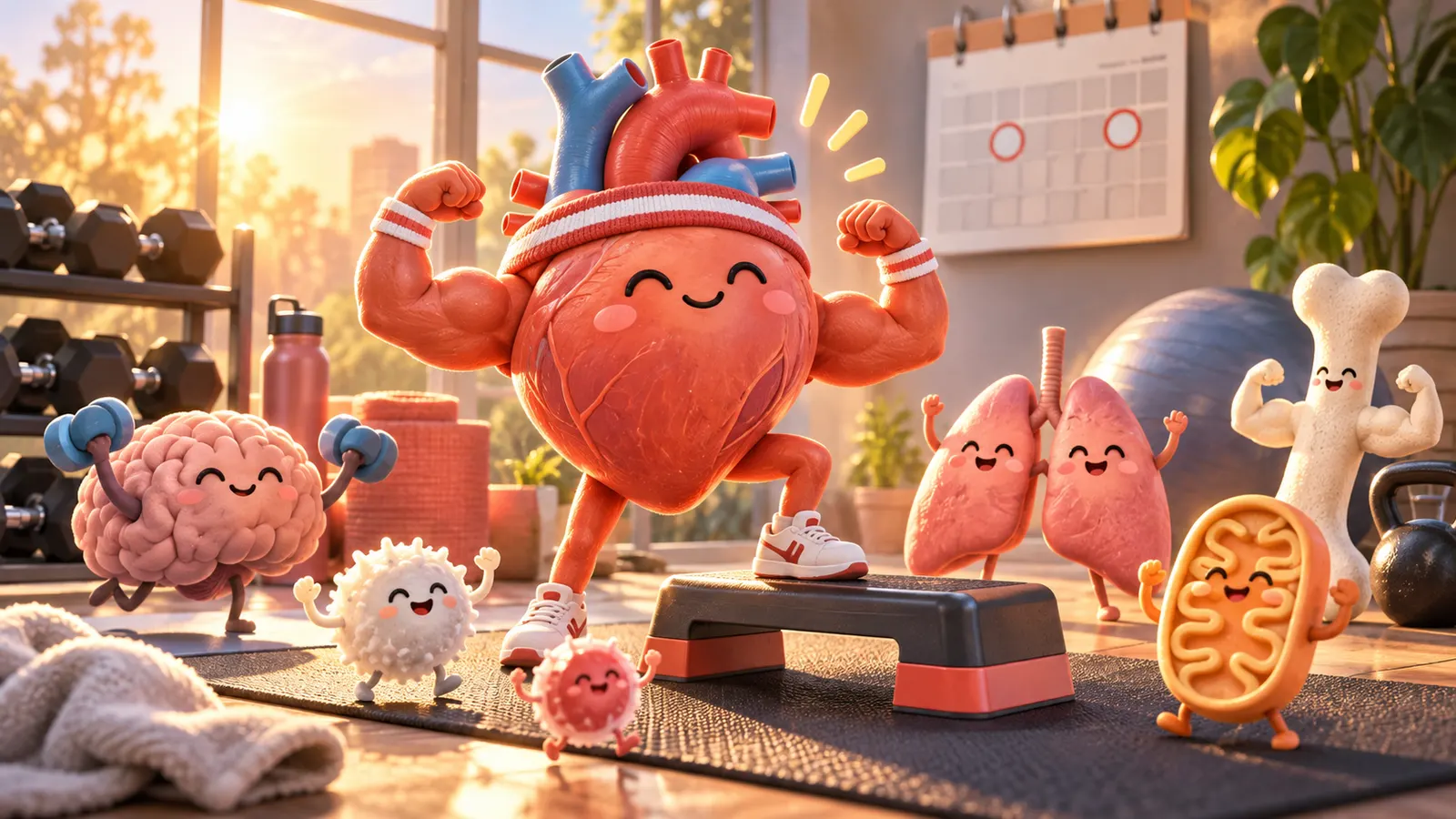
 読む前に予想してみよう!
筋肉を大きくするには、同じ部位を毎日鍛えないと効果がない
合計のトレーニング量がそろえば、週2回でも週3回以上でも差は小さいという分析がある。
 研究カード(どんな研究?)
- 対象
- 筋トレ実験の参加者/世界の成人
- 規模
- 多数の介入研究/コホート研究
- 研究の種類
- 系統的レビュー・メタ分析
- 確かさ
- ★★★★☆
同じ部位は週2回以上が目安。ただし合計の量がそろえば頻度の差は小さい。健康面では週30〜60分ほどで死亡リスク低下と関連。
ひとことで言うと筋トレは「回数」より「合計どれだけやったか」がポイント!
「筋トレは毎日やらないと意味がない」「いや、休ませないと逆効果」。ネットを見ると、正反対の意見がたくさん出てきます。
結局、週何回がベストなのか。たくさんの論文をまとめた研究を見ると、意外とシンプルな答えが見えてきました。
01「週1回」より「週2回」
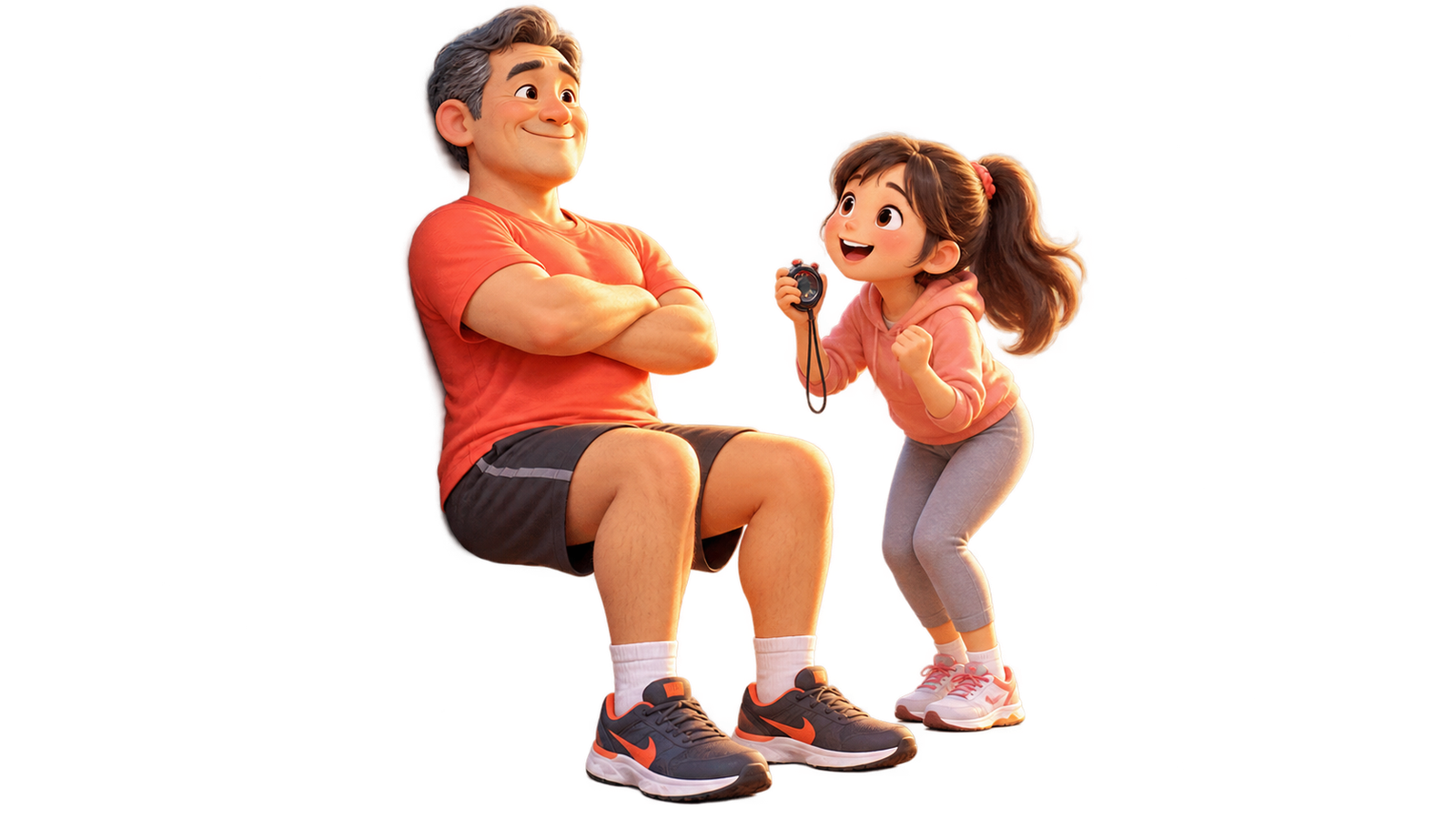
筋トレをすると、筋肉の中で「新しいタンパク質を作れ」というスイッチが入ります。このスイッチは1〜2日ほどで落ち着いてしまうと考えられています。だから週1回だと、残りの日は「工事が止まった状態」が長くなるわけです。
02でも「合計の量」がそろうと差は縮む
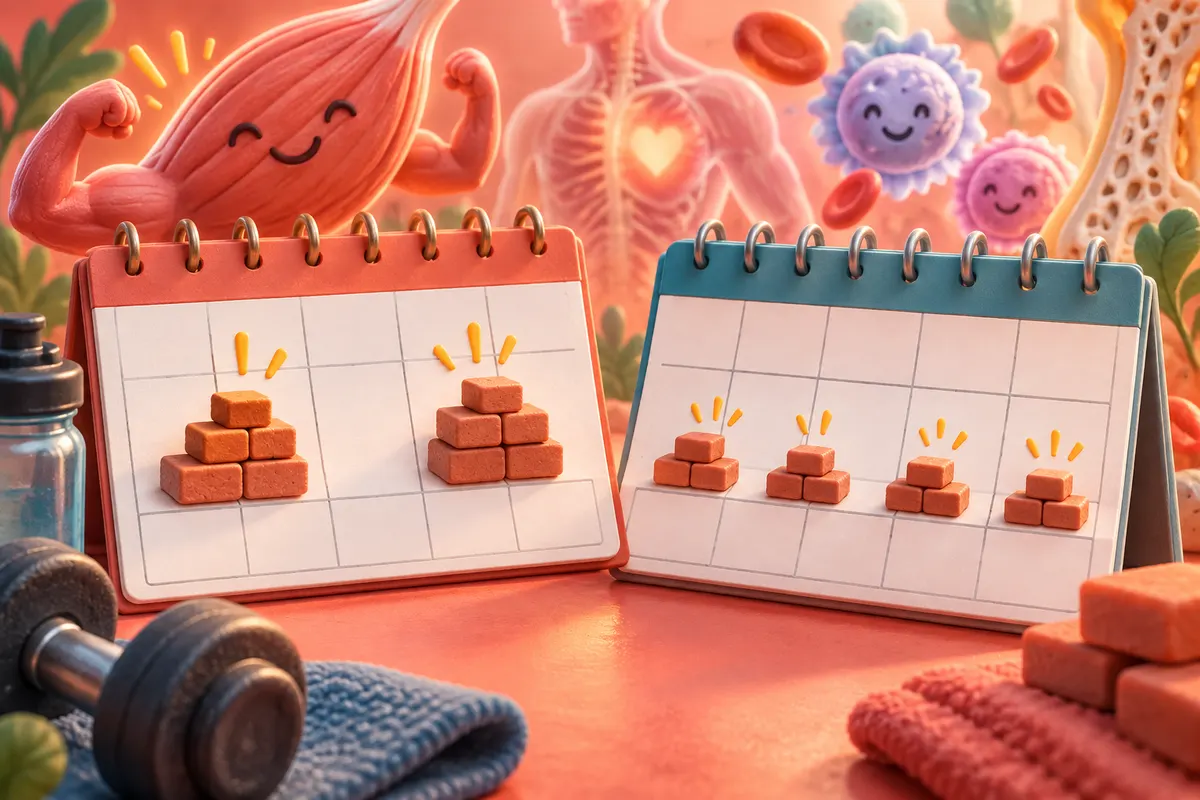
ところが話はここで終わりません。同じ著者らが2019年に、対象の研究を25本に増やして行った分析では、1週間の合計のトレーニング量(セット数×回数×重さ)をそろえると、頻度による差はほとんどなかったんです。
たとえるなら、1週間で同じ距離を走るなら、2回に分けても4回に分けても、だいたい同じという感じ。
つまり大事なのは、
- まず週の合計量をしっかり確保する
- その量を何回に分けるかは、続けやすさで選んでOK
03長生きとの関係は「週30〜60分」
筋肉を大きくする話とは別に、健康や寿命との関係を調べた研究もあります。
2022年、東北大学の門間陽樹さんらが『British Journal of Sports Medicine』で発表したメタ分析では、週30〜60分ほどの筋トレが、死亡リスクや心臓病・がんなどのリスクが低いことと関連していました。
おもしろいのは、それ以上増やしてもリスク低下がどんどん大きくなるわけではなかったこと。少なくとも「やればやるほど長生き」という単純な話ではなさそうです。
WHO(世界保健機関)も、大人に週2日以上の筋力トレーニングをすすめています。
04「休み」もトレーニングのうち
筋トレをした直後の筋肉は、ある意味で小さな工事現場。トレーニングで刺激を受けた筋肉は、休んでいる間に修理され、少しずつ強くなっていきます。
だから、同じ部位を毎日ハードに追いこむより、鍛える日と休む日をうまく組み合わせるほうが続けやすく、ケガもしにくいと考えられています。睡眠やタンパク質をしっかりとることも、工事を進める大事な材料です。
05年をとっても筋トレは効く
筋肉は、何もしないと年齢とともに少しずつ減っていきます。でも、高齢になってから筋トレを始めても、筋力や筋肉量は増えることが多くの研究で示されています。
「もう遅い」ということはありません。階段の上り下りや、イスからの立ち上がりが楽になることは、毎日の暮らしにとって大きな意味があります。
06まとめ
筋トレのベストな頻度は、「同じ部位を週2回以上」がひとつの目安。でも本当に大事なのは、回数より合計の量と、続けることでした。
「毎日やらなきゃ」と気負ってやめてしまうより、週2回を1年続けるほうがずっと強い。まずは今週、2回だけ。
この研究を英語で読もう原田英語の English CornerAdvice on strength training varies, with some saying you must train every day and others saying you need… 音声
音声 4択クイズ9問A2・B1・B2タップして開く
原田英語の English Corner
この研究を英語で読もう
How many times a week should you do strength training? A study found that training each muscle at least twice a week was better than once a week.
But when the total amount of training was the same, it did not matter much how many days you trained. For health, about 30 to 60 minutes of strength training a week was linked to a lower risk of death. Rest days are important too.
73 words ・ CEFR A2
和訳を見る
筋トレは週に何回やるべきでしょうか?ある研究では、それぞれの筋肉を週1回より週2回以上鍛えたほうがよいことがわかりました。
でも、トレーニングの合計の量が同じなら、何日に分けて鍛えるかはあまり関係ありませんでした。健康のためには、週に約30〜60分の筋トレが、死亡リスクの低さと関連していました。休む日も大切です。
4択リーディングクイズ
Q1. What is the passage mainly about?
筋トレを週に何回やるべきかがテーマなので D。
Q2. For health, how much strength training a week was linked to a lower risk of death?
about 30 to 60 minutes of strength training a week was linked to a lower risk of death とあるので B。
Q3. In this passage, "total" means ...
total は「合計の・全体の」。1週間分を全部足した量のことなので A。
Advice on strength training varies, with some saying you must train every day and others saying you need lots of rest. What does research show? In 2016, a review by Schoenfeld and his team found that muscles tended to grow more when each muscle was trained at least twice a week rather than once.
However, a 2019 analysis by the same authors showed that when the total weekly amount of training was the same, frequency made little difference. So the total amount matters more, and you can choose how to divide it. For health, a 2022 Japanese study linked about 30 to 60 minutes of strength training a week with a lower risk of death.
115 words ・ CEFR B1
和訳を見る
筋トレについての助言はさまざまで、毎日やらなければならないと言う人もいれば、たくさん休む必要があると言う人もいます。研究は何を示しているのでしょうか?2016年、シェーンフェルドさんのチームのレビューでは、各筋肉を週1回ではなく週2回以上鍛えたほうが、筋肉が大きくなりやすい傾向がありました。
しかし、同じ著者らの2019年の分析では、週の合計のトレーニング量が同じなら、頻度はほとんど差を生まないことがわかりました。つまり、より大切なのは合計の量で、それをどう分けるかは自分で選べるのです。健康面では、2022年の日本の研究が、週約30〜60分の筋トレと死亡リスクの低さとの関連を示しました。
4択リーディングクイズ
Q1. What is the main point of the passage?
So the total amount matters more, and you can choose how to divide it. が要点なので C。
Q2. What did the 2019 analysis show?
when the total weekly amount of training was the same, frequency made little difference とあるので B。
Q3. Which person is most likely following the advice in the passage?
週2回以上が目安で、合計の量が大切だという内容に最も合うのは A。
Advice on how often to lift weights runs all the way from "every day" to "rest as much as possible." Meta-analyses have narrowed the range. In 2016, Schoenfeld and colleagues found that training each muscle group at least twice a week tended to produce more growth than training it once. One possible reason is that the signal for building muscle protein fades within a day or two. Their 2019 analysis added a qualification. When total weekly volume, meaning sets multiplied by repetitions and weight, was held constant, frequency made little difference.
So frequency is mainly a way of spreading volume across the week, and people can pick whatever schedule they can keep up. Research on health outcomes adds a related finding. A 2022 meta-analysis led by Momma in Japan linked about 30 to 60 minutes of muscle-strengthening activity per week to lower risks of death, heart disease and cancer.
Doing more than that did not keep adding benefit. These figures come from observational cohort studies, and healthier people may simply be more likely to train in the first place. The WHO recommends strength training on at least two days a week.
191 words ・ CEFR B2
和訳を見る
ウエイトトレーニングの頻度についてのアドバイスは、「毎日」から「できるだけ休め」まで、実にさまざまです。メタ分析によって、その幅は狭まってきました。2016年、シェーンフェルドさんらは、各筋肉群を週2回以上鍛えたほうが、週1回よりも筋肉が大きくなりやすい傾向を見いだしました。理由の一つとして考えられるのは、筋肉のタンパク質を作れという信号が1〜2日で弱まることです。彼らの2019年の分析は、条件を1つ付け加えました。週の合計量、つまりセット数×回数×重さを一定にすると、頻度はほとんど差を生まなかったのです。
つまり頻度は主に、合計量を1週間にどう振り分けるかの方法であり、人は自分が続けられるスケジュールを選べばよいのです。健康面の研究からも、関連する発見があります。日本の門間さんが率いた2022年のメタ分析では、週約30〜60分の筋トレが、死亡、心臓病、がんのリスクの低さと結びついていました。
それ以上増やしても、効果が増え続けることはありませんでした。これらの数字は観察的なコホート研究によるもので、もともと健康な人ほど筋トレをしやすいだけかもしれません。WHOは、週2日以上の筋力トレーニングを勧めています。
4択リーディングクイズ
Q1. According to the passage, why might training twice a week produce more growth than once?
One possible reason is that the signal for building muscle protein fades within a day or two. とあるので B。
Q2. What does the author mean by saying frequency is "mainly a way of spreading volume across the week"?
合計量が同じなら頻度の差はほとんどないので、頻度は合計の量をどう分けるかの手段にすぎない、という意味。正解は D。
Q3. What weakness of the 2022 findings does the author point out?
These figures come from observational cohort studies, and healthier people may simply be more likely to train とあるので A。
重要単語
- resistance trainingC1名詞(句)筋力トレーニングResistance training builds muscle strength.
 resistance は「抵抗」。重りやゴムの抵抗に逆らって力を出すことから。strength training とも言う。
 - hypertrophyC1名詞肥大(筋肥大)Muscle hypertrophy needs enough training volume. hyper-(過度に)+trophy(栄養・成長)。反対は atrophy(萎縮)。
- frequencyB2名詞頻度/周波数Training frequency matters less than volume. frequent(頻繁な)の名詞。ラジオの「周波数」も frequency。how often を名詞1語で言うと frequency。
- volumeB1名詞量Weekly volume means sets times reps times weight. 「音量」「体積」「(本の)巻」と意味が多い。a large volume of ~「大量の~」。
- recoveryB2名詞回復Muscles grow during recovery. recover(回復する)の名詞形。economic recovery「景気回復」のように経済でも頻出。
- distributeB2動詞分配する、配るYou can distribute your training across the week. 名詞 distribution。distribute A among B「AをBに分配する」の形で使う。
 入試に出る順の単語帳を印刷する →
 全5561語の「科学英単語カード」で復習する →
 動画でもっと知る
動画は各チャンネルの公式埋め込みで表示しています(YouTube)。
この話題を TED で聞く
同じテーマの TED・TED-Ed を、 TED HACK で。英語の見どころ・使える表現・学習ミッションつきの日本語ガイドです。(運営:原田英語)

 公式・一次情報をチェック
このネタ、誰かに教えたくなった?
筋トレって週何回がいいの? 論文をまとめると、同じ筋肉は週2回以上が目安。でも合計の量が同じなら、回数の差はそこまで大きくないらしい。健康目的なら週30〜60分で長生きとの関連も。
押すと「マジかリスト」に保存されます
 出典・参考文献(4件)タップで表示
- Schoenfeld, Ogborn & Krieger (2016) Effects of Resistance Training Frequency on Measures of Muscle Hypertrophy: A Systematic Review and Meta-Analysis, Sports Medicinedoi.org
- Schoenfeld, Grgic & Krieger (2019) How many times per week should a muscle be trained to maximize muscle hypertrophy? A systematic review and meta-analysis of studies examining the effects of resistance training frequency, Journal of Sports Sciencesdoi.org
- Momma et al. (2022) Muscle-strengthening activities are associated with lower risk and mortality in major non-communicable diseases: a systematic review and meta-analysis of cohort studies, British Journal of Sports Medicinedoi.org
- Bull et al. (2020) World Health Organization 2020 guidelines on physical activity and sedentary behaviour, British Journal of Sports Medicinedoi.org

※本記事は上記の研究・公開資料をもとに、原田英語が独自の言葉で解説したものです。引用は著作権法第32条の範囲で行い、出典を明記しています。画像はすべてオリジナルのイメージです。研究結果には限界や個人差があります。誤りのご指摘は原田英語のお問い合わせフォームから。