

 体と健康・食
紙で指を切るとなぜあんなに痛い? 小さな傷が“最強クラスに痛い”3つの理由
 2026.10.02
 English Corner(A2〜B2・4択クイズ)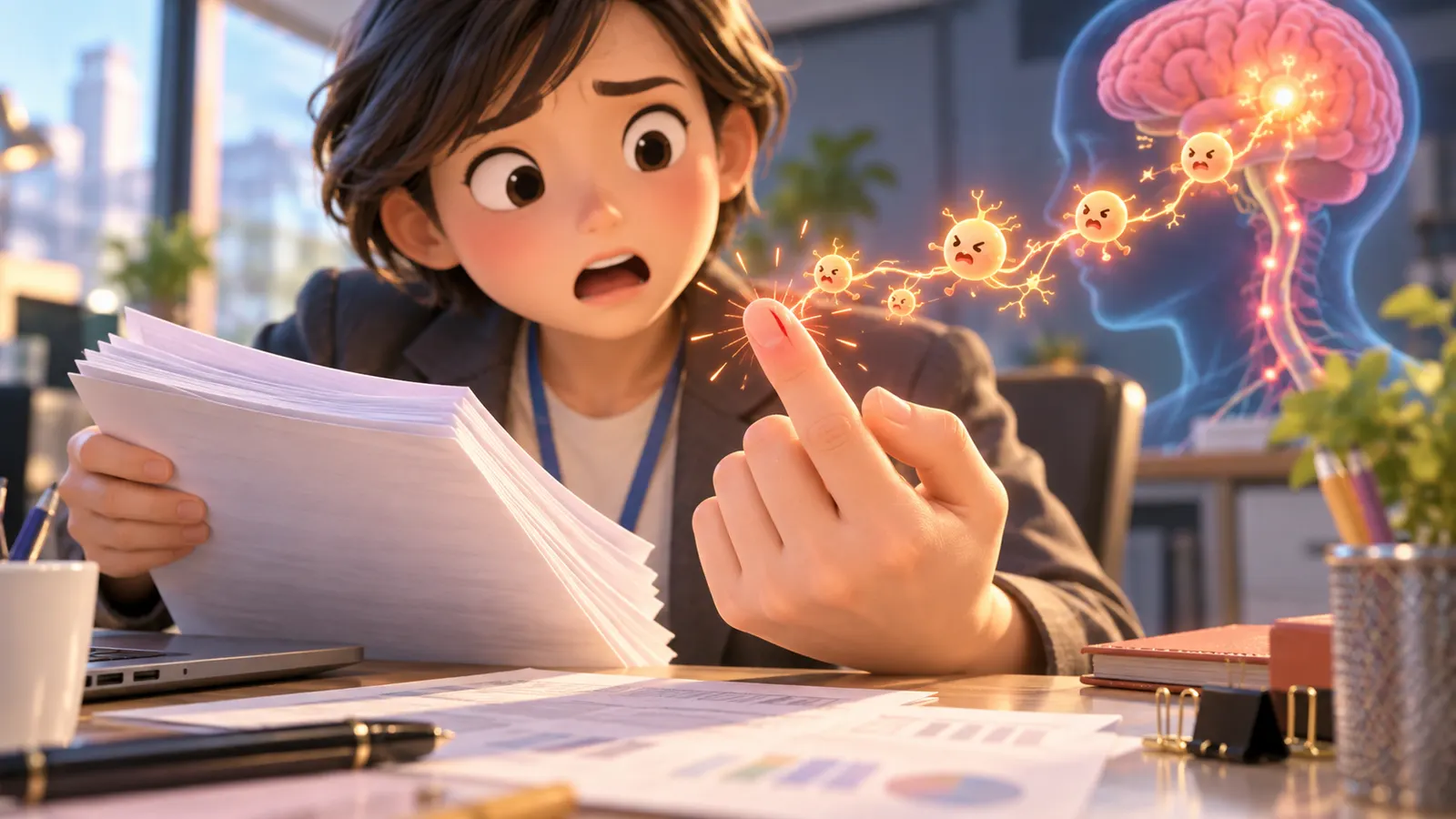
 読む前に予想してみよう!
紙で切った傷が痛いのは、紙に毒のような物質がついているからだ
主な理由は、指先の神経がとても密なことと、浅い傷が開いたまま刺激されやすいこと。
 研究カード(どんな研究?)
- 対象
- 健康な成人
- 規模
- 少人数
- 研究の種類
- 神経生理学・感覚の測定研究
- 確かさ
- ★★☆☆☆
指先は痛みを含む感覚の神経がとても密な場所。紙の傷は浅く血があまり出ず、神経の通る層がむき出しのまま、しかも指を動かすたびに刺激される。
ひとことで言うと指先はセンサーだらけ。そこに浅いキズがむき出しになるから痛い!
書類をめくった瞬間、「いたっ!」。見ると、指先にうっすら赤い線。転んでひざをすりむいたときより、なぜかずっと痛い気がする。
答えを先に言うと、理由は大きく3つあります。①指先は全身でもトップクラスに神経が密な場所、②紙の傷は浅くて血があまり出ず、神経のある層がむき出しになりやすい、③指は一日中動かすので、傷が何度も刺激される。小さな傷なのに、痛みの条件がそろってしまうのです。
01理由1:指先は「センサーの密集地帯」
指先は、物の形や質感を見分けるための精密な道具です。そのため、皮膚の感覚を伝える神経が特に密集しています。
2020年のイギリスの研究(Corniani さんと Saal さん)の推計では、全身の触覚の神経線維のうち、両手のひら側だけで約15%を占めるとされます。体の面積から見ると、とんでもない集中ぶりです。
つまり指先は、痛みの「どこが」を細かく見分けられる場所。その分、小さな傷でもはっきり気づきやすいと考えられます。
02理由2:浅いからこそ、ふさがりにくい
深い切り傷はたくさん血が出ますが、血はやがて固まってかさぶたのフタになります。
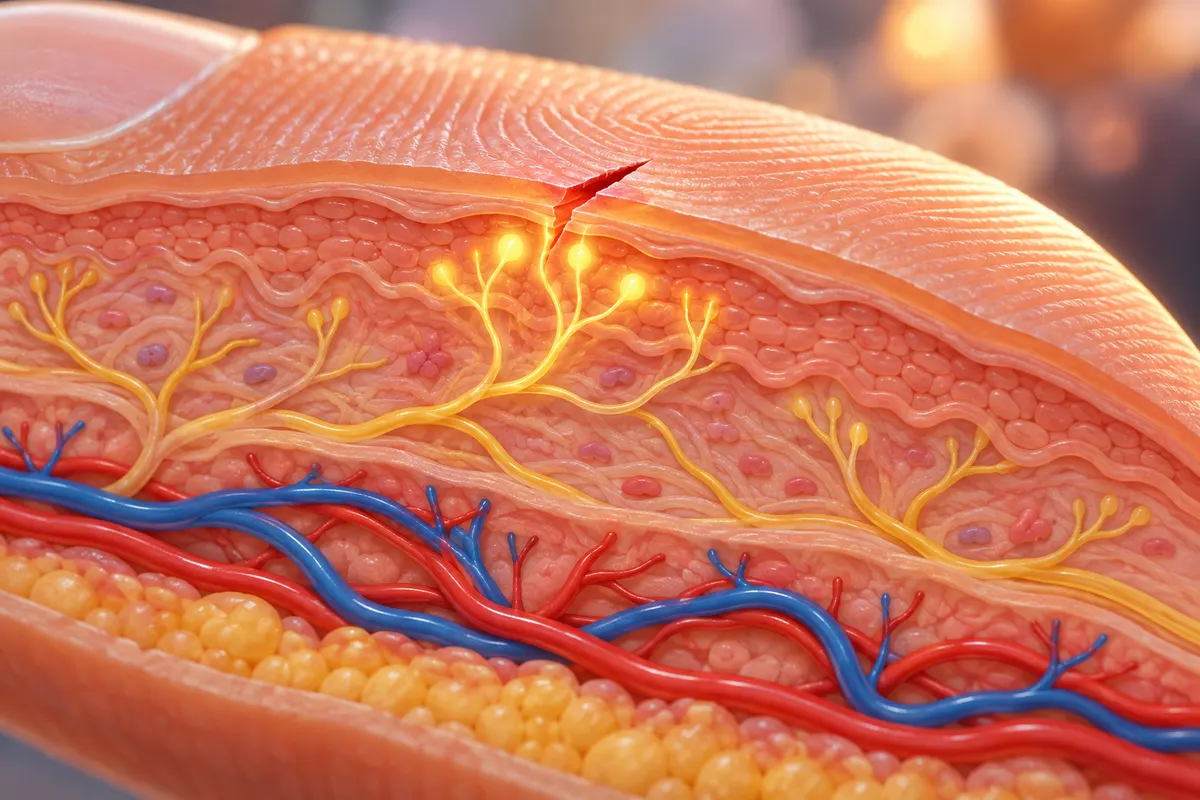
一方、紙で切った傷は、皮膚の表面からほんの少しの深さ。神経の末端がある層までは届くのに、血はにじむ程度しか出ません。そのため傷口がフタをされないまま空気や汗にさらされ、ヒリヒリが続きやすいと考えられています。
03理由3:一日中、傷を「使って」いる
指はスマホ、ペン、ドアノブ、キーボードと、一日に数えきれないほど物に触れます。
そのたびに傷口が引っぱられたり押されたりして、閉じかけた傷がまた開く。腕の傷ならじっとさせておけますが、指先はそうはいきません。治りかけを何度も邪魔されることが、「いつまでも地味に痛い」感覚につながります。
心理的な要素もありそうです。痛みは、注意を向けるほど強く感じやすいことが知られています。指先の傷は作業のたびに目に入り、触れるたびに存在を思い出させられる。気をそらしにくい場所にあることも、痛みを大きく感じさせているのかもしれません。
04まとめ
紙で切ると痛いのは、神経だらけの指先に、ふさがりにくい浅い傷ができ、それを一日中使って刺激してしまうから。小さくても、痛みの条件がフルコースでそろった傷なのです。
「たかが紙の傷」と放っておかず、絆創膏でフタをしてあげましょう。それだけで、ヒリヒリはずいぶん静かになるはずです。
この研究を英語で読もう原田英語の English CornerWhy does a tiny paper cut hurt more than a scraped knee? 音声
音声 4択クイズ9問A2・B1・B2タップして開く
原田英語の English Corner
この研究を英語で読もう
A paper cut is very small, but it can hurt a lot. There are three reasons. First, your fingertips have many nerves, so they feel pain very clearly.
Second, a paper cut is shallow, or not deep. It does not bleed much, so the wound stays open. Third, you use your fingers all day. Every time you touch something, the cut hurts again. So cover it with a bandage!
69 words ・ CEFR A2
和訳を見る
紙で切った傷はとても小さいのに、すごく痛むことがあります。理由は3つあります。1つめに、指先にはたくさんの神経があるので、痛みをとてもはっきり感じます。
2つめに、紙の傷は浅い、つまり深くありません。あまり血が出ないので、傷口が開いたままになります。3つめに、私たちは一日中指を使います。何かに触れるたびに、傷がまた痛むのです。だから絆創膏でふさぎましょう!
4択リーディングクイズ
Q1. What is the passage mainly about?
第1文で「小さいのにとても痛い」と述べ、その3つの理由を説明しているので D。
Q2. Why does a paper cut stay open?
It does not bleed much, so the wound stays open. とあるので A。傷は深くなく浅い(shallow)。
Q3. In this passage, "shallow" means ...
本文で shallow, or not deep と言い換えているので B。
Why does a tiny paper cut hurt more than a scraped knee? First, fingertips are packed with nerve endings. In 1979, Swedish researchers recorded signals from nerves in the hand and found that touch nerves are many times denser in the fingertips than in the palm. A 2014 study also showed that fingertips can locate pain more precisely than the other body parts tested.
Second, a paper cut is shallow. It reaches the layer where nerve endings are, but it does not bleed much, so it is not sealed by a scab. Third, we use our fingers constantly, so the cut is pulled and pressed again and again. The best idea is to clean it and cover it.
118 words ・ CEFR B1
和訳を見る
小さな紙の切り傷が、すりむいたひざより痛いのはなぜでしょうか。第一に、指先には神経の末端がぎっしり詰まっています。1979年、スウェーデンの研究者たちは手の神経から信号を記録し、触覚を伝える神経は手のひらより指先のほうが何倍も密であることを発見しました。2014年の研究では、指先は調べられたほかの部位よりも正確に痛みの場所を特定できることも示されました。
第二に、紙の傷は浅いのです。神経の末端がある層までは届くのに、あまり血が出ないので、かさぶたでふさがれません。第三に、私たちは絶えず指を使うので、傷は何度も引っぱられたり押されたりします。いちばん良いのは、傷を洗ってふさぐことです。
4択リーディングクイズ
Q1. What is the passage mainly about?
第1文の問いに対して First / Second / Third と理由を3つ挙げているので C。
Q2. What did the 1979 study find?
touch nerves are many times denser in the fingertips than in the palm とあるので D。B は逆。
Q3. Why does the author suggest covering the cut?
傷はかさぶたでふさがれず、指を使うたびに刺激されると説明した上での助言なので、A が筆者の意図に合う。
A paper cut is barely a wound, yet it can hurt out of all proportion to its size. Almost no peer-reviewed research has examined paper cuts directly, so any explanation has to be pieced together from studies of the hand. That is the weak spot in what follows. In 1979, Swedish physiologists recorded from hand nerves with fine electrodes and found that touch-sensing nerve units are many times denser in the fingertips than in the palm.
A 2020 estimate placed roughly 15 percent of the body's touch nerve fibers on the palm side of the two hands, a heavy concentration for such a small area. A 2014 study then used laser stimuli that activate only pain pathways. Fingertips located the pain more precisely than any other area tested.
The shape of the cut matters too. It is shallow, deep enough to reach the nerve-rich layer but too shallow to bleed much, so it is not sealed and stays open to air and sweat. Because we use our fingers constantly, the edges are pulled apart again and again. Attention may add to the sting. Pain tends to feel stronger when we focus on it.
193 words ・ CEFR B2
和訳を見る
紙の切り傷はほとんど傷とも言えないほどですが、その大きさに不釣り合いなほど痛むことがあります。紙の切り傷そのものを直接調べた査読研究はほとんどないので、説明は手に関する研究をつなぎ合わせて組み立てるしかありません。それが、これから述べる説明の弱点です。1979年、スウェーデンの生理学者たちは細い電極で手の神経から記録をとり、触覚を感じる神経の単位が手のひらより指先で何倍も密であることを発見しました。
2020年の推計では、全身の触覚神経線維の約15%が両手の手のひら側にあるとされました。面積の小ささを考えると、かなりの集中ぶりです。続いて2014年の研究では、痛みの経路だけを活性化するレーザー刺激が使われました。指先は、調べたほかの部位よりも正確に痛みの場所を特定できました。
傷の形も関係しています。傷は浅く、神経の多い層には届くのに、たくさん出血するほど深くはないため、ふさがらずに空気や汗にさらされたままになります。指は絶えず使うので、傷口は何度も引き離されます。注意も痛みを強めているかもしれません。痛みは、意識を向けるほど強く感じられやすいのです。
4択リーディングクイズ
Q1. What is the main purpose of the passage?
紙の傷そのものの研究はほぼないため、any explanation has to be pieced together from studies of the hand として手の研究から説明しているので B。
Q2. According to the 2020 estimate, about what share of the body's touch nerve fibers is on the palm side of both hands?
placed roughly 15 percent of the body's touch nerve fibers on the palm side of the two hands とあるので C。
Q3. What does the author mean by "the weak spot in what follows"?
直前で紙の切り傷を直接調べた研究はほぼなく、手の研究をつなぎ合わせるしかないと述べているので A。
重要単語
- fingertipA2名詞指先My fingertip is very sensitive.
 tip は「先端」。at one's fingertips は「すぐ使える、熟知して」という熟語。
 - nerve endingB2名詞(句)神経終末(神経の先端)Nerve endings send pain signals to the brain. nerve は「神経」のほか get on one's nerves「~をいらいらさせる」も頻出。
- shallowB1形容詞浅いA paper cut is shallow but painful. 反意語は deep。「(考えが)浅はかな」の意味でも使う。
- densityB2名詞密度The density of nerves is high in the fingers. 形容詞 dense(密な)。population density「人口密度」は地理・社会の長文で頻出。
- woundB1名詞傷Cover the wound to protect it. 発音は /wuːnd/(ウーンド)。wind の過去形 wound /waʊnd/ と区別。
- preciselyB2副詞正確に、精密にFingertips can locate pain very precisely. 形容詞 precise、名詞 precision。with great precision「非常に正確に」。
 入試に出る順の単語帳を印刷する →
 全5561語の「科学英単語カード」で復習する →
 この話題を TED で聞く
同じテーマの TED・TED-Ed を、 TED HACK で。英語の見どころ・使える表現・学習ミッションつきの日本語ガイドです。(運営:原田英語)

このネタ、誰かに教えたくなった?
紙で指を切ると、大ケガでもないのに妙に痛い。理由は、指先が「痛みの場所」を、調べた体の部位の中で一番細かく見分けられる場所だから。しかも浅い傷は血でふさがりにくく、使うたびに刺激されるらしい。
押すと「マジかリスト」に保存されます
 出典・参考文献(3件)タップで表示
- Mancini et al. (2014) Whole-body mapping of spatial acuity for pain and touch, Annals of Neurologydoi.org
- Johansson & Vallbo (1979) Tactile sensibility in the human hand: relative and absolute densities of four types of mechanoreceptive units in glabrous skin, The Journal of Physiologydoi.org
- Corniani & Saal (2020) Tactile innervation densities across the whole body, Journal of Neurophysiologydoi.org

※本記事は上記の研究・公開資料をもとに、原田英語が独自の言葉で解説したものです。引用は著作権法第32条の範囲で行い、出典を明記しています。画像はすべてオリジナルのイメージです。研究結果には限界や個人差があります。誤りのご指摘は原田英語のお問い合わせフォームから。
 これも「マジか!?」

 体・健康
体・健康
ぶつけた所をさすると痛みがやわらぐのはなぜ?「痛いの痛いの飛んでいけ」には科学的な裏づけがあった

 体・健康
体・健康
失った手が痛む「幻肢痛」。鏡1枚で痛みがやわらぐ理由を、脳科学は書き換え続けている
 体・健康
体・健康
足がつる(こむら返り)のはなぜ?「水分・ミネラル不足」説は、実験で旗色が悪くなっていた
 体・健康
体・健康
冷たいものが歯に「キーン」としみるのはなぜ? 歯の中に“冷たさセンサー”を持つ細胞がいた
 体・健康
体・健康
「誰かがそこにいる」気配の正体。ロボットで"見えない人"を作り出した実験

 体・健康
体・健康