

 学習ハックビミョー
数学が苦手な親が宿題を手伝うと、子どもの数学の力が伸びにくい? 438人の追跡調査
 2026.10.02
 English Corner(A2〜B2・4択クイズ)

 読む前に予想してみよう!
親が数学に不安を感じていても、宿題を手伝えば子どもの算数の成績は必ず上がる
アメリカの調査では、数学に不安を持つ親がよく宿題を手伝うほど、子どもの算数の伸びが小さかった。
 研究カード(どんな研究?)
- 対象
- 小学1〜2年生とその親(米国)
- 規模
- 438人/587人
- 研究の種類
- 縦断調査・ランダム化比較試験
- 確かさ
- ★★★☆☆
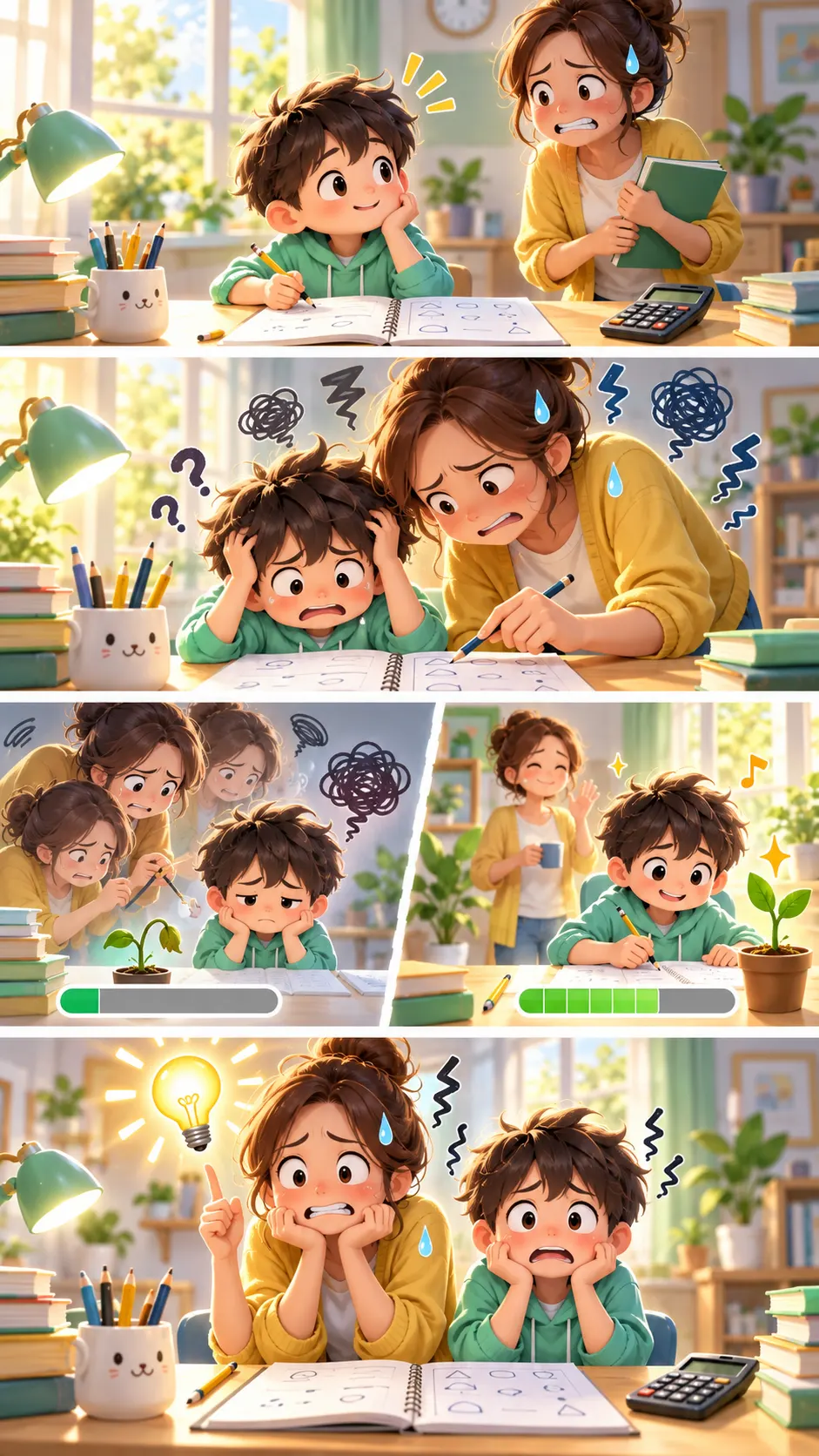
数学に不安を感じる親が宿題をよく手伝う家庭では、子どもの算数の伸びが小さく、算数への不安も大きくなっていた。手伝う回数が少ない家庭では関係が見られなかった。
ひとことで言うと「数学ニガテ…」の気持ちは、宿題を通して子どもに伝わるかも。
「お母さん(お父さん)も数学は苦手だったから…」。子どもの算数の宿題を見ながら、そんな言葉をもらしたことはありませんか。
実はこの「数学ニガテ」の気持ち、宿題を通して子どもに伝わっているかもしれない——。シカゴ大学の研究チームが、そんな結果を報告しています。しかも、カギを握っていたのは「手伝う回数」でした。
01数学に不安のある親が「よく手伝う」と…
親が数学に不安を持っていること自体ではなく、その不安を持ったまま宿題に関わることが、子どもに影響していた可能性があるのです。
02なぜ伝わるのか
研究チームは、数学に不安のある親は、
- 「数学って難しいよね」「できなくても仕方ない」といったメッセージを無意識に伝えてしまう
- 学校とは違う、効率の悪い解き方を教えてしまうことがある
と考えています。同じ研究チームのBeilockさんらは2010年、数学に不安を持つ女性の先生のクラスでは、学年末に「男子は算数が得意、女子は国語が得意」という思い込みを持つ女子が増え、その女子たちの算数の成績が低かったことも報告しています。
不安や苦手意識は、言葉や態度を通じて、大人から子どもへと伝わりうるのです。

03解決策:「算数のお話」アプリで逆転
では、数学に不安のある親はどうすればいいのでしょうか。同じシカゴ大学のBerkowitzさんらは2015年、『Science』誌で、小学1年生587人を対象にしたランダム化比較試験の結果を報告しました。
家庭で親子が一緒に、寝る前などに短い「算数のお話」を読んで問題を解くiPadアプリを使うグループと、読書(国語)のアプリを使うグループに、くじ引きで分けたのです。
その結果、算数のお話アプリを使ったグループは、学年末の算数の成績が有意に伸び、とくに数学に不安を持つ親の子どもで効果が大きかったのです。親が「教える」のではなく、質の高い短いやりとりを一緒に楽しむことで、不安の連鎖を断ち切れる可能性が示されました。
04どんでん返し:数学不安は「原因」か「結果」か
数学不安と成績の関係をまとめたBarrosoさんらのメタ分析(2021年)では、数学への不安が強い人ほど数学の成績が低いという関係は、子どもから大人まで広く見られました(学年や測定法によって強さは異なります)。
ただし、これは「不安が成績を下げる」だけでなく、「成績が低いから不安になる」という逆向きの関係も含まれている可能性があります。おそらく、両方が互いに影響し合っているのでしょう。
05まとめ
数学に不安のある親が宿題をよく手伝うと、子どもの算数の伸びが小さくなる可能性がある。でもそれは、「手伝うな」という意味ではありません。
大切なのは、不安や苦手意識を伝えないことと、楽しく数に触れる時間をつくること。親自身の「ニガテ」は、子どもと一緒に、少しずつ書き換えていけるのかもしれません。
この研究を英語で読もう原田英語の English Corner"I was never good at math either." Many parents say this while helping their children with homework. 音声
音声 4択クイズ9問A2・B1・B2タップして開く
原田英語の English Corner
この研究を英語で読もう
Some parents feel nervous about math. Researchers in Chicago studied 438 first and second graders and their parents for one school year. When math-anxious parents often helped with math homework, their children learned less math. The children also became more worried about math.
But when these parents did not help often, there was no such link. Parents can say "Let's think together" instead of "I was bad at math too."
70 words ・ CEFR A2
和訳を見る
数学に不安を感じる親もいます。シカゴの研究者たちは、小学1〜2年生438人とその親を1年間調べました。数学に不安を感じる親が算数の宿題をよく手伝うと、子どもが学ぶ算数の量は少なくなりました。子どもたちも、算数をより心配するようになりました。
しかし、そうした親があまり手伝わない場合には、そのような関係はありませんでした。親は「私も数学が苦手だった」の代わりに「一緒に考えよう」と言うことができます。
4択リーディングクイズ
Q1. What is the passage mainly about?
数学に不安のある親が宿題を手伝うと子どもの算数に影響しうる、という研究なので B。
Q2. How many children were in the study?
Researchers in Chicago studied 438 first and second graders とあるので D。
Q3. In this passage, "nervous" means ...
nervous は「不安な・緊張した」。後の math-anxious(数学に不安な)と同じ意味なので C。
"I was never good at math either." Many parents say this while helping their children with homework. In 2015, researchers at the University of Chicago followed 438 first and second graders and their parents for one school year. They measured the children's math skills at the start and end of the year and asked parents how anxious they felt about math and how often they helped with math homework.
When math-anxious parents helped often, their children made less progress in math and became more anxious about it. When parents rarely helped, there was no link. Parents' math anxiety was also not related to children's reading, so the effect seemed specific to math.
112 words ・ CEFR B1
和訳を見る
「私も数学は得意じゃなかったよ」。多くの親が子どもの宿題を手伝いながらこう言います。2015年、シカゴ大学の研究者たちは、小学1〜2年生438人とその親を1年間追跡しました。彼らは学年の始めと終わりに子どもの算数の力を測り、親には数学にどれくらい不安を感じるか、算数の宿題をどれくらいの頻度で手伝うかを尋ねました。
数学に不安のある親がよく手伝っていた場合、子どもの算数の伸びは小さく、算数への不安も大きくなっていました。親がほとんど手伝わない場合には、関係は見られませんでした。また、親の数学不安は子どもの読解とは関係していなかったので、その影響は算数に特有のもののようでした。
4択リーディングクイズ
Q1. What happened when math-anxious parents helped often?
their children made less progress in math and became more anxious about it とあるので A。
Q2. What did the researchers ask parents?
asked parents how anxious they felt about math and how often they helped with math homework とあるので C。
Q3. Why did the effect seem specific to math?
Parents' math anxiety was also not related to children's reading, so the effect seemed specific to math とあるので B。
Can a parent's fear of math be passed on to a child? Maloney and colleagues at the University of Chicago followed 438 first and second graders over one school year, measuring their math achievement and math anxiety at the beginning and end, while parents reported their own math anxiety and how often they helped with math homework. When highly math-anxious parents helped frequently, their children learned less math and ended the year more anxious about it. When parents rarely helped, no such relationship appeared, and parental math anxiety was unrelated to children's reading.
The researchers suggested that anxious parents may unintentionally convey negative messages about math or teach inefficient strategies. Encouragingly, a randomized trial by Berkowitz and colleagues with 587 first graders found that families who used an app with short math stories and problems, rather than a reading app, saw greater gains in math, particularly among children of math-anxious parents. However, the first study was observational, and homework help was self-reported, so it is possible that children who were already struggling received more help. A meta-analysis has confirmed that math anxiety and math achievement are broadly linked, but the relationship likely runs in both directions.
196 words ・ CEFR B2
和訳を見る
親の数学への恐れは子どもに伝わるのでしょうか。シカゴ大学のMaloneyさんらは、小学1〜2年生438人を1年間追跡し、学年の始めと終わりに算数の学力と算数への不安を測りました。一方、親は自分自身の数学不安と、算数の宿題をどれくらいの頻度で手伝うかを報告しました。数学への不安が強い親が頻繁に手伝っていた場合、子どもが学んだ算数の量は少なく、学年末には算数への不安も大きくなっていました。親がほとんど手伝わない場合にはそうした関係は見られず、親の数学不安は子どもの読解とは関係していませんでした。
研究者たちは、不安を抱える親は、無意識のうちに数学について否定的なメッセージを伝えたり、効率の悪い解き方を教えたりしているのかもしれないと考えました。心強いことに、Berkowitzさんらによる小学1年生587人を対象にしたランダム化試験では、読書アプリではなく、短い算数のお話と問題を含むアプリを使った家庭は算数の伸びが大きく、それは特に数学に不安のある親の子どもで顕著でした。しかし、最初の研究は観察研究で、宿題の手伝いは自己報告だったため、すでに苦戦していた子どもほど多くの手伝いを受けていた可能性もあります。メタ分析は数学不安と数学の成績が広く結びついていることを確認していますが、その関係はおそらく両方向に働いています。
4択リーディングクイズ
Q1. According to the passage, why might anxious parents affect their children?
anxious parents may unintentionally convey negative messages about math or teach inefficient strategies とあるので D。
Q2. What did the randomized trial with 587 first graders find?
families who used an app with short math stories ... saw greater gains in math, particularly among children of math-anxious parents とあるので A。
Q3. What limitation of the first study does the author mention?
観察研究で手伝いは自己報告であり、it is possible that children who were already struggling received more help(逆の因果の可能性)とあるので C。
重要単語
- math anxietyC1名詞(句)数学不安Math anxiety can affect test performance.
 anxiety は「不安」。形容詞 math-anxious「数学に不安を持つ」。イギリス英語では maths anxiety。
 - intergenerationalC1形容詞世代間のThey studied the intergenerational effects of anxiety. inter-(~の間)+generation(世代)+-al。intergenerational poverty「世代を超えた貧困」。
- transmitC1動詞伝える・伝染させるAttitudes can be transmitted from parents to children. trans-(向こうへ)+mit(送る)。名詞 transmission。病気の「感染」にも使う。
- achievementB1名詞成績・学力Math achievement improved over the year. 動詞 achieve。math achievement「算数・数学の学力」。
- interventionC1名詞介入・支援策The app was a simple intervention. 動詞 intervene(介入する)。教育・医療研究で「効果を確かめる取り組み」を指す。
- inefficientB2形容詞非効率なParents may teach inefficient strategies. in-(否定)+efficient(効率的な)。名詞 efficiency(効率)。
 入試に出る順の単語帳を印刷する →
 全5561語の「科学英単語カード」で復習する →
 この話題を TED で聞く
同じテーマの TED・TED-Ed を、 TED HACK で。英語の見どころ・使える表現・学習ミッションつきの日本語ガイドです。(運営:原田英語)

 4コマでわかる
このネタ、誰かに教えたくなった?
数学に不安を感じる親が、算数の宿題をよく手伝う家庭ほど、子どもは1年間で算数の力が伸びにくく、算数への不安も大きくなっていたらしい。ただし手伝う回数が少ない家庭では関係なし。数学の「ニガテ意識」は親から子へ伝わる?
押すと「マジかリスト」に保存されます
出典・参考文献(4件)タップで表示
- Maloney et al. (2015) Intergenerational Effects of Parents' Math Anxiety on Children's Math Achievement and Anxiety, Psychological Sciencedoi.org
- Berkowitz et al. (2015) Math at home adds up to achievement in school, Sciencedoi.org
- Beilock et al. (2010) Female teachers' math anxiety affects girls' math achievement, PNASdoi.org
- Barroso et al. (2021) A meta-analysis of the relation between math anxiety and math achievement, Psychological Bulletindoi.org

※本記事は上記の研究・公開資料をもとに、原田英語が独自の言葉で解説したものです。引用は著作権法第32条の範囲で行い、出典を明記しています。画像はすべてオリジナルのイメージです。研究結果には限界や個人差があります。誤りのご指摘は原田英語のお問い合わせフォームから。
 これも「マジか!?」

 学習ハック
学習ハック
親が宿題を手伝うと、成績はむしろ下がる? メタ分析でわかった「効く関わり方」
 学習ハック
学習ハック
ゲーム機を買ってあげたら成績は下がる? 「くじ引き実験」と19万人データの答えがちがった
 学習ハック
学習ハック
宿題は多いほど成績が上がる? 7,700人の中学生調査で「1日1時間」が目安に


 学習ハック
学習ハック
【Science掲載】試験直前の10分、不安を紙に書き出したら点数が上がった

 学習ハック
学習ハック
授業中のノートPC、自分だけじゃなく「後ろの席の人」の点まで下げていた

 学習ハック
学習ハック