宇宙・NASAホント
火星はなぜ赤い? 正体は「サビ」。しかも2025年、それは“水のあるサビ”の可能性が出てきた
 2026.10.02
 English Corner(A2〜B2・4択クイズ)
 読む前に予想してみよう!
火星が赤く見えるのは、表面がとても熱いからだ
火星の表面は平均でマイナス60℃前後と寒い。赤いのは、ちりや岩にふくまれる鉄がサビた酸化鉄のため。
 研究カード(どんな研究?)
- 対象
- 火星のちり
- 規模
- 探査機の観測データ+実験室での再現
- 研究の種類
- 観測・実験研究
- 確かさ
- ★★★☆☆
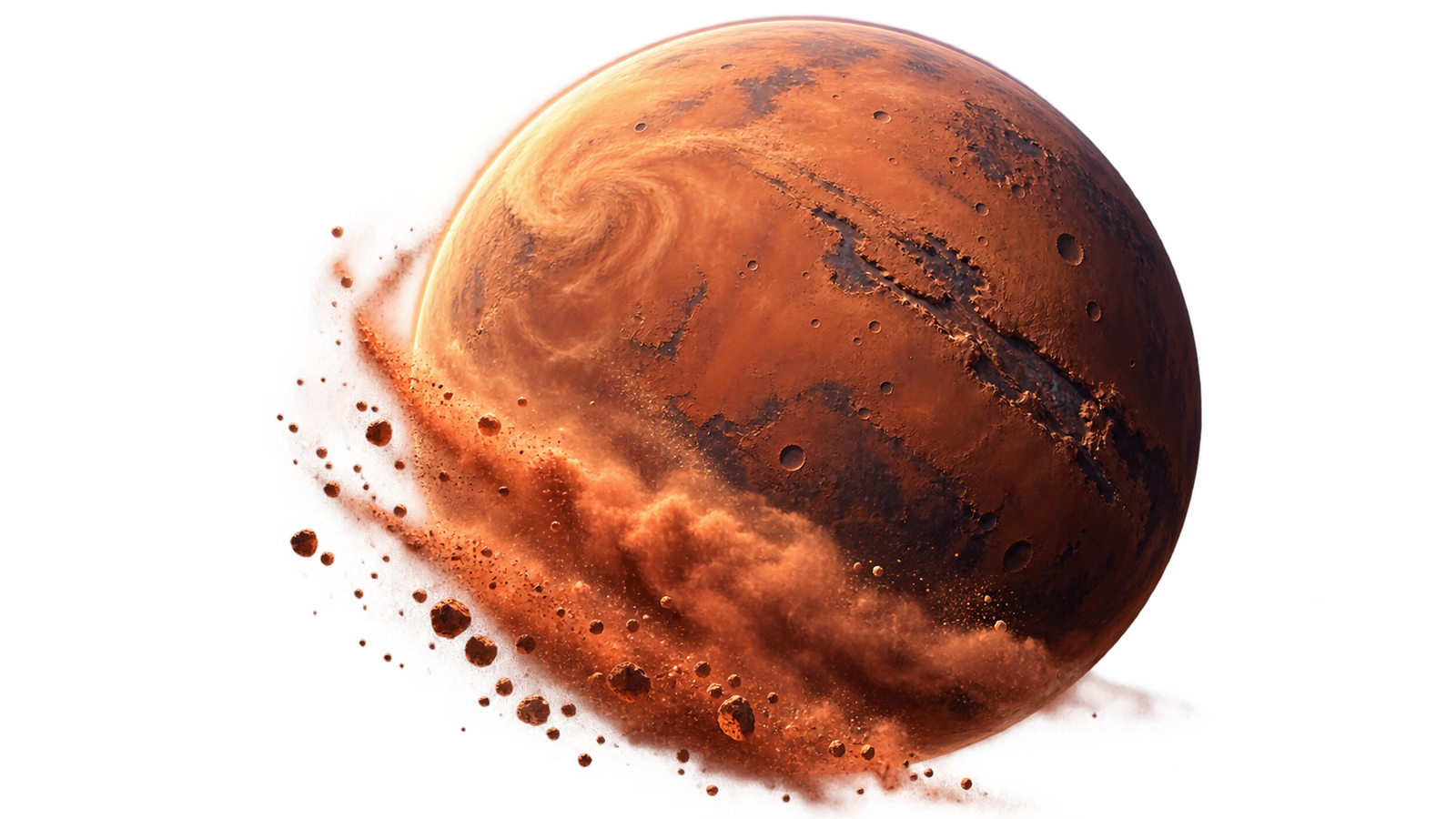
火星が赤いのは地表のちりにふくまれる鉄がサビたから。2025年の研究では、主役は水をふくむサビ「フェリハイドライト」で、昔の火星に水があった証拠かもしれない。
ひとことで言うと火星が赤いのは、星全体が「サビ」におおわれているから!
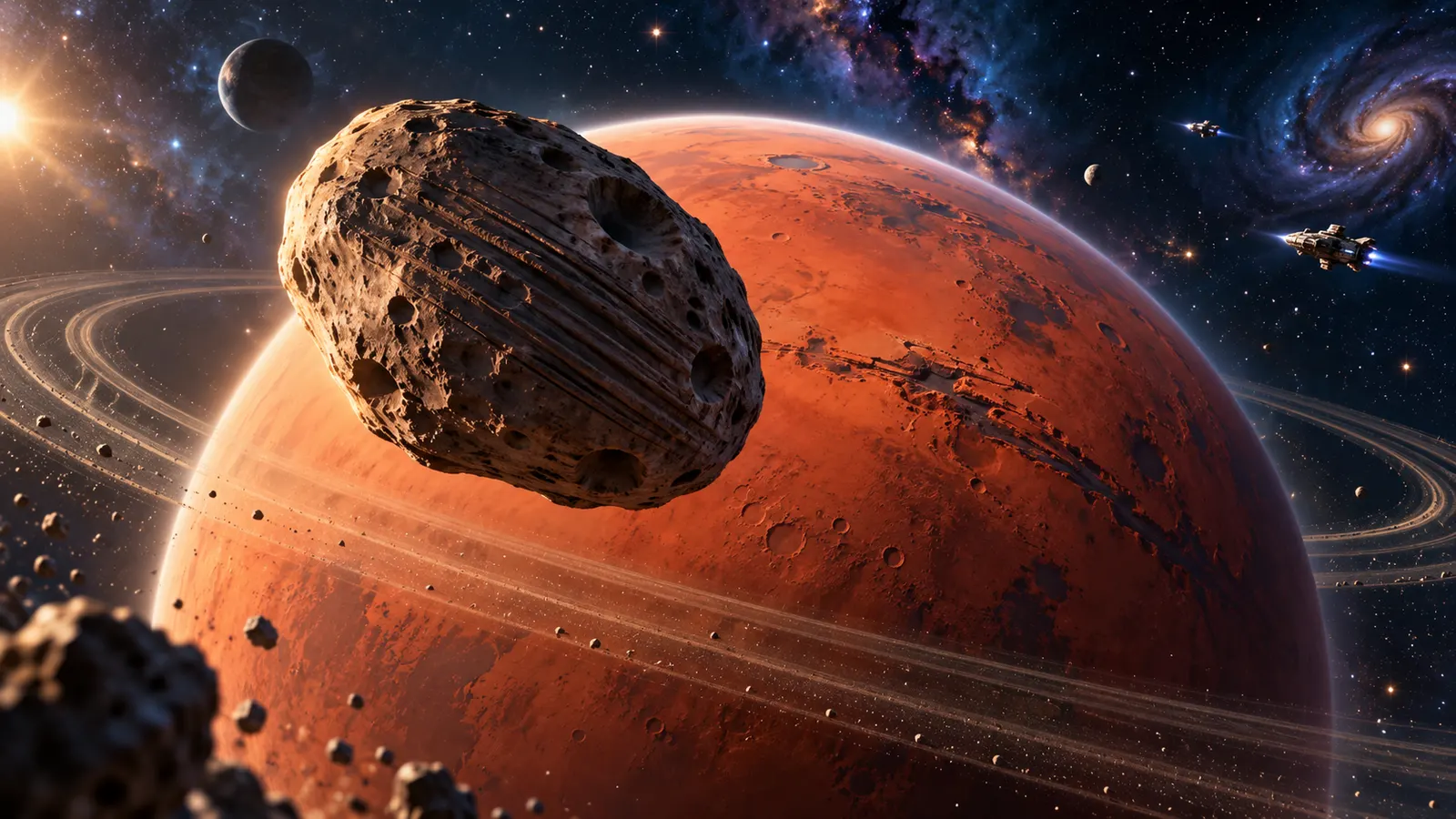
火星が赤いのは、地表をおおう細かいちりや岩にふくまれる「鉄」がサビているからです。鉄が酸素と結びついた酸化鉄は、赤茶色をしています。古い鉄くぎが赤くサビるのと、基本的には同じことです。
ここまでは昔から知られていた話。ところが2025年、「そのサビの正体」をめぐって、火星の歴史を書きかえるかもしれない研究が発表されました。
01星全体が「サビ色のちり」におおわれている
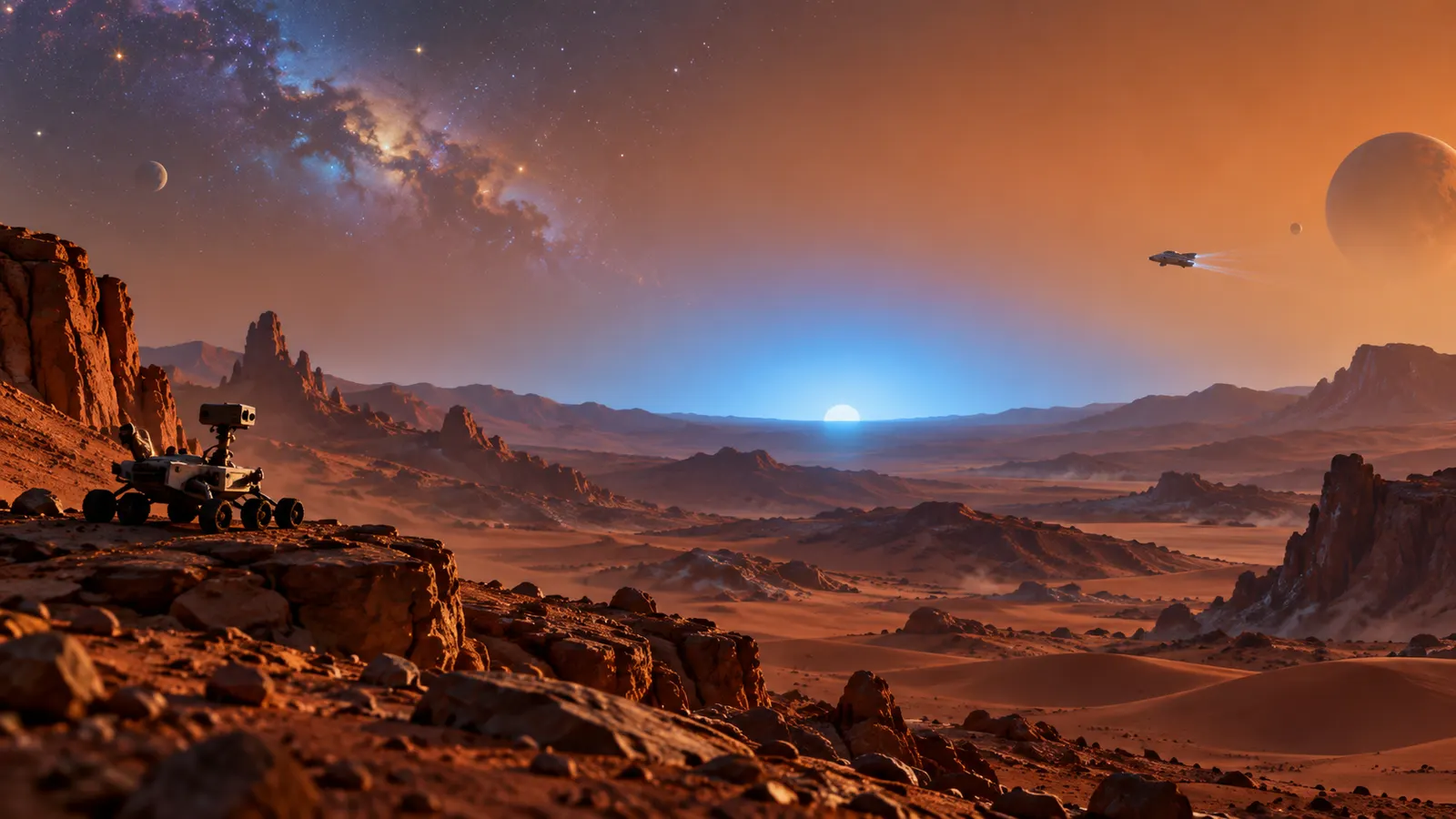
火星の表面は、パウダーのように細かいちりでおおわれています。火星では星全体をおおうほどの砂あらしが起きることもあり、ちりは風で運ばれて、あちこちに降り積もります。そのため、どこを見ても赤っぽく見えるのです。
実は、ちりの下の岩石そのものは、地球の溶岩と同じような黒っぽい玄武岩であることが多いのです。火星の「赤」は、いわば表面をうすくおおうサビのお化粧です。
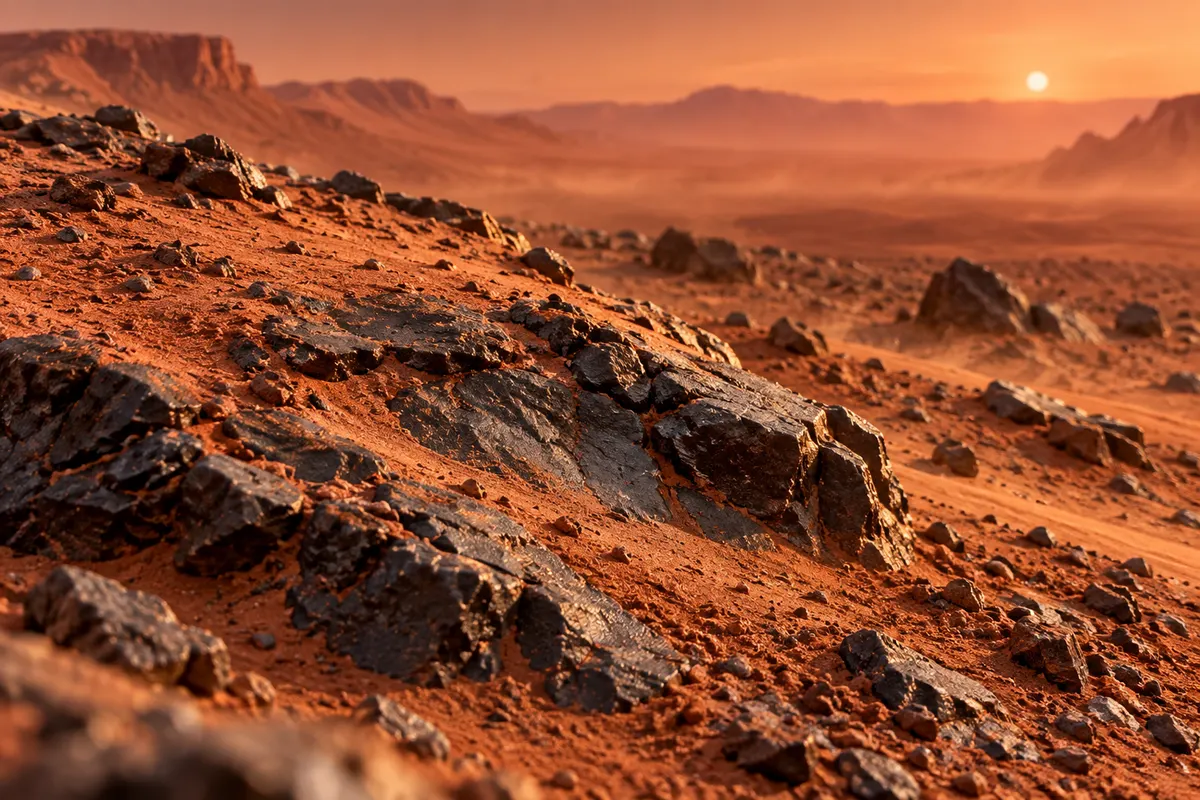
ちなみに、火星の空は昼間はうっすらピンクがかった黄土色に見え、夕焼けは逆に青っぽくなります(くわしくは火星の青い夕焼け)。空の色まで、このちりが決めているのです。
02これまでの説:乾いた火星で、ゆっくりサビた
これまで多くの研究者は、火星の赤いちりは水のない乾いた環境で、長い時間をかけてゆっくりサビたヘマタイト(赤鉄鉱)などが主役だと考えてきました。
2006年、ヨーロッパの探査機「マーズ・エクスプレス」の観測データをまとめた研究では、火星の歴史を「粘土ができた水の多い時代」「硫酸塩ができた時代」「水がほとんどなく、ゆっくり酸化が進んだ時代」に分ける考え方が示されました。赤い色は、このいちばん新しい、乾いた時代の産物というわけです。
032025年の新説:サビは「水をふくんでいた」
フェリハイドライトは、地球では冷たい水がある場所で、鉄がすばやくサビるとできやすい鉱物です。今の火星の表面には液体の水はほとんどありません。だからこそ、水がないとできにくいサビが星じゅうに広がっているとしたら、それは過去の火星の環境を知る大きな手がかりになります。
つまり、火星の赤い色そのものが、「昔の火星には水があった」ことを語っているのかもしれないのです。
04まとめ
火星が赤いのは、地表のちりがサビ(酸化鉄)だから。そして最新の研究によると、そのサビは水があった時代に生まれたものかもしれません。
夜空に赤く光る火星。その色は、はるか昔の水の記憶なのかもしれないのです。
この研究を英語で読もう原田英語の English CornerMars looks red because its surface is covered with fine dust containing iron oxide, or rust. 音声
音声 4択クイズ9問A2・B1・B2タップして開く
原田英語の English Corner
この研究を英語で読もう
Why is Mars red? The answer is rust. Mars is covered with fine dust, and the iron in this dust has rusted. Rust has a reddish-brown color, like an old iron nail. Many scientists thought that this rust formed when Mars was dry.
But a 2025 study suggests that the rust contains water. So the red color may show that Mars had water long ago.
65 words ・ CEFR A2
和訳を見る
火星はなぜ赤いのでしょうか。答えはサビです。火星は細かいちりにおおわれていて、そのちりにふくまれる鉄がサビているのです。サビは、古い鉄くぎのような赤茶色をしています。多くの科学者は、このサビは火星が乾いていたときにできたと考えていました。
でも、2025年の研究は、そのサビが水をふくんでいることを示しています。だから、赤い色は、火星に昔、水があったことを示しているのかもしれません。
4択リーディングクイズ
Q1. What is the passage mainly about?
第1文 Why is Mars red? という問いに答える文章なので A。
Q2. What did the 2025 study suggest about the rust?
a 2025 study suggests that the rust contains water とあるので C。
Q3. In this passage, "fine dust" means dust that is ...
fine には「すばらしい」のほかに「(粒が)細かい」の意味がある。ちりの話なので B。
Mars looks red because its surface is covered with fine dust containing iron oxide, or rust. Dust storms carry this dust across the planet, so almost everywhere looks reddish, even though many of the rocks underneath are dark. For a long time, scientists believed that the rust formed slowly in a dry environment over billions of years.
In 2025, however, researchers compared data from spacecraft with dust that they made in a laboratory. They found that the main rust in Martian dust is probably ferrihydrite, a mineral that usually forms when cold water is present. If this is correct, the red color of Mars may be evidence that the planet once had liquid water.
114 words ・ CEFR B1
和訳を見る
火星が赤く見えるのは、表面が酸化鉄、つまりサビをふくむ細かいちりにおおわれているからです。砂あらしがこのちりを星全体に運ぶので、その下の岩の多くは黒っぽいにもかかわらず、ほとんどどこを見ても赤っぽく見えるのです。長いあいだ、科学者たちは、このサビは乾いた環境で何十億年もかけてゆっくりできたと考えていました。
しかし2025年、研究者たちは探査機のデータを、実験室で作ったちりとくらべました。その結果、火星のちりの主なサビは、ふつう冷たい水があるときにできる鉱物、フェリハイドライトである可能性が高いことがわかりました。これが正しければ、火星の赤い色は、この惑星にかつて液体の水があった証拠なのかもしれません。
4択リーディングクイズ
Q1. What is the main idea of the passage?
火星が赤いのはサビのためで、そのサビは水がある環境でできたかもしれない、という内容なので B。
Q2. How did the researchers study the rust in 2025?
researchers compared data from spacecraft with dust that they made in a laboratory とあるので D。
Q3. Why might the new finding be important?
乾いた環境でできたとされてきたサビが、水のある環境でできた可能性が出てきたので、火星の過去の環境についての見方が変わりうる。正解は A。
Mars owes its color to iron oxide: fine dust coating the planet has effectively rusted, and global dust storms spread it so widely that the planet looks red almost everywhere, even though much of the bedrock beneath is dark basalt. The key question is when and how this rust formed. A widely accepted view, supported by a 2006 synthesis of Mars Express data, divided Martian history into a wet era that produced clays, a later sulfate-forming era, and a long dry period of slow oxidation, which was thought to have created anhydrous minerals such as hematite.
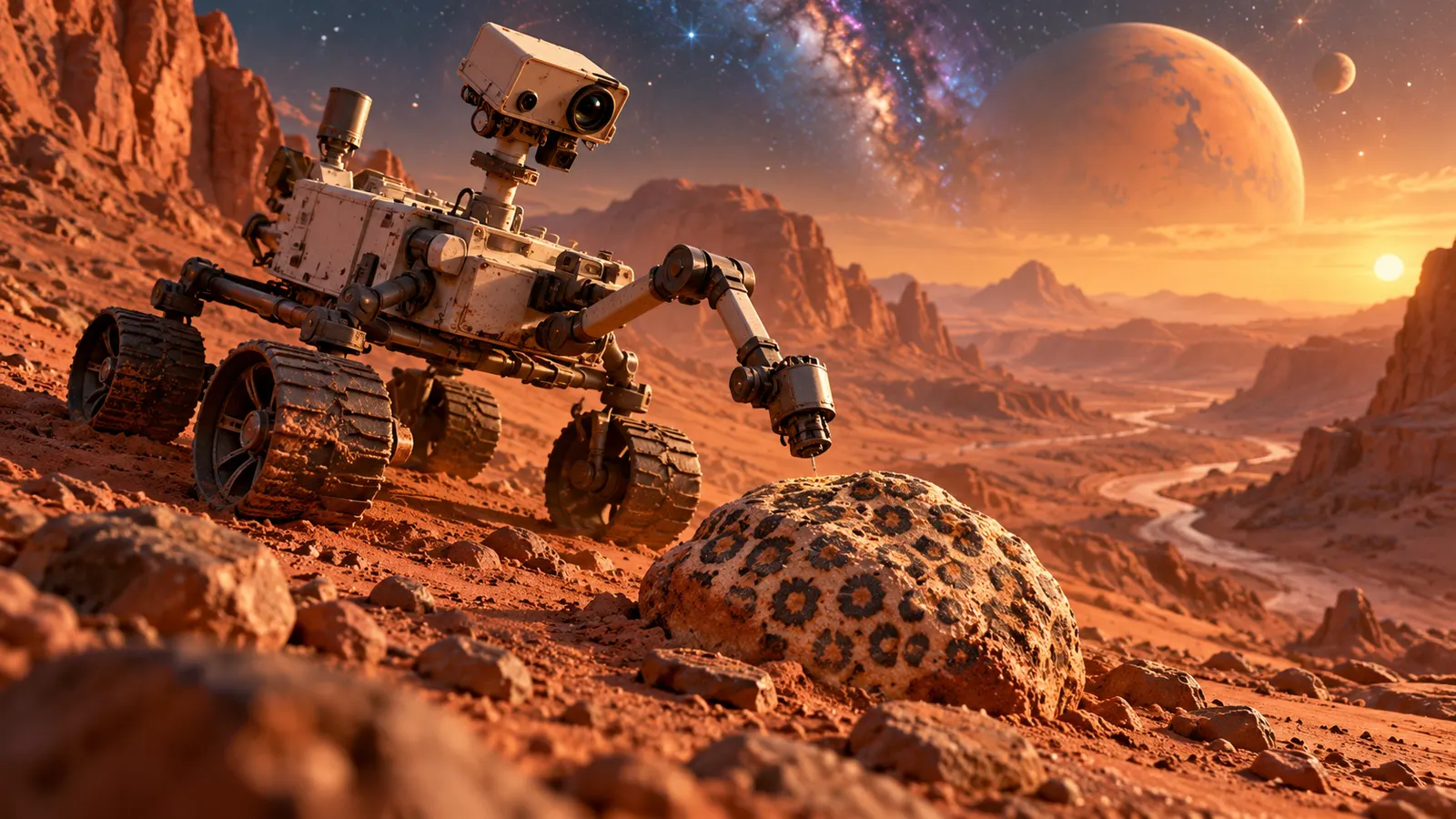
A 2025 study led by researchers at Brown University challenged this picture. By comparing observations from orbiters and rovers with the spectra of artificial Martian dust made in the laboratory, the team concluded that the dominant iron oxide is more likely ferrihydrite, a poorly crystalline, water-bearing mineral that forms readily in the presence of cold water. They also showed that it can survive current Martian conditions. If correct, the red color itself records a cold, wet past. However, the identification rests on spectral comparisons, does not fully exclude hematite, and may ultimately require samples returned to Earth.
193 words ・ CEFR B2
和訳を見る
火星の色は酸化鉄によるものです。星をおおう細かいちりが実質的にサビており、星全体に広がる砂あらしがそれをあまりに広くまき散らすため、その下の岩盤の多くが黒っぽい玄武岩であるにもかかわらず、火星はほとんどどこでも赤く見えるのです。重要なのは、このサビがいつ、どのようにできたのかという問いです。2006年にマーズ・エクスプレスのデータをまとめた研究に支えられた広く受け入れられている見方では、火星の歴史を、粘土ができた湿った時代、その後の硫酸塩ができた時代、そしてゆっくり酸化が進んだ長い乾いた時代に分け、ヘマタイトのような水をふくまない鉱物はこの最後の時代にできたと考えられていました。
ブラウン大学の研究者が率いた2025年の研究は、この見方に異をとなえました。周回探査機や探査車による観測を、実験室で作った人工の火星のちりのスペクトルとくらべた結果、チームは、主な酸化鉄はフェリハイドライトである可能性が高いと結論づけました。これは結晶になりきれていない、水をふくむ鉱物で、冷たい水があるとすぐにできるものです。彼らはまた、この鉱物が現在の火星の環境でも残りうることを示しました。これが正しければ、赤い色そのものが、寒くて湿った過去を記録していることになります。ただし、この同定はスペクトルの比較にもとづくもので、ヘマタイトを完全に否定するものではなく、最終的には地球に持ち帰った試料が必要になるかもしれません。
4択リーディングクイズ
Q1. What is the main point of the passage?
2025年の研究がサビは水と関係してできたと示唆し、最後にその同定には限界があると述べているので C。D は it can survive current Martian conditions に反する。
Q2. What did the 2025 team compare with observations from orbiters and rovers?
comparing observations from orbiters and rovers with the spectra of artificial Martian dust made in the laboratory とあるので A。
Q3. Why does the writer mention that samples may need to be returned to Earth?
However 以下で、スペクトル比較にもとづく同定でヘマタイトを完全には否定できないという限界を述べており、確定にはさらなる証拠が必要だと示しているので B。
重要単語
- rustB1名詞・動詞サビ・サビるMars is covered with fine red rust.
 形容詞 rusty「サビた・(腕が)なまった」。My English is a little rusty.「英語が少しなまっている」。
 - iron oxideB2名詞(句)酸化鉄Iron oxide gives Mars its red color. oxide は oxygen(酸素)と結びついた物質。carbon dioxide「二酸化炭素」の -oxide と同じ。
- dustB1名詞ちり・ほこりDust storms can cover the whole planet. dust storm「砂あらし」。動詞では「ほこりを払う」。dusty「ほこりっぽい」。
- mineralB1名詞鉱物Scientists identified the mineral from its spectrum. 栄養素の「ミネラル」も同じ語。mineral water「ミネラルウォーター」。
- habitableC1形容詞生命が住めるWas Mars once habitable? inhabit「住む」、habitat「生息地」と同語源。habitable zone「生命居住可能領域」は宇宙の話の重要語。
- oxidationC1名詞酸化Slow oxidation turned the iron red. 動詞 oxidize「酸化する」。食品の「酸化防止剤」は antioxidant。
 入試に出る順の単語帳を印刷する →
 全5561語の「科学英単語カード」で復習する →
 この話題を TED で聞く
同じテーマの TED・TED-Ed を、 TED HACK で。英語の見どころ・使える表現・学習ミッションつきの日本語ガイドです。(運営:原田英語)

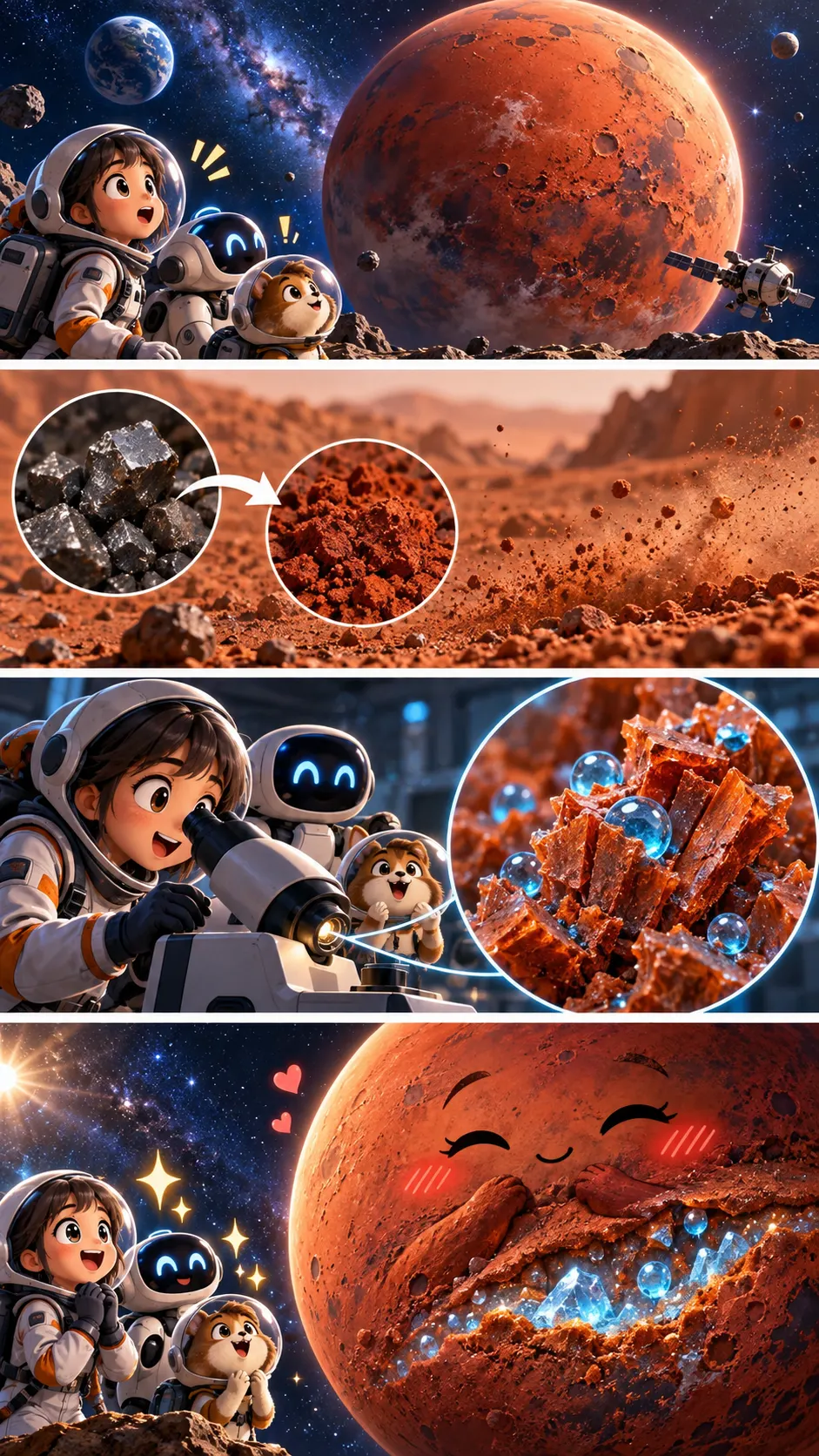
 4コマでわかる
このネタ、誰かに教えたくなった?
火星が赤いのは、地表のちりがサビ(酸化鉄)だから。これまでは乾いた環境でできたサビと考えられてきたけど、2025年の研究で主役は水をふくむサビの可能性が。赤い色そのものが、昔の火星の水の証拠かもしれないらしい。
押すと「マジかリスト」に保存されます
 出典・参考文献(3件)タップで表示
- Valantinas et al. (2025) Detection of ferrihydrite in Martian red dust records ancient cold and wet conditions on Mars, Nature Communicationsdoi.org
- Bibring et al. (2006) Global Mineralogical and Aqueous Mars History Derived from OMEGA/Mars Express Data, Sciencedoi.org
- Ehlmann & Edwards (2014) Mineralogy of the Martian Surface, Annual Review of Earth and Planetary Sciencesdoi.org

※本記事は上記の研究・公開資料をもとに、原田英語が独自の言葉で解説したものです。引用は著作権法第32条の範囲で行い、出典を明記しています。画像はすべてオリジナルのイメージです。研究結果には限界や個人差があります。誤りのご指摘は原田英語のお問い合わせフォームから。