宇宙・NASAホント
赤い惑星なのに、火星の夕焼けは青い。地球と“逆”になる空のしくみ
 2026.10.02
 English Corner(A2〜B2・4択クイズ)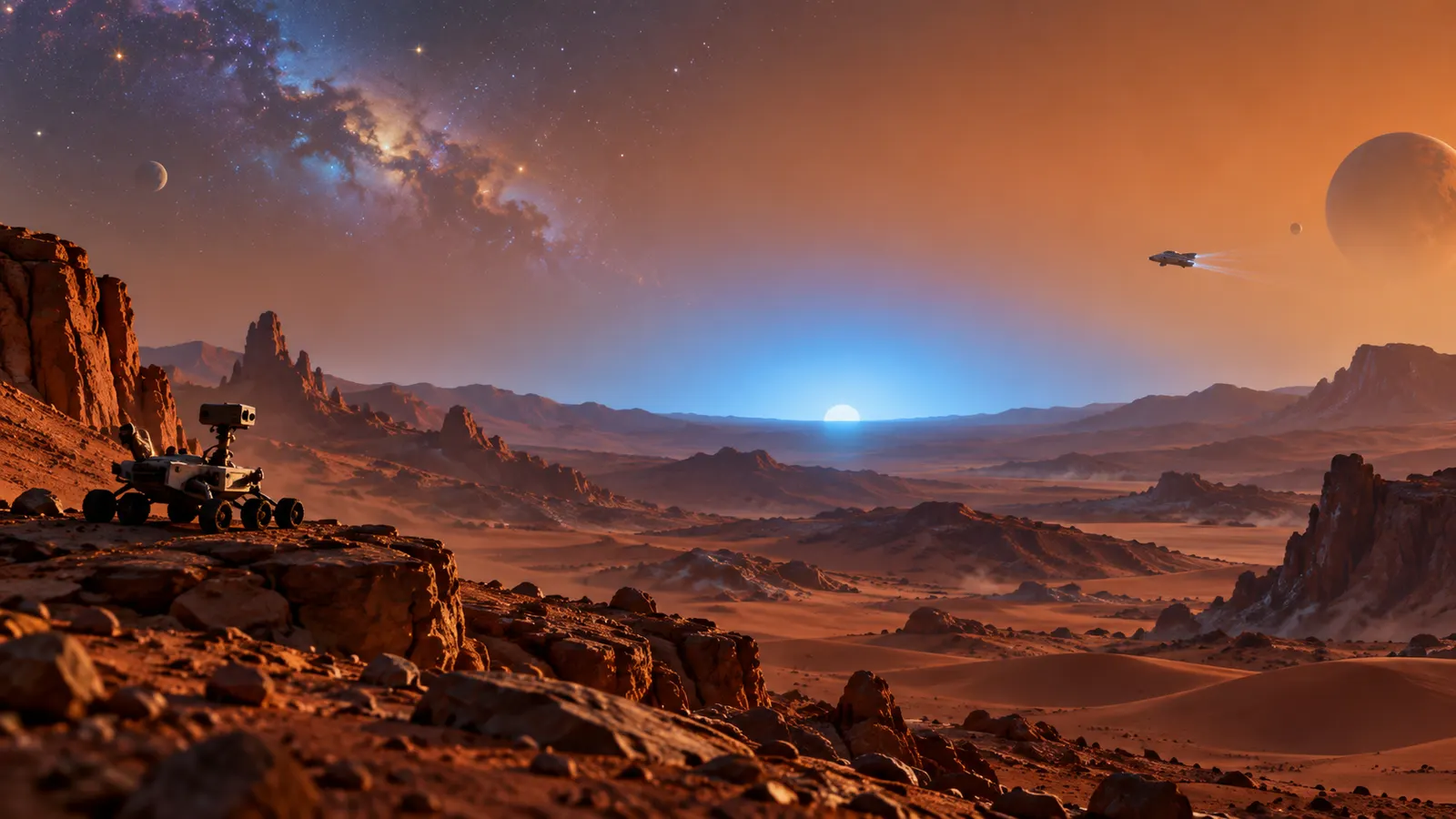
 読む前に予想してみよう!
火星では、昼間の空が地球と同じように青く見える
火星の昼の空は、ちりの影響で赤茶色〜うすいオレンジ色っぽく見える。青くなるのは夕方の太陽のまわり。
 研究カード(どんな研究?)
- 対象
- 火星大気のちり
- 規模
- 探査車の長期にわたる空の撮影データ
- 研究の種類
- 探査機データ+光の散乱モデル
- 確かさ
- ★★★★☆
火星の昼の空は赤茶色っぽく、夕焼けは太陽のまわりが青白く光る。大気中の細かいちりが青い光を太陽光の進む方向(前方)に散らしやすいためと考えられている。
ひとことで言うと火星では、昼の空がオレンジっぽくて、夕やけが青くなるよ!
地球の空は青くて、夕焼けは赤い。あまりにも当たり前すぎて、疑ったことすらないかもしれません。
ところが、火星ではこれが逆になります。昼の空は赤茶色っぽく、夕焼けは太陽のまわりが青く光るのです。
「赤い惑星」の空が、なぜ夕方だけ青くなるのでしょう?
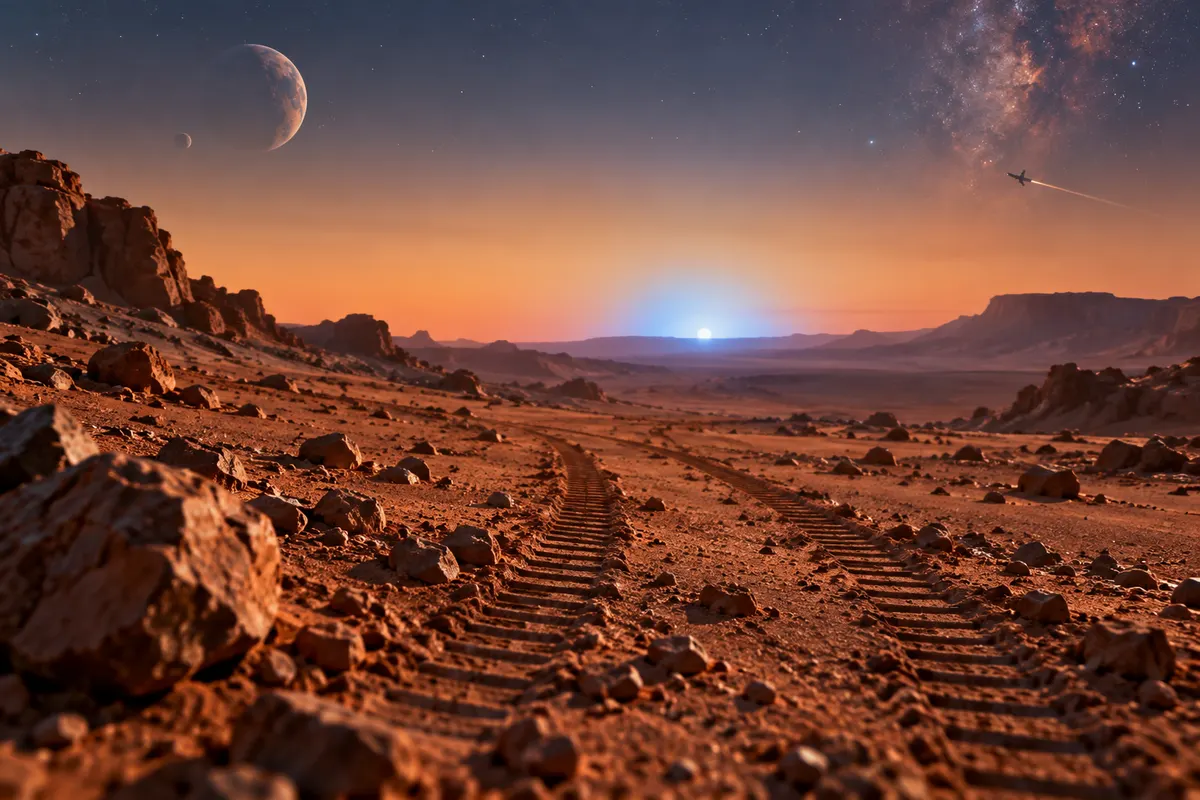
01探査車が撮った「青い夕焼け」
これは想像ではありません。NASAの火星探査車が、実際に火星の夕暮れを撮影しています。
2000年代のスピリットやオポチュニティ、そして2015年4月には探査車キュリオシティが、ゲール・クレーターから青白く光る夕日を撮影し、世界中で話題になりました。
02そもそも地球の空はなぜ青い?
火星の話の前に、地球の空のしくみをおさらいしましょう。
太陽の光は、虹の7色がまざった白い光です。この光が空気の分子にぶつかると、波長の短い青い光ほど、あちこちに散らばりやすい性質があります。これをレイリー散乱といいます。
- 昼:青い光が空いっぱいに散らばる → 空が青い
- 夕方:光が空気の中を長く進むうちに青い光は散ってしまい、残った赤い光が届く → 夕焼けが赤い
つまり地球の空の色は、空気の分子という「とても小さな粒」が決めているのです。
03火星の空を決めるのは「ちり」
火星の大気は、地球の約100分の1しかないほど薄く、空気の分子による散乱はあまり目立ちません。かわりに主役になるのが、空にただよう細かいちりです。
火星のちりは、酸化鉄(さびと同じ成分)を含んでいて、赤っぽい色をしています。このちりが、
- 昼は赤っぽい光を空じゅうに広げる → 空が赤茶色っぽい
- そしてちりの粒の大きさがちょうどよいため、青い光を太陽光の進む方向(前方)に集中して散らす → 夕方、太陽のまわりだけが青く光る
という、地球とは逆の空を作り出していると考えられています。
レモンらは2015年にも学術誌『Icarus』で、2台の探査車による火星の5年分(地球の約10年分)の空の観測記録をまとめ、ちりの量が季節や砂嵐で大きく変わる様子を報告しています。
04火星の空を「再現」すると?
この空の色のしくみは、計算でも確かめることができます。
研究者たちは、火星のちりの粒の大きさや色をもとに、光がどのように散らばるかをコンピューターで計算しました。すると、
- 太陽から離れた空:赤茶色〜くすんだオレンジ色
- 太陽のすぐまわり:青白く光る
という、探査車の写真とよく似た空が再現できたのです。つまり「青い夕焼け」は、ちりの性質を考えればちゃんと説明できる現象なのです。
ちなみに、地球でも大規模な山火事や火山の噴火で特定の大きさの粒が空に広がると、太陽や月が青っぽく見えることがまれにあると報告されています。
05夕焼けの色が「天気予報」になる
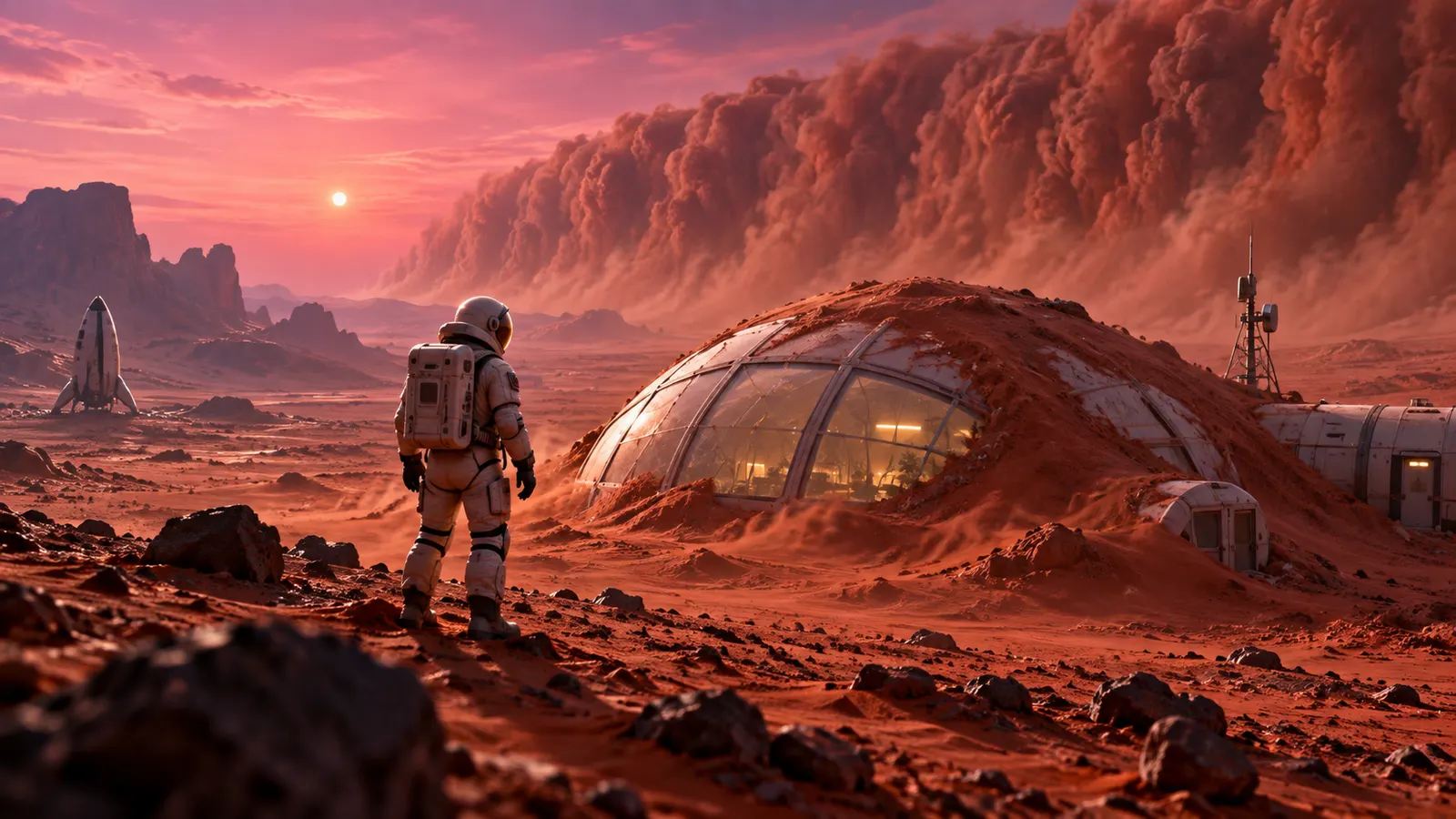
火星の空の色は、ちりの量で大きく変わります。ときには火星全体をおおうほどの巨大な砂嵐が起きて、空が暗くなるほどです。
研究者たちは、空の色や明るさを調べることで、ちりの大きさや量、そして火星の気象を読み解いています。夕焼けは、火星の天気を知るための窓でもあるのです。
06まとめ
- 火星の昼の空は赤茶色っぽく、夕焼けは青白い
- 地球の空の色は空気の分子、火星の空の色は細かいちりが決めている
- ちりが青い光を太陽光の進む方向(前方)に集めて散らすため、夕日のまわりが青くなる
いつか人類が火星に住む日が来たら、「青い夕焼け」は火星の子どもたちにとって当たり前の景色になるはず。そのとき、地球の赤い夕焼けは「不思議な景色」と呼ばれているかもしれません。
この研究を英語で読もう原田英語の English CornerOn Earth, sunlight hits tiny air molecules, and blue light, which has a short wavelength, is scattered… 音声
音声 4択クイズ9問A2・B1・B2タップして開く
原田英語の English Corner
この研究を英語で読もう
On Earth, the sky is blue and sunsets are red. On Mars, it is the opposite. The daytime sky looks reddish brown, and the sky around the setting Sun looks blue.
NASA's rovers have taken pictures of these blue sunsets. The air on Mars is very thin, but it has a lot of fine dust in it. This dust sends blue light in the same direction as the sunlight.
69 words ・ CEFR A2
和訳を見る
地球では、空は青く、夕焼けは赤くなります。火星ではその逆です。昼の空は赤茶色っぽく見え、沈む太陽のまわりの空は青く見えます。
NASAの探査車は、この青い夕焼けの写真を撮影しています。火星の空気はとても薄いのですが、細かいちりがたくさん含まれています。このちりが、青い光を太陽の光と同じ方向へ送るのです。
4択リーディングクイズ
Q1. What is the passage mainly about?
火星では地球と逆に夕焼けが青くなる、という話なので A。
Q2. What color is the daytime sky on Mars?
The daytime sky looks reddish brown とあるので C。
Q3. In this passage, "the opposite" means ...
opposite は「正反対」。地球は空が青く夕焼けが赤いが、火星はその逆になるという意味なので D。
On Earth, sunlight hits tiny air molecules, and blue light, which has a short wavelength, is scattered across the sky. That is why the sky is blue. At sunset, light travels a longer way through the air, so most of the blue light is lost and red light remains. Mars is different.
Its atmosphere is only about one hundredth as thick as Earth's, so fine dust controls the color of the sky instead. The dust contains iron oxide, the same material as rust, and makes the daytime sky look reddish. Because of the size of the dust particles, blue light is scattered mainly forward, in the direction the sunlight travels. As a result, the sky glows blue around the setting Sun.
121 words ・ CEFR B1
和訳を見る
地球では、太陽の光がとても小さな空気の分子にぶつかり、波長の短い青い光が空いっぱいに散らばります。だから空は青いのです。夕方には、光が空気の中を長い距離進むので、青い光の多くは失われ、赤い光が残ります。火星は違います。
火星の大気は地球の約100分の1の厚さしかないので、かわりに細かいちりが空の色を決めます。このちりには、さびと同じ成分である酸化鉄が含まれていて、昼の空を赤っぽく見せます。ちりの粒の大きさのために、青い光は主に前方、つまり太陽の光が進む方向に散らばります。その結果、沈む太陽のまわりの空が青く光るのです。
4択リーディングクイズ
Q1. Why is Earth's sky blue during the day?
blue light, which has a short wavelength, is scattered across the sky. That is why the sky is blue. とあるので B。
Q2. What controls the color of the sky on Mars?
fine dust controls the color of the sky instead. The dust contains iron oxide とあるので A。
Q3. What can we infer from the passage?
地球では空気の分子、火星ではちりが空の色を決めると説明されており、空の色は大気中に何があるかで決まると推論できる。B。
On Earth, the sky is blue because air molecules scatter short-wavelength blue light far more than red, a process known as Rayleigh scattering; at sunset, the long path through the atmosphere removes the blue, leaving red. Mars reverses this pattern. Its atmosphere is only about one hundredth as dense as Earth's, so scattering by gas molecules is weak, and fine dust rich in iron oxide takes over. During the day this dust spreads a reddish glow across the sky, but because its particles are roughly the same size as the wavelengths of visible light, it scatters blue light strongly in the forward direction.
The result is a pale blue halo around the setting Sun, captured by Spirit, Opportunity and, in 2015, Curiosity. Analyses of rover images, including a record covering five Martian years published in 2015, show that dust levels change greatly with the seasons and with dust storms, so the sky's color serves as a window on Martian weather. Computer models based on dust properties can reproduce the rovers' views, but their results depend on assumptions about particle shape and composition, and calibrated camera colors do not precisely match what a human eye would see.
196 words ・ CEFR B2
和訳を見る
地球の空が青いのは、空気の分子が波長の短い青い光を赤い光よりもはるかに強く散らすからで、この過程はレイリー散乱として知られています。夕方には大気中を通る長い道のりで青い光が取り除かれ、赤い光が残ります。火星ではこのパターンが逆になります。火星の大気の密度は地球の約100分の1しかないため、気体分子による散乱は弱く、酸化鉄を多く含む細かいちりが主役になります。昼間はこのちりが赤みがかった光を空全体に広げますが、粒の大きさが可視光の波長とほぼ同じなので、青い光を前方に強く散らします。その結果、沈む太陽のまわりに青白い光の輪ができます。
これはスピリットやオポチュニティ、そして2015年にはキュリオシティによって撮影されています。2015年に発表された火星の5年分の記録を含む探査車の画像の分析からは、ちりの量が季節や砂嵐によって大きく変わることが分かっており、空の色は火星の天気を知る窓の役割を果たしています。ちりの性質に基づくコンピューターモデルは探査車の見た景色を再現できますが、その結果は粒の形や組成についての仮定に左右されます。また、補正されたカメラの色が、人間の目に見える色と正確に一致するわけではありません。
4択リーディングクイズ
Q1. Why does dust, rather than gas, control the color of the Martian sky?
Its atmosphere is only about one hundredth as dense as Earth's, so scattering by gas molecules is weak, and fine dust ... takes over とあるので C。
Q2. According to the passage, why does the dust scatter blue light forward?
because its particles are roughly the same size as the wavelengths of visible light, it scatters blue light strongly in the forward direction とあるので A。
Q3. Which limitation does the author point out?
最終文で、モデルは粒の形や組成の仮定に左右され、カメラの色も人の目と正確には一致しないと述べているので D。
重要単語
- scatteringC1名詞散乱Scattering of sunlight makes the sky blue on Earth.
 scatter(まき散らす)の名詞形。scattered showers「ところにより雨」は天気予報の定番表現。
 - wavelengthB2名詞波長Blue light has a shorter wavelength than red light. be on the same wavelength「波長が合う(気が合う)」という比喩表現もある。
- dust stormB2名詞(句)砂嵐A global dust storm covered Mars. storm は「嵐」。snowstorm, thunderstorm など複合語が多い。
- roverB2名詞探査車The rover took a picture of the sunset. rove(さまよい歩く)+-er。「動き回るもの」。火星探査車は Mars rover。
- atmosphereB1名詞大気・雰囲気Mars has a very thin atmosphere. 「薄い大気」は thin atmosphere、「濃い大気」は thick / dense atmosphere。
- particleB2名詞粒子・微粒子Dust particles in the air change the color of the sky. part(部分)+-icle(小さいもの)。article(記事)も「小さな部分」が語源。
- reverseB2動詞逆にする・反転させるMars reverses the colors of Earth's sky. re-(後ろへ)+verse(向く)。in reverse「逆に」、reverse the trend「流れを逆転させる」も頻出。
 入試に出る順の単語帳を印刷する →
 全5561語の「科学英単語カード」で復習する →
 動画でもっと知る
動画は各チャンネルの公式埋め込みで表示しています(YouTube)。
この話題を TED で聞く
同じテーマの TED・TED-Ed を、 TED HACK で。英語の見どころ・使える表現・学習ミッションつきの日本語ガイドです。(運営:原田英語)

 公式・一次情報をチェック
- Sunset in Mars' Gale Crater(NASA JPL)jpl.nasa.gov
- Mars(NASA Science)science.nasa.gov
 4コマでわかる
このネタ、誰かに教えたくなった?
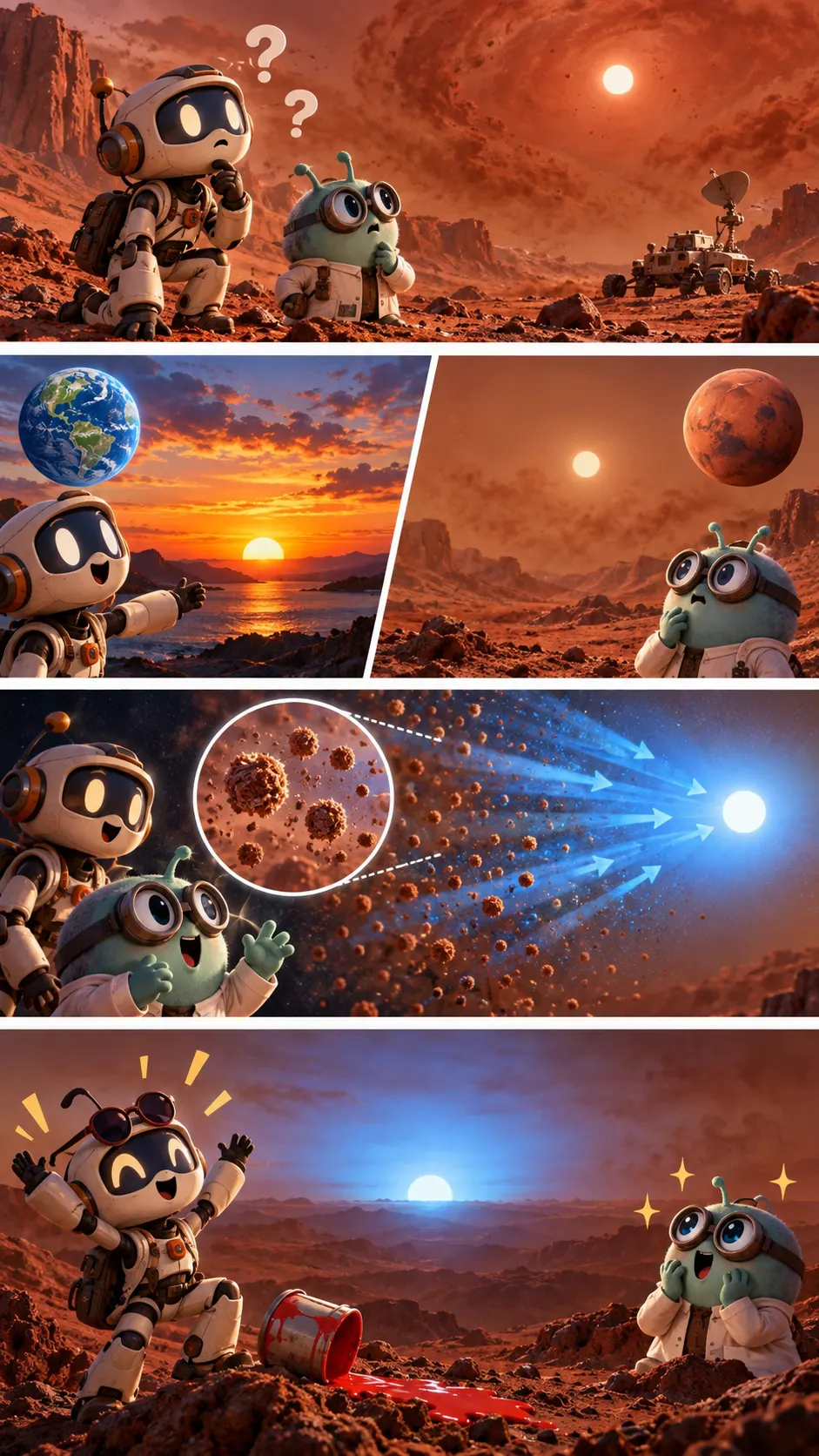
地球の空は青くて夕焼けは赤い。ところが火星は逆で、昼の空は赤茶色っぽく、夕焼けは太陽のまわりが青く光る。探査車が実際に撮影している。犯人は火星の空にただよう細かいちりらしい。
押すと「マジかリスト」に保存されます
 出典・参考文献(3件)タップで表示
- Lemmon et al. (2004) Atmospheric Imaging Results from the Mars Exploration Rovers: Spirit and Opportunity, Sciencedoi.org
- Lemmon et al. (2015) Dust aerosol, clouds, and the atmospheric optical depth record over 5 Mars years of the Mars Exploration Rover mission, Icarusdoi.org
- NASA/JPL (2015) Sunset in Mars' Gale Crater (PIA19400), NASA Jet Propulsion Laboratoryjpl.nasa.gov

※本記事は上記の研究・公開資料をもとに、原田英語が独自の言葉で解説したものです。引用は著作権法第32条の範囲で行い、出典を明記しています。画像はすべてオリジナルのイメージです。研究結果には限界や個人差があります。誤りのご指摘は原田英語のお問い合わせフォームから。