

 心理学ホント
「理想のタイプ」は当てにならない? 会う前の100項目アンケートでも"相性"は予測できなかった
 2026.10.02
 English Corner(A2〜B2・4択クイズ)

 読む前に予想してみよう!
事前に「理想のタイプ」を細かく聞いておけば、実際に誰に惹かれるかをかなり正確に予測できる
研究では、事前に聞いた理想の条件は、実際の出会いでの惹かれ方をほとんど予測しなかった。
 研究カード(どんな研究?)
- 対象
- 米国の大学生
- 規模
- 数百人の出会いイベント参加者
- 研究の種類
- 前向き調査+機械学習による予測
- 確かさ
- ★★★☆☆
出会いイベント前に聞いた「理想のタイプ」は、実際に誰に惹かれるかをほぼ予測しなかった。100項目以上のアンケートとAIでも、2人の"相性"は当てられなかった。
ひとことで言うと「理想のタイプ」と「実際に好きになる人」は、けっこう違う!
「好きなタイプは?」——友達同士の会話で、よく出てくる質問ですよね。「優しい人」「おもしろい人」「頭がいい人」「背が高い人」……。人それぞれ、"理想のタイプ"を持っているものです。
でも、ちょっと思い出してみてください。実際に好きになった人は、その理想のタイプにぴったり当てはまっていましたか?
アメリカの心理学者たちは、この疑問を本気で確かめました。その結果、理想のタイプは、実際に誰に惹かれるかをほとんど予測しないことが分かってきたのです。
01理想と現実は「つながっていなかった」
たとえば「見た目は大事じゃない」と答えた人も、「見た目がとても大事」と答えた人も、実際の惹かれ方の傾向はあまり変わりませんでした。私たちは、自分が何に惹かれるのかを、自分でもよく分かっていないのかもしれません。
02AIと100項目でも、相性は予測できなかった
「質問が少なすぎたのでは?」と思うかもしれません。そこで2017年、研究者たちは最新の方法で再挑戦しました。
出会いイベントの参加者に、事前に性格や価値観、好みなど100項目以上のアンケートに答えてもらい、そのデータを機械学習(AI)に分析させて、「誰が誰に惹かれるか」を予測させたのです。
結果はこうでした。
- 「この人は、いろいろな人に惹かれやすい」という本人の傾向は、少しだけ予測できた
- 「この人は、いろいろな人から好かれやすい」という相手側の傾向も、少しだけ予測できた
- でも、「この2人だからこそ惹かれ合う」という"相性"の部分は、まったく予測できなかった
どんなにたくさんのデータを集めても、2人が実際に会ってみるまで、相性は分からなかったのです。

03「誰にでも好意を見せる」は逆効果?
同じ研究グループは、出会いイベントでのもうひとつの興味深い現象も報告しています。
「自分を好きになってくれた人を好きになる」——これは友人関係ではよく知られた傾向です。ところが出会いイベントでは、誰に対しても好意を示す人は、相手から好かれにくい傾向がありました。一方で、「特にこの人に」という選んだ好意を示された場合は、相手もその人に好意を返しやすかったのです。
「誰でもいい」ではなく、「あなただから」という気持ちのほうが、相手の心に届くのかもしれません。
04まとめ
「理想のタイプ」は、実際に誰に惹かれるかをほとんど予測しませんでした。100項目以上のデータとAIを使っても、2人ならではの相性は、会う前には分からなかったのです。
人の心は、チェックリストでは測りきれません。だからこそ、出会いはおもしろい。理想にこだわりすぎず、目の前の人と実際に話してみること。それが、いちばん確かな"相性診断"なのかもしれません。
この研究を英語で読もう原田英語の English CornerAsk people about their "ideal type," and most can describe one easily. 音声
音声 4択クイズ9問A2・B1・B2タップして開く
原田英語の English Corner
この研究を英語で読もう
Many people have an "ideal type," like someone kind or funny. But does it tell us who we will really like? Researchers asked university students about their ideal type before a speed-dating event.
Then the students met many people. Their ideal type did not predict who they liked. Even with more than 100 questions and AI, the researchers could not predict which two people would match.
66 words ・ CEFR A2
和訳を見る
多くの人は、優しい人やおもしろい人のような「理想のタイプ」を持っています。でも、それで私たちが本当に誰を好きになるかが分かるのでしょうか。研究者たちは、スピードデートのイベントの前に、大学生に理想のタイプをたずねました。
それから学生たちはたくさんの人と会いました。彼らの理想のタイプは、誰を好きになるかを予測しませんでした。100以上の質問とAIを使っても、研究者たちはどの2人が合うかを予測できませんでした。
4択リーディングクイズ
Q1. What is the passage mainly about?
理想のタイプが実際に好きになる人を予測するかどうかがテーマなので C。
Q2. When did researchers ask about the students' ideal type?
before a speed-dating event とあるので A。
Q3. In this passage, "match" means ...
which two people would match は「どの2人が合うか」。match は「よく合う・相性が良い」なので D。
Ask people about their "ideal type," and most can describe one easily. But does it predict real attraction? In a 2008 study, American university students listed what they wanted in a partner, such as good looks or earning potential, before attending a speed-dating event, where they talked briefly with many people. Their stated preferences did not predict whom they actually liked at the event.
In 2017, researchers tried again with more than 100 questions about personality, values, and preferences, and used machine learning. They could predict a little about how much a person liked others in general and how much others liked that person. However, they could not predict the special chemistry between two particular people.
116 words ・ CEFR B1
和訳を見る
人に「理想のタイプ」をたずねると、ほとんどの人は簡単に説明できます。でも、それは実際に惹かれる相手を予測するのでしょうか。2008年の研究では、アメリカの大学生が、多くの人と短く話すスピードデートのイベントに参加する前に、見た目の良さや稼ぐ力など、相手に求めることを挙げました。彼らが述べた好みは、イベントで実際に誰を好きになったかを予測しませんでした。
2017年、研究者たちは性格、価値観、好みについての100以上の質問で再挑戦し、機械学習を使いました。彼らは、ある人が一般的にどれくらい他人を好きになるか、そして他人がその人をどれくらい好きになるかについては、少しだけ予測できました。しかし、特定の2人の間の特別な相性は予測できませんでした。
4択リーディングクイズ
Q1. What did the 2008 study find?
Their stated preferences did not predict whom they actually liked とあるので B。
Q2. What could the 2017 study NOT predict?
they could not predict the special chemistry between two particular people とあるので C。A・B は少しだけ予測できた。
Q3. What can we infer from the passage?
事前のデータでは2人の相性は予測できなかったので、実際に会うことが大切だと推論できる。正解は D。
Before a speed-dating event in 2008, American university students rated how much they cared about traits such as good looks and earning potential. Then they met their dates. The ideals they had described did not predict whom they actually felt drawn to. Men and women had stated different preferences, but those differences did not show up in real attraction.
Suspecting that too few variables had been measured, a team in 2017 with both original authors collected more than 100 self-reported measures of personality, values and preferences and gave them to a machine-learning algorithm. It could partly predict two things. One was actor effects, or how attracted a person tended to be to others in general. The other was partner effects, or how desirable a person was to others in general.
What it could not predict was the relationship effect, the unique compatibility between two specific people. A related study found that people who showed interest in everyone were liked less in return, while interest aimed at a few tended to be returned. These were brief speed-dates between university students, a long way from a marriage. Within those meetings, at least, attraction could not be foreseen from questionnaires.
197 words ・ CEFR B2
和訳を見る
2008年、スピードデートのイベントの前に、アメリカの大学生たちは、見た目の良さや稼ぐ力といった特徴をどれほど重視するかを評価しました。それから相手と会いました。彼らが述べた理想は、実際に誰に惹かれるかを予測しませんでした。男女は異なる好みを述べていましたが、その違いは実際の惹かれ方には現れませんでした。
測定した変数が少なすぎたのではないかと考えた、元の2人の著者を含むチームは、2017年、性格・価値観・好みについての100以上の自己報告の測定値を集め、機械学習のアルゴリズムに与えました。アルゴリズムは2つのことを部分的に予測できました。1つは「行為者効果」、つまりある人が一般に他人にどれだけ惹かれやすいかです。もう1つは「相手効果」、つまりある人が一般に他人からどれだけ好まれるかです。
予測できなかったのは「関係効果」、つまり特定の2人の間だけにある独自の相性でした。関連する研究では、誰にでも好意を示した人は相手から好かれにくく、少数の相手に向けた好意は返されやすいことが分かりました。これらは大学生同士の短いスピードデートであり、結婚とはかけ離れています。少なくともその出会いの中では、惹かれる気持ちは事前のアンケートからは予見できませんでした。
4択リーディングクイズ
Q1. What did researchers in 2017 suspect about earlier work?
Suspecting that too few variables had been measured とあるので A。
Q2. What are "relationship effects" in this passage?
the relationship effect, the unique compatibility between two specific people と説明されているので D。A は行為者効果、B は相手効果。
Q3. What does the passage suggest about showing interest in everyone?
people who showed interest in everyone were liked less in return とあるので C。
重要単語
- idealB1形容詞・名詞理想の/理想What is your ideal weekend?
 動詞 idealize(理想化する)。ideal for ~「~にうってつけの」。
 - preferenceB1名詞好みHer preference is for quiet places. stated preference(述べられた好み)と実際の行動のズレは心理学の重要テーマ。
- compatibilityC1名詞相性、両立性Compatibility matters in teamwork too. 形容詞 compatible。パソコンの「互換性」の意味でも使う。
- selectiveB2形容詞えり好みする、選択的なHe is very selective about books. select(選ぶ)の形容詞形。be selective about ~「~をよく選ぶ」。
- reciprocityC1名詞お互いさま、相互性Friendship is built on reciprocity. 動詞 reciprocate(お返しをする)。the norm of reciprocity「返報性の規範」。
- chemistryB2名詞(人と人の)相性There was good chemistry between the two players. 本来は「化学」。人間関係では「相性・ウマが合うこと」の意味になる。
 入試に出る順の単語帳を印刷する →
 全5561語の「科学英単語カード」で復習する →
 4コマでわかる
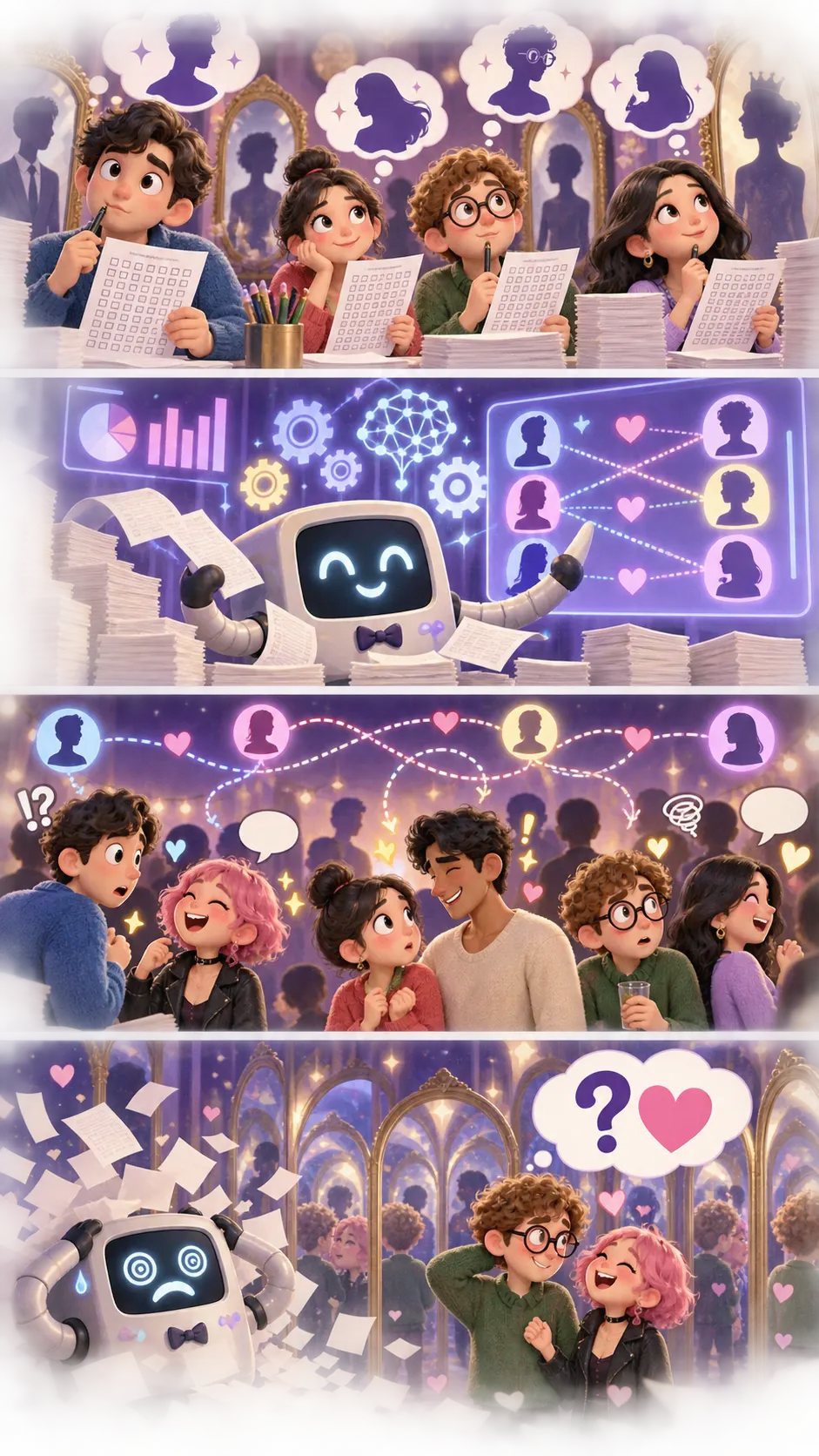
このネタ、誰かに教えたくなった?
出会いイベントの前に100項目以上のアンケートに答えてもらい、AIで「誰と誰が惹かれ合うか」を予測しようとしたら、2人ならではの"相性"はまったく予測できなかったらしい。理想のタイプを語っても、実際に会うまで分からない。
押すと「マジかリスト」に保存されます
 出典・参考文献(3件)タップで表示
- Eastwick & Finkel (2008) Sex differences in mate preferences revisited: Do people know what they initially desire in a romantic partner?, Journal of Personality and Social Psychologydoi.org
- Joel, Eastwick & Finkel (2017) Is romantic desire predictable? Machine learning applied to initial romantic attraction, Psychological Sciencedoi.org
- Eastwick et al. (2007) Selective versus unselective romantic desire: Not all reciprocity is created equal, Psychological Sciencedoi.org

※本記事は上記の研究・公開資料をもとに、原田英語が独自の言葉で解説したものです。引用は著作権法第32条の範囲で行い、出典を明記しています。画像はすべてオリジナルのイメージです。研究結果には限界や個人差があります。誤りのご指摘は原田英語のお問い合わせフォームから。
 これも「マジか!?」
 心理学
心理学
失恋のダメージは「思ったより小さかった」。人は別れのつらさを大きく見積もりすぎていた

 心理学
心理学
「一目惚れ」は科学的にある? 調べたら"愛"というより「強い第一印象」だった
 心理学
心理学
遠距離恋愛は続かない? 研究では「満足度は近距離と同じかそれ以上」。でも落とし穴は"再会後"
 心理学
心理学
好きな人の前で声が変わるのは本当だった。会話の録音でわかった"声の高さ"の変化

 心理学
心理学
囲碁の達人は、知能テストの点がアマチュアより低かった。ただし教育歴をそろえると差は「有意」でなくなった

 心理学
心理学