心理学ホント
「他人の不幸は蜜の味」は脳にも現れた。妬みは"痛み"、ざまあみろは"ごほうび"だった
 2026.10.02
 English Corner(A2〜B2・4択クイズ)

 読む前に予想してみよう!
「妬み」と「嫉妬」は、心理学ではまったく同じ感情として扱われる
妬み(envy)は他人が持つものを欲しがる2者の感情、嫉妬(jealousy)は大切な関係を第三者に奪われそうな3者の感情として区別される。
 研究カード(どんな研究?)
- 対象
- 日本の成人など
- 規模
- 19人のfMRI実験+質問紙研究
- 研究の種類
- 脳画像実験・質問紙調査
- 確かさ
- ★★★☆☆
日本の研究で、優れた人を妬むと脳の"痛み"に関わる部位が、その人に不幸が起きると"ごほうび"に関わる部位が活動した。妬みには人を伸ばす良性のタイプもある。
ひとことで言うと妬みは心の「痛み」。でも上手に使えば、伸びるためのエンジンにもなる!
友達がテストで学年1位。SNSで同級生が楽しそうに旅行している。胸の奥が、ちくっ。
一方で、自慢ばかりしていた人が失敗したと聞いて、心のどこかで「ちょっとスッキリ…」と感じてしまったことはありませんか?
そんな自分に、ちょっと落ち込む。でも安心してください。これはほとんどの人が持っている、ごく人間らしい感情です。しかも日本の研究チームが、その感情が脳でどう処理されているかに迫っています。
01妬みは「痛み」、ざまあみろは「ごほうび」
「他人の不幸は蜜の味」ということわざに通じる反応が、脳の活動にも見つかったわけです。この研究は科学誌Scienceに掲載され、世界的に注目されました。
02「妬み」と「嫉妬」は別もの
日本語では混ざりがちですが、心理学では妬み(envy)と嫉妬(jealousy)を区別します。
- 妬み:相手が持っているもの(成績、才能、お金、人気)を自分も欲しいと感じる。登場人物は2人
- 嫉妬:自分の大切な関係(恋人、親友)を、第三者に奪われそうと感じる。登場人物は3人
1993年の研究では、人々が語る体験を分析すると、妬みは「劣等感」「あこがれ」と、嫉妬は「疑い」「不安」「失う怖さ」と結びつきやすいことが示されました。

03妬みには「良い妬み」もある
さらにオランダの研究では、妬みには2種類あることが示されています。
2009年の研究では、相手を引きずり下ろしたくなる「悪性の妬み」と、自分も追いつきたくなる「良性の妬み」を、人は別の体験として感じていました。良性の妬みは「自分ももっと頑張ろう」というやる気につながり、悪性の妬みは相手の立場を傷つけたい(引きずり下ろしたい)という気持ちにつながりやすかったのです。
どちらになりやすいかは、「相手の成功は努力の結果で、自分にも手が届きそう」と思えるかどうかが関係するという見方もあります。
04まとめ
妬みや「ざまあみろ」の気持ちは、脳に組み込まれた、ごく自然な反応です。感じること自体を責める必要はありません。
大切なのは、その感情をどこに向けるか。相手を引きずり下ろすエネルギーを、自分が一歩前に進むエネルギーに変えられたら、妬みはあなたの味方になってくれます。
この研究を英語で読もう原田英語の English CornerFeeling a sting when a classmate gets top marks, or secret pleasure when a show-off fails, is very human. 音声
音声 4択クイズ9問A2・B1・B2タップして開く
原田英語の English Corner
この研究を英語で読もう
Have you ever felt bad when a friend did better than you? That feeling is envy. A Japanese research team looked at people's brains. When people read about someone better than them, a brain area linked to pain became active.
When something bad happened to that person, an area linked to rewards became active. But envy is not always bad. It can make you want to work harder, too.
69 words ・ CEFR A2
和訳を見る
友達が自分よりうまくいったとき、嫌な気持ちになったことはありますか。その気持ちが妬みです。日本の研究チームが人々の脳を調べました。自分より優れた人について読むと、痛みに関わる脳の部分が活動しました。
その人に何か悪いことが起きると、ごほうびに関わる部分が活動しました。しかし、妬みはいつも悪いものではありません。もっと頑張りたいという気持ちにさせてくれることもあるのです。
4択リーディングクイズ
Q1. What became active when people read about someone better than them?
a brain area linked to pain became active とあるので B。
Q2. What happened when something bad happened to that person?
an area linked to rewards became active とあるので D。
Q3. In this passage, "envy" is the feeling of ...
友達が自分よりうまくいったときの嫌な気持ち=相手が持つものを欲しがる気持ちなので A。
Feeling a sting when a classmate gets top marks, or secret pleasure when a show-off fails, is very human. In 2009, a Japanese research team used brain scans to study these feelings. Nineteen participants read stories about imaginary classmates.
When a classmate was better than them in an area they cared about, participants felt strong envy, and a brain region linked to pain became active. When that classmate later suffered a misfortune, a region linked to reward became active. This pleasure at others' misfortune is called schadenfreude.
Psychologists also separate envy from jealousy. Envy involves two people and wanting what someone else has, while jealousy involves three people and the fear of losing a relationship. Dutch research also found that "benign envy" can motivate people to improve themselves.
128 words ・ CEFR B1
和訳を見る
クラスメートがトップの成績をとったときにちくっと感じたり、自慢ばかりの人が失敗したときにひそかに喜んだりするのは、とても人間らしいことです。2009年、日本の研究チームは脳スキャンを使ってこうした感情を研究しました。19人の参加者が、架空のクラスメートについての話を読みました。
自分が大切にしている分野でクラスメートが自分より優れていると、参加者は強い妬みを感じ、痛みに関わる脳の領域が活動しました。その後そのクラスメートが不幸にあうと、報酬に関わる領域が活動しました。他人の不幸を喜ぶこの気持ちは、シャーデンフロイデと呼ばれます。
心理学者は妬みと嫉妬も区別しています。妬みは2人の間のもので、他人が持っているものを欲しがることであり、嫉妬は3人の間のもので、関係を失うことへの恐れです。オランダの研究では、「良性の妬み」が人に自分を高める意欲を与えうることもわかりました。
4択リーディングクイズ
Q1. What is schadenfreude?
This pleasure at others' misfortune is called schadenfreude. とあるので A。
Q2. How is jealousy different from envy?
jealousy involves three people and the fear of losing a relationship とあるので C。
Q3. What does the Dutch research suggest?
"benign envy" can motivate people to improve themselves とあるので B。
A pang when a friend tops the class, a guilty flicker of satisfaction when a rival stumbles: both reactions are familiar, and a Japanese team traced them in the brain. In a 2009 study in Science, Hidehiko Takahashi and colleagues asked 19 participants to read profiles of fictional classmates during fMRI. When a classmate outperformed the participant in a personally important domain, reported envy was strong and the dorsal anterior cingulate cortex, a region linked to physical and social pain, became more active. When misfortune later struck that classmate, the striatum, part of the brain's reward circuitry, responded, and participants with stronger anterior cingulate responses showed a larger reward response.
The findings lend neural support to the proverb that others' misfortune tastes sweet, though the sample was small and inferring a specific feeling from activity in one region is risky. Psychologists also distinguish envy, which concerns two people and a desired advantage, from jealousy, which involves three people and a threatened relationship. Dutch researchers found that people experience benign envy, which motivates them to rise, differently from malicious envy, which makes them want to pull others down. Whether envy becomes fuel or poison may depend on whether success seems attainable.
200 words ・ CEFR B2
和訳を見る
友達がクラスで1番になったときの胸の痛み、ライバルがつまずいたときの、うしろめたいかすかな満足感。どちらの反応もなじみのあるものですが、日本のチームがそれらを脳の中でたどりました。『サイエンス』誌の2009年の研究で、高橋英彦らは19人の参加者に、fMRIを受けながら架空のクラスメートのプロフィールを読んでもらいました。自分にとって重要な分野でクラスメートが参加者を上回ると、報告された妬みは強く、体の痛みや社会的な痛みに関わる領域である背側前帯状皮質がより活発になりました。その後そのクラスメートに不幸が起きると、脳の報酬回路の一部である線条体が反応し、より強く背側前帯状皮質の反応がより強かった参加者ほど報酬の反応が大きくなりました。
この結果は、他人の不幸は蜜の味ということわざに神経科学的な裏づけを与えていますが、標本は小さく、一つの領域の活動から特定の感情を推測するのは危険です。心理学者はまた、2人の間の、欲しい優位性に関わる妬みと、3人が関わり、関係が脅かされる嫉妬を区別しています。オランダの研究者たちは、向上を促す良性の妬みと、他人を引きずり下ろしたくなる悪性の妬みを、人々が異なる体験として感じていることを見出しました。妬みが燃料になるか毒になるかは、成功が手の届くものに見えるかどうかによるのかもしれません。
4択リーディングクイズ
Q1. What did participants with stronger anterior cingulate responses show when the classmate suffered misfortune?
participants with stronger anterior cingulate responses showed a larger reward response とあるので C。
Q2. Which caution about the 2009 study does the author give?
the sample was small and inferring a specific feeling from activity in one region is risky とあるので A。
Q3. According to the last sentence, what may decide whether envy becomes "fuel or poison"?
may depend on whether success seems attainable とあるので B。
重要単語
- envyB2名詞・動詞妬み、うらやみ/うらやむEnvy can push you to work harder.
 envy A B「AのBをうらやむ」(I envy you your talent.)の語法に注意。形容詞 envious。
 - jealousyB2名詞嫉妬Jealousy is about the fear of losing someone. 形容詞 jealous。be jealous of ~「~に嫉妬する」。envy との違いが入試頻出。
- schadenfreudeC2名詞他人の不幸を喜ぶ気持ちSchadenfreude is a word borrowed from German. ドイツ語 Schaden(損害)+Freude(喜び)。英語に入った借用語。
- benignC1形容詞良性の、悪意のないBenign envy motivates people to improve. g は発音しない(ビナイン)。医学では benign tumor「良性腫瘍」。反対は malignant。
- maliciousC1形容詞悪意のあるMalicious envy wants others to fall. malice(悪意)の形容詞。mal-=悪い(malfunction, malnutrition)。
- misfortuneB2名詞不幸、不運Some people enjoy a rival's misfortune. mis-(悪い)+fortune(運)。suffer a misfortune「不幸にあう」。
- attainableC1形容詞達成可能な、手が届くBenign envy grows when success seems attainable. attain(達成する)+-able。attainable goal「達成可能な目標」。
 入試に出る順の単語帳を印刷する →
 全5561語の「科学英単語カード」で復習する →
 4コマでわかる
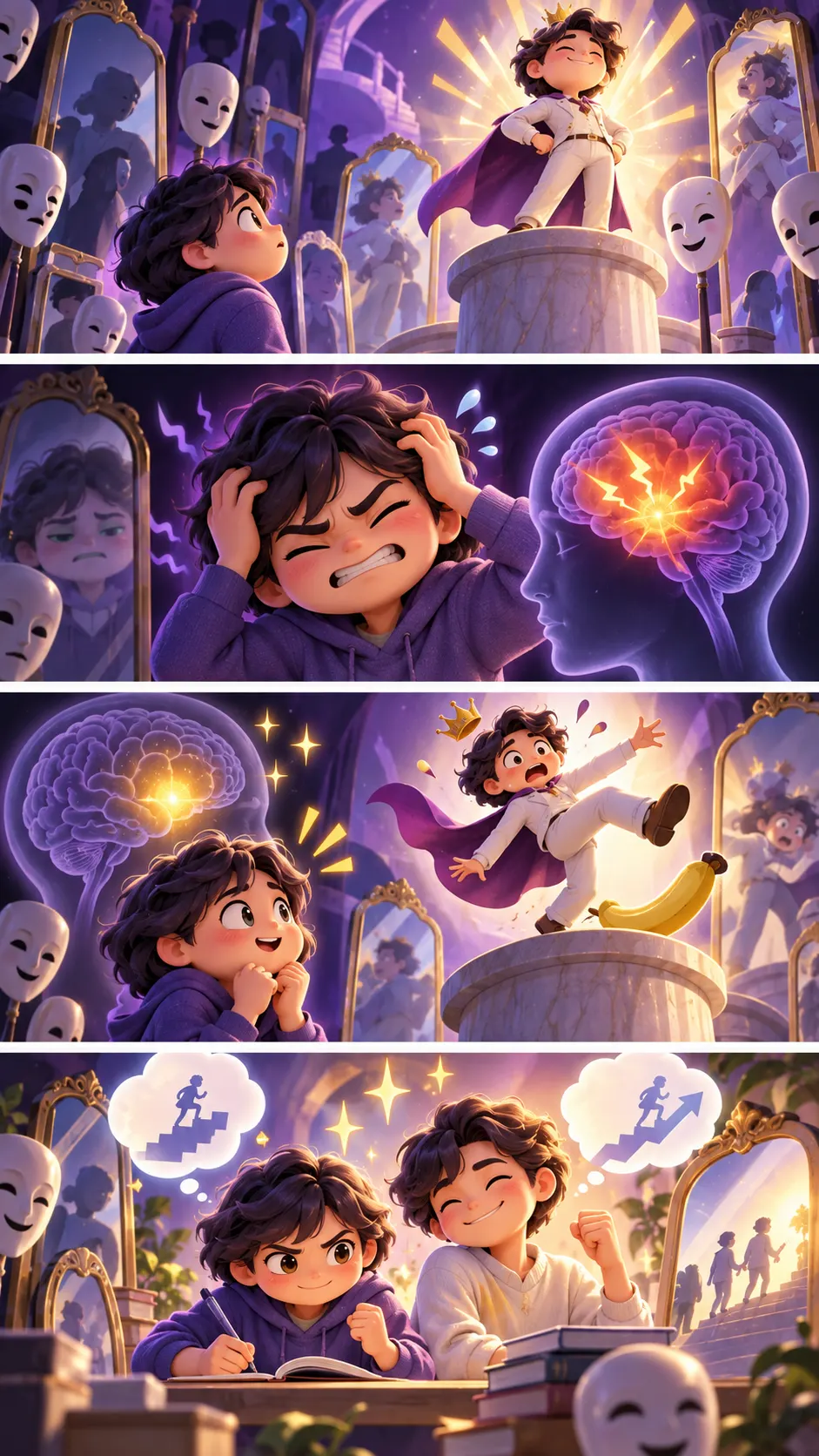
このネタ、誰かに教えたくなった?
自分より優秀な人の話を読むと、脳の"痛み"に関わる部分が反応。そしてその人に不幸が起きると、今度は"ごほうび"に関わる部分が反応した——日本の研究チームが脳で示した「他人の不幸は蜜の味」。妬みにも使い道はある。
押すと「マジかリスト」に保存されます
 出典・参考文献(4件)タップで表示
- Takahashi et al. (2009) When your gain is my pain and your pain is my gain: Neural correlates of envy and schadenfreude, Sciencedoi.org
- van de Ven, Zeelenberg & Pieters (2009) Leveling up and down: The experiences of benign and malicious envy, Emotiondoi.org
- Parrott & Smith (1993) Distinguishing the experiences of envy and jealousy, Journal of Personality and Social Psychologydoi.org
- Smith & Kim (2007) Comprehending envy, Psychological Bulletindoi.org

※本記事は上記の研究・公開資料をもとに、原田英語が独自の言葉で解説したものです。引用は著作権法第32条の範囲で行い、出典を明記しています。画像はすべてオリジナルのイメージです。研究結果には限界や個人差があります。誤りのご指摘は原田英語のお問い合わせフォームから。