

 動物・植物ホント
鏡を見て「自分のノドの汚れ」を落とす魚がいた。ホンソメワケベラと鏡像認知の大発見
 2026.10.02
 English Corner(A2〜B2・4択クイズ)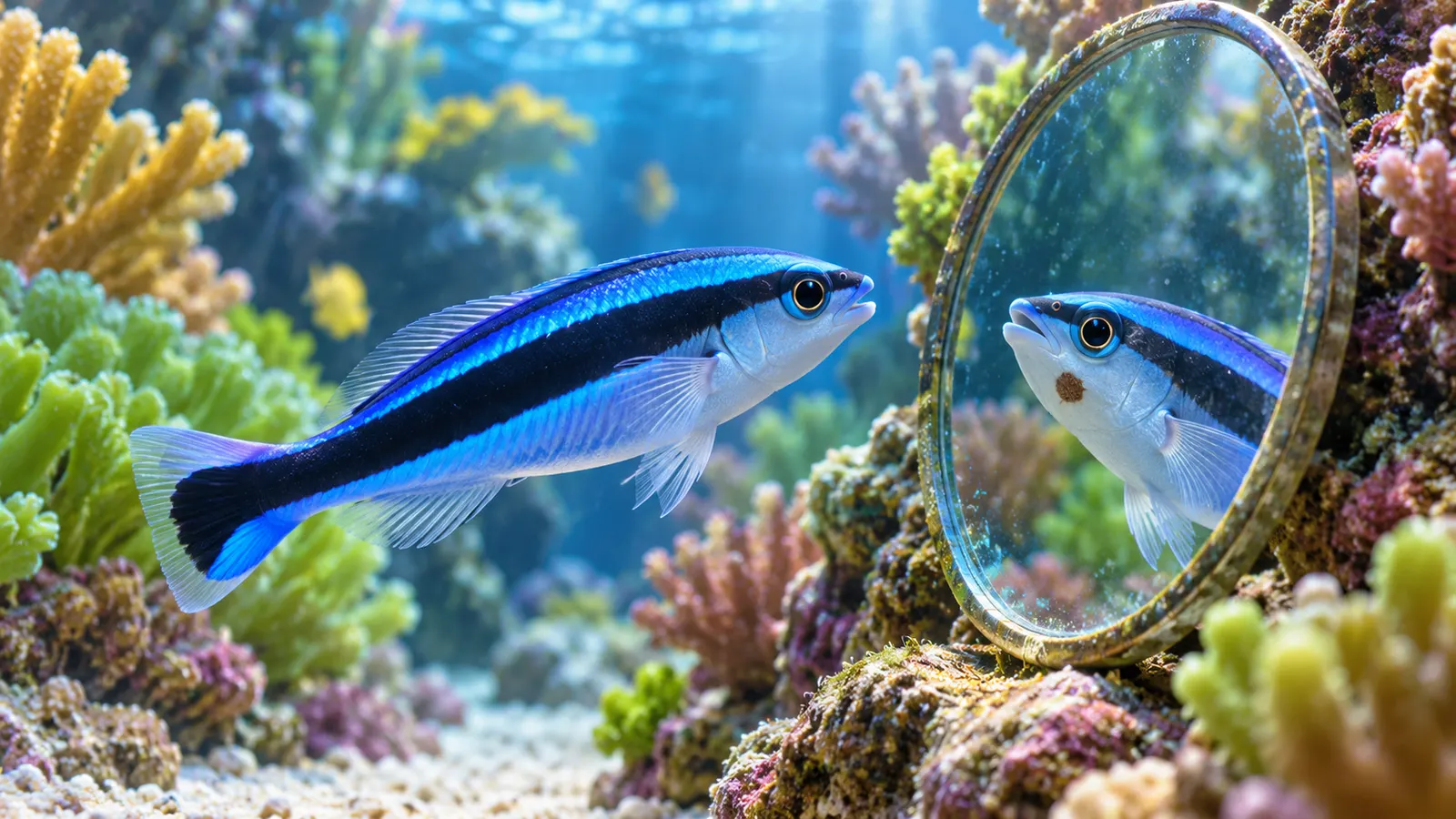
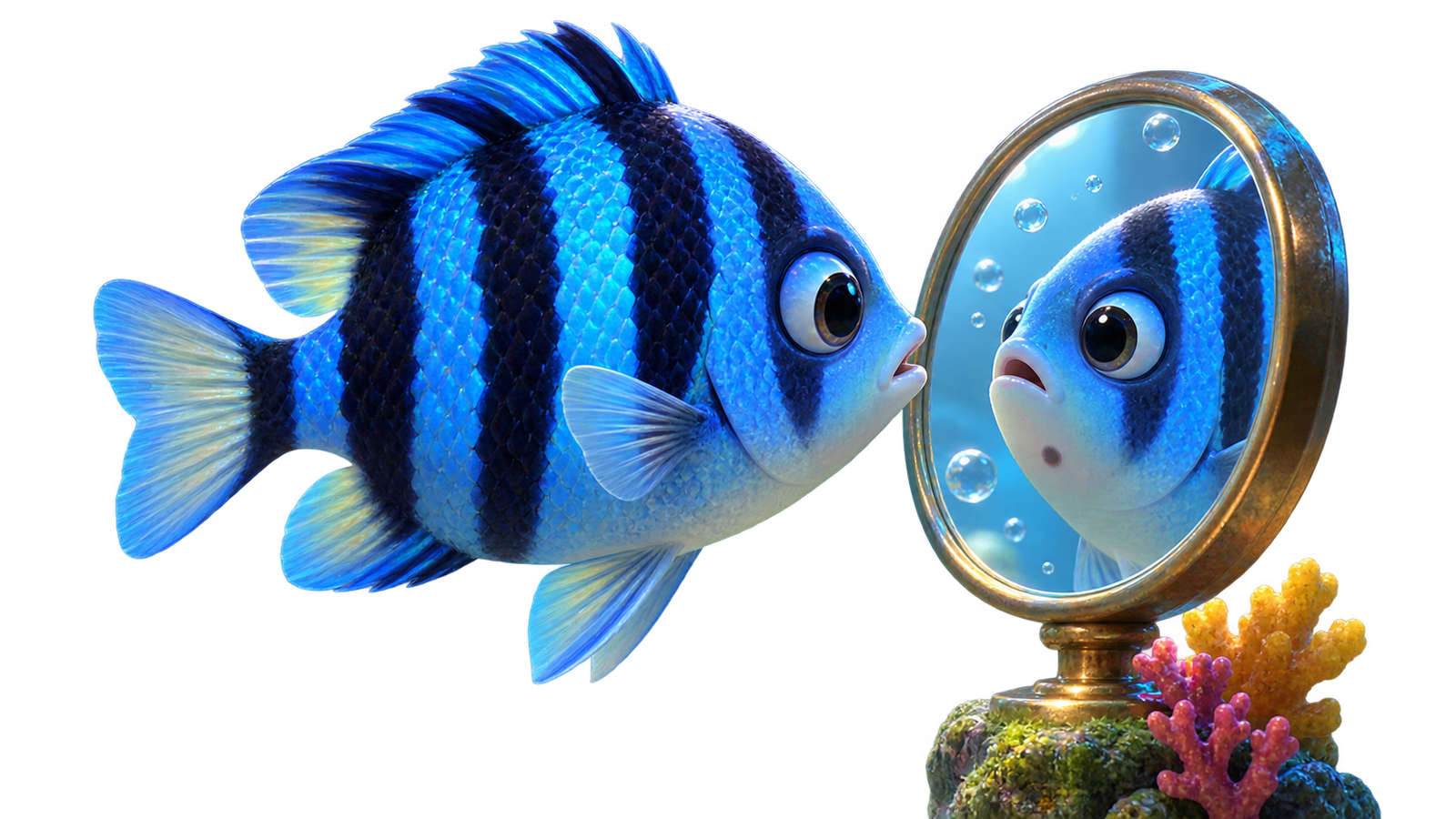
 読む前に予想してみよう!
ホンソメワケベラは、鏡がなくても自分のノドの茶色い印に気づいてこすり落とす
浅くつけた印では、鏡があるときだけこすった。鏡に映る姿を自分だと理解しているからと考えられる。
 研究カード(どんな研究?)
- 対象
- ホンソメワケベラ(野生由来の個体)
- 規模
- 小規模(研究ごとに10〜35匹ほど)
- 研究の種類
- 行動実験(マークテスト・写真提示)
- 確かさ
- ★★★☆☆
大阪の研究チームが、魚のホンソメワケベラが鏡に映る自分を認識し、ノドにつけた印をこすり落とそうとすることを示した。顔で自分を見分けている可能性も。
ひとことで言うとこの魚は、鏡を見て「あ、ぼくのノドに何かついてる!」と気づく!
鏡を見て「あ、寝ぐせがついてる」と気づく。私たちにとっては当たり前のこの行動、動物の世界ではかなりの“難問”です。
鏡に映った姿を自分だと理解できる(鏡像自己認知)と確かめられてきたのは、チンパンジーなどの大型類人猿、イルカ、ゾウ、カササギなど、ごく一部の動物だけでした。
ところが日本の研究チームが、体長わずか5〜8cmほどの魚でこれを示したのです。
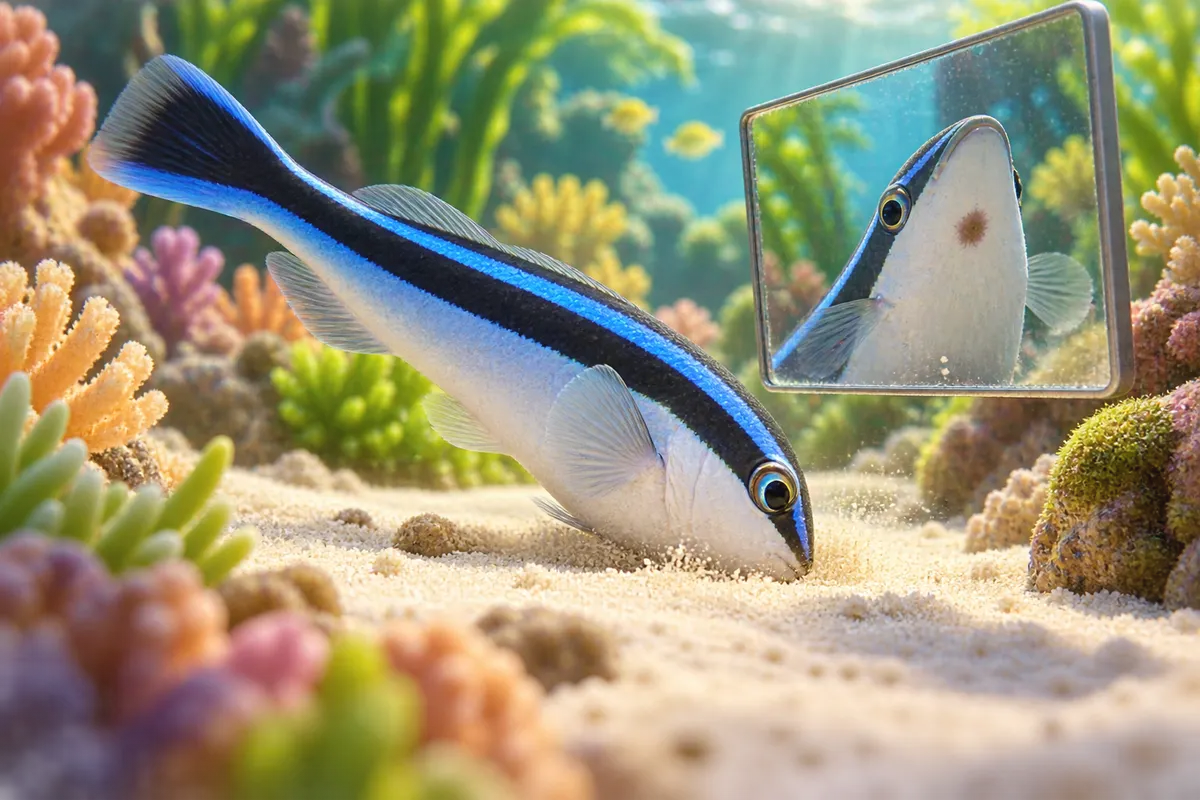
01ノドに茶色い印をつけてみた
主役は、サンゴ礁にすむホンソメワケベラ。大きな魚の体についた寄生虫を食べる「掃除屋」として知られる魚です。
これは、動物の自己認知を調べるマークテスト(鏡テスト)の手順にならった実験です(ただし、印は皮下に入れる改変版)。茶色の印は、ホンソメワケベラにとって寄生虫に見える色でした。
02「たまたまでは?」への答え
この発表には、「魚が自分を認識するなんて」と強い反論も出ました。雑誌側も、審査で賛否両論があったことを明記したほどです。
そこで研究チームは、2022年にやり方を変えて再挑戦しました。
- 新しく調べた14匹すべてが、鏡があるときだけノドの茶色い印をこすった
- 青や緑の印ではこすらなかった(寄生虫らしくない色には関心がない)
- 自分と同じ印をつけた別の魚を見せても、こすらなかった
「鏡に映っているのは自分で、自分のノドに寄生虫がいる」と理解している、と研究チームは解釈しています。
03自分の“顔”を覚えていた
2023年、チームはさらに踏みこみます(『PNAS』)。鏡テストに合格した魚に、写真を見せたのです。
- 知らない魚の写真 → 攻撃する
- 自分の写真 → 攻撃しない
- 自分の顔+知らない魚の体の合成写真 → 攻撃しない
- 知らない魚の顔+自分の体の合成写真 → 攻撃する
決め手は顔でした。さらに、ノドに印をつけた自分の写真を見せると、印のない魚がノドをこすったのです。人間と同じように、頭の中に「自分の顔」のイメージを持っている可能性が見えてきました。
04まとめ
小さな魚が鏡を見て自分の汚れに気づき、写真で自分の顔まで見分ける――。「自分を知る力は、大きな脳を持つ動物だけのもの」という常識が、大阪の研究室から揺らぎ始めています。
魚の世界にも、思っていたよりずっと豊かな「心のようなもの」があるのかもしれません。
この研究を英語で読もう原田英語の English CornerRecognizing yourself in a mirror was once thought to be possible only for a few clever animals, such as… 音声
音声 4択クイズ9問A2・B1・B2タップして開く
原田英語の English Corner
この研究を英語で読もう
Can a fish know itself in a mirror? Scientists in Osaka tested a small fish called the cleaner wrasse. This fish eats parasites, or tiny animals, from the bodies of bigger fish.
The scientists put a small brown mark on the fish's throat. The fish could not see the mark without a mirror. After looking in the mirror, the fish rubbed its throat on the sand. It seemed to know, "That is me!"
73 words ・ CEFR A2
和訳を見る
魚は鏡に映った自分がわかるのでしょうか。大阪の科学者たちは、ホンソメワケベラという小さな魚を調べました。この魚は、大きな魚の体についた寄生虫、つまり小さな生き物を食べます。科学者たちは、魚のノドに小さな茶色い印をつけました。
魚は鏡がなければその印を見ることができません。鏡を見たあと、魚はノドを砂にこすりつけました。まるで「これはぼくだ!」とわかっているようでした。
4択リーディングクイズ
Q1. What is the passage mainly about?
冒頭の問いかけ Can a fish know itself in a mirror? と最終文 It seemed to know, "That is me!" から、鏡で自分を認識するらしい魚の話なので C。
Q2. Where did the scientists put the mark?
put a small brown mark on the fish's throat とあるので A。砂は魚がノドをこすりつけた場所。
Q3. In this passage, "rubbed" means the fish ...
rubbed its throat on the sand は「ノドを砂にこすりつけた」。rub は「こする」なので D。
Recognizing yourself in a mirror was once thought to be possible only for a few clever animals, such as chimpanzees, dolphins and elephants. However, a research team in Osaka showed in 2019 that the cleaner wrasse, a fish about 6 centimeters long, may also have this ability. At first, the fish attacked their reflection as if it were a rival.
Then the researchers put a brown mark on each fish's throat, a place the fish cannot see directly. After seeing the mark in the mirror, the fish scraped their throats on the sand. They did not do this when the mark was transparent or when there was no mirror. Brown marks look like parasites, so the fish probably tried to remove a "parasite" from their own body.
127 words ・ CEFR B1
和訳を見る
鏡に映った自分がわかるのは、かつてチンパンジー、イルカ、ゾウのような一部の賢い動物だけだと考えられていました。しかし大阪の研究チームは2019年、体長6センチほどの魚ホンソメワケベラにもこの能力があるかもしれないことを示しました。最初、魚は鏡の姿をライバルであるかのように攻撃しました。
次に研究者たちは、魚が直接見ることのできない場所であるノドに茶色い印をつけました。鏡で印を見たあと、魚はノドを砂にこすりつけました。印が透明なときや鏡がないときには、こうした行動はしませんでした。茶色い印は寄生虫のように見えるので、魚はおそらく自分の体についた「寄生虫」を取ろうとしたのでしょう。
4択リーディングクイズ
Q1. What did the 2019 study suggest?
第2文 the cleaner wrasse ... may also have this ability(鏡で自分を認識する能力)とあるので B。チンパンジーより賢いとは書かれていない。
Q2. When did the fish scrape their throats?
After seeing the mark in the mirror, the fish scraped their throats とあり、透明な印や鏡なしではしなかったので D。
Q3. Why did the researchers most likely choose a brown mark?
最終文 Brown marks look like parasites から、魚が取り除きたくなる色を選んだと推測できるので A。
The cleaner wrasse is a small reef fish that feeds on parasites. In 2019, Kohda and colleagues put a brown mark on the throats of these fish, in a spot they could not see directly. When a mirror was in the tank, the fish scraped their throats against the sand.
Without a mirror, they did not. This was the mark test, the standard check for mirror self-recognition, and until then only a handful of species, including great apes, dolphins, elephants and magpies, were thought to pass it. The claim was controversial from the start. Scraping is a natural way for these fish to remove parasites, so critics asked whether the fish truly understood the reflection. A 2022 follow-up tested 14 new fish.
Every one of them scraped brown marks, but they ignored blue or green ones and did not react to another fish carrying the same brown mark. The samples in these studies were small, and other laboratories have yet to repeat the work independently. In 2023 the team showed the fish photographs. They attacked pictures of strangers but left pictures of themselves alone, and the face, rather than the body, decided how they reacted.
195 words ・ CEFR B2
和訳を見る
ホンソメワケベラは、寄生虫を食べるサンゴ礁の小さな魚です。2019年、幸田らは、この魚が直接見ることのできないノドの部分に茶色い印をつけました。水槽に鏡があると、魚はノドを砂にこすりつけました。
鏡がないと、こすりませんでした。これは鏡像自己認知を調べる標準的な方法であるマークテストで、それまでは大型類人猿、イルカ、ゾウ、カササギなど、ほんの一握りの種しか合格しないと考えられていました。この主張は最初から論争を呼びました。こする行動はこの魚が寄生虫を取り除く自然なやり方なので、魚が本当に鏡像を理解しているのか、批判者たちは疑問を投げかけたのです。2022年の追試では、新たに14匹が調べられました。
どの魚も茶色い印はこすりましたが、青や緑の印は無視し、同じ茶色い印をつけた別の魚を見ても反応しませんでした。これらの研究のサンプルは小さく、他の研究室による独立した再現もまだ行われていません。2023年、研究チームは魚に写真を見せました。魚は見知らぬ魚の写真は攻撃しましたが自分の写真には手を出さず、反応を決めていたのは体ではなく顔でした。
4択リーディングクイズ
Q1. What is the passage mainly about?
マークテストの説明から2019・2022・2023年の研究と、その限界までを述べているので D。
Q2. Which result came from the 2022 follow-up study?
2022年の追試について they ignored blue or green ones とあるので C。Every one of them scraped brown marks なので B は誤り。
Q3. What limitation of the research does the passage mention?
The samples in these studies were small, and other laboratories have yet to repeat the work independently. とあるので B。have yet to ~は「まだ~していない」。
重要単語
- mirrorA2名詞鏡The fish looked at itself in the mirror.
 look at oneself in the mirror「鏡で自分を見る」。動詞で「反映する」の意味もあり、入試では reflect と並んで頻出。
 - self-recognitionC1名詞自己認識Mirror self-recognition was thought to be rare in animals. self-(自己)+recognition(認識)。recognize の名詞形。self-awareness(自己意識)とセットで覚える。
- scrapeB2動詞こすり落とすThe fish scraped its throat on the sand. scrape A off B「BからAをこすり落とす」。skyscraper(摩天楼)は「空をこするもの」。
- parasiteB2名詞寄生虫Cleaner fish eat parasites from other fish. ギリシャ語 para(そばで)+sitos(食べ物)=「人の食卓で食べる者」。映画『パラサイト』で有名。
- reflectionB1名詞(鏡などに映った)姿、反射At first, the fish attacked its reflection. reflect(映す・反省する)の名詞形。「熟考」の意味もあり、on reflection「よく考えると」も入試に出る。
- controversialB2形容詞論争を呼ぶThe claim that fish recognize themselves was controversial. controversy(論争)の形容詞形。アクセントは con-tro-VER-sial。
- replicationC1名詞(研究の)再現、追試Independent replication is needed to confirm the results. replicate(再現する)の名詞形。科学記事で「再現性」が話題になるときの必須語。
 入試に出る順の単語帳を印刷する →
 全5561語の「科学英単語カード」で復習する →
 動画でもっと知る
動画は各チャンネルの公式埋め込みで表示しています(YouTube)。
この話題を TED で聞く
同じテーマの TED・TED-Ed を、 TED HACK で。英語の見どころ・使える表現・学習ミッションつきの日本語ガイドです。(運営:原田英語)


 公式・一次情報をチェック
- 論文全文:Kohda et al. 2023(NIH PubMed Central)pmc.ncbi.nlm.nih.gov
- 論文全文:Kohda et al. 2022(NIH PubMed Central)pmc.ncbi.nlm.nih.gov
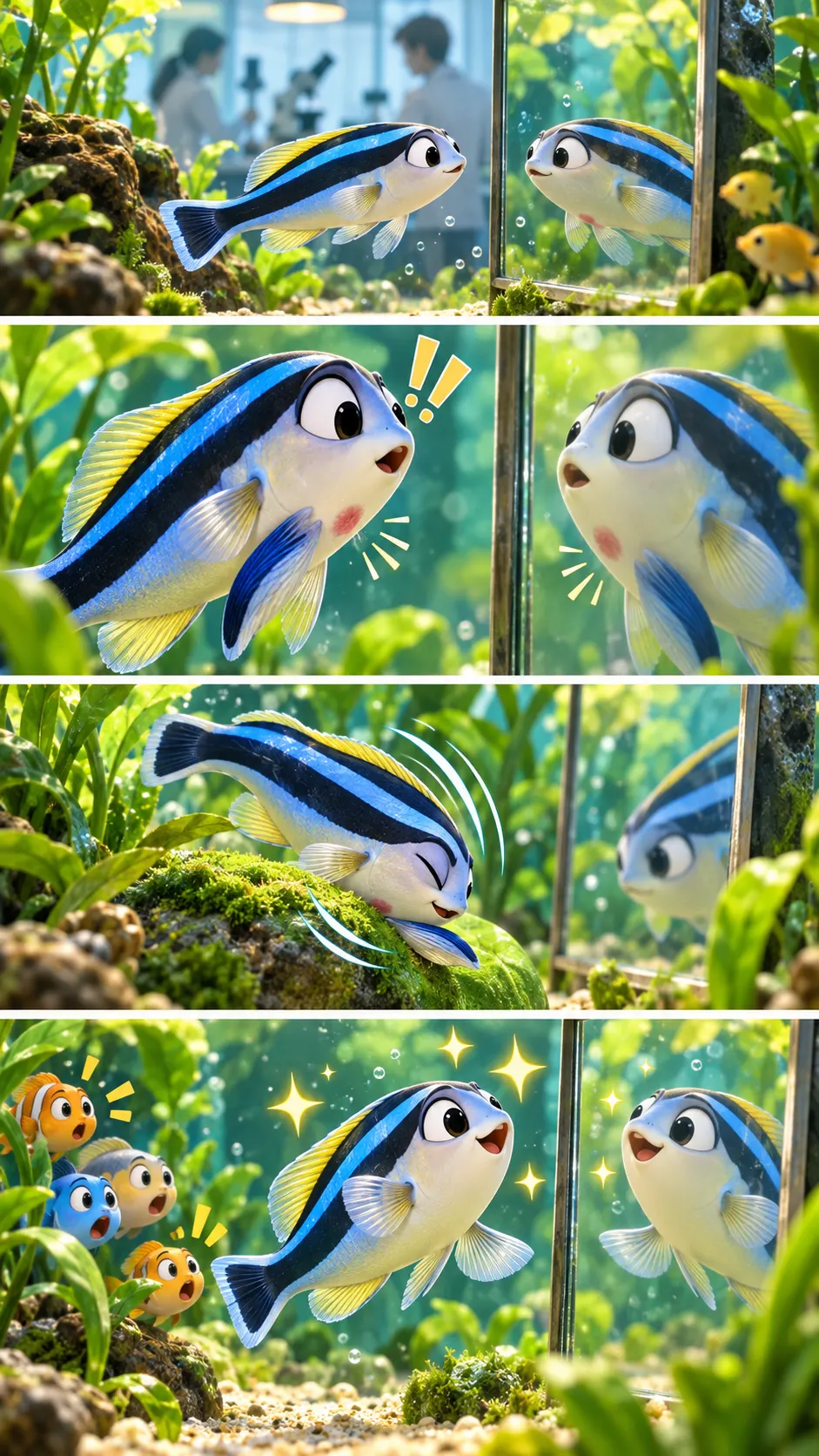
 4コマでわかる
このネタ、誰かに教えたくなった?
大阪の研究チームが、小さな魚ホンソメワケベラの「鏡テスト」に成功。ノドに茶色の印をつけると、鏡を見た魚が砂にこすりつけて落とそうとした。写真でも自分の“顔”を見分けていたらしい。
押すと「マジかリスト」に保存されます
 出典・参考文献(3件)タップで表示
- Kohda et al. (2019) If a fish can pass the mark test, what are the implications for consciousness and self-awareness testing in animals?, PLOS Biologydoi.org
- Kohda et al. (2022) Further evidence for the capacity of mirror self-recognition in cleaner fish and the significance of ecologically relevant marks, PLOS Biologydoi.org
- Kohda et al. (2023) Cleaner fish recognize self in a mirror via self-face recognition like humans, PNASdoi.org

※本記事は上記の研究・公開資料をもとに、原田英語が独自の言葉で解説したものです。引用は著作権法第32条の範囲で行い、出典を明記しています。画像はすべてオリジナルのイメージです。研究結果には限界や個人差があります。誤りのご指摘は原田英語のお問い合わせフォームから。
 これも「マジか!?」
 動物・植物
動物・植物
ミツバチは「ゼロ」がわかる? 脳の小さな虫が「何もない」を数の一番下に置いた
 動物・植物
動物・植物
カエルに飲み込まれても、胃の中で「爆発」して生還する。ミイデラゴミムシの100℃ガス砲
 動物・植物
動物・植物
0.2秒見ただけで数字の位置を記憶。チンパンジー「アユム」に大学生が完敗した日
 動物・植物
動物・植物
カバの汗は「赤い」。日本の研究者が突き止めた、日焼け止めと抗菌剤を兼ねる天然色素
 動物・植物
動物・植物
カラカラに干からびても、水をかけると生き返る虫がいる。「ネムリユスリカ」の不死身ワザ
 動物・植物
動物・植物