ウソ?ホント?検証ホント
「タコの心臓は3つ」はホント。青い血を全身に送るため、エラ専用の"補助ポンプ"を2つも持っていた
 2026.10.02
 English Corner(A2〜B2・4択クイズ)
 読む前に予想してみよう!
タコの血は人間と同じく赤い
タコの血は銅を含むヘモシアニンで酸素を運ぶため、酸素と結びつくと青っぽくなる。
 研究カード(どんな研究?)
- 対象
- タコ
- 規模
- 生理学実験・総説
- 研究の種類
- 動物の生理学研究
- 確かさ
- ★★★★☆
タコには全身に血を送る心臓1つと、エラに血を送る「エラ心臓」2つがある。血は銅を使うヘモシアニンで青い。効率の悪い血を補う工夫だった。
ひとことで言うとタコの心臓は3つ。しかも血の色は青!
「タコって心臓が3つあるらしいよ」
雑学番組やクイズでおなじみのこの話。あまりに不思議なので、「さすがに盛ってるでしょ」と思った人もいるかもしれません。
でもこれは、正真正銘のホントです。しかも3つの心臓には、ちゃんと役割分担があります。さらにタコの血は青色。2つの不思議は、実は深くつながっていました。
01全身用1つ+エラ専用2つ
タコの心臓の内訳はこうです。
- 体心臓(全身用):1つ。エラで酸素を受け取った血を、全身に送り出す
- 鰓心臓(エラ専用):2つ。左右のエラの根元にあり、全身から戻ってきた血をエラに押しこむ
私たち人間の心臓は1つですが、中が「肺に送る側」と「全身に送る側」に分かれています。タコはその役割を、別々の心臓に分けて持っていると考えるとわかりやすいかもしれません。
02血が青いのは「銅」のせい
人間の血が赤いのは、酸素を運ぶヘモグロビンが鉄を含むからです。一方、タコやイカの血は、銅を含む「ヘモシアニン」というタンパク質で酸素を運びます。ヘモシアニンは酸素と結びつくと青っぽくなるので、タコの血は青く見えるのです。
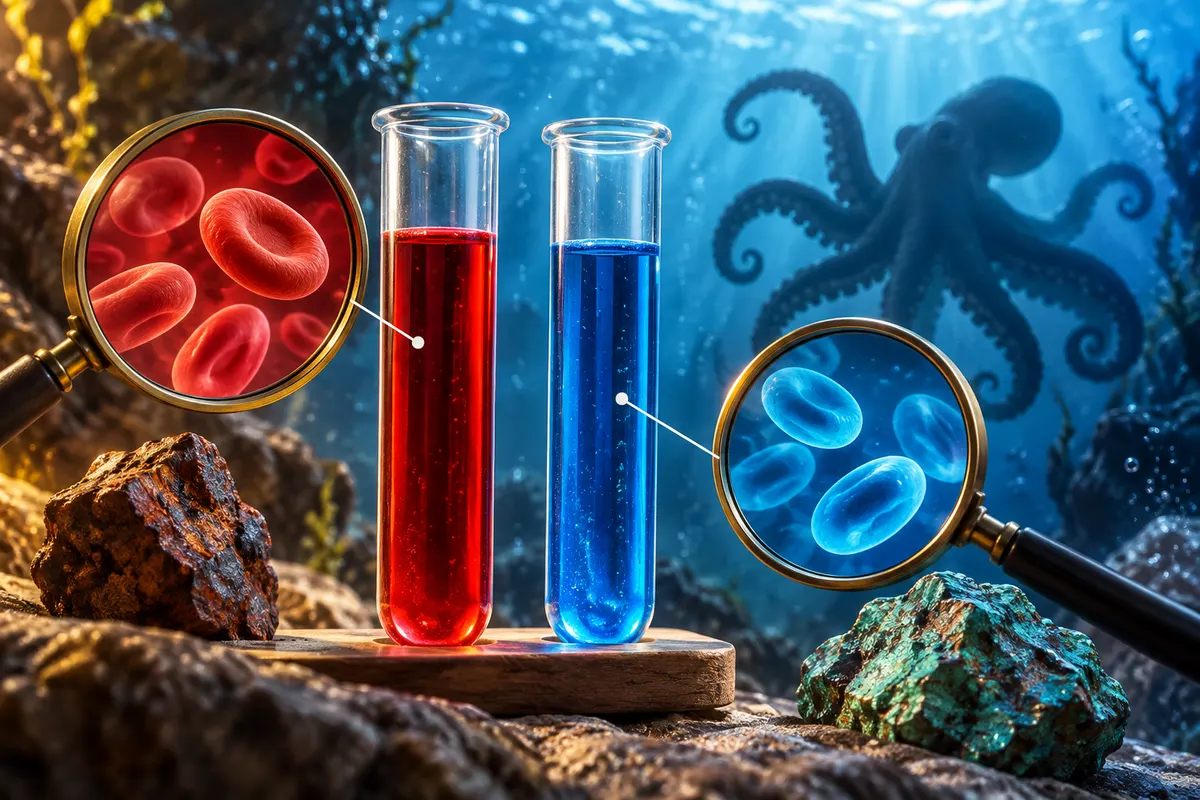
ただ、ヘモシアニンには弱点があります。ヘモグロビンのように赤血球の中に詰めこまれておらず、血液に溶けた状態で流れているため、運べる酸素の量が少なめで、血液もドロッとしやすいのです。
03心臓が3つ必要な"苦しい事情"
ウェルズとスミスは1987年の論文で、タコの循環系を「設計に対する工学の勝利」と表現しました。
どういうことかというと、タコの血は酸素を運ぶ力が弱く、そのうえ血をエラの細い血管に通すには大きな力がいります。そこで、エラの手前にもう一段ポンプ(鰓心臓)を置き、ポンプを増やすという"力わざ"で、効率の悪い血を回している、というわけです。もともとの設計の不利を、エンジニアリングで乗り越えているイメージです。
一方で、2015年の研究では、南極の冷たい海にすむタコ(Pareledone charcoti)は、ヘモシアニンの性質や濃度を調整し、0℃近い海でもヘモシアニンが酸素運搬に役立つようにしていると報告されています。冷たい海水に酸素が多くとけていることも、その助けになっています。
04なぜ「信じられない雑学」になったのか
「心臓が3つ」は、言葉だけ聞くとSFの宇宙人のようです。でも実際には、エラで呼吸する生き物が、酸素を運ぶ力の弱い血で活発に動くための工夫でした。
ちなみに「タコには脳が9つある」という話もありますが、こちらは「腕の神経がとても発達していて、半分自分で動ける」ことを大げさに言ったもの。心臓の3つほど文字どおりではありません。
05まとめ
- タコの心臓は3つ:全身用1つ+エラ専用2つ
- 血は銅を使うヘモシアニンで、酸素と結びつくと青い
- 酸素を運ぶ力が弱い血を、ポンプを増やして回していた
判定は「ホント」。クイズ番組の"盛った雑学"に見えて、実は生き物の設計の工夫が詰まった、筋の通った事実でした。
この研究を英語で読もう原田英語の English CornerIt sounds like a strange quiz fact, but an octopus really has three hearts. 音声
音声 4択クイズ9問A2・B1・B2タップして開く
原田英語の English Corner
この研究を英語で読もう
Does an octopus really have three hearts? Yes, it does. One heart sends blood to the whole body. The other two hearts push blood through the gills.
The gills take in oxygen from the water. Octopus blood is also blue, not red. This is because it uses copper to carry oxygen.
Our blood uses iron. Octopus blood carries less oxygen, so the extra hearts help.
65 words ・ CEFR A2
和訳を見る
タコには本当に心臓が3つあるのでしょうか。はい、あります。1つの心臓は体全体に血を送ります。ほかの2つの心臓は、エラに血を押し流します。
エラは水から酸素を取りこみます。タコの血は赤ではなく、青色です。これは、酸素を運ぶのに銅を使っているからです。
私たちの血は鉄を使います。タコの血は運べる酸素が少ないので、追加の心臓が役に立つのです。
4択リーディングクイズ
Q1. What is the passage mainly about?
タコの3つの心臓と青い血について説明しているので B。
Q2. What do the two extra hearts do?
The other two hearts push blood through the gills. とあるので A。血が青いのは銅のため。
Q3. In this passage, "carry" means ...
carry oxygen は「酸素を運ぶ」。carry は物をある場所から別の場所へ運ぶという意味なので D。
It sounds like a strange quiz fact, but an octopus really has three hearts. One systemic heart pumps blood around the body, while two branchial hearts, one at the base of each gill, push returning blood through the gills. Octopus blood is blue because it carries oxygen with hemocyanin, a protein that contains copper, instead of iron-based hemoglobin.
Hemocyanin floats freely in the blood rather than being packed into red blood cells, so it carries less oxygen. In 1979, a British zoologist measured the heartbeat of octopuses that could move freely. At rest in 22°C water, their hearts beat 40 to 50 times a minute, and during exercise they pumped more blood with each beat instead of beating much faster.
120 words ・ CEFR B1
和訳を見る
クイズ番組の不思議な雑学のように聞こえますが、タコには本当に心臓が3つあります。1つの体心臓が血を全身に送り出し、それぞれのエラの根元に1つずつある2つの鰓心臓が、戻ってきた血をエラに押し流します。タコの血が青いのは、鉄を使うヘモグロビンではなく、銅を含むタンパク質であるヘモシアニンで酸素を運ぶからです。
ヘモシアニンは赤血球に詰めこまれておらず、血液の中に溶けて流れているため、運べる酸素は少なめです。1979年、英国の動物学者が、自由に動けるタコの心拍を測りました。水温22℃での安静時の心拍は1分間に40〜50回で、運動中は心拍をあまり速くするのではなく、1回の拍動で送り出す血の量を増やしていました。
4択リーディングクイズ
Q1. What is the passage mainly about?
3つの心臓の役割と、血が青い理由を説明しているので C。
Q2. How did the octopuses respond to exercise in the 1979 study?
they pumped more blood with each beat instead of beating much faster とあるので B。
Q3. Why does an octopus probably need two extra hearts?
ヘモシアニンは運べる酸素が少なく、エラに血を押し流す心臓が別にある、という説明から A と推測できる。
An octopus's three hearts are not exaggerated trivia but accurate anatomy. A single systemic heart drives oxygen-rich blood through the body, while a pair of branchial hearts, positioned at the base of the gills, forces returning blood through the fine vessels of the gills. In a sense, the octopus divides between separate organs the two pumping roles that the two sides of the human heart perform. The arrangement makes sense once its blood chemistry is considered.
Instead of iron-based hemoglobin packed into red cells, octopuses use hemocyanin, a copper-containing protein dissolved in the blood, which turns bluish when bound to oxygen. Because hemocyanin carries relatively little oxygen and makes the blood thick, extra pumping power is required. Two researchers in 1987 described the system as "a triumph of engineering over design": a less efficient blood is compensated for by adding pumps.
Earlier measurements showed that octopuses meet higher oxygen demand mainly by increasing the volume of each beat rather than the heart rate. Hemocyanin is not simply inferior, however; a 2015 study found that an Antarctic octopus adjusts its hemocyanin so that it still helps carry oxygen in water near 0°C.
191 words ・ CEFR B2
和訳を見る
タコの3つの心臓は、大げさな雑学ではなく、正確な解剖学的事実です。1つの体心臓が酸素を多く含む血を全身に送り出し、エラの根元にある一対の鰓心臓が、戻ってきた血をエラの細い血管に押し通します。ある意味で、タコは、人間の心臓が左右2つの側で行っている2つのポンプの役割を、別々の器官に分けているのです。この仕組みは、血液の化学を考えると納得がいきます。タコは、赤血球に詰めこまれた鉄ベースのヘモグロビンではなく、血液に溶けた銅を含むタンパク質ヘモシアニンを使っており、これは酸素と結びつくと青みを帯びます。
ヘモシアニンは運べる酸素が比較的少なく、血液をドロッとさせるため、より多くのポンプの力が必要になります。1987年に2人の研究者はこの仕組みを「設計に対する工学の勝利」と表現しました。効率の悪い血液を、ポンプを増やすことで補っているというわけです。それ以前の測定では、タコは酸素の必要量が増えると、主に心拍数ではなく1回の拍出量を増やして対応することが示されていました。
ただし、ヘモシアニンは単に劣っているわけではありません。2015年の研究では、南極のタコがヘモシアニンを調整し、0℃近い水の中でもヘモシアニンが酸素運搬に役立つようにしていることがわかりました。
4択リーディングクイズ
Q1. What is the main point of the passage?
3つの心臓は、酸素を運ぶ力の弱いヘモシアニンの血を回すための仕組みだと説明しているので C。
Q2. According to the passage, what makes octopus blood blue?
hemocyanin, a copper-containing protein ... which turns bluish when bound to oxygen とあるので D。
Q3. What does the phrase "a triumph of engineering over design" suggest?
直後のコロン以下 a less efficient blood is compensated for by adding pumps がこの表現の説明なので A。
重要単語
- gillB2名詞エラFish and octopuses breathe through their gills.
 ふつう複数形 gills で使う。発音は /ɡɪl/(ギル)。
 - circulationB2名詞循環The heart is the center of blood circulation. circle(円)と同語源。新聞の「発行部数」の意味もある。動詞 circulate。
- copperB1名詞銅Octopus blood contains copper. iron(鉄)、silver(銀)、gold(金)と並べて覚える。10円玉の素材。
- pumpB1動詞(液体を)送り出すThe heart pumps blood around the body. 名詞「ポンプ」も同じ形。pump A into B「AをBに送りこむ」。
- oxygenA2名詞酸素Blood carries oxygen to every part of the body. アクセントは最初の o(オクシジェン)。carbon dioxide(二酸化炭素)とセットで。
- compensateC1動詞埋め合わせる、補うExtra hearts compensate for the weak blood. compensate for ~「~を補う」の形で頻出。名詞 compensation は「補償(金)」。
- anatomyC1名詞解剖学、体の構造The anatomy of an octopus is very unusual. ana-(ばらばらに)+tomy(切ること)。体のつくりそのものも指す。
 入試に出る順の単語帳を印刷する →
 全5561語の「科学英単語カード」で復習する →
 この話題を TED で聞く
同じテーマの TED・TED-Ed を、 TED HACK で。英語の見どころ・使える表現・学習ミッションつきの日本語ガイドです。(運営:原田英語)


 4コマでわかる

このネタ、誰かに教えたくなった?
「タコには心臓が3つある」はホントだった。全身用が1つ、エラ専用が2つ。しかも血は銅を使った"青い血"。酸素を運ぶ力が弱い血を、ポンプを増やしてなんとか回しているらしい。
押すと「マジかリスト」に保存されます
 出典・参考文献(4件)タップで表示
- Wells & Smith (1987) The performance of the octopus circulatory system: A triumph of engineering over design, Experientiadoi.org
- Schipp (1987) The blood vessels of cephalopods. A comparative morphological and functional survey, Experientiadoi.org
- Wells (1979) The heartbeat of Octopus vulgaris, Journal of Experimental Biologydoi.org
- Oellermann et al. (2015) Blue blood on ice: modulated blood oxygen transport facilitates cold compensation and eurythermy in an Antarctic octopod, Frontiers in Zoologydoi.org

※本記事は上記の研究・公開資料をもとに、原田英語が独自の言葉で解説したものです。引用は著作権法第32条の範囲で行い、出典を明記しています。画像はすべてオリジナルのイメージです。研究結果には限界や個人差があります。誤りのご指摘は原田英語のお問い合わせフォームから。






 動物・植物
動物・植物