

 語学・英語学習ウソ
「大人はLとRを聞き分けられない」はウソ。日本人で実証された"いろんな声"トレーニング
 2026.10.02
 English Corner(A2〜B2・4択クイズ)

 読む前に予想してみよう!
大人になってからでも、訓練すれば英語のLとRの聞き分けは上達する
日本語を母語とする大人を対象にした訓練研究で、聞き分けの正答率が上がり、数か月後まで効果が保たれた。
 研究カード(どんな研究?)
- 対象
- 日本語を母語とする大人
- 規模
- 小規模(各研究とも少人数)
- 研究の種類
- 訓練実験(事前・事後・追跡テスト)
- 確かさ
- ★★★★☆
日本人の大人でも、たくさんの話者・たくさんの単語でLとRを聞き分ける訓練をすると、聞き分けが上達し、数か月後まで保たれ、発音まで良くなったという研究がある。
ひとことで言うと大人でもLとRは聞き分けられるようになる。コツは「いろんな人の声」で練習!
「light」と「right」、「rice」と「lice」。日本人が英語で苦戦する代表が、LとRの聞き分けです。
「日本人の耳は、大人になったらもうLとRを区別できない」。そんな話を聞いて、あきらめている人もいるかもしれません。
でも、それは思い込みでした。1990年代、日本人の大人がLとRを聞き分けられるようになることを示した、一連の有名な研究があるのです。
01赤ちゃんのころは聞き分けられていた
実は、日本人の赤ちゃんも生後6〜8か月ごろはLとRを聞き分けられることが、研究でわかっています。
アメリカと日本の赤ちゃんを比べた研究では、生後6〜8か月のころは、どちらの国の赤ちゃんもLとRを同じくらい聞き分けられました。ところが生後10〜12か月になると、アメリカの赤ちゃんは聞き分けが上達し、日本の赤ちゃんは逆に聞き分けにくくなっていたのです。
これは、脳が「母語で必要な音の区別」に特化していくためだと考えられています。日本語ではLとRを区別する必要がないので、脳は両方を同じ「ラ行」の箱に入れるようになります。
では、大人になってから、もう一度その箱を分け直すことはできるのでしょうか。
02「いろんな声」で聞くトレーニング
ポイントは、1人の声ではなく、いろいろな人の声で練習したこと。これを高変動性音声訓練(HVPT)と呼びます。
1人の声だけで練習すると、その人の発音のクセに慣れるだけになりがちです。いろんな声で練習することで、脳は「話者が変わっても共通する、LとRのちがい」をつかめるようになると考えられています。

03半年後も残り、発音まで良くなった
この研究グループは、その後も同じ訓練法の効果を調べました。
- 効果は長持ち:訓練から3か月後・6か月後にテストしても、3か月後は正答率の低下が2%にとどまり、6か月後も訓練前より4.5%高い水準だった(1994年の報告)
- 発音まで改善:聞き分けの訓練しかしていないのに、訓練後の参加者のLとRの発音を英語母語話者が評価すると、発音も良くなっていた(1997年の報告)
さらに、聞き分けの訓練が発音に与える効果を調べた研究を25年分まとめた2018年のメタ分析でも、聞く訓練は発音の改善にもつながる傾向が示されています(ただし効果は聞き分けの上達より小さめ)。
「聞き分けが上達すると、発音も少し良くなる」。耳と口は、つながっているのです。
04まとめ
「日本人の大人はLとRを聞き分けられない」は、研究から見るとウソでした。
必要なのは、特別な才能ではなく、いろいろな声で、すぐ答え合わせをしながら、数週間続けること。大人の脳も、ちゃんと新しい「箱」を作れるのです。
この研究を英語で読もう原田英語の English CornerStudies show that Japanese babies at six to eight months can tell English L and R apart as well as American… 音声
音声 4択クイズ9問A2・B1・B2タップして開く
原田英語の English Corner
この研究を英語で読もう
Many Japanese adults think they can never hear the difference between L and R. But that is not true. In the 1990s, researchers in the US trained Japanese adults.
The adults listened to many words read by many different people. They answered "L" or "R" and checked the answer right away. Their listening got better. Six months later, they still did better than before training. Their pronunciation also improved, even without speaking practice.
73 words ・ CEFR A2
和訳を見る
多くの日本人の大人は、LとRの違いを決して聞き分けられないと思っています。しかし、それは本当ではありません。
1990年代、アメリカの研究者たちは日本人の大人を訓練しました。大人たちは、たくさんの違う人が読んだたくさんの単語を聞きました。彼らは「L」か「R」かを答え、すぐに答えを確認しました。彼らの聞き取りは上達しました。6か月後も、訓練前より上手に聞き分けられました。話す練習をしなかったのに、発音も良くなりました。
4択リーディングクイズ
Q1. What is the main idea of the passage?
大人でもLとRを聞き分けられるようになったという研究の話なので A。
Q2. Who read the words in the training?
many words read by many different people とあるので D。
Q3. What happened to their pronunciation?
Their pronunciation also improved, even without speaking practice. とあるので C。
Studies show that Japanese babies at six to eight months can tell English L and R apart as well as American babies, but this ability declines by about their first birthday. Can adults learn it again? In 1991, researchers at Indiana University trained Japanese adults to identify L and R in many words spoken by several different speakers.
After each answer, the learners were told immediately whether they were right. Their accuracy improved, and the skill even worked with new words they had not practiced. This method is called high variability phonetic training. Later reports showed that most of the gains were still there three and six months later, and that the learners' pronunciation of L and R improved, although they had only practiced listening.
125 words ・ CEFR B1
和訳を見る
研究によると、生後6〜8か月の日本の赤ちゃんはアメリカの赤ちゃんと同じくらい英語のLとRを聞き分けられますが、1歳の誕生日ごろまでにその能力が低下します。大人はそれを学び直せるのでしょうか。1991年、インディアナ大学の研究者たちは、日本人の大人に、何人かの異なる話者が話すたくさんの単語の中でLとRを聞き分ける訓練をしました。
答えるたびに、学習者は正しかったかどうかをすぐに知らされました。彼らの正確さは上がり、その力は練習していない新しい単語でも発揮されました。この方法は高変動性音声訓練と呼ばれます。その後の報告では、上達は3か月後と6か月後にもおおむね残っており、聞く練習しかしていないのに、学習者のLとRの発音も良くなっていたことが示されました。
4択リーディングクイズ
Q1. What happens to Japanese babies' ability to hear L and R?
this ability declines by about their first birthday とあるので C。
Q2. What was an important feature of the training?
After each answer, the learners were told immediately whether they were right. とあるので A。複数の話者を使った点も特徴。
Q3. What can we infer from the passage?
聞く練習だけで発音も良くなったことから、聞く訓練が話す力にもつながると推論できるので B。
The English /r/-/l/ contrast is notoriously difficult for Japanese speakers, and many assume adults cannot master it. Developmental research explains the difficulty: Japanese and American infants discriminate the two sounds equally well at six to eight months, but by ten to twelve months Japanese infants have declined as their perception tunes to Japanese, which does not use the contrast. A landmark series of studies beginning in 1991 showed that this tuning is not permanent.
Logan, Lively and Pisoni trained Japanese adults to identify /r/ and /l/ in natural recordings of many words, produced by multiple speakers, with immediate feedback after each response. Accuracy rose and generalized to untrained words and voices. This approach, now called high variability phonetic training, is thought to work because exposure to many voices helps learners extract the features that remain constant across speakers.
However, each study involved few participants, and the 1991 study found only small but reliable gains. Follow-up reports found that much of the improvement was retained three and six months later, and that participants' pronunciation improved even though they had practiced only listening. A 2018 meta-analysis of 25 years of research confirmed that perception training tends to transfer to production.
198 words ・ CEFR B2
和訳を見る
英語の /r/ と /l/ の対立は日本語話者にとって難しいことで有名で、多くの人は大人にはそれを習得できないと思い込んでいます。発達研究がこの難しさを説明しています。日本とアメリカの乳児は生後6〜8か月ではこの2つの音を同じくらい聞き分けますが、10〜12か月になると、この対立を使わない日本語に知覚が合わせられていくにつれて、日本の乳児の聞き分けは低下するのです。
1991年に始まる画期的な一連の研究は、この調整が永久的なものではないことを示しました。ローガン、ライブリー、ピゾーニは、日本人の大人に、複数の話者が発音したたくさんの単語の自然な録音の中で /r/ と /l/ を聞き分ける訓練を、各回答の直後のフィードバック付きで行いました。正確さは上がり、訓練していない単語や声にも一般化しました。現在、高変動性音声訓練と呼ばれるこの方法が効くのは、多くの声に触れることで、学習者が話者を超えて一定に保たれる特徴を抽出できるようになるからだと考えられています。
ただし、各研究の参加者は少なく、1991年の研究で見られた向上も小さいが確かなものにとどまりました。追跡報告では、上達の多くが3か月後と6か月後にも保持されており、参加者は聞く練習しかしていないのに発音も向上していたことがわかりました。25年分の研究を対象とした2018年のメタ分析は、知覚訓練が発音に転移する傾向があることを確認しました。
4択リーディングクイズ
Q1. Why is high variability phonetic training thought to work?
exposure to many voices helps learners extract the features that remain constant across speakers とあるので B。
Q2. What did the 2018 meta-analysis confirm?
perception training tends to transfer to production とあるので D。production は「発音・産出」。
Q3. Which limitation does the author mention?
each study involved few participants, and the 1991 study found only small but reliable gains とあるので A。
重要単語
- perceptual trainingC1名詞(句)知覚訓練(音を聞き分ける練習)Perceptual training helped them hear /r/ and /l/.
 perceive「知覚する」の形容詞 perceptual。発音(production)の前に知覚(perception)を整える考え方。
 - high variabilityC1名詞(句)高変動性(多くの話者・単語・環境を使うこと)High variability training uses many different voices. vary「変わる」→variable→variability。略称 HVPT(High Variability Phonetic Training)は発音研究の有名な手法。
- minimal pairC1名詞(句)ミニマルペア(1音だけ違う単語の組)"Light" and "right" are a minimal pair. long / wrong、collect / correct など。聞き分けクイズを自作するのにも便利。
- generalizeC1動詞一般化する(練習していない場面にも広がる)The skill generalized to new words and voices. generalize to ~「~に一般化する・広がる」。名詞 generalization。学習研究で「転移」とほぼ同じ意味で使う。
- retentionC1名詞保持(効果が時間がたっても残ること)Retention was tested six months later. retain「保つ」の名詞形。訓練研究では「直後の効果」と「保持」を必ず分けて見る。
- feedbackB1名詞フィードバック(正誤などの情報)Immediate feedback helps you learn faster. immediate feedback「即時フィードバック」が知覚訓練のカギ。不可算名詞。
- transferB2名詞・動詞転移(する)・移るListening practice can transfer to pronunciation. SLAでは「ある技能の練習効果が別の技能に移ること」。母語の影響を指す language transfer もある。
 入試に出る順の単語帳を印刷する →
 全5561語の「科学英単語カード」で復習する →
 動画でもっと知る
動画は各チャンネルの公式埋め込みで表示しています(YouTube)。
この話題を TED で聞く
同じテーマの TED・TED-Ed を、 TED HACK で。英語の見どころ・使える表現・学習ミッションつきの日本語ガイドです。(運営:原田英語)


 公式・一次情報をチェック
- I-LABS(ワシントン大学 学習・脳科学研究所)ilabs.uw.edu
- Pronunciation(BBC Learning English)bbc.co.uk
 4コマでわかる
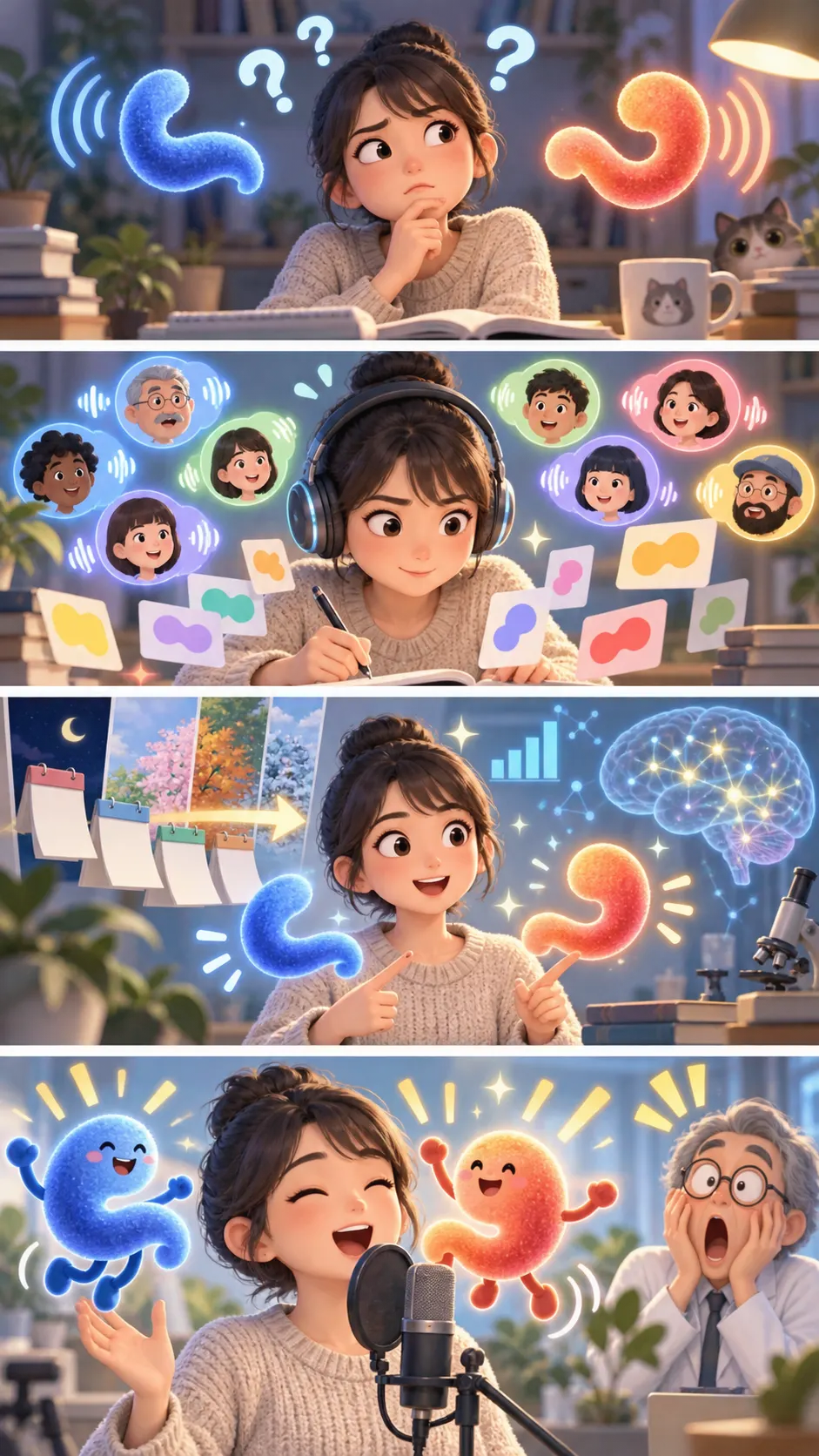
このネタ、誰かに教えたくなった?
「日本人の大人はLとRを聞き分けられない」は思い込みだった。アメリカの研究で、日本人の大人がいろんな人の声でLとRを聞き分ける練習をしたら上達し、半年後も効果が残り、発音の練習をしていないのに発音まで良くなったらしい。
押すと「マジかリスト」に保存されます
 出典・参考文献(5件)タップで表示
- Logan, Lively & Pisoni (1991) Training Japanese listeners to identify English /r/ and /l/: A first report, The Journal of the Acoustical Society of Americadoi.org
- Lively et al. (1994) Training Japanese listeners to identify English /r/ and /l/. III. Long-term retention of new phonetic categories, The Journal of the Acoustical Society of Americadoi.org
- Bradlow et al. (1997) Training Japanese listeners to identify English /r/ and /l/: IV. Some effects of perceptual learning on speech production, The Journal of the Acoustical Society of Americadoi.org
- Kuhl et al. (2006) Infants show a facilitation effect for native language phonetic perception between 6 and 12 months, Developmental Sciencedoi.org
- Sakai & Moorman (2018) Can perception training improve the production of second language phonemes? A meta-analytic review of 25 years of perception training research, Applied Psycholinguisticsdoi.org

※本記事は上記の研究・公開資料をもとに、原田英語が独自の言葉で解説したものです。引用は著作権法第32条の範囲で行い、出典を明記しています。画像はすべてオリジナルのイメージです。研究結果には限界や個人差があります。誤りのご指摘は原田英語のお問い合わせフォームから。
 これも「マジか!?」


 語学
語学
赤ちゃんは「世界中の言語の音」を聞き分けていた。1歳ごろまでに弱まる“耳の超能力”

 語学
語学
「英語は高周波、日本語は低周波」説を音響データで検証したら、ほぼ誤解だった

 語学
語学
日本人の耳には「存在しない母音」が聞こえていた。カタカナ英語の背景にある「耳の錯覚」

 語学
語学
英語は「口元を見る」と聞き取れる? 日本人は静かな場所だと唇の情報をあまり使わないという研究があった
 語学
語学
英語は「ダダダ」、日本語は「タタタ」。リズムの違いを測ったら、教科書の説明は半分ウソだった
 語学
語学