語学・英語学習ホント
静かな教室では聞き取れるのに、カフェだと急に無理。英語が「雑音に弱い」のには理由があった
 2026.10.02
 English Corner(A2〜B2・4択クイズ)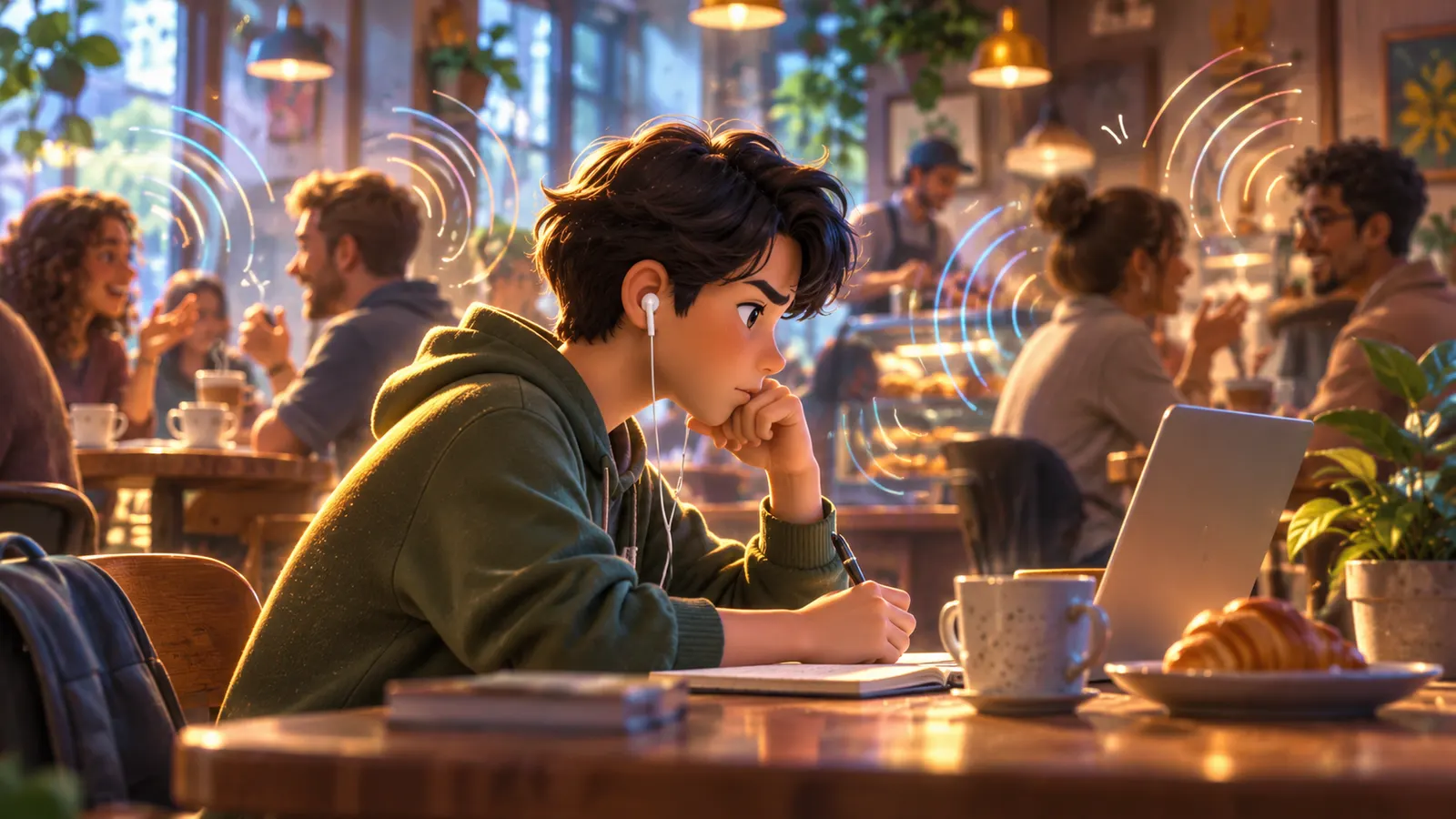
 読む前に予想してみよう!
静かな場所で英語が聞き取れる人なら、騒がしい場所でも同じくらい聞き取れる
外国語の聞き取りは雑音や反響に特に弱く、静かな場所での実力より大きく下がることがわかっている。
 研究カード(どんな研究?)
- 対象
- 日本語話者と英語話者など
- 規模
- 各10人〜数十人規模の実験+レビュー
- 研究の種類
- 知覚実験・総説
- 確かさ
- ★★★★☆
静かな場所では母語話者とあまり差がなくても、雑音や反響があると外国語の聞き取りは一気に落ちる。日本人と米国人の比較実験でも、雑音下で差が大きく開いた。
ひとことで言うと外国語は「うるさい場所」で一気に聞き取りにくくなる。それはふつうのこと!
英語のリスニング教材ならけっこう聞き取れる。でも、駅のアナウンスや、ザワザワしたカフェでの会話になると、急に何も入ってこない……。
「自分の耳が悪いのかな」と落ち込む必要はありません。研究によると、外国語の聞き取りは雑音にとても弱いのが普通なのです。
01静かなときは「小さな差」、うるさいと「大きな差」
つまり、静かな教室で測った「リスニング力」は、現実の騒がしい場面での実力より高めに出ている可能性があるということです。
02流暢でも、英語を遅く始めた人は雑音に弱い
メイヨーらの1997年の研究は、さらに驚きの結果を示しました。
スペイン語を母語とし、英語をとても流暢に話す人たちを、英語を6歳より前に身につけたグループと、14歳より後に身につけたグループに分けて、雑音の中での聞き取りを比べたのです。
すると、遅く英語を学んだグループは、英語母語話者や早く学んだグループに比べて、雑音に弱かった。さらに、文脈から単語を推測して聞き取る「文脈の助け」も、遅く学んだグループはあまり活用できていませんでした。
英語を遅く学んだ人は、流暢に話せても、雑音の中では「母語並み」とはいかない。これは学習者にとって、ある意味で励まされる結果でもあります。

03なぜ外国語は雑音に弱いのか
ガルシア・レクンベリらの2010年のレビューは、この現象を幅広く整理しています。理由は大きく2つあります。
① 音そのものの手がかりが少ない母語話者は、ある子音を聞き分けるのに複数の手がかりを使い分けています。学習者は手がかりの使い方が限られているため、雑音で一部が消えるとすぐに判断できなくなるのです。
② 文脈で「穴埋め」する力が弱い母語話者は、聞き逃した音を単語の知識や文脈、文法から自動的に補っています。学習者はこの「穴埋め」に使える知識や処理の速さが足りないため、雑音の影響をもろに受けます。
逆に言えば、語彙や表現の知識が増えるほど、雑音の中でも補える部分が増えると考えられます。
04まとめ
騒がしい場所で英語が聞き取れなくなるのは、あなたの耳が悪いからではなく、外国語の聞き取りの宿命のようなものです。
雑音に強くなるカギは、耳を鍛えることに加えて、欠けた音を補える語彙と定番表現を増やすこと。そして本番では、遠慮なく静かな席を選びましょう。
この研究を英語で読もう原田英語の English CornerMany learners can follow English in a quiet classroom but struggle at a noisy station or cafe. 音声
音声 4択クイズ9問A2・B1・B2タップして開く
原田英語の English Corner
この研究を英語で読もう
Do you understand English well in class but not in a busy cafe? This is normal. In a 1990 study, Japanese and American people listened to English sounds. In a quiet room, the difference between the two groups was small.
But with noise or echo, the Japanese group did much worse. Native speakers can guess missing sounds from the words around them. Learners cannot do this so easily. Learning common phrases can help you.
74 words ・ CEFR A2
和訳を見る
授業では英語がよくわかるのに、混んだカフェではわからない、ということはありませんか。それはふつうのことです。1990年のある研究で、日本人とアメリカ人が英語の音を聞きました。静かな部屋では、2つのグループの差は小さいものでした。
しかし雑音や反響があると、日本人のグループの成績はずっと悪くなりました。母語話者は、聞こえなかった音を周りの言葉から推測できます。学習者はそれをそれほど簡単にはできません。よく使うフレーズを覚えることが助けになります。
4択リーディングクイズ
Q1. What is the passage mainly about?
雑音や反響があると英語の聞き取りが難しくなる理由がテーマなので B。
Q2. What happened in the quiet room?
In a quiet room, the difference between the two groups was small. とあるので C。
Q3. In this passage, "guess" means ...
聞こえなかった音を周りの言葉から「推測する」という意味なので A。
Many learners can follow English in a quiet classroom but struggle at a noisy station or cafe. Research shows this is a normal problem for second language listeners. In 1990, Takata and Nábělek tested ten Japanese and ten American listeners on English consonants in three conditions: quiet, with people talking in the background, and with echo like in a classroom.
In quiet conditions, the gap between the groups was fairly small, but in noise and echo, the Japanese listeners' scores dropped much more. A 1997 study found that even fluent speakers who had learned English after age 14 were weaker in noise and made less use of context. This suggests that native listeners fill in missing sounds with their knowledge, while learners have fewer tools to do so.
128 words ・ CEFR B1
和訳を見る
多くの学習者は、静かな教室では英語についていけても、騒がしい駅やカフェでは苦労します。研究によると、これは第二言語の聞き手にとってふつうの問題です。1990年、高田とナーベレクは日本人10人とアメリカ人10人を対象に、英語の子音の聞き取りを3つの条件でテストしました。静かな条件、背景で人が話している条件、そして教室のような反響がある条件です。
静かな条件ではグループ間の差はかなり小さかったのですが、雑音や反響の中では日本人の成績がはるかに大きく下がりました。1997年の研究では、14歳以降に英語を身につけた人は、流暢に話せる人でさえ雑音に弱く、文脈をあまり活用できていないことがわかりました。このことは、母語話者は聞き逃した音を知識で補っているのに対し、学習者にはそのための手段が少ないことを示唆しています。
4択リーディングクイズ
Q1. How many listeners took part in the 1990 study in total?
ten Japanese and ten American listeners とあるので合計20人。正解は D。
Q2. What did the 1997 study find about people who learned English after age 14?
even fluent speakers who had learned English after age 14 were weaker in noise and made less use of context とあるので B。
Q3. What can we infer about listening tests taken in quiet classrooms?
静かな条件では差が小さく、雑音下で大きく下がるので、静かな場で測った力は現実より高めに出る可能性がある。正解は A。
Learners who perform well on recorded listening tests are often dismayed to find that they understand little in a crowded cafe. Experimental evidence indicates that this is a typical feature of non-native perception rather than a personal weakness. Takata and Nábělek compared ten Japanese and ten American listeners identifying English consonants in quiet, in multi-talker babble and in classroom-like reverberation. The difference between the groups was relatively small in quiet but widened considerably under both adverse conditions.
Mayo and colleagues later showed that even highly fluent Spanish-English bilinguals who had acquired English after age 14 were more affected by noise than those who had learned it before age six, and they benefited less from contextual cues. A 2010 review by Garcia Lecumberri and colleagues offers two explanations: learners rely on a narrower range of acoustic cues, so losing some of them is more damaging, and they are less able to restore missing sounds using vocabulary, grammar and context. These studies involved small groups, and age of acquisition is entangled with years of experience. Even so, the findings imply that expanding knowledge of words and set phrases may improve listening in real-world conditions.
192 words ・ CEFR B2
和訳を見る
録音されたリスニングテストで好成績をとる学習者が、混雑したカフェではほとんど理解できないことに気づいてがっかりすることはよくあります。実験的な証拠は、これが個人の弱点ではなく、非母語話者の知覚に典型的な特徴であることを示しています。高田とナーベレクは、日本人10人とアメリカ人10人が英語の子音を識別する様子を、静かな条件、多人数の話し声の雑音の中、そして教室のような残響の中で比較しました。グループ間の差は静かな条件では比較的小さかったものの、2つの悪条件ではかなり広がりました。その後メイヨーらは、スペイン語と英語を非常に流暢に話すバイリンガルでも、14歳以降に英語を習得した人は6歳より前に習得した人より雑音の影響を受けやすく、文脈の手がかりから得る恩恵も小さいことを示しました。
ガルシア・レクンベリらによる2010年のレビューは2つの説明を挙げています。学習者はより狭い範囲の音響的手がかりに頼っているため、その一部を失うと打撃が大きいこと、そして語彙・文法・文脈を使って欠けた音を復元する力が弱いことです。これらの研究は小規模なグループを対象としており、習得年齢は経験年数と絡み合っています。それでも、これらの知見は、単語や決まり文句の知識を広げることで、現実の条件でのリスニングが向上するかもしれないことを示唆しています。
4択リーディングクイズ
Q1. What is the main argument of the passage?
this is a typical feature of non-native perception rather than a personal weakness が主張の中心なので C。
Q2. According to the 2010 review, why are learners more affected by noise?
rely on a narrower range of acoustic cues と less able to restore missing sounds の2点が挙げられているので A。
Q3. Which limitation of the research does the author mention?
These studies involved small groups, and age of acquisition is entangled with years of experience とあるので D。
重要単語
- background noiseB1名詞(句)周りの雑音Background noise makes listening tiring.
 in the background「背景で」。研究では multi-talker babble(多人数の話し声の雑音)という用語も使う。
 - reverberationC1名詞残響・反響Reverberation blurs consonant sounds. 動詞 reverberate。教室やホールで音が壁に反射して長く残る現象。echo より専門的な語。
- native listenerB2名詞(句)母語話者の聞き手Native listeners use context to fill gaps. 対になるのは non-native listener / L2 listener。L2 は second language(第二言語)の略で SLA 研究の基本語。
- contextB1名詞文脈Context helps you guess missing words. 形容詞 contextual。in this context「この文脈では」。英単語の意味推測でも入試頻出。
- degradeC1動詞劣化させるNoise degrades the speech signal. de-(下へ)+ grade(段階)。音声研究では degraded speech「劣化した音声」の形でよく出る。
- adverseC1形容詞不利な・悪いLearners struggle in adverse listening conditions. adverse conditions「悪条件」、adverse effects「副作用・悪影響」が定番。advert(広告)とは別語。
- fluentB2形容詞流暢なEven fluent speakers had trouble in noise. 名詞 fluency。be fluent in English「英語が流暢だ」。flu-(流れる)は fluid、influence と同語源。
 入試に出る順の単語帳を印刷する →
 全5561語の「科学英単語カード」で復習する →
 この話題を TED で聞く
同じテーマの TED・TED-Ed を、 TED HACK で。英語の見どころ・使える表現・学習ミッションつきの日本語ガイドです。(運営:原田英語)

このネタ、誰かに教えたくなった?
静かな部屋だとネイティブとそこまで差がないのに、ザワザワした場所だと日本人の英語の聞き取りは大きく落ちたらしい。カフェで英語が急に聞こえなくなるのは、耳が悪いせいじゃなかった。
押すと「マジかリスト」に保存されます
 出典・参考文献(3件)タップで表示
- Takata & Nábělek (1990) English consonant recognition in noise and in reverberation by Japanese and American listeners. The Journal of the Acoustical Society of Americadoi.org
- Mayo, Florentine & Buus (1997) Age of second-language acquisition and perception of speech in noise. Journal of Speech, Language, and Hearing Researchdoi.org
- Garcia Lecumberri, Cooke & Cutler (2010) Non-native speech perception in adverse conditions: A review. Speech Communicationdoi.org

※本記事は上記の研究・公開資料をもとに、原田英語が独自の言葉で解説したものです。引用は著作権法第32条の範囲で行い、出典を明記しています。画像はすべてオリジナルのイメージです。研究結果には限界や個人差があります。誤りのご指摘は原田英語のお問い合わせフォームから。