

 脳と心理ホント
一度見た顔を忘れない「スーパーレコグナイザー」と、顔が覚えられない人。顔の記憶力は人で大違い
 2026.10.02
 English Corner(A2〜B2・4択クイズ)

 読む前に予想してみよう!
人の顔を覚えられないのは、たいてい注意力や努力が足りないせいだ
生まれつき顔の認識が苦手な「先天性相貌失認」があり、ドイツの調査では約2.5%とされた。脳の個性の一つ。
 研究カード(どんな研究?)
- 対象
- 一般の人・顔認識が極端な人
- 規模
- 4人〜689人
- 研究の種類
- 症例研究・疫学調査
- 確かさ
- ★★★☆☆
顔の覚えやすさは人によって大きく違う。ずば抜けて得意な「スーパーレコグナイザー」がいる一方、生まれつき顔が覚えにくい人も約2.5%いたというドイツの調査がある。
ひとことで言うと顔を覚えるのが得意な人も苦手な人もいる。それは脳の個性なんだ!
「あれ、この人どこかで会ったっけ?」
顔を覚えるのが得意な人もいれば、何度会っても覚えられない人もいます。これは単なる努力や性格の違いだと思われがちですが、研究によると顔の記憶力には、とても大きな個人差があるようです。
01顔は脳にとって"特別"
脳には、顔を見たときに特に強く反応する場所があります。1997年、アメリカの神経科学者カンウィッシャー(Kanwisher)さんらは、紡錘状回(ぼうすいじょうかい)の一部が、物や家の写真よりも顔に強く反応することを示し、「紡錘状回顔領域(FFA)」と名づけました。
私たちは毎日たくさんの顔を見分けていますが、それは脳の中の"顔の専門チーム"のおかげなのです。
02「顔の天才」スーパーレコグナイザー
スーパーレコグナイザーは、何年も前に一度会っただけの人や、髪型や年齢が変わった人にも気づくことがあると報告されています。研究チームは、彼らが顔認識で得意な度合いは、顔を見分けにくい人が苦手な度合いと同じくらい極端だ、と表現しています。
03警察にも「顔のプロ」がいる
この能力は実社会でも注目されています。イギリスのロンドン警視庁では、防犯カメラの映像から容疑者を見つけ出すスーパーレコグナイザーの専門チームが作られました。2016年には、こうした警察官たちの能力を調べた研究も発表されています。
04反対に、顔が覚えられない「相貌失認」
一方で、家族や友人の顔さえ見分けにくい人もいます。これを相貌失認(そうぼうしつにん)と呼びます。
脳卒中やけがで起きることもありますが、生まれつきの場合もあります。
生まれつきの相貌失認の人は、自分が顔を覚えにくいことに気づかないまま大人になることも多いといいます。髪型や声、歩き方、服装などで人を見分ける工夫をしているからです。
05まとめ
顔を覚える力は、人によって驚くほど違います。一度見た顔を忘れない人もいれば、家族の顔でさえ見分けにくい人もいる。
どちらも「脳の個性」。人の顔を覚えるのが苦手でも、それはあなたのせいではないのかもしれません。
この研究を英語で読もう原田英語の English CornerThe brain treats faces as special. 音声
音声 4択クイズ9問A2・B1・B2タップして開く
原田英語の English Corner
この研究を英語で読もう
Some people are very good at remembering faces. They can recognize a person they saw only once, years ago. Scientists call them super-recognizers. The London police even have a special team of them.
Other people find it very hard to tell faces apart, even the faces of their family. A German study found this in about 2.5 percent of young people. It is not about effort. Brains are just different.
70 words ・ CEFR A2
和訳を見る
顔を覚えるのがとても得意な人がいます。何年も前に一度だけ見た人に気づくことができるのです。科学者たちは彼らをスーパーレコグナイザーと呼んでいます。ロンドンの警察には、彼らの特別なチームまであります。
一方で、家族の顔でさえ見分けるのがとても難しい人もいます。ドイツの研究では、若者の約2.5%にこれが見られました。それは努力の問題ではありません。脳がただ違うだけなのです。
4択リーディングクイズ
Q1. What is the passage mainly about?
顔を覚えるのが得意な人と苦手な人がいる=顔の記憶力の個人差が話題なので C。
Q2. About what percent of young people in the German study found faces very hard to tell apart?
A German study found this in about 2.5 percent of young people. とあるので A。
Q3. In this passage, "tell faces apart" means ...
tell A apart は「Aを見分ける」。顔の違いがわかる、という意味なので D。
The brain treats faces as special. In 1997, researchers showed that part of a brain area called the fusiform gyrus responds more strongly to faces than to objects. But people differ greatly in face memory. In 2009, a team at Harvard tested four people who said they were extremely good at remembering faces.
All of them scored above the normal range, so the researchers named them "super-recognizers." At the other end are people with prosopagnosia, or face blindness, who struggle to recognize even family members. A 2006 German study of 689 students found that 17, or about 2.5 percent, had been born with it. Many do not realize it, because they identify people by voice or hairstyle.
117 words ・ CEFR B1
和訳を見る
脳は顔を特別なものとして扱っています。1997年、研究者たちは、紡錘状回と呼ばれる脳の領域の一部が、物よりも顔に強く反応することを示しました。ただ、顔の記憶力は人によって大きく違います。2009年、ハーバード大学のチームは、自分は顔を覚えるのが非常に得意だと言う4人を調べました。
4人とも通常の範囲を超える得点を出したため、研究者たちは彼らを「スーパーレコグナイザー」と名づけました。その反対側にいるのが相貌失認(顔が見分けにくい状態)の人で、家族でさえ見分けるのに苦労します。689人の学生を調べた2006年のドイツの研究では、17人、つまり約2.5%が生まれつきこの状態でした。声や髪型で人を見分けているため、多くの人は自分がそうだと気づいていません。
4択リーディングクイズ
Q1. How many people were tested in the 2009 Harvard study?
a team at Harvard tested four people とあるので A。17と689はドイツの研究の数字。
Q2. What did the 1997 research show?
part of a brain area called the fusiform gyrus responds more strongly to faces than to objects とあるので C。
Q3. Why do many people with face blindness not realize their condition?
they identify people by voice or hairstyle とあり、顔以外の手がかりで補っているので D。
Faces occupy a privileged place in the brain. In 1997, Kanwisher and colleagues identified a region of the fusiform gyrus that responds more strongly to faces than to objects or houses, naming it the fusiform face area. Even so, the ability to recognize faces varies enormously between individuals. In 2009, a Harvard team examined four people who claimed exceptional face memory; on two tests, all four scored beyond the normal range.
The researchers coined the term "super-recognizers" and argued that these people are as extreme in their skill as people with face blindness are in their difficulty. Such individuals reportedly recognize people seen once years earlier, even after changes in hairstyle or age, and London's Metropolitan Police formed a dedicated unit of them to identify suspects in camera footage.
At the opposite end lies prosopagnosia. Although it can result from strokes or injuries, it can also be congenital: a 2006 German study of 689 students reported that 17, about 2.5 percent, were affected, and all 14 whose families were tested had relatives with similar difficulties. However, that estimate relied on questionnaire screening and interviews, and because criteria differ across studies, prevalence figures vary.
193 words ・ CEFR B2
和訳を見る
顔は脳の中で特別な地位を占めています。1997年、カンウィッシャーらは、紡錘状回の中で物や家よりも顔に強く反応する領域を特定し、紡錘状回顔領域と名づけました。しかし、顔を見分ける能力は個人によって非常に大きく異なります。2009年、ハーバード大学のチームは、顔の記憶力が並外れていると主張する4人を調べました。2種類のテストで、4人全員が通常の範囲を超える得点を出しました。
研究者たちは「スーパーレコグナイザー」という用語を作り、彼らの得意さの度合いは、相貌失認の人の苦手さの度合いと同じくらい極端だと論じました。こうした人々は、何年も前に一度見ただけの人を、髪型や年齢が変わっていても見分けると報告されており、ロンドン警視庁は防犯カメラの映像から容疑者を特定するために彼らの専門部隊を作りました。
その反対側にあるのが相貌失認です。脳卒中やけがで起こることもありますが、生まれつきの場合もあります。689人の学生を対象にした2006年のドイツの研究では、17人、約2.5%がそれに当てはまると報告され、家族の検査を受けた14人全員に、同じような困難を持つ親族がいました。ただし、この推定は質問紙によるスクリーニングと面接に基づいており、研究によって基準が異なるため、有病率の数値にはばらつきがあります。
4択リーディングクイズ
Q1. What is the main point of the passage?
スーパーレコグナイザーから相貌失認まで、顔認識能力に大きな個人差がある、が主旨なので A。
Q2. What did the 2006 German study suggest about congenital prosopagnosia?
家族の検査を受けた14人全員に似た困難を持つ親族がいたので、家族に受け継がれやすいと読み取れる。正解は C。
Q3. Why should the prevalence figure be treated with some caution?
relied on questionnaire screening and interviews, and because criteria differ across studies, prevalence figures vary とあるので B。
重要単語
- recognizeB1動詞(見て)それとわかる、認識するI didn't recognize her with short hair.
 「(事実を)認める」の意味もある。名詞 recognition。face recognition「顔認識」。
 - prosopagnosiaC1名詞相貌失認(顔を見分けにくい状態)People with prosopagnosia often recognize friends by their voices. ギリシャ語 prosopon(顔)+agnosia(認識できないこと)。一般向けには face blindness と言い換えられる。
- face blindnessB2名詞(句)相貌失認(くだけた言い方)Face blindness can make parties stressful. color blindness(色覚異常)と同じ作りの言葉。
- inheritB2動詞遺伝で受け継ぐSome traits are inherited from parents. 「財産を相続する」の意味も。名詞 inheritance。形容詞 hereditary(遺伝性の)も併せて。
- individual differenceB2名詞(句)個人差There are large individual differences in memory. 心理学の論文で頻出の複数形 individual differences。vary from person to person も同じ意味。
- congenitalC1形容詞先天性の、生まれつきのSome people have congenital face blindness. con-(共に)+genital(生まれ)。acquired(後天性の)と対で覚える。
 入試に出る順の単語帳を印刷する →
 全5561語の「科学英単語カード」で復習する →
 4コマでわかる
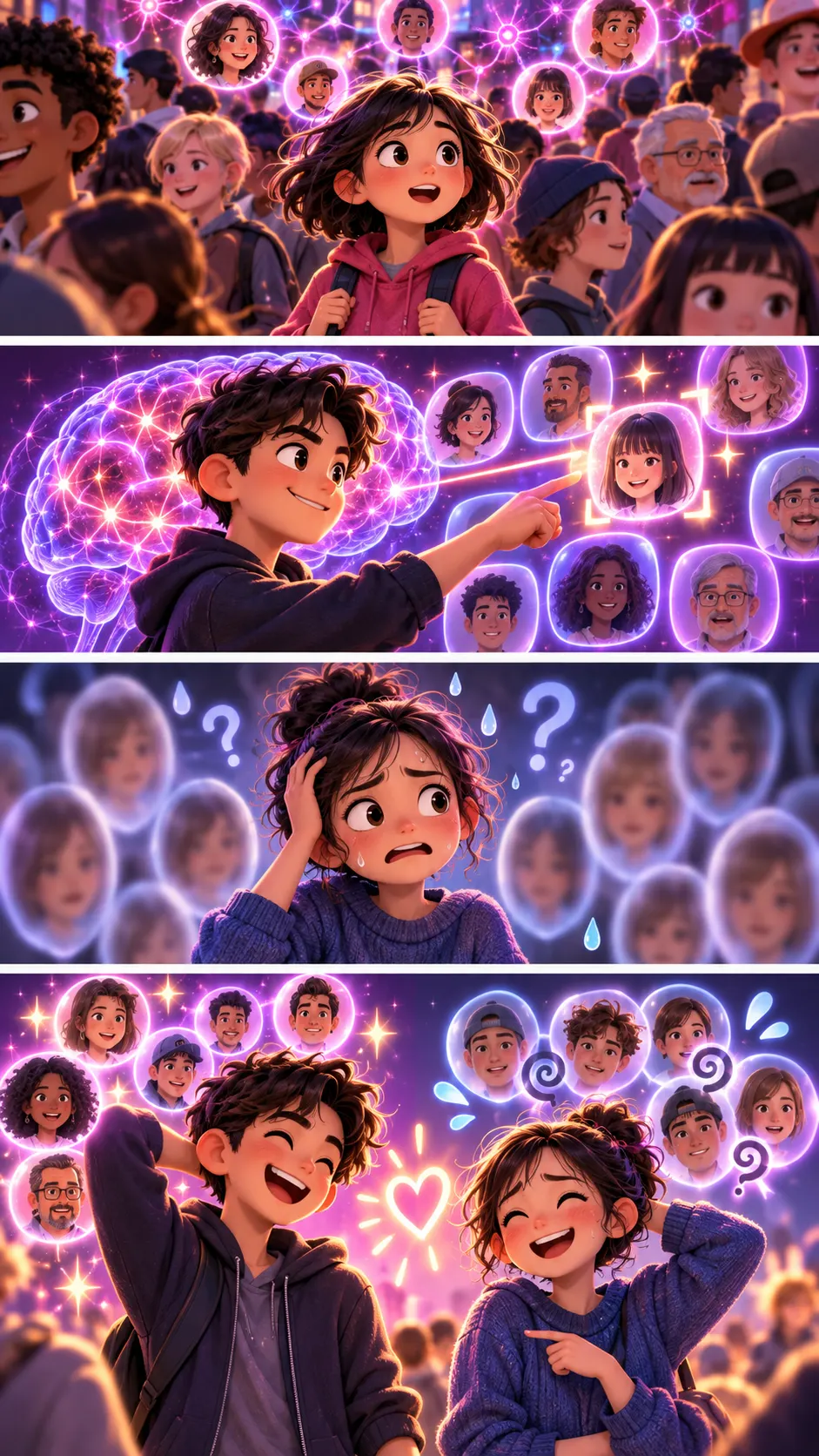
このネタ、誰かに教えたくなった?
何年も前にちらっと見た人の顔を覚えている「スーパーレコグナイザー」がいる。ロンドン警察には専門チームまで作られた。逆に、家族の顔さえ見分けにくい「相貌失認」の人も、ドイツの調査では約2.5%いたらしい。
押すと「マジかリスト」に保存されます
 出典・参考文献(5件)タップで表示
- Russell, Duchaine & Nakayama (2009) Super-recognizers: people with extraordinary face recognition ability, Psychonomic Bulletin & Reviewdoi.org
- Duchaine & Nakayama (2006) The Cambridge Face Memory Test, Neuropsychologiadoi.org
- Kennerknecht et al. (2006) First report of prevalence of non-syndromic hereditary prosopagnosia (HPA), American Journal of Medical Genetics Part Adoi.org
- Davis et al. (2016) Investigating predictors of superior face recognition ability in police super-recognisers, Applied Cognitive Psychologydoi.org
- Kanwisher, McDermott & Chun (1997) The fusiform face area: a module in human extrastriate cortex specialized for face perception, Journal of Neurosciencedoi.org

※本記事は上記の研究・公開資料をもとに、原田英語が独自の言葉で解説したものです。引用は著作権法第32条の範囲で行い、出典を明記しています。画像はすべてオリジナルのイメージです。研究結果には限界や個人差があります。誤りのご指摘は原田英語のお問い合わせフォームから。
 これも「マジか!?」
 脳・心理
脳・心理
コンセントが"びっくり顔"に見える。モノの顔に、脳は最初「本物の顔」に近い反応をしていた

 脳・心理
脳・心理
絶対音感は大人になってからでも身につく? 中国や日本の音大生に多い理由と、大人の訓練実験
 脳・心理
脳・心理
脳そのものは痛みを感じない。手術中に患者が"起きたまま"おしゃべりできる理由

 脳・心理
脳・心理
赤ちゃんの頃の記憶がないのは、「記憶を作れない」からではないかもしれない


 脳・心理
脳・心理
【関学の入試に出た】地平線の月が大きく見えるのは「目の錯覚」。実は大きさは同じだった
 脳・心理
脳・心理