

 脳と心理ビミョー
ゴムの手を"自分の手"だと感じてしまう「ラバーハンド錯覚」。その後わかった意外な落とし穴
 2026.10.02
 English Corner(A2〜B2・4択クイズ)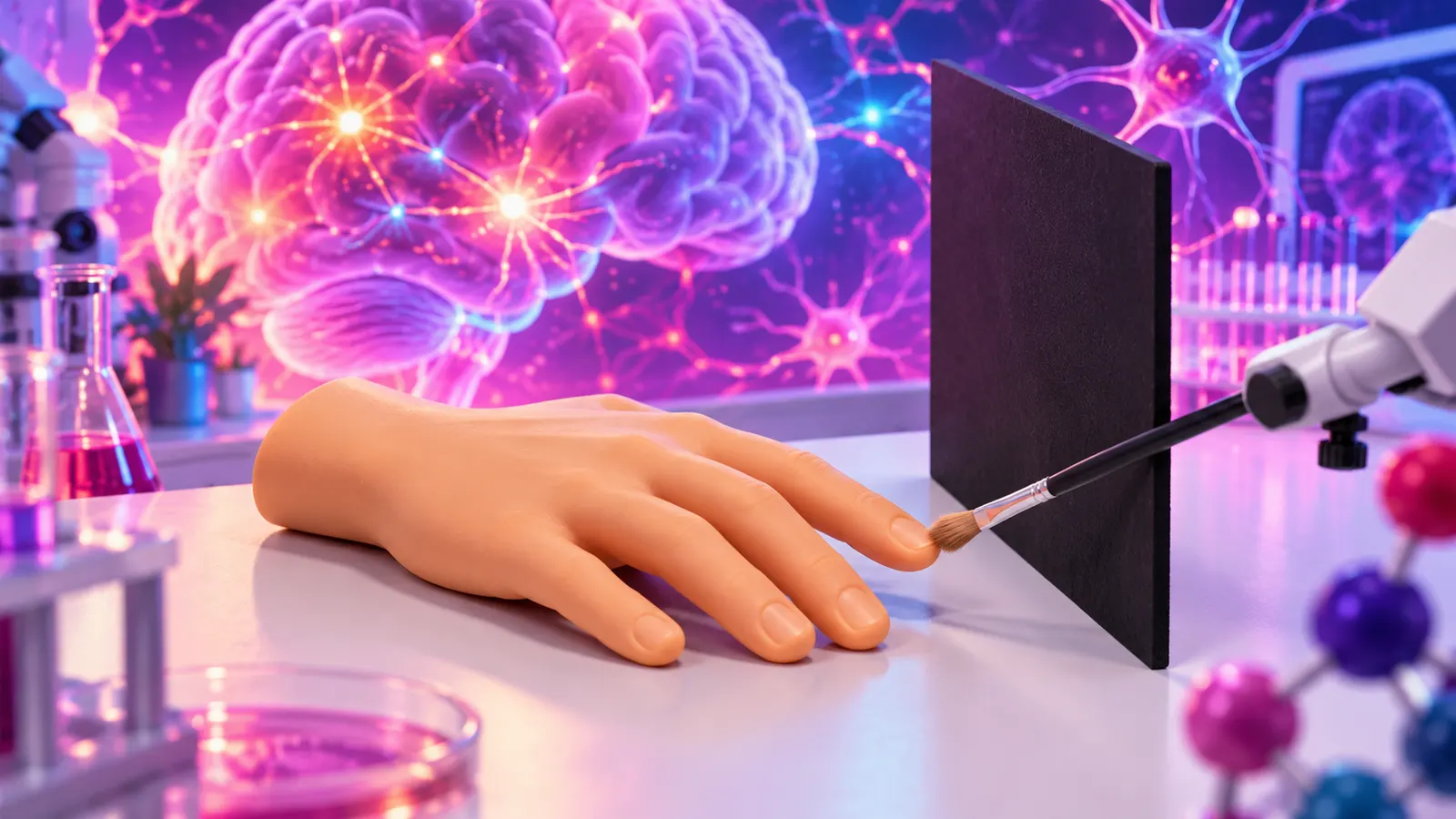
 読む前に予想してみよう!
ラバーハンド錯覚では、本物の手の皮膚温度が必ず下がる
2008年に報告されたが、その後の追試(合計167人)では、はっきりした冷えは確認できなかった。
 研究カード(どんな研究?)
- 対象
- 健康な成人
- 規模
- 10人〜約900人(複数研究の合計)
- 研究の種類
- 実験研究・追試
- 確かさ
- ★★★☆☆
隠した自分の手とゴムの手を同時になでると、ゴムの手が自分の手のように感じられる。ただ「本物の手が冷える」は再現されず、暗示の影響も指摘された。
ひとことで言うとゴムの手が自分の手みたいに感じられる。脳ってだまされやすい!
もくじ
「これは自分の手だ」——ふだん、そう考えることすらありませんよね。自分の手が自分のものだなんて、当たり前すぎます。
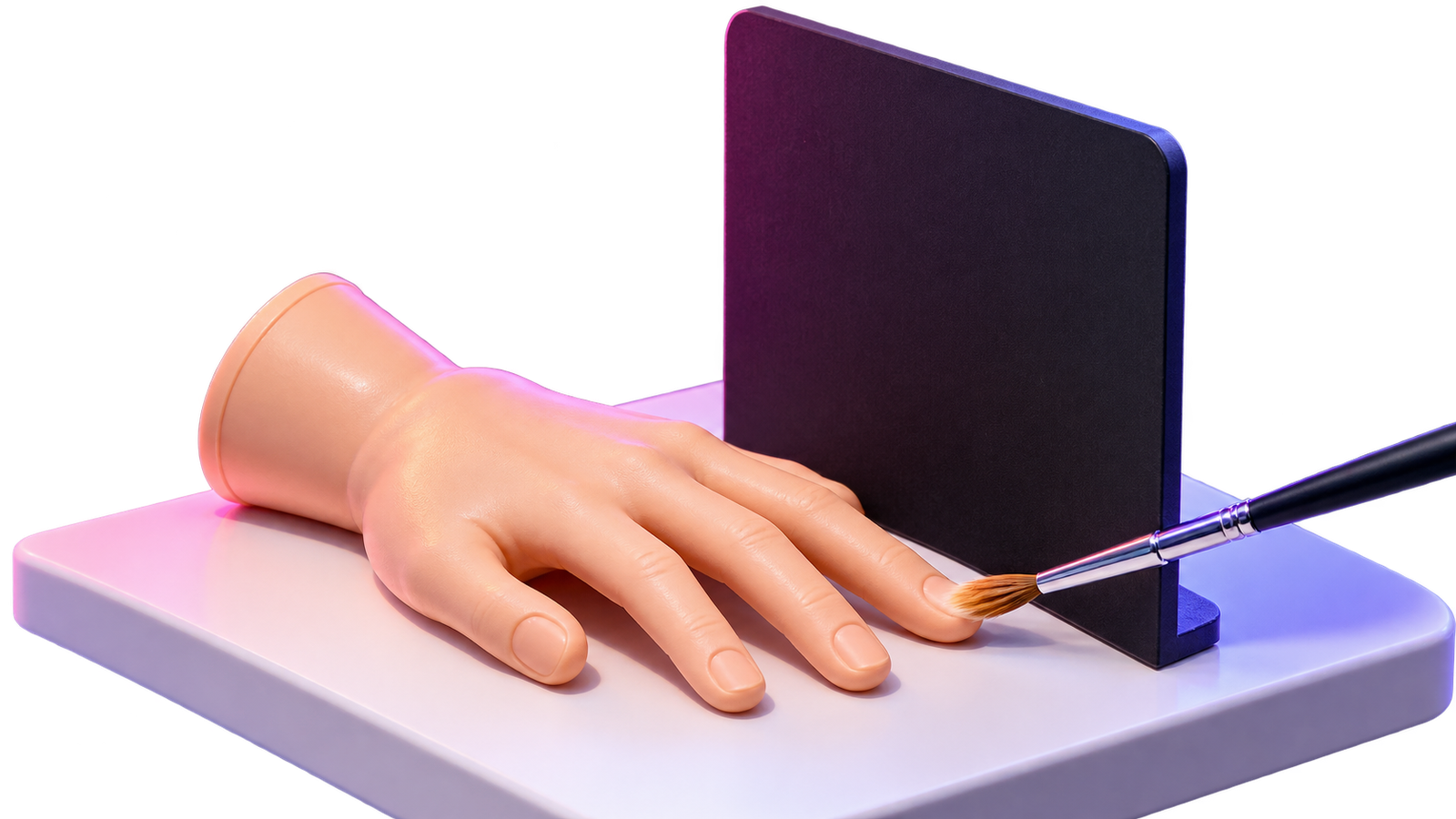
ところが、ある簡単な実験をすると、目の前のゴムの手を「自分の手」だと感じてしまう人がたくさんいます。これがラバーハンド錯覚です。
01やり方は、筆2本とゴムの手だけ
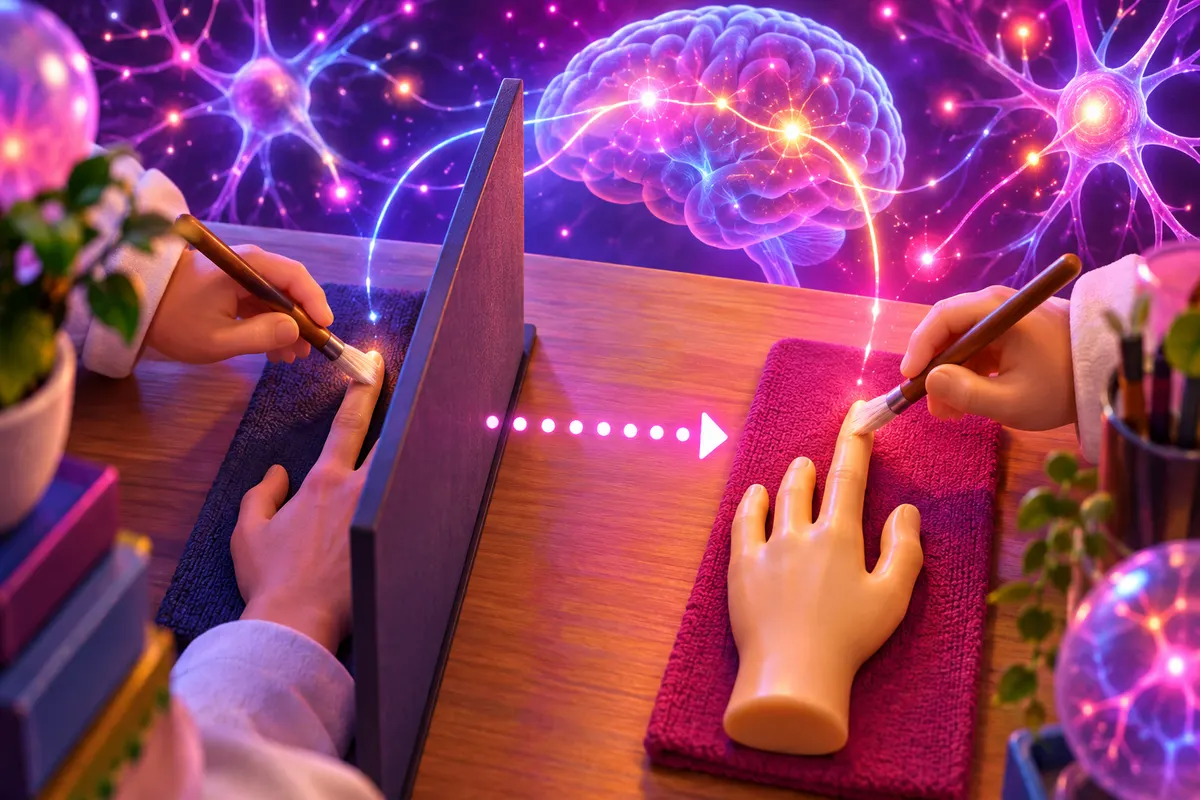
しばらくすると、多くの参加者が「筆の感触が、ゴムの手から来ているように感じる」と答えました。さらに、目を閉じて自分の手の位置を指してもらうと、ゴムの手のほうへズレた位置を指したのです。
なでるタイミングをわざとずらすと、この錯覚はほとんど起きませんでした。
02脳は「見たもの」と「感じたもの」を合わせて判断する
なぜこんなことが起きるのでしょう?
脳は、目からの情報(ゴムの手が筆でなでられている)と、皮膚からの情報(自分の手がなでられている)が、ぴったり同じタイミングで届くと、「この2つは同じ出来事だ」と判断します。その結果、「なでられているあの手が、自分の手だ」という結論を出してしまうのです。
2004年の脳の画像研究では、錯覚が起きているとき、運動前野という、複数の感覚をまとめる領域の活動が、手の"自分のもの感"の強さと対応していました。
03どんでん返し①:「本物の手が冷える」は再現されなかった
2008年、さらに驚きの報告がありました。錯覚が起きているとき、本物の手の皮膚温度が下がるというのです。「ゴムの手を自分のものと感じると、本物の手が"自分のもの"でなくなりかける」と解釈され、大きな話題になりました。
ところが、オランダの研究チームが5回の追試、合計167人で確かめたところ、本物の手がはっきり冷えるという結果は得られませんでした(2017年)。別の追試(2013年)でも、冷えは錯覚の有無とは関係なく、人が筆でなでるかどうかなどの条件で変わっていたと報告されています。
04どんでん返し②:「暗示」にかかりやすい人ほど強く感じた
2020年、イギリスの研究チームは、数百人規模の3つの研究で、意外な関係を見つけました。催眠の暗示にかかりやすい人ほど、ラバーハンド錯覚を強く感じるというのです。
研究チームは、参加者が実験の様子から「こう感じるはずだ」と予想し、その期待に合う体験を無意識に作り出している部分があるのでは、と指摘しています。
05まとめ
ゴムの手が自分の手のように感じられるラバーハンド錯覚は、「自分の体」という感覚さえ、脳が情報を組み合わせて作っていることを教えてくれます。
ただ、有名な効果の一部は再現されず、期待や暗示の影響も指摘されています。「自分の体」の不思議は、まだまだ研究の途中です。
この研究を英語で読もう原田英語の English CornerIn 1998, two American researchers showed how easily the brain can be fooled about its own body. 音声
音声 4択クイズ9問A2・B1・B2タップして開く
原田英語の English Corner
この研究を英語で読もう
Try this strange test. Your real hand is hidden behind a board. A rubber hand is in front of you. Someone strokes both hands with brushes at the same time.
After a while, many people feel that the rubber hand is their own hand. If the brushing is not at the same time, the feeling almost disappears. Our brain decides what our body is by mixing what we see and feel.
71 words ・ CEFR A2
和訳を見る
この不思議なテストを試してみましょう。本物の手は板の後ろに隠されています。目の前にはゴムの手があります。誰かが筆で両方の手を同時になでます。
しばらくすると、多くの人はゴムの手が自分の手だと感じます。なでるタイミングがずれていると、その感覚はほとんど消えます。私たちの脳は、見ているものと感じているものを組み合わせて、何が自分の体なのかを決めているのです。
4択リーディングクイズ
Q1. What is the passage mainly about?
ゴムの手を自分の手のように感じる錯覚の実験が話題なので B。
Q2. When does the feeling almost disappear?
If the brushing is not at the same time, the feeling almost disappears. とあるので D。
Q3. In this passage, "strokes" means ...
stroke は動詞で「なでる」。筆で手の上をそっと動かす動作なので A。
In 1998, two American researchers showed how easily the brain can be fooled about its own body. Each participant's real hand was hidden behind a screen while a rubber hand lay in front of them. The researchers then stroked both hands with brushes at exactly the same time.
Many participants said the touch seemed to come from the rubber hand, and when asked to point to their real hand with their eyes closed, they pointed toward the rubber one. When the strokes were out of time, the illusion hardly occurred. The brain seems to combine sight and touch, and when they match perfectly, it decides that the hand being touched belongs to the body.
114 words ・ CEFR B1
和訳を見る
1998年、2人のアメリカ人研究者は、脳が自分の体についていかに簡単にだまされるかを示しました。参加者の本物の手はついたての後ろに隠され、目の前にはゴムの手が置かれました。そして研究者は、2本の筆で両方の手をまったく同時になでました。
多くの参加者は、触られている感覚がゴムの手から来ているように感じると言い、目を閉じて本物の手を指さすよう頼まれると、ゴムの手のほうを指さしました。なでるタイミングがずれていると、錯覚はほとんど起きませんでした。脳は視覚と触覚を組み合わせているようで、それらが完全に一致すると、触られている手は自分の体の一部だと判断するのです。
4択リーディングクイズ
Q1. What happened when participants pointed to their real hand with their eyes closed?
they pointed toward the rubber one とあるので C。
Q2. What is necessary for the illusion to occur?
タイミングがずれると錯覚はほとんど起きない、とあるので同時になでることが必要。正解は A。
Q3. According to the passage, how does the brain decide which hand belongs to the body?
The brain seems to combine sight and touch とあるので B。
The rubber hand illusion, first reported in 1998, shows that even the sense that our body belongs to us is constructed by the brain. With one real hand hidden behind a screen and a rubber hand placed in view, both are stroked with brushes in synchrony. Many participants soon feel the touch arising from the rubber hand, and when they point to their hidden hand, their pointing drifts toward the fake one; asynchronous stroking largely abolishes the effect. A 2004 imaging study found that activity in the premotor cortex, which integrates signals from multiple senses, tracked the strength of the feeling of ownership.
Some later claims, however, have not held up. A 2008 report that the real hand's skin temperature drops during the illusion attracted wide attention, yet a Dutch team running five replications with 167 participants found no consistent cooling, and another study linked temperature changes to whether a person did the brushing. In 2020, a British team reported across three large studies that people who respond strongly to hypnotic suggestion also experience the illusion more strongly, so expectations may shape what participants report. Supporters of the multisensory account have disputed this interpretation.
194 words ・ CEFR B2
和訳を見る
1998年に初めて報告されたラバーハンド錯覚は、自分の体が自分のものだという感覚でさえ脳が組み立てていることを示しています。本物の手の片方をついたての後ろに隠し、ゴムの手を見える位置に置いて、両方を筆で同期させてなでます。多くの参加者はまもなく、触られている感覚がゴムの手から生じていると感じるようになり、隠れた自分の手を指さすと、偽物の手のほうへずれます。タイミングをずらしてなでると、この効果はほとんど消えます。2004年の画像研究では、複数の感覚からの信号を統合する運動前野の活動が、所有感の強さと連動していることがわかりました。
しかし、その後の主張のいくつかは持ちこたえられませんでした。錯覚の間に本物の手の皮膚温度が下がるという2008年の報告は大きな注目を集めましたが、5回の追試を合計167人で行ったオランダのチームは一貫した冷えを見つけられず、別の研究では、温度の変化は人がなでたかどうかと結びついていました。さらに2020年、イギリスのチームは3つの大規模研究を通じて、催眠の暗示によく反応する人ほど錯覚を強く感じると報告し、期待が参加者の報告を形づくっている可能性を示しました。多感覚統合説の支持者は、この解釈に反論しています。
4択リーディングクイズ
Q1. What does the passage mainly suggest?
所有感は脳が組み立てていることを示しつつ、手の冷えなど一部の主張は疑わしい、という流れなので A。
Q2. What did the Dutch replications find?
five replications with 167 participants found no consistent cooling とあるので B。
Q3. What is the significance of the 2020 British finding?
暗示にかかりやすい人ほど錯覚が強い=期待が報告を形づくっている可能性、とあるので D。
重要単語
- ownershipB2名詞所有感(自分のものだという感覚)The illusion changed his sense of ownership.
 一般には「所有権」。sense of ownership は「当事者意識」の意味でビジネス英語でも使う。
 - strokeB2動詞なでるShe gently stroked the cat's back. 名詞では「脳卒中」「(水泳・テニスの)ひとかき・一打」。多義語として頻出。
- synchronousC1形容詞同時の、同期したSynchronous touch created the illusion. syn-(同じ)+chron(時)。反対は asynchronous。in synchrony「同期して」。
- replicateC1動詞再現する、追試で確かめるOther labs could not replicate the result. 名詞 replication「追試」。failed to replicate「再現できなかった」は科学ニュースの定番表現。
- suggestionB1名詞暗示Suggestion can change what we feel. ふつうは「提案」。心理学では「暗示」。形容詞 suggestible「暗示にかかりやすい」。
- illusionB2名詞錯覚、幻想The rubber hand illusion fooled most participants. optical illusion「目の錯覚」。allusion(言及)と発音・綴りが似ているので注意。
 入試に出る順の単語帳を印刷する →
 全5561語の「科学英単語カード」で復習する →
 この話題を TED で聞く
同じテーマの TED・TED-Ed を、 TED HACK で。英語の見どころ・使える表現・学習ミッションつきの日本語ガイドです。(運営:原田英語)

 4コマでわかる
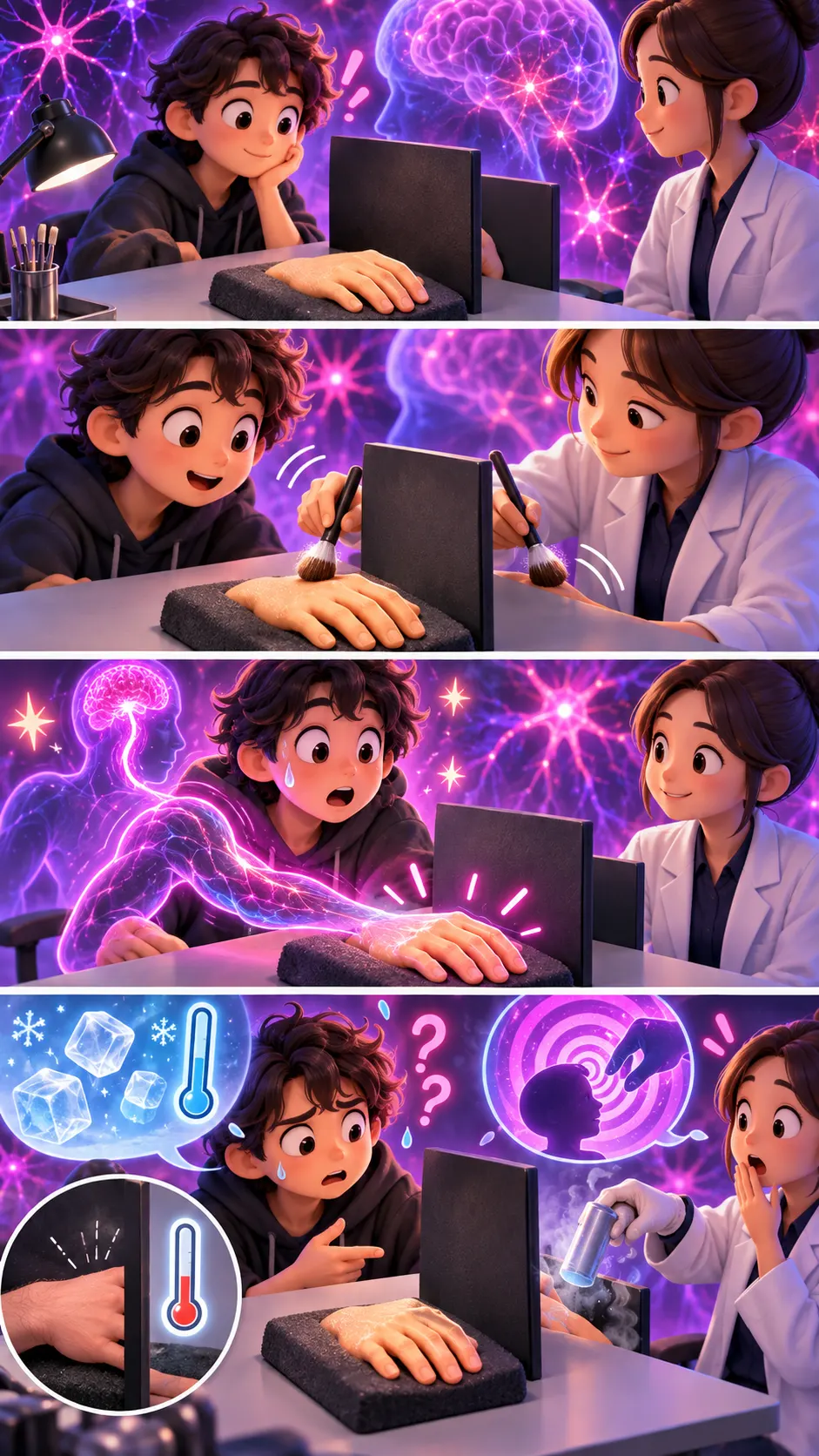
このネタ、誰かに教えたくなった?
隠した自分の手と目の前のゴムの手を同時に筆でなでると、ゴムの手が「自分の手」に感じてくる有名な錯覚。でもその後「本物の手が冷える」は再現されず、「暗示にかかりやすい人ほど強く感じる」という研究も出たらしい。
押すと「マジかリスト」に保存されます
 出典・参考文献(6件)タップで表示
- Botvinick & Cohen (1998) Rubber hands 'feel' touch that eyes see, Naturedoi.org
- Ehrsson, Spence & Passingham (2004) That's my hand! Activity in premotor cortex reflects feeling of ownership of a limb, Sciencedoi.org
- Moseley et al. (2008) Psychologically induced cooling of a specific body part caused by the illusory ownership of an artificial counterpart, PNASdoi.org
- de Haan et al. (2017) No consistent cooling of the real hand in the rubber hand illusion, Acta Psychologicadoi.org
- Rohde et al. (2013) The human touch: skin temperature during the rubber hand illusion in manual and automated stroking procedures, PLoS ONEdoi.org
- Lush et al. (2020) Trait phenomenological control predicts experience of mirror synaesthesia and the rubber hand illusion, Nature Communicationsdoi.org

※本記事は上記の研究・公開資料をもとに、原田英語が独自の言葉で解説したものです。引用は著作権法第32条の範囲で行い、出典を明記しています。画像はすべてオリジナルのイメージです。研究結果には限界や個人差があります。誤りのご指摘は原田英語のお問い合わせフォームから。
 これも「マジか!?」
 脳・心理
脳・心理
「青と黒」か「白と金」か。世界を二分したドレスの写真、脳は"照明"を推理していた
 脳・心理
脳・心理
コンセントが"びっくり顔"に見える。モノの顔に、脳は最初「本物の顔」に近い反応をしていた

 脳・心理
脳・心理
デジャヴは「予知」じゃなかった。脳の"記憶チェック機能"が見せる不思議な錯覚
 脳・心理
脳・心理
「借」をじっと見てたら字に見えなくなった…ゲシュタルト崩壊、脳で何が起きてる?

 脳・心理
脳・心理
絶対音感は大人になってからでも身につく? 中国や日本の音大生に多い理由と、大人の訓練実験
 脳・心理
脳・心理