

 脳と心理ホント
「何も見えない」と言う男性が、障害物だらけの廊下をよけて歩いた。盲視(ブラインドサイト)の不思議
 2026.10.02
 English Corner(A2〜B2・4択クイズ)
 読む前に予想してみよう!
脳の一次視覚野を失った人は、目の前の物にまったく反応できない
「見えない」と答えながら、物の位置や動き、表情などを偶然以上に当てられる「盲視」が報告されている。
 研究カード(どんな研究?)
- 対象
- 視覚野を損傷した患者
- 規模
- 1人〜数人の症例
- 研究の種類
- 症例研究
- 確かさ
- ★★☆☆☆
脳の視覚野が壊れて「見えない」はずの人が、障害物をよけたり、表情を当てたりできることがある。見えている自覚がないまま脳が見ている「盲視」。
ひとことで言うと「見えない」のに、脳のどこかでちゃんと見えていることがあるんだ!
「見る」とは、どういうことでしょう?
ふつうは、「見えた」と感じることと、見たものに反応できることは、セットだと思っていますよね。ところが、「何も見えない」と本気で言いながら、見えているかのように行動する人がいます。
この不思議な現象は、盲視(もうし)/ブラインドサイトと呼ばれています。
01「当てずっぽうです」と言いながら、正解する
目から入った光の情報は、まず脳の後ろ側にある一次視覚野(V1)に届き、そこから処理が進みます。V1が壊れると、その部分に対応する視野が見えなくなります。
ワイスクランツさんらは、この現象を「盲視」と名づけました。
02障害物の廊下を、杖なしで歩き切った
さらに驚くべき例が、2008年に報告されています。
TNさんは、本人いわく何も見えていないのに、障害物を一つずつ避けながら、ぶつからずに廊下の端までたどり着きました。その様子は映像にも記録され、研究者たちを驚かせました。
同じTNさんは、2005年の研究で、怒った顔・うれしい顔などの表情を偶然より高い確率で言い当て、そのとき感情に関わる扁桃体が反応していたことも報告されています。
03脳には「見る」ための裏道があった
なぜこんなことができるのでしょう?
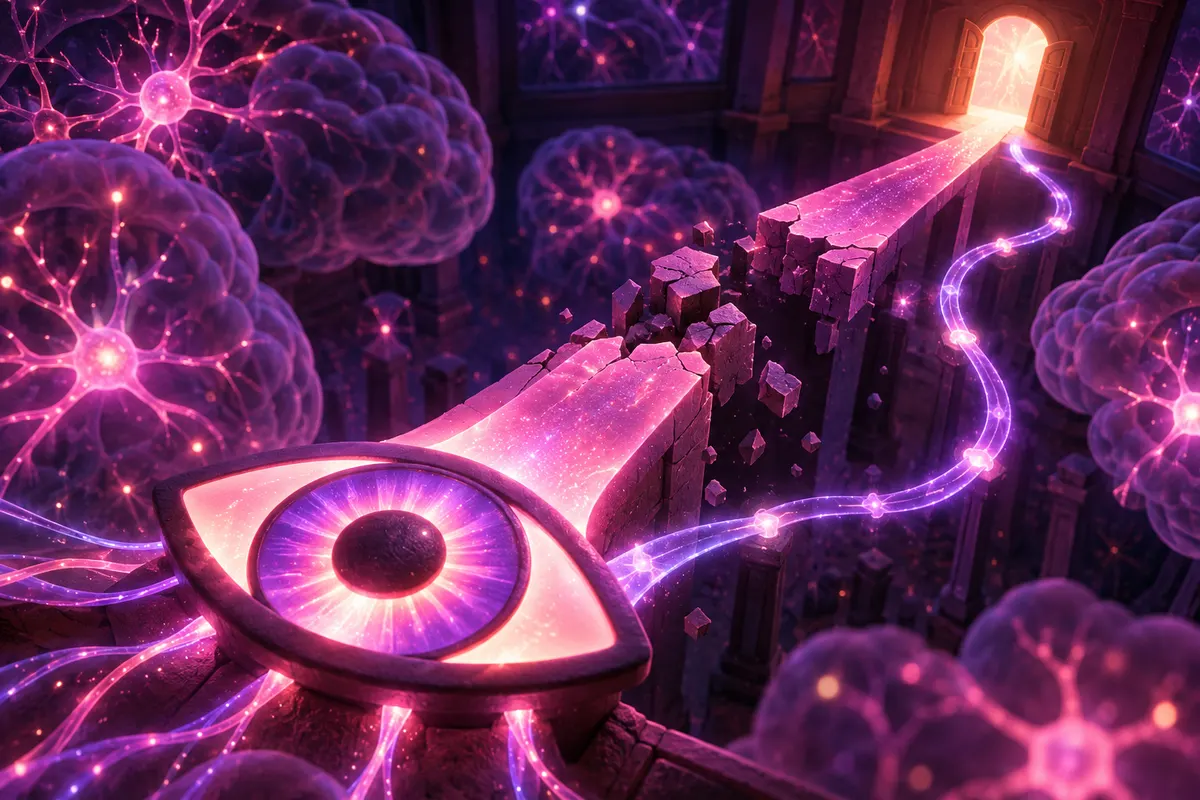
目からの情報は、実はV1だけに行くわけではありません。脳の深いところにある上丘(じょうきゅう)や視床などを通って、V1を経由せずにほかの領域へ届く"裏道"がいくつかあると考えられています。
この裏道は、物の位置や動き、表情のような大まかな情報を伝えられても、「見えている」という自覚を生み出すには足りないのかもしれません。
04どんでん返し:本当に「まったく見えていない」?
ただし、盲視の研究には注意点も多くあります。2010年の総説では、盲視研究には落とし穴(アーティファクト)が多いと指摘されています。
- 見えない側に出したはずの光が、目の中で散乱して、見える側にもれていないか
- 本人は「見えない」と言っても、実はぼんやりした何かを感じている場合がある
- 「見えた」と言うかどうかの基準が人によって違う
こうした点を一つずつ確かめながら、研究が進められています。
05まとめ
脳の視覚の中枢が壊れて「見えない」人でも、脳のどこかでは"見えている"ことがある。盲視は、「見る」ことと「見えたと感じる」ことが別物であることを教えてくれます。
あなたが今、気づかずに見ているものは、いくつあるのでしょうか。
この研究を英語で読もう原田英語の English CornerVisual information from the eyes first reaches the primary visual cortex, called V1, at the back of the brain. 音声
音声 4択クイズ9問A2・B1・B2タップして開く
原田英語の English Corner
この研究を英語で読もう
A man called TN lost the seeing parts at the back of his brain after a stroke. His eyes were healthy, but he said he could see nothing.
In 2008, scientists put boxes and trash cans in a long hallway. They asked him to walk down it without a stick. Amazingly, he walked around every box and trash can. Part of his brain was still seeing, but he did not know it. This is called blindsight.
76 words ・ CEFR A2
和訳を見る
TNと呼ばれる男性は、脳卒中で脳の後ろ側にある「見る」ための部分を失いました。目は健康でしたが、何も見えないと言っていました。
2008年、科学者たちは長い廊下に箱やごみ箱を置きました。そして彼に、杖を使わずに廊下を歩くよう頼みました。驚いたことに、彼は箱やごみ箱を一つ残らずよけて歩きました。彼の脳の一部はまだ見ていたのですが、本人はそのことに気づいていなかったのです。これは盲視と呼ばれます。
4択リーディングクイズ
Q1. What is the passage mainly about?
「何も見えない」と言う男性が障害物をよけた=盲視が話題なので A。
Q2. What did TN do in the hallway?
he walked around every box and trash can とあるので B。杖は使っていない。
Q3. In this passage, "Amazingly" shows that the result was ...
amazingly は「驚いたことに」。見えないはずの人が障害物をよけたので D。
Visual information from the eyes first reaches the primary visual cortex, called V1, at the back of the brain. If V1 is damaged, people lose part of their sight. In the 1970s, however, a British psychologist named Weiskrantz studied a patient who had lost part of V1 and could not see the left half of his visual field.
When a light appeared there, the patient said he was only guessing, yet he pointed to it quite accurately. Weiskrantz and colleagues called this "blindsight." In 2008, another man who had lost V1 on both sides walked down a hallway full of obstacles without hitting any. Scientists believe that other pathways carry rough information without creating the feeling of seeing.
118 words ・ CEFR B1
和訳を見る
目からの視覚情報は、まず脳の後ろ側にあるV1と呼ばれる一次視覚野に届きます。V1が損傷すると、人は視力の一部を失います。しかし1970年代、イギリスの心理学者ワイスクランツは、V1の一部を失い、視野の左半分が見えなくなった患者を調べました。
そこに光が現れると、患者は当てずっぽうだと言いながらも、かなり正確にその場所を指さしました。ワイスクランツらはこれを「盲視」と名づけました。2008年には、左右両方のV1を失った別の男性が、障害物だらけの廊下を何にもぶつからずに歩きました。科学者たちは、別の経路が、見えているという感覚を生み出さないまま大まかな情報を運んでいると考えています。
4択リーディングクイズ
Q1. What happened when a light appeared in the patient's blind field?
the patient said he was only guessing, yet he pointed to it quite accurately とあるので C。
Q2. What is V1?
Visual information ... first reaches the primary visual cortex, called V1 とあるので D。目ではなく脳の一部。
Q3. What can we infer about the "other pathways"?
carry rough information without creating the feeling of seeing とあり、自覚なしに視覚情報を使えるようにすると推論できるので B。
We usually assume that seeing something and being aware of seeing it go together, but blindsight challenges that assumption. Visual signals normally pass through the primary visual cortex, or V1, and damage there produces blindness in the corresponding part of the visual field. In the 1970s, Weiskrantz and colleagues examined a patient known as D.B., part of whose right V1 had been surgically removed. Although he insisted he saw nothing in his left visual field and was merely guessing, he pointed accurately to flashes of light there and distinguished vertical from horizontal lines above chance.
A more dramatic case was reported in 2008, when TN, a man left almost totally blind after strokes destroyed V1 on both sides, navigated a corridor scattered with boxes and trash cans without a cane, avoiding every obstacle. He had also identified emotional facial expressions above chance, with his amygdala responding. Such abilities are thought to rely on subcortical routes that bypass V1, conveying location, motion and rough emotional cues without awareness. However, a 2010 review warned of pitfalls: light may scatter into the intact field, patients may sense something vague, and their criteria for saying "I see it" vary.
195 words ・ CEFR B2
和訳を見る
私たちはふつう、何かを見ることと、見ていると自覚することはセットだと考えていますが、盲視はその前提に疑問を投げかけます。視覚の信号は通常、一次視覚野(V1)を通り、そこが損傷すると視野の対応する部分が見えなくなります。1970年代、ワイスクランツらは、手術で右側のV1の一部を取り除かれたD.B.として知られる患者を調べました。彼は左の視野には何も見えず、ただ当てずっぽうに答えているだけだと言い張りましたが、そこに出た光の位置を正確に指さし、縦線と横線を偶然より高い確率で区別しました。2008年には、さらに劇的な症例が報告されました。
脳卒中で左右両方のV1を失い、ほぼ全盲となった男性TNが、箱やごみ箱が散らばった廊下を杖なしで進み、すべての障害物をよけたのです。彼はまた、感情を表す顔の表情を偶然より高い確率で言い当てており、そのとき扁桃体が反応していました。こうした能力は、V1を迂回する皮質下の経路に頼っていると考えられており、位置や動き、大まかな感情の手がかりを、自覚のないまま伝えています。しかし2010年の総説は、落とし穴に注意を促しました。光が見える側の視野に散乱している可能性があること、患者がぼんやりした何かを感じている可能性があること、そして「見える」と言う基準が人によって違うことです。
4択リーディングクイズ
Q1. What assumption does blindsight challenge?
第1文 seeing something and being aware of seeing it go together という前提に挑戦する、とあるので A。
Q2. What did TN do in the 2008 report?
navigated a corridor scattered with boxes and trash cans without a cane, avoiding every obstacle とあるので B。
Q3. Which is NOT one of the pitfalls mentioned in the 2010 review?
総説の落とし穴は光の散乱・ぼんやりした感覚・基準の違いの3つ。TN の目は健康で、目の損傷は挙げられていないので C。
重要単語
- blindsightC1名詞盲視Blindsight shows that seeing is not always conscious.
 blind(見えない)+sight(視覚)の矛盾した組み合わせが現象の不思議さを表している。
 - visual cortexC1名詞(句)視覚野Damage to the visual cortex can cause blindness. primary visual cortex(一次視覚野)は V1 とも呼ばれる。
- awarenessB2名詞自覚、意識He had no awareness of the object. be aware of ~「~に気づいている」の名詞形。raise awareness「意識を高める」も頻出。
- obstacleB2名詞障害物She walked around every obstacle. an obstacle to ~「~の障害」。比喩的に「(目標達成の)障害」の意味で長文に多い。
- pathwayB2名詞経路Visual signals can travel by another pathway. path(小道)+way。神経科学では neural pathway「神経経路」が定番。
- bypassC1動詞迂回する、経由せずに進むSome signals bypass the visual cortex. by(脇を)+pass(通る)。名詞では「バイパス道路」「バイパス手術」。
 入試に出る順の単語帳を印刷する →
 全5561語の「科学英単語カード」で復習する →
 この話題を TED で聞く
同じテーマの TED・TED-Ed を、 TED HACK で。英語の見どころ・使える表現・学習ミッションつきの日本語ガイドです。(運営:原田英語)


 4コマでわかる
このネタ、誰かに教えたくなった?
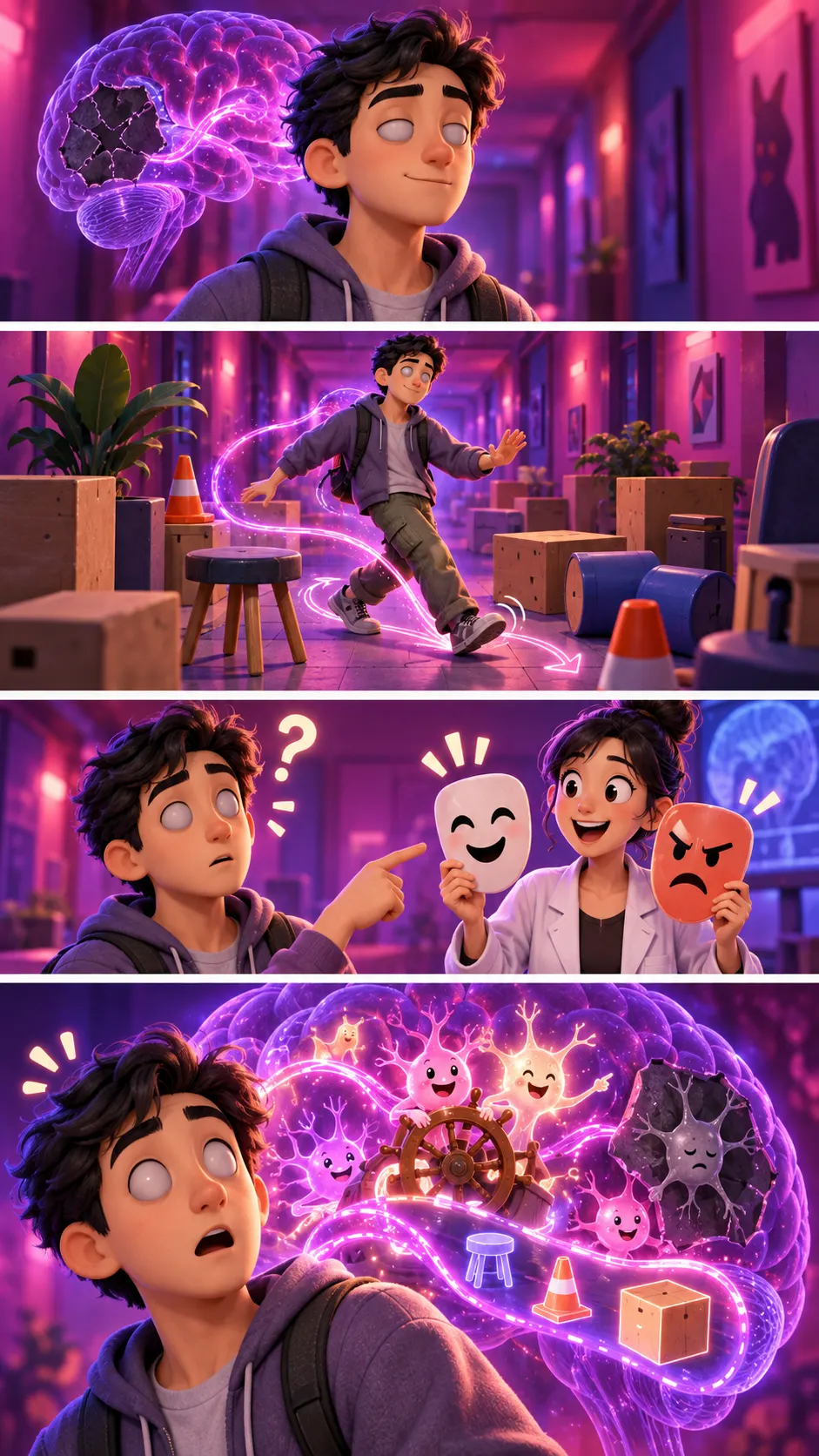
脳の視覚の中枢が左右とも壊れ、「何も見えない」という男性に、障害物を置いた廊下を杖なしで歩いてもらったら、全部よけてゴールした。本人は見えている自覚がないのに、脳の別のルートが「見て」いたらしい。
押すと「マジかリスト」に保存されます
 出典・参考文献(4件)タップで表示
- Weiskrantz et al. (1974) Visual capacity in the hemianopic field following a restricted occipital ablation, Braindoi.org
- Pegna et al. (2005) Discriminating emotional faces without primary visual cortices involves the right amygdala, Nature Neurosciencedoi.org
- de Gelder et al. (2008) Intact navigation skills after bilateral loss of striate cortex, Current Biologydoi.org
- Cowey (2010) The blindsight saga, Experimental Brain Researchdoi.org
※本記事は上記の研究・公開資料をもとに、原田英語が独自の言葉で解説したものです。引用は著作権法第32条の範囲で行い、出典を明記しています。画像はすべてオリジナルのイメージです。研究結果には限界や個人差があります。誤りのご指摘は原田英語のお問い合わせフォームから。
 これも「マジか!?」
 脳・心理
脳・心理
「動こう」と決める前に、脳はもう準備を始めていた? リベットの実験と"自由意志"論争のその後

 脳・心理
脳・心理
左右の脳をつなぐ"橋"を切ったら、心は2つになる? 分離脳研究60年の答え
 脳・心理
脳・心理
錯視とは? 脳がだまされる有名な錯視8選。同じ色が違って見える理由を研究で解説
 脳・心理
脳・心理
集合体恐怖症はなぜ起きる? ブツブツが怖いのは「病気よけ本能」の誤作動かもしれない
 脳・心理
脳・心理 ゼミ★☆☆
ゼミ★☆☆
目が見えるようになった瞬間、触って知っていた形はわかる?300年越しの哲学の問いに実験が挑んだ

 脳・心理
脳・心理