

 体と健康・食ウソ
「人体自然発火」の真相。燃えたのは体だけで部屋は無傷、その謎を豚肉で再現した法科学者
 2026.10.02
 English Corner(A2〜B2・4択クイズ)
 読む前に予想してみよう!
人体が外部の火なしに自然に発火することは、科学的に確認されている
調べられた事例では、たばこや暖房器具など外部の火の源が近くにあったと報告されている。
 研究カード(どんな研究?)
- 対象
- 動物組織(豚)の燃焼実験と法医学的事例
- 規模
- 実験複数+症例報告
- 研究の種類
- 燃焼実験・法医学的事例分析
- 確かさ
- ★★★☆☆
体の一部だけが灰になり、周囲は燃えていない奇妙な火災。実験で、外部の火と「ろうそくの芯」の役割をする布があれば、脂肪がゆっくり燃え続けることが示された。
ひとことで言うと人が勝手に燃え出すわけではない。小さな火と布があれば、ゆっくり燃え続ける。
「部屋の中で人の体だけが灰になり、すぐ横のソファやカーテンは燃えていなかった」
こうした不思議な火災は17世紀から報告され、「人体自然発火(spontaneous human combustion)」と呼ばれてきました。小説にも登場し、「体の中から突然燃え出す」という説明がくり返されてきました。
でも、法科学(犯罪や事故を科学で調べる分野)の研究者たちは、もっと地味で、物理的な説明にたどり着いています。
01事例に共通する特徴
ポイントは③と⑤です。つまり、先に亡くなった人の体に、外から火がついたという順番なのです。
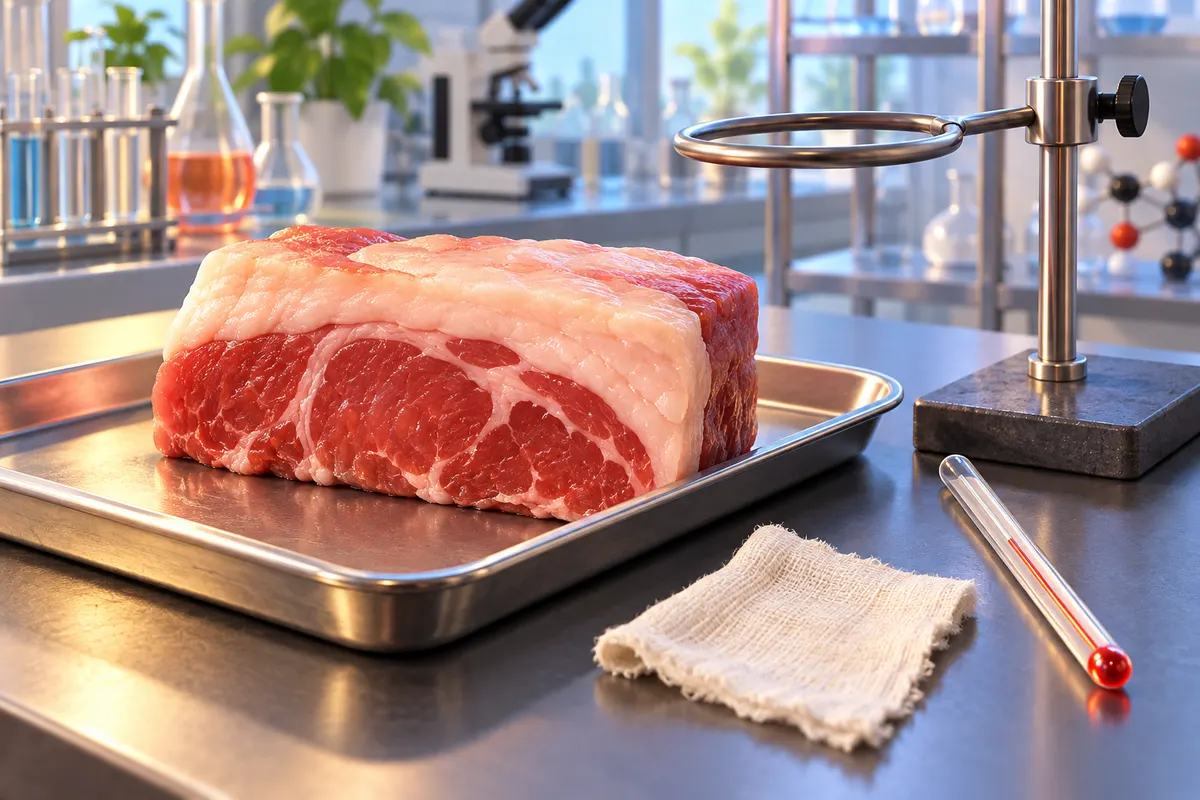
02豚肉で「ろうそく効果」を確かめた
なぜ、体だけがゆっくり燃えるのか。鍵は「ろうそく」です。
ろうそくは、ろう(燃料)が溶けて芯を伝い、炎を小さく保ったまま長時間燃えます。体でも、同じことが起こりえます。溶けた脂肪が燃料になり、衣服や布が芯の役をするのです。
2002年には、別の研究者が人の組織の燃えやすさを実験的に調べた報告も発表されています。
03「火の元は、たいてい外にある」
事例報告では、たばこ、暖房器具、暖炉、ろうそくなど、近くに火の源が見つかっています。
亡くなった人や意識を失った人は、服に火がついても逃げたり消したりできません。そのまま長い時間をかけて、ゆっくり燃え続けてしまうのです。
04どんでん返し:それでも「なぜ胴体だけ?」
ろうそく効果は多くの特徴を説明しますが、すべてを計算どおりに再現できるわけではありません。
たとえば、燃え方の広がりは、服の素材、姿勢、床の材質(カーペットは芯になりやすい)、部屋の空気の流れなど、多くの条件に左右されます。同じ条件を再現するのは難しく、個々の事例では不明な点が残ります。
アルコールの血中濃度が高い事例が多いという報告もありますが、これは「アルコールが燃料になる」のではなく、意識が低下して逃げられなかったことの反映と考えられています。
05まとめ
- 人体自然発火と呼ばれる火災は、外部の火が原因と考えられている
- 脂肪が燃料、布が芯となる「ろうそく効果」で、小さな炎でゆっくり燃え続ける
- 炎が小さいため、周囲の家具が燃え残る
- 体内から勝手に燃え出す仕組みは、確かめられていない
「説明できない現象」の多くは、ていねいに実験すると、意外と地味な物理に落ち着きます。でもその地味さこそ、防火に役立つ本物の知識なのです。
この研究を英語で読もう原田英語の English CornerFor centuries, there have been reports of fires in which part of a person's body was destroyed while the… 音声
音声 4択クイズ9問A2・B1・B2タップして開く
原田英語の English Corner
この研究を英語で読もう
Since the 1600s, there have been strange stories about fires in which a person burned but the room did not. Some people called this "spontaneous human combustion" and said the body started burning by itself.
Scientists do not agree with this idea. In these cases, there was always a small fire nearby, like a cigarette or a heater. Clothes can work like a candle wick, so the fire burns slowly.
70 words ・ CEFR A2
和訳を見る
1600年代から、人は燃えたのに部屋は燃えなかったという奇妙な火災の話があります。これを「人体自然発火」と呼び、体がひとりでに燃え出したと言う人もいました。
科学者たちはこの考えに賛成していません。こうした事例では、たばこや暖房器具のような小さな火が、たいてい近くにありました。服はろうそくの芯のようにはたらくことがあるので、火はゆっくり燃えるのです。
4択リーディングクイズ
Q1. What is the passage mainly about?
「人体自然発火」と呼ばれた火災を科学的に説明する話なので D。
Q2. What was usually found near these fires?
there was usually a small fire nearby, like a cigarette or a heater とあるので A。
Q3. In this passage, "by itself" means ...
by itself は「ひとりでに・他の原因なしに」という意味なので C。
For centuries, there have been reports of fires in which part of a person's body was destroyed while the furniture around it was barely damaged. This was called "spontaneous human combustion," meaning a body catching fire by itself. Forensic scientists, however, have found a simpler explanation.
In 1999, DeHaan and his colleagues burned pig fat and skin in experiments. They found that the tissue needed outside heat to start burning and a piece of cloth to act like a candle wick. Melted fat then fed a small, slow flame for a long time. Because the flame stayed small, nearby objects often did not catch fire. In real cases, a source of fire, such as a cigarette, was usually found nearby.
120 words ・ CEFR B1
和訳を見る
何世紀にもわたって、人の体の一部が失われる一方で、周りの家具はほとんど傷ついていなかったという火災の報告がありました。これは「人体自然発火」、つまり体がひとりでに燃え出すことだと呼ばれました。しかし、法科学者たちはもっと単純な説明を見つけています。
1999年、デハーンと同僚たちは実験で豚の脂肪と皮を燃やしました。その結果、組織が燃え始めるには外からの熱が必要で、ろうそくの芯のようにはたらく布が必要だとわかりました。すると溶けた脂肪が、小さくゆっくりした炎に長い間燃料を与え続けたのです。炎が小さいままだったので、近くの物には火が燃え移らないことが多かったのです。実際の事例では、たばこのような火の源が近くで見つかるのが普通でした。
4択リーディングクイズ
Q1. What did DeHaan and his colleagues use in their experiments?
burned pig fat and skin in experiments とあるので A。
Q2. According to the experiments, what was needed for the tissue to keep burning?
needed outside heat to start burning and a piece of cloth to act like a candle wick とあるので B。
Q3. Why was the furniture often not burned?
Because the flame stayed small, nearby objects often did not catch fire. とあるので C。
Since the seventeenth century, investigators have occasionally described fires in which much of a person's body was consumed while nearby furniture survived almost intact. Such cases gave rise to the idea of "spontaneous human combustion", in which a body supposedly ignites from within. Forensic research points to a more ordinary explanation.
Reviewing their own cases and earlier reports in 2011, the French forensic doctors Levi-Faict and Quatrehomme noted recurring features: the surroundings were largely undamaged, the burning usually occurred after death from natural causes, and an external source of fire was present. Experiments explain how this can happen. In 1999, DeHaan and colleagues showed that animal fat and skin would burn only after being heated by an outside flame and only with a porous wick, such as charred cloth.
Under those conditions, tissue burned at roughly one to three grams per second, producing a relatively small fire that seldom spread to nearby objects. This "wick effect" resembles a candle, in which melted wax rises through the wick. The forensic pathologist Byard has described spontaneous combustion as a myth. Even so, the exact pattern of damage depends on clothing, flooring and airflow, so individual cases can be difficult to reconstruct.
199 words ・ CEFR B2
和訳を見る
17世紀以来、調査者たちは、人の体の大部分が失われる一方で、近くの家具はほとんど無傷のまま残った火災をときどき記録してきました。こうした事例から、体が内側からひとりでに発火するとされる「人体自然発火」という考えが生まれました。法科学の研究は、もっとありふれた説明を示しています。
2011年、フランスの法医学者レヴィ=ファクトとカトルオムは、自分たちの事例と過去の報告を見直し、くり返し見られる特徴を指摘しました。周囲はほぼ無傷であること、燃焼はたいてい病気などの自然死の後に起きていること、そして外部の火の源があったことです。実験は、それがどのように起こりうるかを説明しています。1999年、デハーンらは、動物の脂肪と皮は外部の炎で温められた後でしか燃えず、しかも焦げた布のような多孔質の芯がある場合に限られることを示しました。
その条件のもとでは、組織は毎秒およそ1〜3グラムの速さで燃え、比較的小さな火となり、近くの物にはめったに燃え移りませんでした。この「芯効果」は、溶けたろうが芯を伝って上がるろうそくに似ています。法病理学者のバイアードは、自然発火を神話だと述べています。それでも、損傷の正確なパターンは衣服や床材、空気の流れによって変わるため、個々の事例を再現するのは難しい場合があります。
4択リーディングクイズ
Q1. Which statement best summarizes the passage?
外部の火と芯効果で説明できる、という法科学の結論が中心なので D。
Q2. Which feature did Levi-Faict and Quatrehomme NOT list?
挙げられた特徴は、周囲が無傷・死後の燃焼・外部の火の源。死の前に燃え始めたとは述べていないので C。
Q3. Why can individual cases still be difficult to reconstruct?
the exact pattern of damage depends on clothing, flooring and airflow とあるので A。
重要単語
- combustionC1名詞燃焼Combustion needs fuel, heat and oxygen.
 動詞 combust。internal combustion engine「内燃機関」。spontaneous は「自然発生的な」。
 - wickC1名詞(ろうそくの)芯Clothing can act like a wick. wick effect「芯効果」。動詞で「(水分を)吸い上げる」の意味も(吸汗速乾素材の説明など)。
- fatA2名詞脂肪Body fat can burn slowly in a small fire. 形容詞「太った」より名詞「脂肪」の意味が科学文では多い。body fat「体脂肪」。
- forensicC1形容詞法科学の・法医学のForensic scientists studied these fires. ラテン語 forum(公開の場・法廷)から。forensic science「法科学」。
- igniteC1動詞発火する・火をつけるA dropped cigarette can ignite clothing. 比喩で ignite a debate「議論に火をつける」。名詞 ignition「点火」。
- mythB2名詞神話・作り話The idea is now treated as a myth. a common myth「よくある誤解」は説明文の定番。形容詞 mythical。
 入試に出る順の単語帳を印刷する →
 全5561語の「科学英単語カード」で復習する →
 動画でもっと知る
動画は各チャンネルの公式埋め込みで表示しています(YouTube)。
このネタ、誰かに教えたくなった?
「人体自然発火」は体の一部だけが灰になり周囲は無傷。実験では、外から火がつき布が“ろうそくの芯”になれば、脂肪がゆっくり燃え続けると示された。
押すと「マジかリスト」に保存されます
 出典・参考文献(4件)タップで表示
- DeHaan, Campbell & Nurbakhsh (1999) Combustion of animal fat and its implications for the consumption of human bodies in fires, Science & Justicedoi.org
- Christensen (2002) Experiments in the Combustibility of the Human Body, Journal of Forensic Sciencesdoi.org
- Levi-Faict & Quatrehomme (2011) So-called Spontaneous Human Combustion, Journal of Forensic Sciencesdoi.org
- Byard (2016) The mythology of "spontaneous" human combustion, Forensic Science, Medicine, and Pathologydoi.org

※本記事は上記の研究・公開資料をもとに、原田英語が独自の言葉で解説したものです。引用は著作権法第32条の範囲で行い、出典を明記しています。画像はすべてオリジナルのイメージです。研究結果には限界や個人差があります。誤りのご指摘は原田英語のお問い合わせフォームから。
 これも「マジか!?」

 体・健康
体・健康
「誰かがそこにいる」気配の正体。ロボットで"見えない人"を作り出した実験


 体・健康
体・健康
「体の細菌は人間の細胞の10倍」はまちがい。計算し直したら“ほぼ1対1”だった

 体・健康
体・健康
1年間ウォーキングした高齢者、記憶の司令塔「海馬」が約2%大きくなっていた

 体・健康
体・健康
指紋は「すべり止め」じゃなかった? 測ったら接触面積は減っていた。本当の役割は"振動センサー"

 体・健康
体・健康
大人になって牛乳が苦手になるのは「人類の標準」だった。むしろ平気な人が“突然変異”

 体・健康
体・健康