

 動物・植物ビミョー
シロアリ塚は「天然エアコン」? ビル設計のお手本になった話を、最新の測定で検証したら
 2026.10.02
 English Corner(A2〜B2・4択クイズ)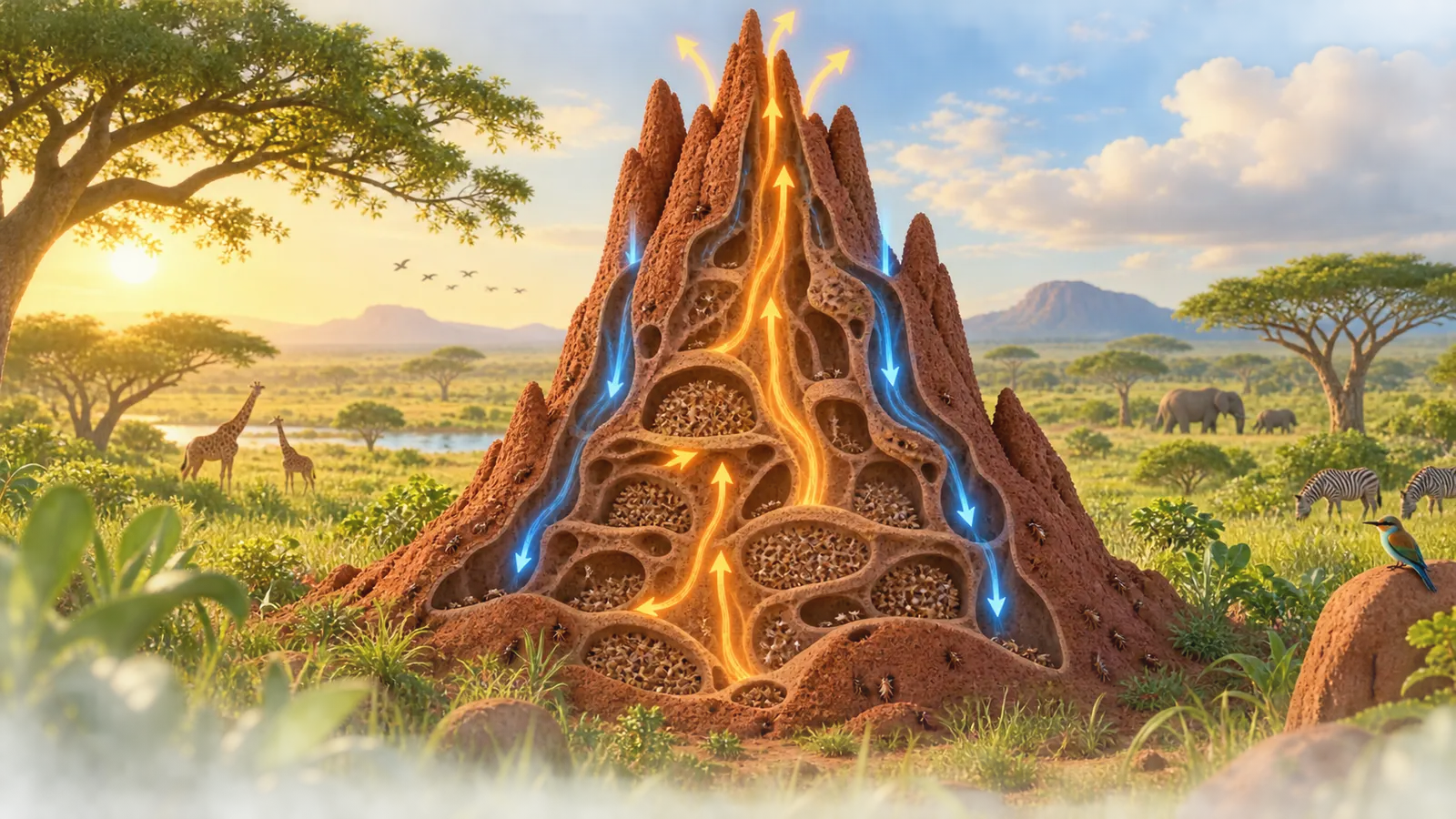
 読む前に予想してみよう!
最近の測定で、シロアリ塚の主な役目は「温度を一定に保つこと」だと確かめられた
空気の流れを実測した研究では、昼夜の温度差を利用してCO2を追い出す「換気」の働きが重視されている。
 研究カード(どんな研究?)
- 対象
- インドとアフリカのキノコシロアリの塚
- 規模
- 野外の塚での直接測定(インドでは25個の塚で流速を測定)
- 研究の種類
- 気流・温度・CO2の野外計測
- 確かさ
- ★★★☆☆
シロアリ塚は温度を一定に保つ“エアコン”として有名だが、実測すると、重要な働きのひとつはCO2を逃がす換気。昼夜の温度差を使って空気を入れかえる「外付けの肺」だった。
ひとことで言うとシロアリの塚は、エアコンというより「大きな肺」だった!
アフリカのサバンナにそびえる、人の背丈をこえるシロアリの塚。その中は、外が灼熱でも夜が冷えこんでも、いつも快適な温度に保たれている――。
この「天然エアコン」の話は、生き物から技術を学ぶ「生物模倣(バイオミミクリー)」の代表例として、教科書やテレビでたびたび紹介されてきました。ジンバブエには、シロアリ塚にヒントを得て、エアコンに頼らず涼しさを保つよう設計されたビルまであります。
ところが、塚の中の空気の流れを実際に測った研究が進むと、話はちょっと違ってきました。
01塚の住人は「キノコ農家」
塚を作るのは、キノコシロアリの仲間。地下の巣で、かみくだいた植物を材料にキノコを育て、それを食べて暮らしています。
何百万匹ものシロアリとキノコが呼吸するので、巣の中には二酸化炭素(CO2)がたまりやすい。この空気をどう入れかえるかは、コロニーにとって死活問題です。
02昼と夜で、空気の流れが逆になる
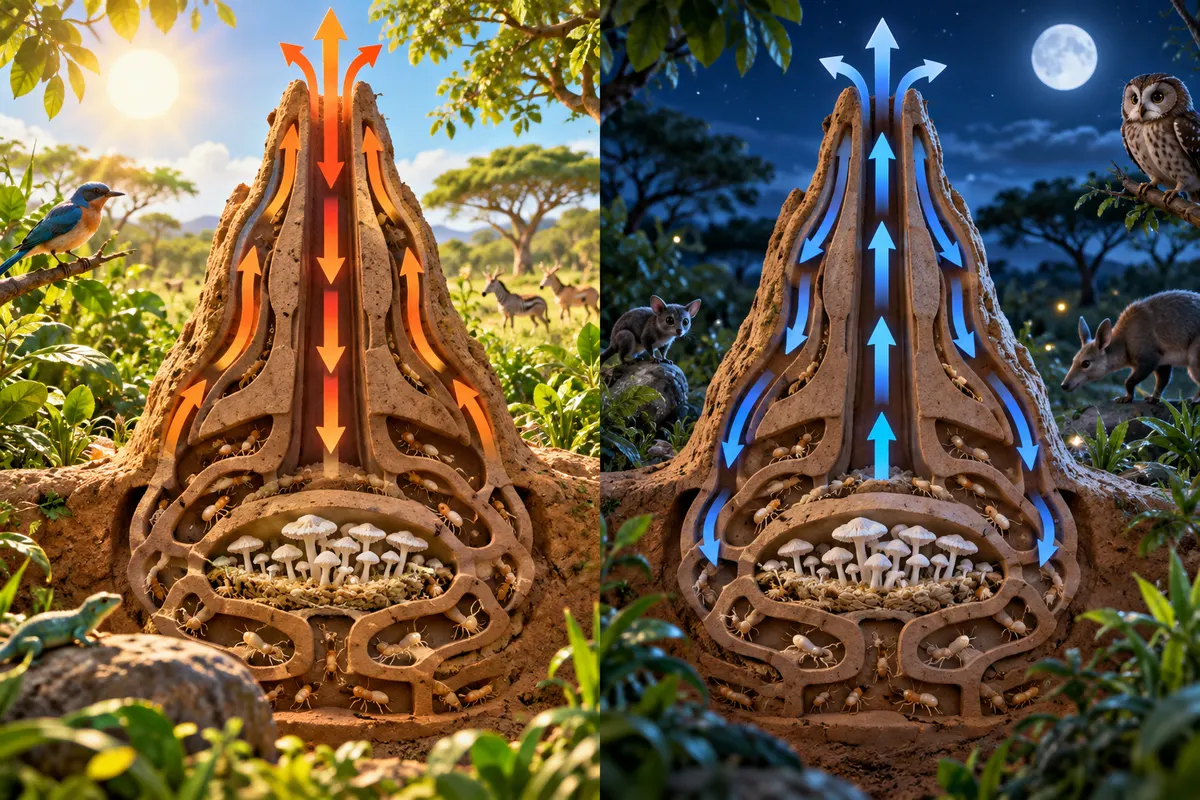
ポイントは、塚が温度を「一定に保つ」ために働いているというより、外の温度が昼夜で変わることを利用して、空気を動かしていること。2017年には同じチーム(Ockoら)が、アフリカ・ナミビアの別の種の塚でも、太陽の熱で駆動される同じような換気を確かめました。研究チームは、塚を「外付けの肺」と表現しています。
03「エアコン説」はどこから来たのか
古くは、巣の生き物が出す熱で温まった空気が煙突を上る「熱でまわる換気」というモデルが唱えられ、塚の中は温度がほぼ一定に保たれている、と考えられていました。ジンバブエのビルも、この考え方がヒントになったとされています。
ところがナミビアで塚を調べたターナー(Turner)さん(2001年)は、巣の換気には風の力が大きく効いていて、巣の熱だけで流れを起こすほどの温度差は、めったに生じないと報告しました。そしてその後の直接測定で、昼夜の温度変化を利用した換気という姿が見えてきたのです。
つまり「天然エアコン」は、まったくのウソではないけれど、“冷房”だけでなく“換気”も大事な役目だった、というのが今の理解です。
04まとめ
シロアリ塚は、温度を一定に保つ魔法のエアコンというより、太陽の熱と昼夜の温度差を使って“呼吸”する巨大な肺でした。
自然から学ぶときは、「よく聞く話」をうのみにせず、最新の測定で確かめることが大切。シロアリ塚の物語は、そのことを教えてくれます。
この研究を英語で読もう原田英語の English CornerTermite mounds in Africa are often called natural air conditioners that keep their inside at a steady… 音声
音声 4択クイズ9問A2・B1・B2タップして開く
原田英語の English Corner
この研究を英語で読もう
In Africa, some termites build very tall mounds. Many books say these mounds work like air conditioners and keep the same temperature inside. A building in Zimbabwe was even designed with this idea.
But scientists measured the air inside real mounds. They found that an important job of a mound is to move air. In the day, air goes one way. At night, it goes the other way. This pushes carbon dioxide out.
73 words ・ CEFR A2
和訳を見る
アフリカでは、とても高い塚を作るシロアリがいます。多くの本は、これらの塚がエアコンのように働いて、中の温度を同じに保つと書いています。ジンバブエには、この考えをもとに設計されたビルさえあります。
しかし、科学者たちが本物の塚の中の空気を測りました。その結果、塚の大事な役目のひとつは空気を動かすことだとわかりました。昼は空気がある方向に流れます。夜は反対方向に流れます。これによって二酸化炭素が外に押し出されるのです。
4択リーディングクイズ
Q1. What is the passage mainly about?
シロアリ塚の大事な役目(空気を動かすこと)が主題なので C。
Q2. What happens to the air at night?
At night, it goes the other way. とあるので B。
Q3. In the passage, "designed" means ...
design は「設計する」。was even designed with this idea=この考えで計画して作られた、なので A。
Termite mounds in Africa are often called natural air conditioners that keep their inside at a steady temperature. A building in Zimbabwe was even designed to stay cool without air conditioning based on this idea. However, when scientists measured the air flow inside real mounds, they found a different story. The termites grow fungus underground, and millions of termites and fungi produce a lot of carbon dioxide.
In 2015, a Harvard team studying mounds in India discovered that during the day, air rises in the thin outer tunnels warmed by the sun and sinks in the central chimney. At night, the flow reverses. This daily change pushes carbon dioxide out, so the mound works more like a lung than an air conditioner.
122 words ・ CEFR B1
和訳を見る
アフリカのシロアリ塚は、中を一定の温度に保つ天然のエアコンとよく言われます。ジンバブエでは、この考えをもとに、エアコンなしで涼しさを保つよう設計されたビルまであります。しかし、科学者たちが本物の塚の中の空気の流れを測ると、別の姿が見えてきました。シロアリは地下でキノコを育てており、何百万ものシロアリとキノコが大量の二酸化炭素を出します。
2015年、インドの塚を調べたハーバード大学のチームは、昼間は太陽で温められた細い外側の通路で空気が上がり、中央の煙突で下がることを発見しました。夜には流れが逆になります。この毎日の変化が二酸化炭素を押し出すので、塚はエアコンというより肺のように働いているのです。
4択リーディングクイズ
Q1. Why do termite nests have a lot of carbon dioxide?
millions of termites and fungi produce a lot of carbon dioxide とあるので B。
Q2. What happens during the day, according to the 2015 study?
during the day, air rises in the thin outer tunnels ... and sinks in the central chimney とあるので A。夜はその逆。
Q3. What does the writer mean by saying the mound works "more like a lung"?
肺は空気を入れかえる器官。二酸化炭素を押し出す換気が大事な役目のひとつ、という意味なので D。
A building in Zimbabwe, inspired by termite mounds, was designed to stay cool without conventional air conditioning. For years the mounds served as a textbook case of biomimicry, natural air conditioners that keep their inside temperature steady. Direct measurements have made the story messier.
The species that build mounds farm fungus, and the breathing of millions of termites and their fungus gardens makes carbon dioxide build up. Getting rid of it is a matter of survival. Earlier models assumed that heat from the colony drove a steady flow of air upward.
In 2001, Turner reported that wind played a major role and that the colony rarely produced enough heat to drive circulation on its own. In 2015, a Harvard team placed sensors inside mounds in India and found convection that changed direction every day. By day, air rose through thin outer channels warmed by the sun and sank through the thick central chimney.
At night the pattern reversed, flushing carbon dioxide out. A 2017 study found similar sun-driven ventilation in Namibia. Only a fairly small number of mounds have been measured. Even so, the researchers now describe the mound as less an air conditioner than an external lung.
198 words ・ CEFR B2
和訳を見る
ジンバブエのあるビルは、シロアリ塚に着想を得て、従来のエアコンなしに涼しさを保つよう設計されました。長年、シロアリ塚は生物模倣の教科書的な例とされ、内部の温度を一定に保つ天然のエアコンだと考えられてきました。直接の測定によって、この話はもっと込み入ったものになりました。
塚を作る種はキノコを育てており、何百万ものシロアリとキノコ畑の呼吸によって二酸化炭素がたまります。それを追い出すことは生死にかかわる問題です。以前のモデルは、コロニーの熱が安定した上昇気流を生むと仮定していました。
2001年、ターナーは、風が大きな役割を果たしており、コロニーだけでは循環を起こすほどの熱をめったに生まないと報告しました。2015年、ハーバード大学のチームはインドの塚の中にセンサーを置き、毎日向きが変わる対流を発見しました。昼は太陽で温められた細い外側の通路を空気が上がり、太い中央の煙突を下がります。
夜にはその流れが逆になり、二酸化炭素を押し流していました。2017年の研究は、ナミビアでも太陽で駆動される同様の換気を見つけました。測定された塚の数はまだ比較的少ないものです。それでも研究者たちは今、塚をエアコンというより外付けの肺だと説明しています。
4択リーディングクイズ
Q1. What did Turner report in 2001?
wind played a major role and that the colony rarely produced enough heat to drive circulation on its own とあるので B。A は逆。
Q2. According to the passage, what drives the daily reversal of air flow?
air rose through thin outer channels warmed by the sun とあり、太陽による加熱の昼夜差が流れを生むので C。
Q3. How do the researchers now describe the termite mound?
the researchers now describe the mound as less an air conditioner than an external lung(エアコンというより外付けの肺)とあるので D。
重要単語
- moundB2名詞塚、盛り土Some termite mounds are taller than a person.
 野球のピッチャーマウンドと同じ語。a mound of paperwork(書類の山)のようにも使う。
 - ventilationB2名詞換気Good ventilation removes carbon dioxide. 動詞 ventilate。ラテン語 ventus(風)から。人工呼吸器は ventilator。
- convectionC1名詞対流Warm air rises and creates convection. 熱の伝わり方 conduction(伝導)・convection(対流)・radiation(放射)の3点セットで覚える。
- biomimicryC1名詞生物模倣Biomimicry learns design ideas from nature. bio(生命)+mimic(まねる)。新幹線の先端(カワセミ)なども有名な例で、入試の頻出テーマ。
- lungB1名詞肺The mound works like an external lung. 通常は複数形 lungs。lung cancer(肺がん)。形容詞は pulmonary(専門語)。
- accumulateC1動詞たまる、蓄積するCarbon dioxide can accumulate in the nest. ac-(~へ)+cumul(積み重ね)。名詞 accumulation。build up と言い換え可。
- respirationC1名詞呼吸The respiration of millions of termites produces carbon dioxide. re-(再び)+spire(息をする)。inspire(吹きこむ→鼓舞する)、expire(息が切れる→期限切れ)も同じ語根。
 入試に出る順の単語帳を印刷する →
 全5561語の「科学英単語カード」で復習する →
 動画でもっと知る
動画は各チャンネルの公式埋め込みで表示しています(YouTube)。
この話題を TED で聞く
同じテーマの TED・TED-Ed を、 TED HACK で。英語の見どころ・使える表現・学習ミッションつきの日本語ガイドです。(運営:原田英語)

このネタ、誰かに教えたくなった?
「シロアリ塚は温度を一定に保つ天然エアコン」は有名な話。でも中の空気の流れを測ると、大事な役割のひとつはCO2を追い出す換気だった。昼と夜で空気の流れが逆になる「外付けの肺」だ。
押すと「マジかリスト」に保存されます
 出典・参考文献(3件)タップで表示
- Turner (2001) On the Mound of Macrotermes michaelseni as an Organ of Respiratory Gas Exchange, Physiological and Biochemical Zoologydoi.org
- King, Ocko & Mahadevan (2015) Termite mounds harness diurnal temperature oscillations for ventilation, PNASdoi.org
- Ocko et al. (2017) Solar-powered ventilation of African termite mounds, Journal of Experimental Biologydoi.org

※本記事は上記の研究・公開資料をもとに、原田英語が独自の言葉で解説したものです。引用は著作権法第32条の範囲で行い、出典を明記しています。画像はすべてオリジナルのイメージです。研究結果には限界や個人差があります。誤りのご指摘は原田英語のお問い合わせフォームから。
 これも「マジか!?」

 動物・植物
動物・植物
「ヤモリの足は吸盤」はウソ。10億個のナノの先端で“分子の引き合う力”を使っていた
 動物・植物
動物・植物
虫が「道具」でハチを釣っていた。ハチの樹脂を前脚に塗る“釣り師”サシガメの作戦

 動物・植物
動物・植物
「観葉植物で空気がキレイに」は幻想? 換気と同じ効果には1㎡に10〜1000鉢が必要だった
 動物・植物
動物・植物
ミツバチは「ゼロ」がわかる? 脳の小さな虫が「何もない」を数の一番下に置いた

 動物・植物
動物・植物
渡り鳥の目の中には「量子コンパス」が入っているかもしれない

 動物・植物
動物・植物