人間関係・お金・日常ウソ
「人は見た目が9割」は誤解だった。メラビアンの法則、本当はこんな実験
 2026.10.02
 English Corner(A2〜B2・4択クイズ)
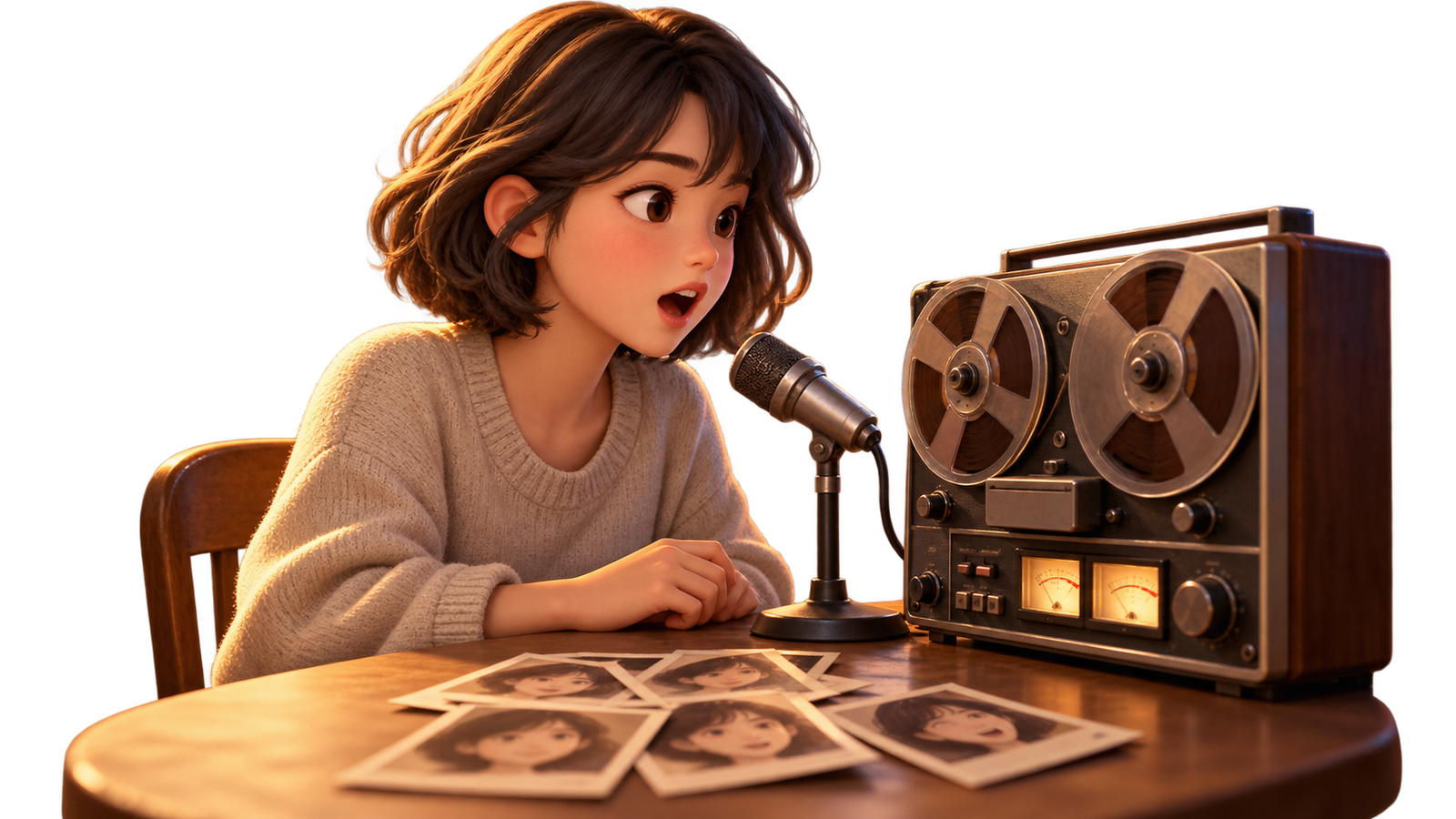
 読む前に予想してみよう!
メラビアンの法則は「どんな会話でも、話の内容は7%しか伝わらない」という意味だ
言葉と声・表情が矛盾する場面で、相手の好意や感情を読み取るときの実験結果にすぎない。
 研究カード(どんな研究?)
- 対象
- アメリカの女子大学生
- 規模
- 数十人(2つの小規模実験)
- 研究の種類
- 実験室実験
- 確かさ
- ★★☆☆☆
「話の内容7%、声38%、見た目55%」という数字は、言葉と態度が食い違うときに好き嫌いを判断する、限られた実験の結果。会話全般の法則ではない。
ひとことで言うと「見た目が大事」という法則は、ほんとはもっとせまい話だった!
「人は見た目が9割」「話の内容は7%しか伝わらない」
研修やビジネス書で、一度は聞いたことがあるかもしれません。その根拠としてよく出てくるのがメラビアンの法則です。
でもこの法則、元の実験を見てみると、ぜんぜん違う話だったんです。
01「7・38・55」の正体
メラビアンの法則として広まっているのは、こんな内容です。
- 話の内容(言葉):7%
- 声のトーンや話し方:38%
- 表情や見た目:55%
「だから見た目が大事!」と言われるのですが……この数字が生まれたのは、カリフォルニア大学ロサンゼルス校の心理学者アルバート・メラビアンが1967年に発表した2つの実験です。
つまり実験は、ひと言だけの単語について、話し手の「好き・嫌い」の気持ちを読み取るものでした。プレゼンや説得、情報の伝わり方を調べたわけではないのです。
02カギは「食い違い」
この実験で重要なのは、言葉と声と表情がバラバラなときの判断だったことです。
たとえば、笑顔で「最悪」と言われたら? 怒った声で「ありがとう」と言われたら?
こういう矛盾したメッセージを受け取ったとき、人は言葉の意味よりも、声や表情を手がかりにして気持ちを読み取りやすい——これが実験の本当の結論です。

03メラビアン本人も「誤解だ」と
7-38-55という数字が「すべてのコミュニケーションの法則」として広まったことについては、メラビアン自身も、感情や態度(好き・嫌い)を伝える場面でなければ当てはまらないという趣旨の注意を出しています。
しかも、この数字は2つの別々の実験の結果を組み合わせて推定したもので、参加者も少数の大学生でした。会話全般に一般化するには、そもそも無理があったのです。
たとえるなら、「激辛カレーを食べた直後の人は、水の味を感じにくい」という実験から、「人は水の味を7%しか感じない」と言い切るようなもの。特殊な条件で出た数字が、条件を外して一人歩きした——それがメラビアンの法則の誤解の正体です。
04じゃあ見た目や声は関係ない?
もちろん、表情や声の調子は大事です。
- 内容が同じでも、ボソボソ話すより、はっきり話した方が伝わりやすい
- 感情や本音は、言葉以外のサインからも読み取られる
ただし、それを「9割」「7%」と数字で言い切るのは科学的には言いすぎ。中身と伝え方、どちらも大事というのが妥当なところです。
05まとめ
メラビアンの法則が本当に教えてくれるのは、「見た目が9割」ではなく、「言葉と態度がズレると、相手は態度の方を信じる」ということ。
謝るときに不満そうな顔をしていたら、言葉は台無しになる。そう考えると、この実験は人間関係のいいヒントになりますね。
この研究を英語で読もう原田英語の English Corner"Only 7 percent of communication comes from words, 38 percent from tone of voice, and 55 percent from body… 音声
音声 4択クイズ9問A2・B1・B2タップして開く
原田英語の English Corner
この研究を英語で読もう
Have you heard that words carry only 7 percent of a message? Many books say this. They call it the Mehrabian rule.
But the real experiments in 1967 were very small. People heard single words, like "maybe," spoken in different tones. They then guessed if the speaker liked someone. When the words and the voice did not match, people trusted the voice and face more. It is not a rule for all talking.
73 words ・ CEFR A2
和訳を見る
言葉はメッセージの7%しか伝えない、と聞いたことがありますか。多くの本がそう書いています。それはメラビアンの法則と呼ばれています。
しかし、1967年の実際の実験はとても小規模なものでした。人々は「たぶん」のような単語ひとつを、いろいろな声の調子で聞きました。そして、話し手が相手を好きかどうかを推測しました。言葉と声が合っていないとき、人々は声や表情の方を信じました。これはすべての会話に当てはまる法則ではありません。
4択リーディングクイズ
Q1. What is the passage mainly about?
メラビアンの法則が本来の実験とは違う意味で広まっている、という話なので C。
Q2. What did people hear in the experiments?
People heard single words ... spoken in different tones とあるので B。
Q3. In this passage, "did not match" means ...
match は「一致する」。did not match で「食い違っていた」なので A。
"Only 7 percent of communication comes from words, 38 percent from tone of voice, and 55 percent from body language." This famous rule is often used in business training, but it is based on a misunderstanding. In 1967, psychologist Albert Mehrabian carried out two small experiments.
Participants listened to single words such as "dear" or "terrible," said in a positive, neutral or negative tone, and some also saw photos of facial expressions. They then judged whether the speaker liked the listener. The key point is that the words, voice and face often did not match. In such cases, people relied more on the voice and face. Mehrabian himself has said that the numbers apply only to feelings and attitudes, not to all communication.
123 words ・ CEFR B1
和訳を見る
「コミュニケーションのうち言葉によるものはわずか7%、声の調子が38%、ボディランゲージが55%」。この有名な法則はビジネス研修でよく使われますが、誤解にもとづいています。1967年、心理学者アルバート・メラビアンは2つの小規模な実験を行いました。
参加者は「dear(あなた)」や「terrible(ひどい)」のような単語ひとつを、好意的・中立・否定的な調子で言ったものを聞き、一部の人は表情の写真も見ました。そして、話し手が聞き手を好きかどうかを判断しました。重要なのは、言葉と声と表情がしばしば食い違っていたことです。そのような場合、人々は声や表情の方をより頼りにしました。メラビアン自身も、この数字は感情や態度にだけ当てはまり、すべてのコミュニケーションに当てはまるわけではないと述べています。
4択リーディングクイズ
Q1. What did participants judge in Mehrabian's experiments?
They then judged whether the speaker liked the listener. とあるので B。
Q2. What was the key condition in the experiments?
The key point is that the words, voice and face often did not match. とあるので A。
Q3. What would Mehrabian probably say about using the rule for business presentations?
本人が the numbers apply only to feelings and attitudes, not to all communication と述べているので、プレゼン全般には当てはまらないと言うはず。C。
The "7-38-55 rule" is quoted with great confidence and very little accuracy. According to it, words carry only 7 percent of a message, tone of voice 38 percent and facial expression 55 percent. The numbers come from two small experiments published in 1967 by Albert Mehrabian and his colleagues.
The participants, a few dozen female university students, heard single words such as "dear," "maybe" or "terrible" spoken in a positive, neutral or negative tone, sometimes paired with photographs of faces. They then judged how much the speaker liked the listener. Often the channels clashed, as when a pleasant word was spoken in a hostile tone.
So the experiments show only that when verbal and nonverbal signals conflict, people tend to trust the nonverbal ones in judging emotions and attitudes. The ratios themselves were estimated by combining the results of two separate studies, which makes them even less precise. Mehrabian has said that the formula does not apply unless a speaker is talking about feelings or attitudes. A 1997 analysis by Lapakko pointed out that communication textbooks have long overgeneralized the result. And if words really carried only 7 percent of meaning, phone calls and emails would hardly work.
198 words ・ CEFR B2
和訳を見る
「7・38・55の法則」は、自信たっぷりに、しかしほとんど正確さを欠いたまま引用されています。この法則によれば、言葉はメッセージの7%しか伝えず、声の調子が38%、表情が55%を伝えるといいます。この数字は、アルバート・メラビアンらが1967年に発表した2つの小さな実験から来ています。参加者は数十人の女子大学生で、「dear(あなた)」「maybe(たぶん)」「terrible(ひどい)」といった単語ひとつを、好意的、中立的、否定的な調子で聞きました。
顔写真が組み合わされることもありました。そして、話し手が聞き手をどれくらい好いているかを判断しました。多くの場合、言葉と声などの手がかりは食い違っていました。
たとえば、感じのよい言葉が敵意のある調子で話される、といった具合です。ですから、この実験が示しているのは、言語と非言語の信号が矛盾するとき、人は感情や態度を判断するのに非言語の方を信じやすい、ということだけです。比率そのものも、別々の2つの研究結果を組み合わせて推定されたもので、精度はさらに低くなります。メラビアン自身、話し手が感情や態度について話しているのでない限り、この公式は当てはまらないと述べています。1997年のラパッコの分析が指摘したように、コミュニケーションの教科書は長年この結果を過度に一般化してきました。それに、もし言葉が意味の7%しか運ばないのなら、電話やメールはほとんど成り立たないはずです。
4択リーディングクイズ
Q1. What do Mehrabian's experiments actually show?
show only that when verbal and nonverbal signals conflict, people tend to trust the nonverbal ones in judging emotions and attitudes とあるので C。
Q2. Which of the following is NOT mentioned as a limitation of the experiments?
参加者の少なさ、単語ひとつ、2研究の組み合わせは述べられているが、未発表とは書かれていない(1967年に発表)ので D。
Q3. Why does the author mention phone calls and emails?
言葉が7%しか伝えないなら電話やメールは機能しないはず、と俗説の矛盾を示すための例なので A。
重要単語
- nonverbalB2形容詞言葉を使わないSmiles and gestures are nonverbal signals. non-(否定)+verbal(言葉の)。nonverbal communication「非言語コミュニケーション」は頻出テーマ。
- inconsistentB2形容詞食い違う、一貫しないHer words and face were inconsistent. be inconsistent with ~「~と矛盾する」。反対語 consistent。
- toneB1名詞口調、声の調子His tone sounded angry. tone of voice「声の調子」。文章の「論調」の意味でも入試の内容一致問題に出る。
- attitudeB1名詞態度、気持ちWe read attitudes from facial expressions. attitude toward(s) ~「~に対する態度」。前置詞 toward とセットで覚える。
- misinterpretC1動詞誤解するThe rule is often misinterpreted. mis-(誤って)+interpret(解釈する)。misunderstand より「解釈を誤る」ニュアンスが強い。
- overgeneralizeC1動詞過度に一般化するDon't overgeneralize from one small study. over-(過度に)+generalize。小さな研究から大きな結論を出すことへの批判で使う。
- hostileB2形容詞敵意のあるShe said "thank you" in a hostile tone. 名詞 hostility。hostile to ~「~に敵対的な」。host(主人)とは別語源。
 入試に出る順の単語帳を印刷する →
 全5561語の「科学英単語カード」で復習する →
 動画でもっと知る
動画は各チャンネルの公式埋め込みで表示しています(YouTube)。
この話題を TED で聞く
同じテーマの TED・TED-Ed を、 TED HACK で。英語の見どころ・使える表現・学習ミッションつきの日本語ガイドです。(運営:原田英語)

 公式・一次情報をチェック
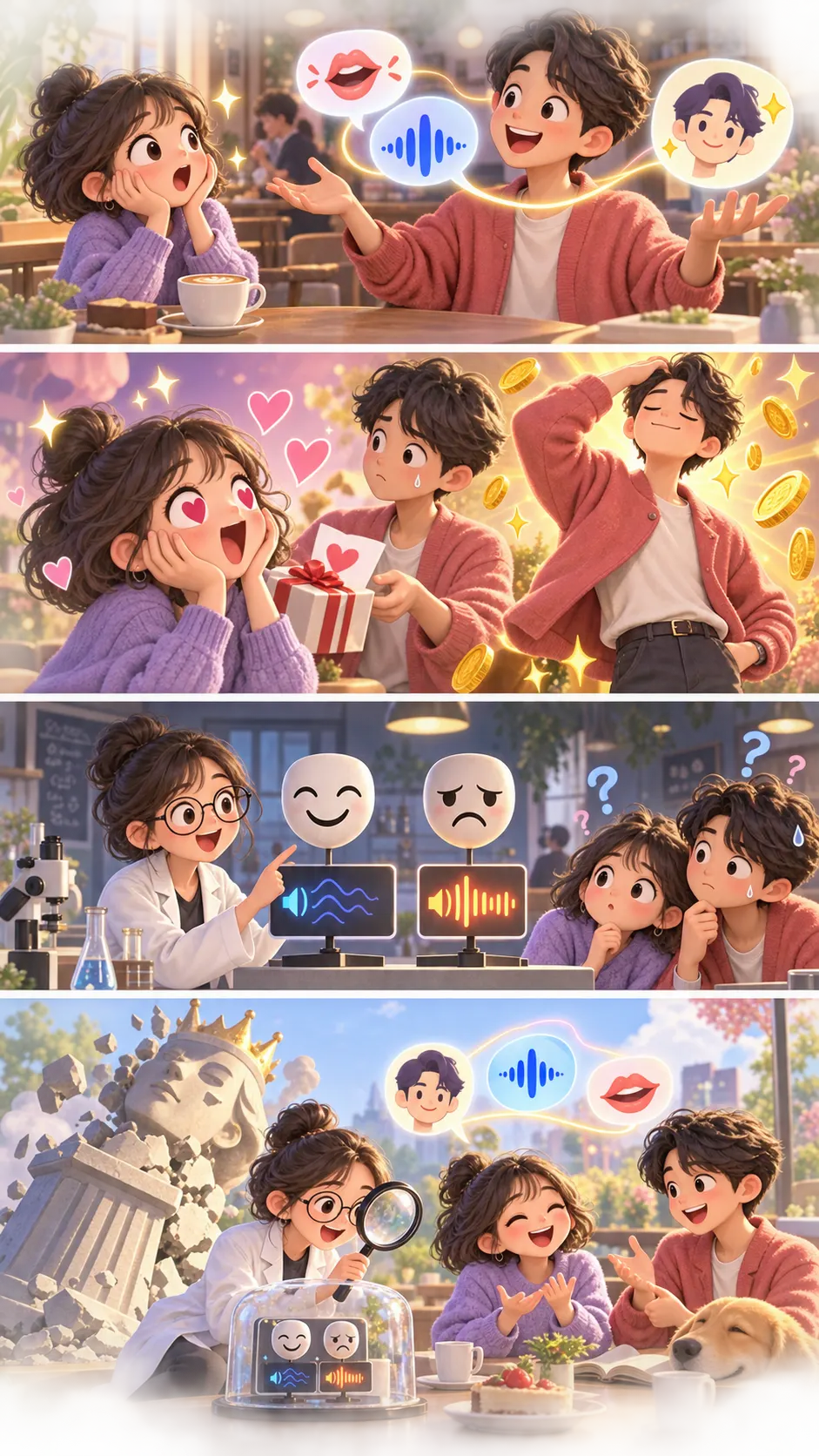
 4コマでわかる
このネタ、誰かに教えたくなった?
「話の中身は7%しか伝わらない、見た目が55%」でおなじみのメラビアンの法則。元の実験は、単語1つの意味と声や表情が食い違う場面で「好意」を判断させたもの。プレゼンの話じゃなかった。
押すと「マジかリスト」に保存されます
 出典・参考文献(4件)タップで表示
- Mehrabian & Wiener (1967) Decoding of inconsistent communications, Journal of Personality and Social Psychologydoi.org
- Mehrabian & Ferris (1967) Inference of attitudes from nonverbal communication in two channels, Journal of Consulting Psychologydoi.org
- Lapakko (1997) Three cheers for language: A closer examination of a widely cited study of nonverbal communication, Communication Educationdoi.org
- Mehrabian 本人による解説ページ(Silent Messages, 著者公式サイト)kaaj.com

※本記事は上記の研究・公開資料をもとに、原田英語が独自の言葉で解説したものです。引用は著作権法第32条の範囲で行い、出典を明記しています。画像はすべてオリジナルのイメージです。研究結果には限界や個人差があります。誤りのご指摘は原田英語のお問い合わせフォームから。