

 地球・歴史・物理ホント
ピラミッドが建てられていた頃、北極海の島ではまだマンモスが生きていた
 2026.10.02
 English Corner(A2〜B2・4択クイズ)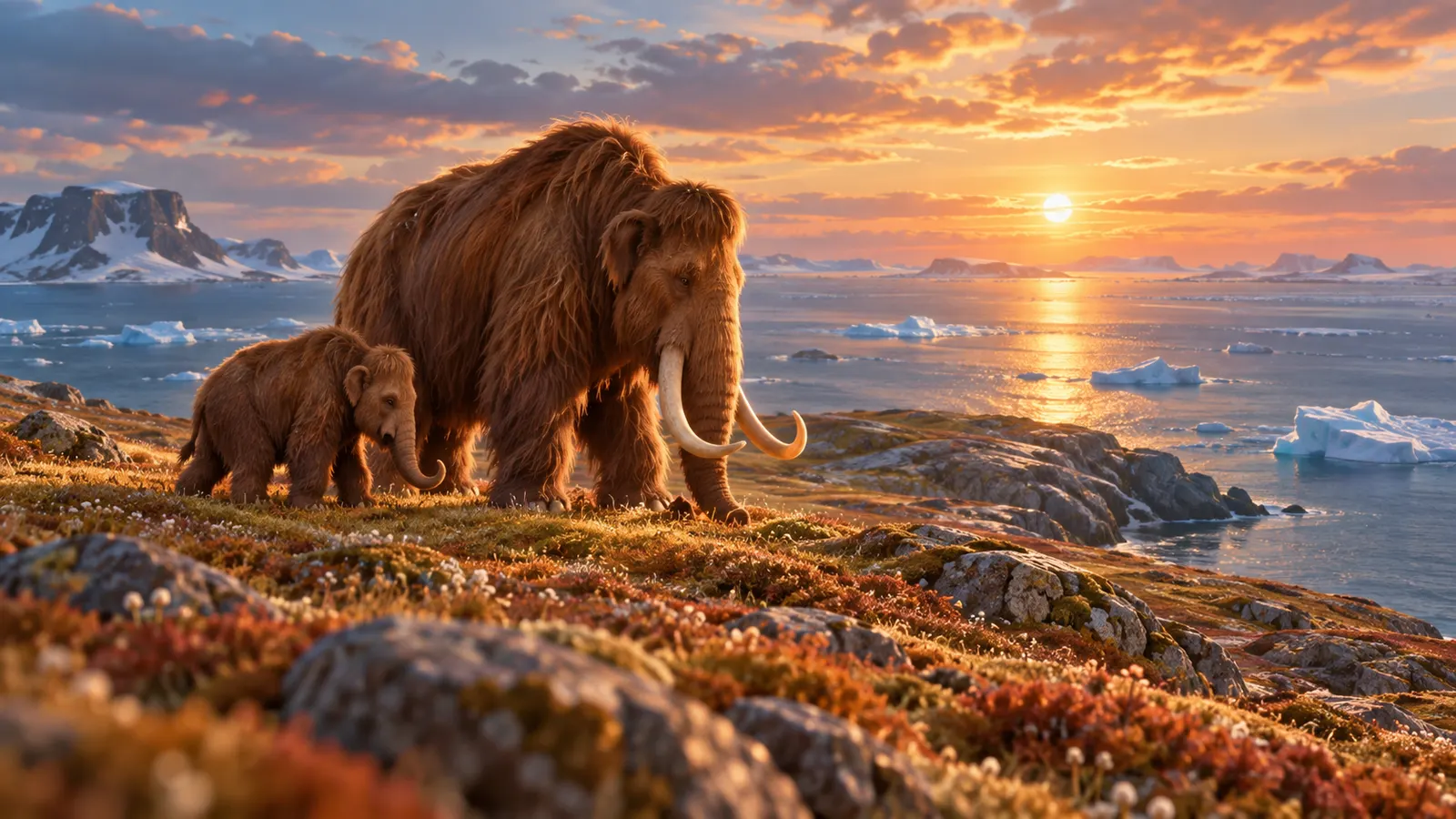

 読む前に予想してみよう!
マンモスは氷河期が終わった約1万年前に、すべて絶滅した
北極海のウランゲリ島では約4000年前まで生き残っていた。大陸から取り残された小さな群れだった。
 研究カード(どんな研究?)
- 対象
- ウランゲリ島とシベリアのマンモスの骨・歯
- 規模
- 放射性炭素年代+21頭分のゲノム
- 研究の種類
- 年代測定・古代ゲノム解析
- 確かさ
- ★★★★☆
最後のマンモスは北極海のウランゲリ島で約4000年前まで生き残っていた。大ピラミッド建設(約4500年前)の時代、マンモスはまだ地球にいた。
ひとことで言うとピラミッドができたころ、遠い北の島にはまだマンモスがいたよ!
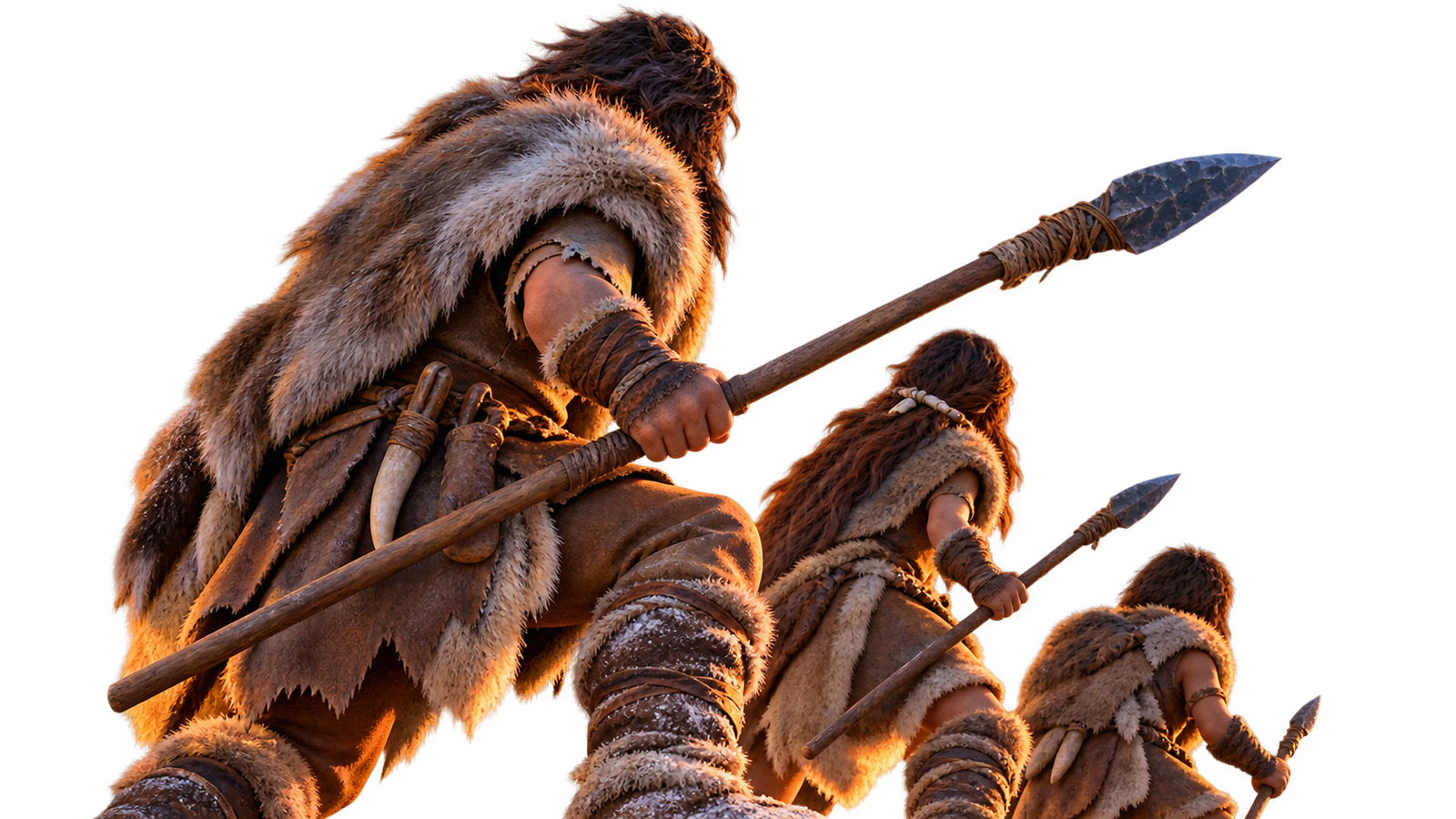
マンモスと聞くと、氷河期の洞窟の壁画や、毛皮を着た原始人たちが狩りをしている場面を思い浮かべますよね。
ピラミッドと聞くと、古代エジプトのファラオや、ナイル川のほとりの文明を思い浮かべるはず。
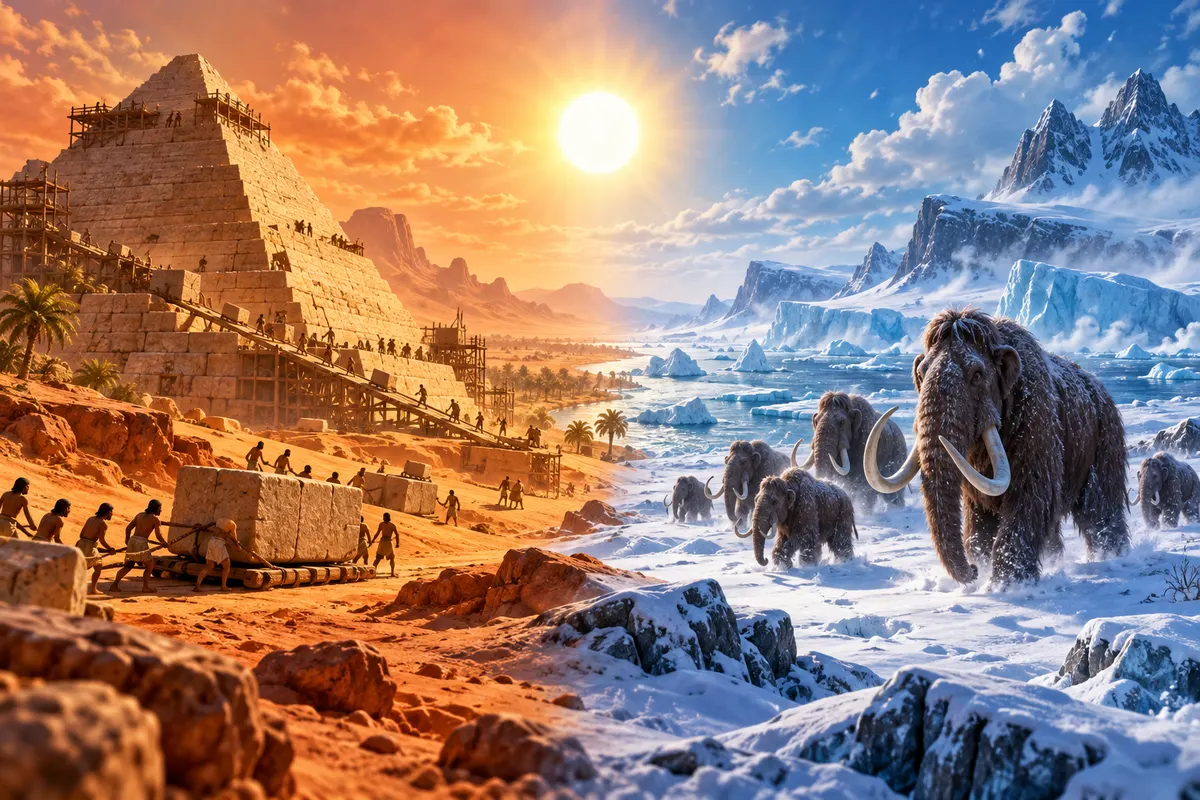
この2つ、まったく別の時代のように感じますが、じつは同じ時代に存在していたのです。エジプトでギザの大ピラミッドが建てられていた約4500年前、北極海の小さな島では、まだマンモスが歩き回っていました。
01最後のマンモスが暮らした「ウランゲリ島」
マンモスの多くは、約1万年前に氷河期が終わるころ、大陸から姿を消しました。気候が暖かくなって草原が減ったことや、人類の狩りなどが原因だと考えられています。
ところが、シベリアの北、北極海に浮かぶウランゲリ島には、生き残りがいました。
氷河期の終わり、約1万年前に海面が上がり、もともと大陸とつながっていた土地が海に沈んで、マンモスの小さな群れが島に取り残されたのです。そしてそこで、なんと約6000年も暮らし続けました。
02年表を並べると見えてくる「同時代」
並べてみましょう。
- 約1万年前:マンモスがウランゲリ島に取り残される
- 約4500年前(紀元前2560年ごろ):エジプトでギザの大ピラミッドが建設される
- 約4500年前ごろ:イギリスでストーンヘンジの大きなサーセン石が立てられる
- 約4000年前:ウランゲリ島のマンモスが絶滅
つまり、少なくとも数百年間、地球の上では「ピラミッドを建てる人類」と「ツンドラを歩くマンモス」が同時に存在していたことになります。
もちろん、エジプトの人々がマンモスを見たわけではありません。でも、同じ太陽の下、同じ地球の上で、まったく違う時間が流れていたのです。
03遺伝子が語る、最後のマンモスたちの苦労
最近は、マンモスの骨からDNAを取り出して調べる研究も進んでいます。
スウェーデンのストックホルム大学などの研究チーム(デハスクら)は2024年、学術誌 Cell に、シベリアとウランゲリ島のマンモス21頭分のゲノム(全遺伝情報)を分析した研究を発表しました。
それによると、島に取り残されたマンモスたちは、十頭に満たないほどの、ごく少ない数から出発したと推定されるにもかかわらず、数は比較的すぐに(数百頭規模まで)回復し、その後6000年ほど安定していたとのこと。
ただし、少ない数で長く暮らすと、血のつながった者どうしで子どもを作ることが増え、少しだけ体に悪い遺伝子の変化が少しずつたまっていきました。いっぽうで、とても有害な変化は自然に取り除かれていたようです。
04なぜ最後は消えてしまったの?
ウランゲリ島のマンモスが絶滅した原因は、まだはっきりわかっていません。
遺伝子の研究からは、ゆっくり衰えていったというより、比較的急に姿を消した可能性が示されています。骨の化学成分(同位体)を調べた2019年の研究でも、最後まで食べ物の質が落ちていた形跡はなく、異常気象による大量の餓死、病気、島の岩石の風化による水の質の悪化など、さまざまな説が検討されています。
05まとめ
- 最後のマンモスは、北極海のウランゲリ島で約4000年前まで生きていた
- 大ピラミッドが建てられた約4500年前、マンモスはまだ地球にいた
- 島のマンモスは約6000年間、少ない数で暮らし続けた
- 最後の絶滅の原因は、まだ謎のまま
「大昔」とひとくくりにしがちな歴史も、並べてみると思わぬ「同時代」が見えてきます。あなたも、教科書の年表と生き物の歴史を重ねてみると、新しい「マジか」が見つかるかもしれません。
この研究を英語で読もう原田英語の English CornerWoolly mammoths disappeared from the mainland around 10,000 years ago, probably as the climate warmed and… 音声
音声 4択クイズ9問A2・B1・B2タップして開く
原田英語の English Corner
この研究を英語で読もう
Most woolly mammoths died out about 10,000 years ago. But a small group lived on Wrangel Island in the Arctic Ocean. When the sea rose, they were left on the island.
They lived there for about 6,000 years, until about 4,000 years ago. The Great Pyramid in Egypt was built about 4,500 years ago. So mammoths were still alive when the pyramid was built!
64 words ・ CEFR A2
和訳を見る
ケナガマンモスのほとんどは約1万年前に絶滅しました。しかし小さな群れが、北極海のウランゲリ島で暮らしていました。海面が上がったとき、彼らは島に取り残されたのです。
マンモスはそこで約6000年間、約4000年前まで暮らしました。エジプトの大ピラミッドが建てられたのは約4500年前です。つまり、ピラミッドが建てられたとき、マンモスはまだ生きていたのです!
4択リーディングクイズ
Q1. What is the passage mainly about?
ピラミッドの時代まで生き残っていたマンモスの話なので B。
Q2. When did the last mammoths on Wrangel Island die out?
until about 4,000 years ago とあるので A。4,500年前はピラミッド、6,000年は島で暮らした期間。
Q3. In this passage, "were left on the island" means the mammoths ...
海面が上がって島に「取り残された」、つまり島から出られなくなったという意味なので C。
Woolly mammoths disappeared from the mainland around 10,000 years ago, probably as the climate warmed and humans hunted them. However, when sea levels rose at the end of the Ice Age, a small group became trapped on Wrangel Island, north of Siberia.
In 1993, Russian scientists reported that mammoth teeth from the island were only about 7,000 to 4,000 years old. This surprised many people, because it meant mammoths were still alive while the Great Pyramid of Giza was being built around 4,500 years ago. A 2024 genetic study found that the island population started very small but grew to a few hundred animals and stayed stable for about 6,000 years.
111 words ・ CEFR B1
和訳を見る
ケナガマンモスは、気候が暖かくなり、人類に狩られたことなどが原因と考えられ、約1万年前に大陸から姿を消しました。しかし、氷河期の終わりに海面が上がったとき、小さな群れがシベリアの北にあるウランゲリ島に閉じこめられました。
1993年、ロシアの科学者たちは、島で見つかったマンモスの歯がわずか約7000〜4000年前のものだと報告しました。これは多くの人を驚かせました。約4500年前にギザの大ピラミッドが建てられていた間も、マンモスはまだ生きていたことになるからです。2024年の遺伝子研究によると、島の集団はごく少ない数から始まりましたが、数百頭まで増え、約6000年間安定していました。
4択リーディングクイズ
Q1. What is the main idea of the passage?
ウランゲリ島のマンモスは大ピラミッドの建設時代にも生きていた、という内容なので D。
Q2. What did the 1993 study show?
mammoth teeth from the island were only about 7,000 to 4,000 years old とあるので C。
Q3. Why were the mammoths on Wrangel Island able to survive longer?
大陸では温暖化や狩りでマンモスが消えたが、島の群れは海で大陸から切り離されていた、という流れから A と推論できる。
Woolly mammoths vanished from the mainland around 10,000 years ago, but a small group survived on Wrangel Island in the Arctic Ocean, cut off when rising seas flooded the land around it. In 1993, radiocarbon dates on mammoth teeth, ranging from about 7,000 to 4,000 years ago, rewrote the extinction timeline.
Mammoths were still walking the tundra while the Great Pyramid was being built. A 2024 analysis of 21 mammoth genomes estimated that fewer than ten animals founded the island population. Their numbers quickly recovered to several hundred and stayed stable for roughly 6,000 years. Inbreeding let mildly harmful mutations build up, even as severely harmful ones were removed.
But the researchers did not blame this genetic decline for the extinction, which seems to have come fairly suddenly. A 2019 isotope study found no sign that food quality dropped before the end, and extreme weather, disease, or poor water quality are among the ideas discussed. Human hunters are unlikely culprits, since the earliest evidence of people on the island comes centuries later. There is also a dating problem. The youngest fossil found is rarely from the very last animal, so the real end may have come a little later.
199 words ・ CEFR B2
和訳を見る
ケナガマンモスは約1万年前に大陸から姿を消しましたが、小さな群れが北極海のウランゲリ島で生き延びていました。海面上昇で周りの土地が水没し、取り残されたのです。1993年、島のマンモスの歯の放射性炭素年代が約7000〜4000年前と測定され、絶滅の年表が書き換えられました。
大ピラミッドが建てられていたころ、マンモスはまだツンドラを歩いていたのです。21頭分のマンモスのゲノムを分析した2024年の研究は、島の集団は10頭に満たない数から始まったと推定しました。その数はすぐに数百頭まで回復し、約6000年間安定していました。近親交配によって、とても有害な変異は取り除かれる一方で、少しだけ有害な変異はたまっていきました。しかし研究者たちは、この遺伝的な劣化を絶滅の原因とはしていません。
絶滅は比較的急に起きたようです。2019年の同位体の研究では、最後まで食べ物の質が落ちた形跡は見つからなかったため、異常気象、病気、水質の悪化が候補として残っています。人間の狩りが原因だった可能性は低そうです。島で見つかっている人間の最も古い痕跡は、数百年後のものだからです。年代の測り方にも問題があります。見つかった中で最も新しい化石が本当に最後の1頭のものであることはまれなので、本当の終わりはもう少し後だったかもしれません。
4択リーディングクイズ
Q1. What is the passage mainly about?
島のマンモスが長く生き延びたことと、絶滅の原因がまだ特定されていないことを述べているので B。
Q2. According to the 2024 study, what happened to harmful mutations?
Inbreeding let mildly harmful mutations build up, even as severely harmful ones were removed. とあるので D。
Q3. Why might the true extinction date have been slightly later?
The youngest fossil found is rarely from the very last animal とあるので C。
重要単語
- woolly mammothB2名詞(句)ケナガマンモスThe woolly mammoth had long hair and curved tusks.
 woolly は wool(羊毛)から「毛でおおわれた」。mammoth は形容詞で「巨大な」の意味もある。
 - extinctionB2名詞絶滅Scientists still debate the cause of their extinction. 形容詞 extinct。on the verge of extinction「絶滅寸前で」は環境系長文で頻出。
- isolatedB2形容詞孤立したThe mammoths were isolated on a small island. isola(島)が語源で「島のように切り離された」。feel isolated「孤独を感じる」。
- inbreedingC1名詞近親交配Inbreeding can cause harmful mutations to build up. in-(内で)+breeding(繁殖)。小さな集団で起きやすい。
- radiocarbon datingC1名詞(句)放射性炭素年代測定Radiocarbon dating showed the teeth were only 4,000 years old. carbon-14(炭素14)の減り方で年代を測る方法。carbon dating とも言う。
- mutationC1名詞(遺伝子の)変異Some mutations are harmful, but most have little effect. mutate(変化する)の名詞形。mutual(相互の)と混同しないこと。
 入試に出る順の単語帳を印刷する →
 全5561語の「科学英単語カード」で復習する →
 動画でもっと知る
動画は各チャンネルの公式埋め込みで表示しています(YouTube)。
 4コマでわかる

このネタ、誰かに教えたくなった?
ピラミッドが建てられていた頃、北極海の島ではまだマンモスが生きてたらしい。氷河期の動物と古代文明、実は同じ時代を生きていた。
押すと「マジかリスト」に保存されます
 出典・参考文献(4件)タップで表示
- Vartanyan, Garutt & Sher (1993) Holocene dwarf mammoths from Wrangel Island in the Siberian Arctic, Naturedoi.org
- Palkopoulou et al. (2015) Complete Genomes Reveal Signatures of Demographic and Genetic Declines in the Woolly Mammoth, Current Biologydoi.org
- Arppe et al. (2019) Thriving or surviving? The isotopic record of the Wrangel Island woolly mammoth population, Quaternary Science Reviewsdoi.org
- Dehasque et al. (2024) Temporal dynamics of woolly mammoth genome erosion prior to extinction, Celldoi.org

※本記事は上記の研究・公開資料をもとに、原田英語が独自の言葉で解説したものです。引用は著作権法第32条の範囲で行い、出典を明記しています。画像はすべてオリジナルのイメージです。研究結果には限界や個人差があります。誤りのご指摘は原田英語のお問い合わせフォームから。
 これも「マジか!?」

 地球・歴史
地球・歴史
クレオパトラにとってピラミッドは「超古代遺跡」。iPhone発売の方が時代が近かった
 地球・歴史
地球・歴史
ピラミッドを造ったのは奴隷じゃなかった? 発掘された「労働者の村」の食卓

 地球・歴史
地球・歴史
最古級のブーメランは「マンモスの牙」製だった。約4万年前、ポーランドの洞窟に眠っていた72cm

 地球・歴史
地球・歴史
沈没船から出た2000年前の「歯車コンピューター」。アンティキティラ島の機械は日食まで予測していた
 地球・歴史
地球・歴史
あなたの中にもネアンデルタール人がいる? DNAの約2%を受けついでいた私たち
 地球・歴史
地球・歴史