

 脳と心理ホント
「これは偽薬です」と正直に渡しても効いた。ハーバード大の不思議なプラセボ実験
 2026.10.02
 English Corner(A2〜B2・4択クイズ)
 読む前に予想してみよう!
プラセボ(偽薬)は、本人が「本物の薬だ」と信じていないと効果がまったく出ない
偽薬だと知らせて渡しても、症状の改善が見られたという研究がある。
 研究カード(どんな研究?)
- 対象
- 過敏性腸症候群・慢性腰痛などの患者
- 規模
- 1試験あたり数十〜約100人、メタ分析11試験
- 研究の種類
- ランダム化比較試験(盲検化なし)+メタ分析
- 確かさ
- ★★★☆☆
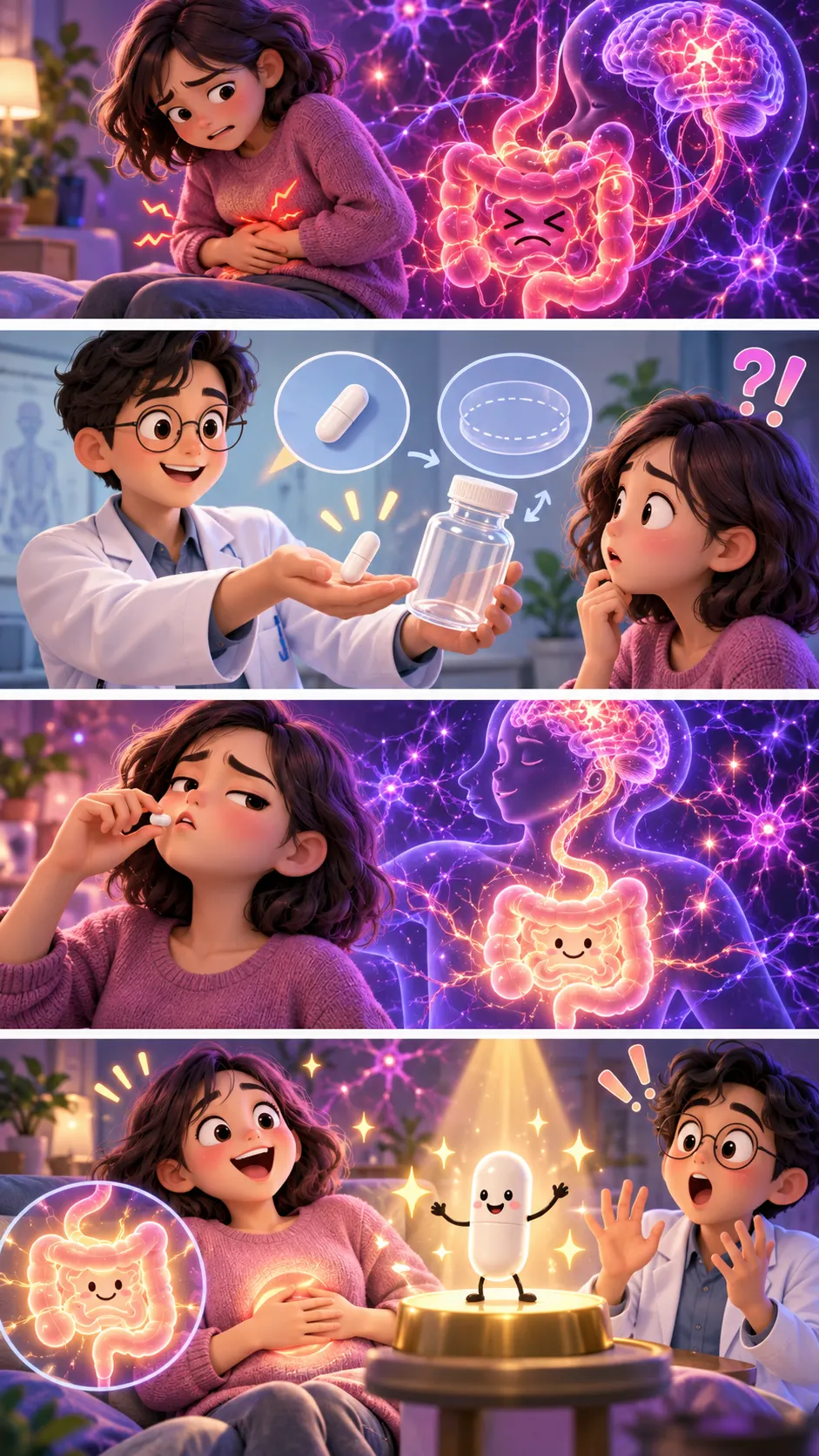
「有効成分ゼロの偽薬です」と説明して渡したのに、過敏性腸症候群の患者の症状が改善した。だますことなく効く「オープンラベル・プラセボ」として研究が進む。
ひとことで言うと「ニセの薬だよ」と言われて飲んでも、体が楽になることがある!
プラセボ(偽薬)効果という言葉を聞いたことはありますか? 有効成分の入っていない薬でも、「効く」と信じて飲むと、本当に症状が軽くなることがある現象です。
この効果は、「本人が本物の薬だと思い込んでいること」が前提だと考えられてきました。だます必要があるから、医療の現場では使いにくい。
ところが2010年、ハーバード大の研究チームが、この常識をくつがえす実験を発表しました。「これは偽薬です」と正直に伝えて渡しても、効果が出たのです。
01「中身ゼロ」と説明して渡した
ラベルを隠さずに渡すことから、これはオープンラベル・プラセボ(ラベル公開の偽薬)と呼ばれるようになりました。
02腰痛でも、似た結果が
その後、ほかの症状でも研究が進みました。
ポルトガルの研究者らは、慢性的な腰痛に悩む97人を対象に、ふだんの治療に加えてオープンラベル・プラセボを3週間飲んでもらうランダム化比較試験を行いました(Pain, 2016)。すると、ふだんの治療だけのグループより、痛みや生活の支障が軽くなったと報告されました。
腰痛、がんに伴う疲労感、アレルギー性鼻炎、うつ症状などを対象にした11の試験をまとめたドイツの研究チームのメタ分析でも、オープンラベル・プラセボには全体として中程度の効果がある、という結果が出ています(Scientific Reports, 2021)。
ただし、注意点もあります。患者は自分が偽薬を飲んでいると知っているので、盲検化(どちらのグループか分からなくすること)ができません。効果の多くは「楽になったか」という自己申告で測られていて、研究ごとの結果のばらつきも大きい。結果がかたよっているおそれ(バイアスのリスク)は「中程度」と評価されていて、確かな結論にはもっと大きく厳密な試験が必要です。

03なぜ「ウソじゃない偽薬」が効くの?
だまされていないのに効く理由は、まだはっきりとは分かっていません。いくつかの考え方があります。
- 飲むという儀式の力:薬を飲む行為そのものが、「ケアされている」「回復に向かっている」という合図として体に働く
- 条件づけ:これまで薬を飲んで楽になった経験が、体に「錠剤=楽になる」と覚えさせている
- 医療者との関わり:丁寧に説明を受け、話を聞いてもらうこと自体が安心感を生む
実際、カプチャクらの実験でも、医療スタッフが温かく丁寧に関わることが大切にされていました。
04まとめ
「偽薬だと分かっていても効く」――それは、私たちの体には、安心や期待によって不調を和らげる力が備わっていることを示しているのかもしれません。
だますことなく、その力を引き出せるとしたら。オープンラベル・プラセボは、「薬とは何か」「ケアとは何か」をあらためて考えさせてくれる研究です。
この研究を英語で読もう原田英語の English CornerThe placebo effect happens when a pill without any active ingredient makes people feel better. 音声
音声 4択クイズ9問A2・B1・B2タップして開く
原田英語の English Corner
この研究を英語で読もう
A placebo is a fake pill with no medicine in it. People thought it worked only when they believed it was real medicine.
But in 2010, doctors at Harvard told patients with stomach problems, "This is a fake pill." The patients took it twice a day for three weeks. Many of them still felt better than patients who took nothing. Scientists are still studying why.
65 words ・ CEFR A2
和訳を見る
プラセボとは、薬の成分が入っていない偽の錠剤です。人が本物の薬だと思っているときにだけ効くと考えられていました。
しかし2010年、ハーバード大学の医師たちは、おなかの不調がある患者に「これは偽の錠剤です」と伝えました。患者たちは3週間、1日2回それを飲みました。それでも多くの人が、何も飲まなかった患者より楽になったと感じました。科学者たちはその理由を今も研究しています。
4択リーディングクイズ
Q1. What is the passage mainly about?
偽薬だと知らせて渡しても症状が改善した研究の話なので D。
Q2. How often did the patients take the pill?
took it twice a day for three weeks とあるので B。
Q3. In this passage, "fake" means ...
fake は「偽の、本物でない」。正解は C。
The placebo effect happens when a pill without any active ingredient makes people feel better. It was long believed that this only works if patients think the pill is real. In 2010, however, Harvard researchers gave 80 patients with irritable bowel syndrome either no pills or pills that were clearly described as placebos.
The patients were told the pills contained no medicine but might still help the body heal itself. After three weeks, about 60% of the placebo group said their symptoms were adequately relieved, compared with about 35% of the no-pill group. Later studies of back pain found similar results. However, because patients knew what they were taking, the studies could not be blinded.
115 words ・ CEFR B1
和訳を見る
プラセボ効果とは、有効成分の入っていない錠剤で人の具合が良くなることです。これは、患者がその錠剤を本物だと思っている場合にしか効かないと長く信じられてきました。しかし2010年、ハーバード大学の研究者たちは、過敏性腸症候群の患者80人に、錠剤を何も渡さないか、偽薬だとはっきり説明した錠剤を渡しました。
患者たちは、その錠剤には薬が入っていないが、体が自分で治る働きを助けるかもしれないと伝えられました。3週間後、偽薬グループの約60%が症状が十分に和らいだと答えたのに対し、錠剤なしのグループでは約35%でした。その後の腰痛の研究でも同様の結果が得られました。しかし、患者は自分が何を飲んでいるか知っていたので、これらの研究は盲検化できませんでした。
4択リーディングクイズ
Q1. What is the main idea of the passage?
偽薬だと知っていても症状が和らいだという研究が中心なので A。D は本文にない。
Q2. What percentage of the placebo group reported adequate relief?
about 60% of the placebo group said their symptoms were adequately relieved とあるので C。35%は錠剤なしのグループ。
Q3. Why could the studies not be blinded?
最終文 because patients knew what they were taking, the studies could not be blinded とあるので B。
Placebos have traditionally been thought to work only through deception: patients improve because they believe an inert pill is real medicine. A 2010 Harvard trial challenged this assumption. Researchers divided 80 patients with irritable bowel syndrome into two groups. One received pills openly described as containing no active ingredient, along with an explanation that placebo effects might trigger the body's self-healing processes; the other received no pills but equally attentive care.
After three weeks, the open-label placebo group reported greater global improvement, and about 60% felt adequate relief, compared with about 35% of controls. A 2016 trial in 97 patients with chronic low back pain found reduced pain and disability, and a 2021 meta-analysis of 11 trials reported a moderate overall effect.
Several explanations have been proposed, including the ritual of taking a pill, conditioning from past experiences with medicine, and a supportive relationship with clinicians. Important limitations remain, however. Because patients know what they are taking, the trials cannot be blinded, outcomes are mostly self-reported, and results vary widely. Placebos mainly ease subjective symptoms such as pain or fatigue; they do not shrink tumors or kill bacteria, so they should never replace proper treatment.
195 words ・ CEFR B2
和訳を見る
プラセボは伝統的に、だますことによってのみ効くと考えられてきました。患者は、効き目のない錠剤を本物の薬だと信じるから良くなる、というのです。2010年のハーバード大学の試験は、この前提に疑問を投げかけました。研究者たちは過敏性腸症候群の患者80人を2つのグループに分けました。一方は、有効成分が入っていないとはっきり説明された錠剤を、プラセボ効果が体の自己治癒の働きを引き出すかもしれないという説明とともに受け取りました。
もう一方は錠剤を受け取りませんでしたが、同じように丁寧なケアを受けました。3週間後、オープンラベル・プラセボのグループは全体的な改善度がより高く、約60%が十分に楽になったと感じたのに対し、対照群では約35%でした。
慢性腰痛の患者97人を対象とした2016年の試験では痛みと生活の支障が軽くなり、11の試験をまとめた2021年のメタ分析は、全体として中程度の効果を報告しました。錠剤を飲むという儀式、薬を飲んだ過去の経験からの条件づけ、医療者との支えになる関係など、いくつかの説明が提案されています。しかし、重要な限界も残っています。患者は自分が何を飲んでいるか知っているので試験は盲検化できず、結果の多くは自己申告で、ばらつきも大きいのです。プラセボは主に痛みや疲労感のような本人が感じる症状を和らげるもので、腫瘍を小さくしたり細菌を殺したりはしないため、適切な治療の代わりには決してなりません。
4択リーディングクイズ
Q1. What assumption did the 2010 Harvard trial challenge?
Placebos have traditionally been thought to work only through deception という前提に A 2010 Harvard trial challenged this assumption と続くので A。
Q2. What did the control group receive in the 2010 trial?
the other received no pills but equally attentive care とあるので C。
Q3. Which statement about placebos does the author make?
最終文で主に主観的な症状を和らげるもので、適切な治療の代わりにはならないと述べているので D。
重要単語
- placeboC1名詞偽薬、プラセボA placebo contains no active ingredient.
 ラテン語で「私は喜ばせるだろう」。placebo effect「プラセボ効果」は医療・心理の長文の定番。
 - deceptionC1名詞だますこと、欺瞞Open-label placebos work without deception. 動詞 deceive(だます)、形容詞 deceptive(人を欺く)。
- randomized controlled trialC1名詞(句)ランダム化比較試験A randomized controlled trial compares groups chosen by chance. 略して RCT。治療効果を調べる研究デザインの代表格。
- symptomB2名詞症状Pain is a common symptom of many illnesses. 発音は /ˈsɪmptəm/(p はほぼ聞こえない)。「兆候」の意味で比喩的にも使う。
- blindingC1名詞盲検化Blinding is impossible when patients know what they take. double-blind(二重盲検)は患者も医師もどちらの群か知らない方式。
- inertC1形容詞(化学的に)不活性の、効き目のないA placebo is an inert pill. inertia(慣性・惰性)と同語源。inert gas「不活性ガス」。
 入試に出る順の単語帳を印刷する →
 全5561語の「科学英単語カード」で復習する →
 動画でもっと知る
動画は各チャンネルの公式埋め込みで表示しています(YouTube)。
この話題を TED で聞く
同じテーマの TED・TED-Ed を、 TED HACK で。英語の見どころ・使える表現・学習ミッションつきの日本語ガイドです。(運営:原田英語)

 公式・一次情報をチェック
- Program in Placebo Studies & Therapeutic Encounter(Beth Israel Deaconess Medical Center / Harvard Medical School)programinplacebostudies.org
- Placebo Effect(NIH 国立補完統合衛生センター NCCIH)nccih.nih.gov
 4コマでわかる
このネタ、誰かに教えたくなった?
「これは中身のない偽薬です」と正直に説明して渡したのに、患者さんの症状が改善したというハーバード大の実験があるらしい。だまさなくても効くプラセボ。心と体のつながり、奥が深すぎる。
押すと「マジかリスト」に保存されます
 出典・参考文献(4件)タップで表示
- Kaptchuk et al. (2010) Placebos without deception: a randomized controlled trial in irritable bowel syndrome, PLoS ONEdoi.org
- Carvalho et al. (2016) Open-label placebo treatment in chronic low back pain: a randomized controlled trial, Paindoi.org
- Charlesworth et al. (2017) Effects of placebos without deception compared with no treatment: a systematic review and meta-analysis, Journal of Evidence-Based Medicinedoi.org
- von Wernsdorff et al. (2021) Effects of open-label placebos in clinical trials: a systematic review and meta-analysis, Scientific Reportsdoi.org

※本記事は上記の研究・公開資料をもとに、原田英語が独自の言葉で解説したものです。引用は著作権法第32条の範囲で行い、出典を明記しています。画像はすべてオリジナルのイメージです。研究結果には限界や個人差があります。誤りのご指摘は原田英語のお問い合わせフォームから。
 これも「マジか!?」


 脳・心理
脳・心理
絶対音感は大人になってからでも身につく? 中国や日本の音大生に多い理由と、大人の訓練実験

 脳・心理
脳・心理
赤ちゃんの頃の記憶がないのは、「記憶を作れない」からではないかもしれない


 脳・心理
脳・心理
【関学の入試に出た】地平線の月が大きく見えるのは「目の錯覚」。実は大きさは同じだった

 脳・心理
脳・心理
【どんでん返し】マシュマロを我慢できた子は成功する? 900人の追試で効果は大幅に縮んでいた
 脳・心理
脳・心理
「青と黒」か「白と金」か。世界を二分したドレスの写真、脳は"照明"を推理していた
 脳・心理
脳・心理