

 体と健康・食ビミョー
発酵食品を増やしたら腸内細菌が多様になり、炎症の目印が下がった。でも“36人の研究”です
 2026.10.02
 English Corner(A2〜B2・4択クイズ)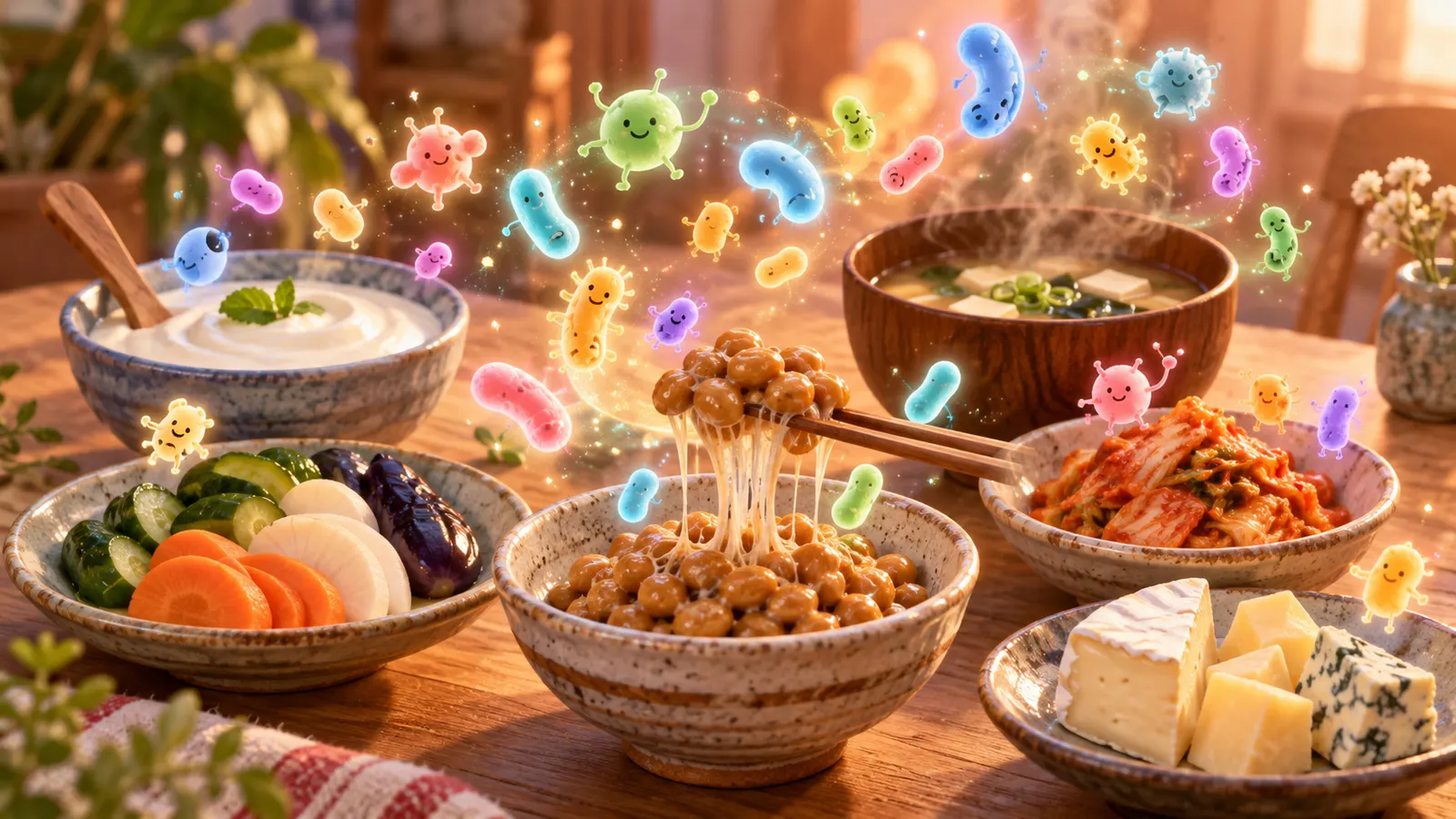
 読む前に予想してみよう!
発酵食品を食べれば、病気の予防効果がはっきり証明されている
腸内細菌や炎症マーカーの変化を示す研究はあるが、病気を防ぐことを示した大規模な試験はまだ少ない。
 研究カード(どんな研究?)
- 対象
- 健康な成人
- 規模
- 36人(各群18人)
- 研究の種類
- ランダム化比較試験(17週間)
- 確かさ
- ★★☆☆☆
スタンフォード大の試験で、発酵食品を増やした人は腸内細菌の多様性が上がり炎症の目印が下がった。ただし36人の研究で、健康効果は断言できない。
ひとことで言うと発酵食品は腸の細菌を「にぎやか」にするかも。でも研究はまだ途中!
みそ、しょうゆ、納豆、ぬか漬け、ヨーグルト、キムチ……。日本の食卓は、世界でも有数の「発酵食品だらけ」です。
「発酵食品は腸にいい」という話はよく聞きますが、実際にどこまで確かめられているのでしょうか。
2021年、アメリカ・スタンフォード大学が、これをくじ引き実験(ランダム化比較試験)で調べた研究を発表しました。結果はなかなか興味深いもの。ただし、読むときにはいくつかの「ただし書き」が欠かせません。
01「発酵食品グループ」と「食物繊維グループ」
02発酵食品グループで起きたこと
結果、発酵食品グループでは、
- 腸内細菌の種類の多さ(多様性)がじわじわと上がった
- 血液中の炎症に関わる目印(炎症マーカー)の多くが下がった
という変化が見られました。炎症は、さまざまな生活習慣病と関係があると考えられているので、注目を集めたわけです。
一方、食物繊維グループでは、腸内細菌の多様性は大きくは変わらず、免疫の反応は人によってバラバラでした。もともとの腸内細菌の状態によって、反応が分かれたようです。

「にぎやかな腸内細菌」がなぜ大事なのか。腸内細菌の種類が多いほど、食べ物の変化や病原体に対してしなやかに対応できるのではないか、と考えられています。ただし、「多様性が高いほど必ず健康」と単純に言い切れるわけではありません。
03でも、ここで冷静に
この研究をもって「発酵食品で病気が防げる」とは言えません。理由は3つあります。
- 参加者は36人(各グループ18人)と小規模
- 調べたのは腸内細菌や血液の目印で、病気そのものが減ったかどうかは見ていない
- 試験の最初に決めていたメインの指標(免疫細胞の反応のスコア)では、はっきりした差は出ていない
2021年に国際的な専門家グループ(ISAPP)がまとめた見解でも、発酵食品は「望ましい微生物の成長と酵素による変化でつくられた食品」と定義されたうえで、健康効果についてはヒトでのしっかりした試験がまだ足りないことが指摘されています。また、パンやしょうゆのように、加熱や加工で生きた菌がほとんど残らない発酵食品も多いことにも注意が必要です。
04まとめ
発酵食品を増やすと、腸内細菌がにぎやかになり、炎症の目印が下がるかもしれない——そんな可能性を示す、ワクワクする研究が出てきました。でもそれは36人の研究。「発酵食品で健康に」と言い切れる段階ではありません。
いつものみそ汁や納豆を、「バランスのいい食事の一部」として楽しむ。今わかっていることから言えるのは、そのくらいがちょうどいいところです。
この研究を英語で読もう原田英語の English CornerFermented foods such as miso, natto and yogurt are often said to be good for the gut, but how strong is the… 音声
音声 4択クイズ9問A2・B1・B2タップして開く
原田英語の English Corner
この研究を英語で読もう
Yogurt, kimchi and natto are fermented foods. Are they good for your stomach? Scientists at Stanford University studied 36 healthy adults. One group ate more fermented foods, and the other group ate more fiber.
After some weeks, the fermented food group had more kinds of gut bacteria. Some signs of inflammation in their blood went down. But this was a small study, so we cannot say these foods prevent illness.
70 words ・ CEFR A2
和訳を見る
ヨーグルト、キムチ、納豆は発酵食品です。これらはお腹に良いのでしょうか。スタンフォード大学の科学者たちは、36人の健康な大人を調べました。一方のグループは発酵食品を多く食べ、もう一方のグループは食物繊維を多く食べました。
数週間後、発酵食品のグループでは腸内細菌の種類が増えました。血液中の炎症のしるしの一部も下がりました。しかし、これは小さな研究なので、これらの食べ物が病気を防ぐとは言えません。
4択リーディングクイズ
Q1. What is the passage mainly about?
発酵食品を増やすと腸内細菌がどう変わるかを調べた研究の話なので C。
Q2. What happened in the fermented food group?
the fermented food group had more kinds of gut bacteria とあるので B。
Q3. In this passage, "prevent" means ...
prevent は「防ぐ」、何かが起きないようにすることなので A。
Fermented foods such as miso, natto and yogurt are often said to be good for the gut, but how strong is the evidence? In 2021, researchers at Stanford University randomly divided 36 healthy adults into two groups for 17 weeks. One group gradually increased fermented foods, eating about six servings a day at the peak, while the other ate more fiber, such as beans and whole grains.
In the fermented food group, the variety of gut bacteria slowly increased, and many markers of inflammation in the blood fell. However, the study was small, and it measured markers rather than actual illness. It is too early to say that fermented foods prevent disease.
112 words ・ CEFR B1
和訳を見る
みそ、納豆、ヨーグルトのような発酵食品は腸に良いとよく言われますが、その証拠はどれくらい確かなのでしょうか。2021年、スタンフォード大学の研究者たちは、36人の健康な大人を無作為に2つのグループに分け、17週間の試験を行いました。一方のグループは発酵食品を少しずつ増やし、ピーク時には1日に約6食分を食べ、もう一方のグループは豆や全粒穀物などの食物繊維を多く食べました。
発酵食品のグループでは、腸内細菌の種類がゆっくり増え、血液中の多くの炎症マーカーが下がりました。しかし、この研究は小規模で、実際の病気ではなく目印を測ったものでした。発酵食品が病気を防ぐと言うのは、まだ早すぎます。
4択リーディングクイズ
Q1. How long did the Stanford study last?
for 17 weeks とあるので D。36 は参加人数、6 は1日の食数。
Q2. What did the other group eat more of?
the other ate more fiber, such as beans and whole grains とあるので C。
Q3. Why does the writer say it is "too early" to make a health claim?
the study was small, and it measured markers rather than actual illness とあるので A。
Fermented foods are a staple of the Japanese diet, and many people assume they benefit the gut. A 2021 randomized trial at Stanford University put this idea to the test. Thirty-six healthy adults were assigned to one of two diets for 17 weeks: one group steadily increased fermented foods such as yogurt, kefir, kimchi and kombucha, reaching about six servings a day, while the other increased fiber from beans, whole grains and vegetables.
In the fermented food group, the diversity of gut bacteria rose gradually and many inflammatory markers in the blood declined. The fiber group showed no major change in diversity, and its immune responses varied depending on each person's original gut bacteria. These findings attracted attention because chronic inflammation is linked to many lifestyle diseases. There are caveats, though.
Each group had only 18 people, the study measured biological markers rather than disease outcomes, and the primary measure chosen in advance showed no clear difference. In addition, many fermented foods, such as bread and soy sauce, contain few live microbes after processing. An international expert panel concluded in 2021 that rigorous human trials are still lacking.
188 words ・ CEFR B2
和訳を見る
発酵食品は日本の食事の主要な要素で、多くの人はそれが腸に良いと思い込んでいます。スタンフォード大学の2021年のランダム化試験は、この考えを検証しました。36人の健康な大人が、17週間、2つの食事のどちらかに割り当てられました。
一方のグループはヨーグルト、ケフィア、キムチ、コンブチャなどの発酵食品を着実に増やして1日約6食分に達し、もう一方は豆、全粒穀物、野菜からの食物繊維を増やしました。発酵食品のグループでは、腸内細菌の多様性が徐々に高まり、血液中の多くの炎症マーカーが低下しました。食物繊維のグループでは多様性に大きな変化はなく、免疫の反応は一人ひとりのもともとの腸内細菌によってばらつきました。慢性的な炎症は多くの生活習慣病と関連しているため、これらの発見は注目を集めました。ただし、注意点がいくつかあります。
各グループはわずか18人で、研究は病気の結果ではなく生物学的な目印を測ったものであり、事前に決めた主要な指標でははっきりした差が出ませんでした。さらに、パンやしょうゆのように、加工後に生きた微生物がほとんど残らない発酵食品も多くあります。国際的な専門家グループは2021年に、ヒトでの厳密な試験はまだ不足していると結論づけました。
4択リーディングクイズ
Q1. Which statement best describes the passage?
前半で興味深い結果を紹介し、後半で caveats(注意点)を挙げているので「有望だが限界のある研究」を説明した B。
Q2. What happened in the fiber group?
The fiber group showed no major change in diversity, and its immune responses varied ... とあるので D。
Q3. Why does the writer mention bread and soy sauce?
contain few live microbes after processing とあり、発酵食品でも生きた菌がほとんどないものがあることを示す例なので C。
重要単語
- fermentedB2形容詞発酵したKimchi and yogurt are fermented foods.
 ferment(発酵する)の過去分詞形。名詞は fermentation(発酵)。
 - microbiomeC1名詞微生物叢(そう)、細菌の集まりYour gut microbiome changes with your diet. micro(小さい)+bio(生命)+-ome(全体)。gut microbiome「腸内細菌叢」は健康記事の頻出語。
- diversityB2名詞多様性A diverse microbiome may be a sign of health. 形容詞 diverse。biodiversity(生物多様性)も入試頻出。
- inflammationC1名詞炎症Chronic inflammation is linked to many diseases. inflame(炎症を起こす)から。flame(炎)と同じ語根で「燃える」イメージ。
- probioticC1名詞プロバイオティクス(体によい生きた菌)Not every fermented food contains probiotics. pro-(ために)+bio(生命)。antibiotic(抗生物質)と対比して覚える。
- caveatC1名詞注意書き、ただし書きThere are some important caveats to this study. 発音は /ˈkæviæt/(キャヴィアット)。研究紹介で「ただし~」と限界を述べるときの定番語。
 入試に出る順の単語帳を印刷する →
 全5561語の「科学英単語カード」で復習する →
 動画でもっと知る
動画は各チャンネルの公式埋め込みで表示しています(YouTube)。
この話題を TED で聞く
同じテーマの TED・TED-Ed を、 TED HACK で。英語の見どころ・使える表現・学習ミッションつきの日本語ガイドです。(運営:原田英語)


 公式・一次情報をチェック
このネタ、誰かに教えたくなった?
ヨーグルトやキムチ、ケフィアなどの発酵食品を1日6食分くらいまで増やしたら、腸内細菌の種類が増えて、炎症の目印が下がったらしい。スタンフォード大の試験。でも参加者は36人。「腸活で何でも治る」はまだ言えない。
押すと「マジかリスト」に保存されます
 出典・参考文献(3件)タップで表示
- Wastyk et al. (2021) Gut-microbiota-targeted diets modulate human immune status, Celldoi.org
- Marco et al. (2021) The International Scientific Association for Probiotics and Prebiotics (ISAPP) consensus statement on fermented foods, Nature Reviews Gastroenterology & Hepatologydoi.org
- Dimidi et al. (2019) Fermented Foods: Definitions and Characteristics, Impact on the Gut Microbiota and Effects on Gastrointestinal Health and Disease, Nutrientsdoi.org

※本記事は上記の研究・公開資料をもとに、原田英語が独自の言葉で解説したものです。引用は著作権法第32条の範囲で行い、出典を明記しています。画像はすべてオリジナルのイメージです。研究結果には限界や個人差があります。誤りのご指摘は原田英語のお問い合わせフォームから。
 これも「マジか!?」
 体・健康
体・健康
虫垂(盲腸)は「進化の名残」じゃないかもしれない。腸内細菌の"避難所"説と、手術しない治療
 体・健康
体・健康
おなかの細菌が「気分」に口出ししている? 腸と脳をつなぐホットラインの正体
 体・健康
体・健康
2026年ノーベル生理学・医学賞は10月5日発表。前年の「免疫のブレーキ」から読む受賞研究の見方


 体・健康
体・健康
「体の細菌は人間の細胞の10倍」はまちがい。計算し直したら“ほぼ1対1”だった

 体・健康
体・健康
1年間ウォーキングした高齢者、記憶の司令塔「海馬」が約2%大きくなっていた

 体・健康
体・健康