

 体と健康・食ビミョー
冷やごはんで「レジスタントスターチ」が増えるのは本当。でも“血糖値が下がる”かは研究で割れていた
 2026.10.02
 English Corner(A2〜B2・4択クイズ)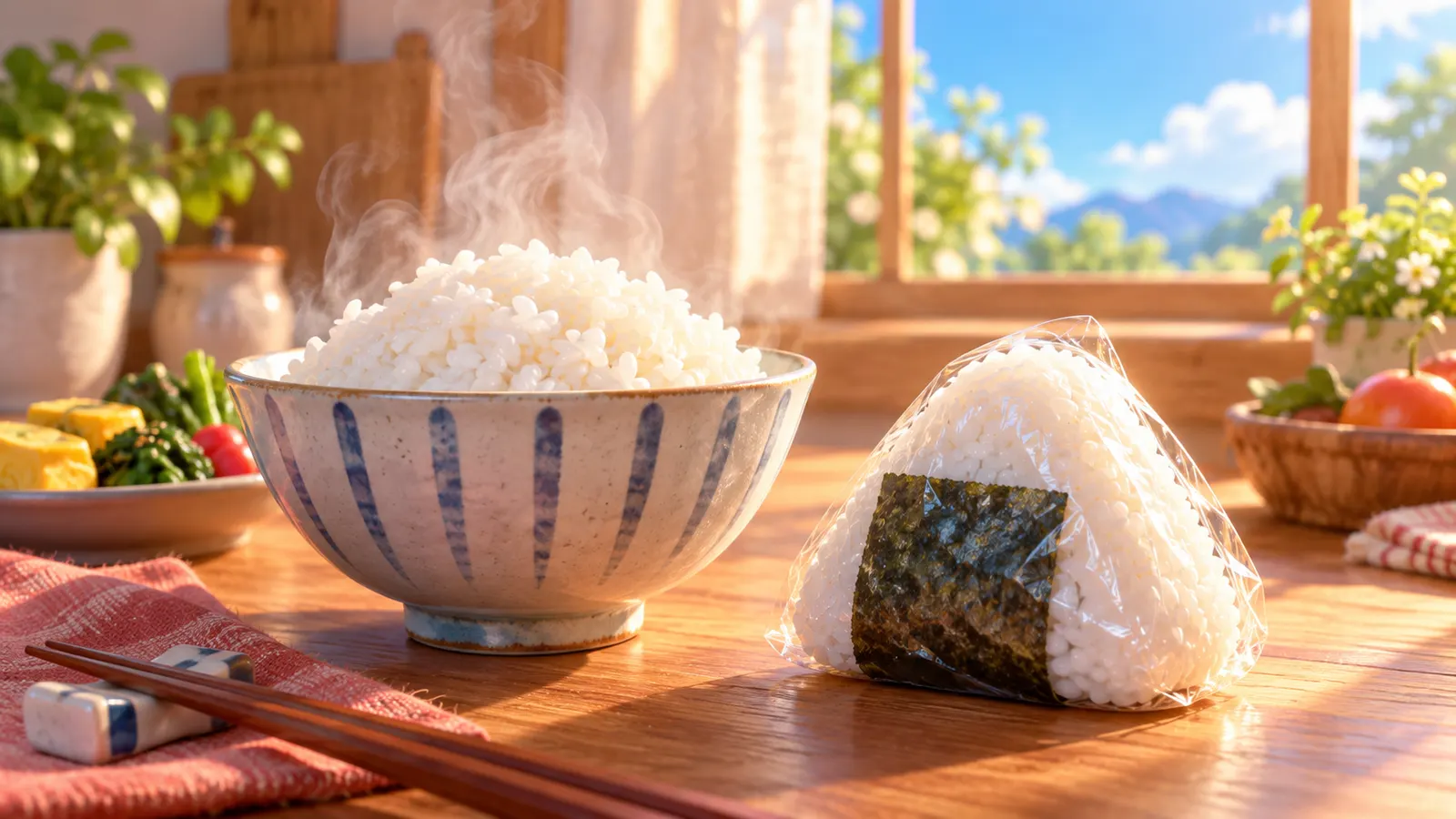
 読む前に予想してみよう!
炊いたごはんを冷やすと、消化されにくいでんぷんが増える
冷えるとでんぷんの分子が並び直す「老化」が起き、消化されにくい部分が増える。ただし増える量は多くない。
 研究カード(どんな研究?)
- 対象
- 健康な成人
- 規模
- 15人・21人の小規模試験
- 研究の種類
- ヒト試験(Soniaはランダム化単盲検クロスオーバー、Chiuはパイロット試験)
- 確かさ
- ★★☆☆☆
炊いたごはんを冷やすと消化されにくいでんぷんが増えるのは確か。ただ量は少しで、食後の血糖値への効果は研究によって割れている。
ひとことで言うと冷やごはんは消化されにくいでんぷんが少し増える。でも魔法じゃない!
「冷やごはんは太りにくい」「おにぎりは冷めてから食べると血糖値が上がりにくい」——SNSや健康番組で、こんな話を見たことはありませんか。
カギになるのはレジスタントスターチという言葉。直訳すると「(消化に)抵抗するでんぷん」です。
調べてみると、「冷やすと増える」はホント。でも「だから血糖値が上がらない」となると、研究の結果は割れていたのです。
01ごはんが冷えると、でんぷんが「並び直す」
お米の主成分はでんぷん。生のお米のでんぷんは、分子がぎっしり並んだかたい構造をしています。炊くと水と熱で分子がほどけ、やわらかくて消化しやすい状態になります(糊化)。
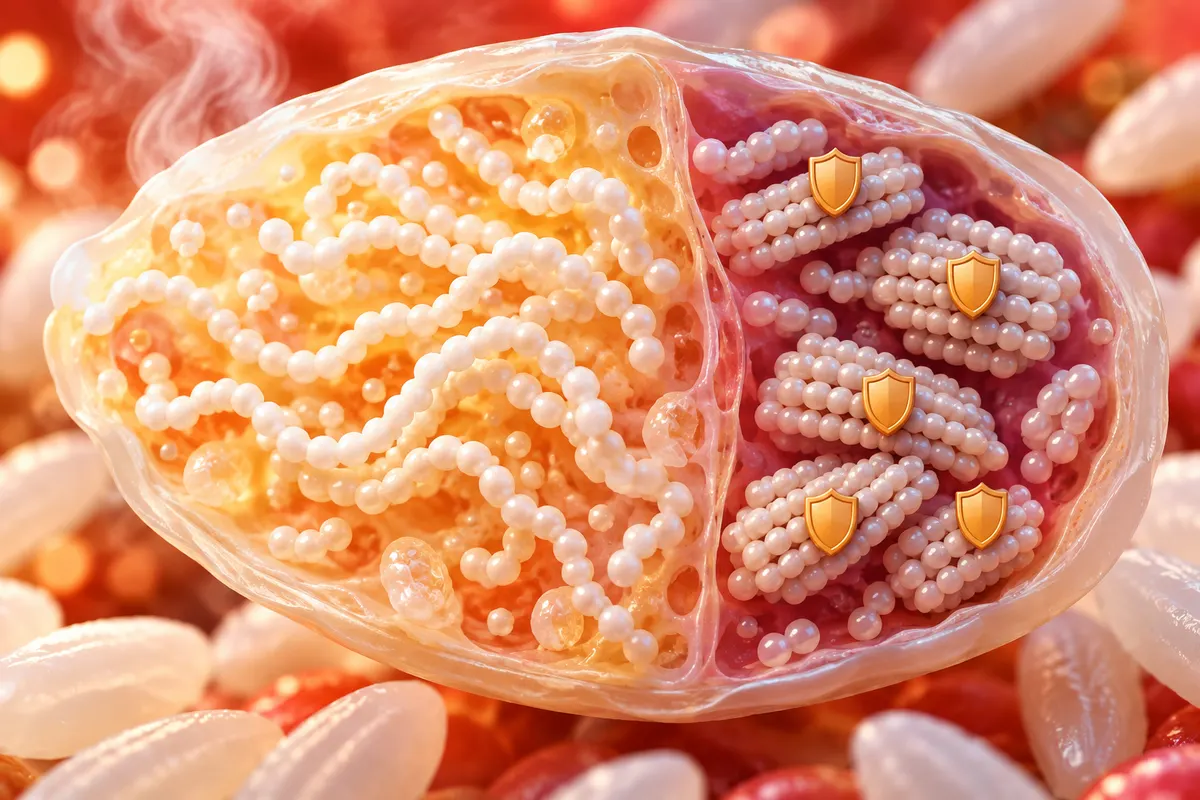
ところが、炊いたごはんが冷えていくと、ほどけていた分子の一部がふたたび寄り集まって並び直します。これをでんぷんの老化といいます。冷やごはんが固くなるのは、このためです。
この並び直した部分の一部は、小腸の消化酵素で分解されにくくなり、そのまま大腸まで届きます。これがレジスタントスターチの一種です。大腸では腸内細菌のエサになり、食物繊維に近いはたらきをすると考えられています。
02冷蔵+温め直しで、血糖値の上がり方がゆるやかに?
冷やして温め直しても、レジスタントスターチはある程度残るようです。
03でも、別の研究では「差なし」
ところがどんでん返しがあります。2013年の別の研究では、お米の種類や炊き方を変え、3日間冷蔵してから温め直したごはんで比べました。レジスタントスターチが最も多いごはん(100gあたり2.55g)と、最も少ないごはん(0.20g)を健康な成人21人に食べてもらったところ、血糖値の上がり方にはっきりした差は出ませんでした。
研究者たちは「お米にもともと含まれる程度のレジスタントスターチでは、血糖値や食欲への影響は小さい」と結論づけています。
どちらも参加者が十数〜二十人ほどの小さな研究で、結論を出すにはまだ足りません。そもそも冷やして増える量は100gあたり1g前後。ごはん1杯(約150g)のでんぷんは50g前後なので、ほんの一部です。
04まとめ
冷やごはんでレジスタントスターチが増えるのは本当です。でも、増える量は少しで、血糖値への効果は研究によって割れているのが現状でした。
冷やごはんは「健康の裏ワザ」というより、おにぎりやお弁当をおいしく食べる日常の知恵くらいに考えておくのがよさそうです。
この研究を英語で読もう原田英語の English CornerPut leftover rice in the fridge overnight, and its starch slowly changes. 音声
音声 4択クイズ9問A2・B1・B2タップして開く
原田英語の English Corner
この研究を英語で読もう
Some people say cold rice is better for your blood sugar. Is it true? When cooked rice gets cold, some of its starch changes. This starch is harder to digest. It is called resistant starch.
So cold rice really has a little more of it. But the amount is small.
Also, two small studies found different results about blood sugar. So cold rice is not a magic food.
68 words ・ CEFR A2
和訳を見る
冷たいごはんのほうが血糖値に良いと言う人がいます。本当でしょうか。炊いたごはんが冷えると、でんぷんの一部が変化します。このでんぷんは消化されにくくなります。これはレジスタントスターチと呼ばれます。
だから、冷たいごはんには本当にそれが少し多く含まれています。しかし、その量はわずかです。
また、2つの小さな研究では、血糖値について異なる結果が出ました。つまり、冷たいごはんは魔法の食べ物ではないのです。
4択リーディングクイズ
Q1. What is the main message of the passage?
レジスタントスターチは少し増えるが量は少なく、研究結果も割れているので魔法の食べ物ではない、という内容なので B。
Q2. What happens to some starch when cooked rice gets cold?
This starch is harder to digest. とあるので C。
Q3. In this passage, "digest" means ...
digest は「消化する」、体の中で食べ物を分解することなので A。
Put leftover rice in the fridge overnight, and its starch slowly changes. As the rice cools, some starch molecules pack tightly together again. The small intestine has trouble breaking down this part, so it is called resistant starch. This is why cold rice is said to be better for blood sugar.
Two studies have tested the idea. In a 2015 study in Indonesia, rice that was chilled for 24 hours and then reheated had more resistant starch than freshly cooked rice. The 15 adults who ate it showed a smaller rise in blood sugar.
But a 2013 study with 21 adults found no clear difference. Both were small studies. And the extra resistant starch is only about one gram per 100 grams of rice.
124 words ・ CEFR B1
和訳を見る
残ったごはんを冷蔵庫にひと晩入れておくと、でんぷんがゆっくり変化します。ごはんが冷えるにつれて、でんぷんの分子の一部がふたたびぎっしりと寄り集まります。小腸はこの部分をうまく分解できないので、これはレジスタントスターチと呼ばれます。冷たいごはんは血糖値に良いと言われるのはこのためです。
この考えを確かめた研究が2つあります。インドネシアで行われた2015年の研究では、24時間冷やしてから温め直したごはんは、炊きたてのごはんよりもレジスタントスターチが多く含まれていました。それを食べた15人の成人は、血糖値の上昇が小さくなりました。
しかし、21人の成人を対象にした2013年の研究では、はっきりした差は見られませんでした。どちらも小規模な研究です。それに、増えるレジスタントスターチは、ごはん100gあたり1gほどにすぎません。
4択リーディングクイズ
Q1. In the 2015 study, what kind of rice was compared with freshly cooked rice?
rice that was chilled for 24 hours and then reheated と比べているので D。
Q2. What did the 2013 study find?
a 2013 study with 21 adults found no clear difference とあるので A。
Q3. What is the writer's attitude toward the claim that cold rice is healthier?
2015年の研究では血糖値の上昇が小さくなったが、2013年の研究では found no clear difference で、どちらも small studies、増える量も100gあたり1gほどと述べているので C。
A popular health tip claims that eating cold rice helps prevent sharp rises in blood sugar. The chemistry behind it is sound. Cooking causes starch molecules to loosen and absorb water, making them easy to digest, but as rice cools, some molecules realign in a process called retrogradation.
Part of this retrograded starch resists digestion in the small intestine and reaches the large intestine, where it may act somewhat like dietary fiber. In a 2015 Indonesian study, resistant starch rose from 0.64 grams per 100 grams in freshly cooked rice to 1.65 grams in rice chilled at 4°C for 24 hours and reheated, and 15 healthy adults showed a smaller blood sugar response to the reheated rice.
However, a 2013 study in which 21 adults ate rice with either high or low resistant starch found no clear difference in blood sugar. Both trials were small, and methods for measuring resistant starch vary. The increase is also only a small fraction of the roughly 50 grams of starch in a bowl of rice. For managing blood sugar, portion size and the rest of the meal probably matter far more.
188 words ・ CEFR B2
和訳を見る
ある人気の健康法は、冷たいごはんを食べると血糖値の急上昇を防げると主張しています。その背後にある化学は確かです。炊くことででんぷんの分子はほどけて水を吸い、消化しやすくなりますが、ごはんが冷えると、一部の分子が並び直します。
これは老化と呼ばれる過程です。この老化したでんぷんの一部は小腸での消化に抵抗して大腸に届き、そこで食物繊維に近いはたらきをするかもしれません。2015年のインドネシアの研究では、レジスタントスターチは炊きたてのごはんの100gあたり0.64gから、4℃で24時間冷やして温め直したごはんでは1.65gに増え、15人の健康な成人は温め直したごはんで血糖値の反応が小さくなりました。
しかし、21人の成人がレジスタントスターチの多いごはんか少ないごはんを食べた2013年の研究では、血糖値にはっきりした差は見られませんでした。どちらの試験も小規模で、レジスタントスターチの測定方法もさまざまです。また、増える量は、ごはん1杯に含まれる約50gのでんぷんのごく一部にすぎません。血糖値の管理には、おそらく量や食事のほかの部分のほうがはるかに重要でしょう。
4択リーディングクイズ
Q1. What is the main point of the passage?
化学的には冷やすと増えるのは確か(The chemistry behind it is sound)だが、血糖値への効果は研究で割れている、という内容なので B。
Q2. According to the 2015 study, how much resistant starch did the chilled and reheated rice contain?
to 1.65 grams in rice chilled at 4°C for 24 hours and reheated とあるので D。0.64 g は炊きたて。
Q3. What does the writer suggest in the final sentence?
portion size and the rest of the meal probably matter far more とあり、温度より量や組み合わせが重要という主張なので A。
重要単語
- starchB2名詞でんぷんRice is rich in starch.
 洗濯の「のり」も starch。starchy food(でんぷん質の食品)も覚えておく。
 - resistantB2形容詞抵抗する、~されにくいResistant starch is not easily digested. resist(抵抗する)の形容詞。water-resistant(耐水性の)、be resistant to ~ の形で頻出。
- digestB2動詞消化するIt takes time to digest a big meal. 名詞は digestion。比喩で「(情報を)理解する」の意味もある。
- blood sugarB1名詞(句)血糖(値)Blood sugar rises after eating rice. 学術的には blood glucose。a spike in blood sugar「血糖値の急上昇」。
- reheatB1動詞温め直すYou can reheat the rice in the microwave. re-(再び)+heat。rewrite / rebuild と同じ作りの語。
- portionB1名詞(食べ物の)1人前、量Portion size matters more than temperature. portion size「1回に食べる量」は栄養の文脈で頻出。「部分」の意味もある。
 入試に出る順の単語帳を印刷する →
 全5561語の「科学英単語カード」で復習する →
 公式・一次情報をチェック
- 細菌による食中毒(厚生労働省)mhlw.go.jp
このネタ、誰かに教えたくなった?
冷やごはんで「レジスタントスターチ」が増えるのは本当らしい。冷蔵して温め直したごはんで血糖値の上昇がゆるやかになった研究もあるけど、差が出なかった研究も。過度な期待は禁物かも。
押すと「マジかリスト」に保存されます
 出典・参考文献(4件)タップで表示
- Sonia et al. (2015) Effect of cooling of cooked white rice on resistant starch content and glycemic response, Asia Pacific Journal of Clinical Nutritionpubmed.ncbi.nlm.nih.gov
- Chiu & Stewart (2013) Effect of variety and cooking method on resistant starch content of white rice and subsequent postprandial glucose response and appetite in humans, Asia Pacific Journal of Clinical Nutritionpubmed.ncbi.nlm.nih.gov
- Englyst, Kingman & Cummings (1992) Classification and measurement of nutritionally important starch fractions, European Journal of Clinical Nutritionpubmed.ncbi.nlm.nih.gov
- Birt et al. (2013) Resistant starch: promise for improving human health, Advances in Nutritiondoi.org

※本記事は上記の研究・公開資料をもとに、原田英語が独自の言葉で解説したものです。引用は著作権法第32条の範囲で行い、出典を明記しています。画像はすべてオリジナルのイメージです。研究結果には限界や個人差があります。誤りのご指摘は原田英語のお問い合わせフォームから。
 これも「マジか!?」


 体・健康
体・健康
「誰かがそこにいる」気配の正体。ロボットで"見えない人"を作り出した実験


 体・健康
体・健康
「体の細菌は人間の細胞の10倍」はまちがい。計算し直したら“ほぼ1対1”だった

 体・健康
体・健康
1年間ウォーキングした高齢者、記憶の司令塔「海馬」が約2%大きくなっていた

 体・健康
体・健康
指紋は「すべり止め」じゃなかった? 測ったら接触面積は減っていた。本当の役割は"振動センサー"

 体・健康
体・健康
大人になって牛乳が苦手になるのは「人類の標準」だった。むしろ平気な人が“突然変異”
 体・健康
体・健康