

 体と健康・食ホント
【新潟大の入試に出た】人間のケガの治りは、チンパンジーの約3倍遅かった
 2026.10.02
 English Corner(A2〜B2・4択クイズ)
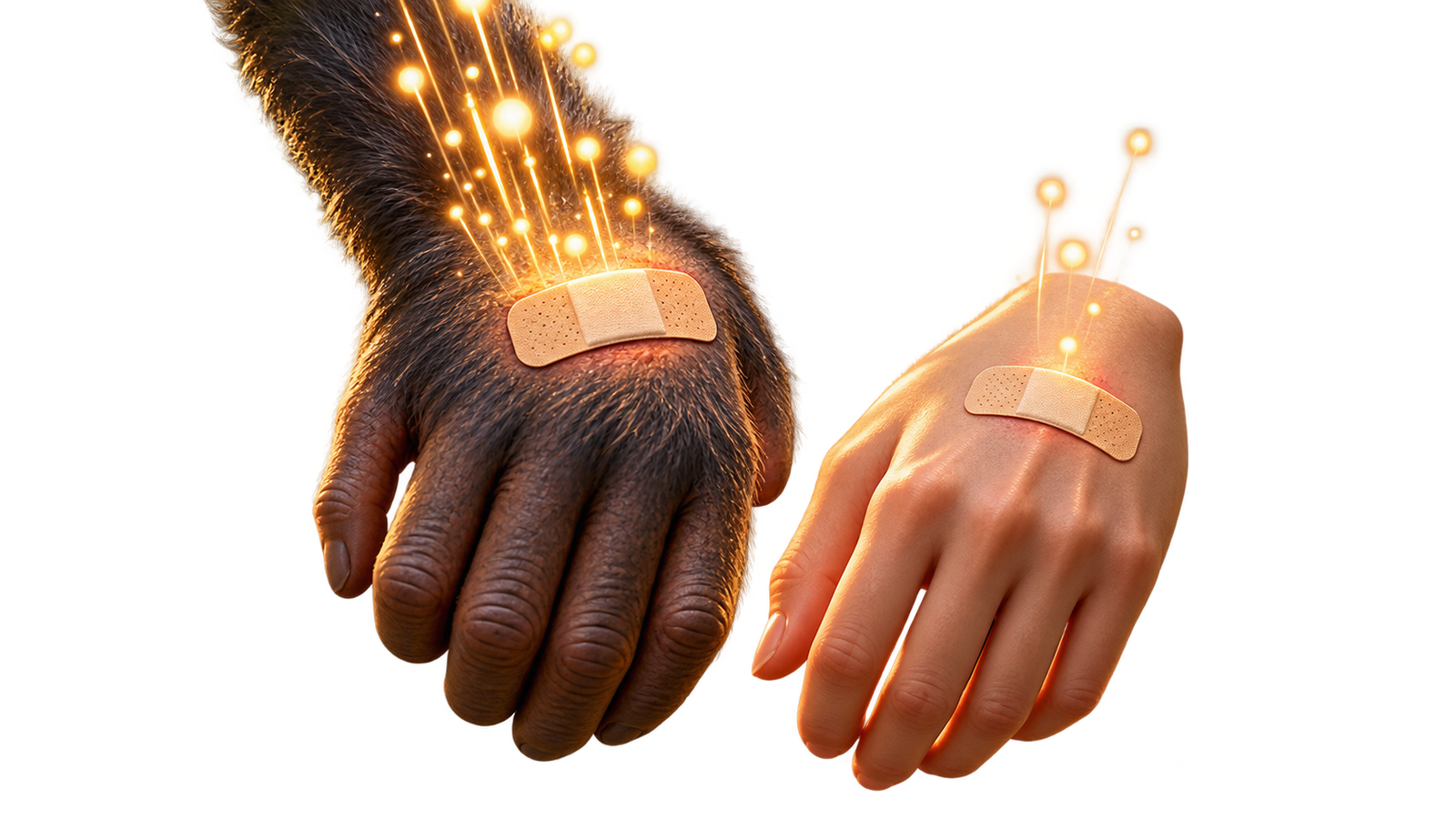
 読む前に予想してみよう!
傷の治る速さは、ネズミとサルの仲間で大きく違っていた
ネズミなどのげっ歯類とサルの仲間の治る速さに大きな差はなく、人間だけが目立って遅かった。
 研究カード(どんな研究?)
- 対象
- 人・チンパンジー・サル類・げっ歯類
- 規模
- 人は24人
- 研究の種類
- 種間比較研究(観察)
- 確かさ
- ★★★☆☆
琉球大学などのチームが比べると、人間の傷がふさがる速さは1日約0.25mm。サルやチンパンジーの約3分の1しかなかった。
ひとことで言うと人間のケガの治るスピードは、サルやチンパンジーよりずっとゆっくりらしい!
転んでできたすり傷が、なかなか治らない。かさぶたが取れるまで、何週間もかかる……。
実はそれ、人間という生き物の特徴かもしれません。日本の琉球大学などの研究チームが、人間と、チンパンジーやサル、ネズミなどの傷の治り方を比べたところ、人間だけが飛び抜けて遅いことがわかったのです。
この「人間と他の動物の治癒速度の違い」は、2026年度の新潟大学(前期)の英語で長文のテーマになりました(代々木ゼミナールの解答速報・概評で確認)。
01同じ「傷がふさがる速さ」で比べてみた
おもしろいのは、サルの仲間4種の間では差がほとんどなく、ネズミなどとも大きく変わらなかったこと。つまり「ゆっくり治る」のは霊長類全体の特徴ではなく、人間だけの特徴だったのです。
02なぜ人間だけ遅いのか
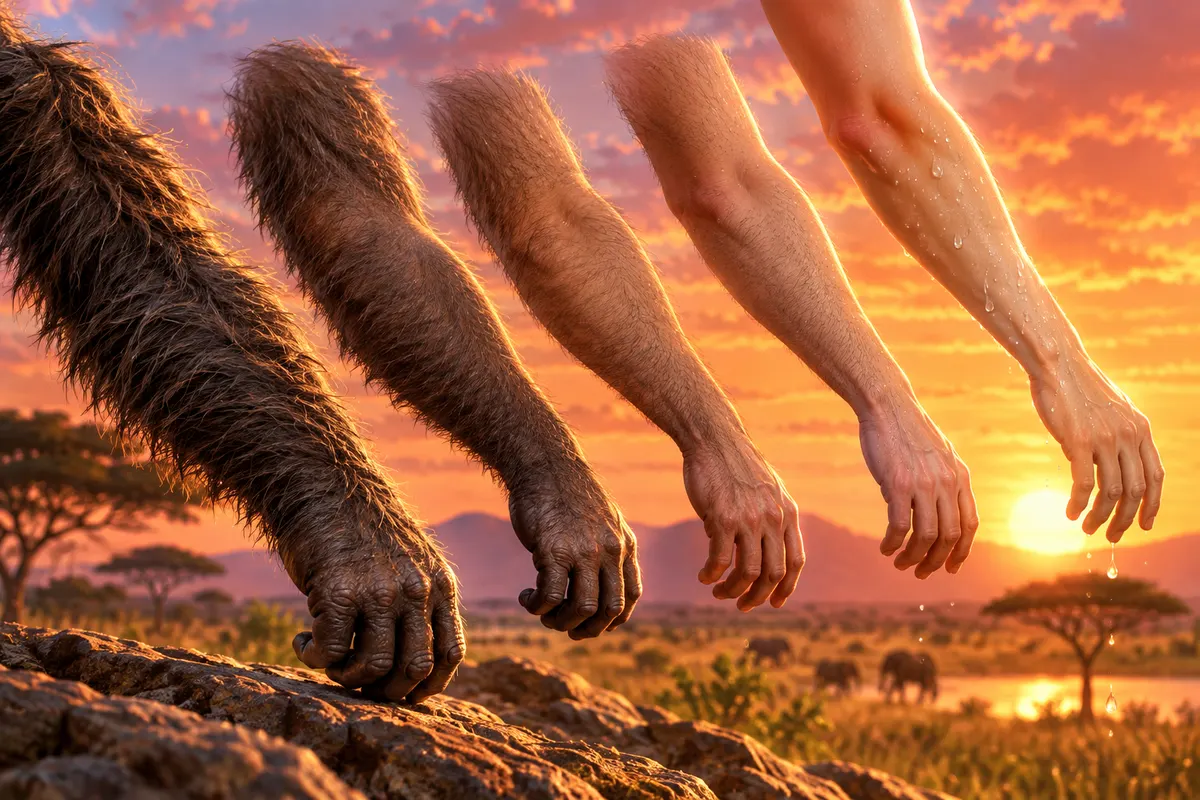
研究チームは、人間が進化の中で手に入れた「皮膚の変化」に注目しています。
- 体毛が減った:毛の根元(毛包)には、傷を治すのに役立つ細胞のもとがあるとされる
- 汗腺が増えた:人間の皮膚には、サルやチンパンジーの約10倍もの汗腺がある。暑い中で長く走り回るには有利だが、毛包とのトレードオフがあったかもしれない
- 表皮が厚い:人間の表皮は他の霊長類より厚く、ふさがるのに時間がかかる可能性
つまり、「汗をかいて体を冷やす力」と引きかえに、傷の治りの速さを手放したのかもしれない――というのが、研究チームの考える仮説のひとつです。
03遅い治りを「仲間」が補った?
傷の治りが遅いのは、野生ではかなり危険なはず。それでも人類が生き延びられたのはなぜでしょう。
研究チームは、ケガをした仲間の世話をしたり、食べ物を分けたり、薬になる植物を使ったりといった、人類の助け合いの文化が、遅い治りを補ってきた可能性にも触れています。
体の弱点を、社会の力でカバーしてきた。そう考えると、人間らしさの別の一面が見えてきます。
04まとめ
人間のケガの治りは、近い親戚のチンパンジーと比べても約3倍ゆっくり。それは、暑さに強い体を手に入れた進化の代償かもしれません。
すり傷がなかなか治らないとき、「これも人類の歴史の名残か」と思えば、ちょっとだけ待てる気がしませんか?
この研究を英語で読もう原田英語の English CornerWhy do our cuts and scrapes take so long to heal? 音声
音声 4択クイズ9問A2・B1・B2タップして開く
原田英語の English Corner
この研究を英語で読もう
Scientists in Japan wanted to know how fast wounds heal in different animals. They studied monkeys, chimpanzees, mice and 24 human patients. Baboon wounds closed about 0.6 mm a day.
Human wounds closed only about 0.25 mm a day. That is about three times slower! The scientists think this may come from human evolution. Our bodies lost some of their body hair and got many more sweat glands, which help us stay cool.
73 words ・ CEFR A2
和訳を見る
日本の科学者たちは、さまざまな動物で傷がどれくらいの速さで治るのかを知りたいと考えました。彼らはサル、チンパンジー、ネズミ、そして24人の人間の患者を調べました。ヒヒの傷は1日に約0.6mmふさがりました。
人間の傷は1日に約0.25mmしかふさがりませんでした。それは約3倍遅いということです!科学者たちは、これは人間の進化から来ているのかもしれないと考えています。私たちの体は体毛の一部を失い、ずっと多くの汗腺を手に入れました。汗腺は私たちが体を涼しく保つのに役立ちます。
4択リーディングクイズ
Q1. What is the passage mainly about?
第1文で「さまざまな動物で傷がどれくらいの速さで治るか」を調べたとあり、人間と比べた結果が全体の中心なので C。
Q2. How fast did human wounds close?
Human wounds closed only about 0.25 mm a day. とあるので A。0.6 mm はヒヒ、24 は患者の人数。
Q3. In this passage, "slower" means the human wounds ...
slow は「遅い」。three times slower は「3倍遅い」=ふさがるのに時間がかかる、なので D。
Why do our cuts and scrapes take so long to heal? A research team led by scientists at the University of the Ryukyus measured how many millimeters a wound closes each day in several species. They studied baboons and other monkeys in Kenya, chimpanzees at a sanctuary in Japan, rodents such as mice, and 24 patients who had surgery to remove skin tumors.
Baboon wounds closed at about 0.6 millimeters per day, while human wounds closed at only about 0.25 millimeters. Monkeys and rodents healed at almost the same speed, so slow healing seems to be special to humans. The researchers think it may be a cost of evolution. Humans lost body hair and gained many sweat glands, which helped them stay cool in hot places.
126 words ・ CEFR B1
和訳を見る
なぜ私たちの切り傷やすり傷は治るのにこれほど時間がかかるのでしょうか。琉球大学の科学者たちが率いる研究チームは、いくつかの種で傷が1日に何ミリふさがるのかを測定しました。彼らはケニアのヒヒやその他のサル、日本の保護施設のチンパンジー、ネズミなどのげっ歯類、そして皮膚の腫瘍を取り除く手術を受けた24人の患者を調べました。
ヒヒの傷は1日約0.6ミリのペースでふさがったのに対し、人間の傷は約0.25ミリしかふさがりませんでした。サルとげっ歯類はほとんど同じ速さで治ったので、治りが遅いのは人間に特有のことのようです。研究者たちは、それが進化の代償かもしれないと考えています。人間は体毛を失い、多くの汗腺を手に入れました。それが暑い場所で体を涼しく保つのに役立ったのです。
4択リーディングクイズ
Q1. What did the research team measure?
measured how many millimeters a wound closes each day in several species とあるので B。
Q2. Which statement is true according to the passage?
Monkeys and rodents healed at almost the same speed とあるので C。人間だけが遅かった点がポイント。
Q3. What does the passage suggest about slow healing in humans?
The researchers think it may be a cost of evolution のあとで、体毛の減少と汗腺の増加が涼しく保つのに役立ったと述べているので A。
A wound on a baboon's skin closes by roughly 0.6 millimeters a day. A human wound manages about 0.25, roughly three times slower. Those figures come from a comparative study published in Proceedings of the Royal Society B in 2025.
Researchers led by Matsumoto-Oda measured how fast wound edges closed in baboons and two other monkey species in Kenya, chimpanzees at a sanctuary in Japan, rodents, and 24 human patients recovering from the removal of skin tumors. The other primates and the rodents all healed at similar rates, so the delay seems to belong to humans alone and not to primates in general. The human data come with a complication.
The patients were about 69 years old on average, so age and illness may have affected the results. If the gap holds up, the team has a hypothesis to explain it. As our ancestors lost their body hair and developed about ten times as many sweat glands as monkeys and chimpanzees, they may have gained the ability to keep cool in the heat at the cost of fast repair. Thicker human skin may also play a part.
187 words ・ CEFR B2
和訳を見る
ヒヒの皮膚の傷は、1日に約0.6ミリずつふさがります。人間の傷は約0.25ミリで、およそ3倍遅いのです。この数字は、2025年に Proceedings of the Royal Society B に発表された比較研究によるものです。
松本晶子(Matsumoto-Oda)氏らの研究者は、ケニアのヒヒと他の2種のサル、日本の保護施設のチンパンジー、げっ歯類、そして皮膚腫瘍の切除から回復中の24人の患者で、傷の端がふさがる速さを測定しました。他の霊長類とげっ歯類はどれも似た速さで治ったので、この遅さは霊長類全般ではなく、人間だけのもののようです。ただし、人間のデータには気になる点があります。
患者は平均約69歳だったので、年齢や病気が結果に影響したかもしれません。この差が本物だとすれば、研究チームにはそれを説明する仮説があります。私たちの祖先は体毛を失い、サルやチンパンジーの約10倍の汗腺を発達させるにつれて、素早い修復と引きかえに、暑さの中で体を涼しく保つ能力を得たのかもしれない、というものです。人間の皮膚が厚いことも一因かもしれません。
4択リーディングクイズ
Q1. What is the main idea of the passage?
人間の傷の治りが約3倍遅いことを示し、後半で汗腺の増加などによる進化上の説明を紹介しているので D。A は the team has a hypothesis とあり、証明されたわけではないので誤り。
Q2. Why does the author conclude that slow healing is specific to humans?
The other primates and the rodents all healed at similar rates, so the delay seems to belong to humans alone とあるので B。
Q3. Which of the following is a limitation mentioned in the passage?
The patients were about 69 years old on average, so age and illness may have affected the results とあるので C。
重要単語
- woundB1名詞傷、けがThe wound healed in two weeks.
 発音は /wuːnd/(ウーンド)。wind(巻く)の過去形 wound /waʊnd/ と区別。発音問題でも狙われる。
 - healB1動詞(傷が)治る、治すSmall cuts usually heal quickly. 傷やけがが「治る」は heal、病気が「治る」は cure / recover が基本。名詞は healing(治癒)。
- primateC1名詞霊長類Humans and chimpanzees are both primates. prime(第一の)と同語源で「最高位の動物」の意。生物系長文の頻出語。
- comparativeB2形容詞比較のThis comparative study looked at several species. compare の形容詞形。comparable(匹敵する、比較できる)との区別は入試の語彙問題で頻出。
- sweat glandC1名詞(句)汗腺Humans have many sweat glands in their skin. sweat /swet/(汗)の発音に注意。gland は「腺」。人類進化の長文でよく出る。
- trade-offB2名詞一方を得ると他方を失う関係Evolution often involves a trade-off. a trade-off between A and B の形で使う。evolutionary adaptation とセットで入試頻出。
- at the expense ofB2熟語~を犠牲にしてHe worked hard at the expense of his health. expense は「費用」。「~の費用で」→「~を犠牲にして」。長文の内容一致で言い換えがよく問われる。
 入試に出る順の単語帳を印刷する →
 全5633語の「科学英単語カード」で復習する →
 動画でもっと知る
動画は各チャンネルの公式埋め込みで表示しています(YouTube)。
この話題を TED で聞く
同じテーマの TED・TED-Ed を、 TED HACK で。英語の見どころ・使える表現・学習ミッションつきの日本語ガイドです。(運営:原田英語)

 公式・一次情報をチェック
- 2026年度 新潟大学(前期)英語 概評(「人間と他の動物の治癒速度の違い」がテーマ)(代々木ゼミナール 解答速報)sokuho.yozemi.ac.jp
 4コマでわかる
このネタ、誰かに教えたくなった?
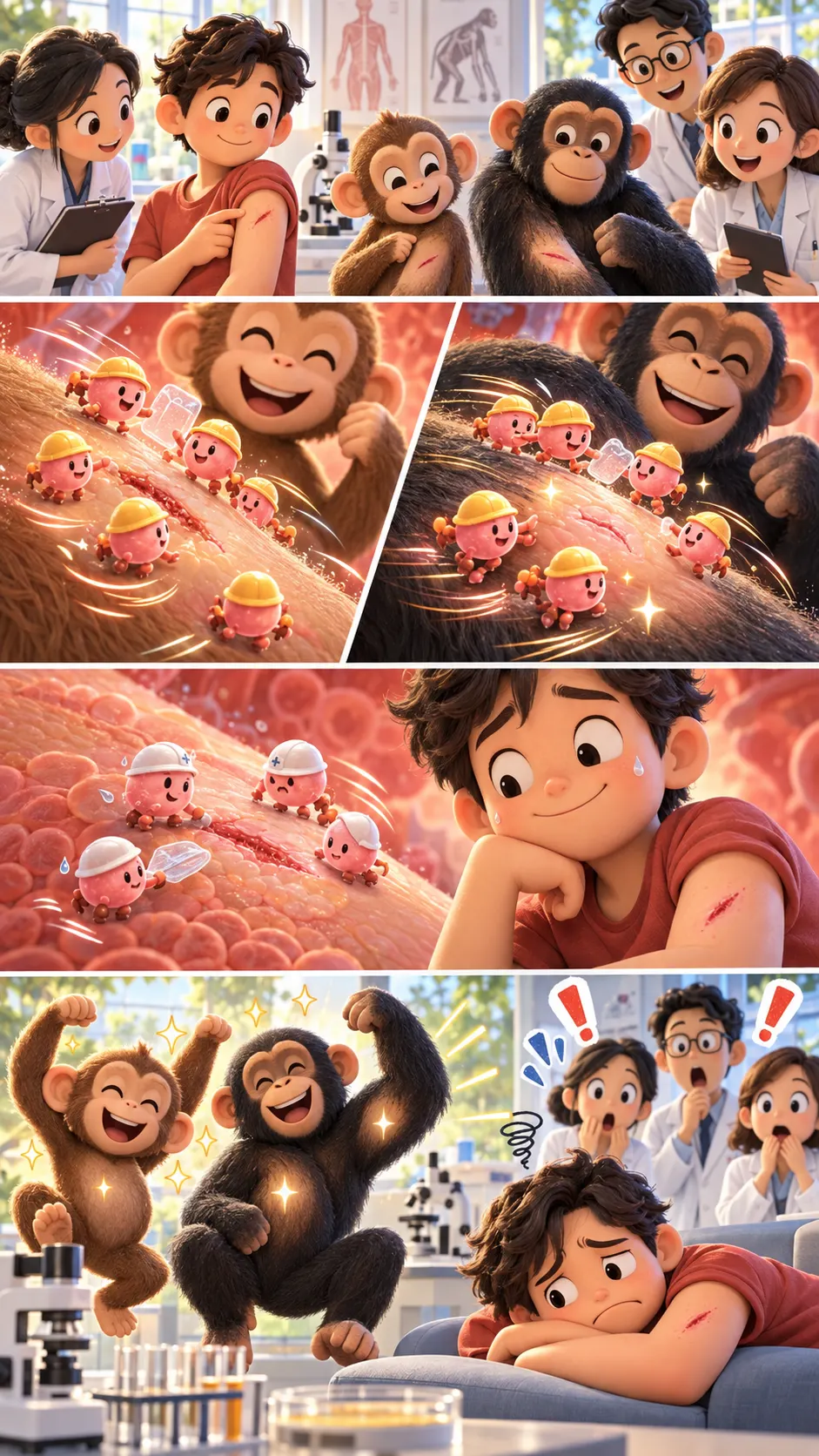
人間のケガの治りは、チンパンジーやサルより約3倍遅いらしい。琉球大学などが傷のふさがる速さを比べたら、人は1日約0.25mm、サルたちはその約3倍(ヒヒで約0.6mm)。体毛が減って汗腺が増えた進化と関係があるかも、という話。
押すと「マジかリスト」に保存されます
 出典・参考文献(3件)タップで表示
- Matsumoto-Oda et al. (2025) Inter-species differences in wound-healing rate: a comparative study involving primates and rodents, Proceedings of the Royal Society Bdoi.org
- Matsumoto-Oda et al. (2025) Correction to 'Inter-species differences in wound-healing rate', Proceedings of the Royal Society Bdoi.org
- Sorg et al. (2017) Skin wound healing: an update on the current knowledge and concepts, European Surgical Researchdoi.org

※本記事は上記の研究・公開資料をもとに、原田英語が独自の言葉で解説したものです。引用は著作権法第32条の範囲で行い、出典を明記しています。画像はすべてオリジナルのイメージです。研究結果には限界や個人差があります。誤りのご指摘は原田英語のお問い合わせフォームから。
 これも「マジか!?」

 体・健康
体・健康
1年間ウォーキングした高齢者、記憶の司令塔「海馬」が約2%大きくなっていた

 体・健康
体・健康
指紋は「すべり止め」じゃなかった? 測ったら接触面積は減っていた。本当の役割は"振動センサー"

 体・健康
体・健康
大人になって牛乳が苦手になるのは「人類の標準」だった。むしろ平気な人が“突然変異”

 体・健康
体・健康
辛さは「味」じゃなく「痛み」だった。脳がだまされる“熱センサー”の正体とノーベル賞

 体・健康
体・健康
脳の「リチウム不足」がアルツハイマー病の始まりに関わる? ハーバード大の新説
 体・健康
体・健康