テクノロジー・未来
体の中を泳いでがんを狙い撃ち。「ナノロボット医療」はマウスでどこまでできた?
 2026.10.02
 English Corner(A2〜B2・4択クイズ)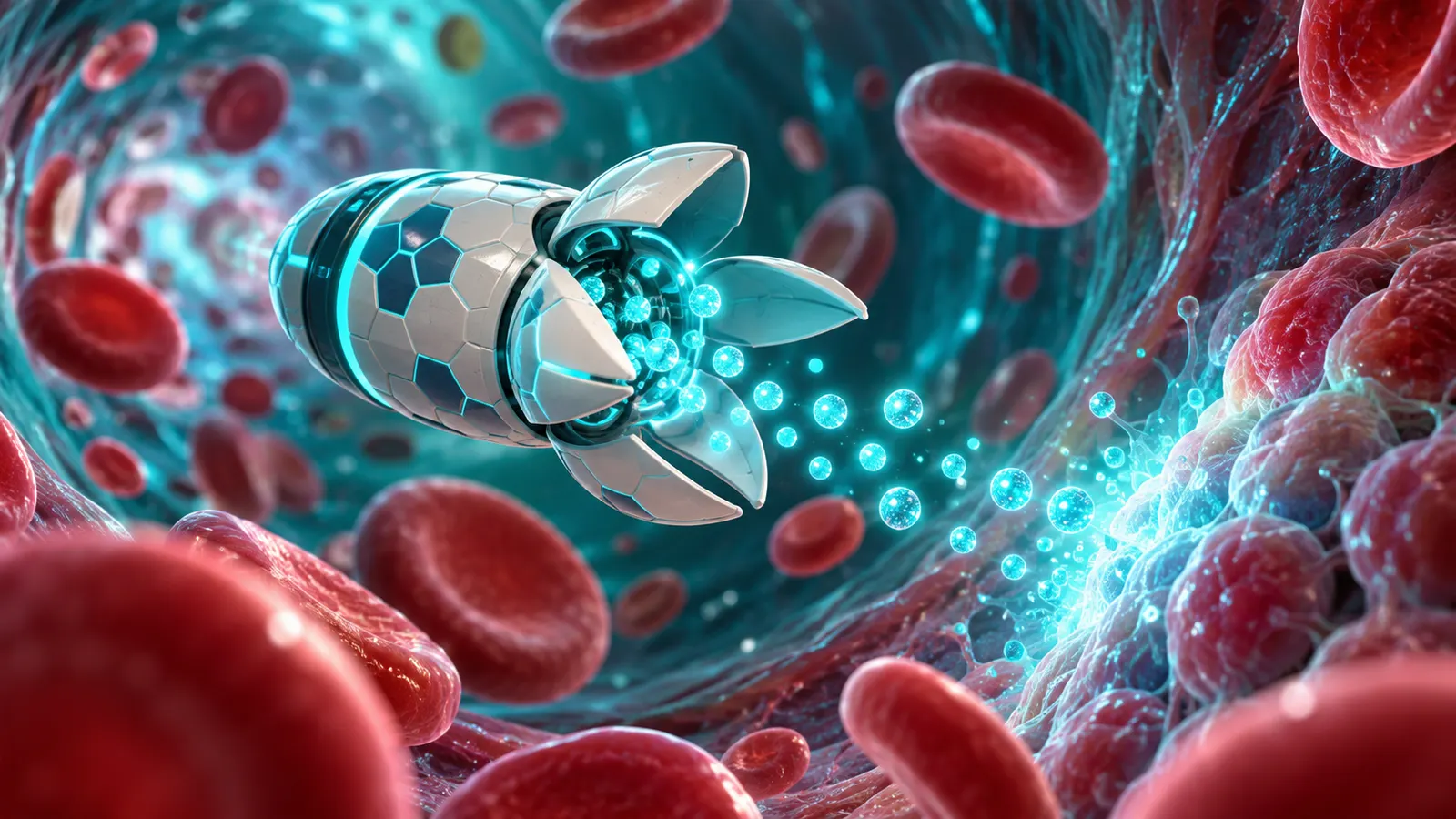
 読む前に予想してみよう!
がんを治すナノロボットは、すでに病院でふつうに使われている
研究の多くは細胞や動物での段階。人での安全性や効果の確認はこれから。
 研究カード(どんな研究?)
- 対象
- がんを移植したマウスなど
- 規模
- 動物実験(マウス・ブタ)
- 研究の種類
- 実験研究・レビュー
- 確かさ
- ★★☆☆☆
DNAを折り紙のように折って作る極小の“ロボット”が、マウスでがんの血管だけを狙って薬を届けた研究がある。ただ人の治療に使われる段階にはまだない。
ひとことで言うと目に見えない小さなロボットが、体の中で薬を運ぶ研究が進んでいる!
小さく縮んだ医師たちが、患者の血管の中を旅して病気を治す――。昔のSF映画で描かれたそんな場面を、本気で実現しようとしている研究者たちがいます。
テーマは「ナノロボット医療」。ナノとは10億分の1のこと。1ナノメートルは、1ミリの100万分の1です。
もちろん、映画のように人が乗れるわけではありません。でも、体の中で狙った場所まで薬を運ぶ極小の“ロボット”は、動物実験の段階まで来ているのです。
01「ロボット」といっても歯車はない
ナノロボットと聞くと、小さな金属の機械を想像するかもしれません。でも、この世界の“ロボット”は少し違います。
多くは、DNAやタンパク質、特殊な粒子などで作った、とても小さな構造物です。モーターや電池はありません。そのかわり、
- 特定の目印にくっつく
- 特定の条件になると形が変わる(開く・閉じる)
- 外から磁石の力で動かされる
といった仕組みを組み込んで、ロボットのように“仕事”をさせるのです。
02DNAを「折り紙」にして作るロボット
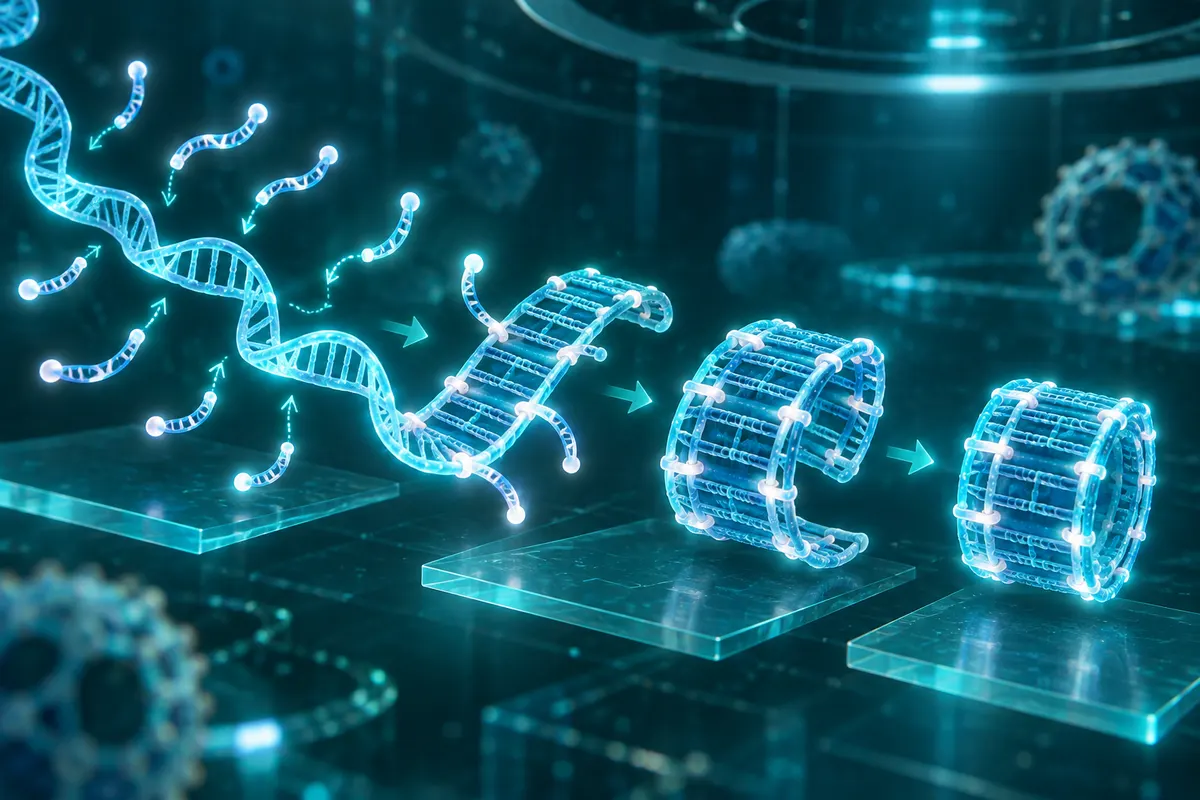
ここで活躍するのがDNA折り紙という技術です。2006年、米カリフォルニア工科大学のポール・ロゼムンドが Nature に発表したもので、長いDNAのひもを、短いDNAの“ホチキス”で留めながら、狙った形に折りたたむ方法です。
DNAは、決まった相手(AとT、GとC)としかくっつかない性質があります。この性質を使うと、ナノサイズの箱や筒を設計図どおりに自動で組み立てることができるのです。
03磁石で動かす「マイクロロボット」も
もう少し大きい、マイクロメートル(1ミリの1000分の1)級のロボットの研究も進んでいます。らせん形の小さな部品を体の外から回転する磁場で動かし、スクリューのように進ませるアイデアなどがあります。目や消化管、血管の中で薬を届けたり、詰まりを取り除いたりする使い方が研究されています。
04なぜ病院ではまだ使えないのか
人での実用化には、こんな問いに答える必要があります。
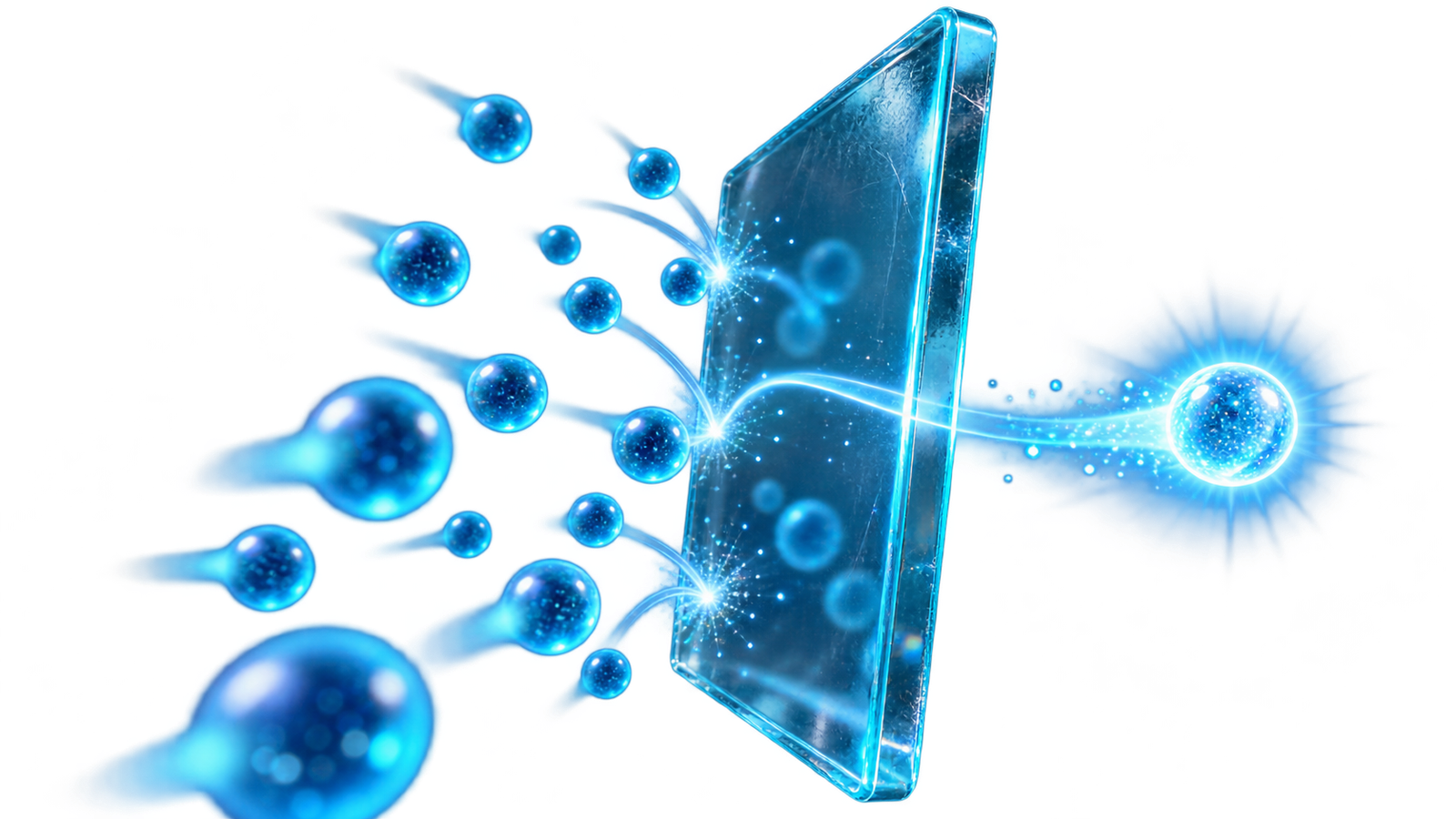
- 体の中で分解されずに目的地まで届くか(ナノサイズの薬の運び役についての過去の研究をまとめた分析では、注射した量のうち腫瘍まで届くのは中央値で約0.7%にとどまるという結果も出ています。Wilhelm ら, 2016)
- 狙っていない場所で悪さをしないか
- 役目を終えたあと、安全に体から消えるか
- 一定の品質で大量に作れるか、費用は見合うか
05まとめ
ナノロボット医療は、DNA折り紙や磁気で動くマイクロロボットなどを使って、薬を必要な場所にだけ届けることを目指す研究です。マウスでがんの成長を抑えた例もありますが、人の治療に使われるまでには、まだ多くの確認が必要です。
SF映画の“体内の旅”は、少しずつ、でも確実に現実へ近づいています。
この研究を英語で読もう原田英語の English CornerNanorobot medicine aims to deliver drugs only to the places in the body where they are needed. 音声
音声 4択クイズ9問A2・B1・B2タップして開く
原田英語の English Corner
この研究を英語で読もう
Scientists are making very, very small "robots" to carry medicine inside the body. These robots have no motors. Some are made by folding DNA like paper in origami.
In a 2018 study, tiny DNA tubes opened only near cancer blood vessels in mice. They released a drug, and the cancer grew more slowly. But these robots have not been tested in people yet.
63 words ・ CEFR A2
和訳を見る
科学者たちは、体の中で薬を運ぶための、とてもとても小さな「ロボット」を作っています。これらのロボットにはモーターがありません。中には、折り紙のようにDNAを折って作られるものもあります。
2018年の研究では、小さなDNAの筒がマウスのがんの血管の近くでだけ開きました。筒は薬を放出し、がんの成長が遅くなりました。しかし、これらのロボットはまだ人では試されていません。
4択リーディングクイズ
Q1. What is the passage mainly about?
体内で薬を運ぶ極小のロボットが主題なので B。
Q2. Where did the DNA tubes open in the 2018 study?
opened only near cancer blood vessels in mice とあるので C。
Q3. In this passage, "released" means ...
release は「放出する」。筒の中の薬を外に出した、という意味なので A。
Nanorobot medicine aims to deliver drugs only to the places in the body where they are needed. One nanometer is one millionth of a millimeter. These "robots" have no gears or batteries.
Instead, they are tiny structures that stick to certain targets or change shape under certain conditions. Many are built using DNA origami, a method invented in 2006 that folds long DNA strands into planned shapes. In 2018, a research team made tube-shaped DNA nanorobots that carried a blood-clotting drug.
When they found a marker common on tumor blood vessels, they opened and formed clots. In mice, this cut off the tumor's food supply and slowed its growth. However, the robots have not been tested in humans.
118 words ・ CEFR B1
和訳を見る
ナノロボット医療は、体の中で薬が必要な場所にだけ薬を届けることを目指しています。1ナノメートルは1ミリメートルの100万分の1です。これらの「ロボット」には歯車も電池もありません。
その代わり、それらは特定の標的にくっついたり、特定の条件で形を変えたりする小さな構造物です。多くはDNA折り紙を使って作られます。これは2006年に発明された、長いDNAのひもを設計どおりの形に折りたたむ方法です。2018年、ある研究チームは、血液を固める薬を運ぶ筒状のDNAナノロボットを作りました。
腫瘍の血管によくある目印を見つけると、筒は開いて血のかたまりを作りました。マウスでは、これが腫瘍への栄養の供給を断ち、その成長を遅らせました。しかし、このロボットは人では試されていません。
4択リーディングクイズ
Q1. What is DNA origami?
a method ... that folds long DNA strands into planned shapes とあるので A。
Q2. How did the 2018 nanorobots slow tumor growth in mice?
formed clots ... this cut off the tumor's food supply and slowed its growth とあるので B。
Q3. What can we infer from the last sentence?
人ではまだ試されていないので、人の治療に使うにはさらに研究が必要と推論できる。正解は D。
The idea of tiny machines traveling through the bloodstream to treat disease has long belonged to science fiction, but nanorobot medicine is now being tested in animals. These devices have no motors; instead, they are nanoscale structures made of DNA, proteins or special particles, designed to bind to specific markers, change shape under certain conditions, or be steered by external magnetic fields.
A key tool is DNA origami, introduced in 2006, which exploits the strict pairing of DNA bases to fold long strands into precise shapes. In 2018, Li and colleagues reported in Nature Biotechnology a tube-shaped DNA nanorobot loaded with thrombin, a clotting agent. When the tube encountered a marker abundant on tumor blood vessels, it opened, triggering clots that starved tumors of nutrients and inhibited their growth in mice.
Safety was also examined in pigs, but no human trials have been conducted. Major obstacles remain. A 2016 analysis found that, found that a median of 0.7% of injected nanoparticles reach tumors, as the liver and spleen capture most of them. Researchers must also show that the devices avoid harming healthy tissue, leave the body safely and can be manufactured consistently at reasonable cost.
195 words ・ CEFR B2
和訳を見る
小さな機械が血流の中を旅して病気を治すという考えは、長い間SFのものでしたが、ナノロボット医療は今、動物で試されています。これらの装置にはモーターがありません。
その代わり、DNAやタンパク質、特殊な粒子で作られたナノサイズの構造物で、特定の目印に結合したり、特定の条件で形を変えたり、外部の磁場で操られたりするよう設計されています。重要な道具は2006年に登場したDNA折り紙で、DNAの塩基が厳密に対になる性質を利用して、長いひもを正確な形に折りたたみます。2018年、Liらは『Nature Biotechnology』に、血液を固める物質であるトロンビンを積んだ筒状のDNAナノロボットを報告しました。筒が腫瘍の血管に豊富な目印に出会うと開き、血栓を引き起こして腫瘍から栄養を奪い、マウスでその成長を抑えました。
ブタでも安全性が調べられましたが、人での試験は行われていません。大きな障害が残っています。2016年の分析では、注射したナノ粒子のうち腫瘍に届くのは中央値で0.7%であることがわかりました。肝臓と脾臓がその大部分を捕らえてしまうからです。研究者たちはまた、装置が健康な組織を傷つけず、安全に体から出ていき、手頃な費用で安定して製造できることを示さなければなりません。
4択リーディングクイズ
Q1. How do nanorobots perform tasks without motors?
designed to bind to specific markers, change shape under certain conditions, or be steered by external magnetic fields とあるので B。
Q2. According to the 2016 analysis, why do few nanoparticles reach tumors?
as the liver and spleen capture most of them とあるので A。
Q3. Which of the following is NOT mentioned as a remaining challenge?
健康な組織を傷つけない・安全に体外に出る・安定した低コスト製造、の3点は書かれているが、肉眼で見えるようにすることは書かれていないので D。
重要単語
- nanorobotC1名詞ナノロボットThe nanorobot opened when it found a tumor.
 nano- は「10億分の1」。ギリシャ語の nanos(小人)から。nanotechnology も同じ。
 - DNA origamiC1名詞(句)DNA折り紙DNA origami folds DNA into tiny shapes. origami は英語でもそのまま通じる日本語由来の語。tsunami, emoji なども同じ仲間。
- targeted deliveryC1名詞(句)標的への送達Targeted delivery sends drugs only where they are needed. target(狙う)の過去分詞+delivery(配達)。targeted advertising「ターゲット広告」も同じ形。
- tumorB2名詞腫瘍The drug slowed the growth of the tumor. 英国つづりは tumour。benign(良性の)/ malignant(悪性の)tumor とセットで。
- in vivoC1副詞・形容詞生体内で(の)The test was done in vivo, in living mice. ラテン語で「生きているものの中で」。in vitro(試験管内で)と対で覚える。体外受精は IVF(in vitro fertilization)。
- clotC1名詞・動詞(血の)かたまり/固まるThe robot caused a blood clot in the tumor's vessels. blood clot「血栓」。形容詞 clotting(凝固の)。
- inhibitC1動詞抑制する、妨げるThe treatment inhibited tumor growth. 名詞 inhibition。inhibit A from doing「Aが~するのを妨げる」。医学・心理学の長文で頻出。
 入試に出る順の単語帳を印刷する →
 全5561語の「科学英単語カード」で復習する →
 動画でもっと知る
動画は各チャンネルの公式埋め込みで表示しています(YouTube)。
このネタ、誰かに教えたくなった?
DNAを“折り紙”みたいに折って作った極小のロボットが、マウスの体内でがんの血管だけを見つけて、そこで薬を放出したらしい。SF映画のような「体内を旅するロボット」、動物実験までは来ていた。
押すと「マジかリスト」に保存されます
 出典・参考文献(4件)タップで表示
- Rothemund (2006) Folding DNA to create nanoscale shapes and patterns, Naturedoi.org
- Li et al. (2018) A DNA nanorobot functions as a cancer therapeutic in response to a molecular trigger in vivo, Nature Biotechnologydoi.org
- Nelson, Kaliakatsos & Abbott (2010) Microrobots for Minimally Invasive Medicine, Annual Review of Biomedical Engineeringdoi.org
- Wilhelm et al. (2016) Analysis of nanoparticle delivery to tumours, Nature Reviews Materialsdoi.org

※本記事は上記の研究・公開資料をもとに、原田英語が独自の言葉で解説したものです。引用は著作権法第32条の範囲で行い、出典を明記しています。画像はすべてオリジナルのイメージです。研究結果には限界や個人差があります。誤りのご指摘は原田英語のお問い合わせフォームから。