宇宙・NASAビミョー
宇宙の果てはどこ? 見えている限界は約465億光年先。宇宙の年齢は138億年なのに、なぜ?
 2026.10.02
 English Corner(A2〜B2・4択クイズ)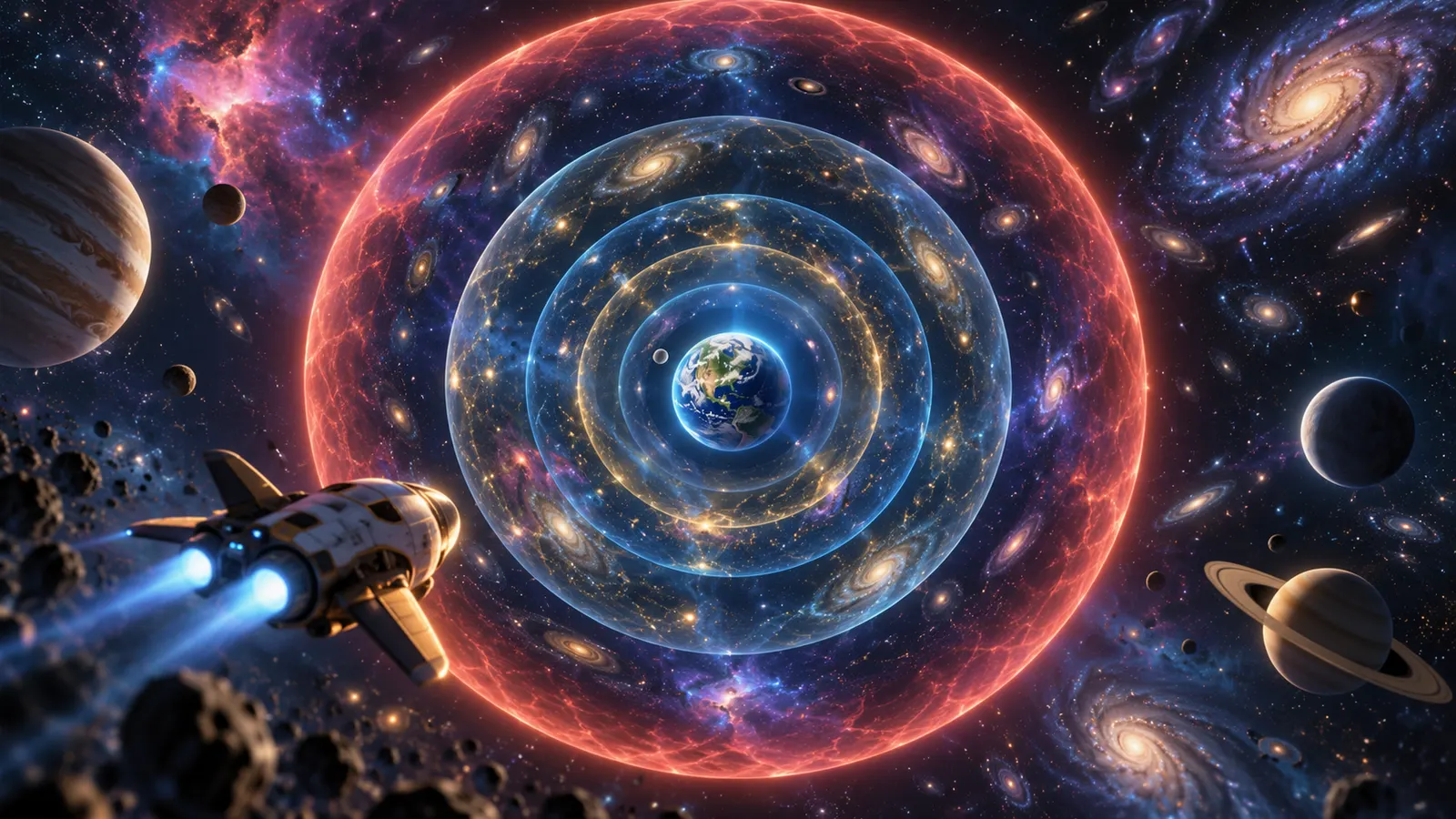
 読む前に予想してみよう!
宇宙の果てには、宇宙を囲む「壁」のようなものがある
観測できる範囲には限界があるが、それは壁ではなく「光がまだ届いていない」という限界。その外にも宇宙は続いていると考えられている。
 研究カード(どんな研究?)
- 対象
- 観測可能な宇宙
- 規模
- 宇宙背景放射・遠方銀河の観測など
- 研究の種類
- 観測研究と理論計算
- 確かさ
- ★★★★☆
観測できる宇宙の果ては半径約465億光年。宇宙の年齢は約138億年だが、光が旅する間も空間が膨張したため。その外にも宇宙は続き、全体はずっと広い可能性が高い。
ひとことで言うと宇宙の「見える範囲」には果てがある。でも宇宙そのものはもっと広い!
私たちが観測できる宇宙の果ては、地球から半径およそ465億光年の距離にあります。これを「観測可能な宇宙」と呼びます。ただし、これは「宇宙そのものの果て」ではありません。光がまだ届いていないので見えない、という限界です。その外側にも、宇宙は続いていると考えられています。
ここで「あれ?」と思った人は鋭いです。宇宙の年齢は約138億年。光は1年で1光年しか進めないのに、なぜ465億光年も先まで見えるのでしょうか。
01光が旅する間に、宇宙が広がった
答えは、宇宙の膨張です。
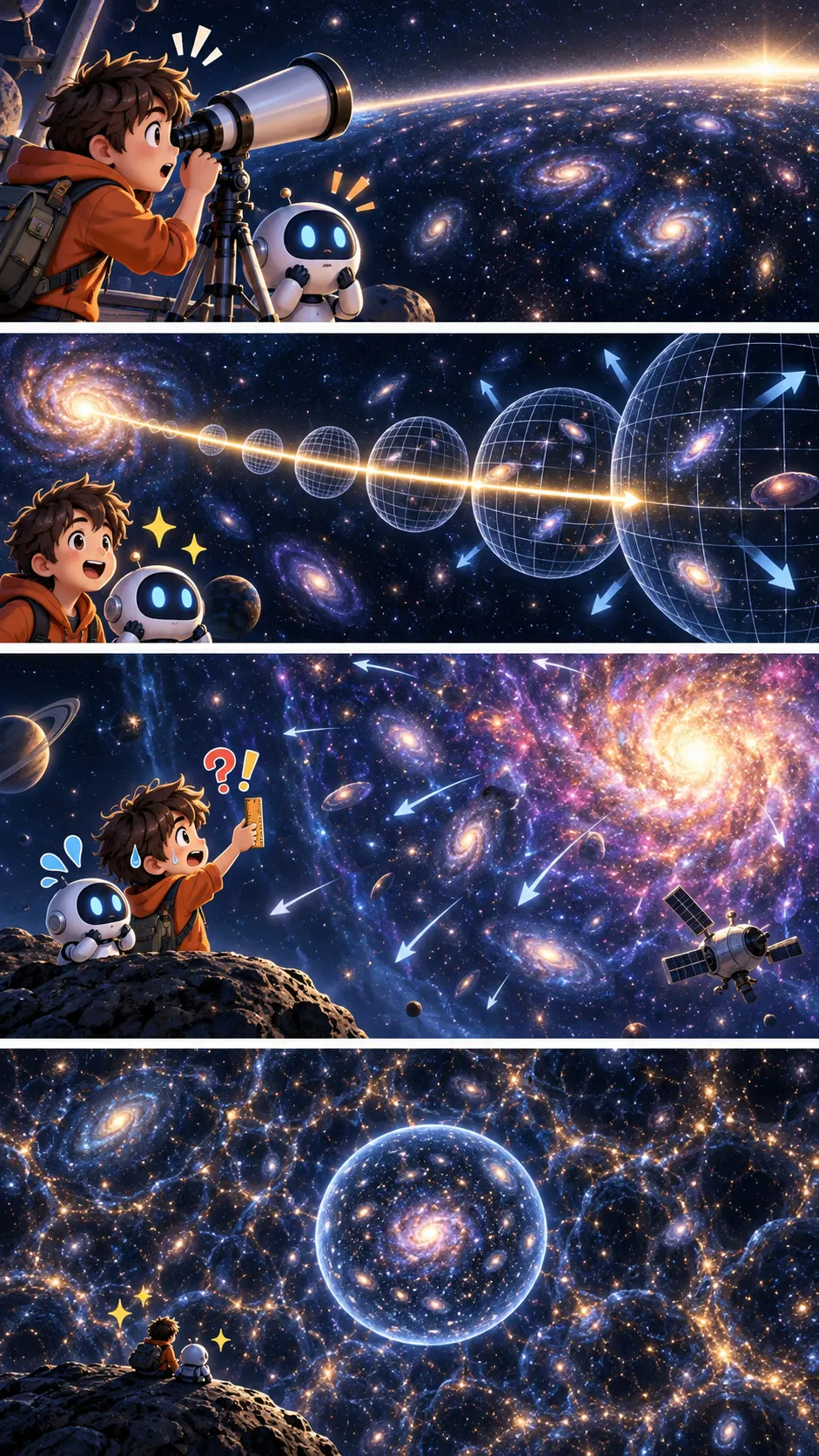
138億年近く前に出発した光は、私たちに届くまでずっと旅をしてきました。でもその間も、空間そのものはずっと広がり続けていました。その結果、光を出した天体は、今では出発したときよりはるかに遠く、約465億光年の距離まで遠ざかっているのです。
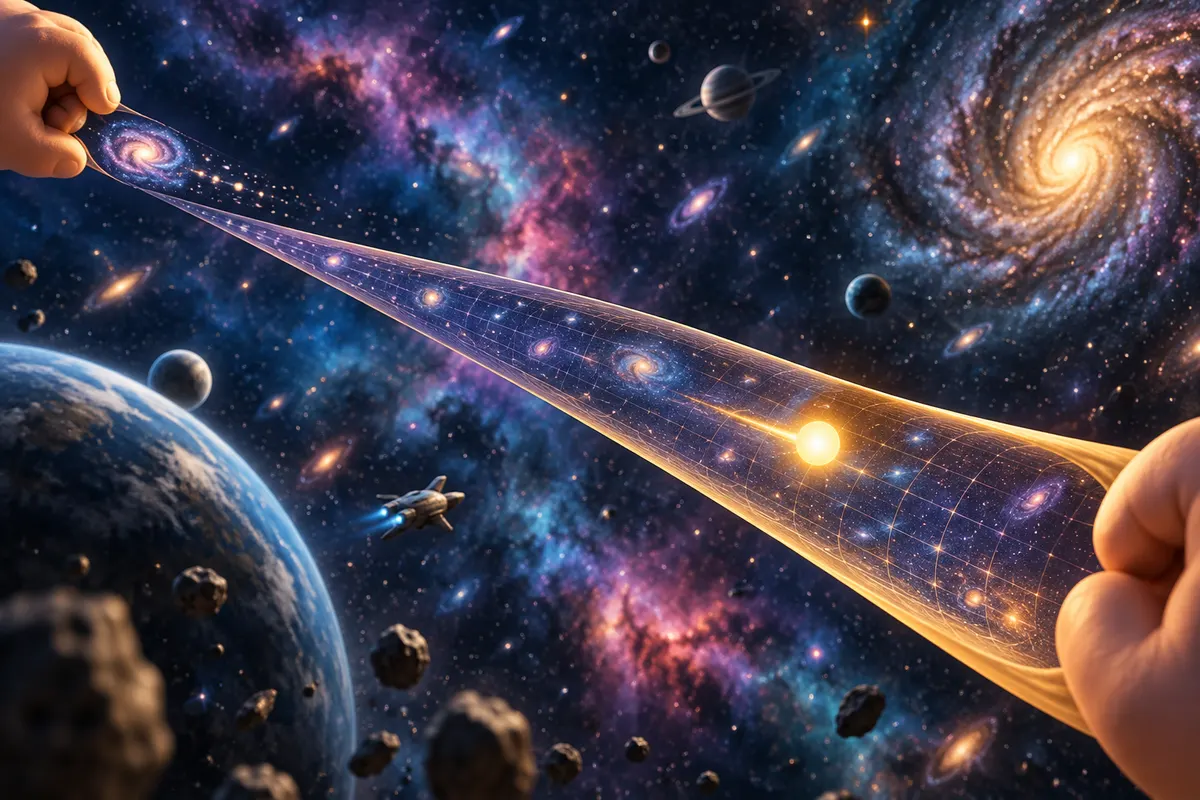
ベルトコンベアの上を歩く人をイメージしてみてください。人が歩いた距離は同じでも、コンベア自体が伸びていたら、スタート地点ははるか後ろに離れています。宇宙で起きているのは、そんなことなのです。
02見えるいちばん遠いものは?
光で見える最も遠いものは、宇宙マイクロ波背景放射です。ビッグバンから約38万年後、宇宙がすけて光がまっすぐ進めるようになった瞬間の光で、それより前は、熱いガスにさえぎられて光では見通せません。
銀河で言えば、ジェームズ・ウェッブ宇宙望遠鏡が2024年に、ビッグバンからわずか約3億年後の銀河を、分光観測で確かめたと報告しています。その後もさらに遠い銀河の候補が見つかっていて、「最遠記録」は更新が続いています。
03宇宙全体は、どれくらい大きい?
では、観測可能な宇宙の外側はどうなっているのでしょう。じつは誰も見たことがありません。ただ、手がかりはあります。
宇宙全体の形が「曲がっているか、平らか」を調べると、ほぼ完全に平らだとわかっています。もし宇宙が球の表面のように閉じているなら、ほぼ平らに見えるためには、とても大きくなければなりません。2011年の研究は、この性質を使い、宇宙全体の体積は、「ハッブル球」と呼ばれる半径約140億光年の球の251個分以上はある(99%の確からしさで)と見積もりました。これは、観測可能な宇宙の7倍以上にあたります。もちろん、無限に続いている可能性もあります。
04まとめ
宇宙の果ては、私たちに「見える範囲」の果てとしては半径約465億光年先にあります。年齢138億年なのにこんなに遠くまで見えるのは、光が旅する間も宇宙が広がり続けたからでした。
そして、見える範囲の外にも宇宙は続いていると考えられています。宇宙全体の大きさは、まだ誰にもわからない。それこそが、宇宙のいちばんのロマンなのかもしれません。
この研究を英語で読もう原田英語の English CornerThe universe is about 13.8 billion years old, so you might think we can see only 13.8 billion light-years… 音声
音声 4択クイズ9問A2・B1・B2タップして開く
原田英語の English Corner
この研究を英語で読もう
Where is the edge of the universe? We can see things up to about 46.5 billion light-years away. This is the edge of the observable universe.
But the universe is only about 13.8 billion years old. How is this possible? While the light was traveling to us, space kept growing.
The edge is not a wall. It is just as far as light can reach us. The universe probably continues beyond it.
72 words ・ CEFR A2
和訳を見る
宇宙の果てはどこにあるのでしょうか。私たちは約465億光年先まで物を見ることができます。これが観測可能な宇宙の果てです。
でも、宇宙の年齢は約138億年しかありません。どうしてこんなことが起きるのでしょうか。光が私たちのところへ旅をしている間に、空間が広がり続けたのです。
果ては壁ではありません。光が私たちに届く限界というだけです。宇宙はおそらくその向こうにも続いています。
4択リーディングクイズ
Q1. What is the passage mainly about?
宇宙のどこまで見えるのか、そしてなぜ年齢より遠くまで見えるのかを説明しているので C。
Q2. How far away is the edge of the observable universe?
We can see things up to about 46.5 billion light-years away. とあるので A。13.8 billion は宇宙の年齢(年)。
Q3. In the last sentence, "beyond it" means ...
beyond は「~の向こうに」。見える範囲の果ての、さらに外側という意味なので D。
The universe is about 13.8 billion years old, so you might think we can see only 13.8 billion light-years away. In fact, the edge of the observable universe is about 46.5 billion light-years away. The reason is that space has been expanding. While light from distant objects was traveling toward us, the space between us kept stretching, so those objects are now much farther away.
The most distant light we can see is the cosmic microwave background, which was released about 380,000 years after the Big Bang. The edge of the observable universe is not a wall. It is simply the limit of how far light has had time to travel to us.
113 words ・ CEFR B1
和訳を見る
宇宙の年齢は約138億年なので、私たちには138億光年先までしか見えないと思うかもしれません。実際には、観測可能な宇宙の果ては約465億光年先にあります。その理由は、空間が膨張し続けてきたからです。遠くの天体からの光が私たちに向かって旅をしている間にも、私たちとの間の空間は伸び続けたので、それらの天体は今ではずっと遠くにあるのです。
私たちに見える最も遠い光は宇宙マイクロ波背景放射で、これはビッグバンから約38万年後に放たれました。観測可能な宇宙の果ては壁ではありません。光が私たちのところまで旅をする時間があった範囲の限界にすぎないのです。
4択リーディングクイズ
Q1. What is the passage mainly about?
宇宙の年齢は138億年なのに465億光年先まで見える理由を説明しているので B。
Q2. When was the cosmic microwave background released?
which was released about 380,000 years after the Big Bang とあるので D。
Q3. What can we infer about the universe beyond the observable edge?
果ては壁ではなく、光が届く時間があった範囲の限界だとあるので、その外にも宇宙はあるが光がまだ届いていないと推測できる。正解は A。
Although the universe is about 13.8 billion years old, the edge of the observable universe lies roughly 46.5 billion light-years away. The apparent contradiction disappears once we remember that space itself has been expanding. Light emitted nearly 13.8 billion years ago has been traveling toward us ever since, but the space it crossed kept stretching, so its source is now far more distant than when the light set out. A 2004 paper by Davis and Lineweaver clarified such common misconceptions, explaining that the radius of the observable universe is roughly 46 billion light-years and that some galaxies we observe are receding faster than light, which does not violate relativity because it is space that expands.
The farthest light we can detect is the cosmic microwave background, released about 380,000 years after the Big Bang, while in 2024 the James Webb Space Telescope confirmed a galaxy seen as it was only about 300 million years after the Big Bang. Beyond our horizon, the universe almost certainly continues. Because space appears nearly flat, a 2011 study estimated that the whole universe is very likely at least seven times larger in volume than the observable part, and it may even be infinite.
199 words ・ CEFR B2
和訳を見る
宇宙の年齢は約138億年ですが、観測可能な宇宙の果てはおよそ465億光年先にあります。この見かけ上の矛盾は、空間そのものが膨張してきたことを思い出せば消えてしまいます。138億年近く前に放たれた光は、それ以来ずっと私たちに向かって旅をしてきましたが、光が横切った空間は伸び続けたので、光の出どころは、光が出発したときよりはるかに遠くなっているのです。デイヴィスとラインウィーバーによる2004年の論文は、こうしたよくある誤解を整理し、観測可能な宇宙の半径は460億光年台であること、そして私たちが観測している銀河の中には光より速く遠ざかっているものもあり、それは膨張しているのが空間なので相対性理論に反しないことを説明しました。私たちが検出できる最も遠い光は、ビッグバンから約38万年後に放たれた宇宙マイクロ波背景放射です。
一方、2024年にはジェームズ・ウェッブ宇宙望遠鏡が、ビッグバンからわずか約3億年後の姿の銀河を確認しました。私たちの地平線の向こうにも、宇宙はほぼ確実に続いています。空間がほぼ平らに見えることから、2011年の研究は、宇宙全体の体積は観測可能な部分のおそらく7倍以上はあると見積もりました。宇宙は無限でさえあるかもしれません。
4択リーディングクイズ
Q1. What is the main point of the passage?
空間の膨張によって年齢以上の距離まで見えること、そして宇宙は見える範囲よりはるかに広いだろうことが中心なので D。C は本文の内容に反する。
Q2. What did the James Webb Space Telescope confirm in 2024?
the James Webb Space Telescope confirmed a galaxy seen as it was only about 300 million years after the Big Bang とあるので C。
Q3. Why does the writer call it an "apparent contradiction"?
apparent は「見かけ上の」。138億年と465億光年は一見矛盾するが、空間の膨張を考えれば消える、と直後で説明しているので B。
重要単語
- observableB2形容詞観測できるThe observable universe has an edge, but the universe may not.
 observe(観測する)+-able(できる)。visible(目に見える)と似た作りの語。
 - horizonB2名詞地平線・限界The cosmic horizon limits what we can see. 形容詞 horizontal「水平の」。broaden one's horizons「視野を広げる」は入試頻出の比喩表現。
- light-yearB1名詞光年(距離の単位)A light-year is a unit of distance, not time. 光が1年で進む距離(約9.5兆km)。year がつくが時間ではなく距離の単位である点がよく問われる。
- expandB1動詞膨張する・広がるSpace expanded while the light was traveling. 名詞 expansion。the expanding universe「膨張する宇宙」。
- infiniteB2形容詞無限のNobody knows if the universe is infinite. in-(否定)+finite(有限の)。発音は /ˈɪnfɪnət/ で頭にアクセント。名詞 infinity。
- recedeC1動詞遠ざかる・後退するDistant galaxies recede from us faster than light. re-(後ろへ)+cede(行く)。名詞 recession は経済の「景気後退」の意味で頻出。
 入試に出る順の単語帳を印刷する →
 全5561語の「科学英単語カード」で復習する →
 4コマでわかる
このネタ、誰かに教えたくなった?
宇宙の年齢は約138億年。なら一番遠くは138億光年先…と思いきや、観測できる宇宙の果ては約465億光年先らしい。光が旅する間にも宇宙が膨張し続けたから。しかもその外にも宇宙は続いていると考えられている。
押すと「マジかリスト」に保存されます
 出典・参考文献(4件)タップで表示
- Davis & Lineweaver (2004) Expanding Confusion: Common Misconceptions of Cosmological Horizons and the Superluminal Expansion of the Universe, Publications of the Astronomical Society of Australiadoi.org
- Planck Collaboration (2020) Planck 2018 results. VI. Cosmological parameters, Astronomy & Astrophysicsdoi.org
- Vardanyan, Trotta & Silk (2011) Applications of Bayesian model averaging to the curvature and size of the Universe, MNRAS Lettersdoi.org
- Carniani et al. (2024) Spectroscopic confirmation of two luminous galaxies at a redshift of 14, Naturedoi.org

※本記事は上記の研究・公開資料をもとに、原田英語が独自の言葉で解説したものです。引用は著作権法第32条の範囲で行い、出典を明記しています。画像はすべてオリジナルのイメージです。研究結果には限界や個人差があります。誤りのご指摘は原田英語のお問い合わせフォームから。