

 心理学ホント
友達が「見ているだけ」で10代は冒険しがちになる。運転ゲーム実験が示したピア効果
 2026.10.02
 English Corner(A2〜B2・4択クイズ)

 読む前に予想してみよう!
友達に見られていると冒険しやすくなるのは、大人も10代も同じくらい
実験では、友達がいるときにリスクが増える効果は10代や若者で大きく、大人ではほとんど見られなかった。
 研究カード(どんな研究?)
- 対象
- 13〜16歳/18〜22歳/24歳以上
- 規模
- 306人
- 研究の種類
- ランダム化実験(+脳画像研究)
- 確かさ
- ★★★★☆
運転ゲームで、友達がそばにいると10代はリスクの高い運転をしやすくなった。大人ではほぼ変化なし。友達が隣の部屋で「見ているだけ」でも脳のごほうび系が反応した。
ひとことで言うと友達に見られていると、10代は「攻めた選択」をしやすくなる!
一人ならやらないのに、友達といると「いけるっしょ!」とやってしまう。10代の多くが経験する、あの不思議なテンション。
アメリカの心理学者たちは、これを運転ゲームで本気で確かめました。結果はシンプルで、ちょっとこわいものでした。友達がそばにいるだけで、10代のプレーは攻めた運転に変わったのです。しかも大人では、ほとんど変化がありませんでした。
01「黄色信号で突っ込む?」ゲームで実験
ポイントは、友達が「やれよ!」とけしかけたから、だけではないことです。ここから研究は、さらに面白い方向へ進みます。
02友達は「隣の部屋」にいるだけ。それでも脳が反応した
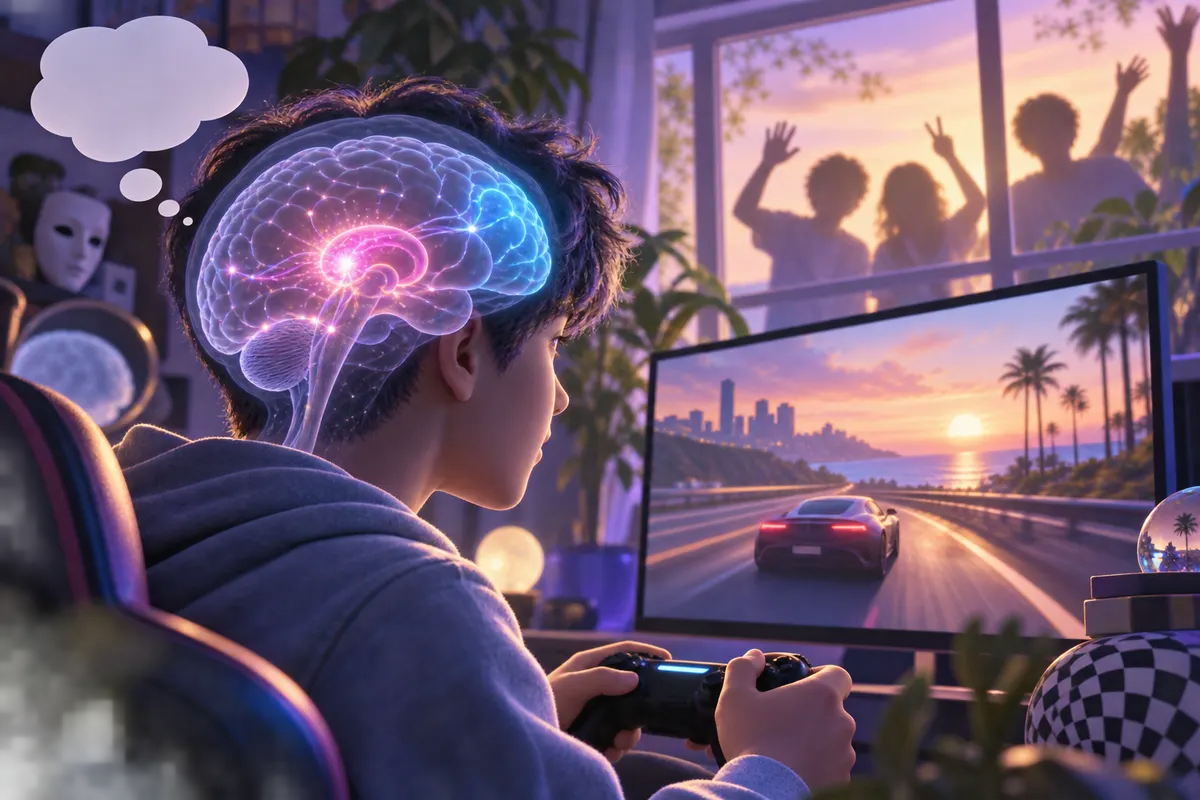
2011年、同じ研究グループのCheinさんらは、運転ゲームをしている最中の脳をMRIで調べました。友達は隣の部屋からモニターで見ているだけ。プレー中は声をかけません(休憩中にインターホンで、見ていることを伝える程度)。
それでも10代では、友達に見られているときに、ごほうびに反応する脳の部位(腹側線条体や眼窩前頭皮質)の活動が強くなり、その活動が大きいほど、そのあと危ない選択をしやすくなっていました。大人ではこの変化は見られませんでした。
一方で、自分を抑える働きに関わる部位の活動は、友達がいてもいなくても変わりませんでした。つまり「友達がいるとブレーキが壊れる」というより、「アクセル側のワクワクが増幅される」イメージに近いのです。
03知らない人に見られても効果があった
さらに2014年のWeigardさんらの実験では、見ているのが友達ですらない、知らない同年代の人という設定でも、10代後半の参加者は「小さくてもすぐもらえるごほうび」を選びやすくなりました。
仲良しかどうかより、「同年代に見られている」こと自体が、10代の判断を動かしているのかもしれません。
04どんでん返し:実験室と現実のあいだ
ただし、これらの実験の多くはゲームやお金の選択で測ったもので、人数も数十〜数百人規模です。脳画像研究のChein et al. は参加者が40人ほどと小さめでした。現実の事故や非行にそのまま当てはまるとは限りません。
また、同じ研究グループのAlbertさんらのレビューでも、仲間の影響に流されない力は10代を通して徐々に伸びていくとされています。10代はずっと「流されっぱなし」ではないのです。
05まとめ
10代は、友達に見られているだけで「攻めた選択」がワクワクに感じやすくなる。運転ゲームと脳スキャンの実験は、そんな姿を浮かび上がらせました。
裏を返せば、どんな仲間といるかは、10代の行動を大きく左右します。「自分は流されない」と思っている人ほど、一度この実験を思い出してみてください。
この研究を英語で読もう原田英語の English CornerTeenagers often say they would never do something dangerous alone, but they may behave differently with… 音声
音声 4択クイズ9問A2・B1・B2タップして開く
原田英語の English Corner
この研究を英語で読もう
Do teens act differently when friends are watching? Scientists asked 306 people to play a driving game. Some played alone, and some played with two friends. At a yellow light, players could stop or drive through.
Teenagers took more risks when their friends were with them, but adults did not change much. In another study, friends only watched from the next room. Even then, the "reward" part of the teen brain became more active.
74 words ・ CEFR A2
和訳を見る
友達が見ていると、10代の行動は変わるのでしょうか。科学者たちは306人に運転ゲームをしてもらいました。一人でプレーする人もいれば、友達2人と一緒にプレーする人もいました。黄色信号では、止まるか突っ込むかを選べました。
10代は友達がそばにいるとより多くのリスクを取りましたが、大人はあまり変わりませんでした。別の研究では、友達は隣の部屋から見ているだけでした。それでも、10代の脳の「ごほうび」に関わる部分がより活発になりました。
4択リーディングクイズ
Q1. What is the passage mainly about?
第1文の問い(友達が見ていると10代は変わるか)と、その実験結果が全体の内容なので C。
Q2. How many people played the driving game?
Scientists asked 306 people to play a driving game. とあるので D。
Q3. In this passage, "took more risks" means the teenagers ...
take a risk は「危険を冒す」。黄色信号で突っ込むような危ない選択が増えたということなので A。
Teenagers often say they would never do something dangerous alone, but they may behave differently with friends. In 2005, Gardner and Steinberg tested this idea with 306 people in three age groups (13 to 16, 18 to 22, and 24 or older). Participants were randomly assigned to play a driving game either alone or with two friends.
Players earned points by driving through yellow lights, but they lost points if they crashed. Players took more risks with friends, but the effect was much larger for teenagers and young adults, and small for adults. A later brain-scan study found that when friends only watched from another room, teenagers' reward areas became more active, while the areas for self-control did not change.
120 words ・ CEFR B1
和訳を見る
10代は「一人なら危ないことは絶対しない」とよく言いますが、友達といると行動が変わるかもしれません。2005年、GardnerさんとSteinbergさんは、13〜16歳、18〜22歳、24歳以上という3つの年齢グループの306人でこの考えを確かめました。参加者はくじ引きで、一人で、または友達2人と一緒に運転ゲームをするよう振り分けられました。
プレーヤーは黄色信号を突っ切るとポイントを得られますが、事故を起こすとポイントを失います。友達と一緒のほうがリスクを多く取りましたが、その効果は10代と若者でずっと大きく、大人では小さいものでした。その後の脳スキャン研究では、友達が別の部屋から見ているだけのとき、10代のごほうびに関わる部分がより活発になった一方、自己制御に関わる部分は変化しなかったことがわかりました。
4択リーディングクイズ
Q1. What was the main question of the 2005 study?
一人か友達と一緒かで、3つの年齢グループのリスクの取り方を比べた実験なので B。
Q2. Which group showed the smallest effect of friends?
the effect was much larger for teenagers and young adults, and small for adults とあるので A。
Q3. What can be inferred from the brain-scan study?
友達は見ているだけでも、ごほうび系が活発になり自己制御系は変わらなかった。つまり「見られること」でワクワク側が強まると推測できるので D。
Peer influence usually brings to mind direct pressure, such as friends shouting "Go for it!" Experiments at Temple University point to something quieter. In a randomized study of 306 people, adolescents, young adults and adults played a driving game either alone or with two friends present. People took more risks with peers around and focused more on the benefits of risky moves, but the effect was strongest among teenagers and young adults. In a follow-up fMRI study, the friends sat in a separate room and simply watched.
Even so, adolescents showed more activity in reward-related regions, and that activity predicted their later risky choices. Regions linked to cognitive control were unaffected. The tasks were games and money decisions, and the brain-scan study had only about 40 participants, so the link to real-world accidents is indirect.
Another experiment found that even an anonymous peer observer led older teenagers to prefer smaller rewards they could get right away. Being watched, these studies suggest, makes rewards more tempting without switching off self-control.
169 words ・ CEFR B2
和訳を見る
仲間の影響というと、ふつうは友達が「いけよ!」と叫ぶような直接的な圧力が思い浮かびます。テンプル大学の実験は、もっと静かなものを示しています。306人を対象にしたランダム化研究では、10代、若者、大人が、一人で、または友達2人がいる状態で運転ゲームをしました。仲間がいるとリスクを多く取り、危険な行動の「得」にもより目を向けましたが、その効果は10代と若者で最も強く表れました。
続くfMRI研究では、友達は別室に座ってただ見ているだけでした。それでも10代では報酬に関わる領域の活動が高まり、その活動はその後の危険な選択を予測しました。認知的な制御に関わる領域は影響を受けませんでした。課題はゲームやお金の選択で、脳スキャン研究の参加者は約40人だけだったため、現実の事故とのつながりは間接的なものです。
別の実験では、匿名の同年代の観察者がいるだけで、10代後半の参加者は「小さくてもすぐもらえるごほうび」を選びやすくなりました。これらの研究によると、見られていることは自己制御を止めるのではなく、ごほうびをより魅力的に感じさせるようです。
4択リーディングクイズ
Q1. Which statement best summarizes the passage?
最終文で Being watched ... makes rewards more tempting without switching off self-control とまとめているので C。
Q2. In the fMRI study, what happened to the regions linked to cognitive control?
regions linked to cognitive control were unaffected とあるので B。変化したのは報酬系の方。
Q3. Why does the author say that the link to real-world accidents is indirect?
The tasks were games and money decisions, and the brain-scan study had only about 40 participants とあり、これを理由に挙げているので A。
重要単語
- peerB2名詞同年代の仲間Teenagers care a lot about what their peers think.
 peer pressure「同調圧力」は入試頻出のコロケーション。動詞 peer は「じっと見る」で別の意味。
 - influenceB1名詞・動詞影響(を与える)Peer influence is strongest in the teenage years. have an influence on ~「~に影響を与える」。動詞のときは influence ~ と前置詞なしで使う。
- observeB1動詞観察する・見るThe friends observed the game from another room. 名詞 observation(観察)、observer(観察者)。「(規則を)守る」の意味もあり、名詞は observance。
- reward circuitryC1名詞(句)脳の報酬回路Peers seem to activate the brain's reward circuitry. circuit(回路)+-ry で「回路網」。reward system とも言う。脳科学の長文で見かける表現。
- immediateB1形容詞すぐの・即時のThey chose the smaller but immediate reward. 副詞 immediately(ただちに)は超頻出。im-(否定)+mediate(間に入る)=「間に何もない」が語源。
- resistB2動詞抵抗する・こらえるThe ability to resist peer pressure grows with age. resist doing「~するのをこらえる」と動名詞をとる点に注意。名詞は resistance。
 入試に出る順の単語帳を印刷する →
 全5561語の「科学英単語カード」で復習する →
 この話題を TED で聞く
同じテーマの TED・TED-Ed を、 TED HACK で。英語の見どころ・使える表現・学習ミッションつきの日本語ガイドです。(運営:原田英語)

 4コマでわかる
このネタ、誰かに教えたくなった?
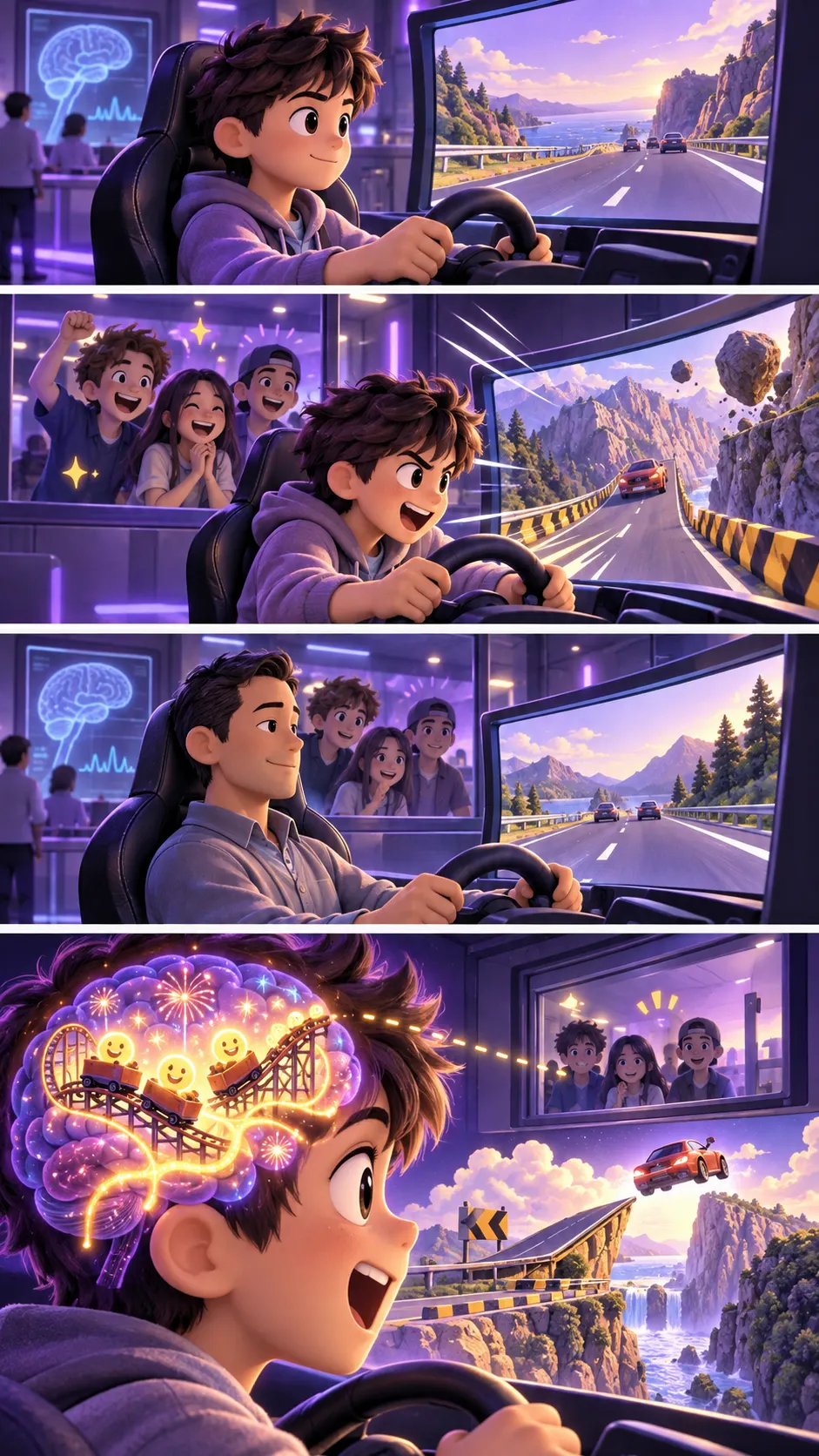
運転ゲームの実験で、友達がそばにいるだけで10代のプレーは攻めた運転に傾いた。大人はほとんど変わらなかった。しかも友達が「隣の部屋で見ているだけ」でも、10代の脳のごほうび系が強く反応していたらしい。
押すと「マジかリスト」に保存されます
 出典・参考文献(4件)タップで表示
- Gardner & Steinberg (2005) Peer Influence on Risk Taking, Risk Preference, and Risky Decision Making in Adolescence and Adulthood: An Experimental Study, Developmental Psychologydoi.org
- Chein et al. (2011) Peers increase adolescent risk taking by enhancing activity in the brain's reward circuitry, Developmental Sciencedoi.org
- Weigard et al. (2014) Effects of anonymous peer observation on adolescents' preference for immediate rewards, Developmental Sciencedoi.org
- Albert, Chein & Steinberg (2013) The Teenage Brain: Peer Influences on Adolescent Decision Making, Current Directions in Psychological Sciencedoi.org

※本記事は上記の研究・公開資料をもとに、原田英語が独自の言葉で解説したものです。引用は著作権法第32条の範囲で行い、出典を明記しています。画像はすべてオリジナルのイメージです。研究結果には限界や個人差があります。誤りのご指摘は原田英語のお問い合わせフォームから。
 これも「マジか!?」

 心理学
心理学
10代は「人気者」より「親友1人」? 15歳から25歳まで追いかけた研究のちょっと意外な結論

 心理学
心理学
10代の脳は「アクセル強め・ブレーキ発達中」? 11か国5000人で見えた冒険心の正体

 心理学
心理学
全員に"同じ性格診断"を配ったら大絶賛。占いが当たる気がする「バーナム効果」

 心理学
心理学
「頭の良さは遺伝で決まる」は誤解? 双子研究の「遺伝率5割」の正しい読み方

 心理学
心理学
いじめの現場の88%に「見ている子」がいた。止めに入ると、半分以上はすぐ止まった
 心理学
心理学