動物・植物
動物・植物植物は細胞の中の「沈む粒」で重力を感じていた。根が下へ、芽が上へ伸びるワケ
 2026.10.02
 English Corner(A2〜B2・4択クイズ)
 読む前に予想してみよう!
植物は重力の「強さ」を測って曲がる向きを決めている
遠心機で重力を強めても反応は変わらず、決め手は「傾きの角度」だった。
 研究カード(どんな研究?)
- 対象
- シロイヌナズナなど複数の被子植物
- 規模
- 実験室(遠心機・顕微鏡観察)
- 研究の種類
- 分子生物学+生物物理の実験と総説
- 確かさ
- ★★★★☆
植物は、細胞の中で沈むでんぷんの粒(アミロプラスト)で上下を知る。2023年には、沈んだ粒の位置を細胞膜に伝えるタンパク質の動きも見つかった。
ひとことで言うと植物は、細胞の中の「重い粒」がどっちに沈むかで上と下を知る!
鉢植えを横に倒して、そのまま置いておくと……数時間後、茎の先がくいっと上を向き始めます。根はというと、ちゃんと下へ曲がっていきます。
目も耳もない植物が、どうして「上」と「下」がわかるのでしょう? 答えは、細胞の中で“沈む粒”にありました。
01細胞の中の「スノードーム」
植物の根の先端(根冠)や、茎の内側の特別な細胞には、でんぷんをたっぷりためた粒(アミロプラスト)が入っています。でんぷんは重いので、この粒は細胞の下側へ沈みます。
鉢を倒すと、粒は新しい「下」へ向かって、砂時計の砂のように移動します。植物はこの粒の位置の変化を手がかりに、「傾いたぞ」と気づくのです。これをデンプン平衡石説といい、100年以上前から唱えられてきました。
02感じているのは「重さ」ではなく「傾き」
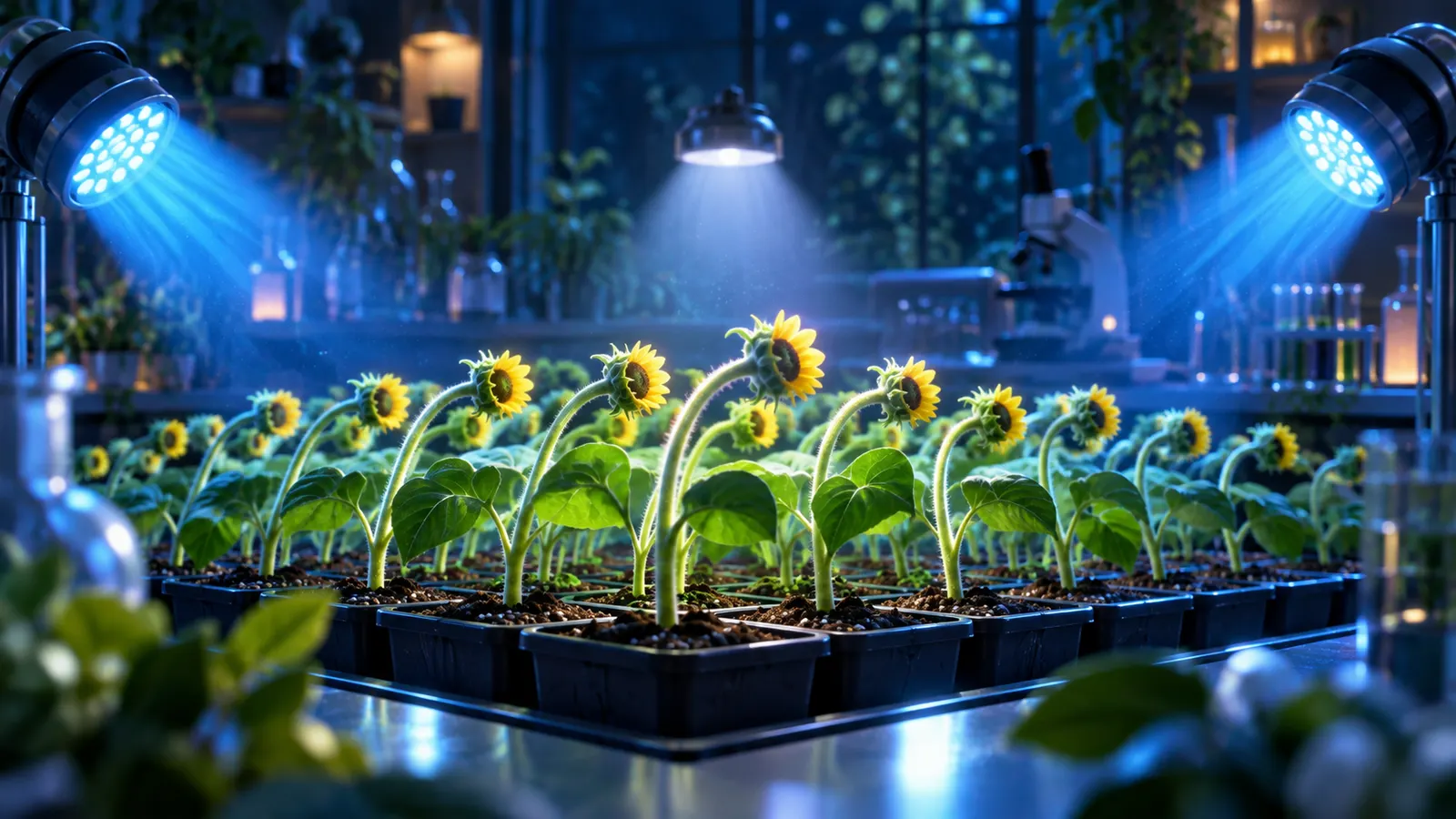
ここで、ちょっと意外な実験があります。フランスの研究チーム(Chauvetら、2016年、『Scientific Reports』)は、植物を遠心機に乗せ、重力の強さを変えながら茎の曲がり方を測りました。
もし植物が重力の“強さ”を測っているなら、重力が強いほど速く曲がるはず。ところが結果は、4種類の植物すべてで、曲がり方は重力の強さに関係なく、傾きの角度だけで決まっていたのです。
粒は砂のように動いて、傾いた側にたまります。植物は重力の強さではなく「傾き」を感じとっているので、風で揺さぶられても惑わされにくい――耳の中の平衡感覚とは、まったく違うしくみでした。

03沈んだ粒の位置を「伝える」タンパク質
では、粒が下側にたまったという情報は、どうやって曲がる動きにつながるのでしょう?
2023年、基礎生物学研究所の森田さんらのチーム(Nishimuraら、『Science』)が、その答えの一つを示しました。LZY(ラジー)というタンパク質が粒の表面にくっついていて、粒が沈むと、粒が近づいた側の細胞膜へ移る。こうして細胞の中に「下はこっち」という目印(極性)ができるのです。
この目印をもとに、植物ホルモンのオーキシンが下側に多く運ばれます。茎では下側がよく伸びて上へ曲がり、根では逆に下側の伸びが抑えられて下へ曲がる――これが重力屈性のしくみです。
04まとめ
植物は、細胞の中の沈む粒で上下を知り、傾きを感じとり、タンパク質の引っ越しでその情報を伝えていました。
国際宇宙ステーションでは、重力のほとんどない環境で植物がどう育つかの実験も続いています。足元の雑草も、じつは重力と静かに“会話”しながら伸びているのです。
この研究を英語で読もう原田英語の English CornerWhen a potted plant is laid on its side, its stem bends upward within hours, while its roots bend downward. 音声
音声 4択クイズ9問A2・B1・B2タップして開く
原田英語の English Corner
この研究を英語で読もう
If you turn a plant pot on its side, the stem soon begins to bend up. The roots grow down. How do plants know which way is down?
Some plant cells have small, heavy grains full of starch. These grains sink to the bottom of the cell, like sand. When the plant is tilted, the grains move. This tells the plant which way is down.
65 words ・ CEFR A2
和訳を見る
植木鉢を横に倒すと、茎はまもなく上に曲がり始めます。根は下に伸びます。植物はどうやって、どちらが下かわかるのでしょうか。
植物の細胞の中には、でんぷんがたっぷり入った小さくて重い粒をもつものがあります。この粒は、砂のように細胞の底に沈みます。植物が傾くと、粒が動きます。これで植物は、どちらが下かがわかるのです。
4択リーディングクイズ
Q1. What is the passage mainly about?
How do plants know which way is down? という問いに答える内容なので C。
Q2. What is inside the small grains?
small, heavy grains full of starch とあるので A。砂はたとえ(like sand)。
Q3. In this passage, "tilted" means ...
tilt は「傾ける」。鉢を横に倒した状態のことなので D。
When a potted plant is laid on its side, its stem bends upward within hours, while its roots bend downward. Plants sense gravity with tiny particles called amyloplasts, which are filled with starch. Because they are heavy, they sink to the lower side of special cells, and when the plant is tilted, they slide toward the new bottom.
In 2016, French researchers spun plants in a centrifuge to change the strength of gravity. The stems bent according to the angle of tilt, regardless of the strength of gravity. In 2023, a Japanese team found that a protein called LZY moves from the particles to the nearby cell membrane, marking which side is down.
113 words ・ CEFR B1
和訳を見る
鉢植えの植物を横に倒すと、数時間のうちに茎は上へ曲がり、根は下へ曲がります。植物は、でんぷんがつまったアミロプラストと呼ばれる小さな粒で重力を感じています。粒は重いので特別な細胞の下側に沈み、植物が傾くと新しい底のほうへすべっていきます。
2016年、フランスの研究者たちは遠心機で植物を回し、重力の強さを変えました。茎は、重力の強さに関係なく、傾きの角度に応じて曲がりました。2023年、日本のチームは、LZYというタンパク質が粒から近くの細胞膜へ移動し、どちらが下かを示す目印をつけることを発見しました。
4択リーディングクイズ
Q1. What is the passage mainly about?
アミロプラストで重力を感じ、その情報をLZYで伝えるしくみを述べているので B。
Q2. What did the 2016 experiment show?
the stems bent according to the angle of tilt, regardless of the strength of gravity とあるので D。A はこれと逆。
Q3. What is most likely the role of the LZY protein?
細胞膜へ移って marking which side is down とあるので、下側の情報を伝える役割だと考えられる。正解は C。
Lay a potted plant on its side and, within hours, the shoot curves upward while the root turns down. For over a century, the starch-statolith hypothesis has explained how: in specialized cells of root tips and stems, dense starch-filled particles called amyloplasts settle toward the lower side, shifting when the plant is tilted. A 2010 review by Miyo Morita noted that starch itself is important but not essential, since mutants with little starch still respond weakly, suggesting the particles themselves act as weights. A 2016 study added a surprising twist.
Using a centrifuge to vary gravitational strength, Chauvet and colleagues found that in all four species tested, shoot bending depended only on the angle of tilt, not on force. The grains seem to pile up on the lower side like sand, and because plants sense inclination rather than force, the system is resistant to shaking by wind. In 2023, Morita's team at the National Institute for Basic Biology showed that LZY proteins move from amyloplasts to the nearby cell membrane, creating a polarity that directs the plant hormone auxin downward, so the lower side of the stem grows more and the shoot bends up.
194 words ・ CEFR B2
和訳を見る
鉢植えの植物を横に倒すと、数時間のうちに芽は上へ曲がり、根は下へ向かいます。100年以上前から、そのしくみは「デンプン平衡石説」で説明されてきました。根の先端や茎の特殊な細胞の中で、でんぷんがつまった密度の高いアミロプラストという粒が下側に沈み、植物が傾くと移動するというものです。2010年の森田美代さんの総説は、でんぷんそのものは重要だが必須ではないと指摘しました。でんぷんの少ない変異体でも弱いながら反応するからで、粒そのものが重りの役割を果たしていると考えられます。2016年の研究は、意外な新事実を加えました。
遠心機で重力の強さを変えたシャヴェらは、調べた4種すべてで、芽の曲がり方は力ではなく傾きの角度だけで決まることを見いだしました。粒は砂のように下側にたまるらしく、また植物は力ではなく傾きを感じとっているので、風に揺さぶられても惑わされにくいのです。2023年、基礎生物学研究所の森田さんのチームは、LZYタンパク質がアミロプラストから近くの細胞膜へ移動して極性(向きの目印)を作り、植物ホルモンのオーキシンを下側へ運ばせることを示しました。その結果、茎の下側がよく伸びて、芽が上へ曲がるのです。
4択リーディングクイズ
Q1. What is the passage mainly about?
平衡石による重力の感知から、LZYとオーキシンによる曲がる反応までを説明しているので D。
Q2. What did Chauvet and colleagues discover?
shoot bending depended only on the angle of tilt, not on force とあるので C。4種すべてで同じ結果だったので B は誤り。
Q3. Why is the system resistant to shaking by wind?
植物は重力の強さ(力)ではなく傾きを感じとっているので、風による一時的な揺れに惑わされにくい。正解は A。
重要単語
- gravityB1名詞重力Roots grow in the direction of gravity.
 grave(重大な)と同語源で「重さ」が原義。the center of gravity「重心」。
 - gravitropismC1名詞重力屈性Gravitropism helps shoots grow upward. gravi(重力)+tropism(屈性)。phototropism(光屈性)とセットで覚える。
- sedimentC1動詞・名詞沈殿する/沈殿物Starch grains sediment to the bottom of the cell. 名詞の「堆積物」が一般的。sedimentary rock「堆積岩」は地学の頻出語。
- tiltB2動詞・名詞傾ける/傾きShoots sense the angle of tilt. the tilt of the Earth's axis「地軸の傾き」も頻出。lean とほぼ同じ意味。
- centrifugeC1名詞遠心分離機Scientists used a centrifuge to change the strength of gravity. centri(中心)+fuge(逃げる)。centrifugal force「遠心力」。
- polarityC1名詞極性、(向きの)偏りLZY proteins create polarity inside the cell. pole(極)の派生語。political polarization「政治的分極化」も時事英語で頻出。
- hypothesisB2名詞仮説The starch-statolith hypothesis is over a century old. 複数形 hypotheses。test a hypothesis「仮説を検証する」がよく使われる組み合わせ。
 入試に出る順の単語帳を印刷する →
 全5561語の「科学英単語カード」で復習する →
 動画でもっと知る
動画は各チャンネルの公式埋め込みで表示しています(YouTube)。
この話題を TED で聞く
同じテーマの TED・TED-Ed を、 TED HACK で。英語の見どころ・使える表現・学習ミッションつきの日本語ガイドです。(運営:原田英語)


このネタ、誰かに教えたくなった?
鉢を横に倒すと、数時間で茎が上を向き始める。植物は細胞の中の「でんぷんの粒」がどっちに沈むかで上下を感じていた。しかも測っているのは重力の強さではなく「傾き」だった。
押すと「マジかリスト」に保存されます
 出典・参考文献(3件)タップで表示
- Morita (2010) Directional Gravity Sensing in Gravitropism, Annual Review of Plant Biologydoi.org
- Chauvet et al. (2016) Inclination not force is sensed by plants during shoot gravitropism, Scientific Reportsdoi.org
- Nishimura et al. (2023) Cell polarity linked to gravity sensing is generated by LZY translocation from statoliths to the plasma membrane, Sciencedoi.org

※本記事は上記の研究・公開資料をもとに、原田英語が独自の言葉で解説したものです。引用は著作権法第32条の範囲で行い、出典を明記しています。画像はすべてオリジナルのイメージです。研究結果には限界や個人差があります。誤りのご指摘は原田英語のお問い合わせフォームから。