

 人間関係・お金・日常ホント
スーパーのBGMがゆっくりだと、売り上げが増えた? 店内の音楽にひそむ心理作戦
 2026.10.02
 English Corner(A2〜B2・4択クイズ)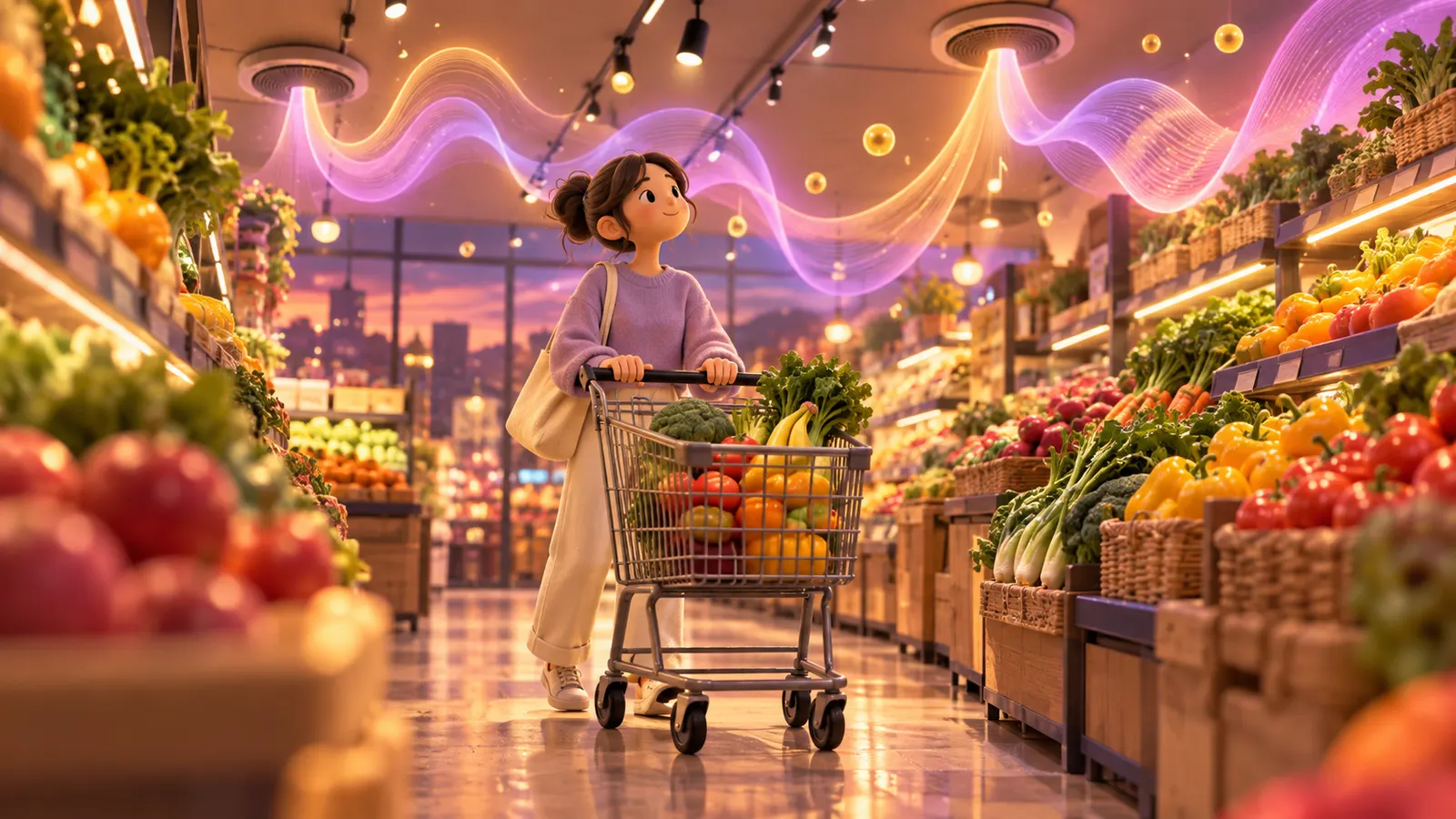
 読む前に予想してみよう!
お店のBGMが買い物に影響していても、客の多くはそのことに気づいていない
ワイン売り場の実験では、流れていた音楽が選択に影響したと自覚していた客はわずかだった。
 研究カード(どんな研究?)
- 対象
- アメリカのスーパー客・イギリスのワイン売り場の客
- 規模
- 1店舗(数週間)〜44人のアンケート
- 研究の種類
- フィールド実験+メタ分析
- 確かさ
- ★★☆☆☆
スーパーでBGMのテンポを遅くすると、客の歩く速さがゆっくりになり、売り上げが増えたという1982年の研究がある。音楽は無意識に買い物を左右する。
ひとことで言うとゆっくりな音楽が流れると、お店の中でのんびり歩いちゃう!
スーパーやコンビニで流れているBGM。気にしたこと、ありますか?
ほとんどの人は「なんとなく流れているもの」と思っているはず。でも実は、BGMのテンポひとつで、お客さんの歩き方や買い物の量が変わるという研究があるんです。
01テンポを変えたら、歩くスピードが変わった
この分野の古典的な研究が、アメリカのマーケティング研究者ロナルド・ミリマンによる実験です。
結果は、こうでした。
- ゆっくりのテンポのとき、客は店内をゆっくり歩いた
- そして、ゆっくりのテンポの日は、速いテンポの日より売り上げが多かった(論文では約38%高いと報告)
ゆっくり歩くと、棚の商品が目に入る時間が増えます。その分、「あ、これも買っておこう」が増えたのかもしれません。
BGMは「聞いている」というより、体のリズムにそっと入り込んでくるもの。だからこそ、自分では影響に気づきにくいのです。
02レストランでは「長居」が増えた
ミリマンは、1986年にレストランでも同じような実験をしています。
ゆっくりのBGMを流した日は、客の食事時間が長くなり、バーでの飲み物の注文が増えたと報告されました。
ただし、お客さんの回転が大事なファストフード店なら、逆にテンポの速い曲の方がいいかもしれません。BGMは、お店の目的に合わせて選ばれているのです。

03フランスの曲でフランスワインが売れた
さらに有名なのが、イギリスのレスター大学のエイドリアン・ノースらによる実験です。
1997年に科学誌 Nature に発表されたこの研究では、スーパーのワイン売り場で、フランスらしい音楽とドイツらしい音楽を日替わりで流しました。
すると、フランスの音楽の日はフランスワインが、ドイツの音楽の日はドイツワインがよく売れたのです。
ところが、買い物客にアンケートをとると、音楽が自分の選択に影響したと答えた人はごくわずかでした。音楽は、私たちが気づかないうちに頭の中の「フランス」や「ドイツ」のイメージを呼び起こしていたようです。
04注意:古い研究、限られたお店
これらの研究は、BGMと買い物の関係を示した先駆的な研究ですが、
- ミリマンの研究は1つのスーパー、ノースらの研究も1つの売り場での結果
- 時代やお店の種類、音楽の好みによって効果は変わりうる
という点には注意が必要です。その後の研究でも、BGMが買い物に影響するという結果は多く出ていますが、効果の向きや大きさはさまざまです。お店の音楽についての多くの実験をまとめたメタ分析(Garlin と Owen、2006年/Roschk ら、2017年)でも、BGMの効果は全体として小〜中程度で、Garlin と Owen の分析では、テンポや音量、お客さんの好みとの相性によって変わるとされています。
05まとめ
お店のBGMは、ただの背景ではなく、空間をデザインする道具でした。
次にスーパーに行ったら、ちょっと耳をすませてみてください。その曲のテンポが、あなたの歩く速さを決めているかもしれません。
この研究を英語で読もう原田英語の English CornerBackground music in stores is not just there to fill the silence. 音声
音声 4択クイズ9問A2・B1・B2タップして開く
原田英語の English Corner
この研究を英語で読もう
Do you notice the music in a supermarket? In a 1982 study in the United States, a store played slow music on some days and fast music on others.
With slow music, shoppers walked more slowly. Sales were also higher on slow-music days. In another study, French music helped sell French wine. But most shoppers did not notice that the music changed their choices.
64 words ・ CEFR A2
和訳を見る
スーパーの音楽に気づいていますか。1982年のアメリカでの研究で、ある店が、ある日はゆっくりした音楽を、別の日は速い音楽を流しました。
ゆっくりした音楽のとき、買い物客はよりゆっくり歩きました。ゆっくりした音楽の日は売り上げも多くなりました。別の研究では、フランスの音楽がフランスワインを売るのに役立ちました。しかし、ほとんどの客は、音楽が自分の選択を変えたことに気づいていませんでした。
4択リーディングクイズ
Q1. What is the passage mainly about?
店内の音楽が買い物客の行動に影響するという話なので A。
Q2. What happened when slow music was played?
With slow music, shoppers walked more slowly. とあるので D。
Q3. In this passage, "notice" means ...
notice は「気づく」。become aware of が最も近いので B。
Background music in stores is not just there to fill the silence. In 1982, marketing researcher Ronald Milliman tested this in an American supermarket. Over several weeks, he switched between no music, slow music and fast music, and he measured how quickly shoppers moved and how much the store sold. When slow music was playing, shoppers walked more slowly, and daily sales were higher than on fast-music days.
Slower walking may give people more time to notice products on the shelves. In a 1997 study, a wine section played French or German music on different days. French wine sold better with French music, and German wine sold better with German music. However, very few shoppers said the music had influenced their choice.
122 words ・ CEFR B1
和訳を見る
店のBGMは、ただ静けさを埋めるためにあるのではありません。1982年、マーケティング研究者のロナルド・ミリマンは、アメリカのスーパーでこれを検証しました。数週間にわたって、彼は音楽なし、ゆっくりした音楽、速い音楽を切り替え、買い物客がどれくらい速く移動するか、店がどれくらい売り上げるかを測りました。ゆっくりした音楽が流れているとき、客はよりゆっくり歩き、1日の売り上げは速い音楽の日より多くなりました。
ゆっくり歩くことで、棚の商品に気づく時間が増えるのかもしれません。1997年の研究では、ワイン売り場で日によってフランスの音楽かドイツの音楽を流しました。フランスの音楽のときはフランスワインが、ドイツの音楽のときはドイツワインがよく売れました。しかし、音楽が自分の選択に影響したと答えた客はほとんどいませんでした。
4択リーディングクイズ
Q1. What did Milliman measure in his study?
he measured how quickly shoppers moved and how much the store sold とあるので B。
Q2. What happened in the 1997 wine study?
フランスの音楽でフランスワイン、ドイツの音楽でドイツワインがよく売れたので、音楽の国とワインの国が一致した C。
Q3. Why might slow music increase sales?
Slower walking may give people more time to notice products on the shelves. とあるので A。
Ronald Milliman spent several weeks in 1982 changing the music in a mid-sized American supermarket, switching between no music, slow-tempo music and fast-tempo music. With slow music playing, shoppers moved through the store more slowly, and daily sales were higher than on fast-tempo days, by roughly 38 percent according to the paper.
A 1986 follow-up in a restaurant linked slow music to longer meals and more drinks ordered at the bar. The best-known demonstration came in 1997, when Adrian North and colleagues alternated stereotypically French and German music in a supermarket wine section. French wines outsold German ones on French-music days, and the pattern reversed on German-music days, yet very few customers said the music had affected their choice.
Researchers interpret this as priming, in which the music activated ideas associated with each country. Each of these pioneering studies, however, took place in a single location, and sales can also be influenced by things like the day of the week or the number of customers. Meta-analyses put the effect of background music in the small-to-medium range. How big it is depends on the tempo, the volume and whether listeners like the music.
192 words ・ CEFR B2
和訳を見る
1982年、ロナルド・ミリマンはアメリカの中規模スーパーで数週間にわたって音楽を変え、音楽なし、ゆっくりしたテンポの音楽、速いテンポの音楽を切り替えました。ゆっくりした音楽が流れていると、買い物客は店内をよりゆっくり移動し、1日の売上は速いテンポの日より高くなりました。論文によれば、その差はおよそ38%でした。
1986年にレストランで行われた続編の研究では、ゆっくりした音楽が、より長い食事時間と、バーでのより多い飲み物の注文と結びついていました。最もよく知られた実証は1997年のものです。エイドリアン・ノースらは、スーパーのワイン売り場で、いかにもフランス風の音楽とドイツ風の音楽を交互に流しました。フランス音楽の日にはフランスワインがドイツワインより多く売れ、ドイツ音楽の日にはそのパターンが逆転しましたが、音楽が自分の選択に影響したと答えた客はごくわずかでした。
研究者たちはこれをプライミングと解釈しています。音楽がそれぞれの国に結びついた考えを呼び起こしたというのです。ただし、これらの先駆的な研究はどれも1か所で行われたもので、売上は曜日や客の数といったほかの要因にも左右されます。メタ分析によると、BGMの効果は小〜中程度です。その大きさは、テンポや音量、そして聞き手がその音楽を好きかどうかで変わります。
4択リーディングクイズ
Q1. How do researchers explain the results of the wine study?
Researchers interpret this as priming, in which the music activated ideas associated with each country. とあるので B。
Q2. What is mentioned as a weakness of these pioneering studies?
Each of these pioneering studies, however, took place in a single location, and sales can also be influenced by things like the day of the week or the number of customers とあるので C。
Q3. What does the passage suggest about the overall effect of background music?
Meta-analyses put the effect of background music in the small-to-medium range. How big it is depends on the tempo, the volume and whether listeners like the music. とあるので D。
重要単語
- tempoB2名詞速さ、テンポThe slow tempo calmed the shoppers. イタリア語由来の音楽用語で「時間」が原義。temporary(一時的な)と同語源。
- background musicB1名詞(句)BGMBackground music can shape our mood. BGM は和製略語で、英語では background music と言うのが自然。
- atmosphereB1名詞雰囲気Stores design their atmosphere carefully. 原義は「大気」。atmo-(蒸気)+sphere(球)。the atmosphere of the room「部屋の雰囲気」。
- influenceB1名詞・動詞影響(する)Few customers noticed the music's influence. have an influence on ~「~に影響を与える」。動詞は他動詞なので influence on としない点に注意。
- field experimentC1名詞(句)現場での実験The study was a field experiment in a real store. laboratory experiment(実験室実験)と対比される。現実に近いが条件を統制しにくい。
- primingC1名詞プライミング(先に受けた刺激が後の判断に影響すること)French music may cause priming for French wine. prime は「下準備をする」。再現性が議論される分野なので、限界とセットで語られることが多い。
- outsellC1動詞~より多く売れるFrench wines outsold German wines. out-+動詞で「~をしのぐ」。outnumber(数で上回る)、outperform(性能で上回る)も同じ形。
 入試に出る順の単語帳を印刷する →
 全5561語の「科学英単語カード」で復習する →
 この話題を TED で聞く
同じテーマの TED・TED-Ed を、 TED HACK で。英語の見どころ・使える表現・学習ミッションつきの日本語ガイドです。(運営:原田英語)


このネタ、誰かに教えたくなった?
スーパーのBGMをゆっくりにしたら、お客さんの歩くスピードが落ちて売り上げが増えたという研究がある。別の実験では、フランスの音楽を流すとフランスワインが売れたらしい。しかもお客さんはほぼ気づいてなかった。
押すと「マジかリスト」に保存されます
 出典・参考文献(5件)タップで表示
- Milliman (1982) Using background music to affect the behavior of supermarket shoppers, Journal of Marketingdoi.org
- Milliman (1986) The influence of background music on the behavior of restaurant patrons, Journal of Consumer Researchdoi.org
- North, Hargreaves & McKendrick (1997) In-store music affects product choice, Naturedoi.org
- Garlin & Owen (2006) Setting the tone with the tune: A meta-analytic review of the effects of background music in retail settings, Journal of Business Researchdoi.org
- Roschk, Loureiro & Breitsohl (2017) Calibrating 30 years of experimental research: A meta-analysis of the atmospheric effects of music, scent, and color, Journal of Retailingdoi.org

※本記事は上記の研究・公開資料をもとに、原田英語が独自の言葉で解説したものです。引用は著作権法第32条の範囲で行い、出典を明記しています。画像はすべてオリジナルのイメージです。研究結果には限界や個人差があります。誤りのご指摘は原田英語のお問い合わせフォームから。
 これも「マジか!?」
 日常の科学
日常の科学
「1000円」と「980円」、たった20円差なのに安く見えるのはなぜ? 脳は左端しか見ていない
 日常の科学
日常の科学
空腹で買い物に行くと、食べ物以外まで欲しくなる? 「腹ぺこショッピング」の科学
 学習ハック
学習ハック
勉強中のBGM、歌詞ありはNG? 好きな曲でも読解の成績が下がった実験

 日常の科学
日常の科学
第一印象は0.1秒で決まっていた。しかも時間をかけても、ほとんど変わらない

 日常の科学
日常の科学
【決着】「年収が一定を超えると幸せは頭打ち」説、ライバル同士の共同研究で書き換えられた

 日常の科学
日常の科学