

 語学・英語学習ホント
英単語は「ジェスチャー付き」で覚えると忘れにくい? 脳の“運動の場所”まで働いていた
 2026.10.02
 English Corner(A2〜B2・4択クイズ)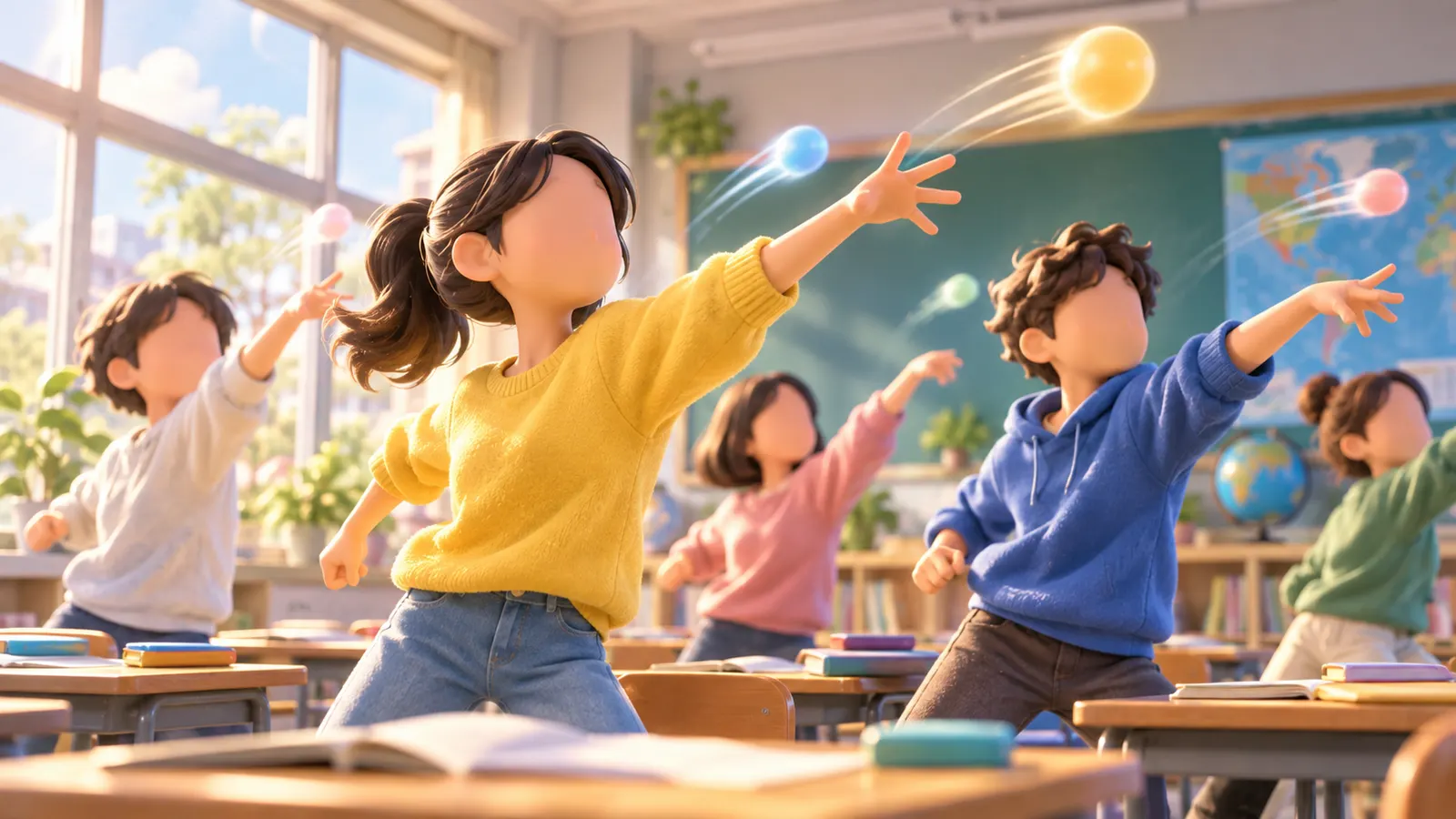
 読む前に予想してみよう!
単語を覚えるとき、どんな動きでも体を動かしさえすれば記憶に残りやすくなる
効果が出たのは意味に合ったジェスチャーで、意味と関係ない動きでは同じような効果は見られなかった。
 研究カード(どんな研究?)
- 対象
- ドイツ語・英語話者の大人
- 規模
- 数十人規模×複数実験
- 研究の種類
- 実験研究(脳画像・脳波含む)
- 確かさ
- ★★★☆☆
新しい単語を、意味に合ったジェスチャーと一緒に覚えると、記憶に残りやすいという実験が複数ある。ただし意味と関係ない動きでは、同じ効果は見られなかった。
ひとことで言うと「投げる」はボールを投げるまねをしながら覚えると忘れにくい!
「throw(投げる)」を覚えるとき、ボールを投げるまねをしながら言ってみる。子ども向けの英語教室でよく見る光景です。
「子どもっぽい」と思うかもしれませんが、実はこれ、大人にも効くことが実験で確かめられています。しかも脳を調べると、ジェスチャー付きで覚えた単語は、単語を認識・翻訳するときに“体を動かす脳”まで働いていたのです。
01ジェスチャー付きの単語は忘れにくい
おもしろいのは、ジェスチャーが単語の意味と同じイメージを伝えているときに効果が最大だったこと。「飲む」ならコップを傾ける動き、というように、言葉と動きが同じことを言っているのがポイントです。
02「でたらめな動き」では同じ効果は出ない
では、体を動かしさえすればいいのでしょうか?
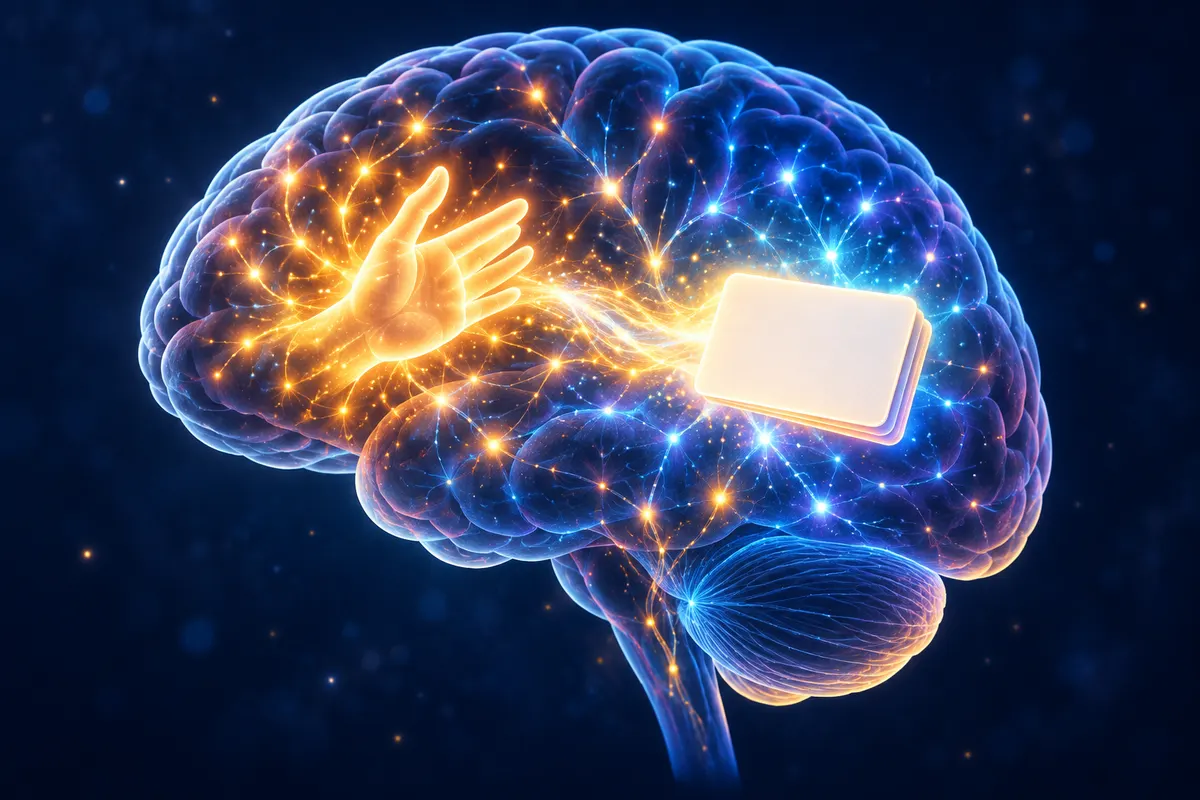
一方、意味と関係ない動きで覚えた単語では、認知的な制御に関わる脳のネットワークが活動していました。研究者たちは、効果の正体は「体を動かすこと」そのものではなく、単語の意味とつながった「動きのイメージ」だと考えています。
03絵より、ジェスチャーが強かった
2015年のマイヤーらの研究では、新しい単語を①ジェスチャー付き、②絵付き、③言葉だけで覚えさせました。その結果、ジェスチャーも絵も言葉だけより効果があり、ジェスチャーのほうが絵より効率がよかったと報告されています。
さらに脳の活動パターンを分析すると、ジェスチャーで覚えた単語では運動に関わる領域、絵で覚えた単語では視覚に関わる領域が、単語の翻訳に関わっていたことが示されました。覚え方によって、脳の別の場所に「手がかり」が残るというわけです。
04どんでん返し:使えるのは「動き」を表せる単語が中心
ただし限界もあります。これらの研究は数十人規模の実験室研究が中心で、使われた単語も動作や物など、ジェスチャーで表しやすいものが多めでした。「economy(経済)」や「responsibility(責任)」のような抽象的な単語で同じ効果が出るかは、まだはっきりしていません。
05まとめ
ジェスチャー付きで覚えた単語は、意味と動きがつながることで、記憶に残りやすくなることがわかりました。ただし、意味に合った動きであることが条件です。
今日覚える動詞を3つ選んで、体で演じながら声に出してみましょう。ちょっと恥ずかしいくらいが、記憶にはちょうどいいのかもしれません。
この研究を英語で読もう原田英語の English CornerIn children's English classes, teachers often act out words. 音声
音声 4択クイズ9問A2・B1・B2タップして開く
原田英語の English Corner
この研究を英語で読もう
Try this when you learn the word "throw." Move your arm like you are throwing a ball. In a 2009 study, English-speaking adults learned Japanese verbs. Words learned with matching gestures were remembered best, even one week later.
But the movement must match the meaning. In another study, random movements did not help in the same way. Gestures work well for action words. We do not know yet if they work for words like "economy."
75 words ・ CEFR A2
和訳を見る
「throw(投げる)」という単語を覚えるときに、これを試してみてください。ボールを投げるように腕を動かすのです。2009年のある研究で、英語を話す大人たちが日本語の動詞を覚えました。意味に合ったジェスチャーと一緒に覚えた単語は、1週間後でさえ最もよく覚えられていました。
しかし、動きは意味に合っていなければなりません。別の研究では、でたらめな動きは同じようには役立ちませんでした。ジェスチャーは動作を表す単語によく効きます。「economy(経済)」のような単語にも効くかどうかは、まだわかっていません。
4択リーディングクイズ
Q1. What is the passage mainly about?
意味に合ったジェスチャーで単語を覚える効果がテーマなので D。
Q2. What did the 2009 study find?
Words learned with matching gestures were remembered best, even one week later とあるので B。
Q3. In this passage, "random" movements are movements that ...
直前の「動きは意味に合っていなければならない」と対比されており、random は「意味と関係のない・でたらめな」なので C。
In children's English classes, teachers often act out words. They pretend to throw a ball while saying "throw," for example. Research suggests this helps adults too. In a 2009 study, Kelly and his colleagues taught Japanese verbs to English-speaking adults.
Words learned with gestures that matched their meanings were remembered best five minutes, two days and one week later. A 2015 study found that gestures also worked better than pictures. Most of these studies were small, though, and used words that are easy to act out, so nobody knows yet how well gestures work for abstract words.
In 2011, German researchers compared meaningful gestures with movements unrelated to meaning. Meaningful gestures improved memory over time more than unrelated ones, and brain scans showed activity in an area that prepares movement.
130 words ・ CEFR B1
和訳を見る
子どもの英語教室では、先生がよく単語を演じてみせます。たとえば「throw」と言いながら、ボールを投げるふりをするのです。研究によると、これは大人にも役立ちます。2009年の研究で、ケリーらは英語を話す大人に日本語の動詞を教えました。
意味に合ったジェスチャーと一緒に覚えた単語は、5分後、2日後、1週間後のいずれでも最もよく覚えられていました。2015年の研究では、ジェスチャーは絵よりもよく効くこともわかりました。ただし、これらの研究の多くは小規模で、演じやすい単語を使っていたため、抽象的な単語にジェスチャーがどれだけ効くのかはまだわかっていません。
2011年、ドイツの研究者たちは、意味のあるジェスチャーと意味に関係のない動きを比較しました。意味のあるジェスチャーのほうが、関係のない動きより時間がたっても記憶がよく残り、脳のスキャンでは動きを準備する領域の活動が見られました。
4択リーディングクイズ
Q1. What did Kelly and his colleagues teach in their study?
Kelly and his colleagues taught Japanese verbs to English-speaking adults とあるので A。
Q2. What did the 2015 study find?
A 2015 study found that gestures also worked better than pictures. とあるので D。
Q3. Why don't we know yet how well gestures work for abstract words?
used words that are easy to act out, so nobody knows yet how well gestures work for abstract words とあるので B。
Acting out vocabulary may look childish, but experimental evidence suggests that adults also benefit when new words are paired with gestures that express their meaning. Kelly, McDevitt and Esch taught Japanese verbs to English-speaking adults and found that words accompanied by meaning-congruent gestures were recalled best at intervals of five minutes, two days and one week. To determine whether movement alone was responsible, Macedonia and colleagues compared iconic gestures with meaningless movements when teaching words of an artificial language. Only iconic gestures produced better long-term retention, and fMRI scans showed that recognizing these words engaged the premotor cortex, whereas words learned with meaningless movements activated a network associated with cognitive control.
The benefit, therefore, appears to stem from a motor image linked to meaning rather than from physical activity itself. These findings, however, come largely from small laboratory studies using concrete or action-related words, and whether gestures help with abstract vocabulary such as "responsibility" has yet to be established. A 2015 study by Mayer and colleagues added that gestures and pictures both outperformed verbal learning alone, with gestures being more effective, and that motor and visual brain regions respectively supported translation.
191 words ・ CEFR B2
和訳を見る
語彙を演じることは子どもっぽく見えるかもしれませんが、実験的な証拠は、新しい単語をその意味を表すジェスチャーと組み合わせると大人も恩恵を受けることを示唆しています。ケリー、マクデヴィット、エッシュは英語を話す大人に日本語の動詞を教え、意味と一致したジェスチャーを伴った単語が、5分後、2日後、1週間後のどの時点でも最もよく思い出されることを見いだしました。動きそのものが効果の原因なのかを確かめるため、マケドニアらは人工言語の単語を教える際に、アイコニック・ジェスチャー(意味を表す身振り)と意味のない動きを比較しました。長期的な保持を高めたのはアイコニック・ジェスチャーだけで、fMRIスキャンでは、これらの単語を認識する際に運動前野が働く一方、意味のない動きで覚えた単語では、認知的な制御に関わるネットワークが活動していました。
したがって、効果は体を動かすことそのものではなく、意味と結びついた運動イメージから生じているようです。ただし、これらの知見の多くは、具体的な単語や動作に関わる単語を使った小規模な実験室研究によるもので、「responsibility(責任)」のような抽象的な語彙にジェスチャーが役立つかどうかは、まだ確かめられていません。2015年のマイヤーらの研究は、ジェスチャーも絵もどちらも言葉だけの学習を上回り、ジェスチャーのほうがより効果的であること、そして運動と視覚の脳領域がそれぞれ翻訳を支えていることを付け加えました。
4択リーディングクイズ
Q1. According to the passage, where does the benefit of gestures seem to come from?
the benefit ... appears to stem from a motor image linked to meaning rather than from physical activity itself とあるので C。
Q2. What did Macedonia and colleagues find in the brain?
recognizing these words engaged the premotor cortex とあるので A。意味のない動きでは認知制御に関わるネットワークが働いた。
Q3. Which of the following would the author most likely agree with?
意味に合ったジェスチャーは効果があるが、抽象語への効果は has yet to be established と述べているので D。
重要単語
- gestureB1名詞身振り・ジェスチャーUse a gesture that matches the word.
 発音は /ˈdʒestʃər/(ジェスチャー)。make a gesture「身振りをする」。
 - iconicC1形容詞(意味や形を)まねて表す・象徴的なAn iconic gesture shows what the word means. icon(像・アイコン)の形容詞。日常では「象徴的な」、言語学では「意味と形が似ている」の意味。iconic gesture は研究用語。
- motor cortexC1名詞(句)運動野(体の動きに関わる脳の領域)The motor cortex was active during word recognition. motor は「運動の」。premotor cortex は「運動前野」で動きの準備に関わる。cortex は「(大脳)皮質」。
- retainB2動詞保持する・覚えておくGestures helped learners retain new words. 名詞 retention。re-(後ろに)+ tain(保つ)。contain、maintain も同じ tain の仲間。
- enrichB2動詞豊かにするPictures and gestures enrich word learning. en-(~にする)+ rich。enrich your vocabulary「語彙を豊かにする」は英作文でも使える表現。
- congruentC1形容詞一致した・調和したMeaning-congruent gestures helped the most. 反対語 incongruent(一致しない)。心理学実験で「条件が一致しているか」を表す定番語。
- abstractB2形容詞抽象的なIt is hard to make gestures for abstract words. 反対語 concrete(具体的な)。名詞では「論文の要旨」の意味もある。
 入試に出る順の単語帳を印刷する →
 全5561語の「科学英単語カード」で復習する →
このネタ、誰かに教えたくなった?
新しい単語を意味に合ったジェスチャー付きで覚えると、1週間後まで記憶に残りやすかったらしい。脳を調べると、その単語を認識するときに“体を動かす場所”まで働いていた。ただし適当な動きでは同じ効果は出なかった。
押すと「マジかリスト」に保存されます
 出典・参考文献(3件)タップで表示
- Macedonia, Müller & Friederici (2011) The impact of iconic gestures on foreign language word learning and its neural substrate. Human Brain Mappingdoi.org
- Kelly, McDevitt & Esch (2009) Brief training with co-speech gesture lends a hand to word learning in a foreign language. Language and Cognitive Processesdoi.org
- Mayer, Yildiz, Macedonia & von Kriegstein (2015) Visual and motor cortices differentially support the translation of foreign language words. Current Biologydoi.org

※本記事は上記の研究・公開資料をもとに、原田英語が独自の言葉で解説したものです。引用は著作権法第32条の範囲で行い、出典を明記しています。画像はすべてオリジナルのイメージです。研究結果には限界や個人差があります。誤りのご指摘は原田英語のお問い合わせフォームから。
 これも「マジか!?」

 語学
語学
英単語は「口の中で発音できない」と覚えられない? 声を封じると外国語の単語が覚えにくくなった実験

 語学
語学
「イラスト付き単語帳」は覚えやすい? 実験では訳語に負けた。原因は「わかったつもり」
 語学
語学
英単語は「10回書いて覚える」は逆効果? 書き取りが記憶をジャマした実験と、上手な使い方

 語学
語学
寝る前の単語暗記は効く? 新しい単語は「ひと晩寝ると」脳の辞書に入っていた
 語学
語学
英文の「単語の注釈」で覚える量は約1.7倍に。でも絵や音声つきの“豪華版”は差がなかった
 語学
語学