

 地球・歴史・物理ビミョー
イースター島のモアイは「歩いて」運ばれた? 18人とロープ3本で巨像が進んだ実験
 2026.10.02
 English Corner(A2〜B2・4択クイズ)
 読む前に予想してみよう!
イースター島の文明は、木を切りすぎて人口が激減し崩壊した、というのが今の定説だ
古代ゲノム研究は1600年代の急激な人口崩壊を支持せず、農地の衛星分析も大人口を想定した従来の推定に疑問を投げかけている。
 研究カード(どんな研究?)
- 対象
- イースター島の道沿いのモアイとレプリカ
- 規模
- レプリカ1体・道沿いのモアイ数十体
- 研究の種類
- 実験考古学・形態分析
- 確かさ
- ★★☆☆☆
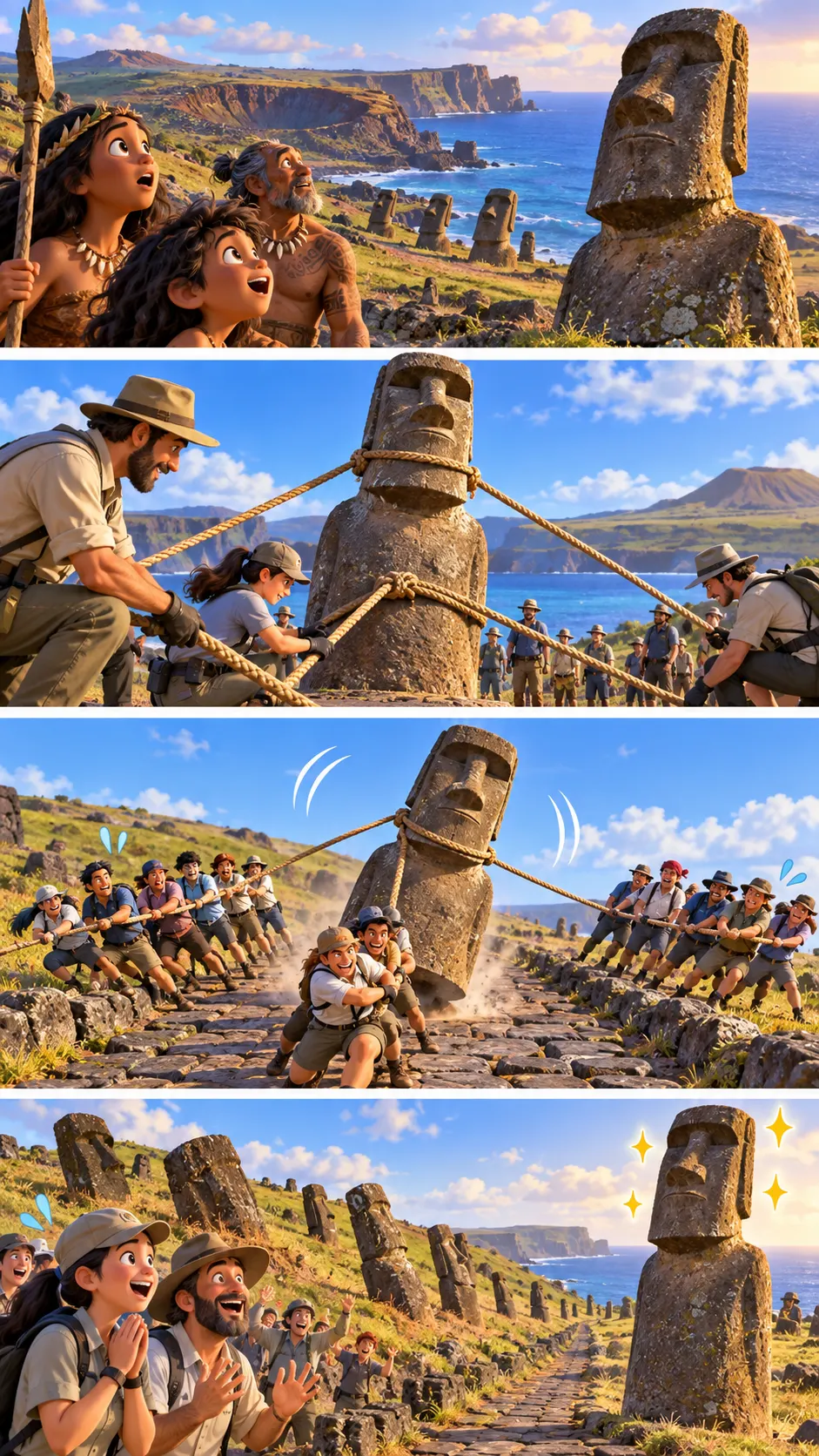
島に伝わる「モアイは歩いた」という言い伝え。研究者がレプリカに3本のロープをかけて左右に揺らすと、18人で約100mを進んだ。道ばたのモアイの形も手がかりに。
ひとことで言うとモアイは、ロープで左右にゆらして「歩かせて」運んだのかもしれない。
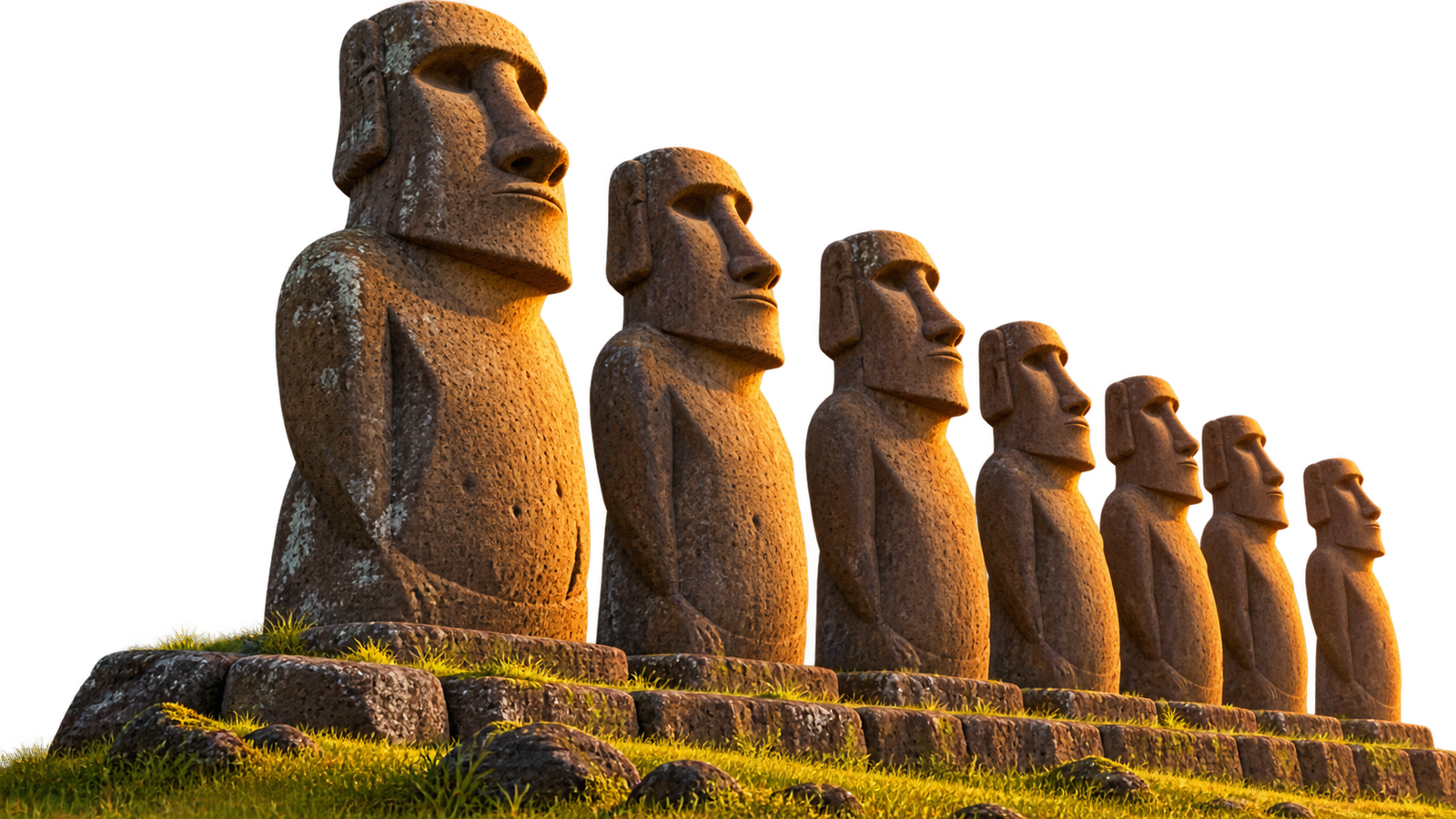
南太平洋に浮かぶイースター島(ラパ・ヌイ)。この小さな島には、1000体近いモアイが残っています。
大きいものは高さ数メートル、重さ数十トン。島の石切り場で彫られたモアイは、遠いものでは十数km離れた海岸まで運ばれています。クレーンもトラックもない時代に、どうやって?
島の人々には、昔から答えがありました。「モアイは歩いたのさ」。この言い伝えを、科学者が本気で確かめてみたのです。
01「寝かせて引きずった」説の弱点
昔からの有力な説は、モアイを寝かせて木のソリやコロに乗せ、引っぱったというものでした。
でもこの方法だと、大量の木材と大人数が必要です。さらに、「木を切りすぎて森が消え、島の文明が崩壊した」という有名な物語とも結びついてきました。
02道ばたのモアイに「ヒント」があった
アメリカの考古学者リポとハントは、石切り場から延びる古い道の途中で倒れている「道のモアイ」に注目しました。
これらは、祭壇に立つ完成品のモアイとは形が少し違いました。底が幅広いD字形で、立てると前に傾くようにできていたのです。まるで「立てたまま揺らして運ぶ」のに都合のいい形でした。
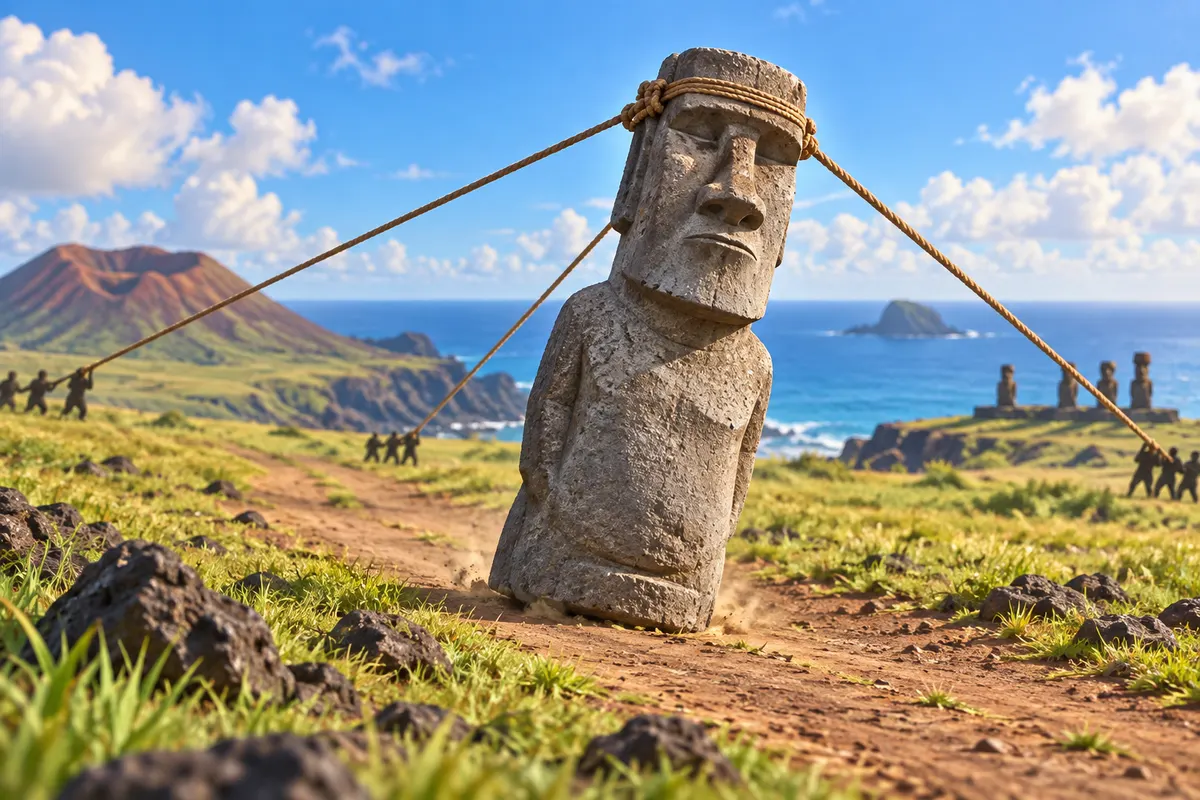
道そのものも、断面がゆるいU字形のくぼみになっていて、立てた像が左右に倒れにくい構造だったと考えられています。
032025年、「批判への回答」
この「歩くモアイ」説には、「実際の大きなモアイでは無理では?」などの批判もありました。
リポとハントは2025年、道沿いのモアイの3Dデータなどを使った分析と実験の結果をまとめ直し、批判に一つ一つ答える論文を発表しました。道のモアイの形や分布は、立てて運ぶ方法と最もよく合う、という主張です。
04どんでん返し:すべてのモアイが「歩いた」とは限らない
ただし、実験で動かしたのは約4.35トンのレプリカです。数十トンの巨大モアイでも同じようにできたかは、まだ直接は確かめられていません。
運び方は1つではなく、像の大きさや地形によって工夫を変えた可能性もあります。
05まとめ
- イースター島には「モアイは歩いた」という言い伝えがある
- 道沿いのモアイは、立てて運ぶのに向いた形をしていた
- レプリカ実験では、ロープ3本・18人で約100mを「歩かせる」ことができた
- 「環境破壊で文明崩壊」という定説も、最新研究で揺らいでいる
昔話を「ただの伝説」と切り捨てず、ていねいに確かめる。それが科学のいちばん面白いところかもしれません。
この研究を英語で読もう原田英語の English CornerEaster Island, or Rapa Nui, is home to nearly 1,000 moai, some weighing tens of tons. 音声
音声 4択クイズ9問A2・B1・B2タップして開く
原田英語の English Corner
この研究を英語で読もう
Easter Island has almost 1,000 large stone statues called moai. People on the island have an old story that says, "The moai walked."
Scientists decided to test this idea. They made a copy of a moai and put three ropes on its head. People pulled the ropes on the left and right in turns. The statue rocked and moved forward step by step. A team of 18 people moved it about 100 meters.
73 words ・ CEFR A2
和訳を見る
イースター島には、モアイと呼ばれる大きな石像が1000体近くあります。島の人々には「モアイは歩いた」という昔からの言い伝えがあります。
科学者たちはこの考えを確かめることにしました。彼らはモアイの複製を作り、頭に3本のロープをかけました。人々は左右のロープを交互に引きました。像は揺れながら一歩ずつ前へ進みました。18人のチームで、像を約100メートル動かしました。
4択リーディングクイズ
Q1. What is the passage mainly about?
「モアイは歩いた」という言い伝えを実験で確かめた話なので D。
Q2. How many people were on the team that moved the statue?
A team of 18 people moved it とあるので B。3 はロープの数、100 は移動距離。
Q3. In this passage, "a copy" of a moai is ...
copy は「複製」。本物に似せて作った像のことなので A。
Easter Island, or Rapa Nui, is home to nearly 1,000 moai, some weighing tens of tons. A common theory says they were laid down and dragged on wooden sledges, but this would have needed a lot of wood and many workers. Islanders, however, have long said that the statues "walked."
The archaeologists Lipo and Hunt noticed that moai left along ancient roads had wide, D-shaped bases and leaned forward, which suits moving them upright. In 2012, they tied three ropes to the head of a 4.35-ton replica. Two groups pulled from the sides in turn while a third group kept it steady from behind. The statue "walked," and 18 people moved it about 100 meters in around 40 minutes.
119 words ・ CEFR B1
和訳を見る
イースター島、すなわちラパ・ヌイには、1000体近いモアイがあり、なかには数十トンになるものもあります。よく知られた説では、モアイは寝かせて木のソリで引きずられたとされますが、それには大量の木材と多くの働き手が必要だったはずです。一方、島民は昔から像が「歩いた」と言ってきました。
考古学者のリポとハントは、古代の道沿いに残されたモアイが幅広いD字形の底を持ち、前に傾いていることに気づきました。これは立てたまま運ぶのに向いた形です。2012年、彼らは4.35トンのレプリカの頭に3本のロープを結びました。2組が左右から交互に引き、3組目が後ろから像を安定させました。像は「歩き」、18人で約100メートルを約40分で動かしたのです。
4択リーディングクイズ
Q1. What is one problem with the sledge theory?
this would have needed a lot of wood and many workers とあるので C。
Q2. What did Lipo and Hunt notice about the moai along the roads?
had wide, D-shaped bases and leaned forward とあるので A。
Q3. What was the role of the third group in the experiment?
a third group kept it steady from behind とあるので、後ろの組は像が倒れないよう支えたと分かる。正解は D。
In 2012, a team of 18 people with three ropes rocked a 4.35-ton replica statue from side to side and "walked" it about 100 meters in roughly 40 minutes. The test came from Lipo and Hunt, who wanted to know how the people of Rapa Nui had moved nearly 1,000 moai, some weighing tens of tons, as far as the coast.
The traditional answer is that the statues were laid flat and dragged on wooden sledges. That would have demanded a great deal of timber and labor, and it has been tied to the famous story of deforestation and social collapse. Lipo and Hunt instead treated local oral tradition, which says the moai walked, as a hypothesis they could test.
Statues abandoned along ancient roads have broad, D-shaped bases and lean forward, and the roads themselves have a shallow U-shaped profile. A working replica shows only what was possible, of course, and no one has tried walking one of the largest statues. In 2025, the pair answered critics with 3D data on the road moai. Separate 2024 studies found no genetic sign of a sudden collapse in the 1600s, and farmland data cast doubt on a huge population.
198 words ・ CEFR B2
和訳を見る
2012年、18人のチームが3本のロープを使って重さ4.35トンのレプリカ像を左右に揺らし、約40分で約100メートル「歩かせ」ました。この実験を考えたのはリポとハントです。
2人は、ラパ・ヌイの人々が、なかには数十トンもある1000体近くのモアイを、どのようにして海岸まで運んだのかを知りたかったのです。従来の答えは、像を寝かせて木のソリで引きずったというものです。それには大量の木材と労働力が必要だったはずで、この説は森林破壊と社会崩壊という有名な物語と結びつけられてきました。リポとハントはその代わりに、モアイは歩いたという島の口承を、検証できる仮説として扱いました。
古代の道沿いに残された像は幅広いD字形の底を持ち、前に傾いています。道そのものも、浅いU字形の断面をしています。もちろん、レプリカでうまくいっても、それが示すのは何が可能だったかだけですし、最大級の像を歩かせてみた人はまだいません。2025年、2人は道のモアイの3Dデータを使って批判に答えました。2024年に行われた別々の研究でも、古代ゲノムには1600年代の急激な人口崩壊の兆しがなく、農地の分析も巨大な人口には疑問を投げかけました。
4択リーディングクイズ
Q1. What is the passage mainly about?
「歩くモアイ」説の根拠と実験、そして限界を述べているので A。
Q2. According to the passage, what did the 2024 studies suggest?
Separate 2024 studies found no genetic sign of a sudden collapse in the 1600s とあるので C。
Q3. Why does the author say the replica "shows only what was possible"?
A working replica shows only what was possible とあり、再現できても当時実際にその方法が使われた証明にはならないという意味なので D。
重要単語
- statueB1名詞像The giant statue stood on a stone platform.
 the Statue of Liberty(自由の女神像)。status(地位)、stature(身長)とつづりが似るので注意。
 - quarryC1名詞石切り場Most moai were carved at one quarry. 「獲物」という別の意味もある。文脈で判断する。
- replicaB2名詞複製The team built a concrete replica of a moai. replicate(再現する)の仲間。研究の「再現性」は replicability。
- oral traditionC1名詞(句)口承(口伝えの言い伝え)Oral tradition says the statues walked. oral は「口の・口頭の」。an oral exam「口頭試験」。aural(耳の)と発音が近い。
- collapseB2名詞・動詞崩壊(する)The idea of a population collapse has been challenged. col-(共に)+lapse(滑る)。人が「倒れる」、建物が「崩れる」、文明が「崩壊する」まで幅広い。
- uprightB2形容詞・副詞まっすぐ立った(状態で)The statue was moved in an upright position. stand upright「まっすぐ立つ」。比喩で「正直な・高潔な」の意味もある。
 入試に出る順の単語帳を印刷する →
 全5561語の「科学英単語カード」で復習する →
 動画でもっと知る
動画は各チャンネルの公式埋め込みで表示しています(YouTube)。
この話題を TED で聞く
同じテーマの TED・TED-Ed を、 TED HACK で。英語の見どころ・使える表現・学習ミッションつきの日本語ガイドです。(運営:原田英語)


 4コマでわかる
このネタ、誰かに教えたくなった?
イースター島には「モアイは自分で歩いた」という言い伝えがある。約4トンのレプリカに3本のロープをかけて左右に揺らすと、18人で約100mを進んだらしい。
押すと「マジかリスト」に保存されます
 出典・参考文献(4件)タップで表示
- Lipo, Hunt & Haoa (2013) The 'walking' megalithic statues (moai) of Easter Island, Journal of Archaeological Sciencedoi.org
- Lipo & Hunt (2025) The walking moai hypothesis: Archaeological evidence, experimental validation, and response to critics, Journal of Archaeological Sciencedoi.org
- Davis et al. (2024) Island-wide characterization of agricultural production challenges the demographic collapse hypothesis for Rapa Nui (Easter Island), Science Advancesdoi.org
- Moreno-Mayar et al. (2024) Ancient Rapanui genomes reveal resilience and pre-European contact with the Americas, Naturedoi.org

※本記事は上記の研究・公開資料をもとに、原田英語が独自の言葉で解説したものです。引用は著作権法第32条の範囲で行い、出典を明記しています。画像はすべてオリジナルのイメージです。研究結果には限界や個人差があります。誤りのご指摘は原田英語のお問い合わせフォームから。
 これも「マジか!?」

 地球・歴史
地球・歴史
世界最古のパンは農業より4000年早かった。1万4400年前の「焦げたかけら」の正体
 地球・歴史
地球・歴史
ナスカの地上絵、AIを使ったら半年で303点も新発見。100年かけた数がほぼ2倍になった

 地球・歴史
地球・歴史
ストーンヘンジの石、700km以上も離れたスコットランドから運ばれていた
 地球・歴史
地球・歴史
ミイラ作りの「レシピ」が判明。古代エジプトの工房のつぼに、熱帯林由来の樹脂が入っていた
 地球・歴史
地球・歴史
ピラミッドを造ったのは奴隷じゃなかった? 発掘された「労働者の村」の食卓

 地球・歴史
地球・歴史